Insights / Articles
Understanding the Biggest Risks in Emerging Markets
Are you prepared for the biggest risks in emerging markets? Learn how to identify emerging market risks and protect your investments.

- A single political event can disrupt supply chains, increase compliance obligations, and delay investments.
- Understanding the broader economic environment is just as important as evaluating the company itself.
- Continuously updated company intelligence helps identify potential risks earlier.
Emerging markets offer significant opportunities for growth, from new suppliers and lower production costs to expanding customer bases and investment opportunities.
But these opportunities often come with higher uncertainty.
Political events, economic instability, regulatory changes, and limited market visibility can quickly affect supplier relationships, investment decisions, and daily operations.
This article explores the biggest risks businesses face when operating in or sourcing from emerging markets and how better visibility can help you manage them.
Political Risk
A company does not need to operate in a conflict zone to experience political risk.
A government change, armed conflict, sanctions, corruption concerns, or shifts in trade policy can quickly affect businesses that appear far removed from the event itself.
Myanmar's military coup in 2021 is a clear example.
After the military seized power, many governments imposed sanctions, while civil unrest and armed conflict disrupted banking, logistics, and trade.
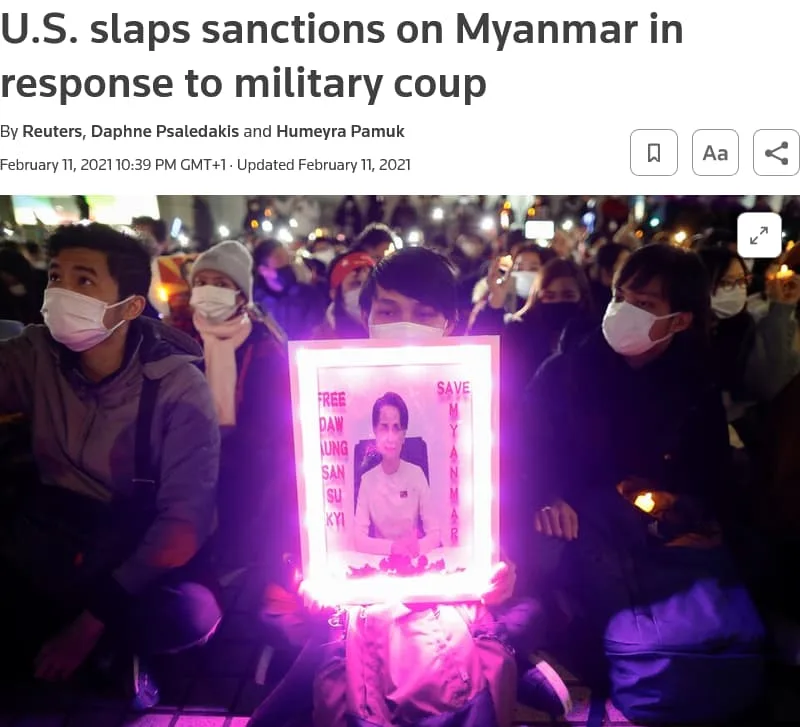
Source: Reuters
The uncertainty also prompted a number of multinational companies, including Telenor, Chevron, TotalEnergies, Kirin, and Woodside, to suspend operations or withdraw from the country as the political situation made it increasingly difficult to operate responsibly and manage legal, operational, and compliance risks.
That is the nature of political risk.
A single political event can rapidly reshape the business environment, disrupting supply chains, increasing compliance obligations, delaying investments, and forcing companies to reconsider their operations or sourcing strategies.
And this risk is becoming harder to ignore.
In the World Economic Forum’s Global Risks Report 2025, state-based armed conflict was ranked as the most pressing current global risk by surveyed experts.
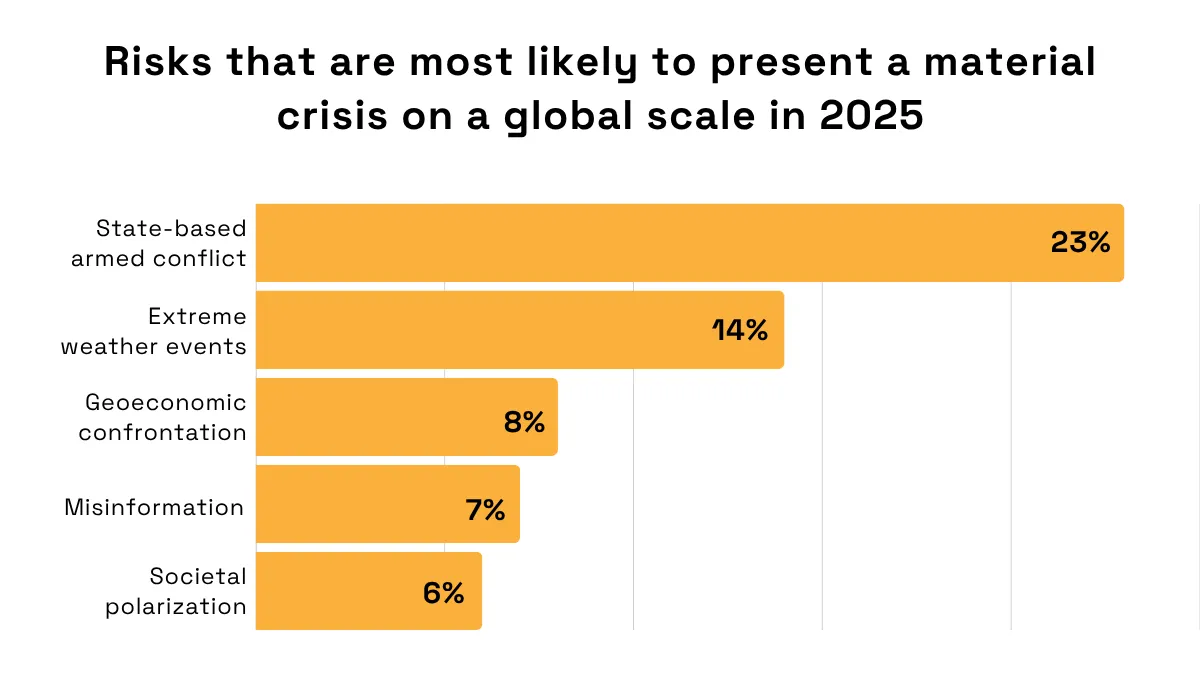
For companies sourcing from emerging markets or expanding into new regions, political developments are no longer something to monitor only at a strategic level.
They can directly affect supplier reliability, transportation costs, investment decisions, and daily operations.
Economic Risk
A supplier can be performing well today and still become a risk tomorrow if the economic environment around it changes.
Economic risk comes from factors such as:
- Inflation
- Currency fluctuations
- Debt crises
- Slow economic growth
- Sudden changes in monetary policy
In emerging markets, these factors can create additional uncertainty because economic conditions can shift quickly and have a direct impact on businesses.
Imagine sourcing products from a supplier in Argentina under a contract priced in local currency.
If the peso suddenly loses value, the cost of imported materials may increase, suppliers may struggle to access foreign currency, and contracts that once looked profitable may need to be renegotiated.
The supplier itself may not have changed. The economic conditions around it did.
Argentina illustrates how this type of volatility can affect businesses

Source: The Conversation
For years, the country maintained strict currency controls designed to stabilize the peso and limit capital flight.
However, these restrictions also made it more difficult for companies to access foreign currency and for international businesses to move profits out of the country.
Although the government began easing some of these restrictions in 2025, years of inflation and economic instability continued to create uncertainty for businesses operating in the country.
This is the challenge with economic risk in emerging markets.
Exchange rate movements can change the value of contracts, inflation can increase operating costs, and economic policy changes can reshape the business environment with little warning.
For procurement teams and investors, understanding the broader economic environment is just as important as evaluating the company itself.
Regulatory Risk
Regulatory risk occurs when changes in government rules, trade policies, taxes, ownership requirements, environmental standards, or licensing rules affect how companies operate.
In some emerging markets, regulations can develop quickly, leaving businesses with limited time to adjust.
Indonesia's nickel export ban, for example, shows how one regulatory decision can have global consequences.
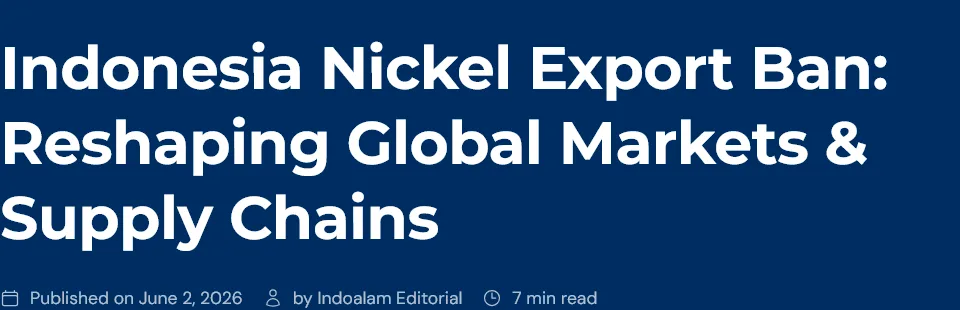
Source: Indoalam
To encourage domestic processing and strengthen its mining industry, Indonesia restricted exports of raw nickel.
The policy supported local industrial development, but it also reduced global nickel supply and contributed to prices rising above $48,000 per metric ton in 2022, reaching their highest levels in more than a decade.
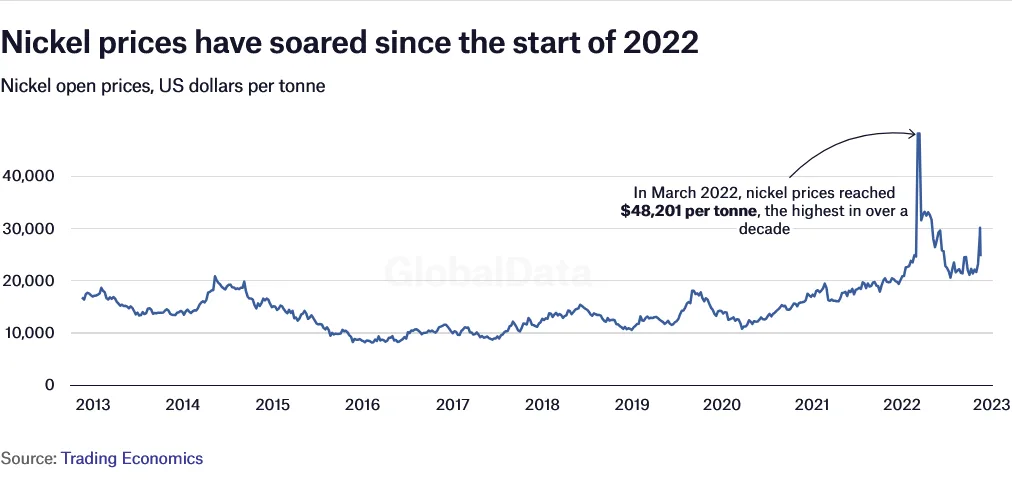
Source: Mining Technology
Naturally, the impact was felt far beyond Indonesia.
Industries around the world, including stainless steel manufacturers and electric vehicle battery producers, rely on stable nickel supplies.
This example shows why regulatory risk is not only about complying with local laws.
A single policy change can reshape supply chains, increase costs, limit supplier options, and force companies to rethink sourcing strategies.
Overall, monitoring regulatory changes in emerging markets is essential because today's business environment may look very different tomorrow.
Legal and Contract Enforcement Risk
Finding the right supplier and negotiating a solid contract are important. But before entering an emerging market, there's another question you need to ask:
What happens if the other party doesn't hold up their end of the agreement?
If a supplier fails to deliver, a customer doesn't pay, or a business partner breaches a contract, you'll likely need to rely on the local legal system to resolve the dispute.
And that's where things can become complicated because not every country offers the same level of legal protection.
According to the World Justice Project's Rule of Law Index, countries differ significantly in areas such as civil justice, regulatory enforcement, and the absence of corruption, all of which influence how effectively businesses can enforce contracts and protect their interests.
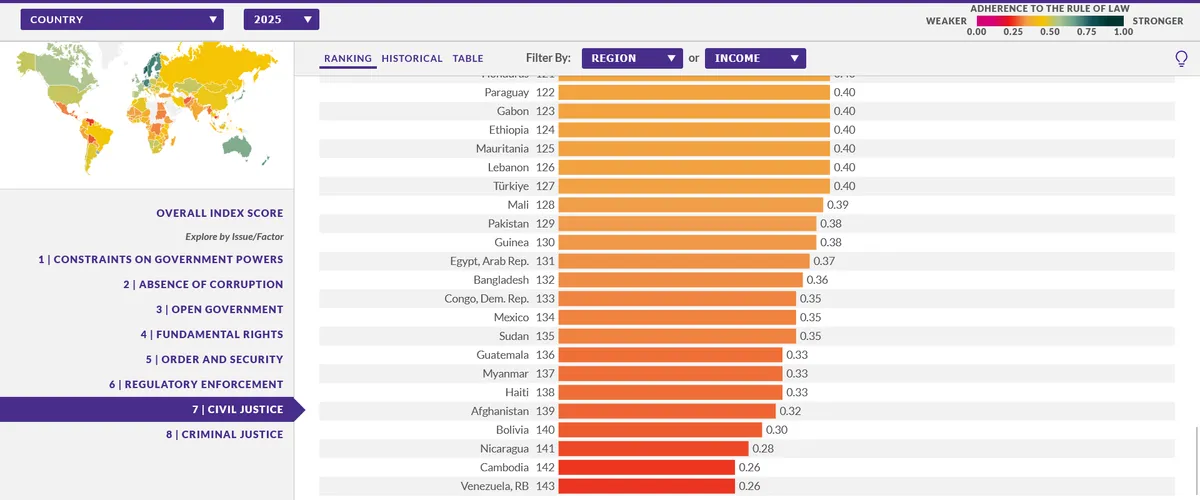
Source: World Justice Project
In practice, that can mean longer court proceedings, inconsistent legal decisions, or difficulties recovering assets and unpaid funds.
In other words, even if your contract is clear, enforcing it may be slower, more expensive, or less predictable than you expected.
But contract enforcement is only one example. There is more.
For example, a Reuters investigation into bankruptcy proceedings in China found that gaps in the country's insolvency system left some creditors struggling to recover assets or challenge bankruptcy filings they believed were unfair.
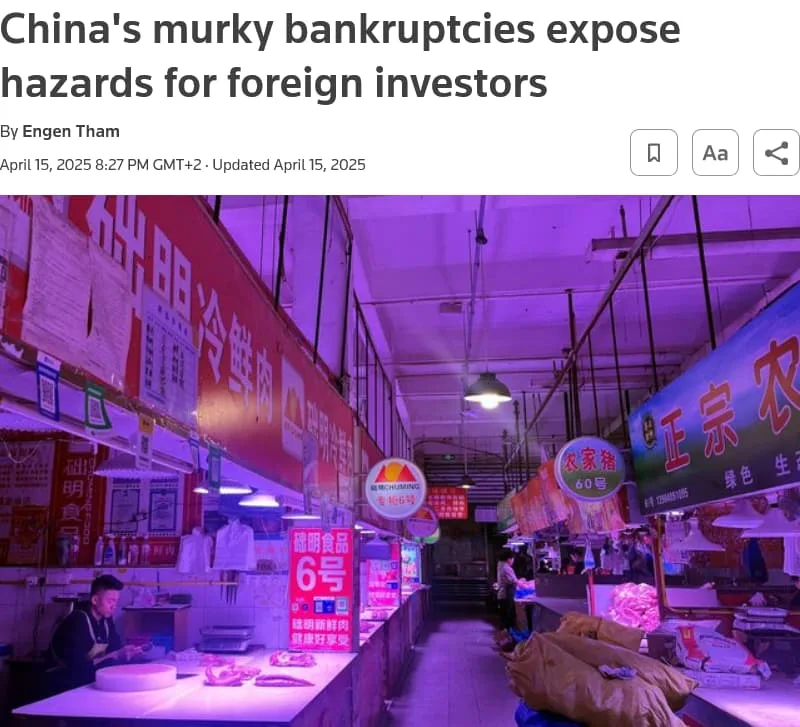
Source: Reuters
The case highlights an important point: a well-written contract can only protect your business if the legal system is able to enforce it.
That's why legal due diligence shouldn't stop with reviewing contracts.
Before entering a new market, it's worth understanding how commercial disputes are handled, how efficiently courts operate, and how consistently contracts are enforced.
Those answers can tell you just as much about your potential risk as the supplier you're evaluating.
Market Transparency and Data Quality Risk
Political, economic, regulatory, and legal risks all have one thing in common: you can only manage them if you know they're happening.
That's what makes poor market transparency and unreliable company data such a challenge when operating in emerging markets.
Even if you've carefully evaluated a supplier or investment opportunity, things can change quickly.
A company may change ownership, expand into a higher-risk jurisdiction, introduce products subject to export controls, or become exposed to sanctions.
If you're relying on outdated or incomplete information, you may not discover those changes until they're already affecting your business.
The challenge becomes even greater in fast-moving industries and emerging markets, where many companies are privately held, and public information is often limited.
According to the World Economic Forum's Global Risks Report 2025 cited above, misinformation and disinformation remain the world's top short-term global risk, making it increasingly difficult to separate reliable information from noise.
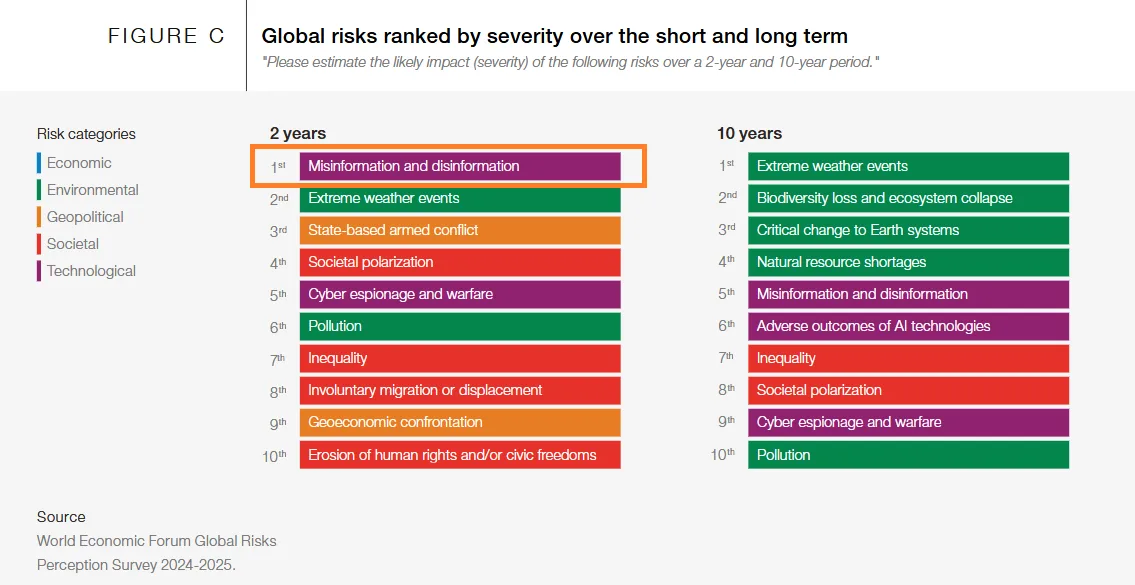
Source: WEF
At the same time, research from the Global Emerging Markets Risk Database (GEMs) shows that investors often overestimate emerging-market risks simply because they lack reliable company data and objective ways to assess potential partners.
In other words, the problem isn't always that information doesn't exist. It's that finding information that's accurate, current, and connected is much harder than it should be.
This is where Veridion’s continuously updated company intelligence can make a difference.
Rather than relying on static company records, Veridion continuously indexes companies worldwide and builds a live company knowledge graph that connects hundreds of business attributes into a more complete picture of each organization.
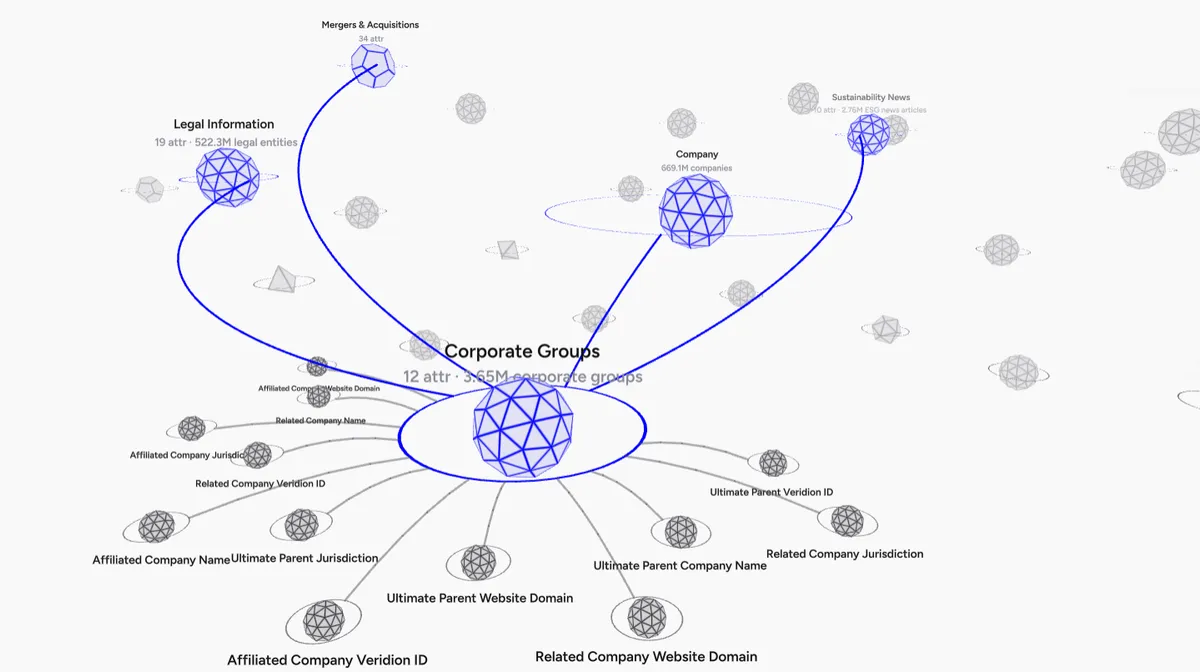
Source: Veridion
Instead of seeing only basic company information, you can understand a business's ownership structure, locations, products and services, operations, and other key attributes.
More importantly, you can detect changes that may signal increasing risk, such as expansion into higher-risk jurisdictions, the introduction of sensitive product lines, or shifts in corporate structure.
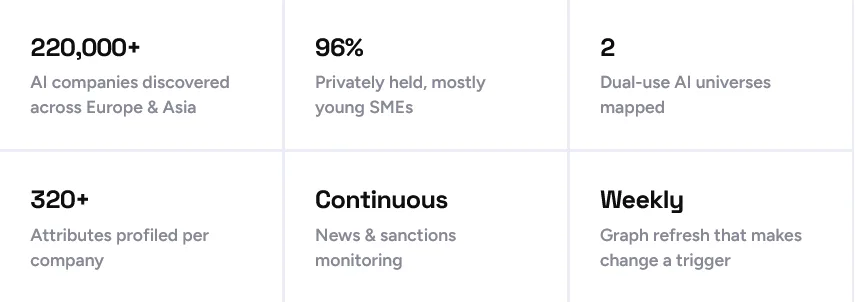
One sanctions intelligence provider, for example, used Veridion to identify and continuously monitor more than 220,000 AI companies across Europe and Asia, many of them privately held businesses operating in fast-moving, dual-use sectors.
Because Veridion continuously tracks company attributes, operational changes, location intelligence, and sanctions-related signals, the provider could identify potential exposure much earlier than would have been possible by relying solely on traditional commercial databases or official watchlists.
Since 96% of the companies identified were privately held, mostly young SMEs, the project also provided visibility into a segment where conventional company data is often limited and emerging risks are most difficult to detect.
Source: Veridion
No platform can eliminate the political, economic, regulatory, or legal risks of operating in emerging markets.
But with accurate, connected, and continuously updated company intelligence, you can identify potential risks earlier, better understand your exposure, and make more informed decisions before uncertainty turns into disruption.
Conclusion
Emerging markets create valuable opportunities, but they also require a different approach to risk.
Political instability, economic volatility, regulatory changes, legal challenges, and limited market transparency can all affect business decisions in unexpected ways.
Companies cannot eliminate these risks completely, but they can reduce surprises by improving visibility into the markets, suppliers, and partners they depend on.
After all, the better you understand what is changing around your business, the better prepared you are to act before risks become costly problems.
Articles
Discuss how these trends affect your organization.
Our analysts are available for a short call. Bring a specific question and we will ground it in the data.
Insights
Keep reading
More analysis, research, and outcomes grounded in live company intelligence.
Why Tier-2 and Tier-3 Suppliers Are Your Biggest Hidden Risk
Are your Tier-2 and Tier-3 suppliers a ticking time bomb? Learn how to identify emerging market risks before they cripple your business.
Using Location Intelligence to Spot Regional and Geopolitical Threats
Uncover hidden geopolitical threats and identify emerging market risks with cutting-edge location intelligence. Stay ahead of global instability.
The Anatomy of a Supply Chain Surprise: Lessons from Semiconductors, Suez, and the Next Shock
How can you identify emerging market risks before they disrupt your supply chain? Uncover critical lessons from semiconductors and Suez.