Insights / Articles
The Anatomy of a Supply Chain Surprise: Lessons from Semiconductors, Suez, and the Next Shock
How can you identify emerging market risks before they disrupt your supply chain? Uncover critical lessons from semiconductors and Suez.

- Over 80% of major European companies indirectly depend on Chinese rare earths.
- China controls over 90% of rare earth refining and 94% of magnet manufacturing.
- Hidden dependencies matter more than supplier counts when assessing concentration risk.
Most supply chain risks aren't as obvious as they seem.
You may have different suppliers, but they could still rely on the same manufacturer, shipping route, or raw material.
That means one disruption can affect thousands of businesses at the same time.
Recent world events have shown how quickly these hidden dependencies can delay production and disrupt industries around the world.
In this blog, we'll look at three real examples that show why understanding your supply chain beyond direct suppliers is more important than ever.
The Pattern Behind Every Supply Chain Surprise
Many supply chain disruptions look unrelated at first.
But if you look further upstream, you'll often find the same pattern.
Different businesses can end up depending on the same manufacturer, shipping route, or raw material without realizing it.
That's why one disruption can affect entire industries at the same time.
Below are some real-life examples that changed how businesses analyze their supply risks:
Semiconductors and Hidden Concentration
When the global semiconductor shortage hit in 2021, most headlines focused on one question:
Where did all the chips go?
A more important question emerged soon after.
Why did companies across completely different industries run into the same shortage at the same time?
Automakers couldn't build cars.
Consumer electronics companies delayed product launches.
Data center operators worried about securing processors for expanding cloud infrastructure.
All these businesses had different suppliers, customers, and products.
So what connected them?
Many companies believed they had diversified their supply chains because they bought chips from multiple suppliers or distributors.
But, in reality, many of those suppliers depended on the same manufacturing ecosystem.
That ecosystem was Taiwan.
Today, Taiwan produces more than 60% of the world's semiconductors and over 90% of the world's most advanced chips.
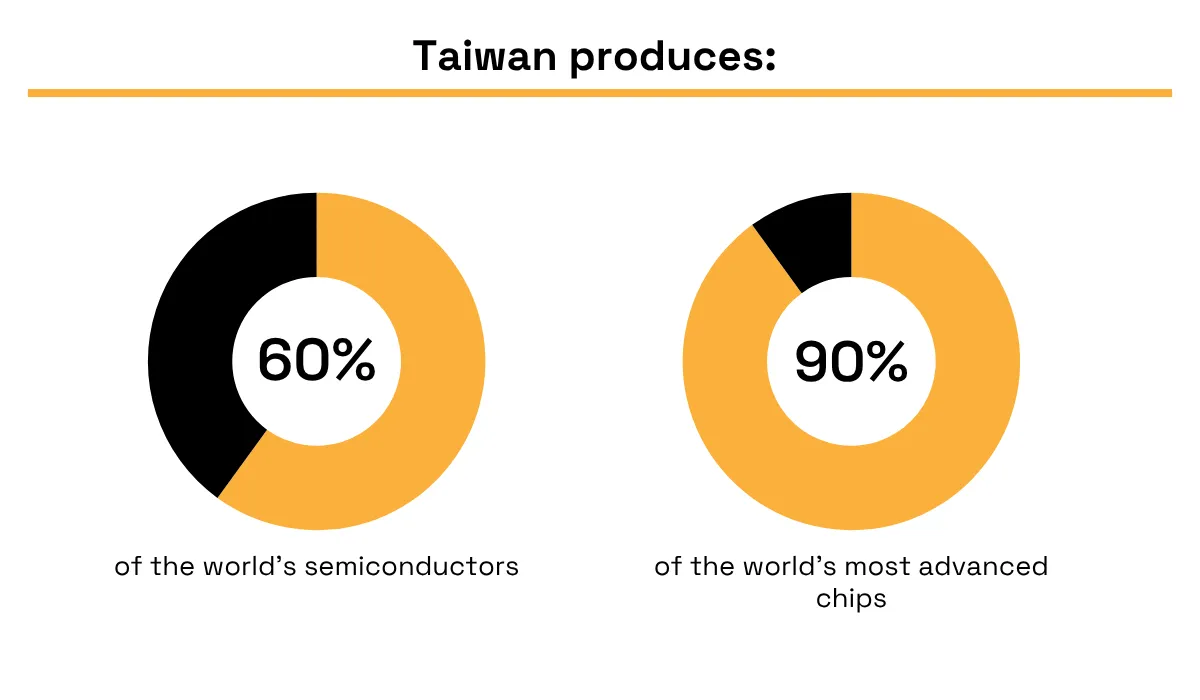
Illustration: Veridion / Quote: Asia Pacific
For leading-edge semiconductors and advanced chips, manufacturing is even more concentrated, with Taiwan Semiconductor Manufacturing Corporation (the world's largest contract chipmaker) standing as the only company capable of producing them at scale.
That naturally raises another question.
If one company dominates advanced chip manufacturing, why doesn't someone else simply build more factories?
It is because semiconductor manufacturing is extraordinarily difficult to replicate.
Building a leading-edge fabrication plant costs tens of billions of dollars, takes years to complete, and depends on decades of engineering expertise, supplier relationships, and specialized infrastructure.
As John Neuffer, CEO of the Semiconductor Industry Association, the primary trade association representing the U.S. semiconductor industry, observed:
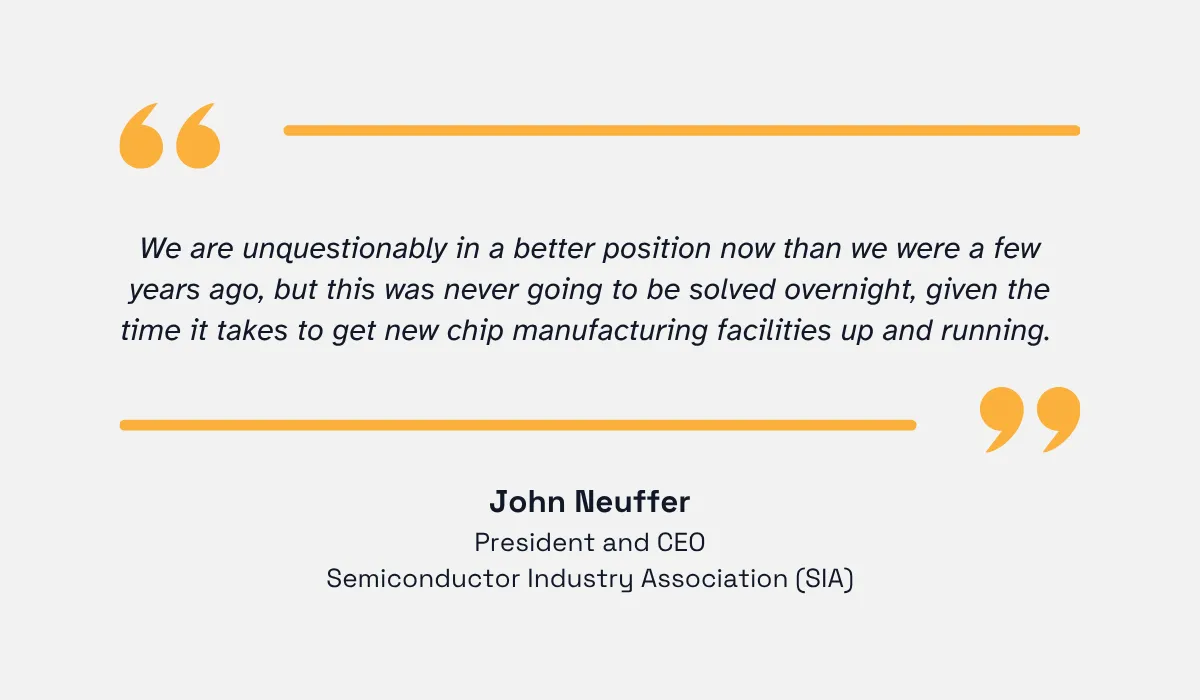
Illustration: Veridion / Quote: Japan Times
Even governments have found that reducing dependence on Taiwan is a long-term effort.
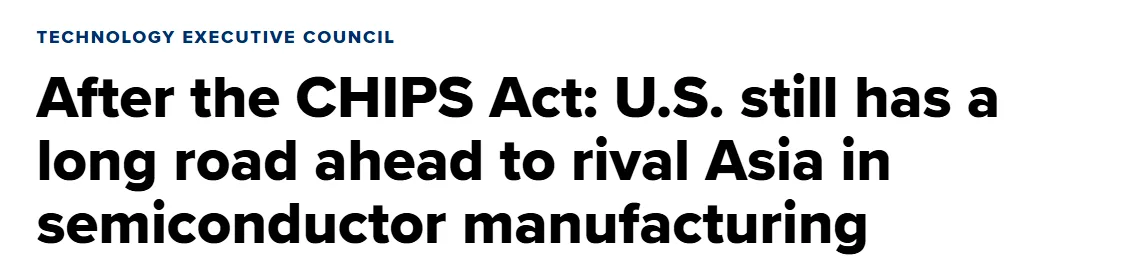
The U.S. CHIPS and Science Act was introduced to expand domestic semiconductor manufacturing, but matching Taiwan's scale, expertise, and ecosystem remains a long road ahead.
Source: CNBC
The dependency becomes even clearer when you look at the companies relying on TSMC.
Apple, Nvidia, AMD, Qualcomm, and Broadcom compete aggressively in the marketplace, but when it comes to manufacturing their most advanced processors, they all depend on the same foundry because there are few, if any, viable alternatives.
That's a textbook example of concentration risk.
Now consider Taiwan's geographic position.
The island sits at the center of geopolitical tensions with China while also facing earthquakes, typhoons, and periodic water shortages.
Any disruption, even a temporary one, has the potential to affect global chip availability.
The events of 2021 showed how quickly that risk can spread.
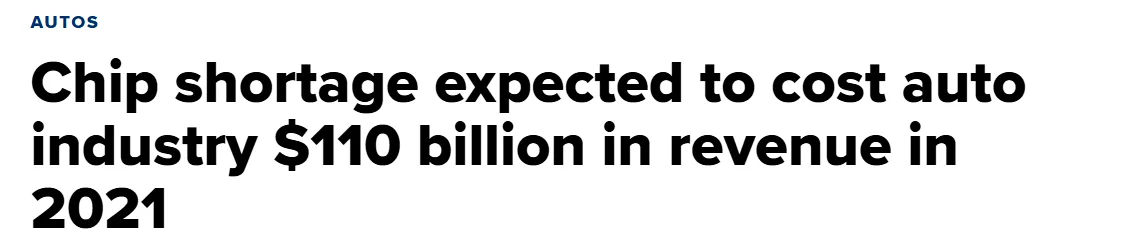
The semiconductor shortage cost the automotive industry an estimated $110 billion in revenue and reduced vehicle production by roughly 3.9 million units.
Source: CNBC
Ford alone expected a $2.5 billion earnings hit, forcing plant shutdowns, temporary layoffs, and production cuts because a single missing chip could halt an entire vehicle.
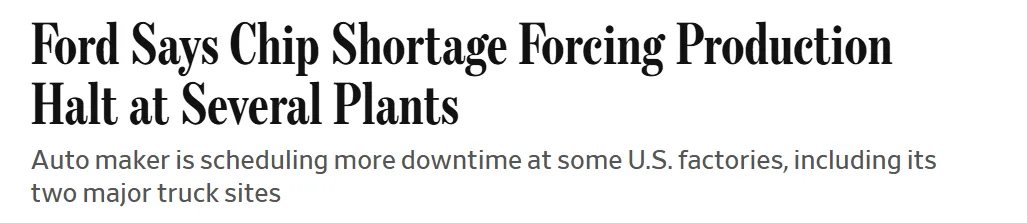
Source: The Wall Street Journal
The biggest lesson wasn't that the world ran out of semiconductors.
It was that many companies didn't realize how dependent they were on the same manufacturing base until production slowed.
On paper, their supplier lists appeared diversified.
In reality, many of those supply chains converged on the same foundries.
You can avoid making the same mistake.
Don't stop your supplier assessment at Tier 1 vendors.
Map where critical components are actually manufactured and identify where multiple suppliers converge on the same production facilities.
You can't reduce concentration risk if you don't know where it exists.
Suez Canal and the Single Chokepoint
On March 23, 2021, the container ship Ever Given ran aground in the Suez Canal after being caught in strong winds during a sandstorm.
At first, it looked like an isolated maritime accident.
Soon, it became one of the clearest demonstrations of how a single chokepoint can disrupt global supply chains.
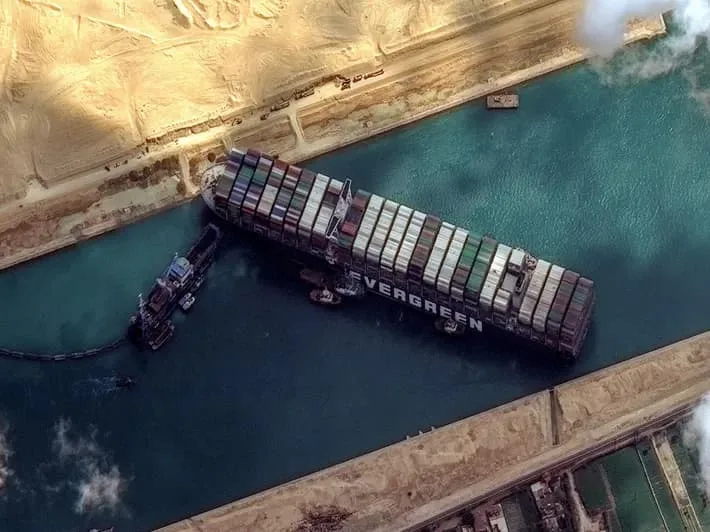
Source: Forbes
The Suez Canal stretches just 193 kilometers, yet it carries nearly 12% of global trade, around 30% of global container traffic, and close to $1 trillion worth of goods every year.
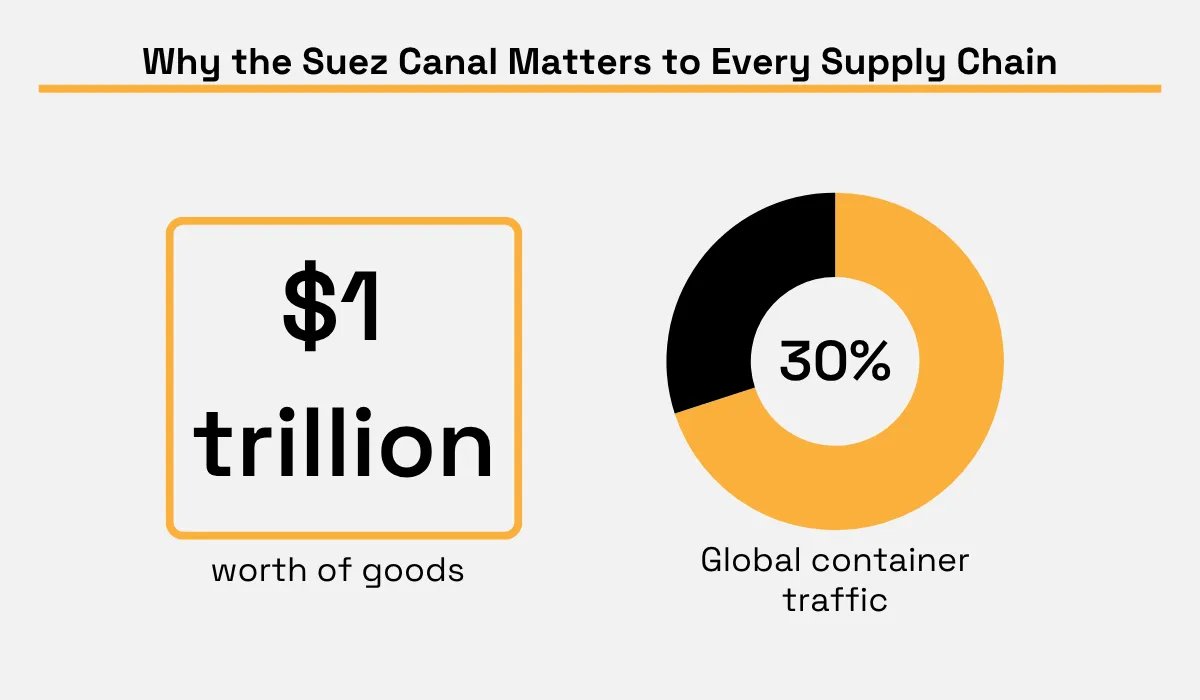
This represents an immense volume of economic activity funneled through a single narrow passage.
So, what happens when that passage suddenly becomes unavailable?
For six days, the Ever Given completely blocked the canal, leaving more than 400 ships stranded at either end.
Every hour the blockage continued, more vessels carrying oil, liquefied natural gas, consumer goods, raw materials, and manufacturing components joined the queue.
The blockage delayed an estimated $9.6 billion in goods each day, or roughly $400 million per hour.
According to Allianz, every additional week of disruption has the potential to shave 0.2 to 0.4 percentage points from annual global trade growth.
The real impact wasn't limited to the vessels waiting outside the canal.
It spread across supply chains that had no direct connection to the Ever Given itself.
Take the case of IKEA, a home furnishing retailer.
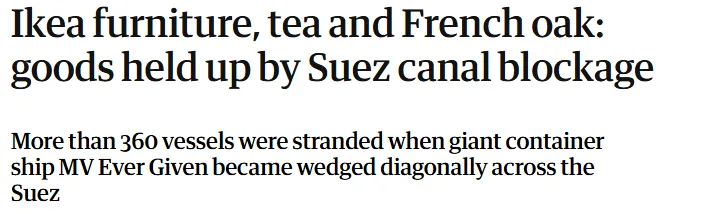
Source: The Guardian
The company depends on predictable shipping schedules to move products from manufacturing hubs in Asia to stores across Europe.
When vessels were delayed or rerouted around the Cape of Good Hope, transit times increased by as much as two weeks, freight costs rose, and inventory reached stores later than planned.
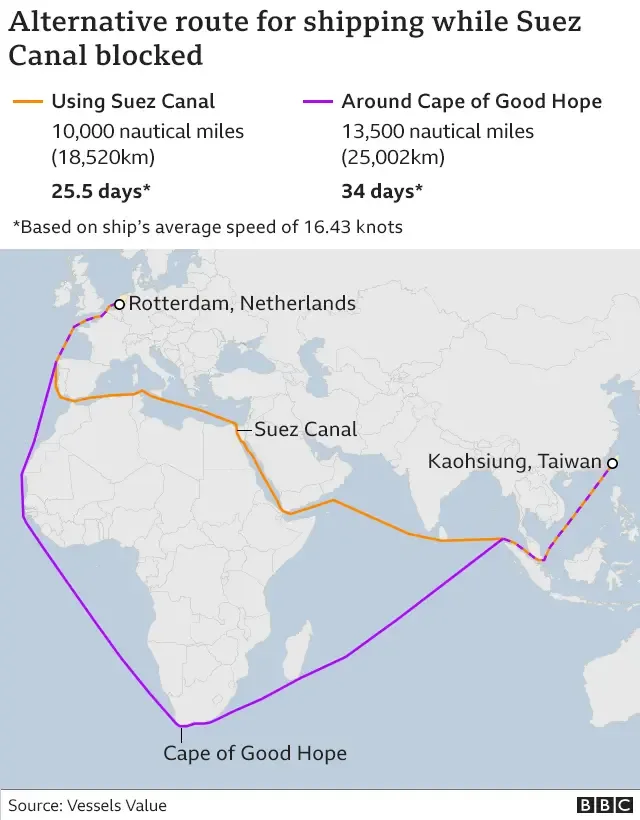
Source: BBC
The blockage became another source of pressure on a supply chain already struggling with pandemic-related disruptions and unusually high consumer demand.
Manufacturers waiting for production components, retailers expecting seasonal inventory, and energy companies transporting fuel all faced similar delays because they shared one dependency: the same shipping corridor.
That's what makes chokepoints different from supplier failures.
A supplier issue affects one part of your supply chain.
A chokepoint can disrupt thousands of businesses simultaneously, even if they source from different vendors, operate in different industries, and serve different customers.
The Suez Canal blockage also exposed the misconception that supplier diversification can eliminate logistics concentration.
Well, it can’t.
You might source products from three manufacturers in different countries.
But, if every shipment still passes through the same canal, your supply chain remains dependent on a single transportation route.
Chris Bhatt, Chief Commercial Officer at Aon, a leading global professional services and risk mitigation firm, aptly described the situation:
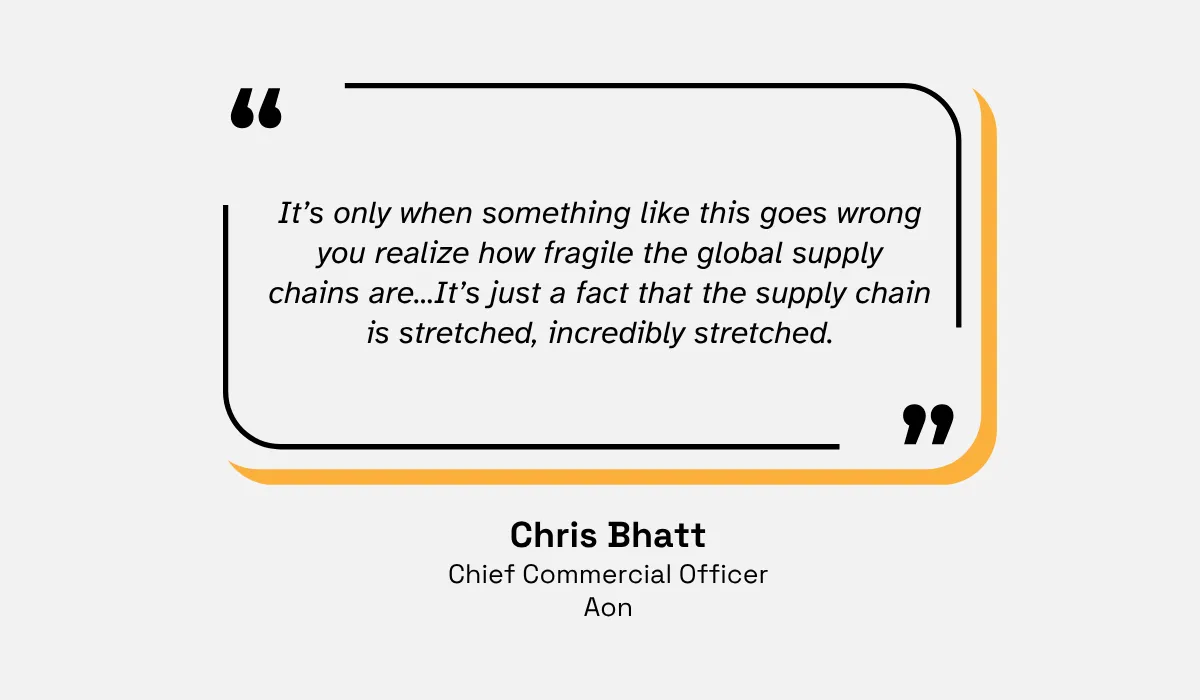
The Ever Given incident proved that resilience requires visibility beyond suppliers.
It also requires understanding the ports, shipping corridors, and logistics infrastructure your suppliers rely on.
Ideally, start by reviewing how your products move, not just where they come from.
Ask suppliers which ports, shipping routes, and freight partners they depend on, and identify practical alternatives before a disruption forces you to find them under pressure.
Rare Earths: The Next Shock Already Unfolding
Rare earth elements are essential to products we rely on every day, from electric vehicles, wind turbines, smartphones, AI data centers, and advanced semiconductor equipment to fighter jets, submarines, and missile guidance systems.
But a huge problem is unfolding around rare earth elements.
Around 60% of global rare earth production comes from China.
And not just that, it also controls around 90–91% of global rare earth refining and nearly 94% of permanent magnet manufacturing (where raw ore is converted into components manufacturers can actually use).
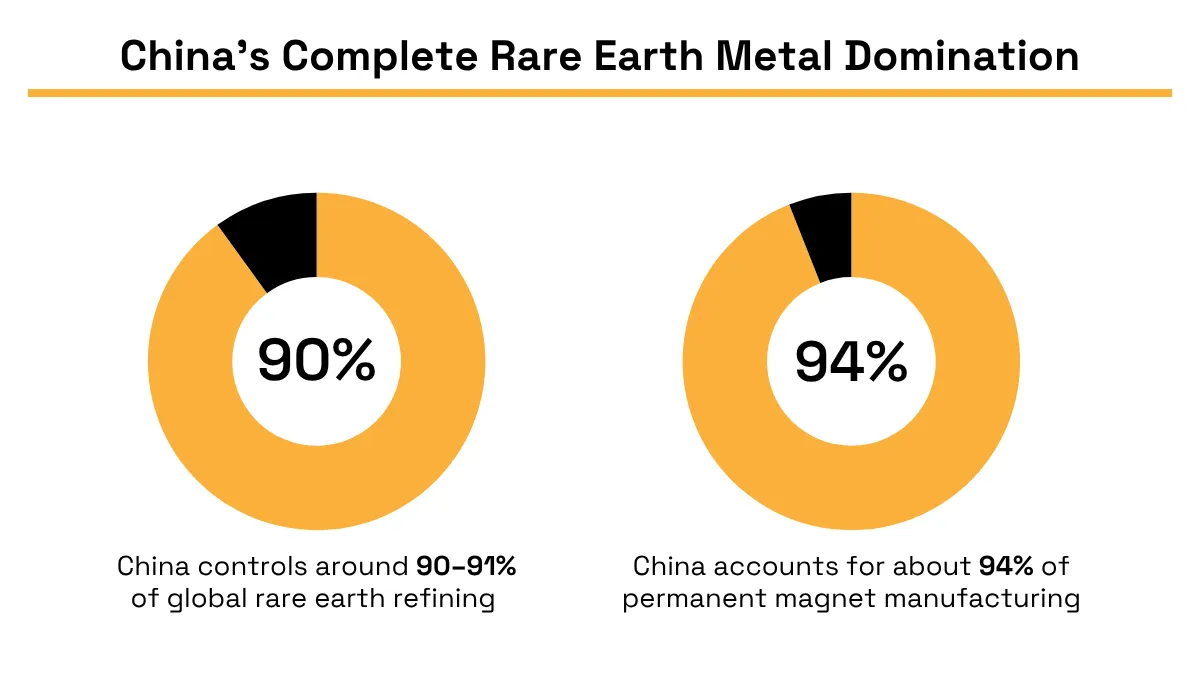
Even countries with their own rare earth reserves often send ore to China because few others have developed refining capacity at a commercial scale.
This dependency has become one of the world's biggest supply chain chokepoints.
Here’s a quick timeline on how China is slowly building a system that can impact major industries, all at once:
China banned exports of rare earth extraction and processing technologies. | |
|---|---|
Export licensing was introduced for seven heavy rare earth elements. | |
Licensing requirements expanded to foreign-made products containing as little as 0.1% Chinese-origin rare earth material or produced using Chinese rare earth technologies. | |
China's rare earth exports fell 6.4% year over year, showing these measures are influencing global trade. |
Due to China’s policy, automakers across Europe, India, and North America struggled to secure permanent magnets for electric motors.

Source: Reuters
Some manufacturers reduced production, while others temporarily suspended operations as shipments waited for export approvals.
Prices also diverged sharply, with European rare earth prices climbing to as much as six times those inside China.
And the exposure runs deeper than many organizations realize.
More than 80% of major European companies sit within three supply chain tiers of a Chinese rare earth source, even if they never purchase directly from China.
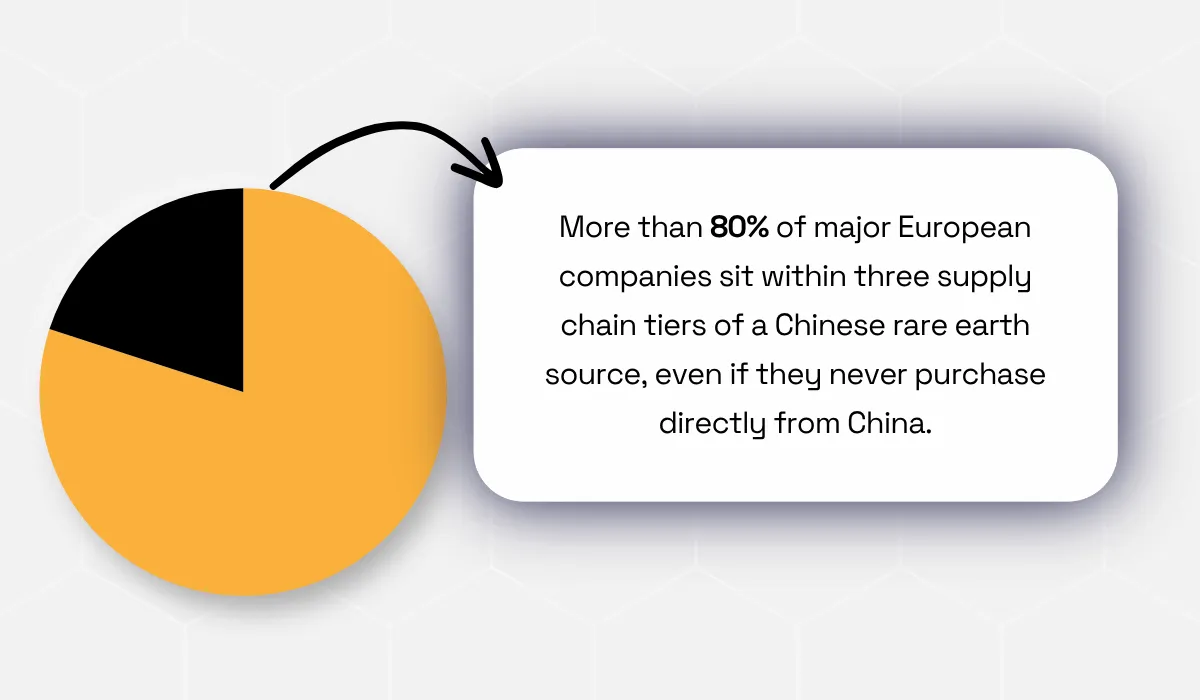
Governments taking stock of China’s power moves are now investing in new mines and refining capacity, but catching up won't happen quickly.
As Alicia García-Herrero, Chief Economist for Asia Pacific at Natixis, a French corporate and investment bank, put it:
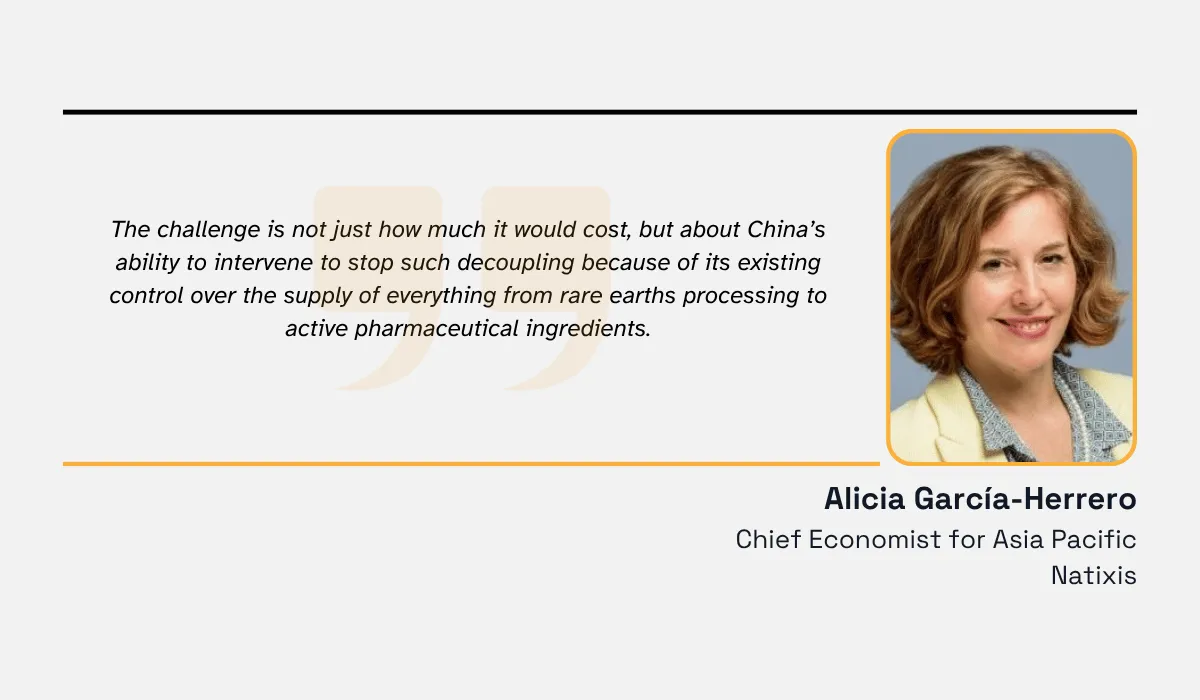
Illustration: Veridion / Quote: Financial Times
EY-Parthenon global supply chain study suggests the United States and Europe would need to invest $23.6 trillion over the next 25 years to end reliance on China’s ecosystem that they currently depend on!
You may wonder, as a supplier, what’s the best thing you could do right now?
Firstly, don't assume concentration risk ends with your direct suppliers.
Trace critical materials beyond Tier 1 and Tier 2 vendors to understand where key inputs are refined and processed.
The earlier you identify hidden dependencies, the more time you have to prepare for policy changes, export controls, or supply disruptions.
Supply Chain Risk Intelligence in Practice
Nobody predicted the semiconductor shortage before factories began slowing down.
Few expected a stranded ship in the Suez Canal to disrupt global trade for weeks.
Today, businesses are watching rare earth export controls unfold, but no one knows whether they will remain manageable or grow into a larger supply chain crisis.
That's the reality of supply chain risk.
By the time a disruption becomes obvious, the consequences have usually already started.
And today, amidst major geopolitical tensions, trade restrictions, and increasingly connected supply chains, it’s impossible to predict every disruption.
The best option is to stay prepared as conditions change.
And they will.
This is where Veridion can help.
Unlike static company databases that quickly become outdated, Veridion continuously refreshes company intelligence across 693M businesses in 250 countries.
It combines legal entities, operating locations, parent companies, and facilities into a connected company graph, helping organizations see how seemingly independent suppliers may cluster around the same regions, ownership structures, or operational hubs.
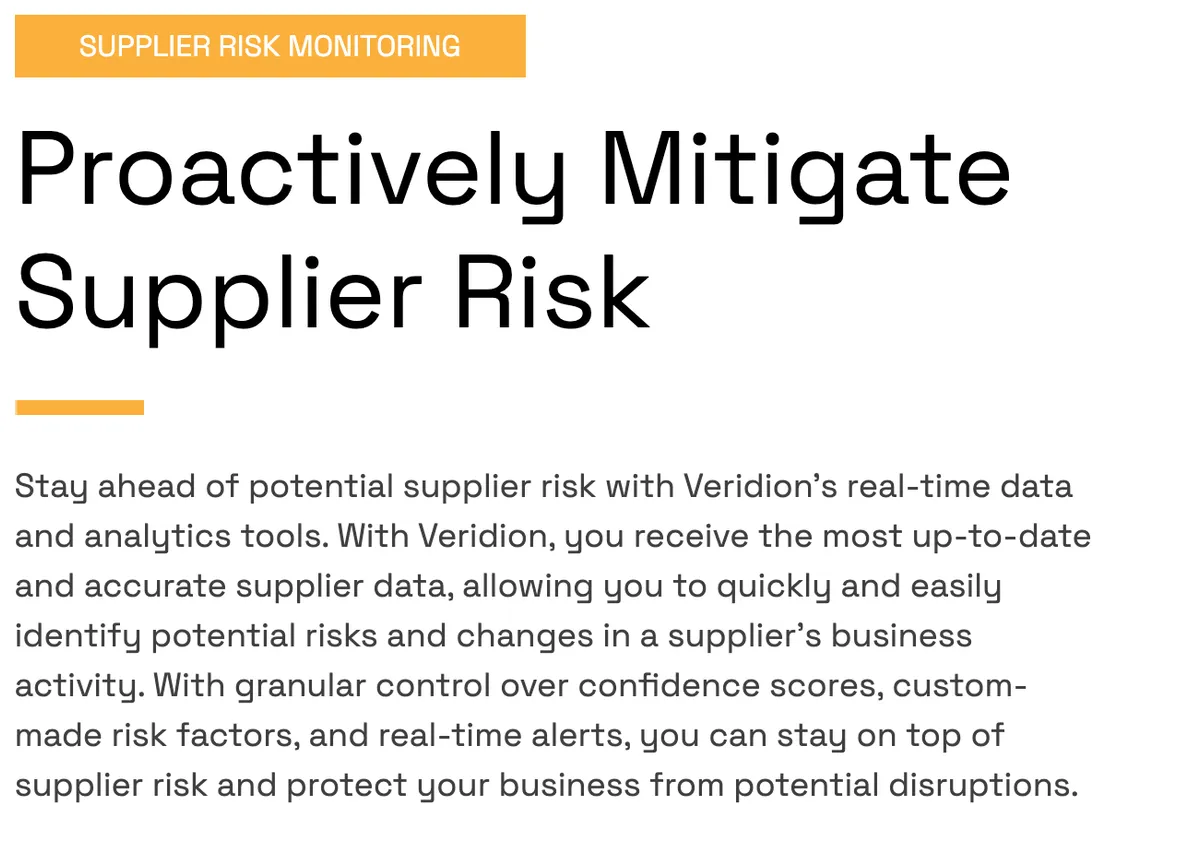
Source: Veridion
That visibility makes it easier to identify hidden concentration before it becomes a business problem.
Continuous change detection also helps organizations monitor evolving supplier networks instead of relying on annual reviews that can miss important developments.
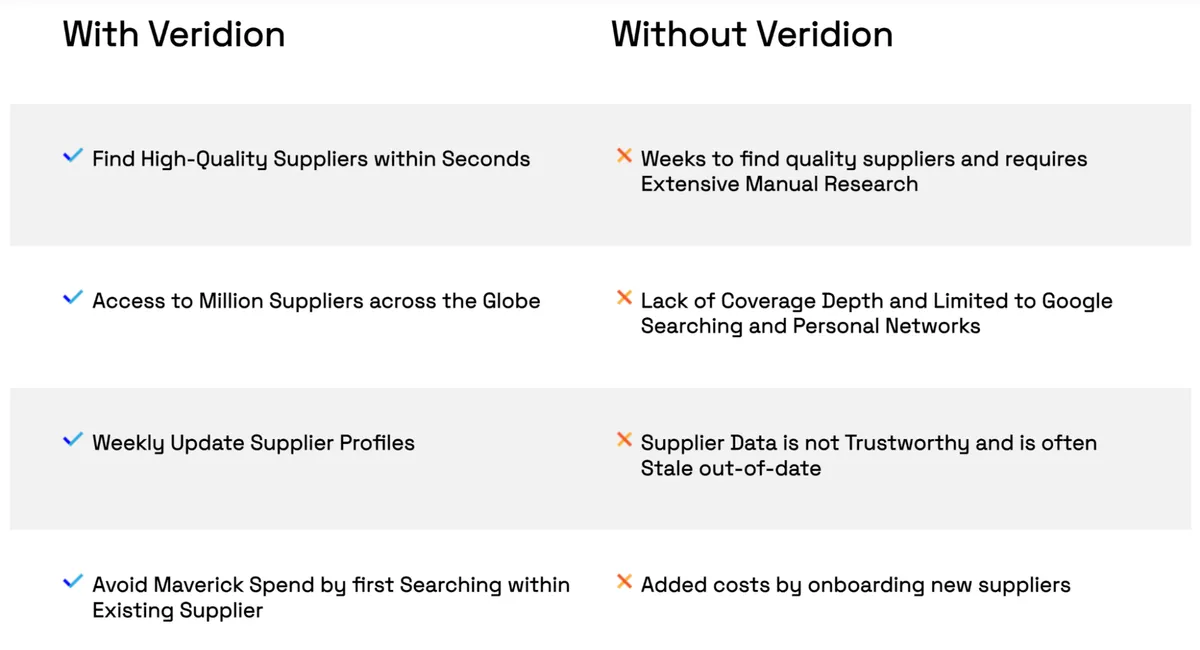
Source: Veridion
As supply chains become more interconnected, having an up-to-date view of the companies behind your suppliers can make the difference between reacting to disruption and preparing for it.
Conclusion
The biggest supply chain risks are often the ones you can't see.
Having multiple suppliers doesn't always mean you're protected if they share the same underlying dependencies.
Looking beyond your direct suppliers helps you spot these hidden risks before they become costly problems.
The better you understand what your products, materials, and shipments truly depend on, the better prepared you'll be when the next disruption happens.
Articles
Discuss how these trends affect your organization.
Our analysts are available for a short call. Bring a specific question and we will ground it in the data.
Insights
Keep reading
More analysis, research, and outcomes grounded in live company intelligence.
The Hidden Cost of Stale Supplier Intelligence
Are you missing crucial signals to identify emerging market risks? Stale supplier intelligence can cost you dearly. Uncover the hidden dangers.
How AI Powers Continuous Emerging-Risk Detection
Tired of being blindsided by market shifts? See how AI proactively helps you identify emerging market risks before they impact your business.
How Successful Companies Use Market Intelligence for Business Growth
Discover how successful companies use market intelligence to unlock new growth opportunities. Learn more in our latest guide.