Insights / Articles
The Hidden Cost of Stale Supplier Intelligence
Are you missing crucial signals to identify emerging market risks? Stale supplier intelligence can cost you dearly. Uncover the hidden dangers.

- Outdated supplier data can distort risk decisions long before anyone notices a problem.
- When teams stop trusting company data, workarounds become the new normal.
- Organizations spend roughly 15 hours resolving a data incident.
- Data freshness is a form of risk control.
Imagine approving a supplier after every system indicates that the company is financially stable, fully compliant, and low risk.
A few weeks later, you discover the business had already changed ownership, one of its certifications had expired, and its financial position had deteriorated before the decision was made.
The problem wasn’t that your team ignored the warning signs.
The problem was that your supplier intelligence never reflected them.
As businesses evolve, supplier intelligence begins to lose value the moment it stops reflecting current reality.
Every day between a meaningful business change and your next data refresh creates a gap between what your organization believes about a supplier and what's actually true.
This article explores the hidden costs of that gap and why treating data freshness as a strategic capability helps your firm make faster, more confident decisions.
The Real Cost of Stale Supplier Data
The cost of outdated company intelligence rarely shows up as a single, obvious failure.
Instead, it accumulates quietly across hundreds of procurement, compliance, and risk decisions that rely on outdated information.
By the time the consequences become visible, they've often already cost your company time, money, or trust.
Mispriced Risk, Missed Red Flags
If you’re evaluating a supplier’s ownership structure, financial stability, or operational status using information that’s months or years out of date, you’re not managing risk.
You're making decisions based on an outdated version of reality.
A supplier that appeared financially sound during onboarding may now be carrying serious red flags, such as:
- Change in ownership
- Pending litigation
- Credit downgrade
- Closure of a key manufacturing facility
If your supplier intelligence hasn't kept pace with those changes, you'll continue treating a now-risky supplier as a safe one.
The opposite can happen, too.
You might flag or deprioritize a supplier whose financial position, operational resilience, or compliance posture has improved, missing out on a reliable, cost-effective partner because your records were never updated.
Whether stale data causes you to underestimate or overestimate supplier risk, the outcome is that decisions become detached from current business reality.
As David Opolon, Principal at Boston Consulting Group, a global management consulting firm, warns.
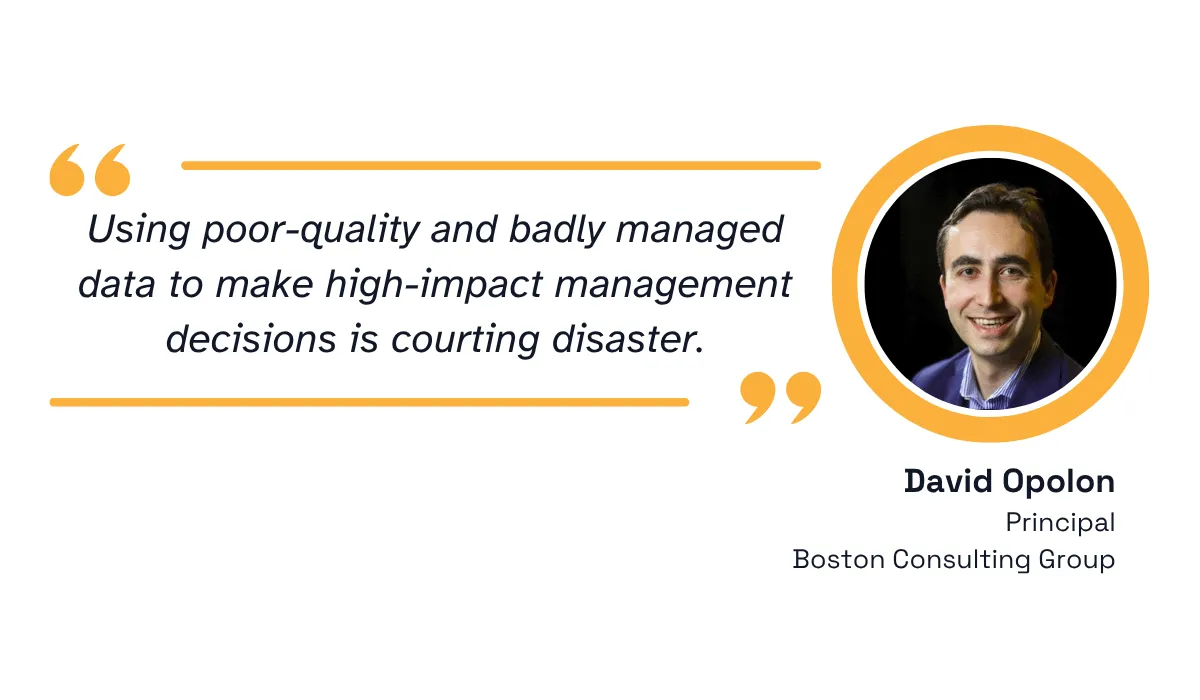
Illustration: Veridion / Quote: World Economic Forum
The challenge becomes even greater as supplier portfolios grow.
Most enterprise risk models combine dozens of signals, including financial stability, ownership information, geographic exposure, ESG performance, cybersecurity posture, operational history, and vendor concentration risk to generate risk scores.
Those signals often come from data enrichment pipelines that continuously append and update company attributes from multiple sources.
These models assume their inputs remain accurate over time.
As the inputs age, their predictive accuracy gradually erodes because they evaluate today’s suppliers using yesterday’s information.
Real-world examples show how difficult these issues can be to detect before they affect business outcomes.
In 2022, Equifax issued inaccurate credit scores to millions of customers after a legacy system generated incorrect data values.

Source: New York State Attorney General
In some cases, the errors were significant enough to influence lending decisions, exposing both consumers and financial institutions to financial risks they didn’t know they were carrying.
The problem wasn't a single erroneous score.
It was a data quality issue embedded within a legacy system that remained unnoticed until its downstream consequences became impossible to ignore.
Stale supplier intelligence behaves in much the same way.
Risk models rarely fail because of one incorrect data point.
Instead, they gradually become less reliable as outdated company records accumulate over time.
Those misjudgments often remain hidden during routine procurement activities and surface only after a supposedly low-risk supplier:
- Files for bankruptcy
- Fails a compliance audit
- Experiences a cyber incident
- Disrupts your supply chain
By then, the outdated company intelligence that contributed to the decision is often buried beneath procurement records, making the true source of the problem difficult to identify.
Instead of a single catastrophic data error, you experience a gradual accumulation of hidden risk that only becomes apparent after the damage has already been done.
Hours Lost to Manual Fixes
When supplier data becomes unreliable, the first casualty isn’t always a bad business decision but productivity.
It usually starts with something small.
A procurement analyst opens a supplier profile, notices the information looks outdated, and spends a few minutes checking the company's website, reviewing a recent filing, or emailing a supplier contact to confirm the details.
Individually, those extra checks seem harmless.
Collectively, they become a significant drain on productivity.
These workarounds may reduce the risk of making decisions based on stale information, but they come at a considerable operational cost.
Instead of focusing on strategic sourcing, supplier performance, or risk mitigation, highly skilled professionals spend valuable time correcting data quality issues that should have been addressed upstream.
These extra checks don't just consume a few minutes here and there.
Across an enterprise, they quickly add up to thousands of hours spent resolving data issues rather than acting on trusted information.
According to Monte Carlo’s 2023 State of Data Quality Survey, organizations experienced an average of 67 data incidents per month, with each incident taking roughly 15 hours to resolve, a 166% increase in resolution time from the previous year.
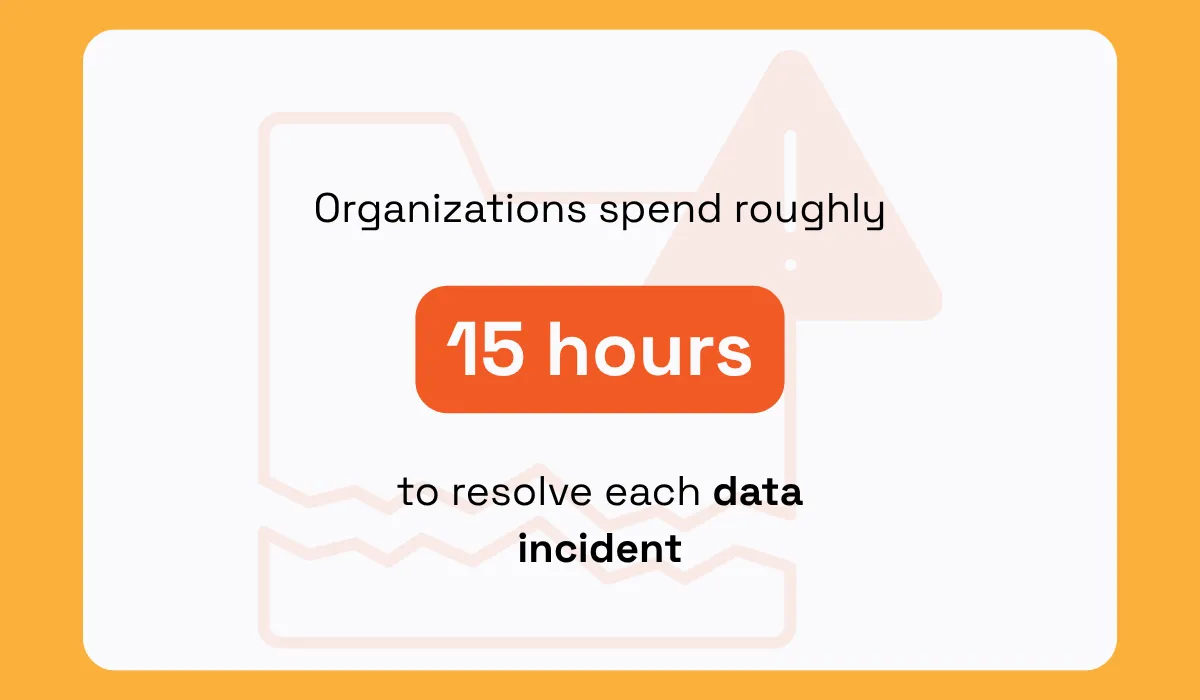
Illustration: Veridion / Data: Monte Carlo
While these incidents span many business functions, they illustrate how quickly data quality problems translate into thousands of hours spent investigating, validating, and correcting information instead of using it to make decisions.
Unlike one-off data errors, stale supplier records continually generate new work because businesses don't stop changing.
Every business change creates another discrepancy for someone to discover and resolve.
As supplier portfolios grow, these manual processes become increasingly difficult to sustain, slowing procurement cycles and driving up operational costs.
The greatest cost isn't simply the hours lost.
It's what those hours could have been spent doing instead: identifying new suppliers, negotiating better contracts, strengthening supplier relationships, mitigating emerging risks, or supporting higher-value strategic initiatives.
Over time, these workarounds stop feeling temporary.
Teams begin maintaining their own spreadsheets, creating independent validation checklists, and building parallel supplier databases because they're faster to trust than the official system.
Rather than improving efficiency, these disconnected workflows duplicate effort, create new inconsistencies, and make it even harder to establish a single source of truth across the organization.
Compliance Gaps You Can't See
If your supplier records no longer reflect reality, neither do your due diligence efforts.
Supplier compliance isn't static.
It's shaped by events that continue long after onboarding, many of which occur without directly notifying the organizations that rely on supplier data.
Sanctions lists change constantly, ownership structures shift through mergers and shell arrangements, and certifications quietly lapse without a single event announcing that your records are now out of date.
Without continuous monitoring, these changes can go unnoticed for months, leaving you exposed to compliance risks that aren’t visible in your systems.
This creates a false sense of security.
Compliance controls continue operating as designed, but they're evaluating suppliers against records that no longer reflect reality.
A supplier may appear compliant because its profile still shows valid certifications or an approved ownership structure, even though both have changed since the last review.
Likewise, a vendor that wasn’t subject to sanctions during onboarding may later appear on a watchlist or become linked to a sanctioned parent company, while your records continue to classify it as low risk.
By the time these discrepancies are discovered, often during an audit, regulatory review, or third-party incident, the compliance gap has already existed for weeks or months.
Recent enforcement actions show how costly these blind spots can become.
In 2019, the U.S. Office of Foreign Assets Control (OFAC) fined e.l.f. Cosmetics after the company imported false-eyelash kits containing materials sourced from North Korea via two Chinese suppliers.
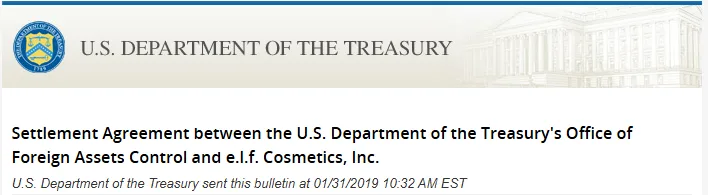
Source: U.S. Department of the Treasury
Although the company had supplier review processes in place, they focused primarily on product quality rather than sanctions compliance and failed to detect the prohibited sourcing.
As a result, the company unknowingly imported products that violated U.S. sanctions regulations despite having supplier oversight processes in place.
OFAC significantly reduced the penalty after e.l.f voluntarily self-disclosed the violations and implemented extensive remediation measures.
The financial consequences of compliance failures extend well beyond sanctions enforcement.
According to the GDPR Register, regulators have issued more than €4 billion in GDPR fines in 2021, reflecting a broader trend toward stricter expectations around data governance and organizational accountability.
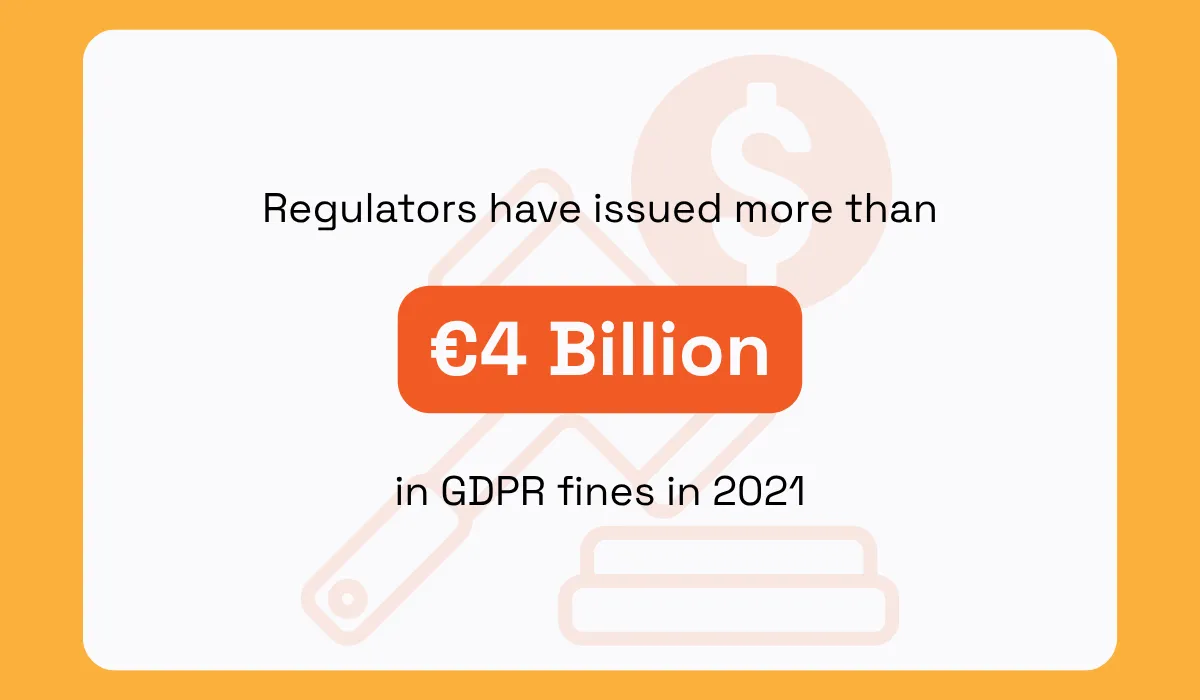
Illustration: Veridion / Data: GDPR Register
While many of those penalties relate to the handling of personal data rather than supplier records, they reinforce an important lesson: regulators increasingly expect organizations to maintain information that is accurate, well governed, and up to date.
Although the e.l.f. case wasn't caused solely by stale supplier records, it illustrates a broader principle: compliance programs are only as effective as the supplier intelligence they're built on.
If critical changes in ownership, sourcing, sanctions exposure, or supplier status aren't reflected in your data, even well-designed due diligence processes can produce outdated conclusions.
Teams Quietly Losing Trust
The hidden cost of stale supplier data isn’t limited to slower workflows or missed risks.
Over time, it also erodes confidence in the systems designed to support better decision-making.
Trust in enterprise data is difficult to build, but remarkably easy to lose.
The shift away from trusted systems rarely happens all at once.
Imagine a procurement manager preparing to approve a strategic supplier, only to discover that the platform still shows outdated ownership information or a certification that expired weeks ago.
After encountering inaccuracies like this a few times, they stop relying on the platform and instead verify supplier records through spreadsheets, emails, and external databases.
As Barr Moses, CEO and co-founder of Monte Carlo, a data and AI observability platform, notes:
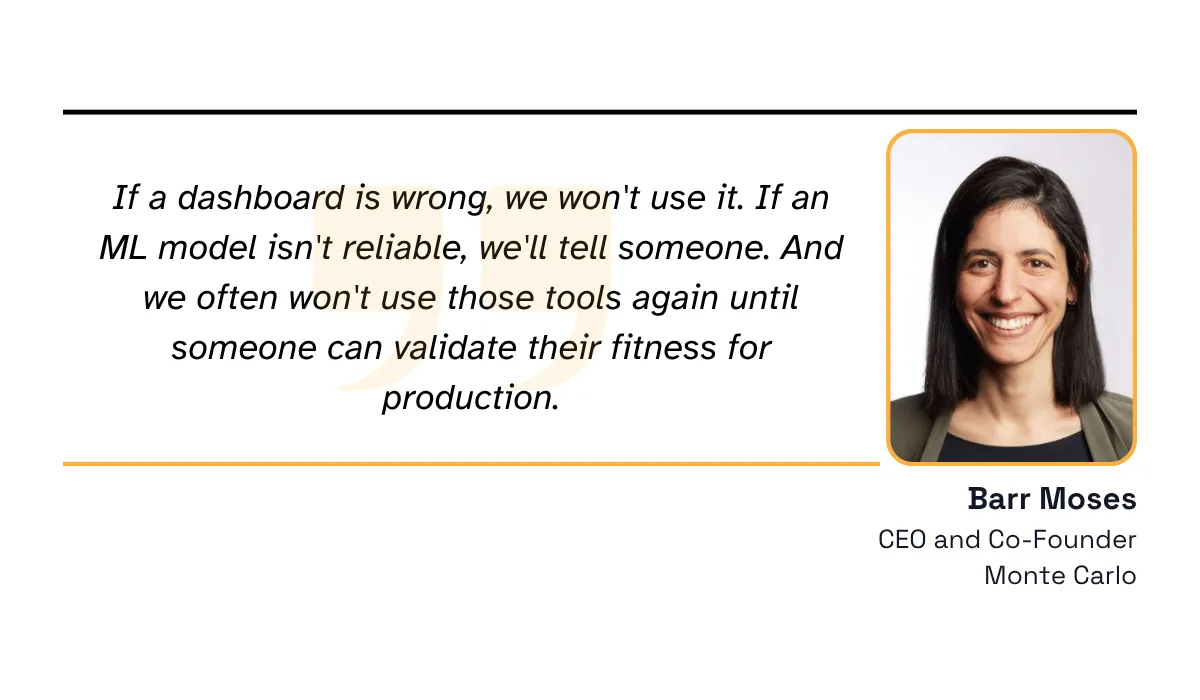
Illustration: Veridion / Quote: Barr Moses on LinkedIn
The same pattern plays out across procurement, compliance, and supplier risk management.
Once users lose confidence in the information they're given, verification becomes a routine part of every decision.
Quietly, they abandon automated workflows in favor of manual ones.
That loss of trust often gives rise to what many organizations call “shadow data.”
This comprises unofficial spreadsheets, personal databases, email trails, and department-specific records maintained outside approved enterprise systems.
For instance, procurement may begin tracking supplier certifications in a spreadsheet, compliance may maintain a separate sanctions watchlist, and finance may rely on ERP records instead of the supplier intelligence platform.
While these workarounds may help individuals complete their tasks, they also introduce new inconsistencies, fragment institutional knowledge, and make it even harder to establish a single source of truth.
Rather than improving visibility, stale company data fragments supplier intelligence across disconnected systems.
This makes it increasingly difficult for teams to agree on fundamental questions such as whether a supplier is approved or poses an elevated risk.
The technology isn’t what employees abandon.
They abandon information they no longer trust.
Once confidence in supplier intelligence is lost, even the most sophisticated procurement or risk management platform stops functioning as a system of record and becomes just another place to verify information before making a decision.
Real-Time Monitoring Closes the Gap
The hidden costs explored above all point to the same conclusion: data freshness is a must for adequate risk control.
Company intelligence needs to reflect what’s true today, not what was true when the supplier was onboarded or last reviewed.
The problem is that supplier records are often reviewed on schedules that make sense administratively, whether quarterly, semi-annually, or annually, but those schedules rarely keep pace with how quickly businesses evolve.
Research cited by the EDM Council estimates that master data changes by approximately 2% each month, compounding to nearly 27% annually.
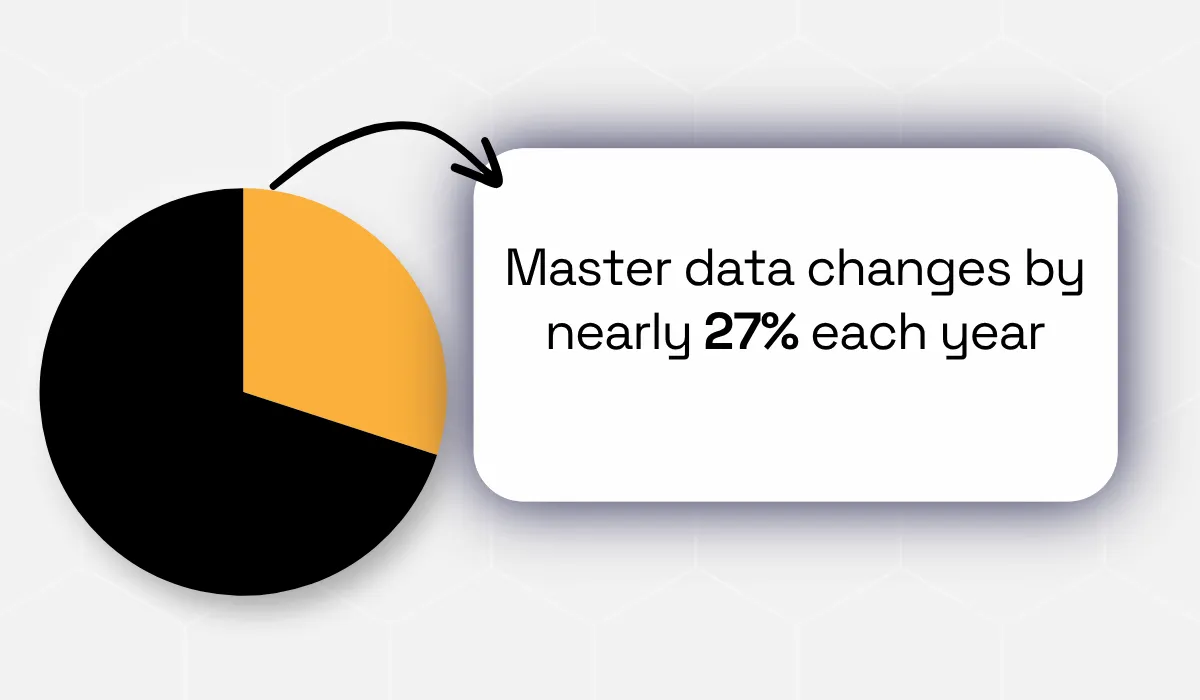
Illustration: Veridion / Data: EDM Council
For supplier records, those changes often include ownership changes, executive turnover, new locations, financial developments, certification updates, or other operational events.
If your supplier intelligence is refreshed only once a quarter or once a year, you're managing supplier risk with a built-in delay, and that delay is where every hidden cost we’ve looked at begins.
Continuous monitoring closes that visibility gap by combining frequent data enrichment with ongoing company monitoring, ensuring supplier intelligence evolves alongside the businesses it describes.
Instead of relying on periodic snapshots, you receive updated company information as meaningful changes occur, allowing your procurement, compliance, and risk teams to respond before those changes become costly problems.
Reducing that delay doesn't just improve data quality, but also:
- Reduces the likelihood of mispriced risk
- Eliminates unnecessary manual verification
- Narrows compliance blind spots
- Restores confidence in the systems your teams rely on every day.
This is the approach behind Veridion’s vendor management platform.
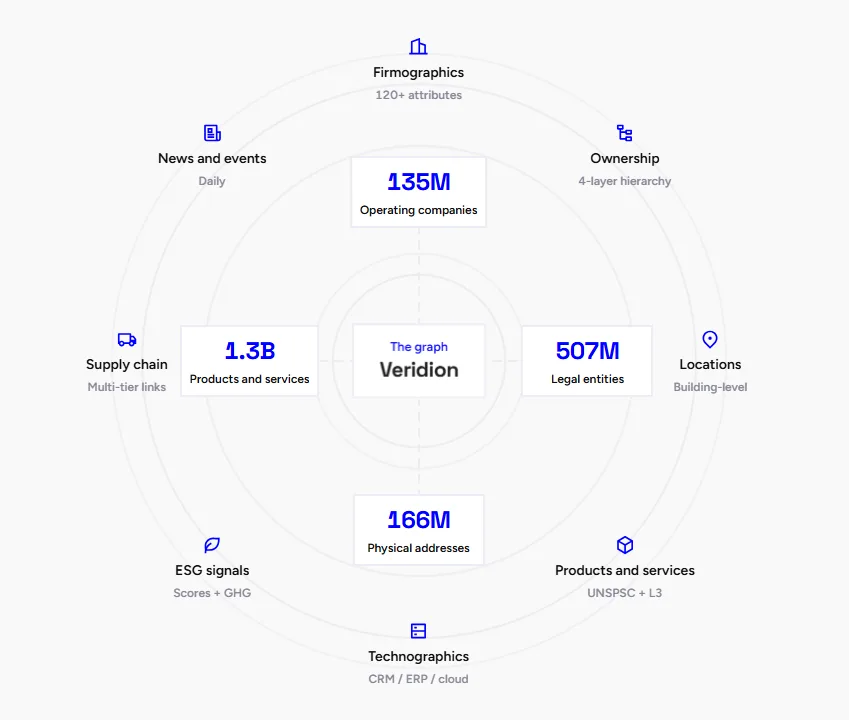
Veridion combines continuous company monitoring with automated data enrichment, refreshing more than 693M company profiles weekly as ownership, financial health, operational activity, locations, and hundreds of other business attributes change.
Source: Veridion
Rather than depending on annual vendor reviews or manually validating supplier records before every decision, your teams can work from company intelligence that continuously reflects current business conditions.
The practical impact of this approach is already evident.
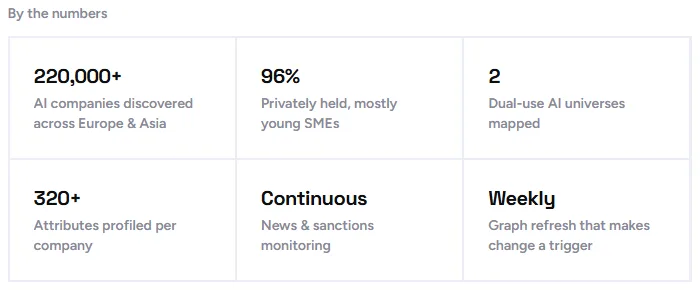
One sanctions-intelligence provider used Veridion's live company graph to identify more than 220,000 companies across Europe and Asia operating in dual-use, export-controls-sensitive sectors, where sanctions exposure can change rapidly.
Of those companies, 96% were privately held SMEs, a segment that traditional data providers often struggle to cover.
Source: Veridion
By combining continuously refreshed company intelligence with ongoing monitoring, the organization gained earlier visibility into emerging sanctions risks across a segment of the market that is typically difficult to track
This allowed analysts to investigate potential exposure before it became a larger compliance issue.
This is a practical example of how continuously refreshed company intelligence transforms data freshness from a maintenance task into an active risk control.
When supplier intelligence stays current, every downstream system becomes more reliable.
Risk models produce more accurate assessments because they're evaluating today's companies rather than yesterday's snapshots.
Compliance teams can identify ownership changes, sanctions exposure, or lapsed certifications sooner.
Procurement professionals spend less time verifying supplier records manually because they have greater confidence in the underlying data.
Conclusion
Stale data fails quietly, buried in supplier records that everyone assumes are still accurate.
By the time you notice, the damage has already been done.
The common thread across the costs we’ve looked at is the gap between how quickly businesses change and how slowly many organizations update the information they rely on to understand them.
Closing this gap requires a shift in mindset.
You don't have to accept quarterly blind spots, manual workarounds, or compliance exposure that only becomes visible after the fact.
With supplier intelligence that refreshes weekly rather than annually, you can identify emerging risks while there's still time to respond, not months later, when the only options left are damage control.
Businesses never stop changing, and your supplier intelligence shouldn't stop changing either.
The only real choice is whether you find out this week or find out the hard way months from now, when the cost has already landed.
Articles
Discuss how these trends affect your organization.
Our analysts are available for a short call. Bring a specific question and we will ground it in the data.
Insights
Keep reading
More analysis, research, and outcomes grounded in live company intelligence.
How AI Powers Continuous Emerging-Risk Detection
Tired of being blindsided by market shifts? See how AI proactively helps you identify emerging market risks before they impact your business.
Data Collection Methods for E-Commerce Market Intelligence
We will explore data collection methods for e-commerce market intelligence and show how they help businesses track trends and market changes.
Looking for a Global Data Collection Partner? These Companies are Worth Considering
Looking for a global data collection partner? This guide will introduce companies worth considering and explain what sets them apart.