Insights / Articles
Using Location Intelligence to Spot Regional and Geopolitical Threats
Uncover hidden geopolitical threats and identify emerging market risks with cutting-edge location intelligence. Stay ahead of global instability.

- Global supply chain disruptions cost businesses $184 billion annually.
- Country-level risk scores miss crucial info.
- Location intelligence turns a static snapshot into an accurate picture of exposure.
Your suppliers are mapped. Your risk reports are current. You’d think that’s enough security and built-in resistance. And then…
A disruption can arrive from somewhere your country-level risk score never flagged.
Country-level risk views provide a starting point, but render you vulnerable to blind spots. The problem is you usually find out much too late, only after supply chain continuity has already been hit.
Regional concentration, foreign ownership structures, fast-moving sanctions, sudden geopolitical shifts, and facility-level realities all fall through the gaps.
Granular location intelligence is what closes them. Here’s how to implement it.
Why Country-Level Risk Views Fall Short
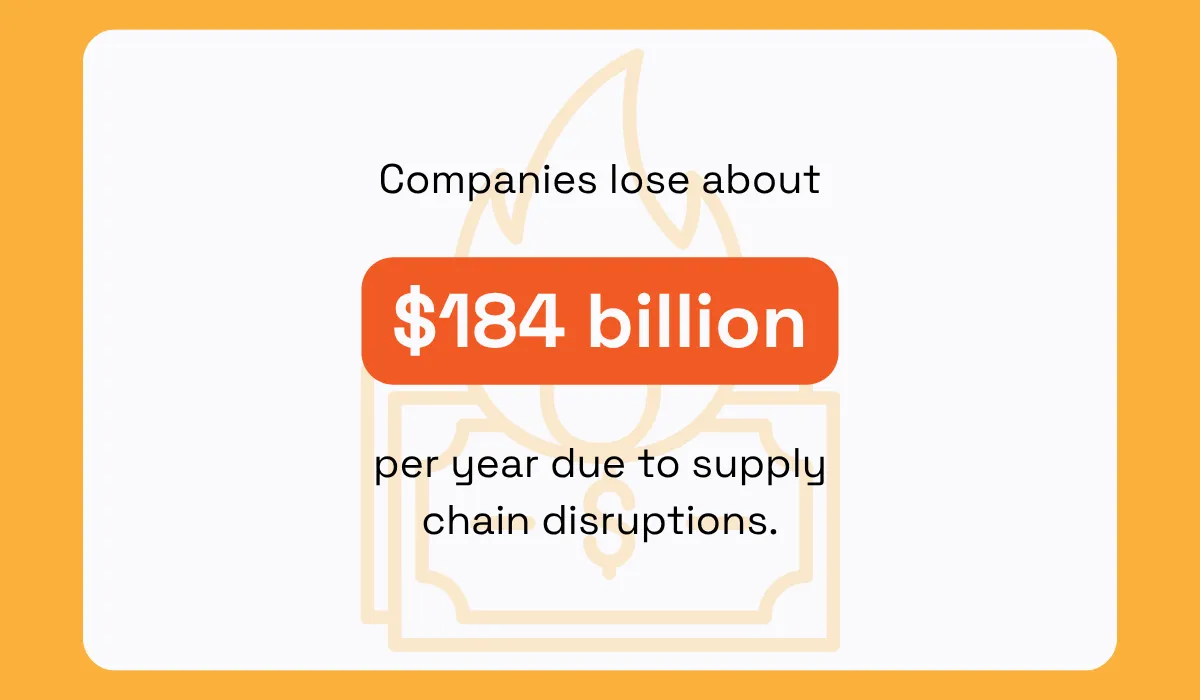
Global supply chain disruptions now cost businesses an estimated $184 billion annually.
That’s according to Marsh’s Sentrisk data from January 2026, which also names geopolitical volatility as the fastest-growing driver of said costs.
Yet the framework most organizations rely on to manage that exposure doesn’t quite hit the mark.
The standard toolkit, consisting of mainstays such as periodic supplier reviews, static country risk ratings from commercial providers, or entity-level vendor databases, has one central vulnerability that isn’t really discussed:
It’s all based on a point-in-time snapshot of a continuously moving target.
Other popular sources, like broader country risk reports from international organizations, offer genuine analytical depth.
These still run into a similar problem: they’re updated on fixed publication cycles, not on the messiness of geopolitical events.
As a result, you’re still beholden to unpredictability.
Really, if you think about it, it’s like forcing a square peg into a round hole.
A sanctions designation won’t wait for your Q4 review, and a regional disruption won’t neatly schedule itself around your annual audit so you can earn extra credit for a detailed report presented to C-level management.
Mirek Dušek, Managing Director at the World Economic Forum, highlighted this in 2025, claiming that the world grows ever more divided and that resilience is one of the solutions to rising instability.
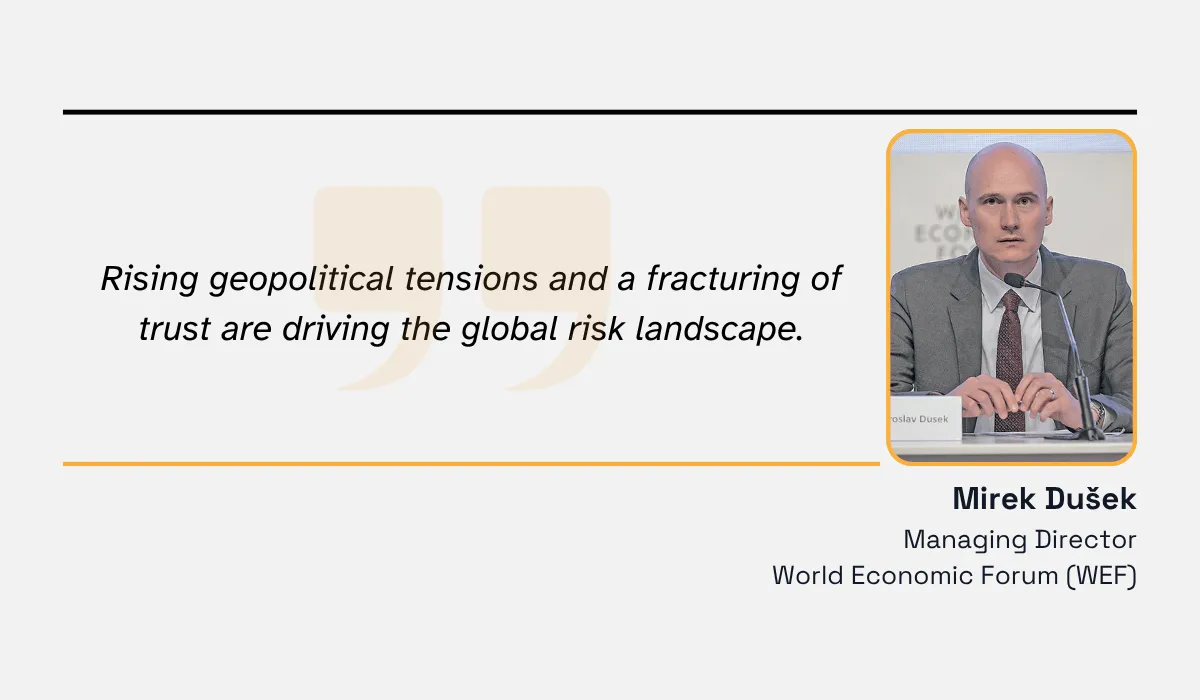
Illustration: Veridion / Quote: World Economic Forum
And still, while they have their drawbacks, country-level risk scores remain a fixture in supply chain organization. They’re intuitive, they’re comparable, and they’re easy to report upward.
But they’re not an ideal set-it-and-forget-it solution because they oversimplify.
A supplier in a “low-risk” country can still sit in a high-risk region.
A partner with a clean country profile can be controlled by an entity in a jurisdiction your procurement team would never have approved.
Sanctions can be imposed on a supplier you’ve worked with for years with mere days' warning.
And a single national risk rating tells you nothing about whether a factory, a warehouse, and a headquarters face the same threat environment – because they often don’t.
As you see, it’s clear that the gaps between the score and the reality on the ground are where exposure hides.
It’s critical to understand where these gaps arise and how best to close them to build the resilience Dušek mentions.
Source: Veridion
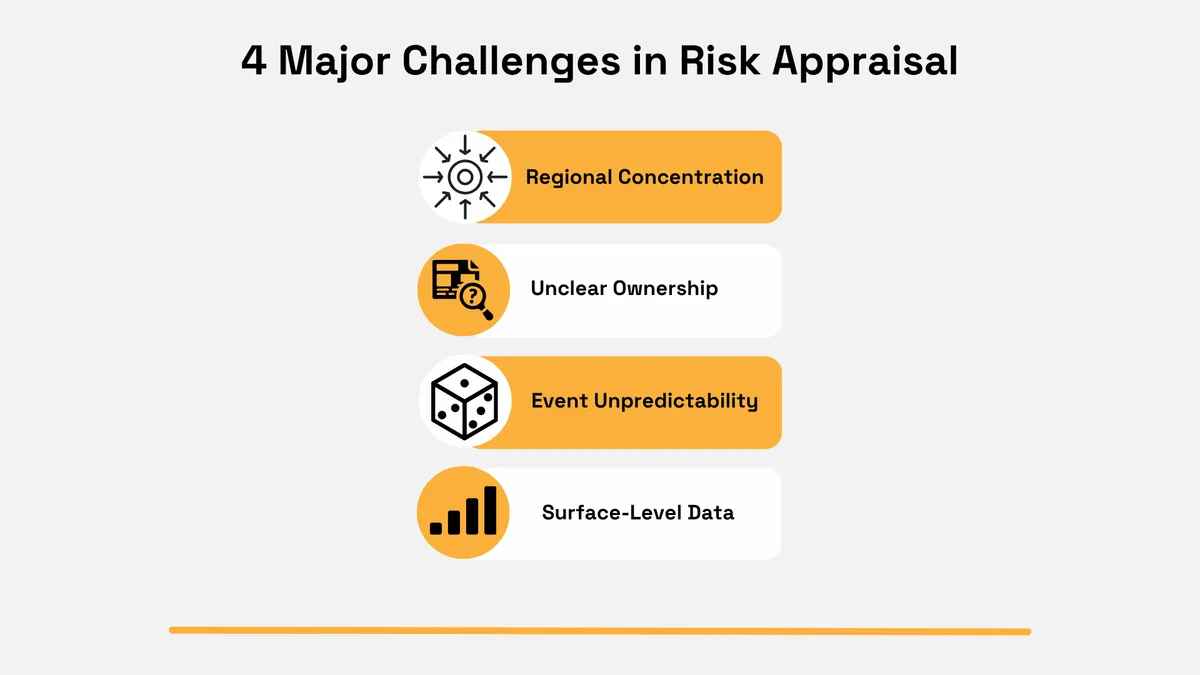
Each of the blind spots we’ve named is addressable, but you have to know how to probe your current risk appraisal methodology effectively.
Diversification Can Mask Regional Concentration
Spreading spend across multiple suppliers feels like a proper risk mitigation strategy. Often, it isn’t, and the reasons why hide in plain sight.
When those suppliers share a geography, such as an industrial corridor or port and its respective infrastructure, a single event can hit all of them simultaneously, regardless of how many distinct company names appear on your vendor list.
The 2021 flooding across Germany, Belgium, and the Netherlands demonstrated exactly this.
Companies with no shared corporate dependencies, operating in what looked on paper like a diversified supplier base, were all disrupted at once because their facilities sat in the same affected region.
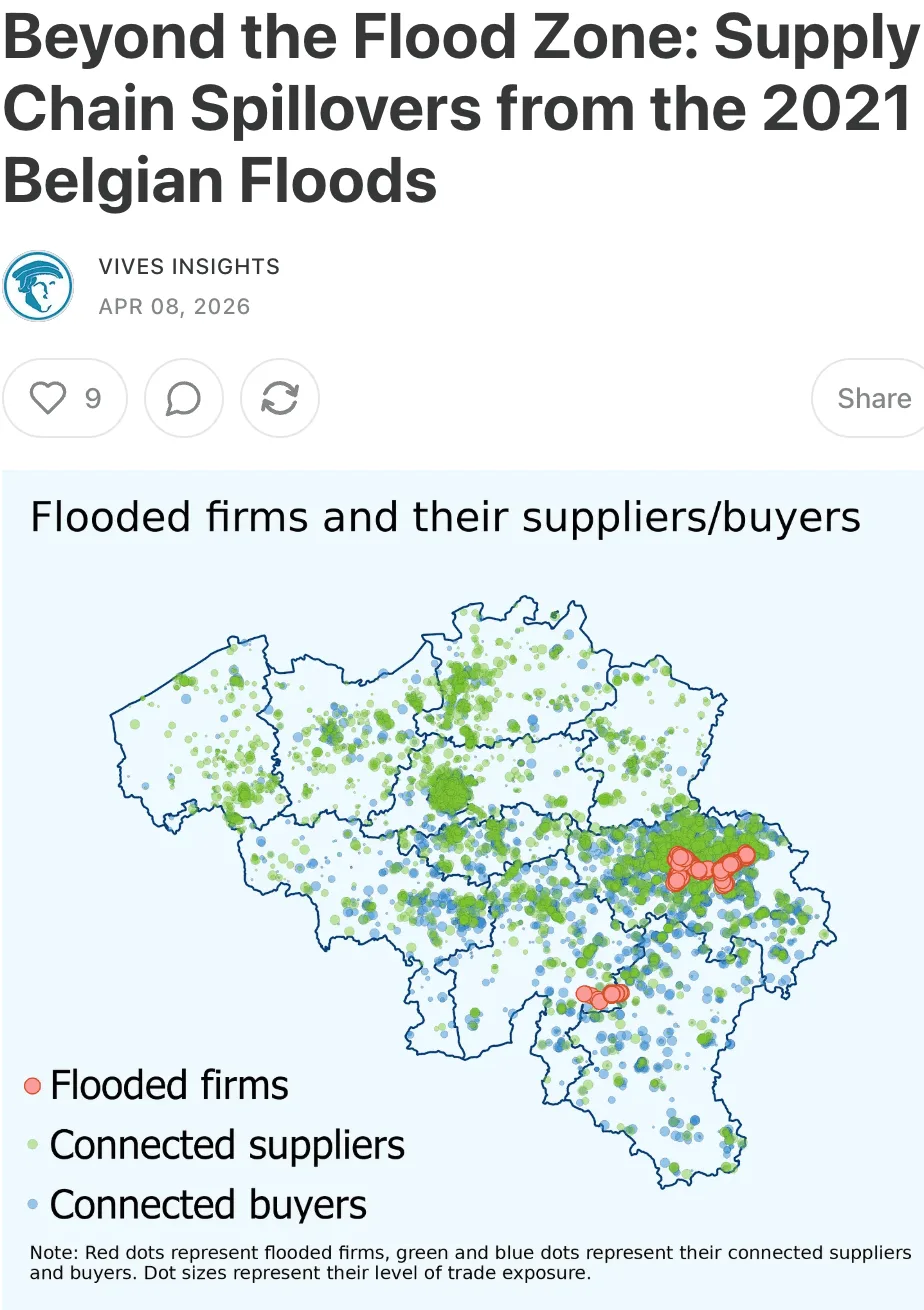
Source: VIVES Insights
The disruption didn’t follow the org chart. It followed the Rhine’s and the Meuse’s drainage basins.
Vendor concentration and clustering of this kind can form naturally and quietly over the years without arousing suspicion because of how logical and intuitive it all seems.
Suppliers concentrate their businesses around the same infrastructure because it’s efficient, so why shouldn’t you take advantage of that, too?
That efficiency turns to fragility the moment the shared infrastructure is threatened.
Geopolitical chokepoints amplify the problem further.
According to Project44, when Houthi attacks forced rerouting away from the Red Sea beginning in late 2023, container vessel traffic through the corridor dropped by up to 75%.
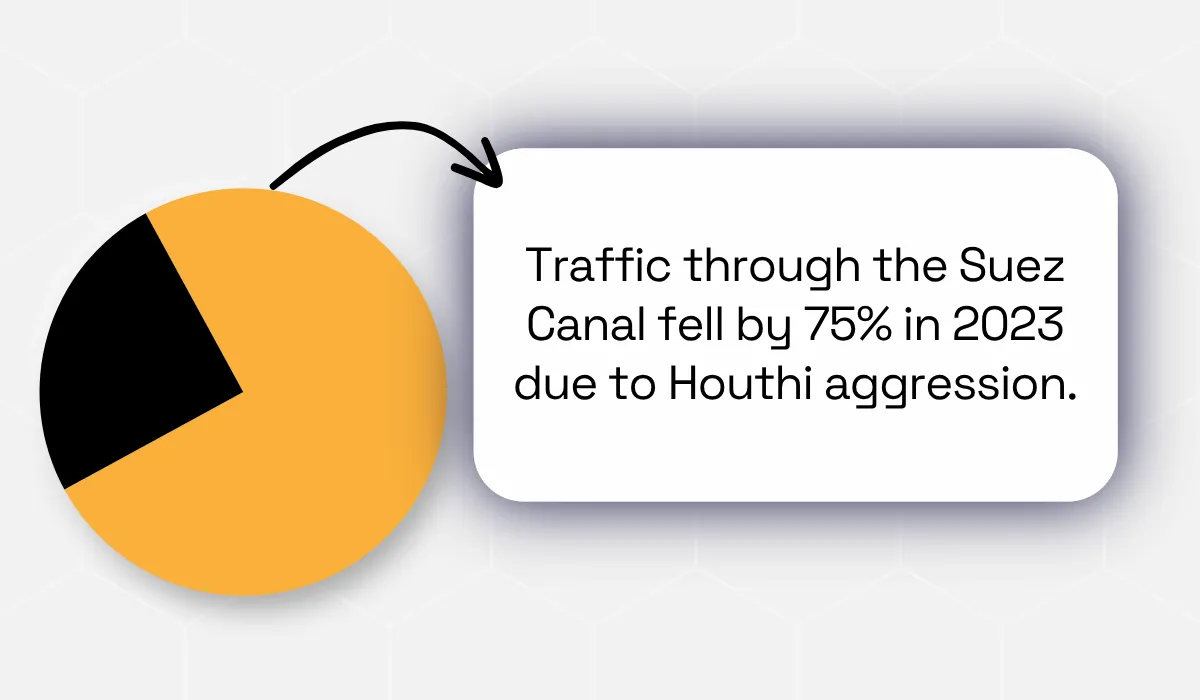
Suppliers dependent on geographical bottlenecks, regardless of their industry or country of origin, faced simultaneous disruptions, causing global reverberations.
A simplistic country-level view simply won’t surface this, nor will a supplier list that looks reasonably diversified only on paper.
What reveals it is mapping where suppliers actually operate, not just where they’re registered.
Foreign Ownership Adds a Hidden Layer
A supplier incorporated in a neutral jurisdiction can be owned, in whole or in part, by an entity in a higher-risk country.
If complex ownership structures slip through the cracks, you inadvertently expose yourself to a risk that no country-level score can ever capture.
That’s because the score reflects the supplier’s registered location, not the beneficial ownership chain sitting behind it.
This matters for several reasons. Here’s a brief idea of what ownership affects:
Data access
A parent company registered in a jurisdiction subject to data localization laws might impact visibility into sensitive procurement information
Continuity
Geopolitical rows between your country and the other party’s jurisdiction create pressure on the relationship
Contractual stability
In the event of geopolitical deterioration, agreements governed by or subject to the laws of the parent’s jurisdiction may become significantly harder to enforce
Reputational exposure
Sanctions, human rights investigations, or regulatory actions directed at a parent entity can attach to its subsidiaries in the eyes of regulators, the press, and customers
Compliance exposure
When ownership ties a supplier to a jurisdiction under geopolitical scrutiny, your organization can find itself in violation of trade law through relationships that never appeared on any restricted list
The UFLPA (Uyghur Forced Labor Prevention Act) is a case in point.
In the years following its 2022 passage, the Act resulted in the sanctioning of 144 Chinese entities and the detention of 12,500 shipments at U.S. ports.
Many of these sanctions involved companies that appeared several tiers removed from any direct China connection.
That violation wasn’t visible in any supplier’s country profile. To uncover it, you had to dig deeper into the ownership chain.
The concept already exists in one sector: defense procurement.
There, foreign ownership, control, or influence (FOCI) triggers mandatory disclosure and review, but outside regulated industries, it rarely receives the same scrutiny.
Take Nexperia as another example. They are a Dutch chipmaker that manufactures electronic components present in almost every automotive system.
When the Dutch government moved to seize control of the company in September 2025 over national security concerns, China retaliated by banning exports of Nexperia’s finished products from its Chinese manufacturing unit.
The cascade was immediate.
Bosch furloughed over 3,000 workers across plants in Germany and Portugal. Honda forecast a reduction of 110,000 vehicles and costs of approximately $969 million in its H1 2025 financial results. Nissan, BMW, Volkswagen, and Mercedes all warned of further disruptions.
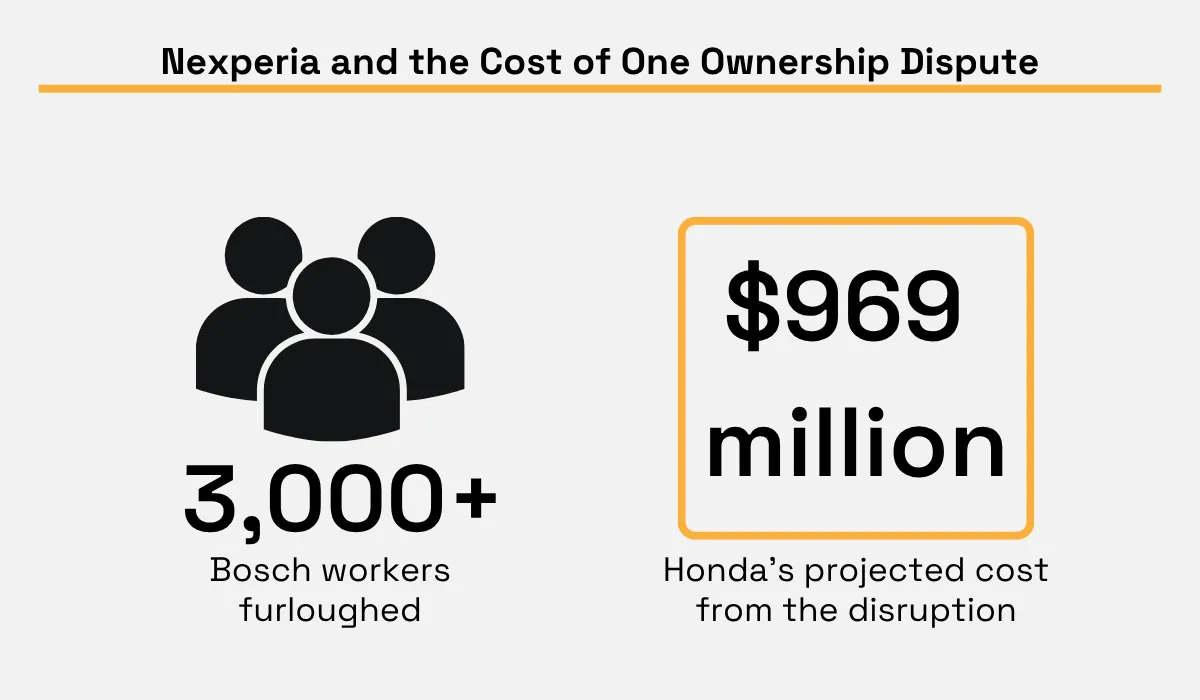
Illustration: Veridion / Sources: Reuters and Honda 2025 Investor Call
What started as a corporate governance dispute in the Netherlands became a production crisis across three continents.
Not because any of those manufacturers had a direct relationship with the jurisdictional risk, but because none of them had mapped the ownership structure sitting above their chip supplier.
Sanctions and Export Controls Move Faster Than Reviews
Sanctions lists and export control regimes are living instruments of foreign policy. They move on political timelines, not procurement calendars.
Without dedicated infrastructure, tracking the full scope of change becomes genuinely difficult.
2024 was a record year.
The Biden administration added 3,135 individuals and entities to OFAC’s SDN List (a 25% increase over 2023) alongside 520 additions to the BIS Entity List, according to the Center for a New American Security’s annual Sanctions by the Numbers review.
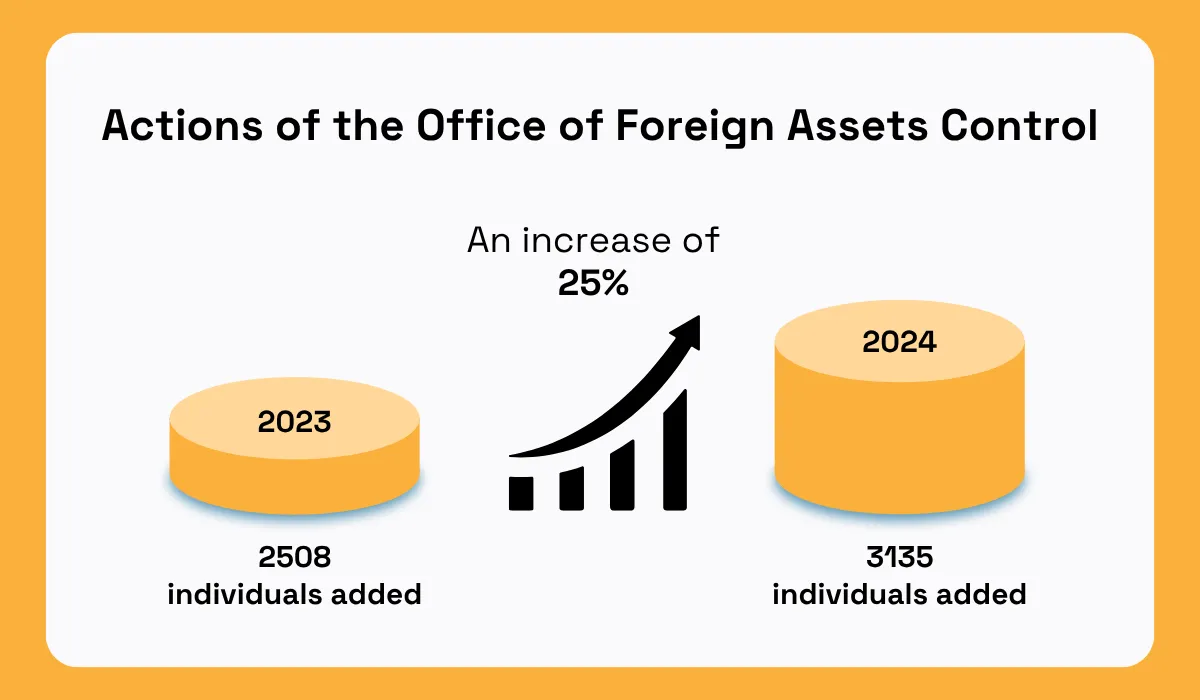
Illustration: Veridion / Data: CNAS “Sanctions by the Numbers” report
When China announced new export controls on critical minerals in April 2025, Ford confirmed it shut down production lines within weeks due to component shortages.
A policy decision in Beijing translated into halted manufacturing in Michigan faster than any scheduled supplier review could have caught it.
The gap between when a designation lands and when it registers in a procurement team’s awareness is where exposure lives.
Annual or quarterly review cycles were designed for a risk environment that produced changes on a different timescale.
Constructing an architecture that reflects the actual rate of change requires a foundation of continuous monitoring of live events. Nothing less will cut it.
Generic Country Scores Miss Facility-Level Reality
A country risk score is an average. By nature, sometimes it will over- or undershoot reality.
Within a single country, the risk environment can vary enormously by region, by city, and by specific site:
- A supplier’s registered headquarters may sit in a stable urban center
- Its primary manufacturing facility may sit in a region with active labor unrest
- Its warehouse may be located in a flood plain
- Its port of export may run through a chokepoint subject to geopolitical pressure
None of that appears in a national risk score. The score reflects the country. The exposure reflects the site.
This gap is particularly consequential in large, geographically diverse countries where regional dynamics diverge significantly from national averages.
A country-level rating for China, India, or the United States encompasses an enormous range of actual conditions at the facility level.
Treating the national score as a proxy for site-level risk means accepting a systematic blind spot at the most operationally relevant level of analysis.
According to a 2025 McKinsey Supply Chain Risk Pulse Survey, only 42% of organizations have risk visibility into tier-two suppliers or beyond.
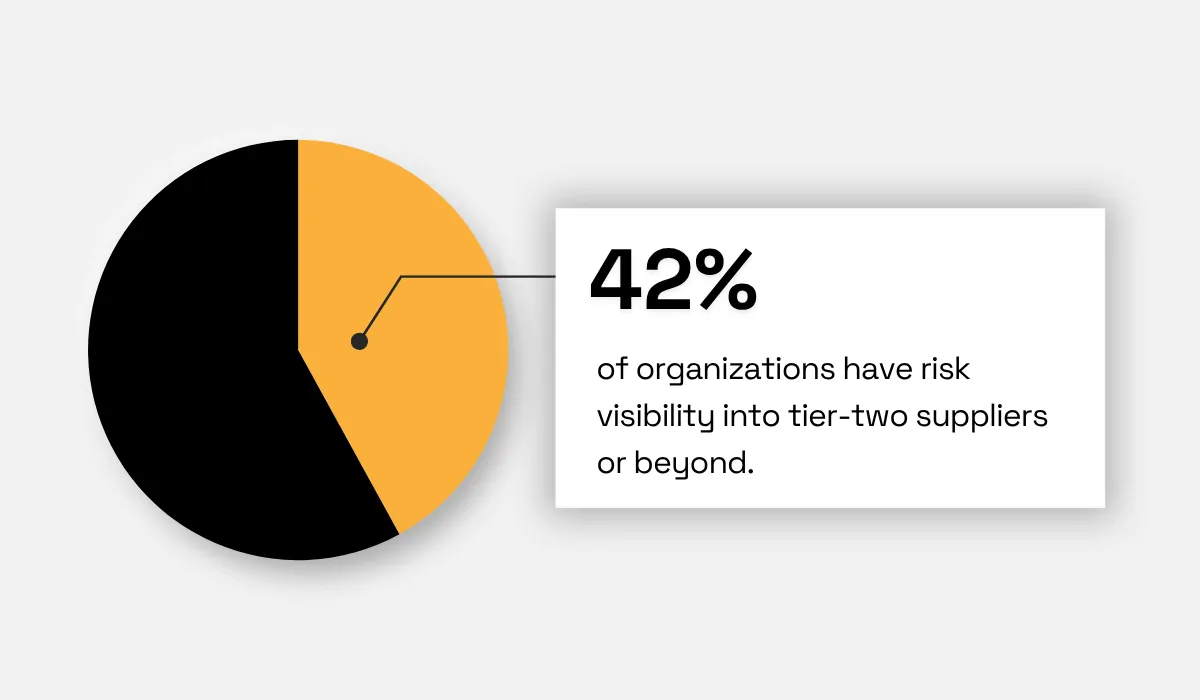
For those that do, the visibility is often limited to entity-level data about the supplier.
Rarely do they ever scrutinize location-level data to obtain information about the conditions under which their supplier actually operates, leaving behind a glaring hole that makes itself known the moment a regional event hits the headlines.
Mapping Real Exposure with Location Intelligence
The four blind spots above share a common root.
The data being used to assess risk doesn't match the geographic and structural reality of how supply chains actually operate.
What resolves all of them is data from supplier location intelligence platforms that encompasses a fully structured approach.
When you can map where your suppliers physically operate and link that geography up with their corporate hierarchy while maintaining continuous updates – that’s when you can safely say you’re accurately observing risk.
Veridion is built around this architecture.
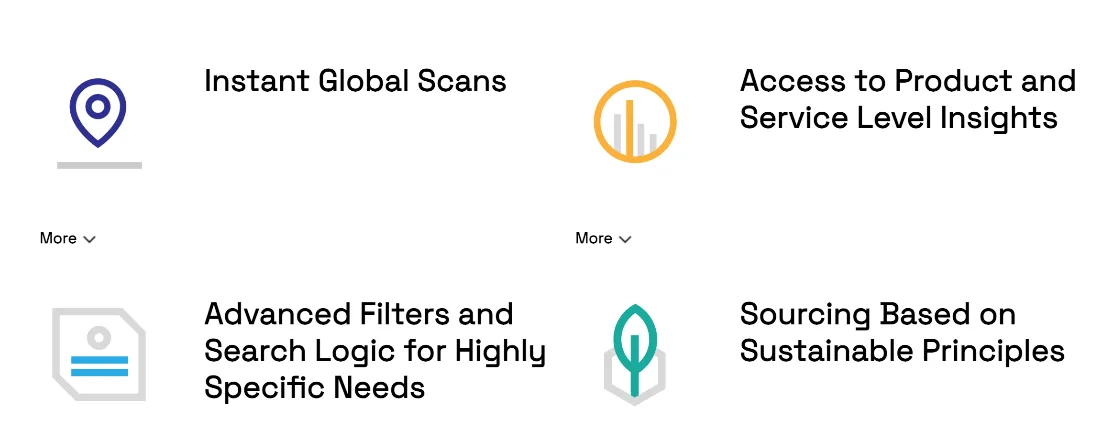
It maps HQ and branch-level geographies down to the city level across more than 693M companies, with corporate hierarchy and ownership structure embedded in the same dataset.
Source: Veridion
Also, our market intelligence data refreshes weekly, so you know you’re always getting fresh information.
When you need to get more specific, you can always filter down to a granular level.
Proximity filters surface all suppliers within a defined radius of a given location – useful for identifying geographic clustering before a regional event makes it apparent.
Postcode filters narrow to specific high-risk zones.
And because ownership hierarchy sits in the same dataset, the concentration risk that exists through corporate relationships becomes visible alongside the geographic picture.
Bear in mind that location intelligence shouldn’t replace basic country-level risk scores. But that said, raw scoring leaves your operations vulnerable to what it doesn’t cover.
Investing in solutions that reveal a more granular perspective might be the right move if you want more robust security.
Conclusion
As noted, country-level risk scores aren’t going away.
But relying on them as the primary (or only) lens for geopolitical and regional exposure leaves predictable gaps.
Granular location intelligence adds the geographic and structural dimension that makes the rest of your appraisal methodology more meaningful.
The organizations that close these blind spots before disruption hits are the ones that are best suited to withstand consequences and emerge intact from any disruption.
Articles
Discuss how these trends affect your organization.
Our analysts are available for a short call. Bring a specific question and we will ground it in the data.
Insights
Keep reading
More analysis, research, and outcomes grounded in live company intelligence.
The Hidden Cost of Stale Supplier Intelligence
Are you missing crucial signals to identify emerging market risks? Stale supplier intelligence can cost you dearly. Uncover the hidden dangers.
How AI Powers Continuous Emerging-Risk Detection
Tired of being blindsided by market shifts? See how AI proactively helps you identify emerging market risks before they impact your business.
5 Trends Shaping the Future of Market Intelligence
Want to future-proof your business strategy? Explore the top trends defining the future of market intelligence.