Insights / Articles
How to Find Local B2B Suppliers in Canada Using AI Taxonomies
Tired of struggling to find local B2B suppliers in Canada? Discover how to find suppliers in Canada using AI supplier finder Canada.

- A single supplier search can take up to 400 hours of logged work.
- Taxonomies help AI understand buyer requirements and identify the right suppliers.
- AI significantly shortens the procurement process by extracting business intelligence.
- 50% of organizations will use AI for supplier negotiation by 2027.
Google search or local registries will give you supplier information, but it will not be a complete list. There is no guarantee your search engine has covered the entire business landscape of Canada.
In fact, it is more likely that you will see only a fraction of the suppliers that operate in the Canadian market.
This gap can be efficiently closed with AI taxonomies.
Combining the scale at which AI operates with the shortlisting capability of taxonomies, you can find suppliers that are not registered or surfaced in a simple Google search.
This article will show you six steps to use AI taxonomies to find local B2B suppliers in Canada, from registered corporations to small businesses.
1. Build an AI Supplier Taxonomy
Taxonomy is the process of categorizing objects into groups for ease of understanding.
If we map this general definition to supplier taxonomy, we can say that it is the process of classifying suppliers into categories based on different parameters for ease of discovery.
In fact, Gartner has predicted that by 2027, organizations that use semantics in AI-ready data will increase agentic AI’s accuracy by up to 80% and reduce cost by 60%.
We already know AI excels at scale. It can discover thousands of suppliers within minutes.
If you ask it to find Canadian automotive suppliers, it will match the keyword and return a long list that will take days to filter through.
In this scenario, AI sped up the discovery. But you ended up at square one in terms of time and effort. The very perk of scale becomes a nightmare for procurement teams.
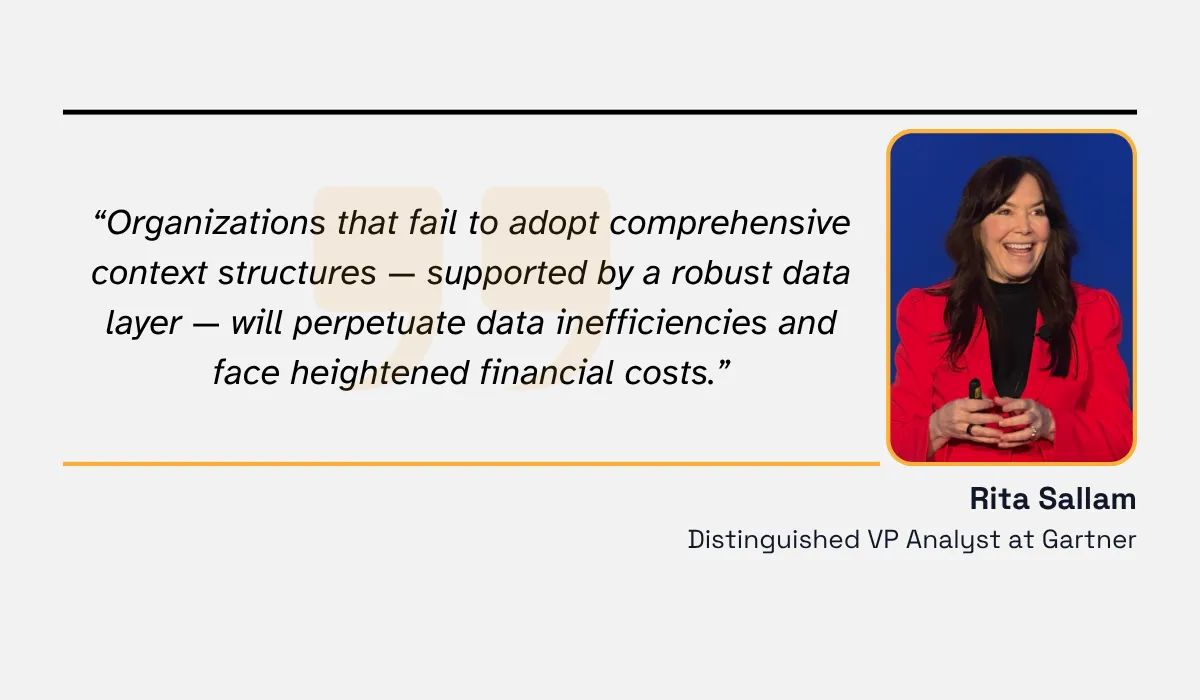
Rita Sallam, Distinguished VP Analyst at Gartner, a global research and advisory firm, spoke about the consequences of no context and semantics in AI data at the 2026 Gartner Data & Analytics Summit in London.
Sallam pointed out how it will disrupt data quality, which translates into higher costs.
Starting your local supplier search with a 3-digit long list is inefficient. Taxonomy helps focus the radar and narrows the scope, hence improving accuracy and cost savings as predicted by Gartner.
Taxonomy classifies the industry into searchable parameters. For example:
- Industry
- Manufacturing capabilities
- Materials, production processes
- Certifications
- Location,
- Export experience
Your search would now look like:
Find Canadian automotive suppliers in Ontario that specialize in steel stamping and CNC machining, work with aluminum and high-strength steel, and hold IATF 16949 certification.
Once you have identified your requirements, you can categorize them.
From the new search criteria, you can put together the following taxonomy.
- Industry: automotive
- Manufacturing capability: steel stamping, CNC machining
- Materials: aluminum, high-strength steel
- Certifications: IATF 16949
- Location: Ontario
You have translated your sourcing needs into a checklist. It helps AI understand your requirements.
AI filters through all Canadian automotive suppliers based on your taxonomy. It then presents you with the filtered suppliers.
Your taxonomy will serve as a guide to your AI supplier discovery process. It narrows the three-digit list into two digits. We will further narrow it down in the next steps.
2. Navigate Canada's Regional Supplier Ecosystems
Canada’s vast landscape, divided into ten provinces, offers distinct industrial strengths across different regions.
Finding a good supplier means you must be aware of Canada’s regional landscape and know which province can offer what you are sourcing.
The location alone will focus your search in the right direction. It will expand your supplier discovery as opposed to searching in a region that doesn’t specialize in what you need.
The 2023 Annual survey of manufacturing industries by the Government of Canada revealed Ontario’s major manufacturing sectors. Transportation equipment, food, and chemical did $107.5 billion, $608 billion, and $29.8 billion in revenue, respectively.
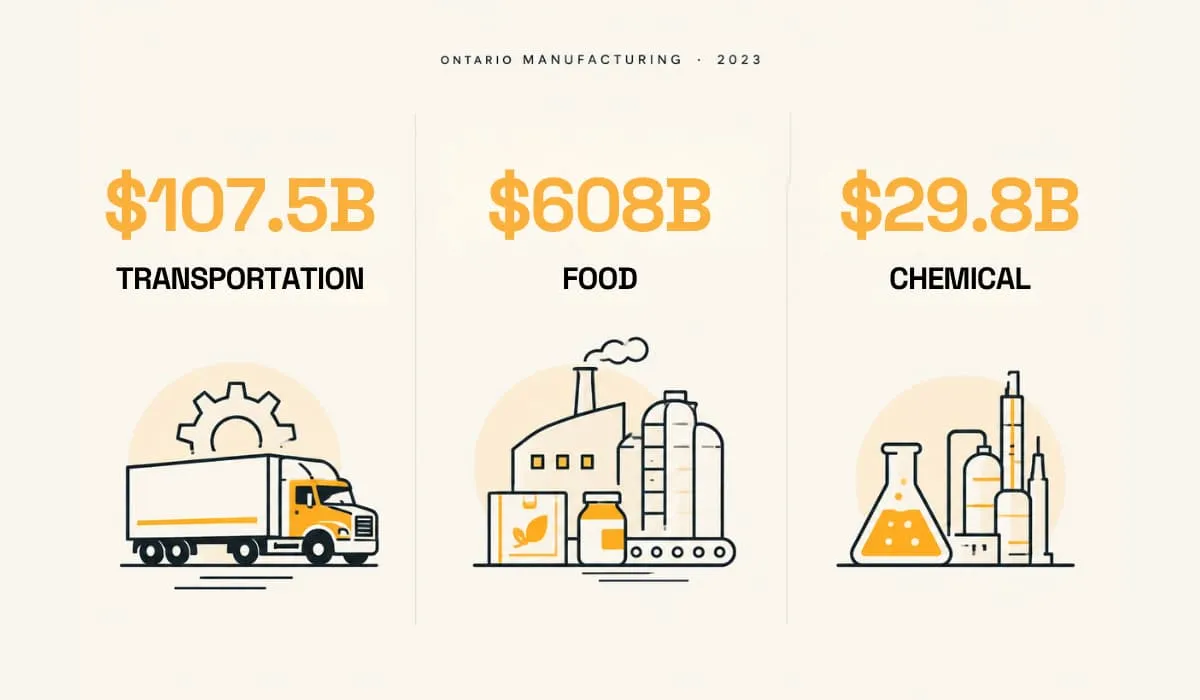
Illustration: Veridion / Data: Government of Canada
These three sectors were responsible for 50.2% of the provincial revenue in the manufacturing industry in 2023.
Moreover, Alberta, Newfoundland and Labrador have huge oil and gas industries. Saskatchewan and Quebec are rich in minerals, along with the emerging region of British Columbia (BC).
Michael Goehring, president and CEO of the Mining Association of British Columbia (MABC), a non-profit mining association of BC, talked about the potential of his province in the mining sector:

Illustration: Veridion / Quote: Business in Vancouver
Goehring further mentioned that Vancouver has one of the largest networks of mining professionals, and their mining supply chain involves 4,000 companies.
Manitoba and Prince Edward Island are agricultural regions with a special focus on potato production. Saskatchewan, on the other hand, is known for grain and lentil farming and its exports.
Deborah Yedlin, President and CEO of the Calgary Chamber of Commerce, a non-profit business association in Calgary, explained the strengths of Alberta in the following words.
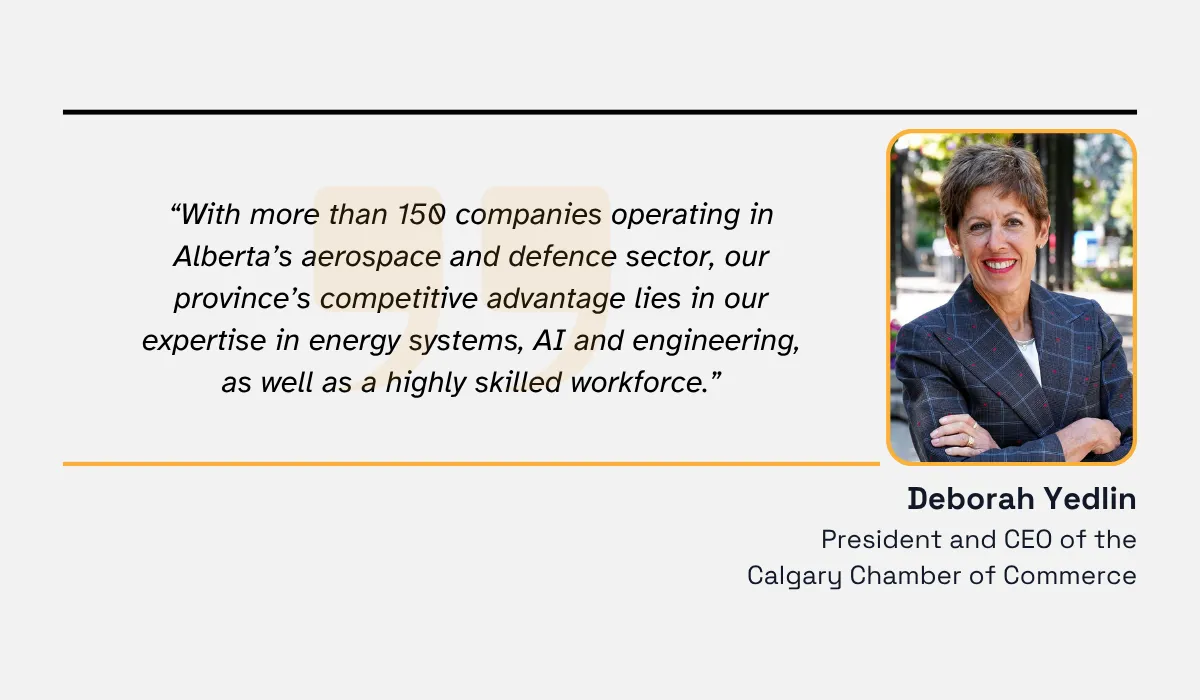
Illustration: Veridion / Quote: Calgary Chamber
In short, you can select the location based on proximity and other requirements if you know which regions are offering what you need.
Once all your taxonomic parameters are finalized, you can start using AI to help you initiate and aid in the rest of the procurement process, which is our next step.
3. Extract Supplier Intelligence with AI
Procurement has evolved over the past few years, and AI integration continues to increase.
For example, Precedence Research reported the market size of AI in supply chain to be $9.94 billion USD in 2025. The market is projected to grow as more and more companies are adopting AI in procurement.
Precedence Research has further predicted the AI in supply chain market to reach $236.42 billion USD by 2035.
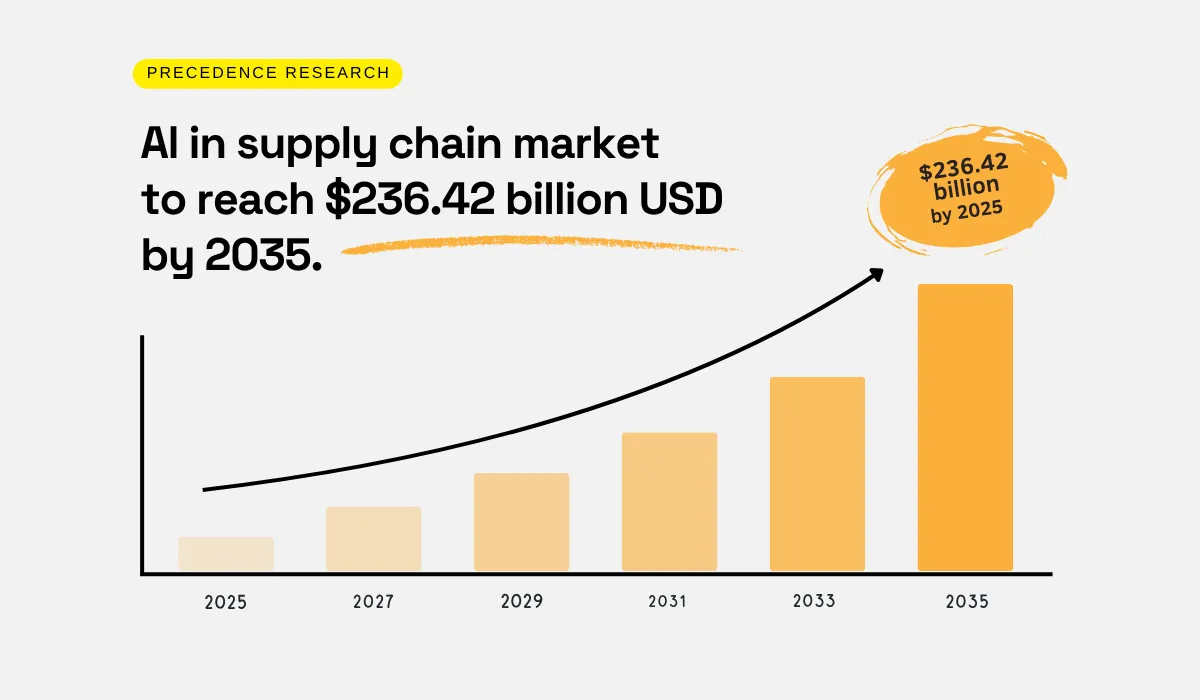
Illustration: Veridion / Data: Precedence Research
This shift is the result of a time-consuming and tedious manual procurement process.
A manual process depends on your network, scouring local registries, and Google, resulting in only a handful of suppliers.
This raw data then needs to be verified and shortlisted, which is again a cyclical and resource-intensive process.
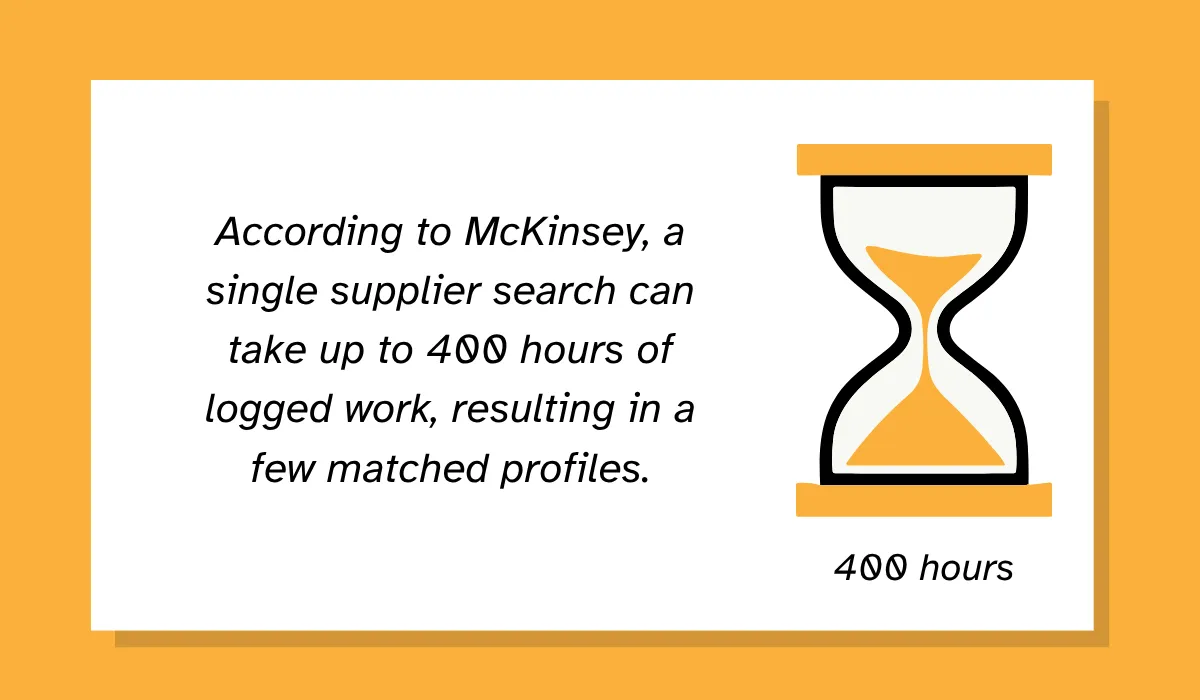
According to McKinsey, a single supplier search can take up to 400 hours of logged work, resulting in a few matched profiles.
But supplier sourcing platforms like Veridion help you extract business intelligence with AI, significantly reducing the time and effort.
There are three phases where Veridion can assist you in procurement.
First up is supplier discovery.
Veridion maintains a global, weekly-updated database of companies collected from all the supplier discovery channels.
It offers seven industry taxonomies with the flexibility to create a custom one.
A broad AI search through Veridion will reveal a crazy number of options. You can narrow it down through taxonomies and get a curated list of suppliers that match your requirements, as shown in the image below.
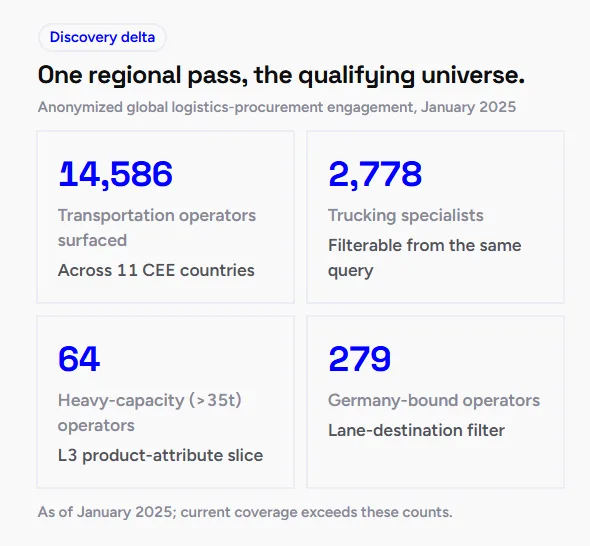
Source: Veridion
Its vast coverage ensures the radar notices every single company, big or small, that matches your requirements.
Next up is business verification.
The next step after discovery is verifying the business details of all the shortlisted companies.
Veridion’s AI model cross-checks the company across legal subsidiaries, news, multiple languages and writing systems, and digital footprint to build a canonical profile backed by
- Legal registration data
- Digital presence (domain, tech signals)
- Relationship data (parent/subsidiary/alias chains)
- A confidence score (e.g., 0.97) showing how certain the match is
- Documented match reasoning: Which signals drove the verification decision, so it's auditable per record
Finally, let’s not forget about third-party risk management.
Once you have vetted a supplier, you can track them in Veridion for up-to-date information.
Natural calamities, sanctions, changes in leadership, and all such changes are recorded with trackable sources.
This gives you instant updates and allows you to mitigate risk while planning ahead.
In short, Veridion helps extract business intelligence within minutes that would have manually taken days.
4. Create AI Supplier Scoring
Supplier scoring is simply further shortlisting. It’s identifying the best-fit options from your list.
This is done through scoring each supplier on certain parameters depending on your requirements and priorities.
The 2025 Global CPO survey by Deloitte revealed that 67.68% of CPO’s report the main value driver for GenAI in procurement is enhanced analytics and decision-making.
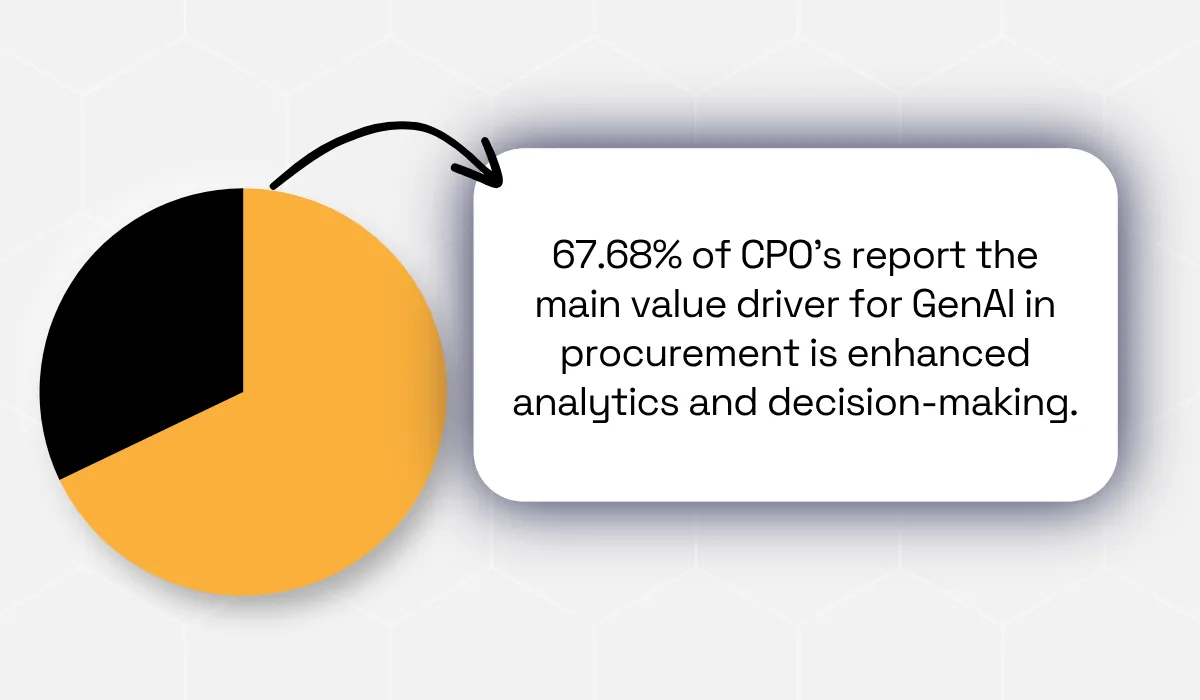
Illustration: Veridion / Data: Global CPO survey by Deloitte
Decision-making is directly linked to supplier scoring. It tells you the best-fit options at a glance. Further information explains the scoring.
Let’s continue with the example of Ontario-based steel stamping suppliers.
You now have a curated list of suppliers who passed the taxonomic criteria.
To build an AI scoring system, you first define parameters and their conditions based on the company’s priorities.
For example, we have shown five parameters and their scoring conditions in the following illustration.
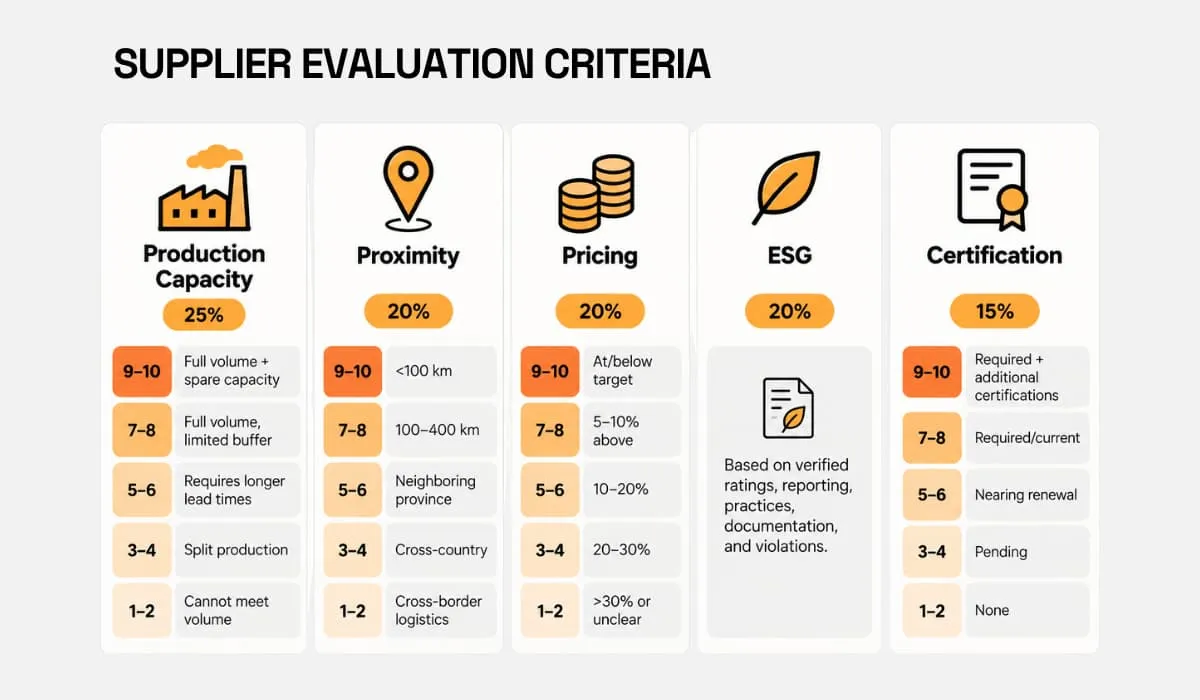
Illustration: Veridion
Notice how every parameter has a certain percentage. This weightage represents how important a parameter is in your procurement process.
The greater the weightage, the greater its effect on the final score.
Based on your parameters, AI can score the companies as follows:
Supplier | Capacity | Proximity | Pricing | ESG | Certification | Total score |
|---|---|---|---|---|---|---|
Supplier A | 9/10 | 9/10 | 7/10 | 8/10 | 8/10 | 8.25 |
Supplier B | 8/10 | 9/10 | 9/10 | 7/10 | 9/10 | 8.35 |
Supplier C | 9/10 | 6/10 | 8/10 | 9/10 | 8/10 | 8.05 |
The score clearly shows that supplier B is the best fit.
To build your own scoring system, start by identifying the parameters of the best-fit supplier. Define the conditions of each parameter as clearly as possible.
You can decide the complexity based on your priorities. For example, certification can be either a yes-or-no parameter, or you can consider more nice-to-have certifications and freshness, as we demonstrated in the example.
Next, decide the weightage of each parameter based on how important it is. The more important a parameter is, the more weightage it will carry.
Your scoring parameters are now ready.
To calculate the final score, the individual scores will be multiplied by their weightage. Add all the multiplication products to get a final score.
This step concludes vetting. We have found the best-fit options.
The next step is to reach out.
5. Initiate Autonomous Outreach
Reaching out involves sending RFQs, RFIs, and negotiation. Through Gen AI, you can automate this process.
Gartner, in their Supply Chain Symposium in Orlando, May 2024, has predicted that 50% of organizations will adopt AI for supplier negotiation by 2027.
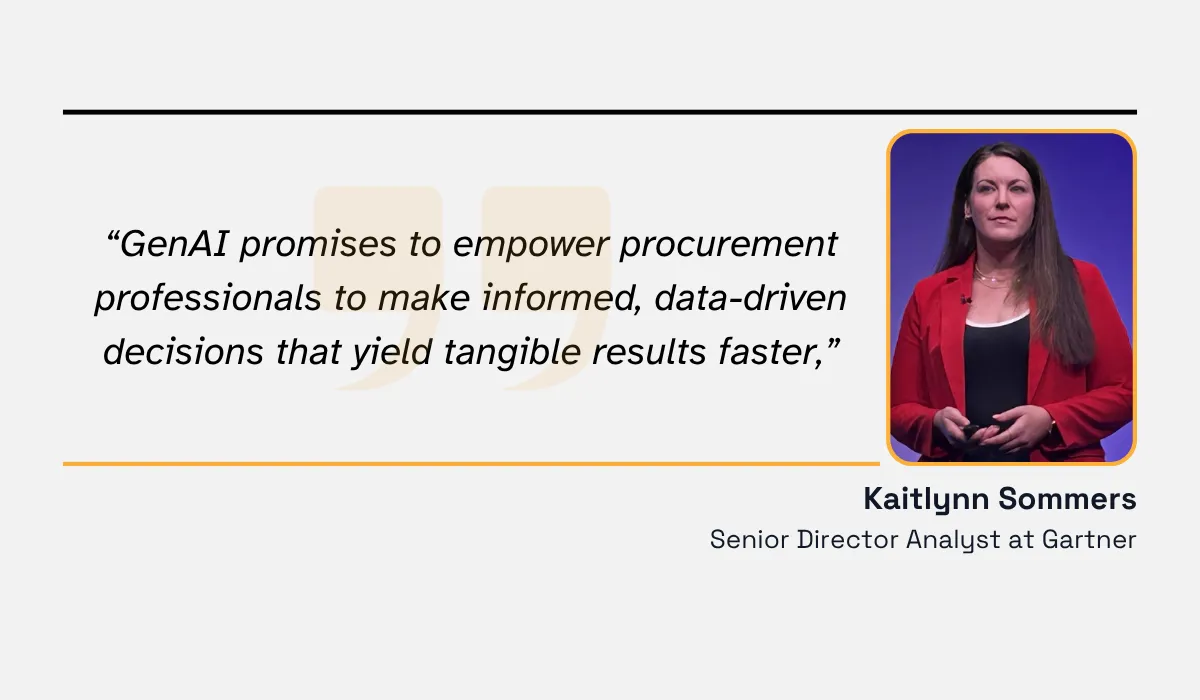
Kaitlynn Sommers, Senior Director Analyst at Gartner, highlighted in the same Symposium how Gen AI can save time and deliver faster results in procurement
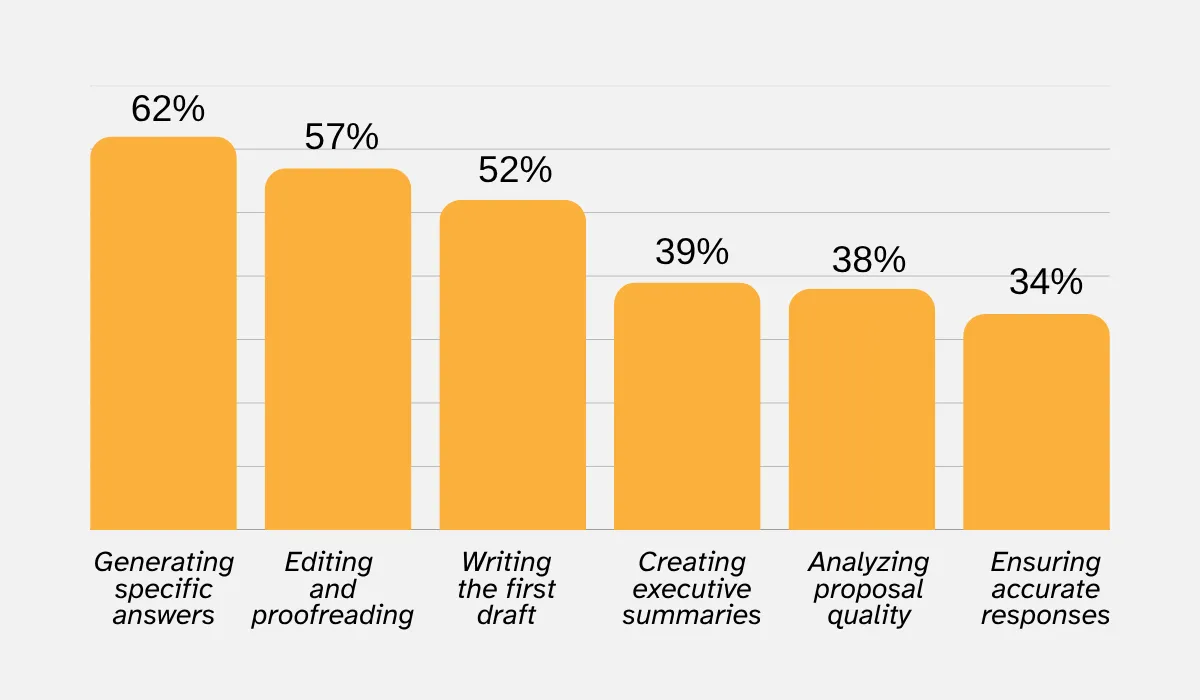
Loopio’s RFP Response Trends & Benchmarks 2026 report now confirms Gartner’s prediction.
The report mentions that 79% of procurement teams use Gen AI in the RFP process, while 84% of them use it almost once every week.
The specific use cases of Gen AI are shown below.
Gen AI can prepare RFQs and RFIs. It can also send them to suppliers and draft a response to their quotes and information based on your negotiation conditions.
Parameters like price ranges, payment terms, delivery windows, and volume discounts are examples of important parameters to define.
AI will behave according to the set parameters. These parameters will define what it will flag and what will be completely out of its scope.
Still, be sure to keep a human in the loop to review the draft before giving the green signal to AI. It will flag and hold until a human reviews it.
Additionally, establish KPI’s to track accuracy, performance, and time saved.
Once you test AI’s accuracy and perfect your conditions, you can start moving to fully autonomous negotiations.
You can set a benchmark amount above which all negotiations require human review, or set conditions under which a certain profile falls outside AI’s scope. More predictable negotiations, meanwhile, can be fully automated.
6. Build an AI Supplier Monitoring System
Many procurement teams end the process when they strike a deal with a supplier. However, in this volatile economy, a smart approach is to keep an eye on the market.
Manually, it is not a practical step. Because it means repeating the supplier discovery process over and over again. Not humanly possible.
But AI can continue to run processes and give you updates on new suppliers, price or lead-time shifts, and market disruptions, including material shortages, tariff changes, or supplier financial distress.
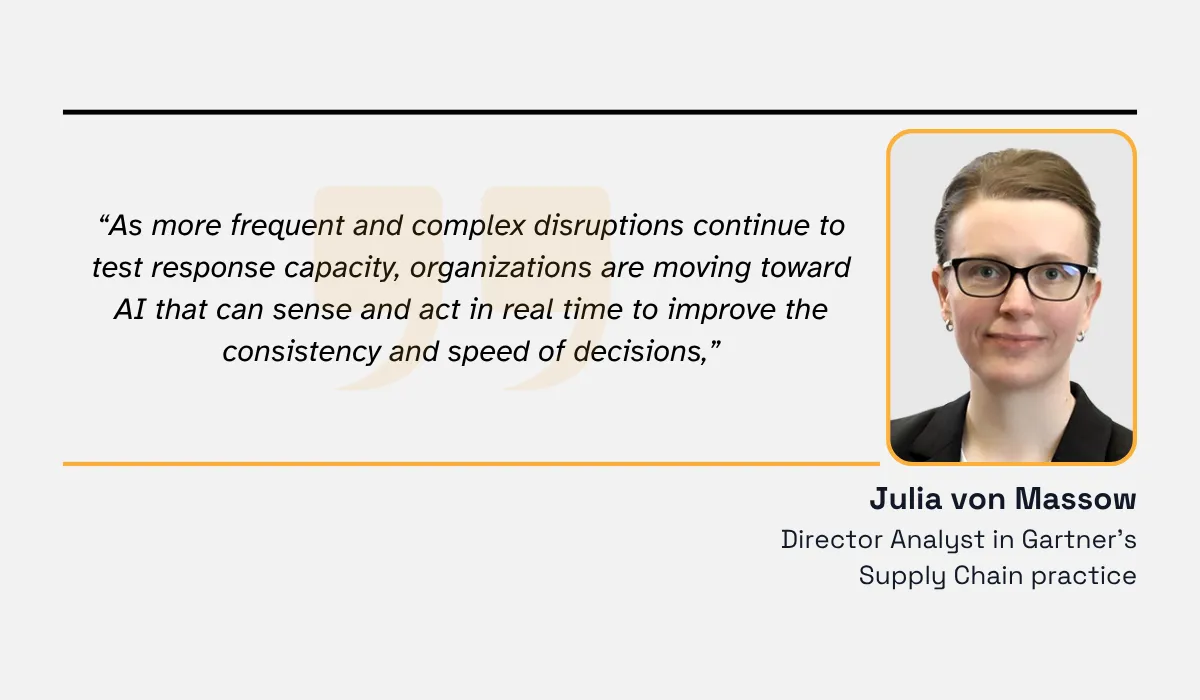
Julia von Massow, Director Analyst in Gartner’s Supply Chain practice, talked about market volatility and the use of AI for quick alerts and data-driven decision-making.
AI monitoring system allows you to have real-time market intelligence, alerting you to potential risks and better opportunities. You may find a supplier who better suits your requirements when you are not even actively looking.
Let’s say you need to change your supplier. The market intelligence you get from monitoring will ease your procurement process. How?
Because the discovery, comparison, and vetting work is already done. Instead of starting a fresh procurement cycle, you already have a shortlist of qualified, monitored suppliers with current pricing and performance data.
To sum up, AI monitoring is a beneficial and risk-averse step in the long run, especially in today’s inconsistent markets.
Conclusion
Procurement has always been a critical but resource-intensive process. But with AI, you can optimize it for data volume, automation, and time-saving.
AI alone is not enough, though. Taxonomies direct the volume AI operates at in the right direction, ensuring you get a holistic list of suppliers that match your search.
Canada is home to multiple sectors and suppliers. There are plenty of businesses that would be happy to partner with you.
The gap is discovery.
We have explained to you in detail how to close this gap. You can now expand your discovery and meet the new business opportunities that await you in Canada.
Articles
Discuss how these trends affect your organization.
Our analysts are available for a short call. Bring a specific question and we will ground it in the data.
Insights
Keep reading
More analysis, research, and outcomes grounded in live company intelligence.
Supplier Sourcing: What CPOs Need to Know
Supplier sourcing is not just about finding the cheapest suppliers. It’s about building long-term partnerships that move you forward.
How to Find the Right Suppliers for Your Business
Want to find reliable suppliers for your business? This guide will show you how to identify, evaluate, and choose the right ones.
Supplier Sourcing Software Solutions to Know About
Discover top supplier sourcing software solutions that streamline procurement and enhance supplier diversity.