Insights / Articles
How to Find Local B2B Suppliers in the United Kingdom Using AI Taxonomies
Tired of endless searches? Discover how to find suppliers UK with AI supplier finder UK. Streamline your B2B sourcing in the United Kingdom.

- The way most companies search for suppliers is working against them.
- The quality of your supplier search depends on the quality of your instructions.
- AI can verify supplier identities without hours of manual research.
- A supplier that passes every check today could become a risk tomorrow.
Finding local B2B suppliers in the United Kingdom isn’t the hard part.
Finding the right ones is.
The UK is home to one of Europe's most diverse manufacturing and supplier ecosystems, but supplier information is spread across company websites, government registries, certification databases, trade associations, and industry directories.
Turning that fragmented data into a shortlist of qualified suppliers often requires hours of manual research and verification.
That’s where AI taxonomies come in.
By transforming broad sourcing requirements into structured search criteria, AI helps procurement teams discover, verify, score, and continuously monitor suppliers with far greater precision.
This guide explains how to build an AI-powered supplier discovery process that delivers better results.
1. Build an AI Supplier Taxonomy
The quality of your supplier search depends on the quality of your instructions.
Many procurement teams begin with broad queries such as “UK furniture suppliers” or “UK electronics manufacturers.”
While these searches may return hundreds or even thousands of results, they rarely produce a shortlist of qualified suppliers.
Instead, the results often include distributors, trading companies, manufacturers outside your target niche, or businesses that don't meet your technical, operational, or compliance requirements.
This is why you need supplier taxonomies.
A taxonomy is a structured classification system that organizes an industry into meaningful categories and attributes.
Think of it as a common language between your procurement team and your AI sourcing platform.
Instead of relying on broad keywords, you define the characteristics that matter most, allowing
AI to interpret your sourcing intent rather than simply matching words.
The principle is already embedded in the UK's business ecosystem.
Companies House classifies businesses using Standard Industrial Classification (SIC) codes, while trade associations, certification bodies, and procurement platforms organize suppliers into industry-specific categories.
AI supplier taxonomies build on the same concept but add much greater detail by classifying suppliers according to products, manufacturing capabilities, certifications, materials, geographic coverage, and other operational attributes.
For example, instead of searching for “UK furniture suppliers,” your taxonomy could describe suppliers using dimensions such as:
- Manufacturing capabilities (OEM, contract manufacturing, custom production)
- Product category (office furniture, hospitality furniture, laboratory furniture)
- Materials (solid wood, engineered wood, metal, recycled materials)
- Certifications (ISO 9001, FSC, BSI Kitemark)
- Company size and production capacity
- Export experience and target markets
- Geographic location within the UK
Breaking your sourcing requirements into these structured dimensions gives AI the context it needs to identify suppliers that genuinely fit your requirements rather than simply matching keywords.
It also standardizes how procurement teams describe suppliers, improving consistency across sourcing projects.
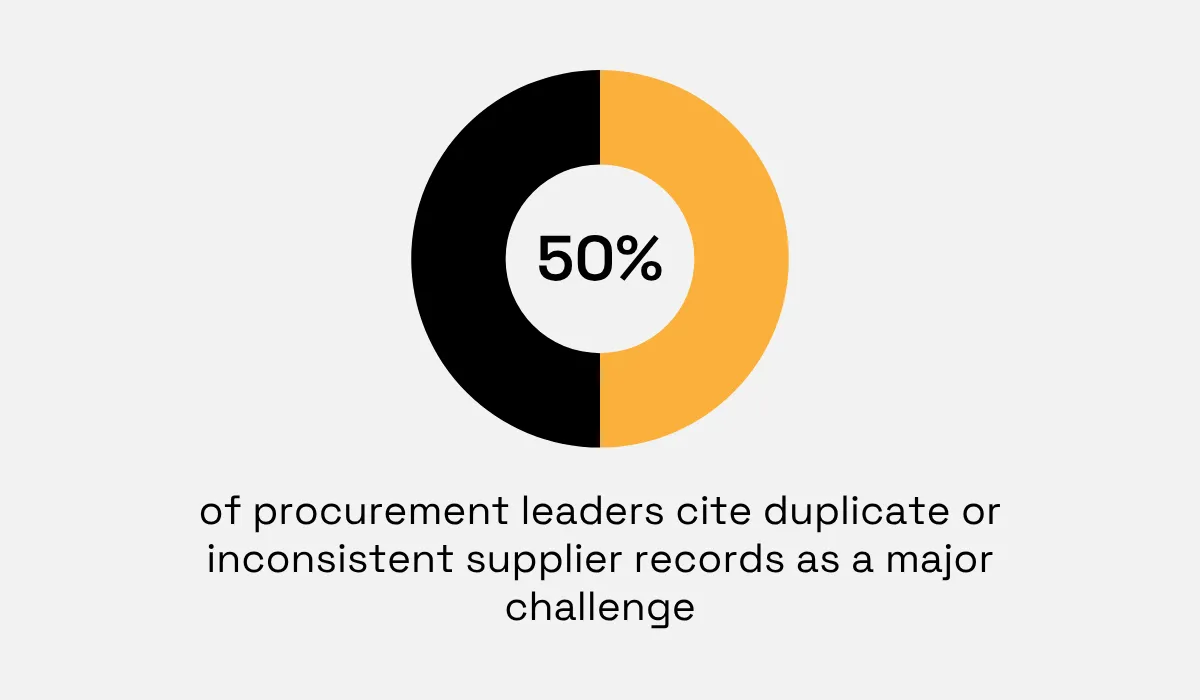
That’s increasingly important given that 50% of procurement leaders cite duplicate or inconsistent supplier records as a major consequence of poor supplier data.
The benefits become even clearer in highly specialized manufacturing sectors.
Two companies may both describe themselves as furniture manufacturers, yet one produces bespoke laboratory furniture for healthcare facilities while the other specializes in high-volume office furniture for commercial workplaces.
A keyword search treats them as identical.
A taxonomy enables AI to distinguish between them based on the characteristics that matter to your sourcing strategy.
Before AI can identify the best suppliers, it first needs to understand how your industry is organized.
A well-designed supplier taxonomy provides that foundation by transforming broad sourcing requests into structured search criteria.
2. Understand UK Supplier Data Sources and Market Structure
Once you've defined what you're looking for, the next step is understanding where supplier information comes from.
The United Kingdom has a mature but highly fragmented supplier ecosystem.
Valuable supplier information is spread across government registries, certification bodies, trade associations, manufacturing networks, industry exhibitions, and company websites.
Each source reveals only part of the picture, forcing procurement teams to switch between multiple databases to build and validate a reliable supplier shortlist.
Companies House may confirm a supplier's legal identity, while certification databases verify compliance credentials, trade associations highlight industry specialization, and company websites describe products, manufacturing capabilities, and markets served.
No single source combines all of that information.
Some of the most common UK supplier data sources include:
Companies House | Legal entity information, registration details, directors, and filing history |
|---|---|
Trade associations | Industry memberships, sector expertise, and accredited suppliers |
Certification bodies | Standards such as ISO 9001, ISO 14001, FSC, and BSI certifications |
Industry networks and events | Manufacturers, specialist suppliers, product launches, production capabilities, and emerging businesses |
Company websites | Products, manufacturing capabilities, facilities, markets served, and contact information |
Each source answers a different question about a supplier.
Together, they provide a much more complete view, but only after the information has been collected, verified, and connected.
That's difficult to do manually, especially when evaluating hundreds or thousands of potential suppliers.
As Danny Thompson, Chief Product Officer at apexanalytix, supplier management software, observes:
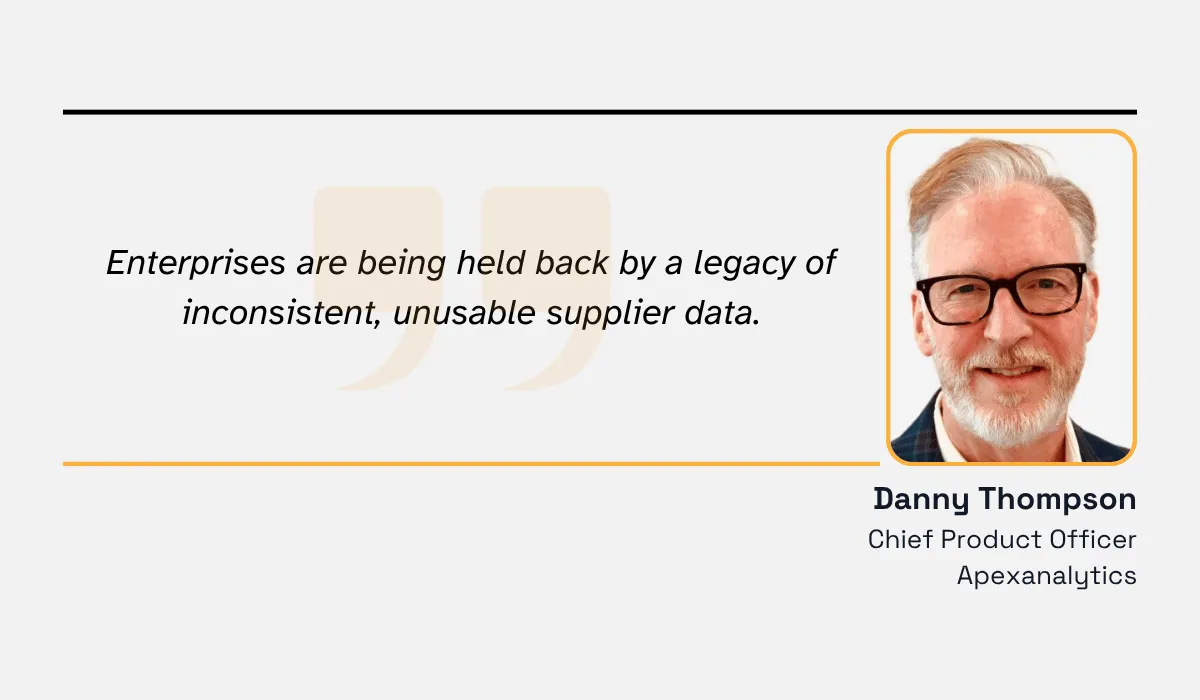
Illustration: Veridion / Quote: apexanalytix
AI changes this process by continuously collecting, normalizing, and connecting information from thousands of publicly available sources into a single searchable intelligence layer.
Instead of deciding which database to search next, procurement teams can query companies, products, certifications, manufacturing capabilities, locations, and other business attributes from one place.
Rather than manually checking Companies House, reviewing certification databases, searching trade association directories, and visiting company websites, AI automatically consolidates those signals into unified supplier profiles.
The result is a faster, more complete supplier discovery process built on connected business intelligence rather than disconnected datasets.
Once supplier information has been consolidated into a single intelligence layer, procurement teams can begin identifying, verifying, and monitoring suppliers far more efficiently.
3. Extract Supplier Intelligence with AI
Building a supplier taxonomy and understanding where supplier data comes from helps narrow your search.
The next challenge is determining which suppliers are actually worth pursuing.
Traditionally, this is the most time-consuming part of supplier discovery.
Procurement teams compile a shortlist from:
- trade directories
- company websites
- trade shows
- referrals
…then spend days or even weeks verifying company names, manufacturing capabilities, certifications, ownership structures, and production locations.
Even then, supplier data can quickly become outdated as companies relocate, expand operations, add new product lines, or undergo ownership changes.
AI-powered supplier intelligence platforms automate much of this work by continuously collecting, organizing, and validating business information from thousands of publicly available sources.
Instead of researching suppliers individually, you can search a continuously updated database of verified company profiles enriched with firmographic, operational, and product-level data.
A platform like Veridion collapses that entire workflow into three connected stages: source, verify, and monitor.
Find Suppliers That Match Your Sourcing Criteria
Traditional sourcing often begins with supplier lists built from past purchase orders, RFx invitations, trade shows, or referrals.
While useful, those lists represent suppliers you've already encountered, not the full universe of companies operating in a market.
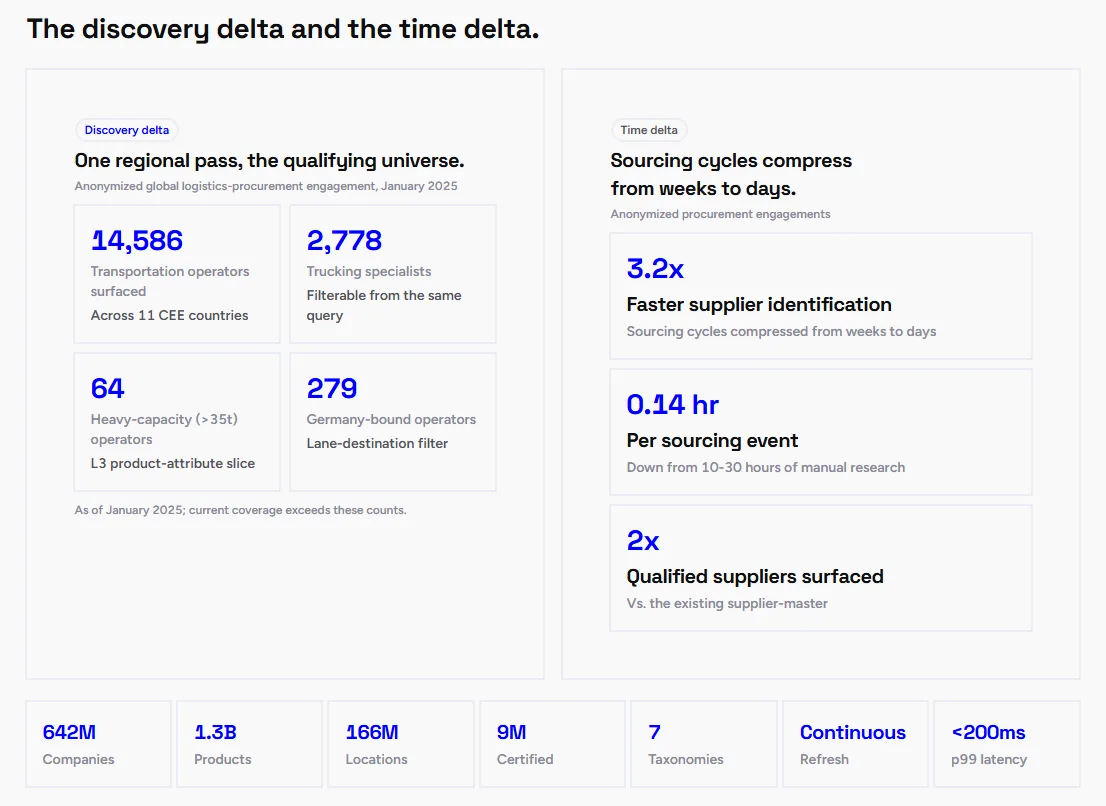
Veridion's Supplier Sourcing tool searches a continuously updated dataset of more than 693M companies, 1.3B products and services indexed, and 173M business locations.
Source: Veridion
Instead of relying on broad keyword searches, you can apply the supplier taxonomy you created earlier as structured search filters.
For example, instead of searching for “UK precision engineering suppliers,” you can combine multiple criteria in a single query, such as:
- ISO 9001 or AS9100 certification
- Aerospace manufacturing experience
- Manufacturing facilities in the West Midlands
- Minimum employee count or production capacity
- Export experience within Europe or North America
- CNC machining or precision engineering capabilities
Because Veridion searches across structured business attributes rather than website keywords, it identifies suppliers based on what they manufacture, where they operate, and the capabilities they possess.
The platform also supports facility-level filtering, product-level searches, and multiple industry taxonomies, helping procurement teams uncover qualified suppliers that traditional keyword searches often overlook.
Verify Supplier Information
Finding a supplier is only the first step.
The same company may appear under different legal names, subsidiaries, historical addresses, or web domains across multiple data sources.
Verifying that these records all refer to the same business is time-consuming and error-prone.
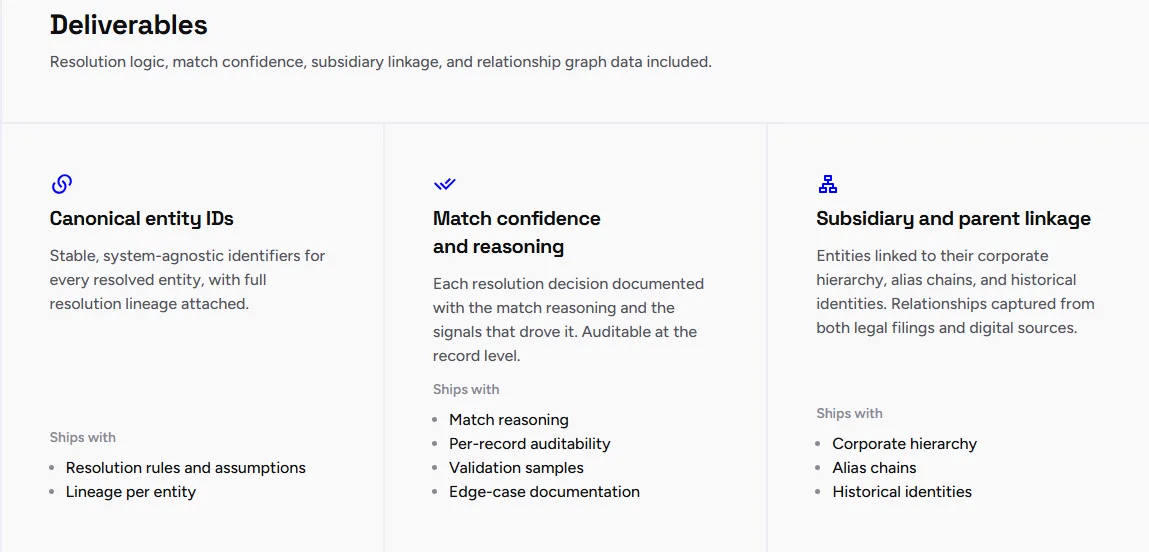
Veridion’s Entity Resolution capabilities automatically reconcile fragmented business records into a single company profile.
Instead of manually comparing multiple sources, you receive a unified view of each supplier, including its legal entity, ownership structure, operational footprint, business locations, websites, and other critical attributes.
Source: Veridion
This reduces duplicate records while giving procurement teams greater confidence that they’re evaluating the right supplier.
Monitor Suppliers Continuously
Supplier verification shouldn't end after onboarding.
A supplier that met your requirements six months ago may have opened a new manufacturing facility, changed ownership, expanded its product portfolio, or become exposed to financial, ESG, regulatory, or geopolitical risks.
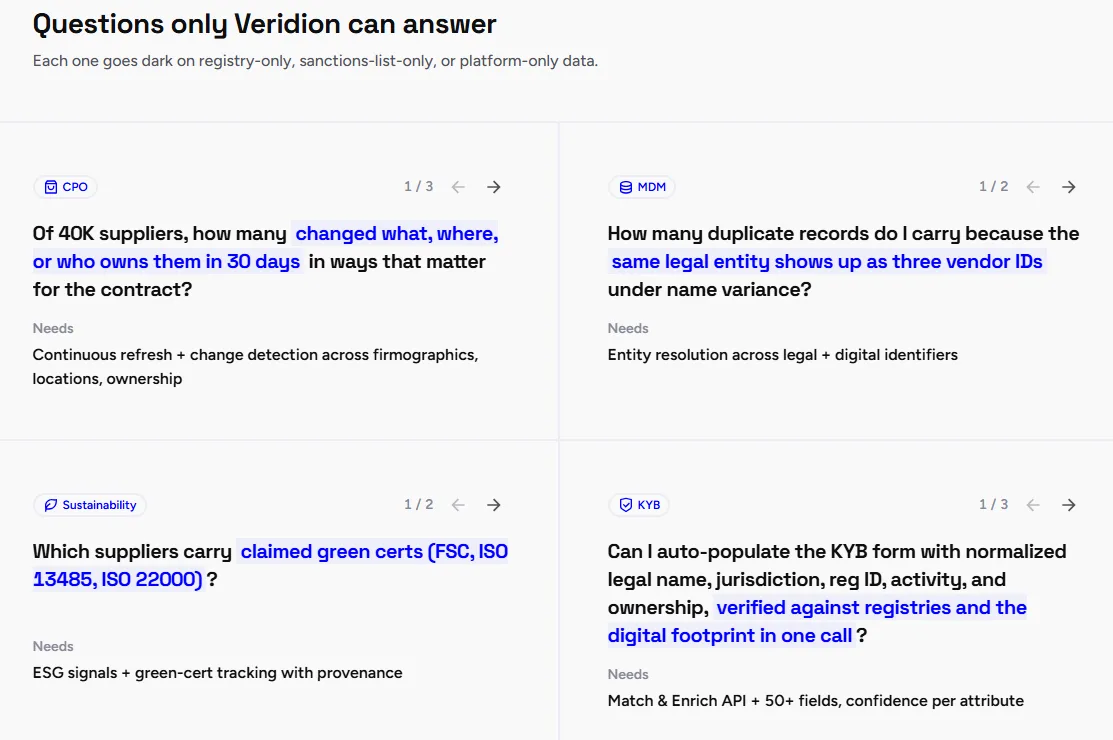
Veridion’s Third-Party Risk Monitoring solution continuously tracks supplier changes after the relationship begins.
Source: Veridion
Rather than relying on periodic audits, it monitors corporate ownership structures, sanctions exposure, facility updates, and other operational signals to help you identify emerging risks before they disrupt the supply chain.
4. Create AI Supplier Scoring
Not every supplier that matches your search criteria is an equally good fit.
One manufacturer may offer competitive pricing but have limited export experience.
Another may hold the right certifications but lack sufficient production capacity.
A third may satisfy every technical requirement but operate in a region with higher logistics costs.
Rather than evaluating each supplier manually, AI ranks suppliers based on the criteria that matter most to your organization.
Instead of applying a one-size-fits-all ranking, you can assign different weights to each attribute according to your sourcing objectives.
For example, a company seeking a long-term manufacturing partner may place greater emphasis on quality certifications and financial stability, while another sourcing a time-sensitive component may prioritize production capacity, lead times, and proximity to major shipping ports.
An AI supplier scorecard might evaluate suppliers across criteria such as:
- Location
- Product fit
- Risk profile
- Certifications
- Business stability
- Export experience
- Production capacity
- Manufacturing capabilities
AI combines these criteria into a weighted score that reflects your procurement priorities.
Rather than sorting suppliers alphabetically or by keyword relevance, it prioritizes those that most closely match your ideal supplier profile.
This approach is already being adopted by enterprise procurement platforms.
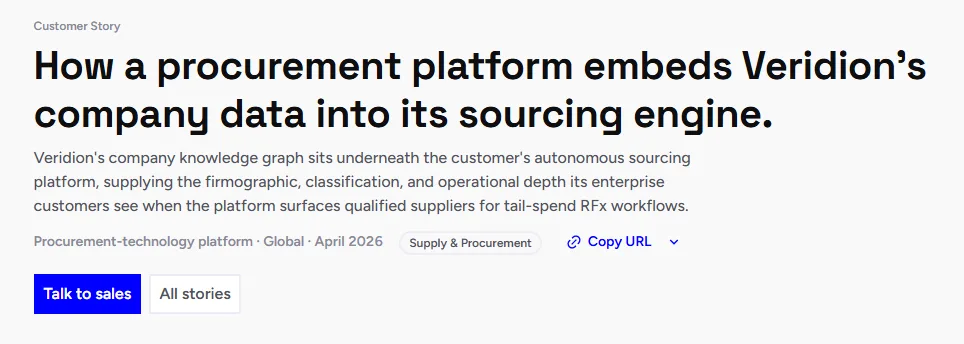
In one customer implementation, an enterprise procurement platform embedded structured company intelligence into its supplier search engine, enabling buyers to prioritize suppliers using operational attributes, industry classifications, and continuously refreshed business data.
Source: Veridion
The same principle can be applied to virtually any sourcing project.
Imagine you’re sourcing wooden office furniture for the North American market.
Your team might assign greater weight to FSC certification, export experience, and manufacturing capacity than to company size.
AI then ranks suppliers according to those priorities, helping you focus your evaluation on the strongest candidates first while keeping lower-ranked suppliers available for further evaluation if your requirements change.
By ranking suppliers against weighted business criteria rather than simple keyword matches, AI helps procurement teams focus their evaluation efforts on suppliers most likely to meet their operational, technical, and commercial requirements.
5. Build an AI Supplier Monitoring System
Finding the right supplier is just the beginning of an ongoing relationship.
Supplier information doesn't remain static.
Companies expand production, introduce new product lines, change ownership, earn new certifications, or face financial, regulatory, or geopolitical risks.
A supplier that wasn't the right fit six months ago may now be an ideal partner, while an existing supplier may present new risks.
That’s why supplier discovery shouldn’t be treated as a one-time project.
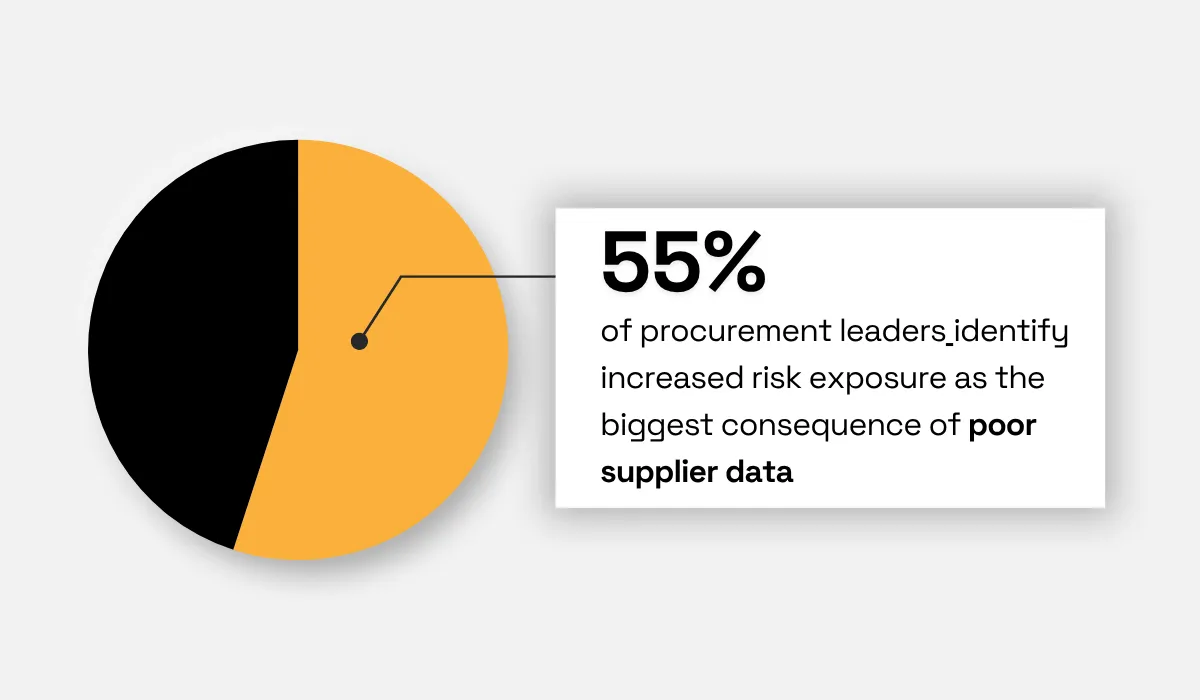
According to the Graphite State of Supplier Data 2026 report, 55% of procurement leaders identify increased risk exposure as the biggest consequence of poor supplier data, highlighting the need for supplier intelligence that extends well beyond onboarding.
Instead, procurement teams should build an AI-powered monitoring system that continuously scans the market for relevant business changes.
Unlike manual monitoring, which relies on periodic supplier reviews or occasional market research, AI continuously analyzes fresh, granular business data to identify meaningful changes.
As Florin Tufan, CEO of Veridion, notes:
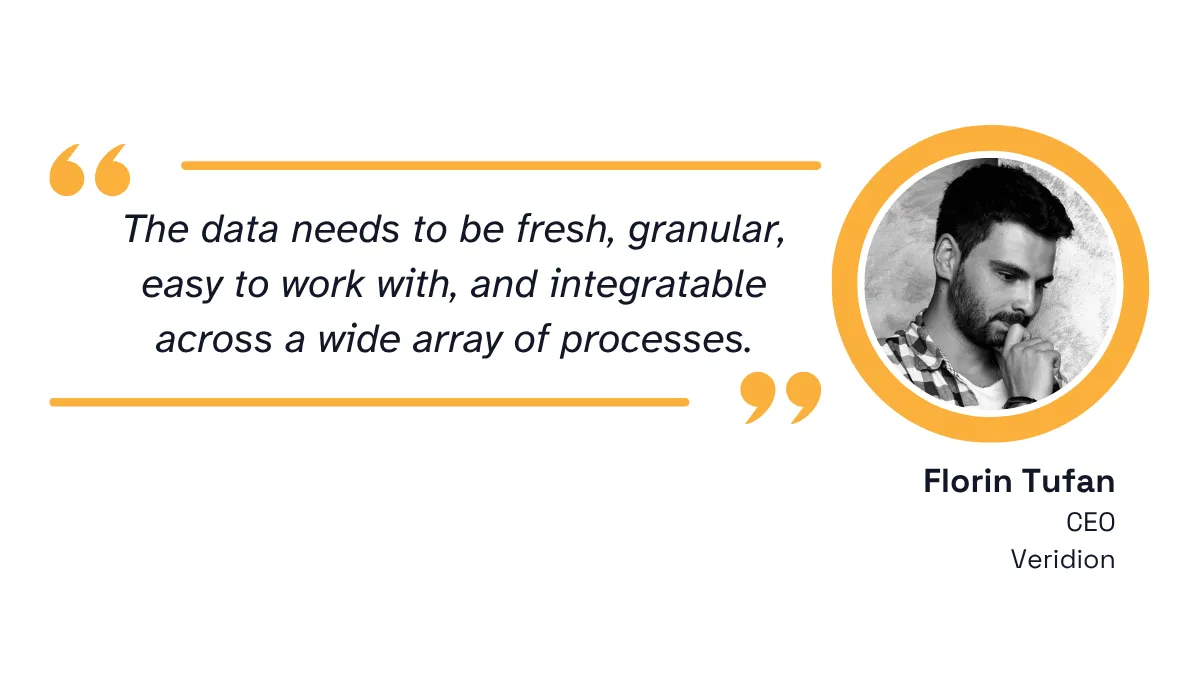
Illustration: Veridion / Quote: The Recursive
Depending on your sourcing objectives, AI can monitor events such as:
- Emerging suppliers that match your sourcing criteria
- New production facilities or capacity expansions
- New manufacturers entering your target market
- Mergers, acquisitions, and ownership changes
- New products or manufacturing capabilities
- Industry news affecting supplier operations
- Trade show exhibitors in your target sector
- Certification and regulatory changes
- Executive leadership changes
For example, suppose your organization sources precision components for the UK automotive industry.
Rather than repeating the supplier discovery process every quarter, AI can notify your team when a new manufacturer enters the market, an existing supplier expands production capacity, or a current supplier loses an important certification.
That enables procurement teams to respond quickly to both new sourcing opportunities and emerging supplier risks.
AI transforms supplier discovery from a reactive activity into a continuous capability.
Instead of launching a new sourcing exercise every time business needs change, procurement teams maintain an always-current view of the supplier landscape and already know where qualified alternatives exist.
That's what separates a one-time supplier search from a durable sourcing capability.
Conclusion
Precision beats breadth.
The moment you stop searching for “suppliers” and start searching for a structured set of attributes, AI stops guessing and starts identifying suppliers that genuinely match your requirements.
The UK's supplier landscape isn't standing still, and neither should your sourcing process.
Build your taxonomy, and every supplier search becomes more precise, consistent, and scalable.
That's how supplier discovery evolves from a recurring scramble into a repeatable capability your procurement team can rely on, project after project
Articles
Discuss how these trends affect your organization.
Our analysts are available for a short call. Bring a specific question and we will ground it in the data.
Insights
Keep reading
More analysis, research, and outcomes grounded in live company intelligence.
Enterprise Supplier Discovery for Procurement Teams
Want to simplify enterprise supplier discovery? Explore proven strategies for finding and vetting suppliers!
5 Useful Sources of Small Business Data
Looking for small business data? This article will show you five useful sources companies use to find reliable insights.
7 Key Steps of Successful Supplier Sourcing
Want to optimize your supplier sourcing process? Get better at each of the key seven steps we outlined and you'll get there.