Insights / Articles
How Fast Does Firmographic Data Decay (and What Can You Do About It?)
How fast does firmographic data decay? Combat B2B data freshness issues and find reliable firmographic data providers.

- 11% of professionals shift companies annually.
- 234 CEOs exited roles worldwide during 2025.
- Refresh high-value accounts before lower-priority records.
- Continuous enrichment reduces reliance on manual checks.
How much confidence can you place in the data your sales team uses every day?
A company record can remain in your CRM for years, but that does not mean every detail inside it is still correct.
Changes happen across businesses all the time, and outdated information can affect targeting, account scoring, outreach, and reporting.
The challenge is keeping useful information current without turning data maintenance into a constant manual task.
A practical approach can help you maintain data accuracy and give your teams a clearer picture of the companies they are trying to reach.
How Fast Does Firmographic Data Actually Decay?
There is no universal expiry date for firmographic data.
How long a record stays useful depends on the type of information, the company, and how quickly its market is moving.
A firmographic record can look perfectly fine and still be getting less reliable.
Why? Find out below.
Headcount and Revenue Drift Continuously
How long does a person typically stay with the same employer?
According to the U.S. Bureau of Labor Statistics, wage and salary workers had a median tenure of 3.9 years with their current employer in January 2024. For private-sector workers, it was even shorter at 3.5 years.
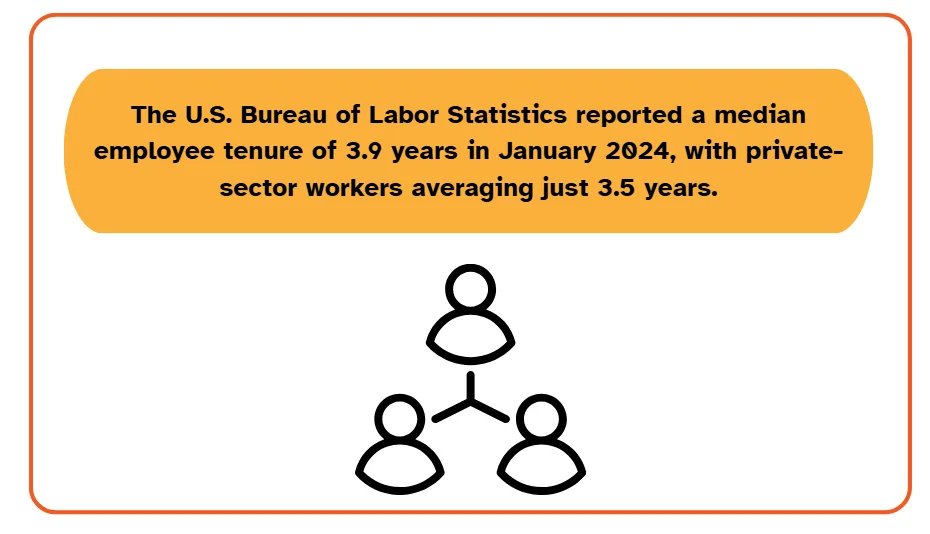
Illustration: Veridion / Data: U.S. Bureau of Labor Statistics
The tenure length also varied by industry. Workers in leisure and hospitality had a median tenure of just 2.1 years, compared with 4.9 years in manufacturing.
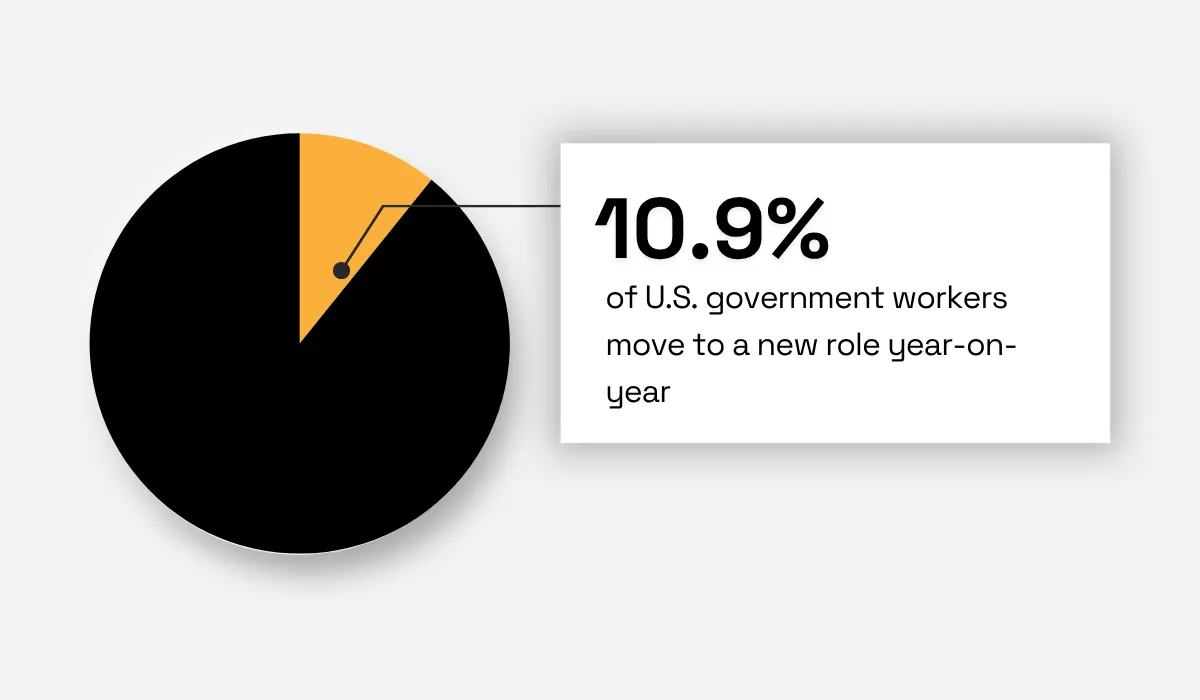
Coming to the public sector, according to the LinkedIn Workforce Report for April 2026, 10.9% of U.S. government employees changed jobs year over year.
Every one of those moves can affect several data fields at once.
Employee movement matters because company data is often built around the people, roles, and structures within a business.
Let’s say your target is mid-sized technology companies.
A company that had 200 employees when you added it may now be much larger. Another may have cut its workforce after a restructuring.
The company name is still the same, so the record looks valid at first glance.
But is it?
The same issue applies to revenue.
A company that pulled in $10M last year could be sitting at $7M or $20M now, depending on how the year went. Industry classification shifts too, especially when a company pivots or adds a new product line.
This is why firmographic data needs regular checking, not just a one-time cleanup.
You are not only asking, 'Has the company changed?'
You need to ask, 'Are its headcount, revenue, and other firmographic details still accurate today?'
Funding and Ownership Change With Little Warning
A funding round can change a company’s growth plans. An acquisition can change its ownership, name, domain, and structure. A merger can make an old company record wrong in several places at once.
Research estimates that 5% to 10% of companies go through a major change each year.
But the problem is that it may take months for third-party data companies to reflect those changes.
Think about an acquisition. If Company A acquires Company B, the old Company B’s record does not simply become 'acquired.'
Its name may change. Its email domain may change. Departments may be reorganized. Contacts may move into new roles.
All of this could make your data stale rapidly.
Leadership and ownership changes also create a similar problem.
According to the Global CEO Turnover Index from Russell Reynolds Associates, 234 CEOs left their roles worldwide in 2025. That was 16% higher than the year before and 21% above the eight-year average.
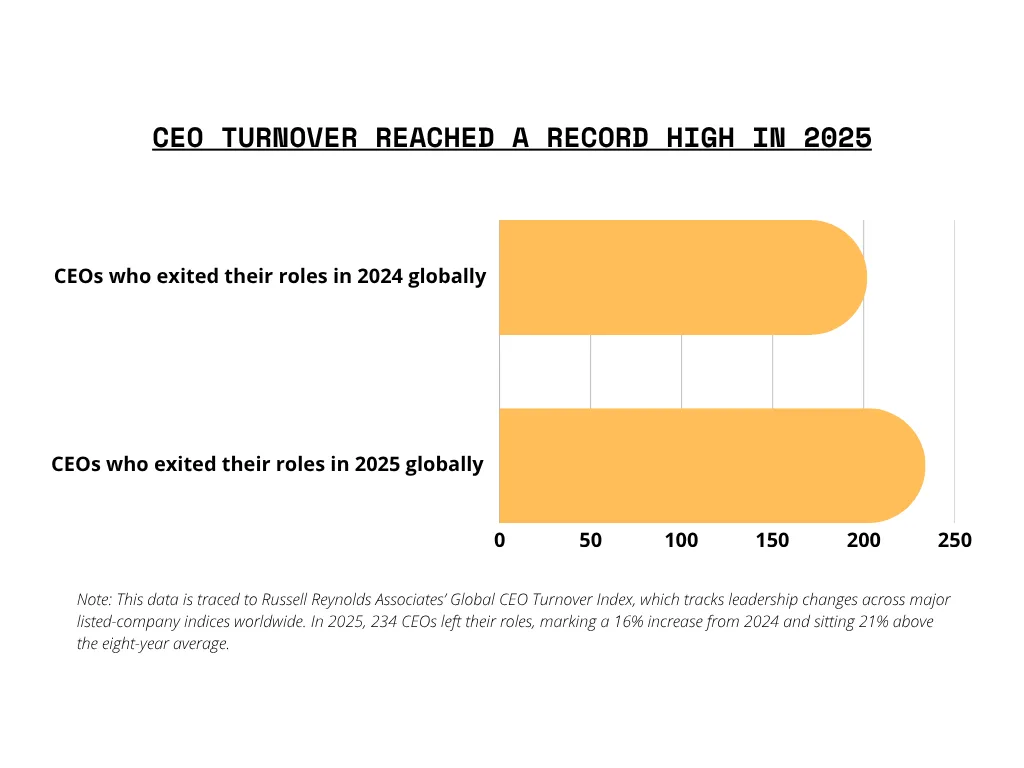
Illustration: Veridion / Data: Russell Reynolds
That means the person leading a company can change while your database still points to the previous CEO.
So, what happens to your account data when leadership changes, but your records do not?
You may still have the right company name and website. But your ownership or leadership data is already behind.
Funding creates another timing problem. A company can receive new capital quickly, while third-party data may take longer to reflect what happened.
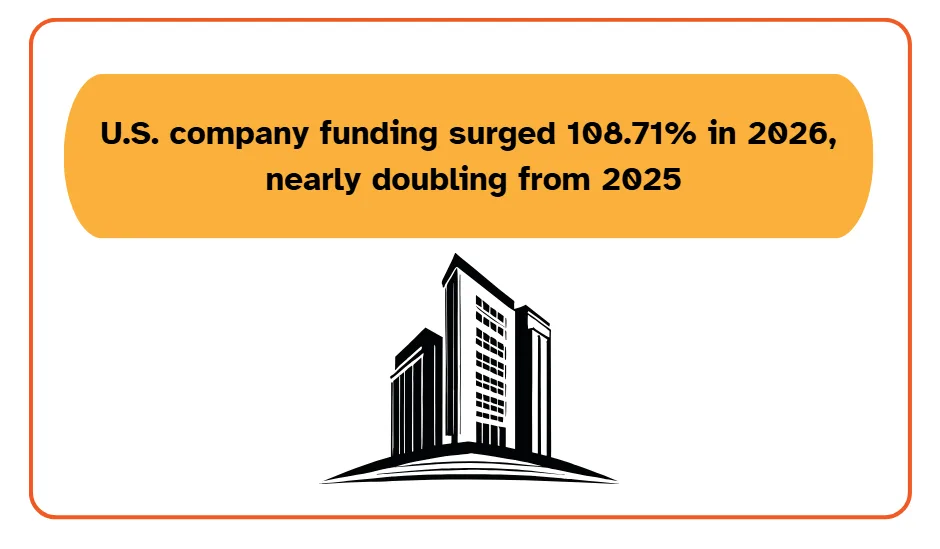
According to Tracxn, a private data market platform, U.S. companies attracted 108.71% more funding in 2026 than in 2025. That is almost twice the funding in a single year.
Imagine how many funding records, headcount changes, leadership moves, ownership updates, and other firmographic changes could have been created.
The question is: how many data providers are actually capturing those changes accurately and quickly?
Firmographic data is inherently static, but the company attributes it captures can change over time. That means the data needs to be regularly checked and refreshed to stay accurate.
Decay Compounds Faster in High-Mobility Sectors
A single annual decay number can hide a big difference between industries.
A stable government organization and a fast-growing technology company do not change at the same pace. So why would you refresh their data on the same schedule?
The industry data decay numbers make this clear.
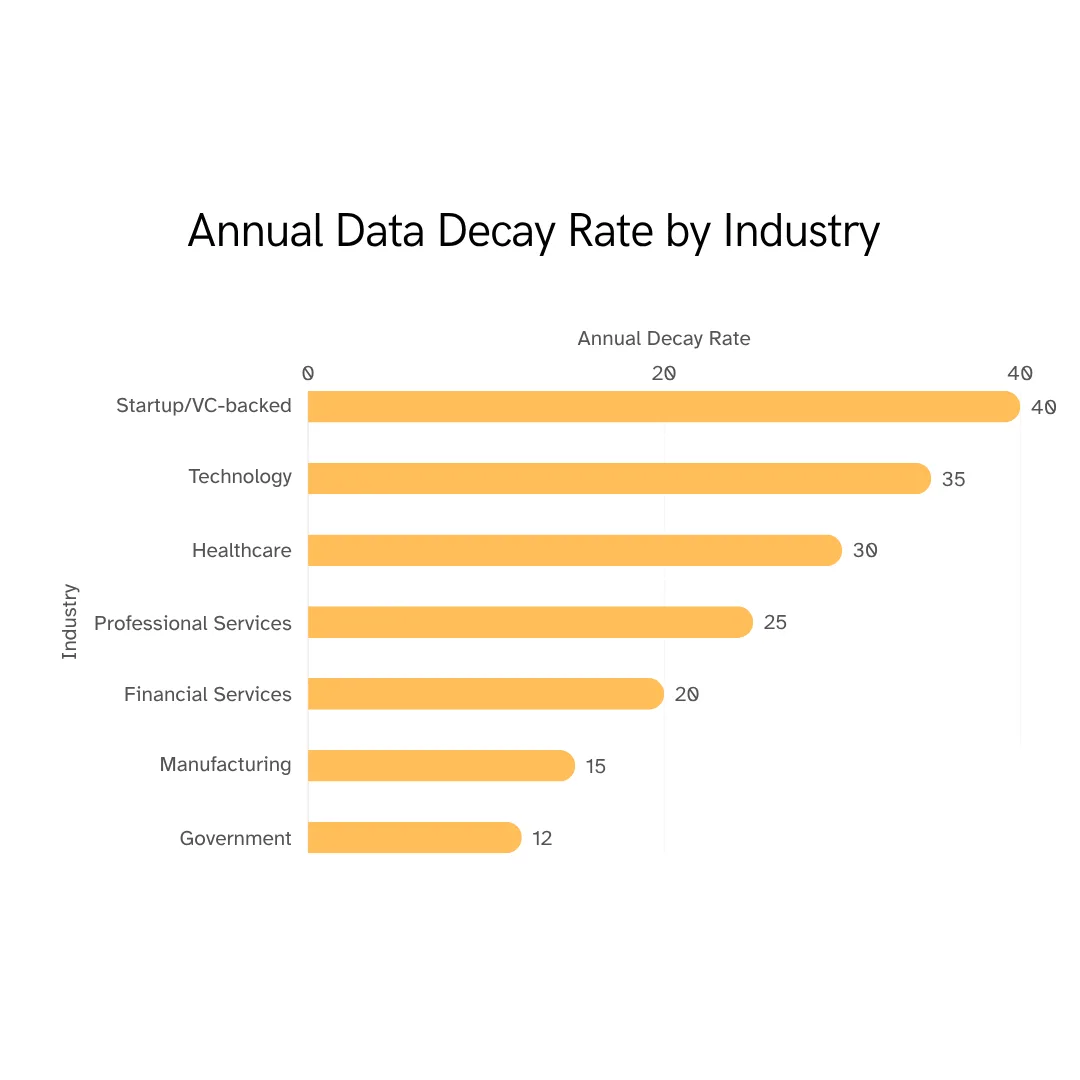
Illustration: Veridion / Data: Cleanlist.ai
The difference is not small.
As seen from the illustration above, startups and VC-backed companies sit at the top, with an annual 30–40% data decay, followed by technology at 25–35%.
Now compare that with the government at 8–12%.
The gap changes how you should think about data accuracy and maintenance.
And it is not just about annual data decay. At a micro level, the numbers are much more worrisome:
- 42.9% of business contacts get new phone numbers.
- 41.9% experience address changes.
- 37.3% have email addresses that change within a year.
Say you have a list of 5000 prospects; then there’s a good chance that ~2,145 phone numbers are stale or ~1,865 email addresses are no longer valid.
If the industry is tech or startup, the numbers could be much higher.
Daniel Conn, Co-founder at graph8, an AI sales company, captures the sentiment perfectly:
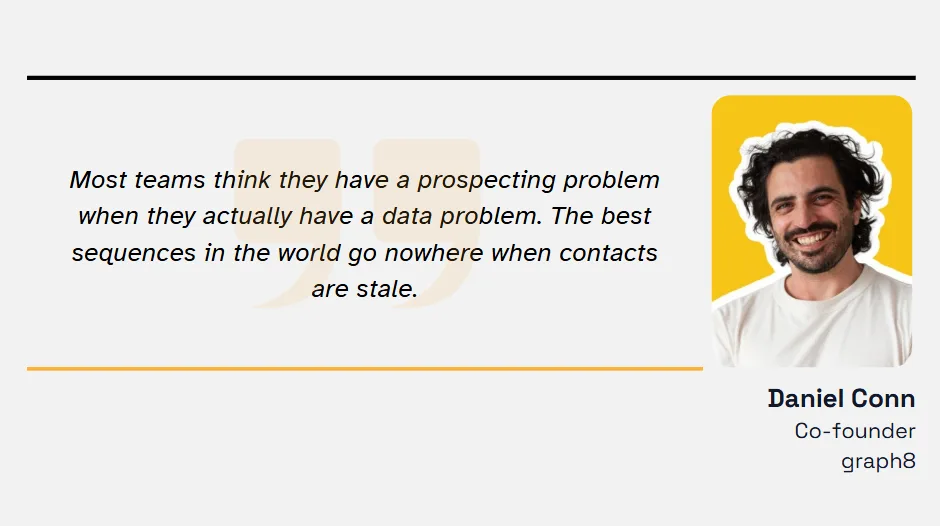
So, your team working with such prospect lists could be wasting a good amount of time on leads that don’t exist or those that may not convert.
That is why a single refresh cycle across all industries makes little sense.
A technology company may need much closer monitoring than a government organization. A VC-backed startup may need even more attention because company-level changes and employee movement happen together.
Your data strategy should follow the pace of the industry. The faster the sector moves, the faster your firmographic data can become yesterday’s information.
How to Ensure You Always Work With the Freshest Data
Keeping data fresh is less about doing one large cleanup and more about building a process that keeps pace with change.
The goal is to keep your database reliable without creating unnecessary work for your teams.
How do you achieve this? Read below.
Match Refresh Cadence to Each Field's Volatility
Not every field in your database becomes outdated at the same speed. Treating them all the same wastes time.
Cleanlist.ai’s research shows a clear difference.
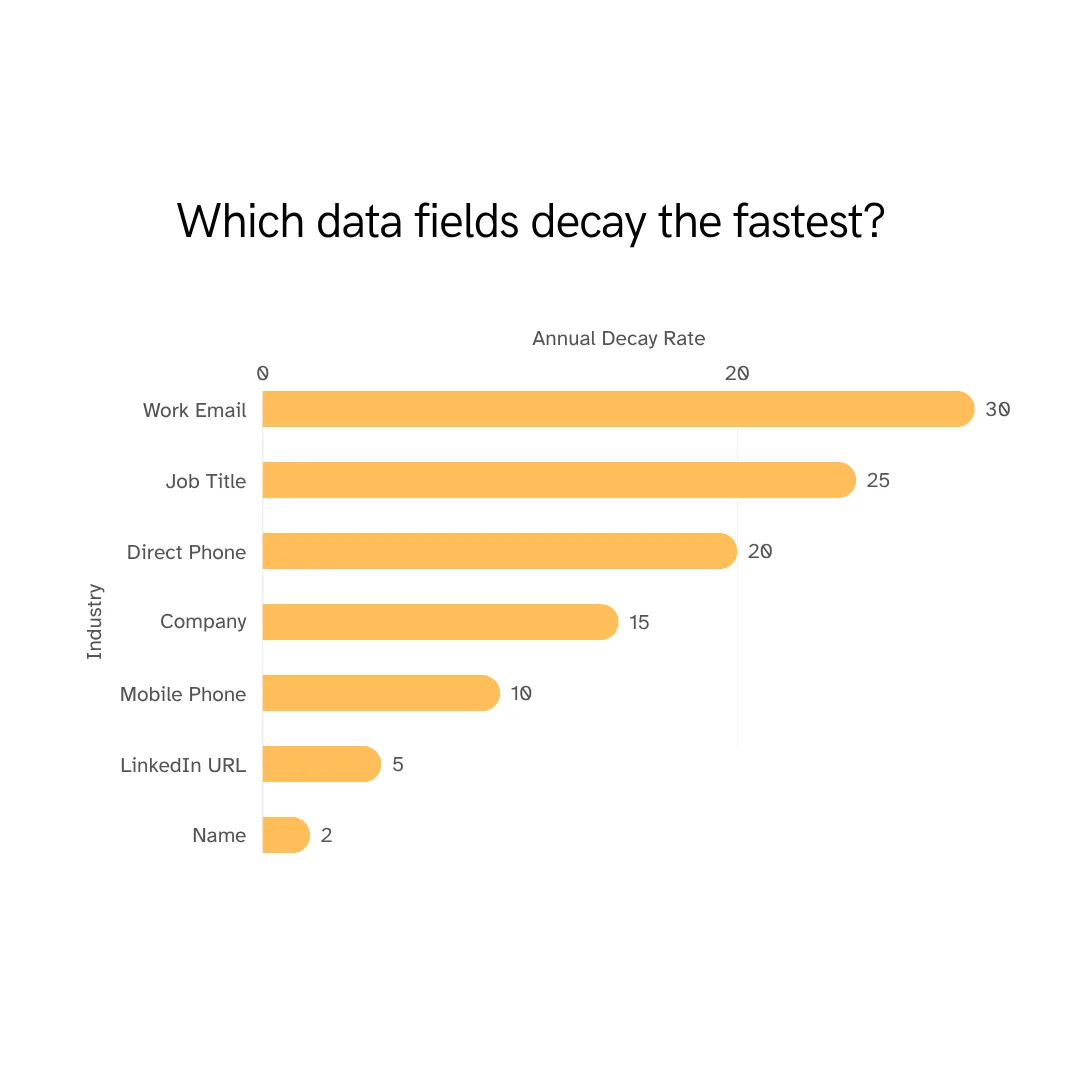
Illustration: Veridion / Data: Cleanlist.ai
As observed from the illustration, work emails decay the most, while LinkedIn URLs are more stable, with a maximum decay rate of 5%.
That gives you a simple rule: the faster a field changes, the more often you should verify it.
For example, checking a work email once a year is unlikely to be enough when up to 30% can change over that period. Phone numbers and job titles also deserve more frequent checks than a person's name or LinkedIn URL.
It’s important to remember this because stale data comes at a cost.
Research from Validity, an AI-powered email platform, showed that 44% of companies lose more than 10% of annual revenue due to poor CRM data.
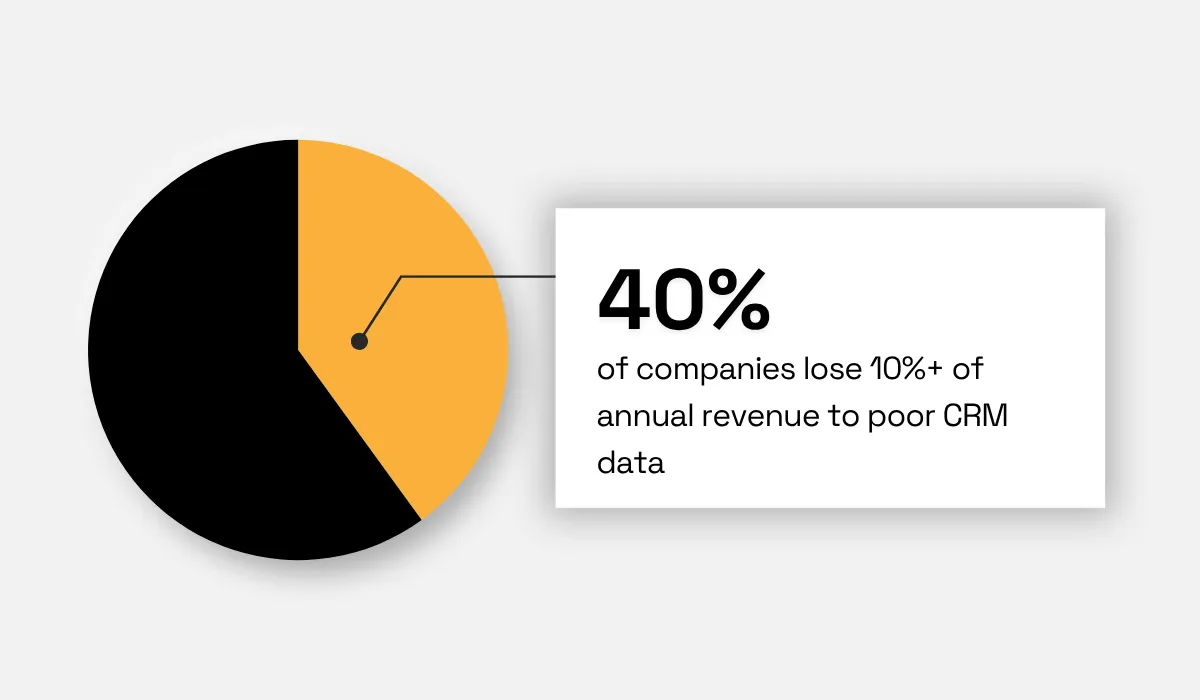
To avoid such wastage, set different refresh cycles for different fields rather than an annual checkup.
High-volatility fields | Verify frequently |
|---|---|
Medium-volatility fields | Review on a regular schedule |
Low-volatility fields | Refresh less often, unless a change signal appears |
This makes data maintenance more focused. Your team spends its time checking the fields most likely to have changed, rather than repeatedly reviewing information that is still accurate.
Prioritize Refreshing High-Value Accounts First
You do not need to refresh and enrich every company in your database at the same time.
Start with the accounts where data refreshing could have the biggest impact on revenue.
That could mean your largest prospects, like:
- Active opportunities
- Strategic accounts
- Companies that closely match your ideal customer profile (ICP)
Market Research Future reports that organizations implementing enrichment strategies see conversion rate improvements of up to 20%.
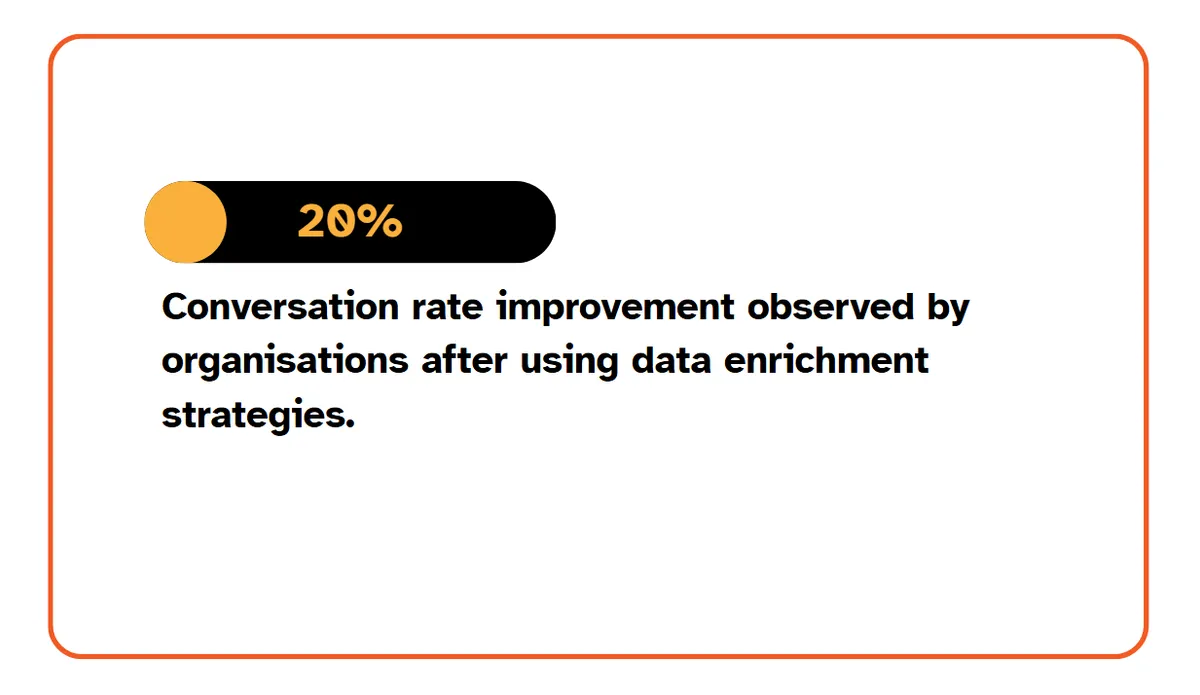
Illustration: Veridion / Data: Market Research Future
So imagine your sales team is preparing outreach to 500 high-value accounts. Instead of applying the same level of scrutiny to every record in your database, start with the accounts that could have the biggest impact on revenue.
For each priority account, verify:
- The decision-maker
- Their current role
- Their company association
- Their email and phone number
- The firmographic details that determine ICP fit
You can also use change signals to decide when an account needs another review. Funding events, leadership changes, hiring activity, acquisitions, or major shifts in company size can all indicate that older data may no longer be reliable.
This is more effective than waiting for one large annual cleanup. Set a regular refresh cycle for priority accounts, while using significant company changes as triggers for an earlier review.
That keeps your most valuable records current without spending the same amount of time repeatedly checking accounts that have not materially changed.
Automate Data Updates
Manual data checks can help clean a database, but they are difficult to sustain when company information keeps changing constantly.
A stronger approach here is to automate data updates and make data maintenance an ongoing process.
The need is clear. According to Salesforce's 6th State of Sales report, sales reps spend 70% of their time on tasks that do not directly involve selling. This includes manual data entry, administrative work, and more.
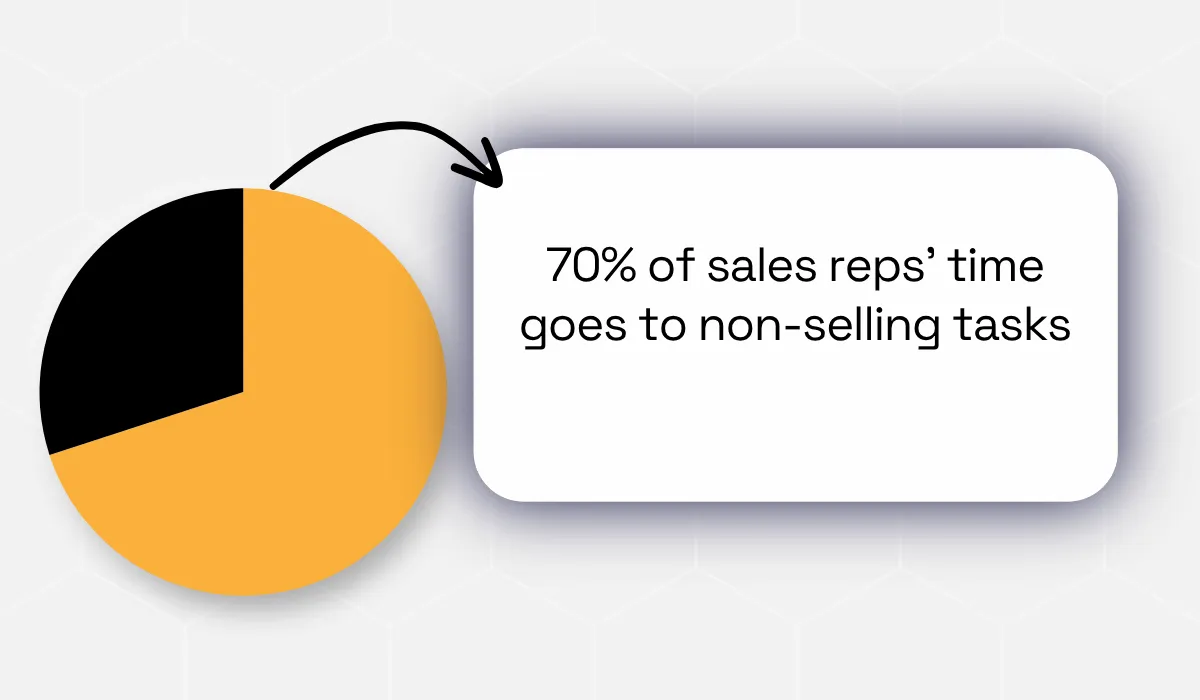
Illustration: Veridion / Data: Salesforce's 6th State of Sales
Automation can help reduce these manual efforts by closing the gap between when a company changes and when your database reflects that change.
For that, you require a data source built to detect and incorporate new information continuously.
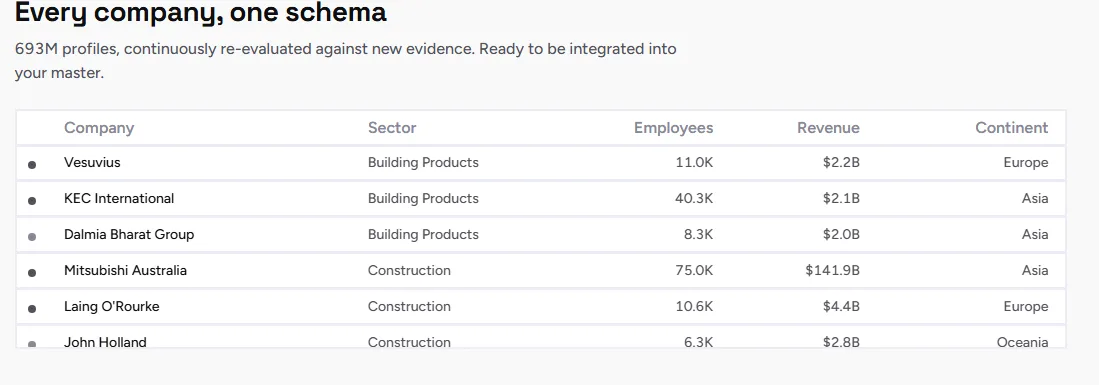
Veridion does this by building company profiles from primary sources, then using extraction, entity resolution, and validation to keep those profiles current.
The profiles are then continuously re-evaluated as new evidence becomes available.
Source: Veridion
The platform brings together information such as company size, business activity, industry classifications, contact details, digital presence, legal information, and corporate relationships.
Veridion also supports APIs for Search, Match, Enrich, Location, ESG, and Corporate Groups, along with scheduled batch exports.
That makes it possible to build freshness into the data workflow itself. Your teams spend less time finding what changed and more time acting on company data that is current.
Conclusion
Firmographic data does not stay accurate simply because a company record still exists.
Headcount, revenue, ownership, industry, and leadership can all change while your database continues showing yesterday’s information.
The answer is not refreshing everything at once. Match refresh frequency to how quickly each field changes, focus first on accounts that matter most, and automate updates wherever possible.
A data workflow built around continuous change gives sales and marketing teams a better view of the companies they are targeting and helps keep important decisions based on current information.
Articles
Discuss how these trends affect your organization.
Our analysts are available for a short call. Bring a specific question and we will ground it in the data.
Insights
Keep reading
More analysis, research, and outcomes grounded in live company intelligence.
How to Build a Firmographic Lead Scoring Model That Actually Predicts Revenue
Looking to build a firmographic lead scoring model? This guide will show how company data can help prioritize leads and improve revenue predictions.
Which Online Business Data Providers Stand Out in Today's Market?
This article will highlight online business data providers that businesses trust for accurate company information and actionable insights.
What B2B Teams Get Wrong About Data Privacy When Enriching Company Records
Are B2B teams making critical data privacy mistakes when enriching company records? Avoid costly errors with insights on firmographic data providers.