Insights / Articles
Firmographic Fit vs Buying Readiness: Why the Best B2B Teams Use Both
In this article, you will learn how firmographic fit vs buying readiness helps B2B teams identify accounts that are both relevant and ready to buy.

- Only 5% of B2B buyers are in-market quarterly.
- Firmographics define account fit, but not buying readiness.
- Behavioral signals reveal when account priorities begin shifting.
- Connected data reduces blind spots across GTM decisions.
A prospect list can look impressive and still tell you very little about where revenue will come from.
The real challenge is not finding more companies. It is separating useful account information from signals that actually help a go-to-market (GTM) team make better decisions.
A company may fit your market perfectly but have no current need. Another may look ordinary on paper but suddenly become worth pursuing.
This gap between account fit and account movement is where data becomes more valuable.
Looking at firmographic and behavioral data together gives teams a clearer way to decide who belongs on the list, who deserves attention, and when that priority should change.
Firmographic Data: An Always-On Qualification Filter
Firmographic data answers the first question in B2B targeting: is this the right company?
It continuously identifies accounts that match your ideal customer profile (ICP) using attributes such as industry, company size, location, ownership, products, and more.
That makes it the foundation layer for deciding where your GTM teams should even look. But is that all?
Firmographic Fit Helps Narrow the Market, But Not the Account Moment
A strong firmographic match does not mean an account is ready to buy.
Two companies can sit in the same industry, have similar headcounts, operate in the same region, and still have completely different reasons to consider a new solution.
One may be expanding into new markets and increasing its technology budget, while another is cutting costs and putting new projects on hold.
That distinction becomes important when most B2B buyers are not actively purchasing.
Research from the Ehrenberg-Bass Institute, a research organisation based at Adelaide University, found that only about 5% of B2B buyers are in-market in a given quarter. The remaining 95% may still fit the ICP, but they are not necessarily looking for a solution.
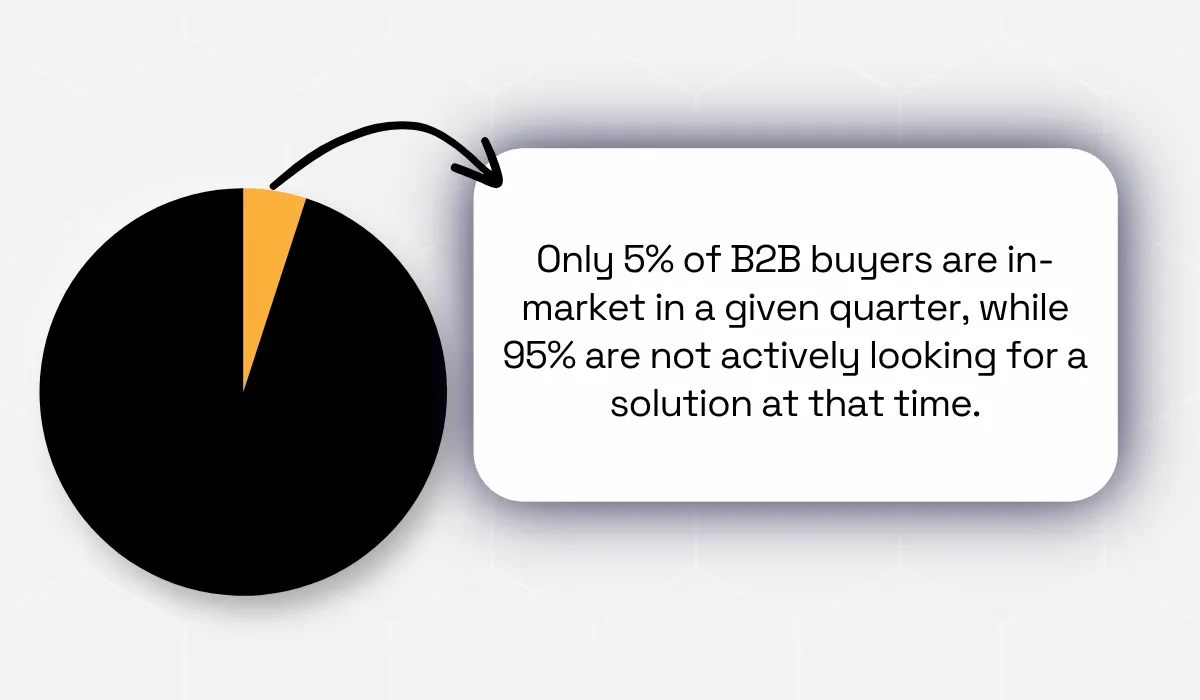
Illustration: Veridion / Data: Ehrenberg-Bass Institute
In other words, if you have a list of 20,000 prospects, ~19,000 have no intent to purchase at any given time.
Bad data makes the problem worse.
FirstEigen reports that poor data causes B2B marketers to reach the wrong decision-makers 86% of the time.
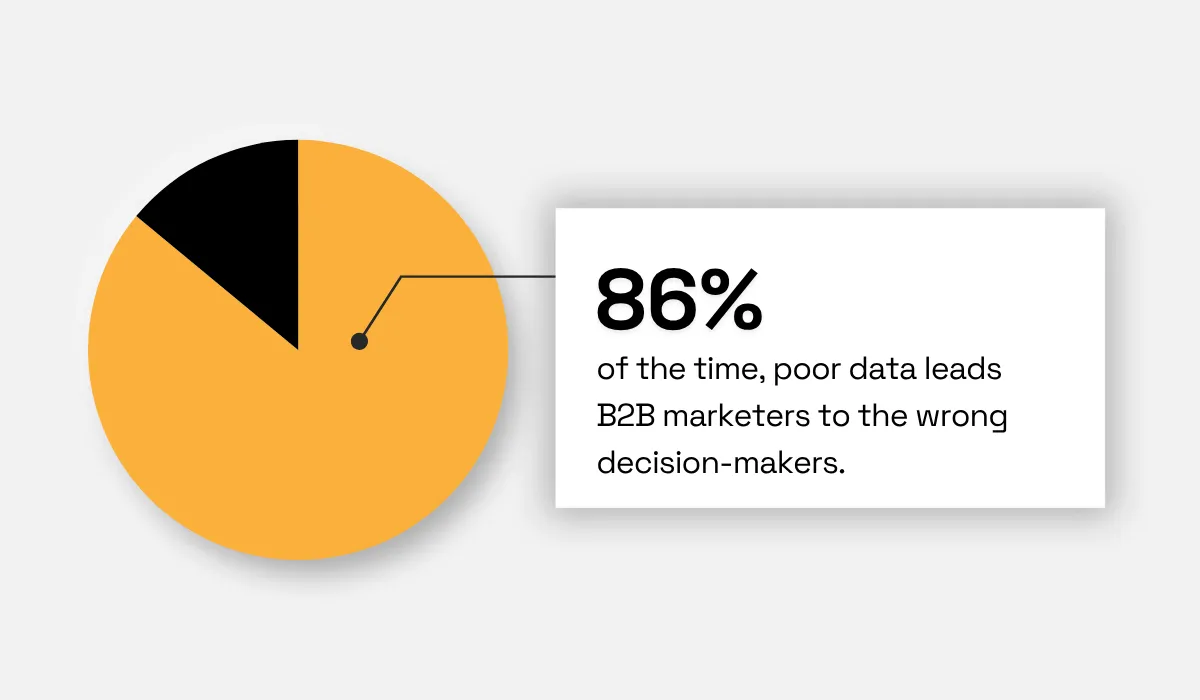
Illustration: Veridion / Data: FirstEigen
So, your sales team could likely be calling the wrong people or chasing dead leads.
In other words, a firmographic filter can give sales teams an account list without telling them which accounts should move to the top.
This is why firmographic data needs to go beyond broad filters. A company can strongly match your ICP, but that does not automatically mean conversion.
Keep the ICP Current as the Market Changes
For teams that use firmographic data, the challenge is not just a static list or lack of buyers.
Dun & Bradstreet, a data and analytics company, showed in their 10th Annual B2B Data Report that 32% of B2B organizations struggle with data inconsistency, 31% with inaccurate data, and 30% with data latency or outdated information.
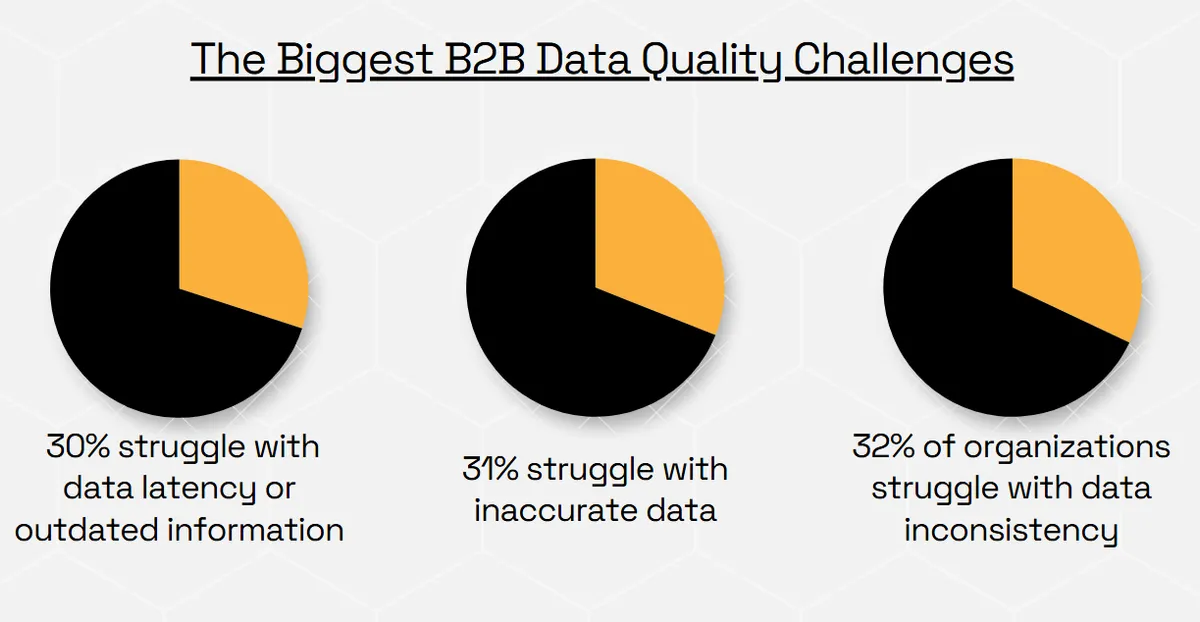
Illustration: Veridion / Data: Dun & Bradstreet
Companies enter new markets, change ownership, add products, or grow beyond their original size range. As those changes happen, the firmographic attributes used to qualify an account can quickly lose their relevance.
That makes it important to look beyond a single data source.
GTM teams can combine firmographics with third-party, behavioral, and intent data to truly understand what is changing around an account.
This adds context that static company attributes cannot provide and helps teams spot accounts that may be becoming more relevant.
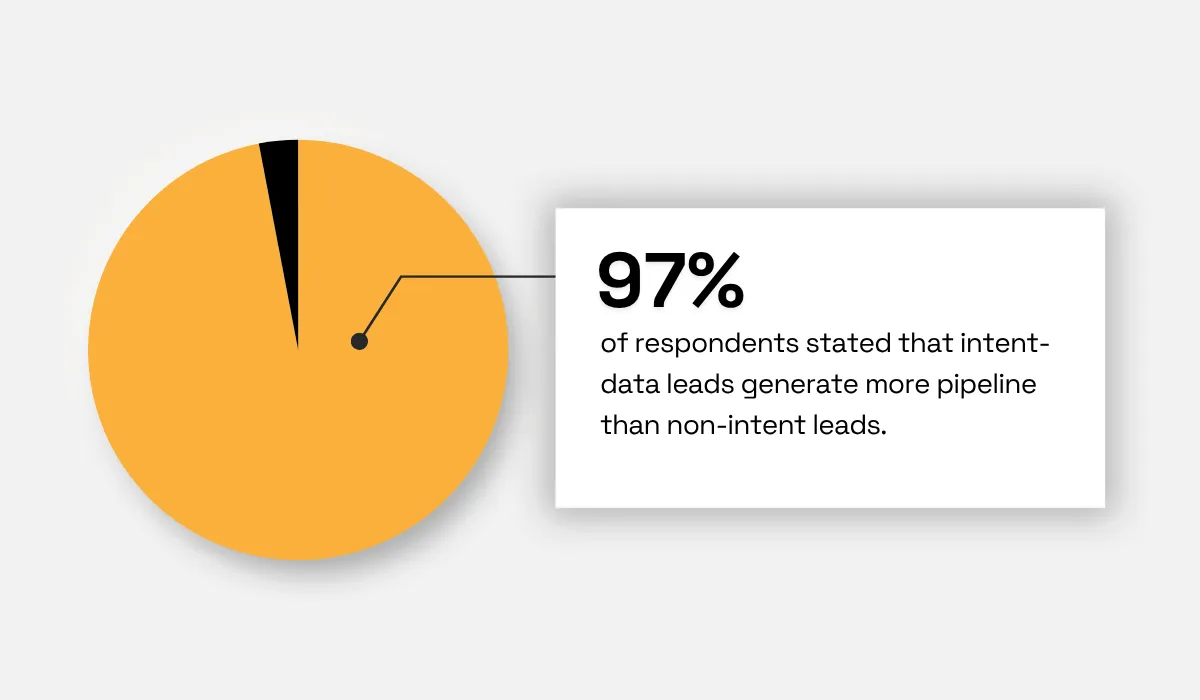
Research by Anteriad, a B2B marketing and data company, reported that 97% of respondents said intent-data leads generated more pipeline than non-intent leads.
Remember, it is not about replacing firmographics with intent data.
Firmographics still largely help establish which companies fit the target market. Behavioral and intent signals add the missing layer by showing which of those accounts are actively moving toward a need your solution can address.
Behavioral Data: The Timing Trigger
Many sales reps ask “how do you know when an account is worth your attention?” or “what changes when a company that looked like a good prospect yesterday starts showing signs of active interest today?”
Behavioral data helps uncover those shifts, giving you and your team another layer of context before deciding where to focus.
Intent Data Shows Which Accounts Are Moving
Imagine you search for: Financial services companies, US, 1,000+ employees, Microsoft Dynamics users.
A company that matches all four criteria may seem like an ideal prospect. But if it recently chose a competing solution and is locked into a multi-year contract, its ICP fit does not translate into an immediate opportunity.
The account is a match, but the timing is not. In other words, firmographic data’s static nature cannot tell you if the account has a reason to buy right now.
Intent data addresses this exact problem. It captures signals such as increased research activity, funding events, content engagement, and interest in topics to help you understand true buyer interest.
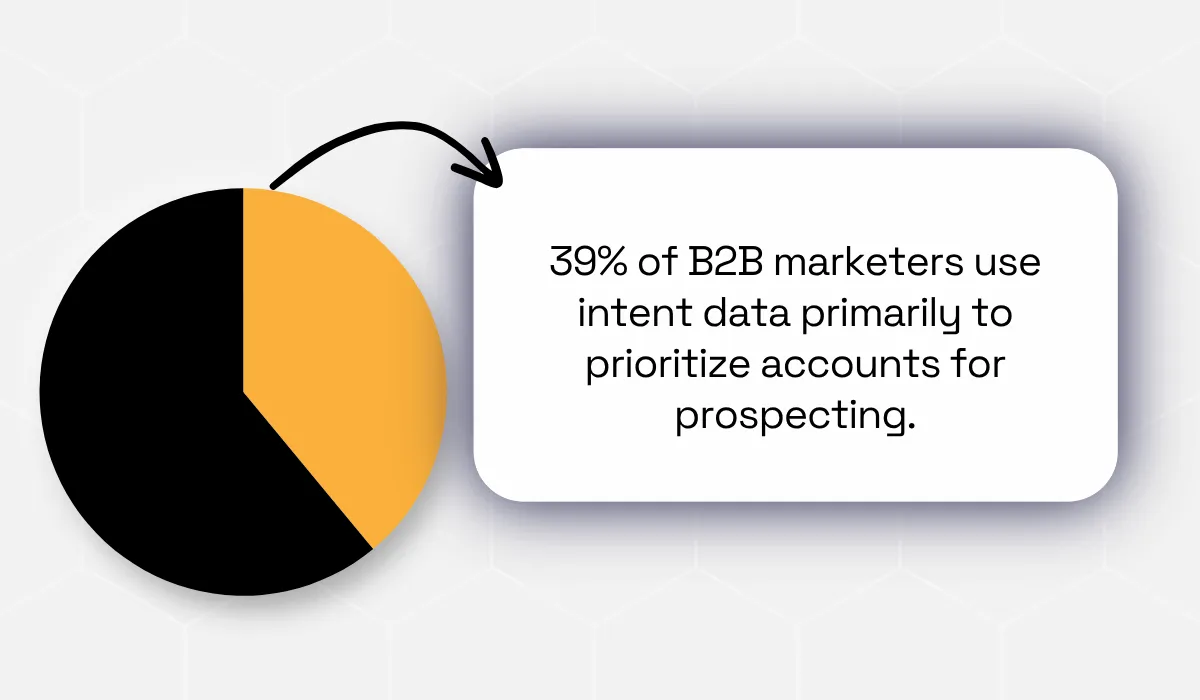
And it makes sense because 39% of B2B marketers say their primary goal for using intent data is to prioritize accounts for prospecting, according to Mixology Digital's 2024 intent-data research.
Now consider an account with the same firmographic profile that has started researching alternatives, visiting relevant product pages, and engaging with content around the problem your product solves.
That information gives sales teams a reason to move the account higher on the priority list instead of treating every ICP-fit company the same way.
Combine Intent With Other Account Signals
Intent data becomes more useful when it is combined with the account information GTM teams already use for qualification.
DISCO, a legal technology company, provides a good example.
The company wanted to understand its prospects better and engage them earlier with more relevant outreach. It used Demandbase, an account-based marketing platform, to bring together account data from its CRM, marketing automation platform, and website.
Demandbase helped DISCO identify signals such as keyword activity, competitor research, and website engagement. These signals gave its sales and marketing teams more context about what target accounts were interested in and when they might be ready for a conversation.
The platform also helped DISCO define its ICP and total addressable market (TAM), connecting account fit with buying signals.
This meant the team could look beyond a generic target-account list and identify prospects that were both relevant to its market and showing signs of active interest.
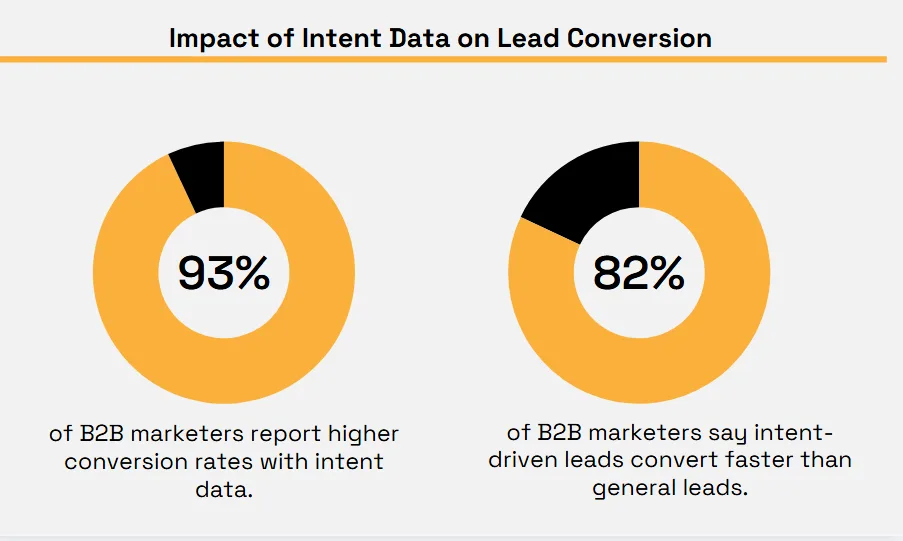
And it’s not just DISCO: 93% of B2B marketers have reported a lift in their conversation rates when using intent data, with 82% converting faster than general leads.
Henry Schuck, ZoomInfo founder and CEO, also precisely sums up the relationship between intent data and firmographic data:
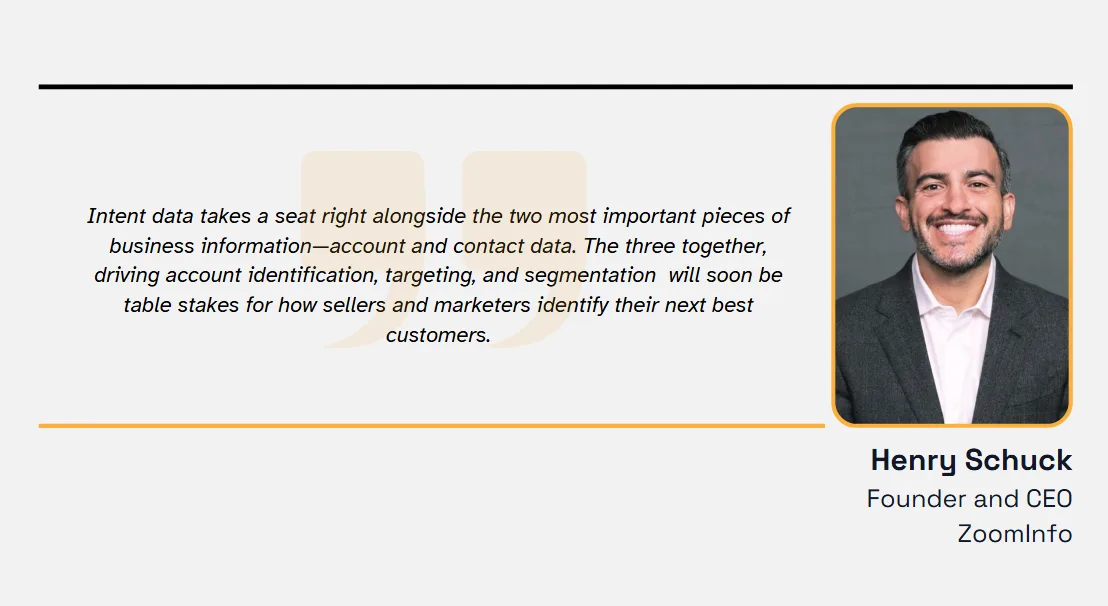
So, for GTM teams, these data layers (firmographic, behavioral, and intent) turn a static ICP list into a more responsive account-prioritization system.
As account behavior changes, GTM teams can adjust their focus instead of waiting for the next planning cycle.
Why Best-in-Class Teams Layer Both Together
Does your company have enough firmographic data to know which accounts are worth targeting? Or enough behavioral data to know which of those accounts are actually ready to engage?
For sales teams, choosing between the two can create blind spots. Both are needed to make account decisions with confidence.
The challenge is making sure those signals are accurate and connected. According to Precisely's 2025 Data Integrity Trends and Insights report, 64% of organizations cite data quality as their top data challenge, while 77% rate their data quality as average or worse.
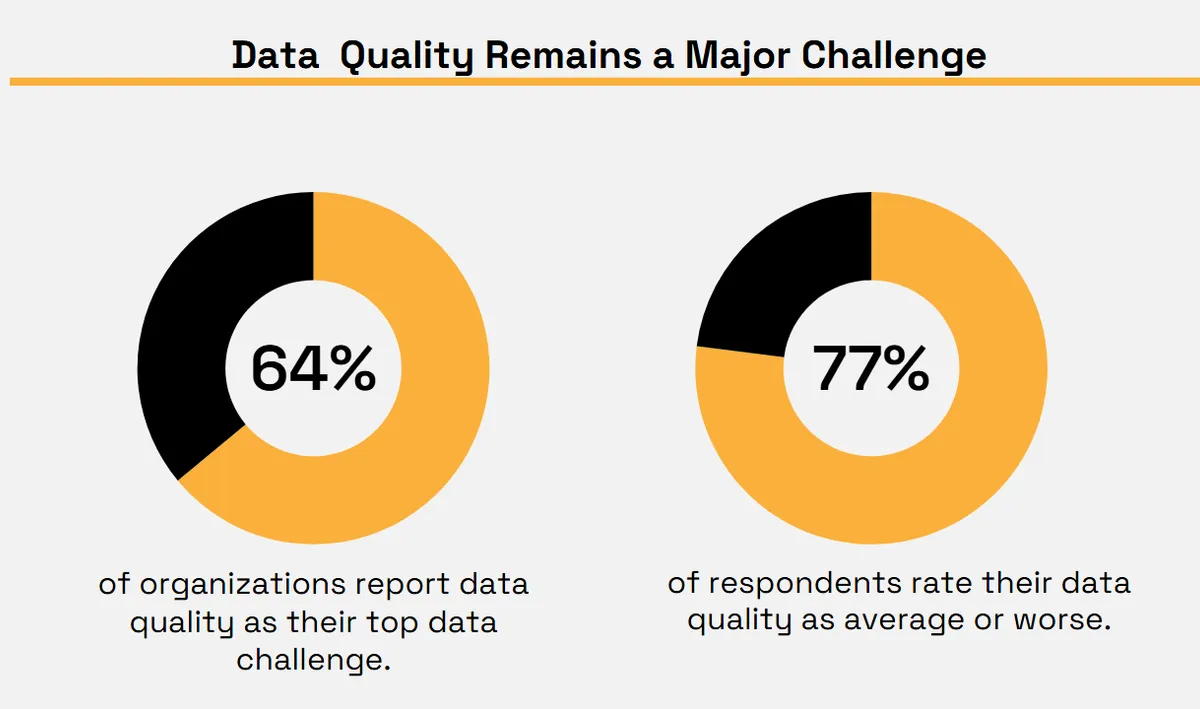
The issue is not always a lack of information. Teams can have plenty of data and still struggle to act on it when important signals are incomplete, outdated, or sitting in separate systems.
This is where a connected company data layer can make a difference.
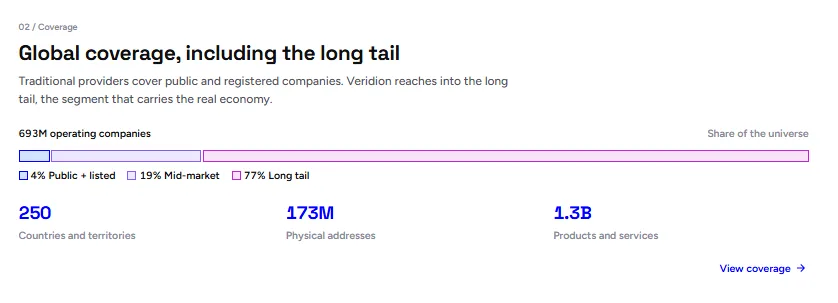
Veridion brings together firmographic information, business activities, industry classifications, locations, technology signals, products and services, and other company attributes.
Source: Veridion
This gives GTM teams a broader view of an account instead of relying on one category of data to make every qualification decision.
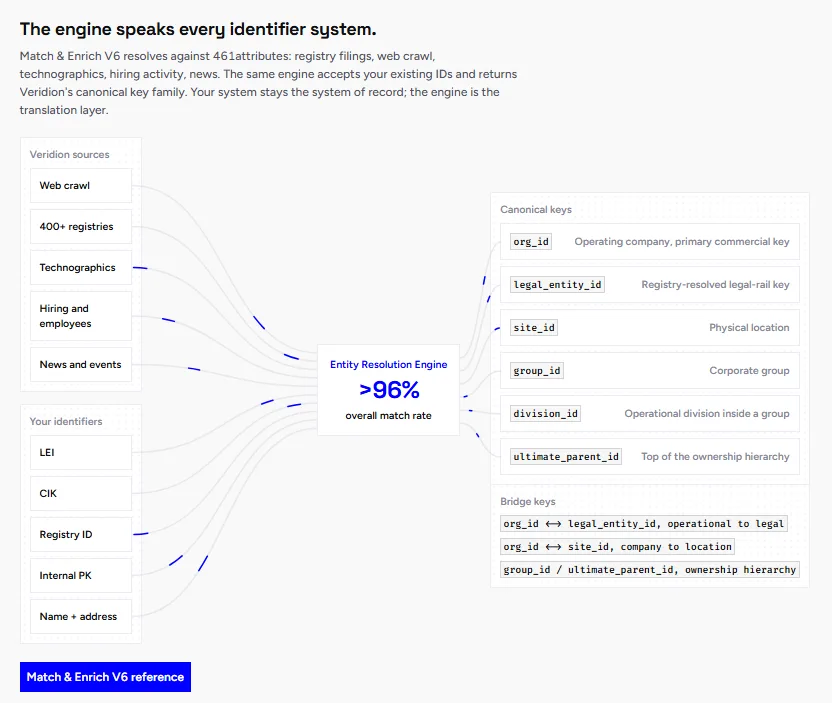
That broader view can also support market intelligence. Teams can use company-level data to understand market structure, compare businesses, identify relevant segments, and uncover opportunities across industries and regions.
Source: Veridion
As company information changes, continuously evaluating records against new evidence can also help keep account profiles closer to current market conditions.
The same principle applies to data enrichment. Instead of simply filling an empty field in a CRM, teams can connect multiple company signals to add meaningful context to existing records.
The goal here is not to collect the most data. It is to connect the right signals so teams can understand both who an account is and what it is doing.
That combination makes qualification more precise, helps surface opportunities at the right time, and truly reduces the risk of overlooking valuable accounts.
Conclusion
The strongest GTM teams do not treat account qualification as a one-time exercise. Markets change, companies change, and buying priorities change with them.
That means the value of a prospect depends on more than how closely it matches an ICP created months ago.
Firmographic data provides the structure for finding relevant companies, while behavioral signals add context around changing needs and priorities.
When those signals work together, teams can spend less time treating every account equally and more time understanding which opportunities deserve action.
Articles
Discuss how these trends affect your organization.
Our analysts are available for a short call. Bring a specific question and we will ground it in the data.
Insights
Keep reading
More analysis, research, and outcomes grounded in live company intelligence.
What Are the Benefits of Data Enrichment?
Want to understand the benefits of data enrichment? This guide will explain how enriched data supports better decisions and analytics.
Which Online Business Data Providers Stand Out in Today's Market?
This article will highlight online business data providers that businesses trust for accurate company information and actionable insights.
Looking for a Global Data Collection Partner? These Companies are Worth Considering
Looking for a global data collection partner? This guide will introduce companies worth considering and explain what sets them apart.