Insights / Articles
How to Find Local B2B Suppliers in France Using AI Taxonomies
Structured supplier taxonomies show how to find suppliers in France across regional clusters, then qualify, score, contact and monitor them with AI.

- A search by industry can miss French suppliers with the right materials, production processes or certifications.
- France’s 53 labelled competitiveness clusters give buyers a place to start, though relevant firms also operate outside their member directories.
- Different company names on websites and registry records complicate supplier checks.
- Facilities, ownership and production capabilities change after selection, so supplier records need ongoing review.
France classifies businesses across 732 activity codes. A search for “French industrial suppliers” gives enterprise buyers little information about companies suited to a specific sourcing requirement.
Broad industry labels leave out details such as manufacturing processes, materials, certifications, location, and production capabilities. You need a structured way to define these requirements and search across France’s industrial base.
AI taxonomies provide this structure. This article walks you through a repeatable process for using them to find, qualify, and manage B2B suppliers across France.
1. Build an AI Supplier Taxonomy
A supplier search works better when you first define what a suitable supplier looks like.
An AI taxonomy gives you a structured way to describe the industry and the attributes you need from a supplier.
Earley Information Science explains how taxonomies support product discovery, attribute design, and search refinement.
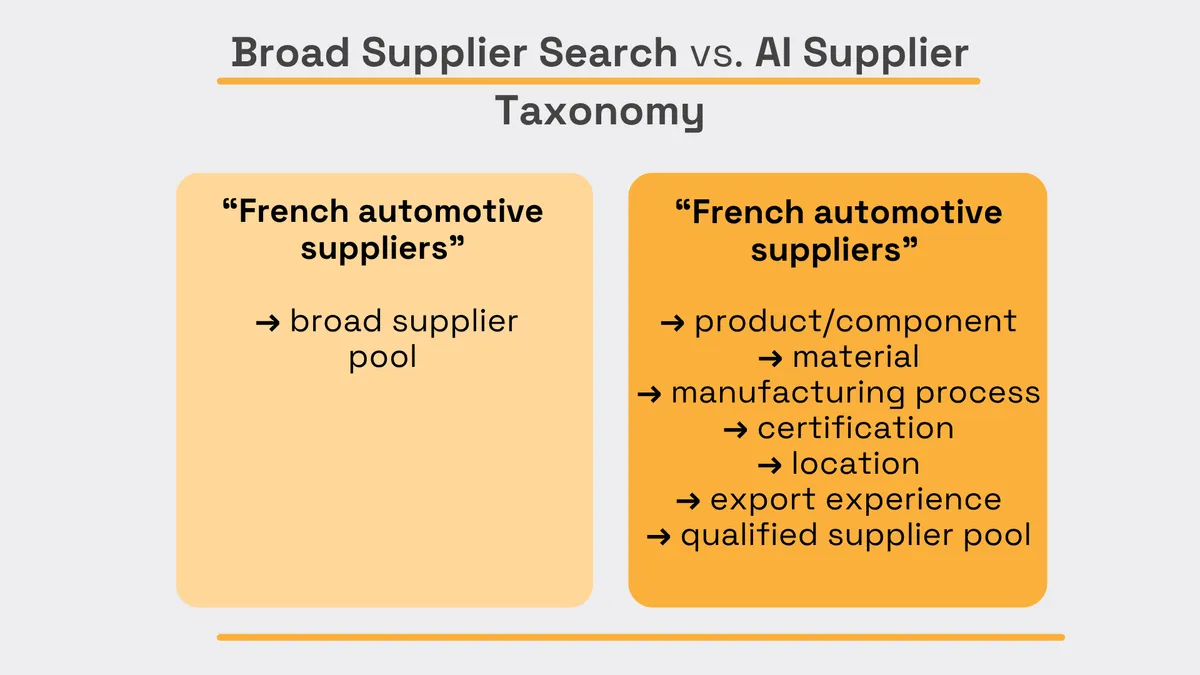
Consider a request such as, “Find French automotive suppliers.”
The query identifies an industry and a country, but leaves several important questions unanswered. You may need a manufacturer of stamped steel components, for example, with a specific production process, quality certification, a facility in France, and experience exporting to other European markets.
A supplier taxonomy breaks the requirement into attributes such as industry, product or component type, materials, manufacturing process, production capacity, certifications, facility location and export markets.
Source: Veridion
The infographic shows how the same broad search becomes more specific when you add product, material, manufacturing process, certification and location criteria. These attributes give AI more information to use when identifying suitable suppliers.
AI supplier discovery tools can then use criteria such as location, compliance and product categories to filter and rank potential suppliers. Supplier.io’s guide to AI supplier discovery describes how AI can aggregate supplier data, apply predefined criteria and rank suppliers against procurement goals.
For example, an automotive buyer looking for French metal component manufacturers could define the component type, steel grade, stamping or machining capability, production volume, IATF 16949 certification and facility location. The taxonomy gives AI a defined structure for interpreting these requirements and matching them against supplier information.
Start with the attributes that define your requirement
Begin by translating your sourcing specification into supplier attributes. A supplier sourcing framework starts with defining product requirements, quality standards, compliance needs and location before you begin searching.
Separate mandatory requirements from preferences so the search reflects your priorities from the start. A French production facility and a required quality certification might be mandatory, while proximity to a particular assembly plant could receive a lower priority.
The same structure helps AI interpret different ways suppliers describe similar capabilities.
One manufacturer might describe itself as a precision metalworking company, while another highlights CNC machining, stamping or metal forming. Structured product and capability attributes help AI connect these descriptions with the sourcing requirement.
Instead of asking AI to find companies associated with “automotive,” you give it a structured definition of the supplier you want to examine. Once these attributes are defined, you have the foundation for a more targeted supplier search.
The next step is to apply the same structure to France’s regional industrial landscape, where different sectors and supplier capabilities are concentrated in different areas.
2. Navigate France's Regional Industrial Ecosystems
France’s industrial suppliers are distributed across regional ecosystems with different sector strengths.
Competitiveness clusters, or pôles de compétitivité, give buyers a useful way to explore these ecosystems because they bring companies, research organisations and training bodies together around specific industries. The French Ministry of Economy reports 53 labelled competitiveness clusters, bringing together around 2,000 laboratories and higher-education institutions and 15,000 innovative companies.
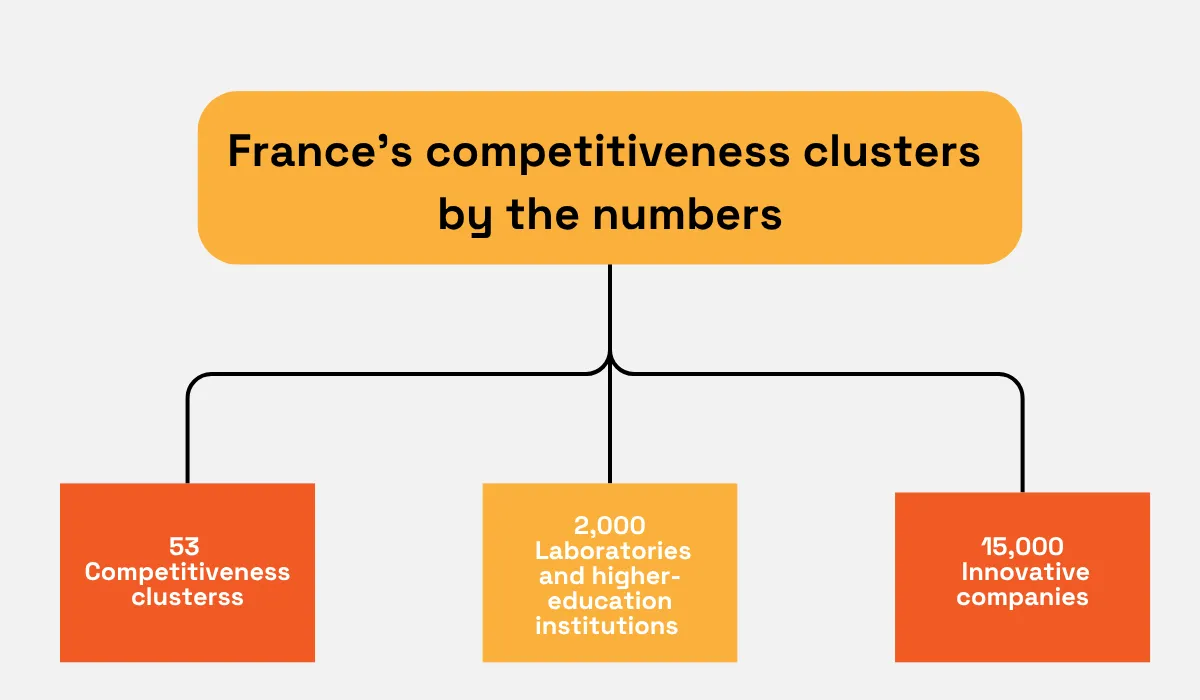
Illustration: Veridion / Data: French Ministry of Economy
The clusters cover established industries such as automotive and aerospace alongside emerging fields, giving buyers a broad network of companies and organisations to explore.
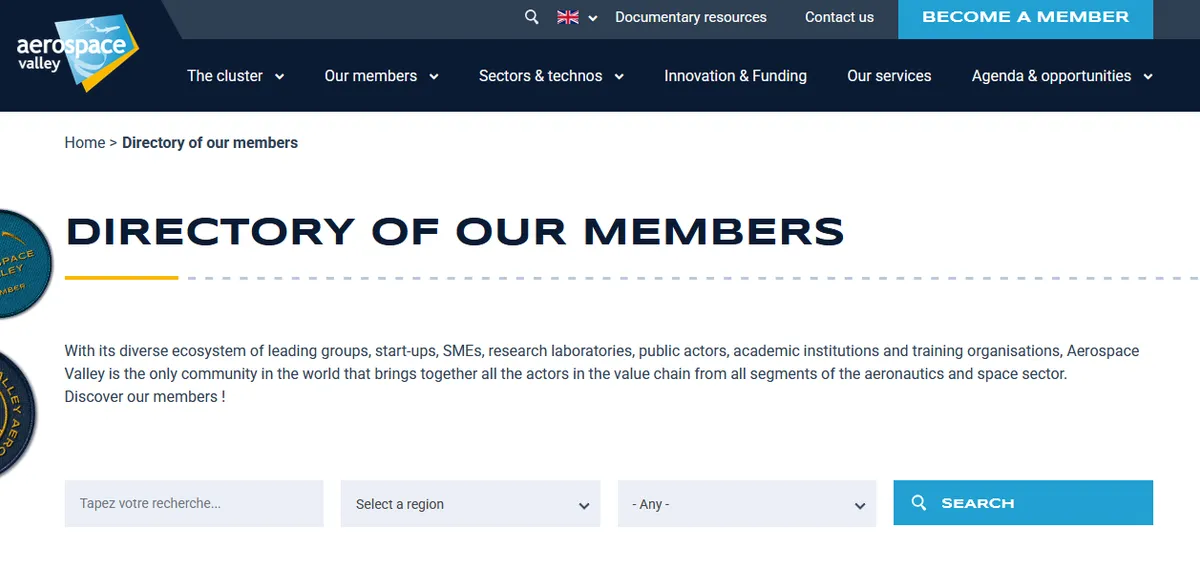
A cluster can also provide a practical route to supplier discovery. The Aerospace Valley member directory brings together small and medium-sized enterprises (SMEs), large companies, research laboratories, academic institutions, public bodies and training organisations across the aerospace and space value chain.
Source: Aerospace-valley
The limitation appears when a sourcing project requires more than a sector or region. A buyer looking for French aerospace suppliers may also need a specific manufacturing process, material, certification, production capability or facility location.
Checking cluster directories one by one still leaves you with the work of comparing companies against those requirements.
AI helps combine these attributes in one search. You can define the target region alongside industry, capabilities, certifications and other supplier characteristics, then narrow the list to companies matching your requirements. A supplier sourcing framework helps structure these requirements before you begin the search.
This approach also extends beyond formal cluster membership. A supplier may operate in a relevant industrial region without belonging to the cluster you started with.
Geography adds another layer to the supplier search. Use regional clusters to see where relevant industrial activity is concentrated, then apply the product, capability and company criteria from your supplier taxonomy.
3. Extract Supplier Intelligence with AI
Finding potential suppliers is only the first part of sourcing. You also need to establish whether each company is the business it claims to be, where it operates and whether its products and capabilities match your requirements.
Manual research requires you to pull information from company websites, business registries, trade databases and industry directories, then reconcile the records yourself.
AI supplier intelligence brings these sources together in a structured dataset for discovery and qualification.
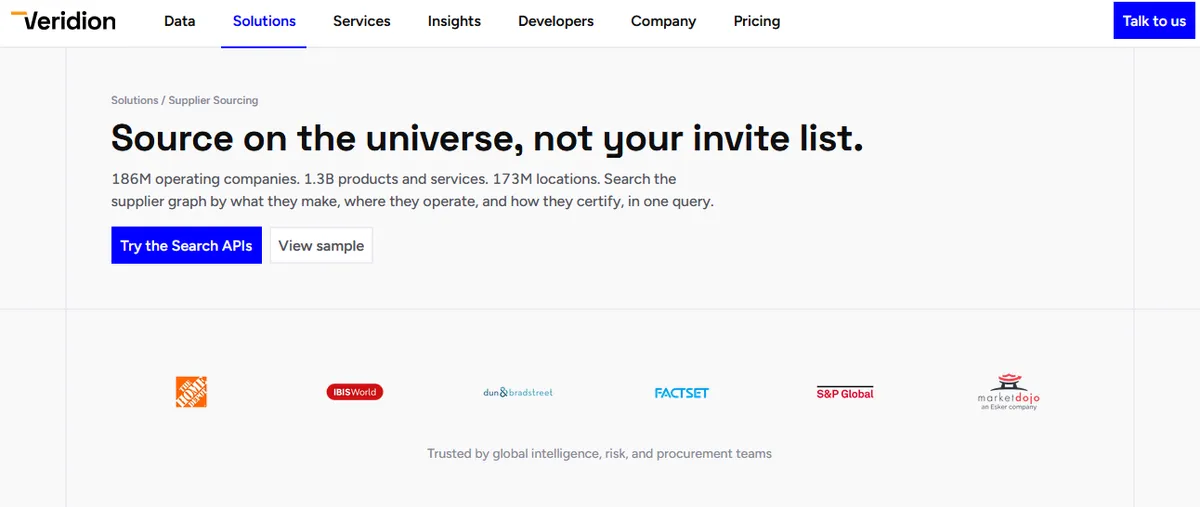
Veridion’s supplier sourcing platform searches millions of operating companies, products and services across millions of locations. You can filter the supplier universe by products, geography, certifications and other attributes rather than starting with a fixed list of companies.
Source: Veridion
This broad dataset matters because supplier information rarely comes from one source. Company websites, trade registries, public data assets and licensed feeds each provide different pieces of a supplier’s profile. AI extracts these records, resolves duplicate entries and keeps the company data structured.
For example, a company may use a trading name on its website while appearing under a different legal name in a registry. Entity resolution connects records belonging to the same company into a single profile.
You then work from one resolved record instead of comparing duplicate entries manually.
The same supplier intelligence continues after qualification. Supplier management processes keep company details, ownership, locations and product information up to date after a supplier enters your approved pool. Continuous data refresh also helps identify developments such as new facilities, product changes or ownership changes.
This creates a supplier intelligence process across the sourcing lifecycle. You discover companies from the wider supplier universe, resolve and verify their records during qualification, then keep relevant changes under review after onboarding.
The main benefit over manual research is having these activities work from the same structured data layer. Instead of rebuilding supplier profiles from scattered sources for each sourcing exercise, you can use consistent company, product, location and corporate information throughout discovery and ongoing monitoring.
With supplier intelligence in place, you have a qualified pool to assess. The next step is to rank those suppliers against your specific sourcing priorities and identify the strongest matches.
4. Create AI Supplier Scoring
A filtered shortlist still includes suppliers with different strengths. One may have stronger quality performance while another offers a cost advantage, so AI supplier scoring ranks the shortlist against the priorities you set.
The weighting should reflect the sourcing requirement and the risks attached to it. For example, Tacto’s supplier scorecard example gives quality a 40% weight, delivery 30%, cost 20% and service 10% for an automotive supplier. The weighting depends on the industry and sourcing strategy
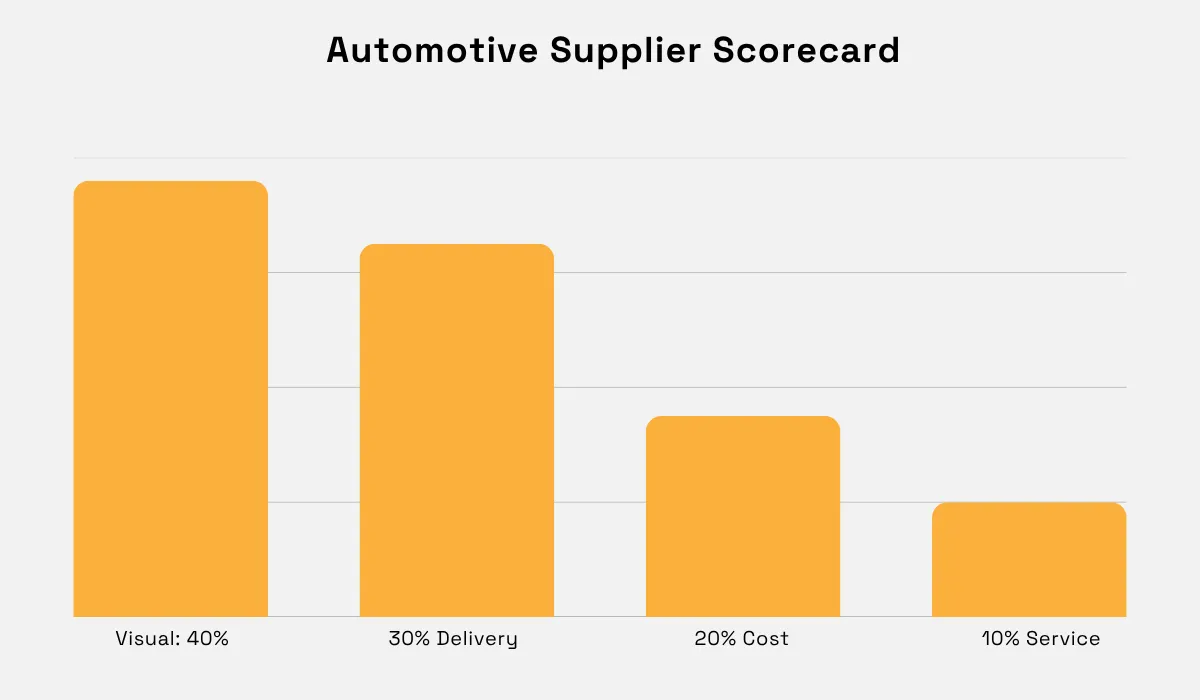
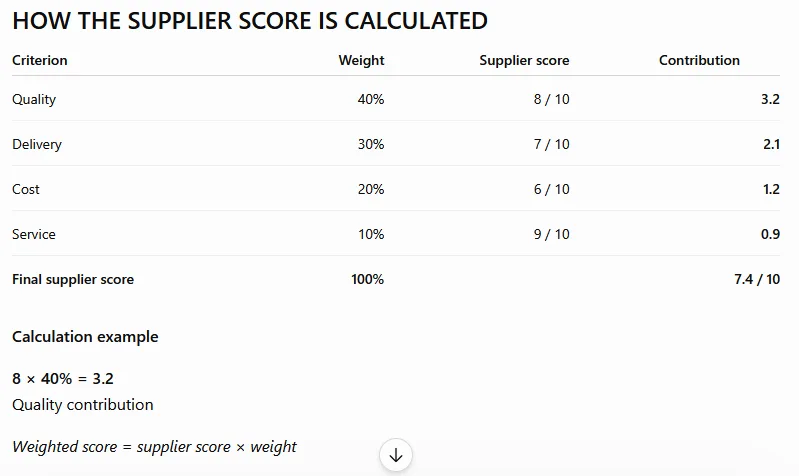
A weighted score gives you one result from several criteria. Art of Procurement’s supplier-selection guide recommends defining selection criteria, assigning weights, scoring suppliers against them and calculating weighted totals before making a selection.
For example, a supplier scoring 8 out of 10 for quality with a 40% weight contributes 3.2 points to its final score. A 6 out of 10 score for cost with a 20% weight contributes 1.2 points. The same calculation applies to the remaining criteria.
Source: Veridion
The calculation gives procurement a consistent basis for ranking suppliers. In the example above, quality, delivery, cost and service each contribute according to their assigned share.
EcoVadis’ AI Assistant also supports scorecard analysis, supplier comparisons and supply-chain benchmarking. Users can ask it to identify high-priority improvements for a named supplier or compare information from several suppliers.
The scoring criteria need to follow the requirements used to build the taxonomy and shortlist earlier in the process. A supplier selection process gives you a basis for defining requirements and evaluating candidates.
Applying the same criteria and proportions keeps the ranking tied to your sourcing priorities. A supplier with a lower price may rank below a more expensive option when quality, delivery, risk or another business-critical criterion carries greater importance.
Once AI has ranked the candidates, the top-ranked suppliers are ready for outreach. Those rankings guide requests for information (RFIs), requests for quotation (RFQs) and follow-up.
5. Initiate Autonomous Outreach
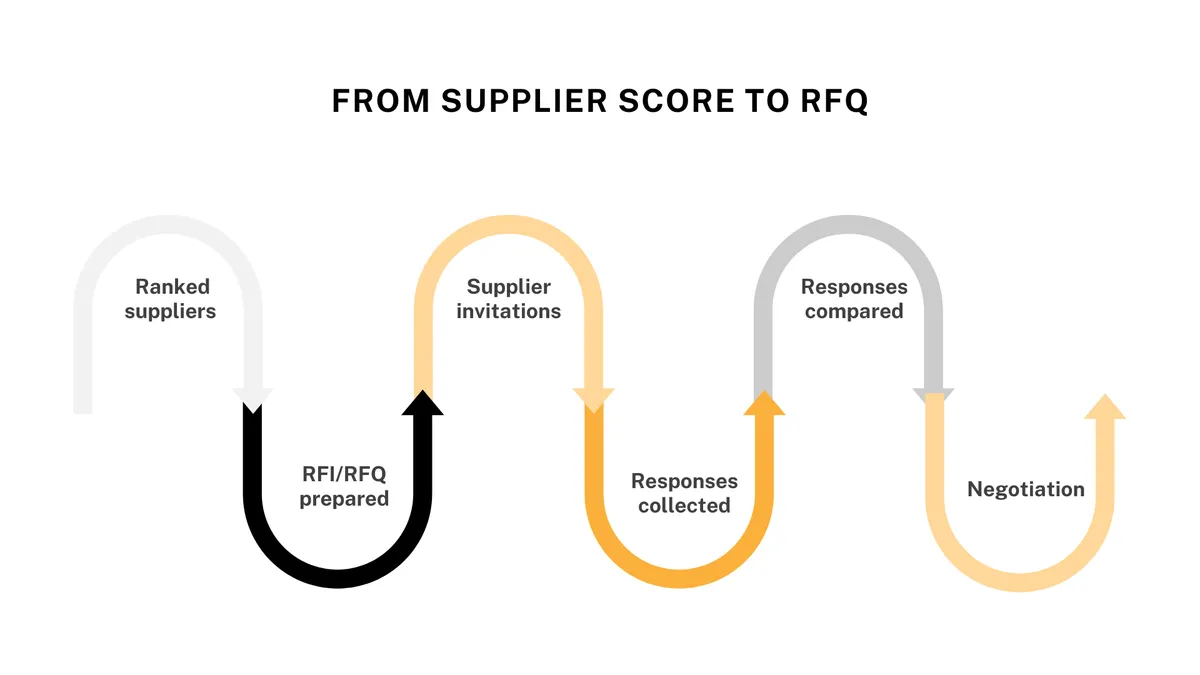
Once AI has ranked the supplier shortlist, the next step is to approach the top candidates. AI agents prepare requests for information (RFIs) or requests for quotation (RFQs), send them to selected suppliers, collect responses and handle follow-up. This reduces the manual work involved in running a sourcing event.
The outreach needs to draw on the information gathered earlier in the process. Supplier capabilities, product requirements, volumes, delivery expectations and qualification criteria feed the RFx, giving suppliers a request aligned with the sourcing requirement.
Source: Veridion
AI supplier discovery platforms already automate parts of the RFI process. Supplier.io’s guide to AI supplier discovery describes automated RFI requests as one application of AI in supplier discovery.
The same approach applies to structured sourcing events. Fairmarkit’s RFx Agent uses AI to generate RFx events from sourcing requirements, apply templates and scoring criteria and structure supplier responses for comparison.
A supplier sourcing process also keeps the requirements from discovery and qualification connected to supplier outreach. An agent could invite a selected group of qualified French suppliers, send the same specification and commercial requirements to each one, collect their responses and flag suppliers requiring follow-up.
Autonomous negotiation takes this process further. Zycus describes its Autonomous Negotiation Agent as handling RFQs, supplier responses and follow-up before negotiating price, payment terms, warranties and delivery requirements within predefined guardrails.
Human oversight remains important for strategic suppliers or negotiations involving significant commercial, technical or regulatory consequences. Procurement professionals retain control over exceptions, approval thresholds and final supplier decisions while AI handles repeatable outreach and negotiation tasks.
Once suppliers respond, their information feeds back into the sourcing process. Continued monitoring then tracks those suppliers after selection and flags new risks or changes in their business environment.
6. Build an AI Supplier Monitoring System
Supplier discovery continues after the initial sourcing exercise. New manufacturers enter the market, existing suppliers add capabilities and industry events may reveal companies you missed during the first search.
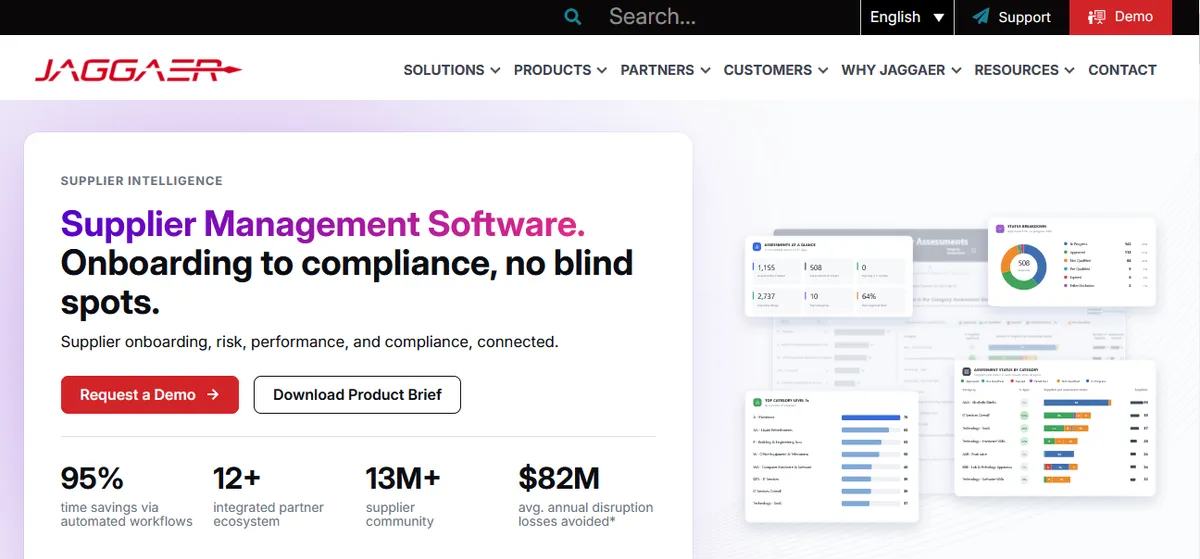
AI keeps the supplier universe under review by combining company data with news, regulatory information and other external signals. JAGGAER, a supplier management and procurement software provider, describes continuous monitoring of financial, environmental, social and governance (ESG), operational and other supplier signals alongside regular assessments.
GEP, a procurement and supply chain consultancy and software provider, reports that only 43% of purchasing categories have proactive risk monitoring on average.
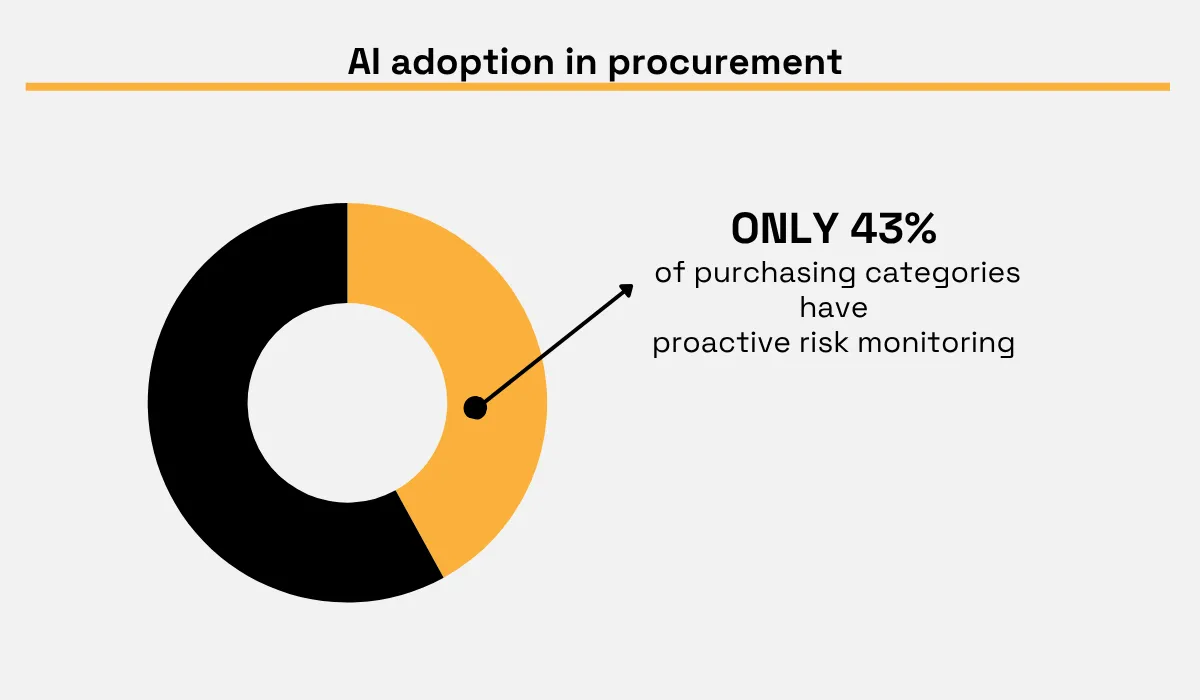
The figure points to limited ongoing supplier risk coverage. Continuous monitoring lets procurement review emerging risks between scheduled supplier assessments.
Trade shows provide supplier information too. Exhibitor directories list companies by product and capability, so AI can compare those companies with your supplier taxonomy.
Industry news adds company-level information. A new manufacturing facility, acquisition, certification, product launch or ownership change may reveal a sourcing opportunity or affect an existing supplier.
The same monitoring system follows approved suppliers after onboarding. Financial signals, operational developments, ESG issues and adverse news trigger a review before the next scheduled supplier assessment.
Source: jaggaer.com
The JAGGAER example shows supplier risk information alongside other supplier data in one view. A supplier management process lets procurement review these signals and act on relevant developments.
The result is an ongoing sourcing process. Your taxonomy defines the supplier requirements, market searches find candidates, scoring ranks them and monitoring keeps supplier information current as companies and their circumstances change.
Conclusion
Build the taxonomy once, then query it by region, certification, delivery requirement or other sourcing criteria. The same structure gives you a cluster shortlist for one search and a ranked supplier list for another.
Add new company data as it becomes available and keep supplier information under review. With the core requirements defined in the taxonomy, you do not need to rebuild your search for each sourcing exercise.
That is where AI fits into French B2B sourcing. One structured set of requirements supports supplier discovery, qualification, scoring and outreach from the same starting point.
Build the taxonomy once. Use it throughout the sourcing process.
Articles
Discuss how these trends affect your organization.
Our analysts are available for a short call. Bring a specific question and we will ground it in the data.
Insights
Keep reading
More analysis, research, and outcomes grounded in live company intelligence.
How to Find the Right Suppliers for Your Business
Want to find reliable suppliers for your business? This guide will show you how to identify, evaluate, and choose the right ones.
7 Key Steps of Successful Supplier Sourcing
Want to optimize your supplier sourcing process? Get better at each of the key seven steps we outlined and you'll get there.
Supplier Management — The Ultimate Guide
Discover the ultimate guide to supplier management, essential for improving procurement processes and building strong vendor relationships.