Insights / Articles
Empowering Brokers: Driving Premium Growth with Pre-Vetted ESG Prospect Lists
Tired of sifting through endless leads? Get market intelligence for insurance brokers with ESG vetted prospect lists that drive premium growth.

- Roughly 25% of the submissions underwriters review do not fit their portfolio appetite.
- 63% of insurers link ESG to underwriting outcomes.
- Living prospect data supports stronger broker-underwriter relationships.
How many prospects reach an insurer’s desk only to be ruled out later?
For brokers and insurers, the challenge is not simply finding more companies.
It is finding companies that fit the insurer’s appetite, meet relevant climate and Environmental, Social, and Governance (ESG) requirements, and still look like a good fit when the broker is ready to act.
Data can help move these checks much earlier in the process.
This blog looks at how insurers can build pre-vetted prospect lists, add ESG screening, and keep those lists current as company profiles change.
Why Broker Submissions Rarely Match Underwriting Appetite
A broker may know the client well, but that does not mean the risk fits every carrier’s appetite.
Differences in class, territory, size, loss history, and other underwriting rules can turn a promising submission into a quick decline.
Let’s understand why that happens.
Most Submissions Never Had a Real Chance
How many submissions actually fit what an underwriter is looking for? The answer may be fewer than brokers think.
Federato, an insurance platform company, shows in its State of Underwriting Report that around 25% of submissions reviewed by underwriters fall outside their portfolio appetite.
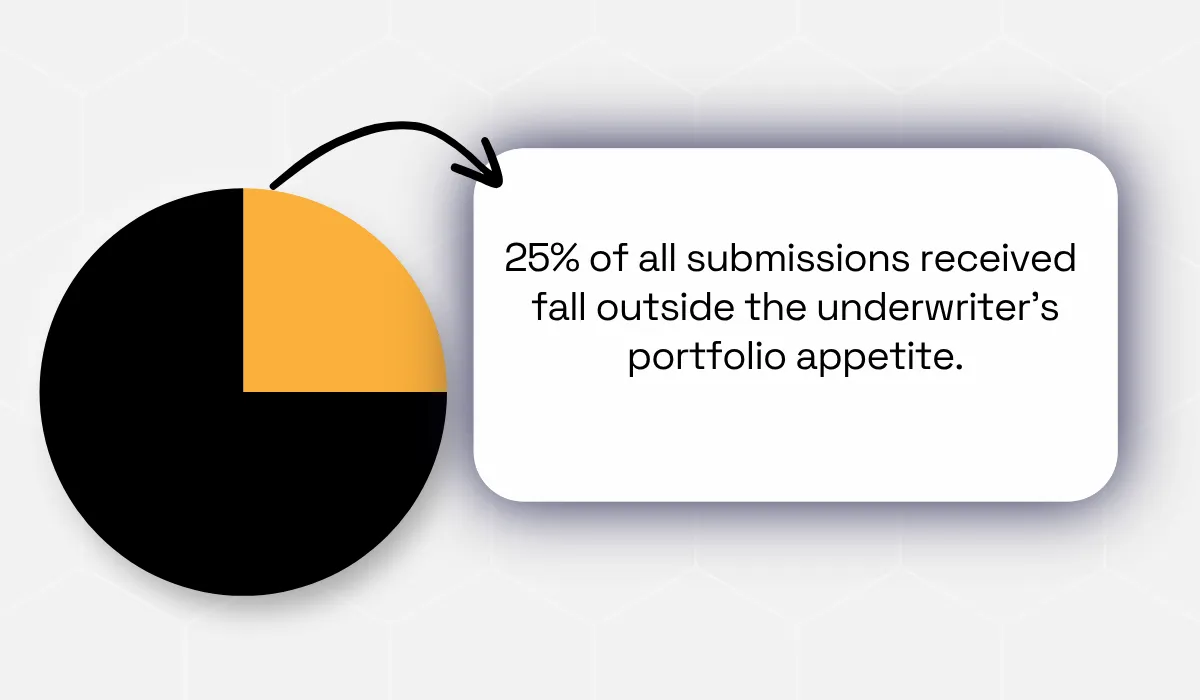
That creates wasted work before underwriting has even really started.
A broker spends time understanding the client, collecting information, and preparing the submission.
The underwriter then spends time reviewing a risk that may never have been a fit.
Per the same report, more than half of the underwriters surveyed said that 21% to 30% of the submissions they review are outside their portfolio appetite. Another 17% put the figure between 31% and 50%.
These numbers point to one problem: many brokers are struggling to gauge their underwriter’s true risk capacity.
But risk appetite is not always easy to understand.
Underwriters are looking at a wide variety of risks, clients, and prospects.
Brokers, on the other hand, are looking at an individual client who needs cover.
Those two views need to meet somewhere. If they do not, the same cycle starts again:
- The broker sends a submission.
- The underwriter reviews it.
- The risk is declined.
Global Insurer Marsh Risk's Global Insurers Survey also says that 51% of underwriters consider awareness of appetite an important factor when working with brokers.
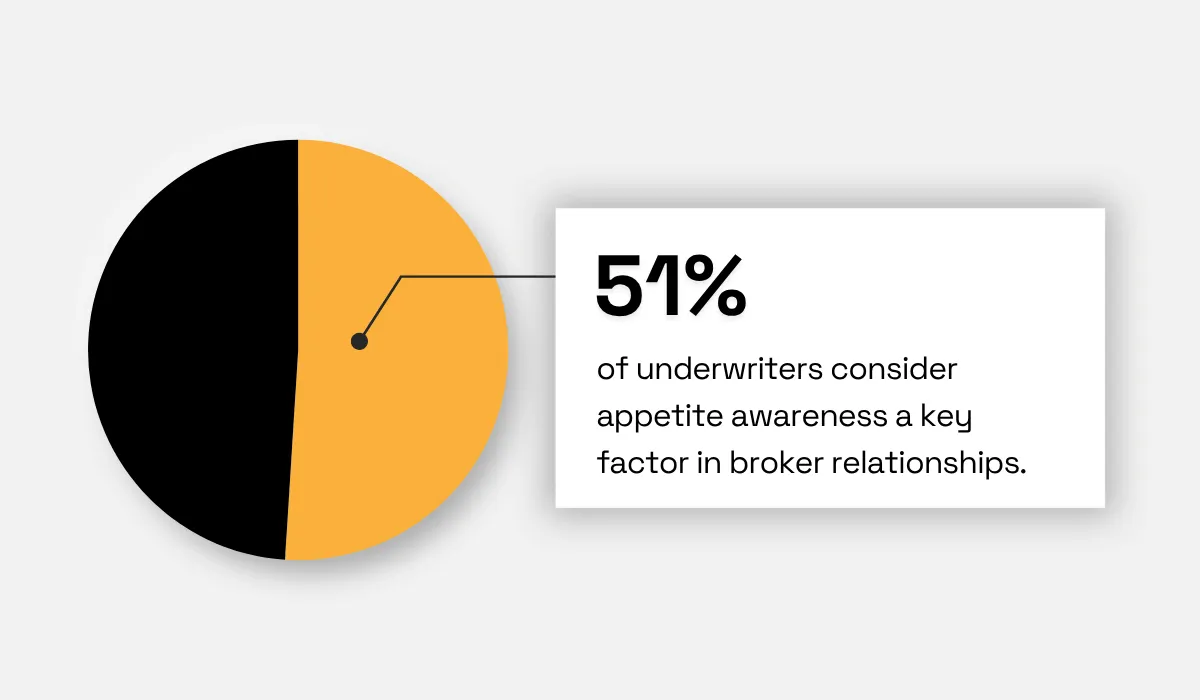
That makes sense because if a broker knows what a carrier wants, they can spend more time sending risks that have a genuine chance of being written.
But if that information is unclear or out of date, even a well-prepared submission can miss the mark.
Underwriters Spend Their Time Declining, Not Deciding
Think about what happens after a submission reaches an underwriter.
They need to complete the formalities, gather basic information, and research the business before they can properly assess the risk.
That time adds up.
As per Accenture, a tech consultancy company, 40% of underwriters’ time is spent on non-core and administrative activities, showing how much capacity is consumed by tasks outside core underwriting.
And Federato’s State of Underwriting Report states that ~33% of underwriters say they lack the tools needed to prioritize effectively.
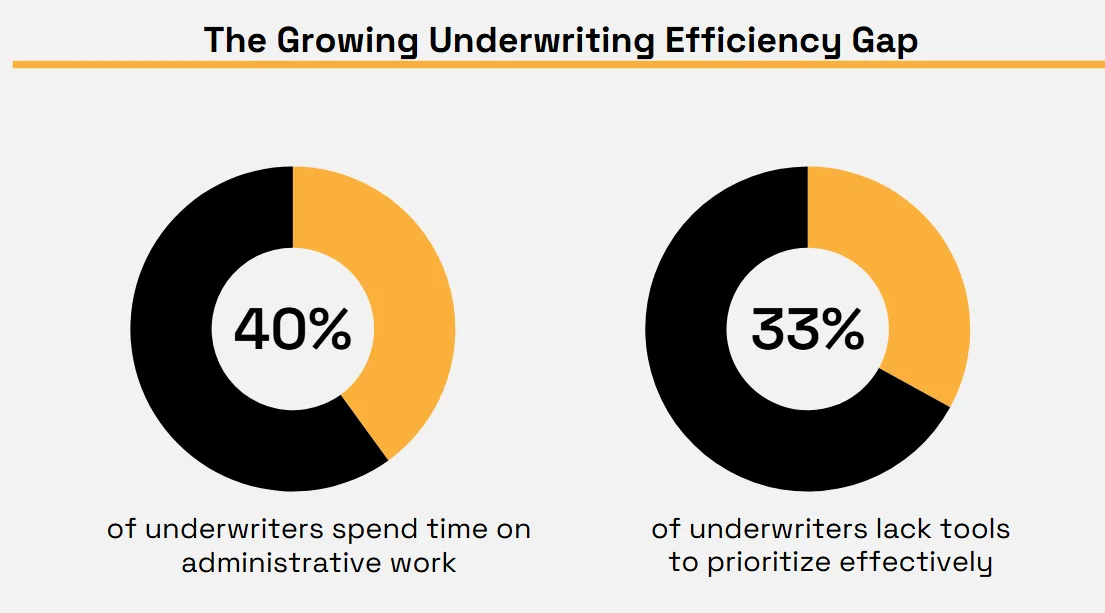
So the problem is not just workload. It is where that workload is going.
At the same time, manual workflows make it harder to separate straightforward risks from those that need deeper judgment quickly.
Then also comes the pressure to move faster. Many brokers and clients may expect an answer within 24 to 48 hours.
James Still, Founder and CEO of Still Age, explains why this creates problems for both sides.
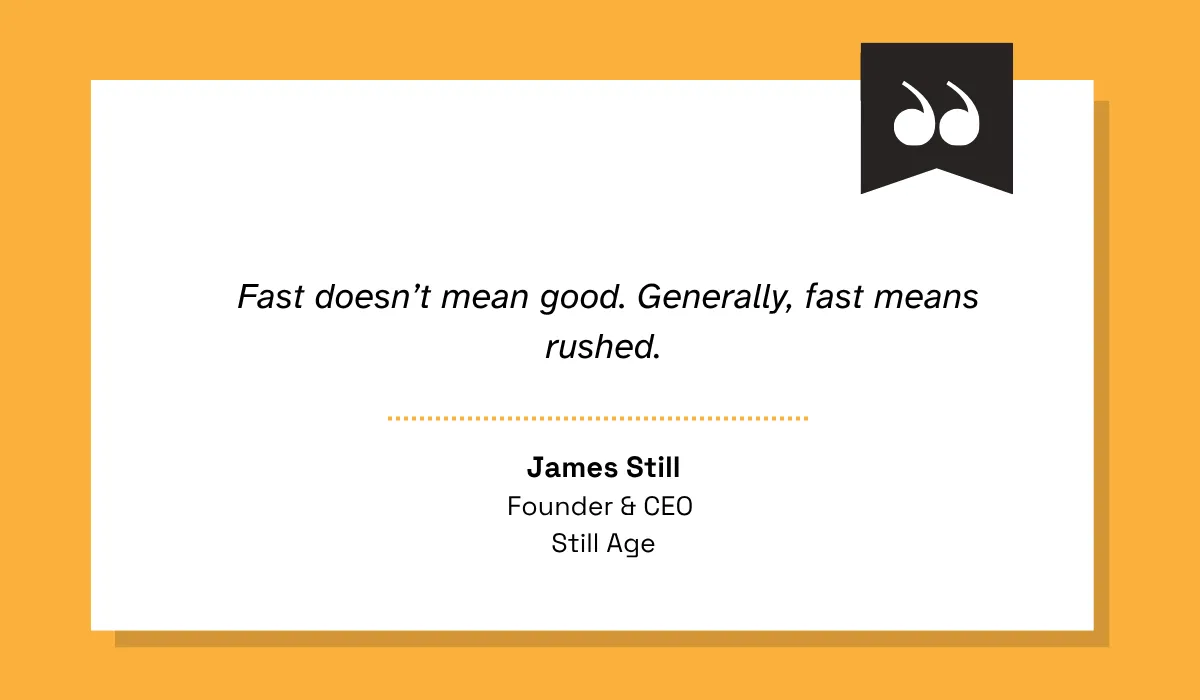
Illustration: Veridion / Quote: Insurance Business
A broker working against the clock may submit a file with missing information or little context. The underwriter, facing the same deadline, has less time to investigate, ask questions, or work through the grey areas.
That can turn a potentially workable risk into a decline.
There is also a longer-term cost.
If a broker receives a decline without understanding what made the risk unsuitable, the next submission may have the same problem. The underwriter then spends time reviewing another file that could have been better qualified at the start.
Brokers Lack Visibility Into What Actually Qualifies
Today’s brokers have a different problem. Risk does not stay still, and an insurer’s appetite can change as new exposures emerge.
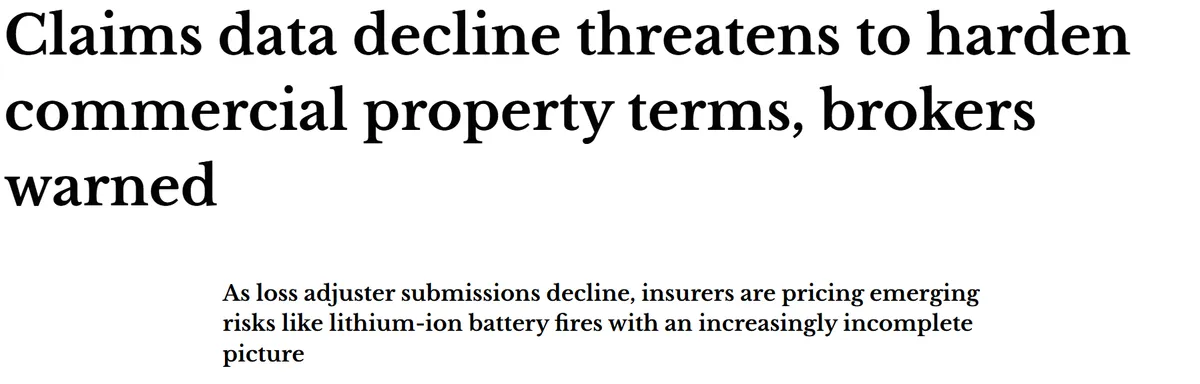
One recent example of this relates to a tech staple: lithium-ion batteries.
Insurers are paying closer attention to battery-related fire risks across areas such as warehousing, battery storage, and commercial property.
Some carriers are responding with tighter conditions, exclusions, or warranties around how batteries are stored and handled.
This can change how a broker evaluates a business.
Source: Insurance Business
A commercial property risk may look suitable based on its usual classification, but the picture changes if the company stores batteries, uses battery-powered equipment, or has an exposure that was not obvious during the original assessment.
Environmental risks create another layer of complexity.
A flood, storm, or bushfire may usually be treated as a property loss. Yet the same event can trigger an environmental liability claim that the client never insured against.
Take the case of Australia’s treatment of polyfluoroalkyl substances (PFAS), the infamous “forever chemicals”.
From July 1, 2025, Australia banned the manufacture, import, export and use of three PFAS chemicals: PFOS, PFOA and PFHxS. The chemicals were placed in Schedule 7, the highest concern level under Australia’s Industrial Chemicals Environmental Management Standard.
The scale of the issue became even clearer when the Australian government later brought a claim of roughly $2 billion against 3M, a major manufacturer of PFAS-containing products, over alleged PFAS contamination at 28 defence sites.
Anthony Saunders, Partnership Director at Gow-Gates Insurance Australasia, highlights why pollution risk must not be taken lightly:
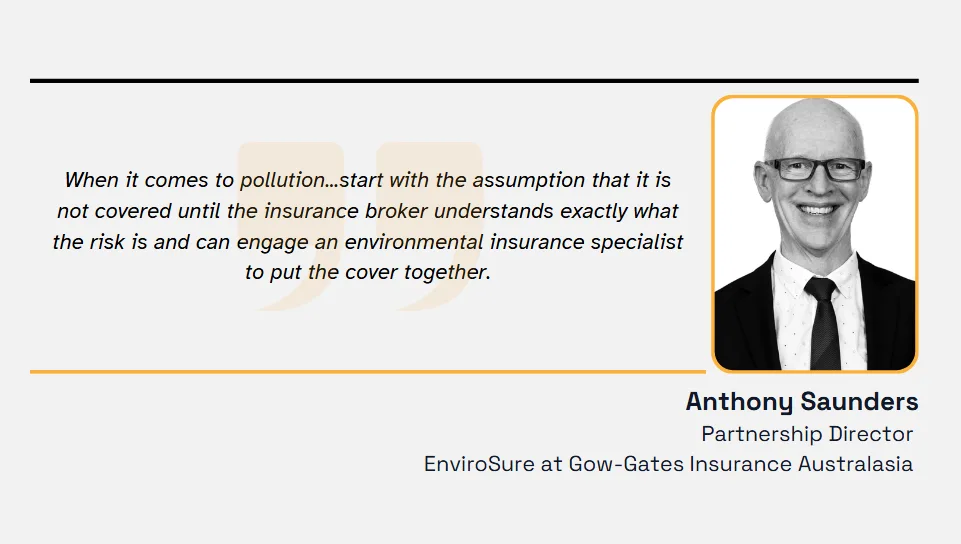
Illustration: Veridion / Quote: Insurance Business
For brokers, cases like this show how new exposures can change the risk conversation.
And now, to this whole new set of risks, add manual processes.
A report by INTX Insurance Software found that 72% of insurers use Excel or internally built tools for critical workflows, while 52% of policy administration processes still require manual intervention.
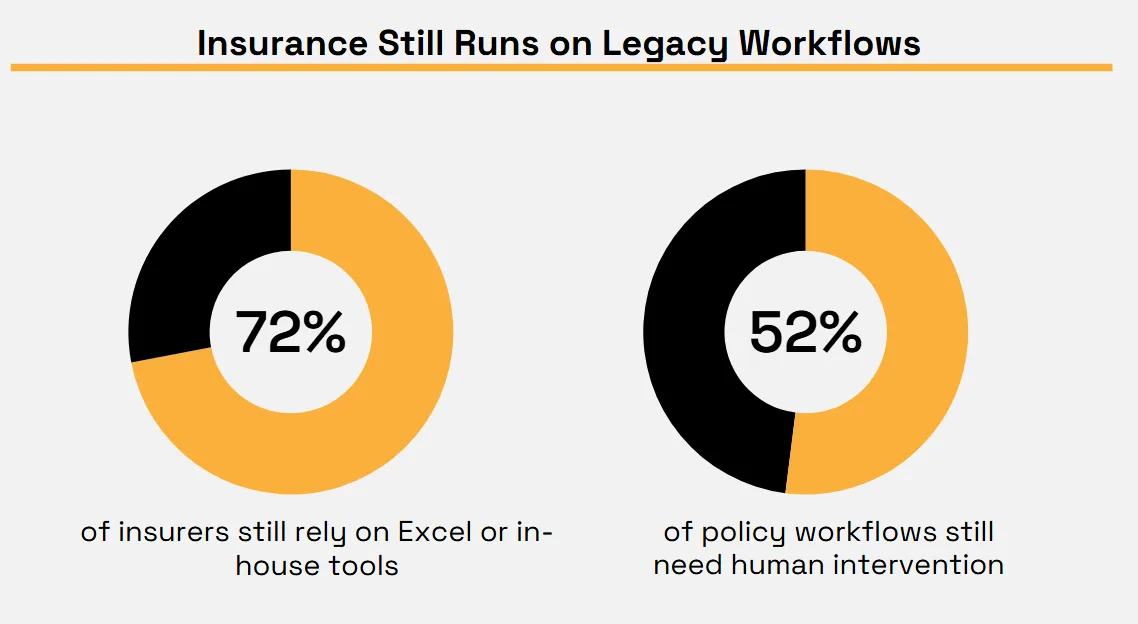
Illustration: Veridion / Data: Business Wire
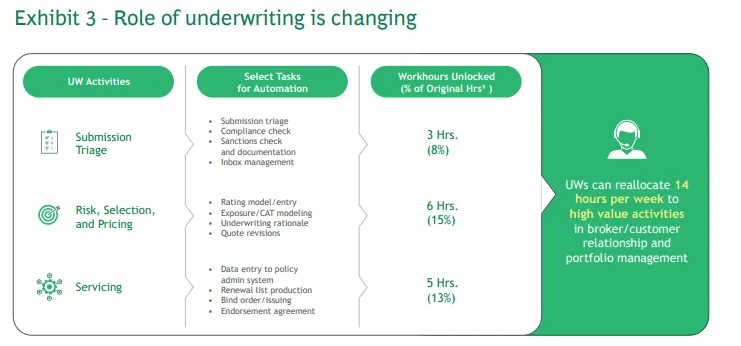
Further, research from the Boston Consulting Group (BCG) states commercial underwriters spend around 14 hours every week, or 35% of their working time, on tasks that could be automated or delegated.
The same report states that three hours are tied to submission triage, while six hours relate to risk selection and pricing.
Source: BCG
So, brokers may be checking old guidelines or PDFs while underwriters work from a newer view of appetite.
That creates a huge information gap.
Brokers need to know what has changed, why it has changed, and which risks still fit. Without that visibility, emerging exposures can turn into repeated back-and-forth and poor submissions.
Giving Brokers Pre-Vetted, ESG-Ready Prospect Lists
What if brokers could start with prospects already checked against the risks an insurer wants to write?
Pre-vetting brings underwriting and ESG signals into prospecting, giving brokers a clearer list to work from.
Score Prospects Against Underwriting Criteria Before Outreach
A broker can spend hours finding a promising commercial prospect, only for the insurer to reject it because the business falls outside appetite.
Why find that out after the submission?
Predictive appetite scoring moves this check to the prospecting stage.
Insurers can take a broader universe of companies and score them against the criteria that shape their appetite.
That can include:
- Class codes
- Territory
- Company size and
- Loss history proxies
The model can then separate stronger matches from weaker ones before a broker invests time in outreach or prepares a submission.
For example, an insurer looking for specific commercial risks could score companies across its target territories and classes, then give brokers a prospect list ranked by likely underwriting fit.
The broker still needs to qualify the business, but the starting point is far more focused.
There is also a portfolio reason to improve the first filter.
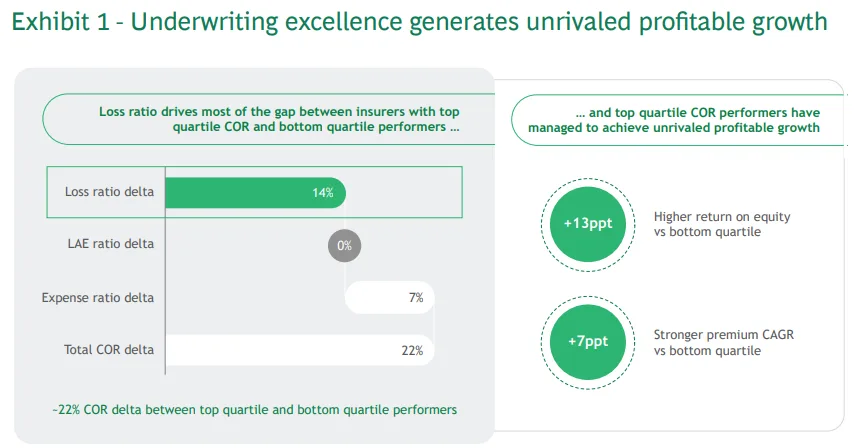
BCG found that the loss ratio accounts for much of the performance difference between top- and bottom-quartile commercial insurers.
The combined-ratio gap was about 22%, while the top group recorded 13% higher ROE and 7% stronger premium CAGR.
Source: BCG
That makes proactive appetite scoring more than a prospecting tool.
It creates an earlier link between who brokers approach and the risks an insurer actually wants to write.
Layer ESG Screening Into the Same Pre-Vetting Pass
A company can fit an insurer’s class, territory, and size requirements and still fall short once its ESG profile is reviewed.
If that check happens only after a broker has identified the prospect and started preparing a submission, both sides may have already spent time on a risk that was never going to qualify.
Here’s why underwriters need to pay attention to ESG earlier.
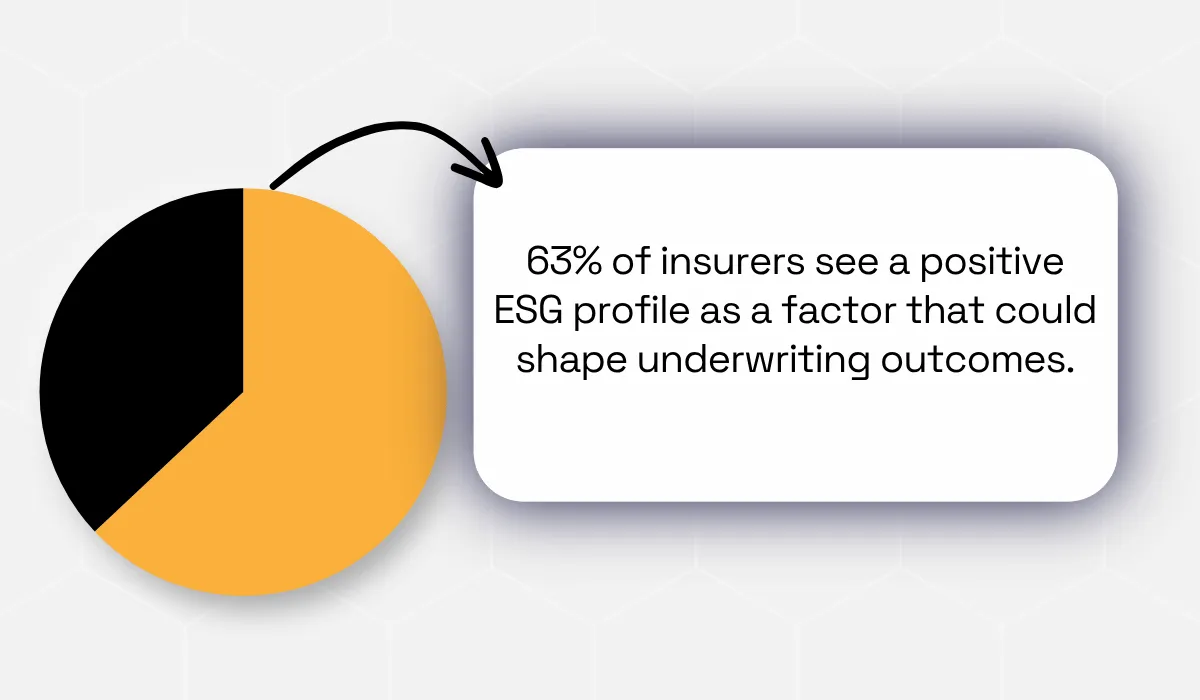
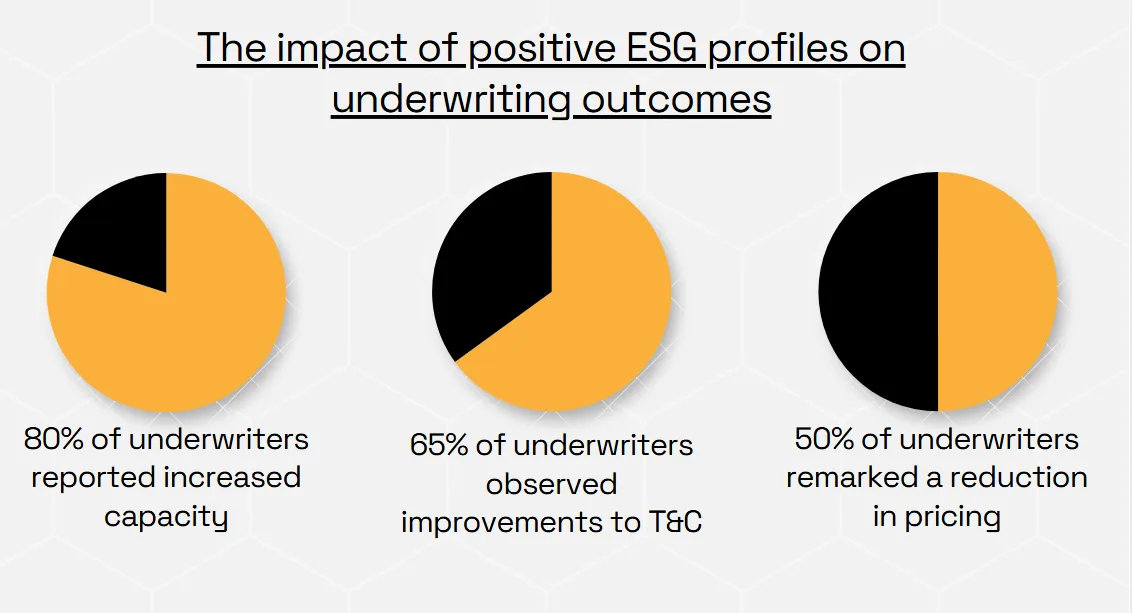
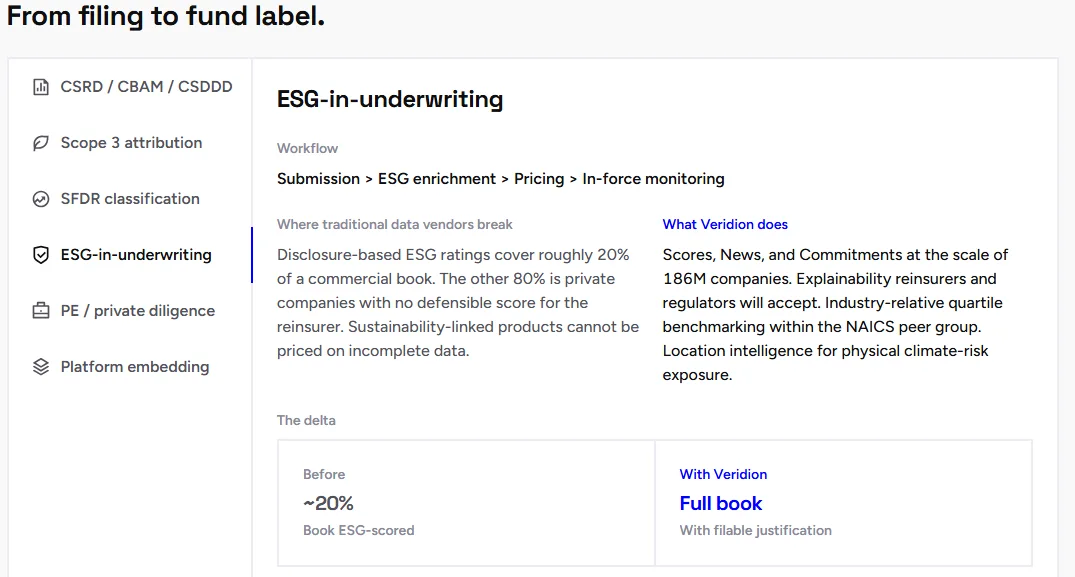
Marsh's 2023 ESG Insurer Survey found that 63% of insurers said a positive ESG profile would likely affect an insured’s underwriting outcome.
Among those insurers, 80% said a positive ESG profile could increase insurance capacity, while 65% said it could improve terms and conditions, and 50% said it could reduce rates or pricing.
So why leave that information until the end of the process?
An ESG pre-vetting pass can bring this assessment forward.
Prospective companies can be screened against ESG requirements at the same time as standard risk appetite criteria.
Brokers can then see which businesses fit the insurer’s risk appetite and which also meet its ESG requirements before spending time on outreach and submissions.
But the quality of the screening matters too: an ESG score should not simply appear as a green or red flag with no explanation.
Brokers need to know what signals were assessed, what factors influenced the score, and why a company qualified or fell short. That makes the screening easier to understand and act on.
The result is a prospect list built around more than basic underwriting fit.
It gives brokers a clearer set of companies to approach and gives insurers an earlier view of risks that fit both their appetite and ESG requirements.
Refresh Lists Continuously So They Don't Go Stale
For a prospect list to have meaning, it needs to be current.
A company can change its ownership, locations, products, operations, or ESG profile after the list is created. Its fit with an insurer’s appetite can change too.
That makes a one-time list difficult to rely on for long.
The better model is a continuous refresh that truly gives brokers a current view of which companies still fit the insurer’s appetite and ESG requirements.
Ashley Moffatt, Senior Vice President of E&S Brokerage Primary Casualty for Nationwide, sums up the impact of this well:
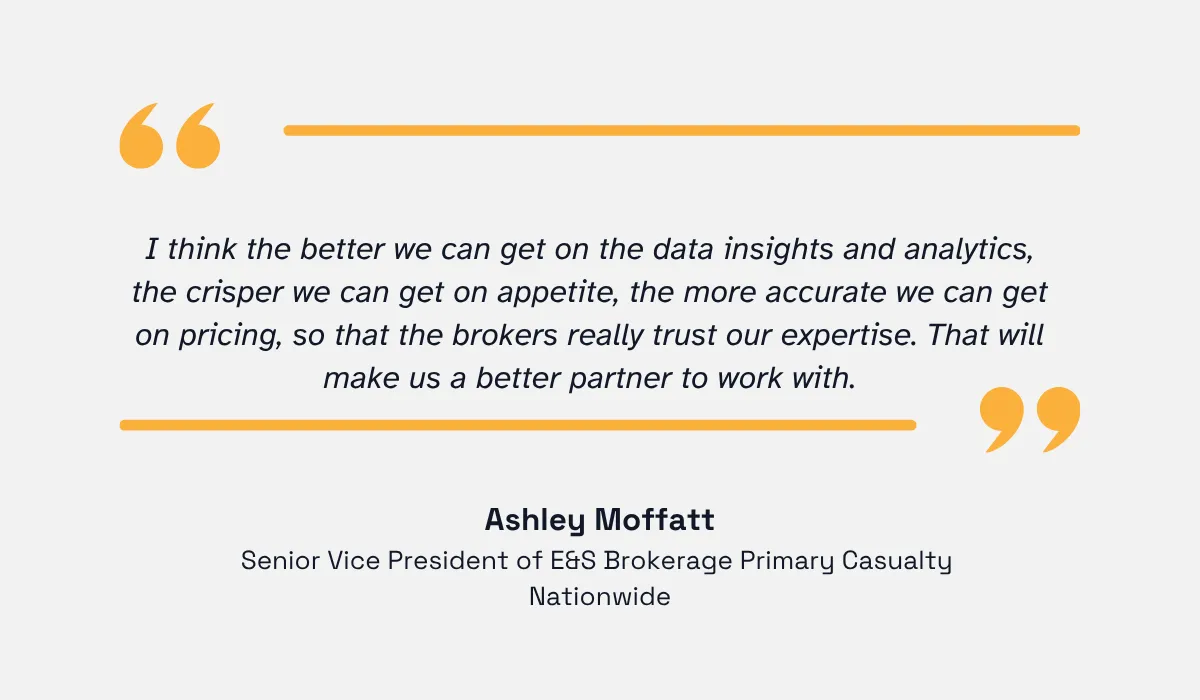
Illustration: Veridion / Quote: Risk&Insurance
This is where Veridion comes in.
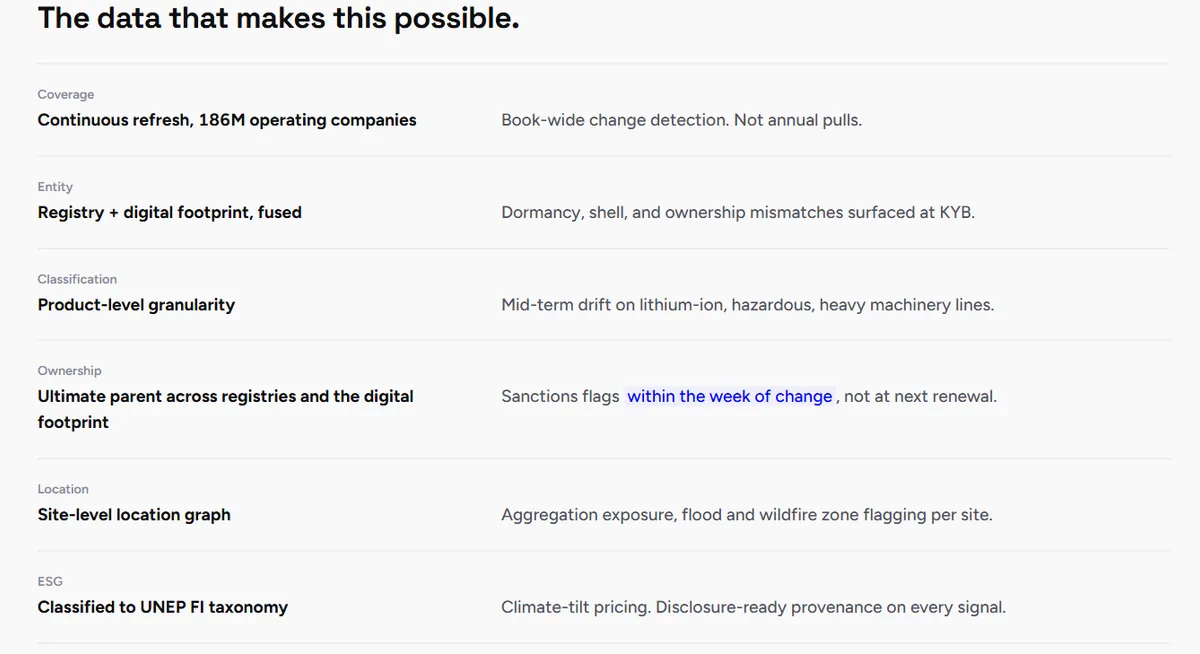
Veridion continuously refreshes data across millions of active companies, mapped locations, and products and services.
Its insurance data layer combines company, classification, location, ownership, and activity signals, while its ESG layer adds scores, GHG metrics, ESG news, and company commitments.
Source: Veridion
And the refresh is not limited to company records.
Veridion’s ESG news data is refreshed weekly, while company ownership and location data are also continuously updated.
That means a prospect list can reflect changes instead of preserving a snapshot that was accurate when it was created.
Source: Veridion
For brokers, this creates a different kind of relationship with the insurer.
You are not receiving one prospect list and starting again from scratch next quarter. You can work from a living pool of prospects that keeps reflecting the insurer’s current appetite.
And that makes pre-vetting useful beyond the first outreach. It becomes an ongoing data layer between the insurer and its distribution partners.
Conclusion
A strong prospect list needs more than a long list of companies.
It needs evidence that those companies fit the insurer’s appetite, align with its ESG requirements, and remain relevant over time.
By bringing these checks closer to the prospecting stage and keeping the underlying data fresh, insurers can give brokers a more useful starting point for outreach.
The goal is simple: help underwriter teams spend more time on risks worth pursuing and less time filtering out poor fits.
Articles
Discuss how these trends affect your organization.
Our analysts are available for a short call. Bring a specific question and we will ground it in the data.
Insights
Keep reading
More analysis, research, and outcomes grounded in live company intelligence.
Market Intelligence: Use Cases Across Departments
Want to make better decisions across departments? Learn how market intelligence use cases apply to your entire organization.
9 Essential Sources of Market Intelligence
Want to boost your market knowledge? These 9 market intelligence sources will show you where to look and how to apply the insights.
5 Trends Shaping the Future of Market Intelligence
Want to future-proof your business strategy? Explore the top trends defining the future of market intelligence.