Insights / Articles
Reading the Competitive Map: Market Signals Reveal Where Rivals Are Moving
Are your rivals outmaneuvering you? Decode market signals for strategic planning and uncover their next moves before they happen.

- Competitive market signals go beyond official statements, press releases, and competitor news.
- Job postings or technology changes often reveal investments and market entries.
- 81% of competitive intelligence professionals say collecting intel takes up a lot of time.
Your competitors rarely announce their next move in advance.
But they show it anyway, through everything from the roles they hire for to the technologies they adopt.
The problem is that these competitive market signals sit scattered across dozens of sources.
In this article, we'll break down what signals are worth tracking and how to analyze them more efficiently.
What Exactly Are Competitive Market Signals?
When we talk about competitive market signals, we mean the observable traces a company leaves behind while running its business.
Whether public or hidden, these signals can reveal where a competitor is investing and predict their next strategic move.
David Sanborn, managing partner at BlackFlag Advisors, summarizes this point well.

Illustration: Veridion / Quote: BlackFlag Advisors
His point is that the information you'd most like to have, such as a rival's exact pricing, is rarely visible.
But, even without direct data, things like ownership changes and moves into adjacent markets can be analyzed and show how a competitor is positioned and how it's likely to act.
This thinking builds into the broader concept of competitive intelligence, the practice of gathering and analyzing information about rivals.
It's useful to see what companies currently rely on as sources for this type of data.
According to a recent survey, the most cited sources of competitive intelligence are shown next.
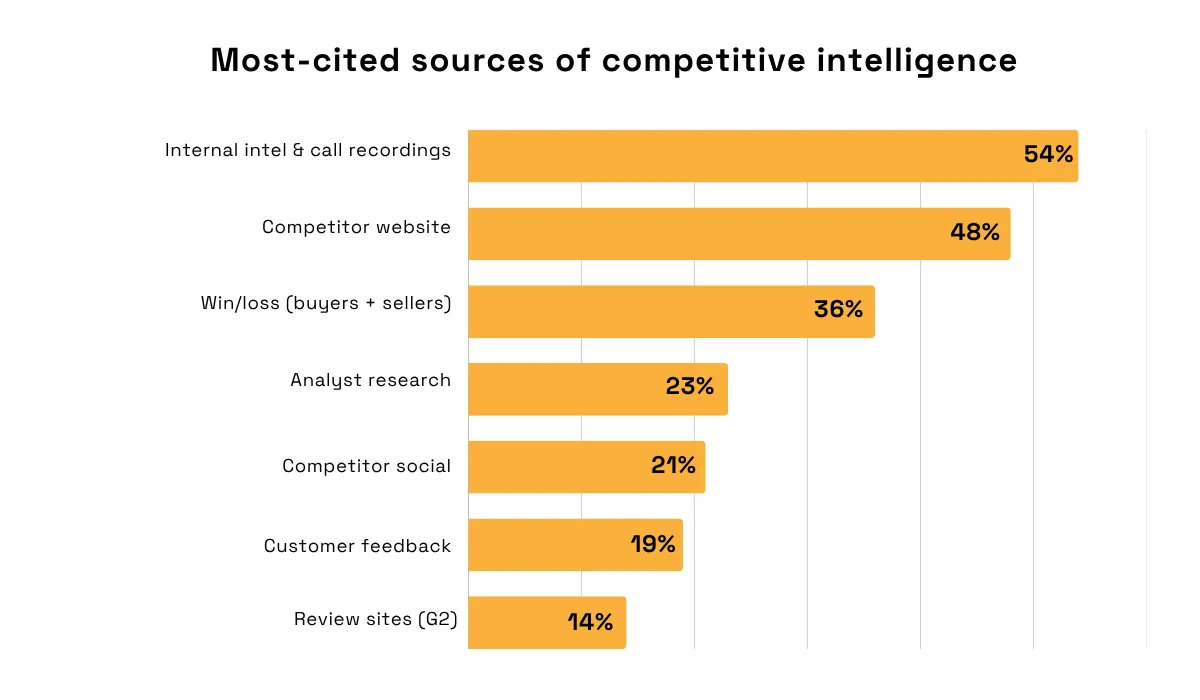
As you can see, the most valued intel is internal, with public sources like competitor websites coming next.
That's understandable, since these are the sources most readily available.
But the list of usable signals goes far beyond, and many smaller data points often come together to form a broader picture of competitor strategy.
Some of the other signal categories worth tracking are shown below.
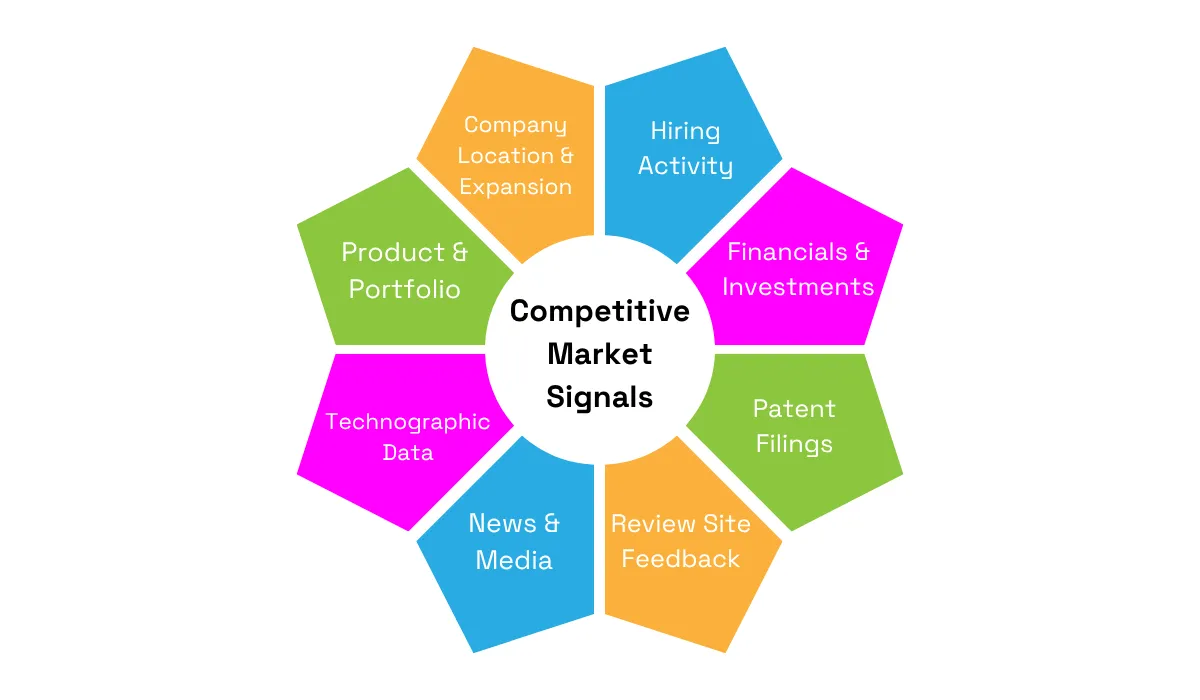
Source: Veridion
The key thing to remember is that competitive intelligence shouldn't rely only on press releases and other information a competitor publishes about itself.
Official communication is curated, and it usually arrives long after the decision behind it was made.
The operational signals above appear earlier, and they're much harder to stage. For that reason, they deserve a closer look.
The Market Signals That Actually Reveal Competitor Movement
Of course, not every signal deserves equal attention.
Four categories consistently reveal competitor movement early, which we’ll cover next.
Hiring Signals Show Where Competitors Are Investing
First, hiring patterns reveal where a competitor believes its future growth will come from.
A company can change its messaging overnight, but hiring requires budget approval, leadership commitment, operational planning, and time.
For that reason, new roles often represent strategic bets months before they become visible in the market.
Analyzing this kind of data is usually grouped under talent intelligence, a discipline that has been growing quickly in recent years according to the research.
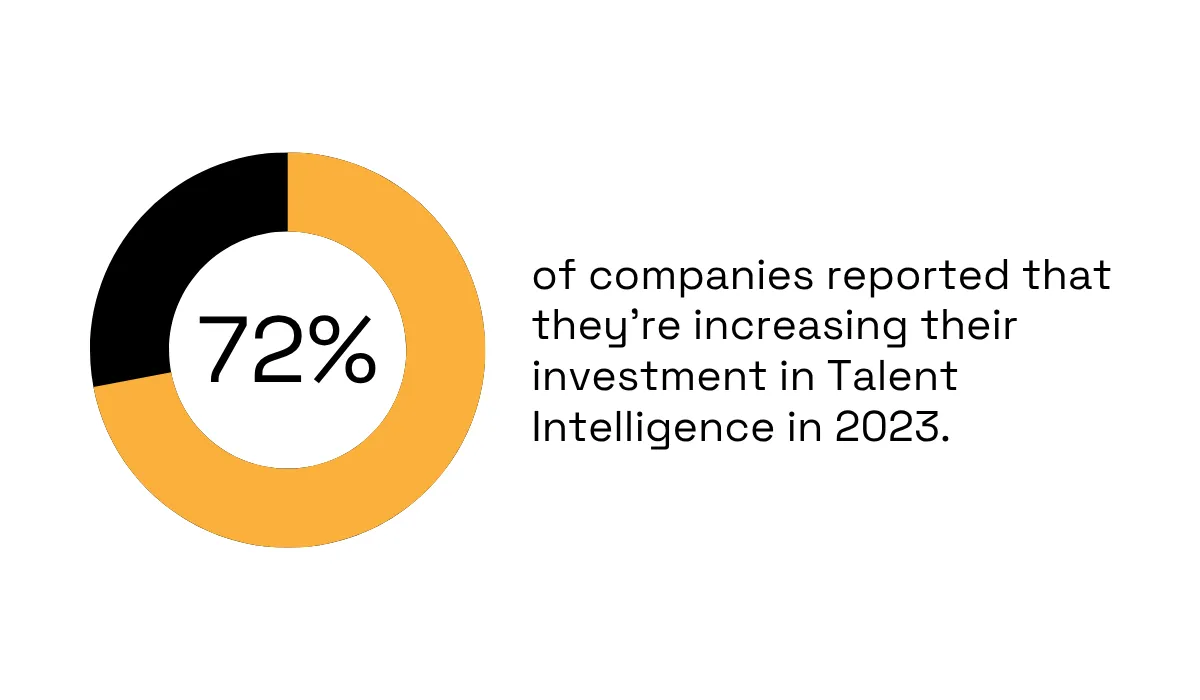
Illustration: Veridion / Data: Aptitude Research
While talent intelligence is mainly talked about in terms of HR and talent management benefits, there's plenty of competitive insight to be gained from the same data.
If you monitor which skills a rival suddenly recruits for, you can often spot a capability being built long before any product exists.
Apple's AI hiring is a good example.
In May 2023, TechCrunch reported that Apple had posted at least a dozen job ads seeking generative AI specialists.
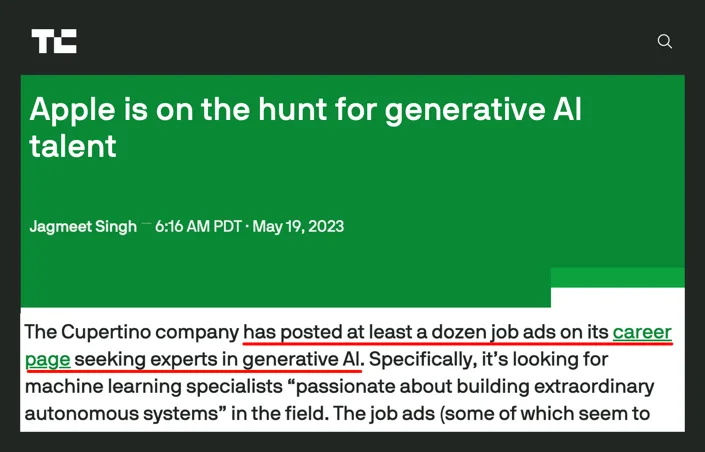
Source: TechCrunch
These ads ran more than a year before Apple Intelligence was introduced on June 10, 2024.
In other words, anyone tracking Apple's career page saw the company's AI ambitions well ahead of any official announcement.
Toby Culshaw, Senior Director of Talent Intelligence and Quality at ServiceNow, who previously built talent intelligence teams at Amazon and Philips, explains just how useful this data is for staying ahead of rivals.
Below is a quote from his talk on the Digital HR Leaders podcast.
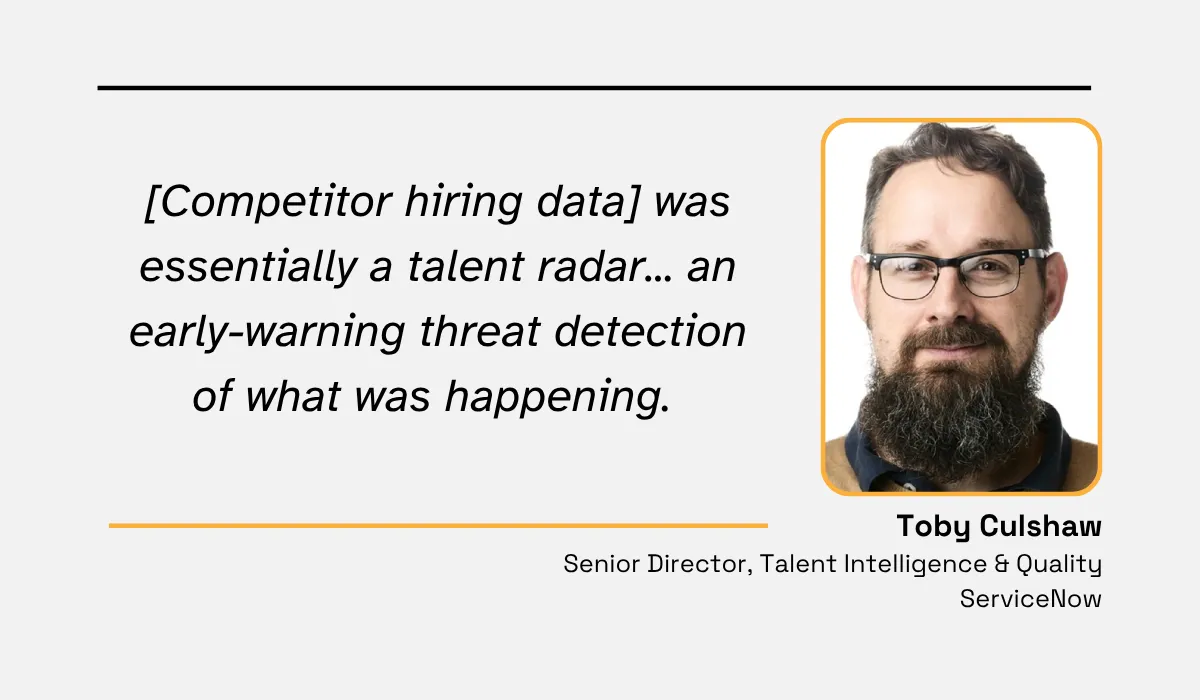
Illustration: Veridion / Quote: myHRfuture
Culshaw described how executives being hired into areas a competitor had never hired into before served as one of the clearest warnings that a pivot was coming.
His team used those flags to alert leadership early, rather than reacting after a rival's launch.
In short, hiring data turns a competitor's own recruitment activity into an early view of its plans.
If a rival is staffing up somewhere unexpected, it's worth asking what they know that you don't.
Location Signals Reveal Expansion Plans
Company expansions are hard to hide.
A business can keep its strategy quiet, but its physical footprint grows in public, through construction permits and local announcements.
But what matters just as much as the expansion itself is the type of location being opened, because different facilities point to different kinds of expected growth.
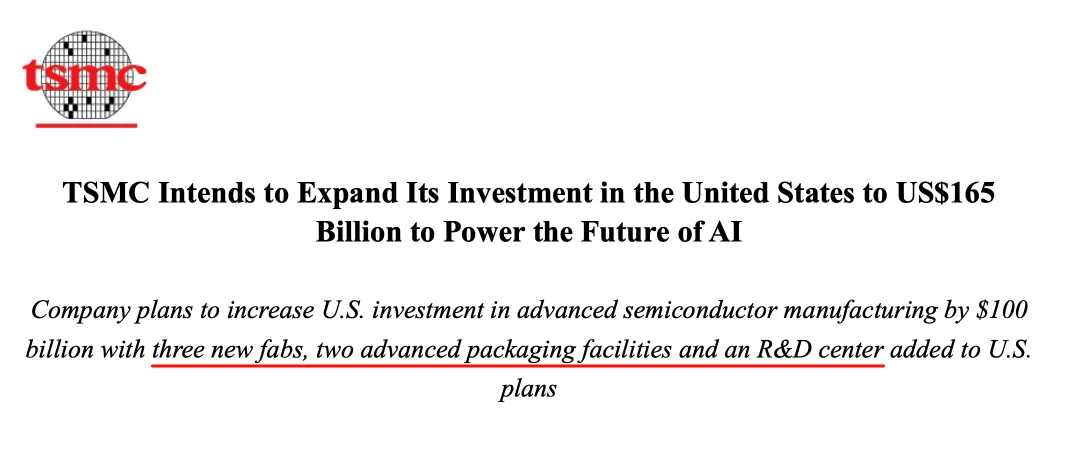
TSMC's investment in the United States illustrates this well.
In March 2025, the chipmaker announced it would expand its U.S. investment to $165 billion, framing the move around future AI demand.
Source: TSMC
This information is public and clearly shows the expansion plans, but the facility types tell the more specific story.
Fabrication plants (or “fabs”) and packaging plants are long-term, capital-heavy commitments, which means TSMC expects demand in the region for decades, while the added R&D center shows it also plans to concentrate critical engineering talent there.
Had the company opened a network of sales offices instead, the signal would have pointed to a completely different move.
This logic applies broadly, since each location type carries its own message about a company's intentions.
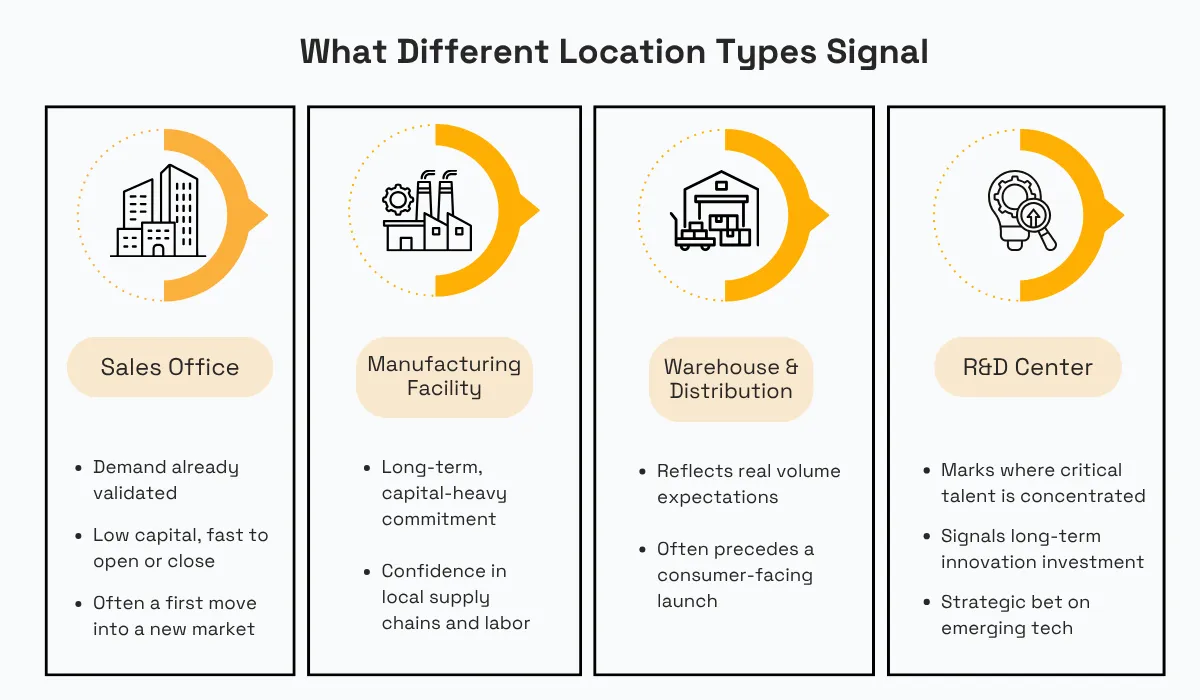
Source: Veridion
To contrast just two of these, a new warehouse reflects real volume expectations and often precedes a consumer-facing launch, while an R&D center signals a long-term innovation bet tied to local talent.
Paying close attention to this kind of location intelligence can indirectly show you a competitor's confidence and target markets before either is stated publicly.
It also gives you something concrete to act on.
If a rival opens a distribution center in a region you haven't prioritized, that's a reason to examine demand there yourself, starting with local customers and potential partners, so you can decide whether to respond or deliberately stay out.
Simply put, where a competitor builds shows where it expects to grow.
Technographic Signals Reveal Strategic Direction
Technology sits at the core of how modern companies operate, regardless of industry.
As the CEO of Microsoft, Satya Nadella, correctly puts it, most companies use some type of technology in their work, making each of them a tech company in practice.
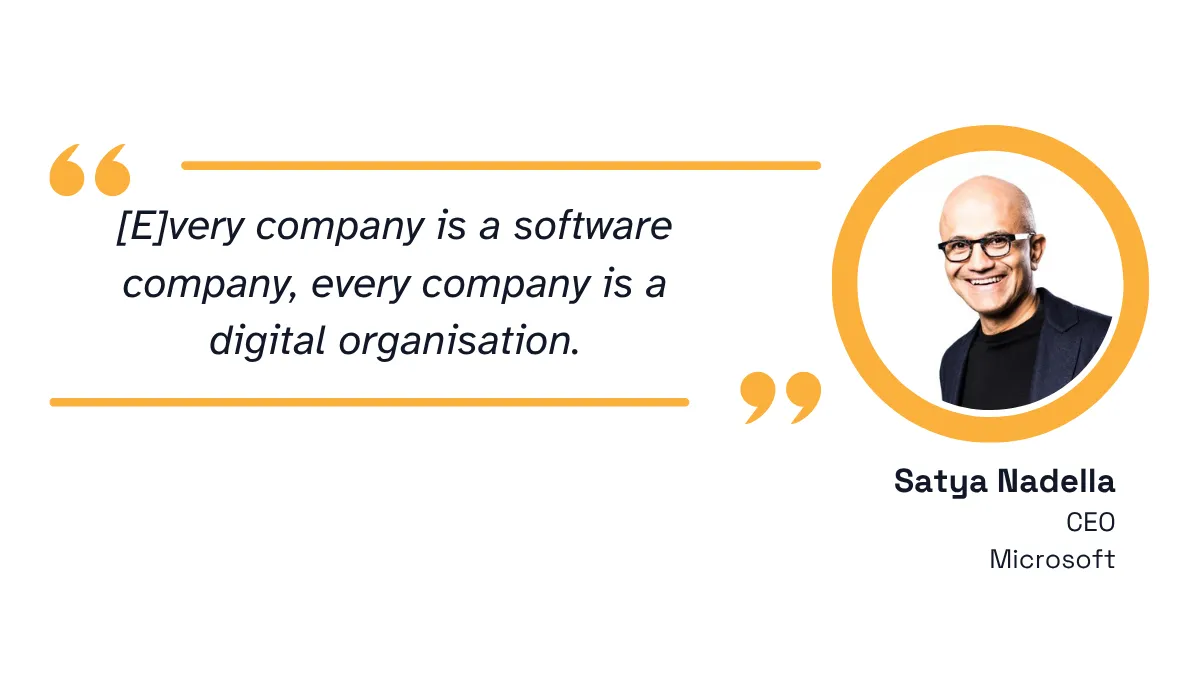
As such, the technologies a competitor uses, adopts, replaces, or builds around say a lot about its strategic direction, often more than its marketing does.
Some specific technographic signals to look for include:
- Adoption of a new platform or tool
- Replacement of a long-standing vendor
- Migration from on-premise systems to the cloud
- New integrations with specific partners
One insight this data offers is maturity, since a company modernizing its stack is usually preparing to scale or automate.
Another is direction, because dropping or replacing a vendor can double as a statement about where a company is heading and who it now considers a rival.
Amazon's database migration illustrates that second point.
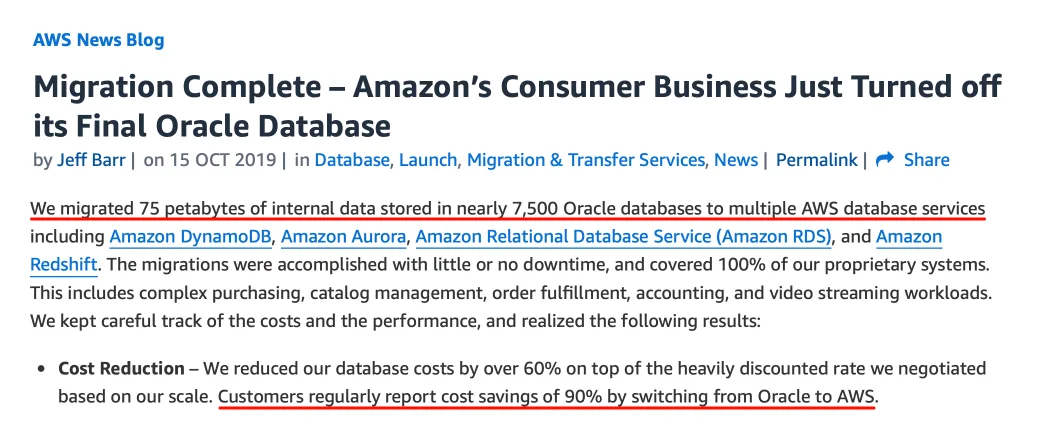
In 2019, the company announced it had turned off its final Oracle database after moving 75 petabytes of internal data to its own AWS services.
Source: AWS
Notice how the announcement, published on Amazon's own news blog, documents the move away from Oracle and promotes AWS in the same breath.
The migration removed a dependency on a direct rival, and it doubled as public proof that AWS could handle extreme scale, a message aimed at every enterprise still running Oracle.
When you work with technographic signals, accuracy matters a lot, because tech stacks change frequently.
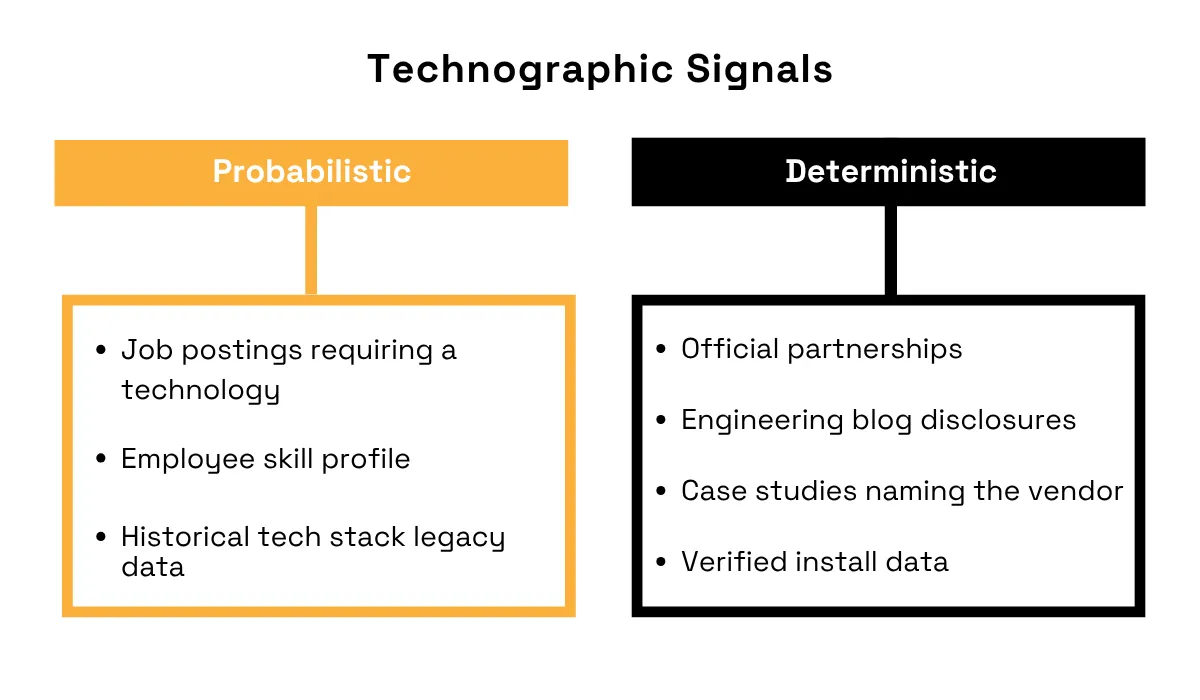
That's why it's worth separating probabilistic signals from deterministic ones.
Source: Veridion
Probabilistic signals, like job postings mentioning a technology, suggest usage without confirming it, while deterministic signals, like verified install data, confirm it outright.
The practical approach is to combine them, using probabilistic signals to spot changes early and deterministic ones to verify before acting.
Read this way, a competitor's tech stack becomes a fairly honest record of its strategy.
Product and Portfolio Signals Indicate Market Positioning
Product signals can be some of the most direct ones you'll find.
After all, products are the most visible expression of a company's strategy, since they're what customers actually see and compare.
Any change in this area shows how a competitor wants the market to perceive it.
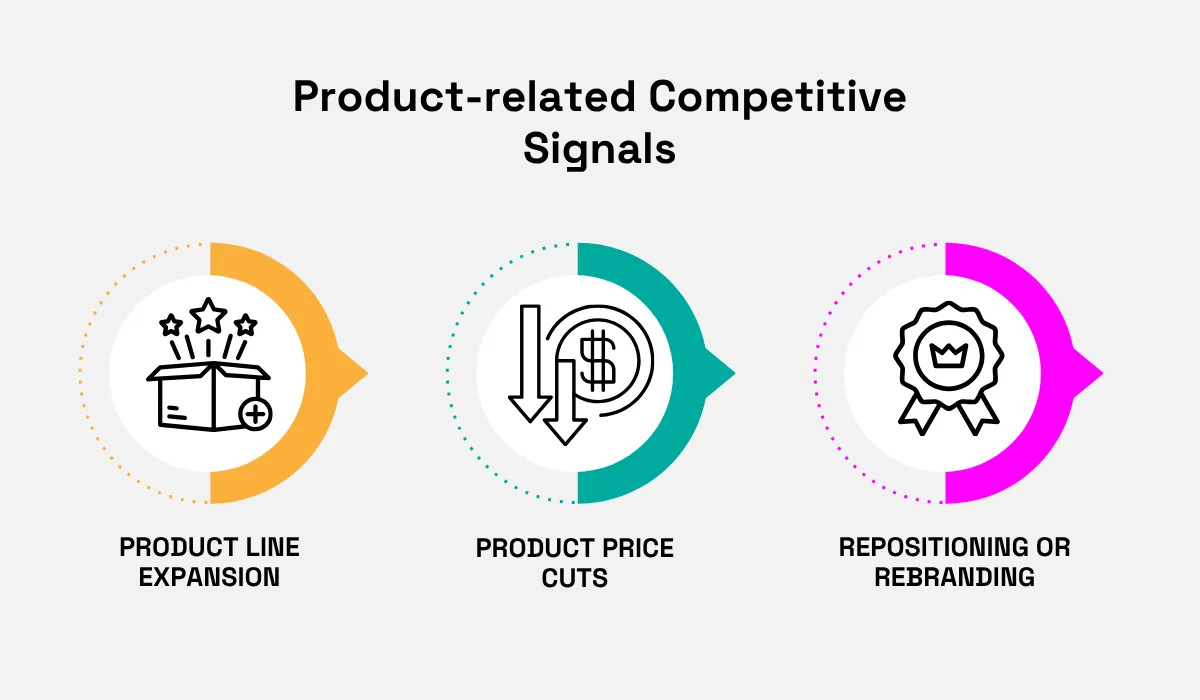
Some of these signals, just to illustrate, are shown below.
Source: Veridion
Product line expansion usually means a competitor is betting on a new segment or customer need, and it often follows the hiring and technology signals covered earlier.
On the other hand, price cuts or a rebrand tend to signal a push for market share or a shift in target customer, which changes the competitive frame you operate in.
In each case, this data is valuable because it helps you differentiate deliberately, in response to what rivals are actually doing.
April Dunford, positioning expert and founder of Ambient Strategy, comments on why that competitive context matters so much.
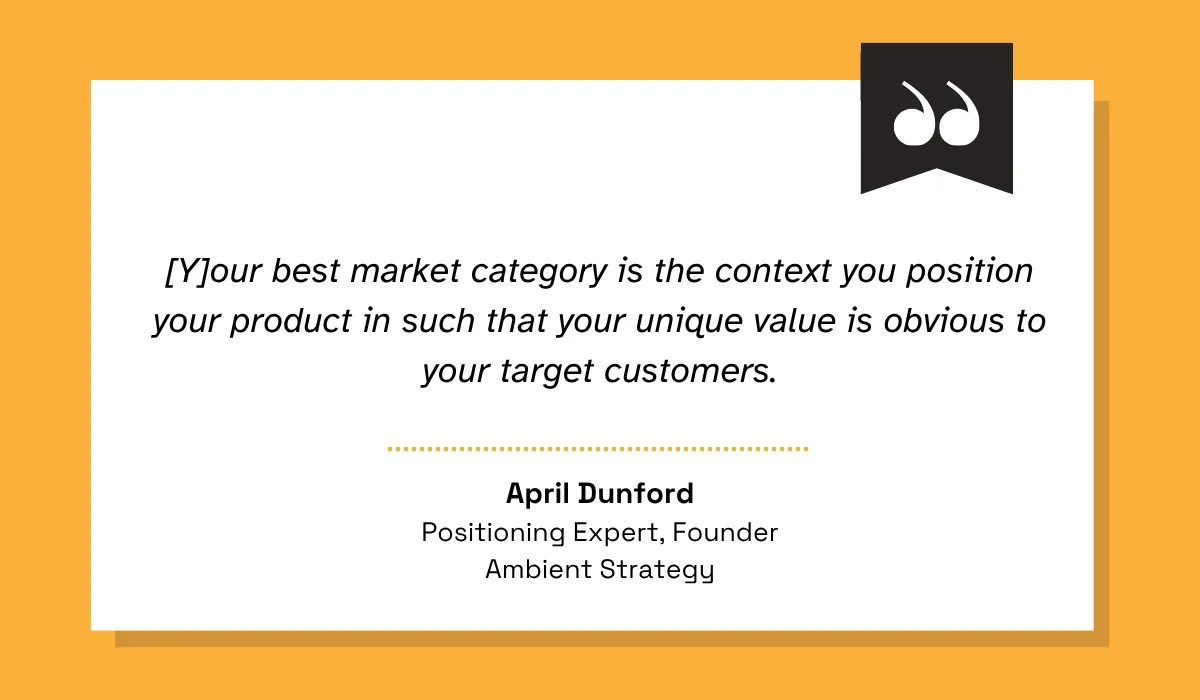
Illustration: Veridion / Quote: April Dunford
What Dunford means is that positioning only works in context, and that context is defined by the alternatives your customers compare you against.
So, when a competitor repositions or rebrands, the context shifts, and your own messaging may need to shift with it for your value to stay obvious.
If a rival moves upmarket, for example, you may want to emphasize accessibility and fast setup to win the customers it's deprioritizing.
The same logic plays out on a larger scale with entire portfolios.
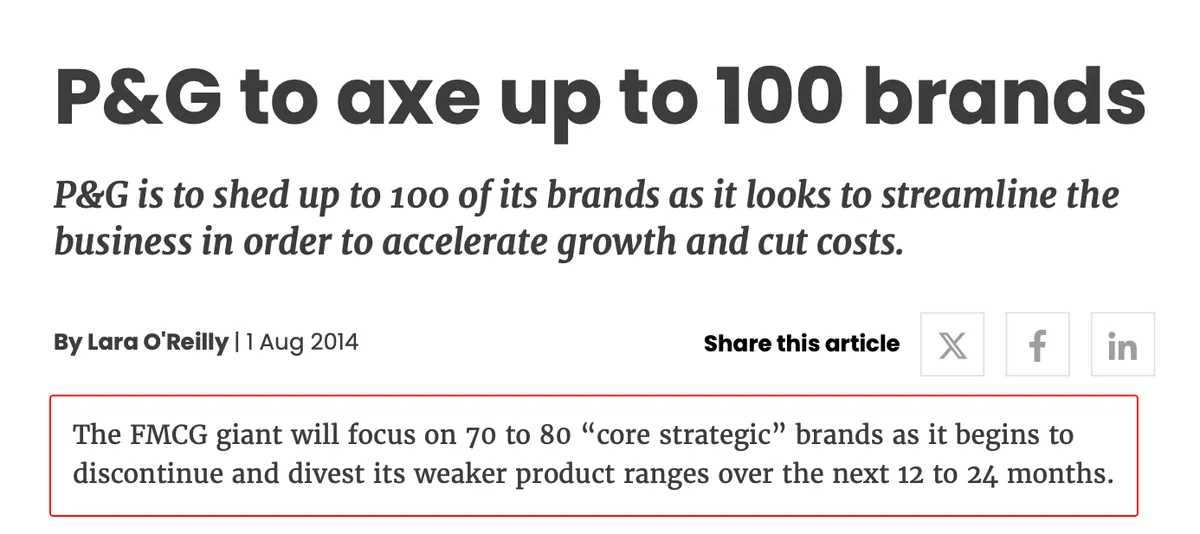
In 2014, P&G announced it would shed up to 100 brands to concentrate on 70 to 80 core ones, as reported by Marketing Week.
Source: Marketing Week
For P&G, the move meant focusing resources on the brands that generated nearly all of its profit.
For competitors, it revealed which categories the giant intended to defend and which it was exiting, and companies watching closely could prepare to compete for the customers those divested brands served.
Whether at the level of a single product or a whole portfolio, these signals show where a rival wants to compete next.
How to Stop Piecing Together All These Competitive Signals Manually
As we've seen, competitors give off market signals across many categories, from job boards to product catalogs.
While all this data is publicly available, compiling it and making use of it is a time-consuming, manual process.
And according to Crayon's 2024 State of Competitive Intelligence report, simply collecting the data is where much of that time goes.
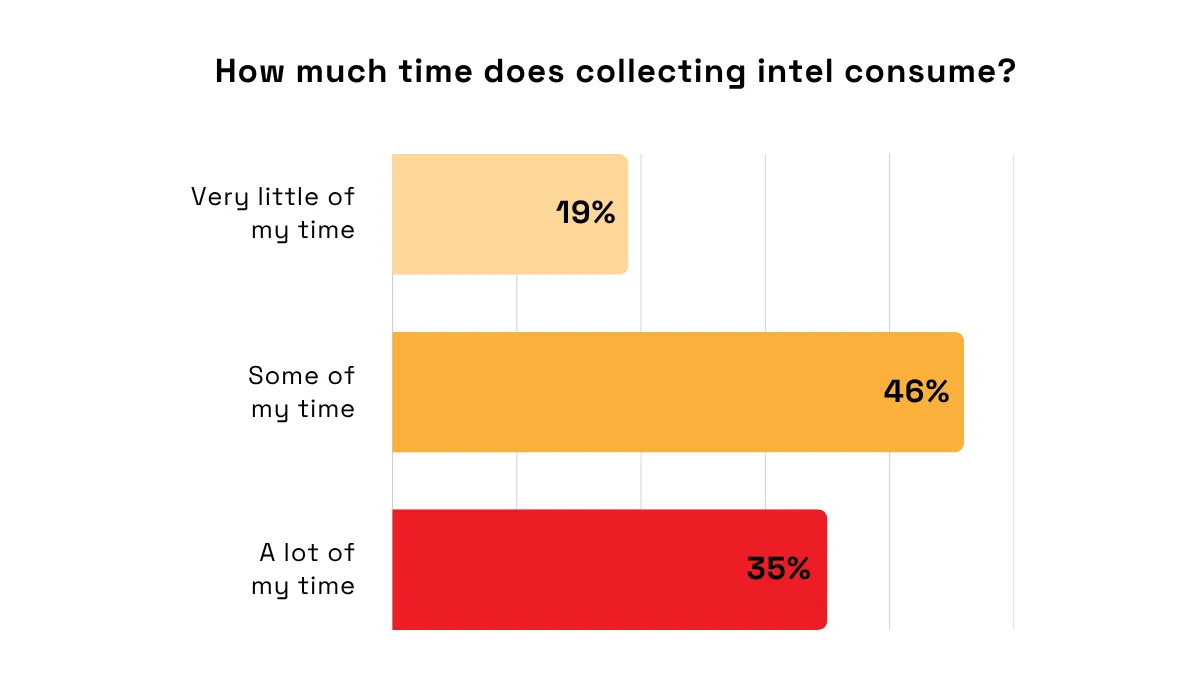
In fact, 81% of the surveyed professionals said collecting competitive intelligence data takes up some or a lot of their time, leaving less room for the analysis that actually creates value.
That figure doesn't even account for data freshness.
Signals change constantly, so a dataset gathered last quarter quietly goes stale, and anything that happens between two manual checks is simply missed.
This is exactly the problem Veridion solves.
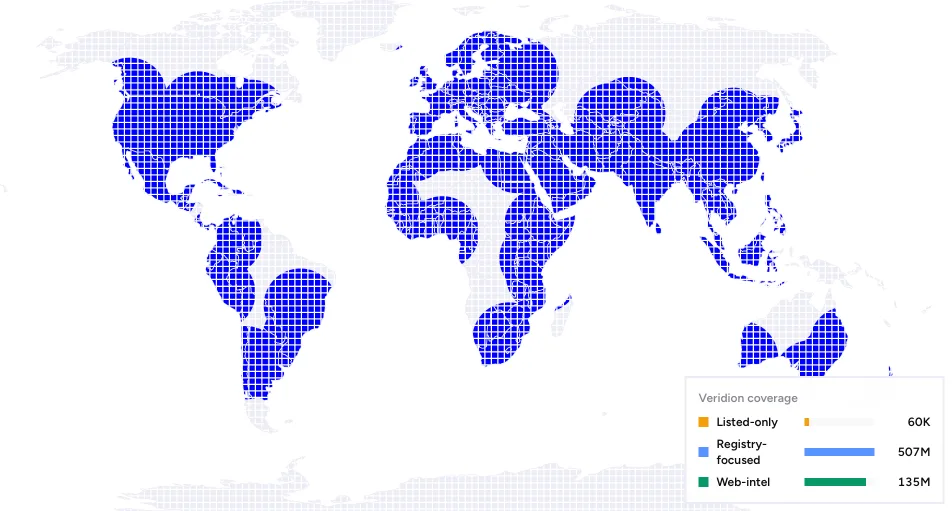
Veridion is a company intelligence platform that maintains a data graph so broad that if a company is registered anywhere or has any digital presence, it's probably in there.
Coverage currently spans over 186M operating companies across the globe, including the small and private businesses most providers overlook.
Source: Veridion
To build this database, Veridion's pipeline crawls around ~1.4B web pages per month, and AI models turn the raw content into structured company profiles.
Probabilistic web signals are corroborated against deterministic registry records, and every attribute ships with a confidence score and its source, so you always know how much weight to give it.
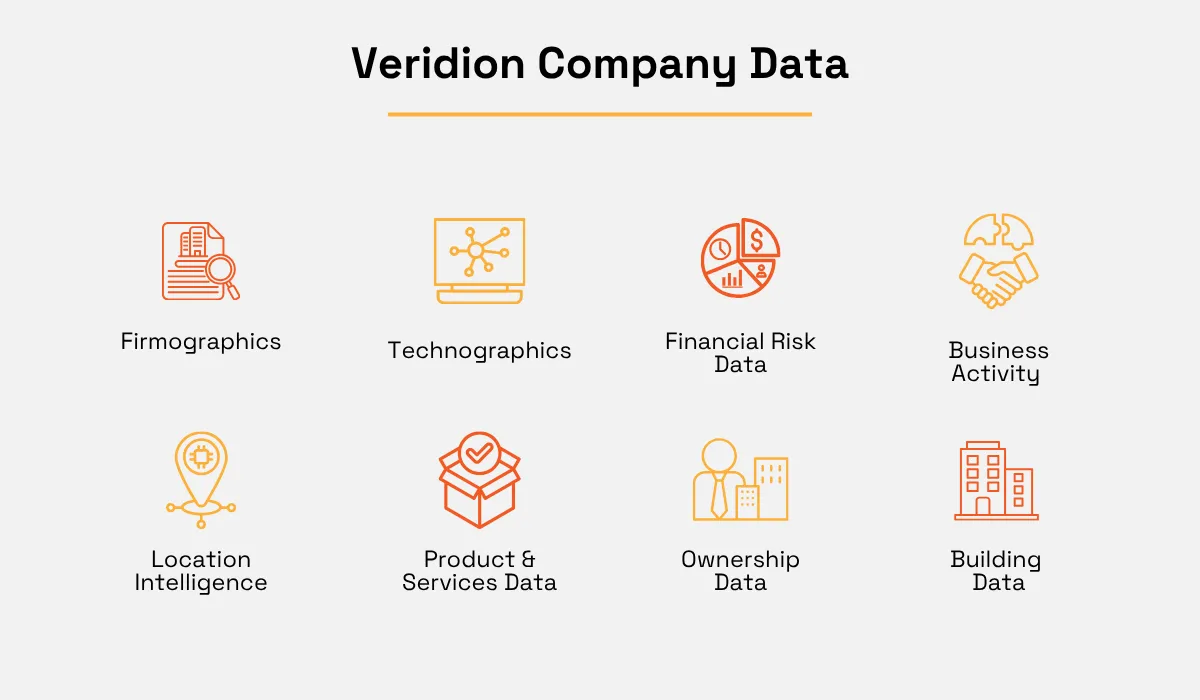
Some of the company data types most relevant to the market signals covered in this article are shown below.
Source: Veridion
Importantly, this data is constantly updating.
Core company profiles refresh continuously, volatile signals refresh daily, and technographics are re-evaluated on a rolling 90-day window.
For competitive intelligence, that changes the job itself.
Rather than spending most of your time collecting scattered signals, you start from data that's already compiled and current, and your time goes into deciding what to do about it.
Conclusion
Competitors reveal far more than they announce, and hopefully you now have a clearer sense of which signals to watch and what each one can tell you.
The real advantage, though, comes from developing a better process for compiling these competitive market data points consistently and acting on them early.
So, pick the signals most relevant to your market and start tracking them today.
Articles
Discuss how these trends affect your organization.
Our analysts are available for a short call. Bring a specific question and we will ground it in the data.
Insights
Keep reading
More analysis, research, and outcomes grounded in live company intelligence.
Competitive Intelligence: Importance, Components, and Collection Methods
Explore competitive intelligence: its importance, main components, and proven methods for collecting actionable data.
6 Common Mistakes when Gathering Competitive Intelligence
Uncover 6 common pitfalls to avoid when gathering competitive intelligence for more accurate insights and smarter business decisions.
M&A Target Radar: Spotting Acquisition and Partnership Signals in Real Time
Are you missing crucial market signals for strategic planning? M&A Target Radar helps you spot acquisition and partnership opportunities in real time.