Insights / Articles
When Firmographics Aren't Enough: How to Know It's Time to Layer in Behavioral Data
Tired of firmographic data providers falling short? Discover when to layer in behavioral data for a complete customer picture.

- Only about 5% of B2B buyers are actively in-market at any given moment.
- ICP-fit accounts that consistently fail to convert usually have a timing problem, not a targeting problem.
- Behavioral signals poured onto an unfiltered list just multiply noise.
Your ICP list looks perfect on paper. It has the right industry, size, and revenue. Still, half of it brings in no business.
That’s because firmographic data helps identify accounts that resemble your target market.
But behavioral data, such as first-party engagement, third-party intent, or observed buying activity, is what helps estimate interest or timing.
And when it comes to a well-built account list repeatedly stalling at the same stage, investigating timing is a good place to start.
Sometimes, your qualified leads just aren’t ready to buy when you reach them.
The missing link is behavioral data.
Use firmographic and technographic fit to build your qualified universe, then use behavioral signals to time and prioritize outreach inside it.
Here's how to do it correctly.
Why Firmographic Segmentation is Necessary, but Not Enough
Firmographic data groups companies by the traits that describe what they are: industry, employee count, revenue, geography, and ownership structure.
It's the starting point for nearly every B2B go-to-market motion, and for good reason.
The problem is that firmographic attributes answer "does this company structurally look like our market?" and stop there.
Two accounts can share the exact same industry, size, and revenue band and sit in completely different positions.
For example, one account may have recently renewed with a competitor, while another may be reviewing its technology stack after a leadership change.
Basic firmographics alone would not reveal that difference.
Firmographic attributes are also comparatively stable. As HG Insights points out, these attributes shift over quarters, while buying readiness can shift within a single week.
However, it's worth pointing out this isn’t the case for all firmographics. Many core attributes change less frequently than engagement signals, yes, but their freshness requirements vary by field.
For example, legal form may be stable, while headcount, revenue, operating locations, status, and ownership can change much faster.
In any case, this stability makes firmographic characteristics a solid foundation for segmentation strategies. However, firmographic stability also becomes a limitation when you need to determine who is ready to act today, not next year.
The fact is that buying readiness can change long before a company’s firmographic profile does, and often before the buyer contacts a vendor.
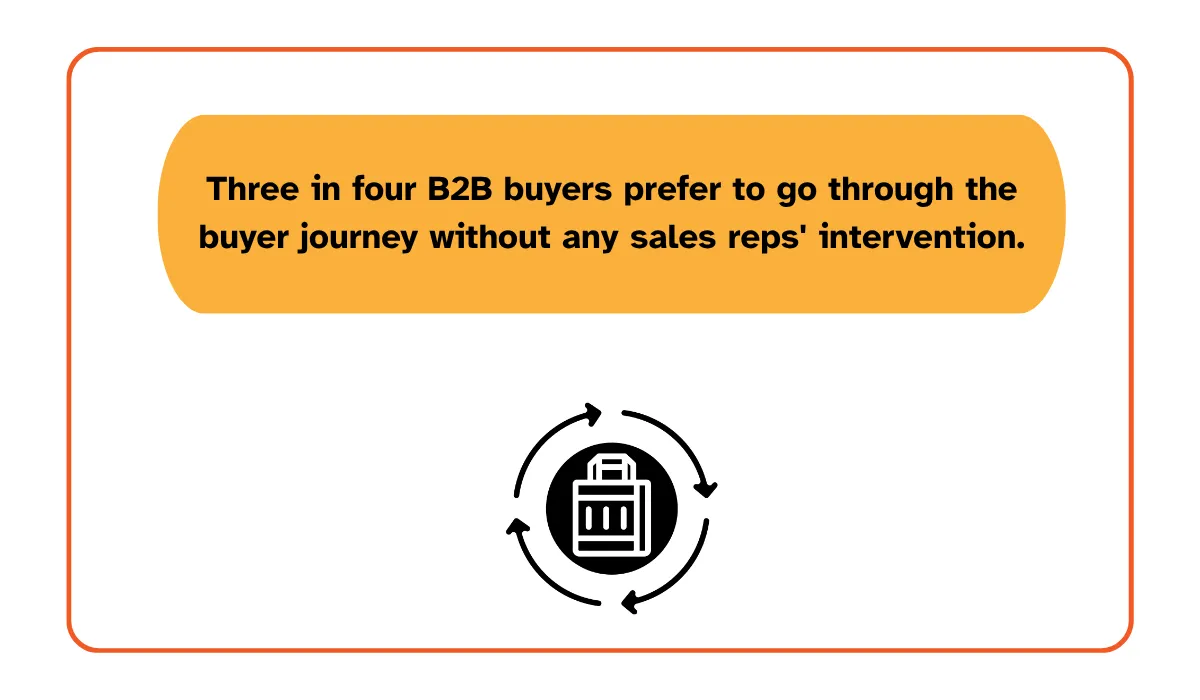
For example, research by Gartner shows that 75% of B2B buyers prefer a rep-free sales experience, meaning that much of their early research may happen without direct interaction with sales.
Firmographic data would still classify the account in the same way during this period, while relevant behavioral signals may indicate that its buying activity has changed.
That said, firmographic fit stays useful. It just answers a narrower question than most teams assume.
It tells you which companies could become customers. But, on its own, firmographic fit provides limited evidence about which accounts are likely to act.
When your list looks good on paper and yet fails to convert, the gap between "could buy" and "is buying" could be one of the reasons for poor results.
Signals That Show It's Time to Add a Behavioral Layer
Three warning signs tend to appear together when firmographic fit alone is no longer moving the needle:
- On-paper-perfect accounts that don't convert
- Pipeline that stops progressing despite strong list quality
- Reps who keep describing the same problem in different words
Each signal on its own can be attributed to natural sales friction. All three at once show a need for an additional timing factor.
1. ICP-Fit Accounts Are Not Converting
ICP fit is a static metric. It shows the company could potentially benefit from your product or service; however, it doesn't indicate whether the company is currently prepared to act.
When all accounts on the list that match the criteria—right industry, right company size, right revenue—still don't convert at a higher rate than other accounts, fit becomes irrelevant.
This pattern has a specific shape once a team pulls the numbers. You have strong list-to-meeting rates, meaning your reps are getting in the door without much trouble. But these meetings don't end in a contract, even though these are the firmographically ideal accounts.
Reps get the meeting because the outreach and targeting were good. But the conversation doesn't advance because nothing in the account's actual business creates urgency to act now.
In an analysis of how and when decisions are made, 6sense researchers found that 85% of B2B buyers establish their purchase requirements before contacting sales, and 69% of the purchase process happens long before the buyers engage with vendors. Additionally, 81% of buyers finally pick a vendor without ever talking to a sales rep.
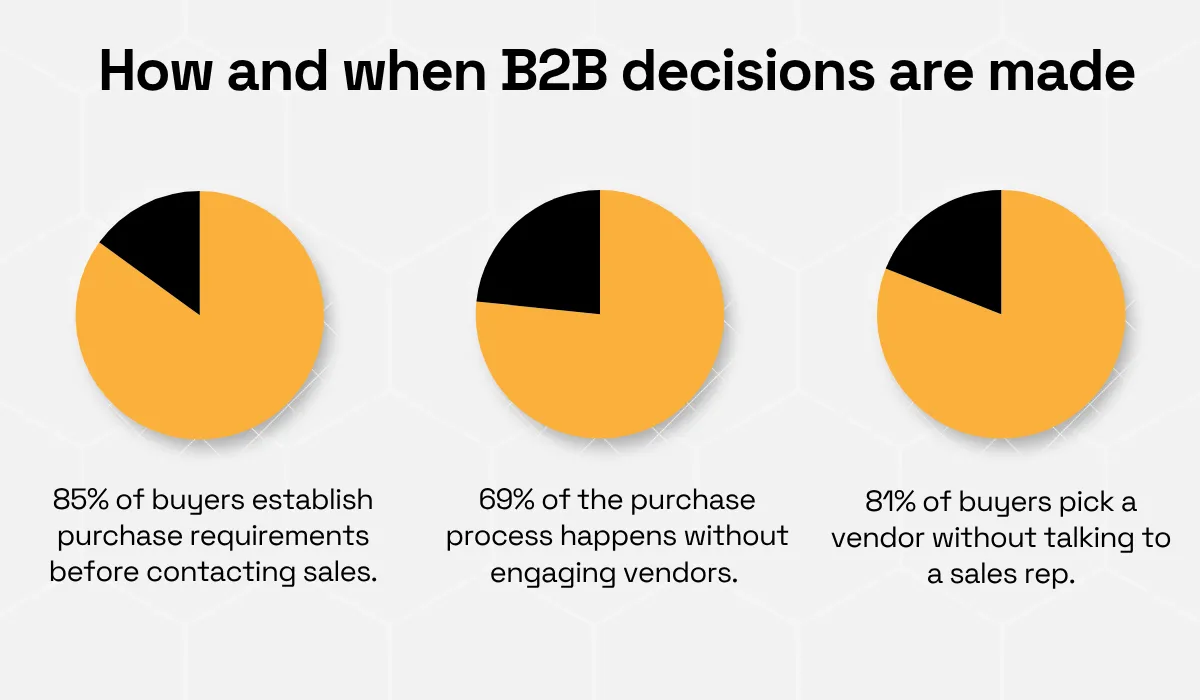
If your sales reps are reaching out to such buyers, then the real buying window may already be closing or may not have opened at all.
This, however, doesn't mean your ICP definition was wrong; you simply measured fit on the wrong axis.
Here's what you need to do. Take all qualified opportunities created over a representative period, group them by ICP tier, and compare stage conversion and win rates across tiers.
Control for segment, source, territory, deal size, and sales cycle where possible.
Then check if the conversion rate is similar in top-tier and mid-tier segments. If it is, the bottleneck isn't in the fit.
Next, track a simple binary flag indicating whether the account had a specific triggering event (renewal window, leadership change, competitive issue) when you first contacted them.
Test whether verified trigger events add predictive value beyond the existing ICP score. Define each trigger, capture it at the time of outreach, and compare model performance on held-out data before using it for routing.
2. Pipeline Is Not Moving
The second signal appears further down your funnel. Your lists look good, you've made contact with leads, and meetings have been scheduled. But the conversation isn't driving results.
This shows that fit alone can't predict readiness, because a firmographically qualified account can stall just as readily as one that isn't.
The most reliable way to tell whether a stalled pipeline reflects a qualification problem or a timing problem is to compare deal age against your stage-average benchmark.
If a deal has sat in a stage well past the typical time for deals that eventually close, something has changed, or never existed, on the buyer's side.
A firmographically qualified account may still stall if nothing internal drives urgency to buy. No compelling event has occurred lately, the company has no budget cycle lined up, and no executive decisions are pushing the deal further.
The deal isn't broken. It's just parked outside a buying window, and no amount of follow-up email cadence changes that.
Fullcast's analysis of pipeline health notes that well-qualified deals win 6.3 times more often than deals that were never properly qualified.
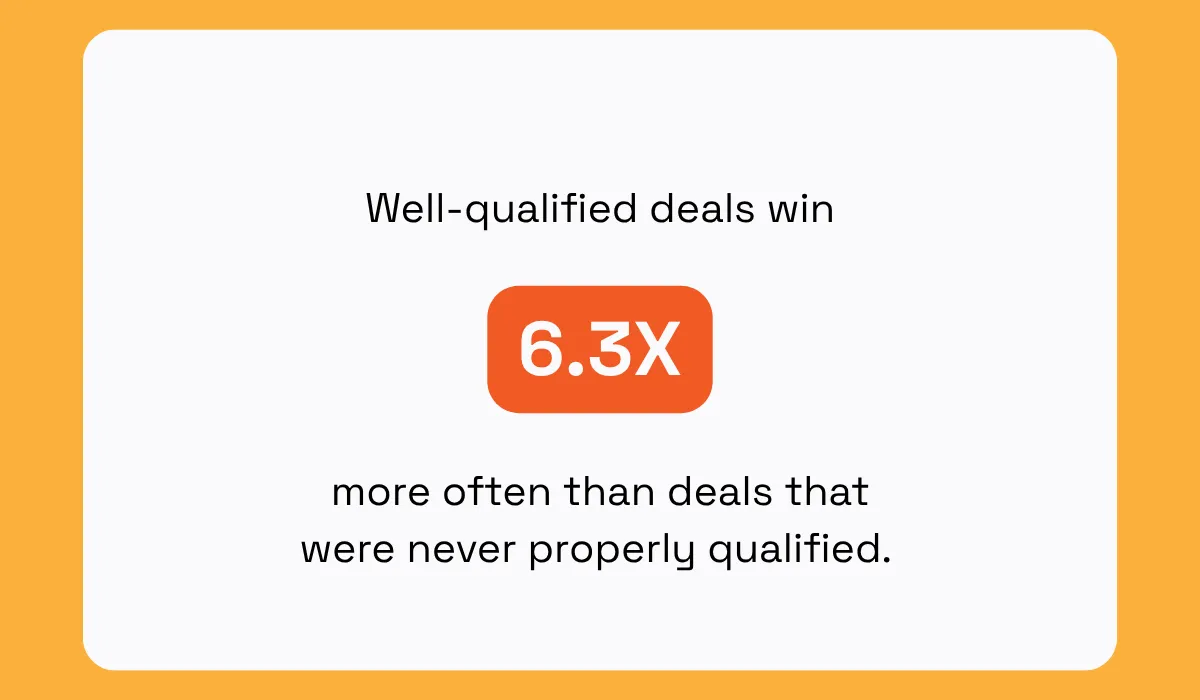
This underlines why distinguishing a genuinely slow-moving deal from one that was never in an active buying window matters more than pushing harder on either.
To better qualify your leads, calculate your average time-in-stage for the deals that closed won in the last four quarters, by stage.
Define stage-age thresholds from your own historical distribution. For example, by comparing an open deal with the median or upper quartile for similar closed-won opportunities.
Require a one-line answer from the rep:
What specific business event, not activity, is driving this deal forward right now?
If the rep cannot identify buyer-confirmed urgency, next steps, stakeholders, and stage-exit evidence, review the opportunity’s forecast category and move it to nurture or monitoring when those criteria are not met.
3. Sales Reps Say "The Timing Is Off"
The third sign is the most qualitative and subjective, but also the most likely to be dismissed. Salespeople will come back from calls and report that the account is a fit but not ready yet.
This feedback typically gets filed as an excuse—a soft "no" the rep didn't want to pursue. This is because it sounds so subjective. No number is attached to "not ready right now," so it is easily filed as an excuse rather than data.
When this response pops up across a substantial portion of the ICP-fit outreach program, it stops being an anecdote. It becomes a structural issue—that the list is firmographically correct and timing-blind.
The pattern may reveal a prioritization problem, an execution problem, or both. Validate the cause before changing data sources or coaching.
Sales coach Lee Levitt has documented what happens when a pipeline review trades the question "when will this close" for "where is the buyer stuck."
In one review session with a VP of sales, the vague answers became specific.
There was a leadership shift nobody knew about, and an unresolved integration challenge for which nobody had offered a solution yet. Two out of twelve deals were removed from the pipeline altogether because neither rep could point to any obstacle; therefore, the deals were not real in the first place.
Levitt concluded:
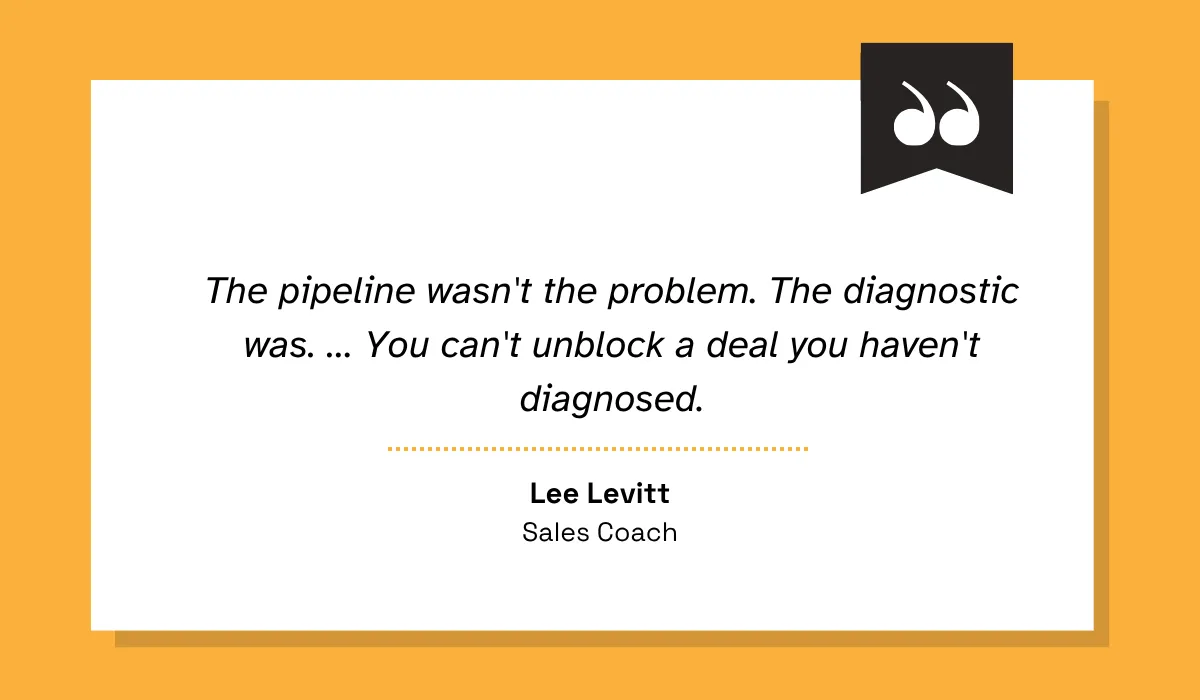
Illustration: Veridion / Quote: Thoughts on Selling
The next step here is to stop ignoring this feedback post-call. Create a short list of "not ready" reasons, such as renewal locked in, no internal champion, budget-cycle timing, reorg in progress, etc., and insist on selecting one each time a deal stalls or fails.
Once that field exists, set up a monthly review of tagged "not ready" reasons across your top 100 ICP accounts contacted that month.
If more than a third repeat the same underlying reason, that's your signal to build or buy a timing layer specifically addressing that trigger, rather than treating each instance as a one-off.
How to Actually Progress from Broad Targeting to Precision Targeting
Once the three signals show up, the instinct is to buy an intent data tool and bolt it onto the existing list. That's the wrong order.
Precision targeting works better as a three-layer progression, as each layer answers a different question in sequence:
- Firmographic fit: Is this the right type of company?
- Technographic fit: Does it have the right infrastructure or capabilities?
- Behavioral and timing signals: Is this the right moment to engage?
Skipping straight to behavioral data without the first two layers underneath it doesn't give you precision. It gives you noise.
The scale of the problem behavioral data alone creates is well documented.
Research from the Ehrenberg-Bass Institute for Marketing Science, credited to Professor John Dawes and known as the 95:5 Rule, found that roughly 95% of potential B2B buyers are not actively evaluating a purchase at any given moment, with only about 5% in an active buying window.
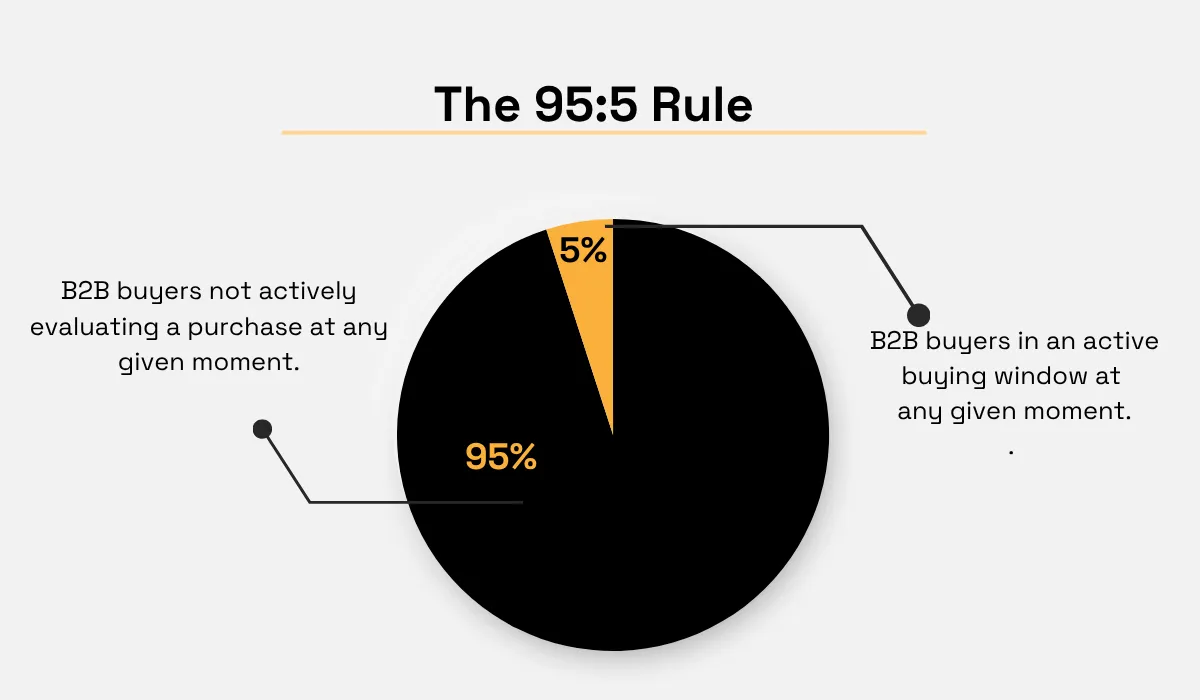
Illustration: Veridion / Data: Marketing Science
An account may visit a pricing page or download a guide but still fall outside the ICP because of size, geography, use case, or technical requirements. Treat engagement as a prioritization clue, not proof of authority or purchase intent.
In short, if you run intent data across your full addressable universe without a firmographic filter first, you flood your team with "in motion" signals from companies that were never going to be customers regardless of timing.
The fix isn't better intent scoring. It's applying intent scoring only after firmographic and technographic qualification have already narrowed the field.
This is where Veridion fits into the model, not as the behavioral layer itself, but as the foundation underneath it.
Source: Veridion
Veridion turns complex firmographic and technographic data into one unified, constantly updated business profile.
That foundation is what makes behavioral and intent signals worth acting on: once you know an account is a structural fit and has the operational capacity to buy, a timing signal on top of that account becomes a real prioritization tool. A timing signal on an account that could never become a customer is just noise with a timestamp.
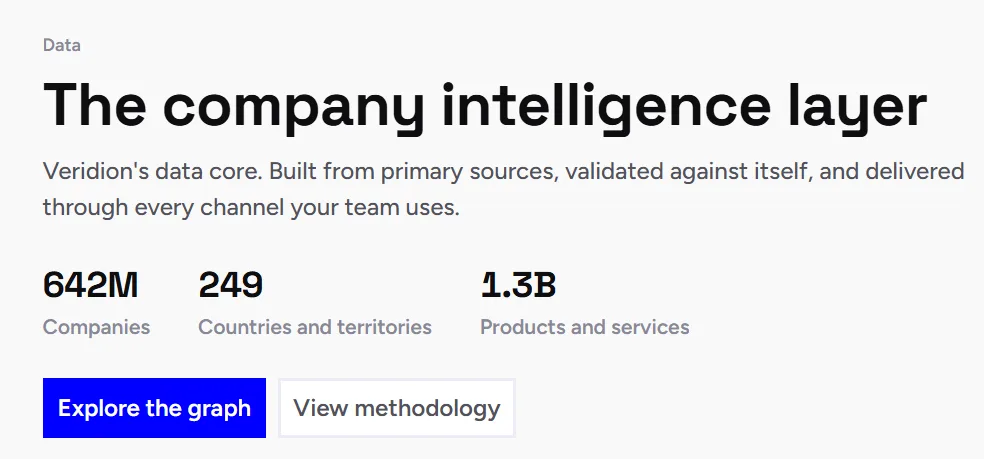
The platform's company enrichment service and revenue operations solution are built around exactly this idea: a live, per-attribute-sourced firmographic and technographic layer that GTM teams can layer behavioral or intent tools on top of, through the search API, rather than running behavioral data against an unfiltered universe.
Source: Veridion
For account scoring, teams can use these data types sequentially rather than assigning equal weight to every signal in one composite score.
Use firmographic and technographic fit to define your qualified universe first. That's the pool your reps can work.
Then apply behavioral and intent signals within that pool to decide priority and timing, not who's in the pool.
Prevent raw activity from overpowering basic eligibility and value. Use fit as a gate or model feature, then validate how timing and behavioral signals improve ranking on out-of-sample outcomes.
Conclusion
In the end, when a strong-looking list underperforms, test targeting quality and data accuracy first, then determine whether timing or behavioral signals add explanatory and predictive value.
Firmographic segmentation needs to go hand in hand with timing signals, and in the correct order.
Start by checking whether your own ICP-fit accounts show the fit-without-conversion pattern, then build the layers in sequence rather than all at once.
The goal is to prioritize accounts with credible near-term signals without neglecting the larger out-of-market audience that may buy later.
Articles
Discuss how these trends affect your organization.
Our analysts are available for a short call. Bring a specific question and we will ground it in the data.
Insights
Keep reading
More analysis, research, and outcomes grounded in live company intelligence.
Which Online Business Data Providers Stand Out in Today's Market?
This article will highlight online business data providers that businesses trust for accurate company information and actionable insights.
7 Firmographic Attributes to Weight in Your Account Scoring (and How Much Each One Matters)
Tired of inaccurate account scoring? Discover which firmographic data providers offer the 7 crucial attributes that truly matter.
Looking for a Global Data Collection Partner? These Companies are Worth Considering
Looking for a global data collection partner? This guide will introduce companies worth considering and explain what sets them apart.