Insights / Articles
How to Verify Business Addresses and Company Status in Romania
Tired of uncertainty? Learn how to find business addresses and verify company status in Romania with our expert guide.

- Romania's trade register confirms a company's legal existence, status, and registered office at no cost.
- Cross-checking ONRC, ANAF, and VIES catches mismatches that single-source checks miss.
- Automated data platforms cross-check at scale, verifying thousands of companies at once.
Fake supplier identities and shell companies cost businesses extra money every year. Romanian counterparties are no exception. A company can look polished online while its registration tells a different story.
Romania's public registers make verification possible in minutes once you know where to look. The challenge lies in knowing which records to trust and how to read them.
Registration status, tax details, addresses, activities, and signs of current trading all live in these records, and checking them takes just a few steps.
Confirm the Company's Legal Registration Status
Every verification starts with Romania's National Trade Register Office, the Oficiul Național al Registrului Comerțului (ONRC).
Source: Veridion
The register is public by law, so anyone can consult it.
Your entry point is RECOM online, the register's official search service. Basic company data comes free of charge. You can search by name, registration number, or fiscal code.
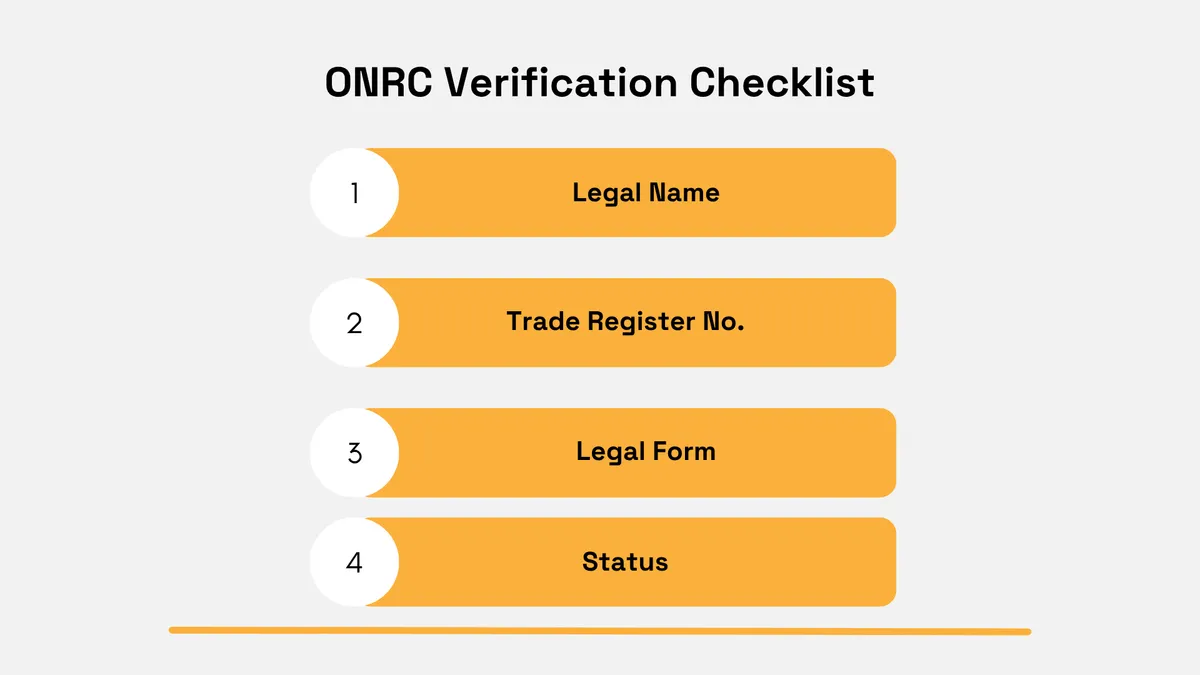
The essentials are the legal name, the trade register number, and the Unique Registration Code (CUI). The trade register number follows the J format, such as J40/1234/2020 for a Bucharest registration.
The record also shows the company’s legal form and current standing. Societate cu Răspundere Limitată (SRL) marks a limited liability company. Societate pe Acțiuni (SA) marks a joint stock company.
The status field shows whether the company is active, dissolved, or in insolvency proceedings.
Each status carries different consequences. An active status shows a company is still trading, while dissolution means the company is winding down.
An insolvency flag means that you should talk to a lawyer before paying anything. Insolvency proceedings change who can legally accept payment and how contracts get enforced.
Two more fields round out the check. The registered office address anchors the company legally, and directors or shareholders appear where available.
A certificate constatator from the paid InfoCert service gives you certified proof when a deal demands it.
A clean registration can give you confidence that a company is legitimate, but it’s only part of the picture. Tax records fill in the rest.
Verify the Company's Tax and Business Registration Details
Registration identifiers deserve their own check because fraudsters recycle or invent them. Every company gets one CUI when it first registers, and that same number is also used as its tax ID. It never changes and is never reissued.
If the CUI on an invoice doesn't match the CUI in the official record, that's a red flag. It could mean the invoice is fake or you're dealing with the wrong company entirely.
Romania's tax authority handles this part of the check. The National Agency for Fiscal Administration (ANAF) publishes taxpayer data through its online services. One search confirms the fiscal registration, the declared name, and the registered address.
It’s a good idea to take a separate look at VAT status for cross-border deals.
A VAT-registered Romanian company carries an RO prefix before its fiscal code. The EU's VIES database validates that number against national records in seconds.
There is one nuance in the Romanian system that prevents a lot of false alarms: a Romanian company below the VAT threshold can hold a valid CUI without any VAT number.
Missing VAT registration proves nothing on its own, so check it alongside the other records.
The real power of this step comes from comparison rather than collection. A name and address in the tax records should match the ONRC entry and the company website.
A firm whose own sources disagree about basic identifiers invites hard questions.
Romania’s own numbers explain why these checks matter. The European Commission’s 2025 VAT gap report put Romania at 30% for 2023.
No other EU member had a higher compliance gap. Identifier checks do catch invoices and registrations that don’t hold up.
Once you’ve covered registration and tax records, you should then check whether the address is correct.
Verify the Registered Business Address
An address check sounds unimportant until two records disagree.
The registered office in the ONRC record has the company's official legal address. Every other source should match it or explain the difference.
A registered address matters more than convenience or courier routes. Legal notices, tax correspondence, and court documents all get sent to the registered office.
A wrong or fictitious address can leave you without recourse when a dispute starts.
The records from ANAF offer a second official reading, so trust these two sources over anything else.
You can also cross-check the address on the company website, business directories, and online listings. Sources like these carry less weight on their own because nobody verifies them.
A supplier quoting one address on invoices and another on its site owes you an explanation. Mismatches like that are the whole point of cross-checking.
Three details matter most when you compare them.
- Company name matches across all sources.
- Street address stays consistent everywhere it appears.
- Postal code is valid for that locality.
A quick online search shows if a postal code matches that area. Fake addresses often get this part wrong.
Fakers usually get the street name right, but the postal code trips them up.
One thing trips up first-time checkers here. A registered office is the official legal address, but warehouses, branches, and factories can operate elsewhere.
A different operating site is completely normal. The next step is to see where the company runs day to day.
Verify the Actual Operating Location
Physical presence tells you things paper records can’t. A company with a genuine site has trucks, staff, signage, and neighbors. But a shell company only has a mailbox.
Free tools can find operating locations quickly.
Google Maps shows the site, photos, and often its customer reviews. Street-level imagery reveals signage, gates, and loading bays at the claimed premises.
Satellite imagery is especially useful for industrial claims.
A factory described as huge should show up clearly on the map. If the coordinates just show an empty field, you have your answer.
You can also check industry-specific sources. Industrial park directories list tenants, and business directories record branches and secondary sites.
Company photos and website contact pages fill in the last details.
OMV Petrom shows how registered and operating addresses can legitimately diverge.
The company keeps its registered head office at Petrom City in Bucharest. Its official contact page lists trade register number J40/8302/1997.
The Petrobrazi refinery, though, operates in Brazi commune, Prahova County, near Ploiești.
Both addresses are genuine, and each serves a different corporate function. An address split like this fits a normal enterprise structure.
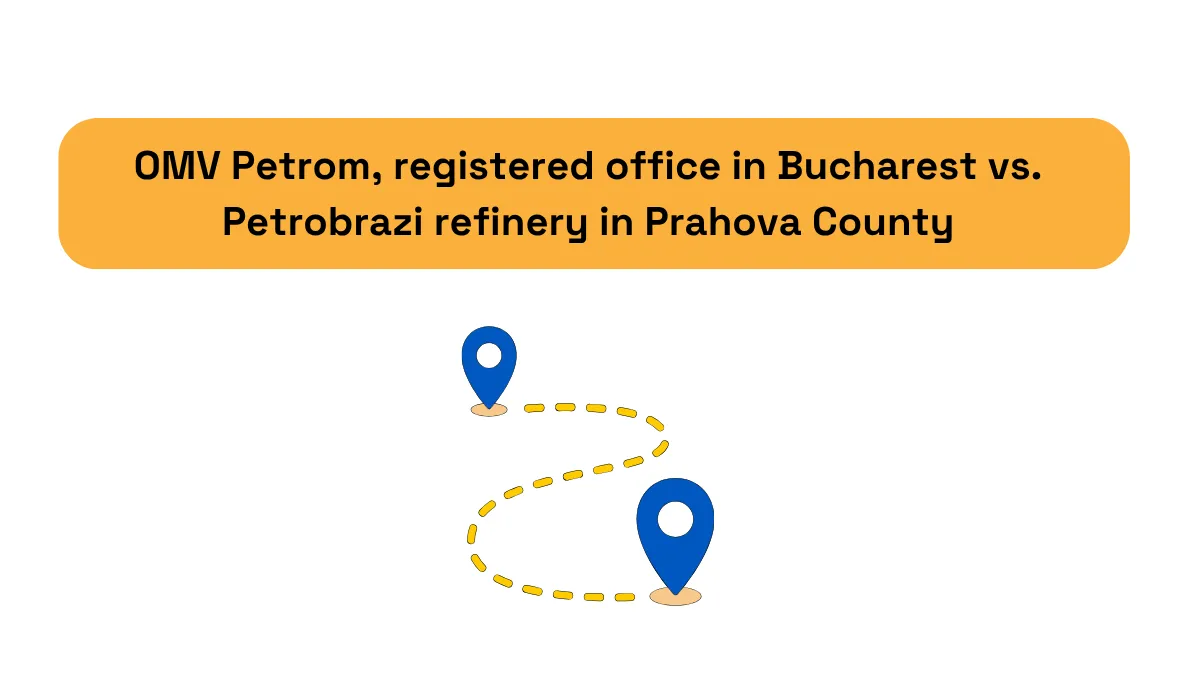
Illustration: Veridion / Data: OMV Petrom
Large distances from the registered office aren’t cause for alarm. Romanian manufacturing often clusters outside the capital in county industrial hubs.
A Bucharest registration paired with provincial operations mirrors how Romania's economy works. The same pattern shows up with any counterparty you assess.
Operational locations give you a fuller picture than the registered office alone. You've settled the location question. Now you can move on to what the company claims to do.
Confirm the Company's Industry and Business Activities
Claimed activities need the same scrutiny as claimed addresses. A supplier presenting itself as a manufacturer should show manufacturing somewhere in its records.
Each company declares a Clasificarea Activităților din Economia Naționale (CAEN) code, Romania’s classification of economic activities.
The system mirrors the European Union’s Nomenclature of Economic Activities (NACE), so the codes translate across borders. A declared code tells you what the company is registered to do.
One recent change affects every lookup you run.
CAEN Rev. 3 took effect on January 1, 2025. Businesses have an 18-month transition through September 2026, so records may show old or new codes.
Codes alone never close the case, though. A company website, product catalogs, business directories, and industry databases should echo the declared activity.
A registered wholesaler marketing itself as a certified manufacturer has some explaining to do. Certifications and references then move you from claims to proof.
You can check an ISO certificate with the group that issued it, and you can contact the customers that a company names. If they won't answer or stay vague, that's a warning sign.
A declared code also shapes obligations beyond marketing claims. Licenses, permits, and some tax regimes hinge on registered activities.
A partner operating outside those activities carries legal risk you may inherit.
Consistency is the main standard here. A firm should describe itself the same way across records, marketing, and visible operations.
Everything checks out so far. One question remains: is the business still active?
Check Whether the Company Is Still Active
Registration proves a company exists on paper. Whether it still trades is a separate question.
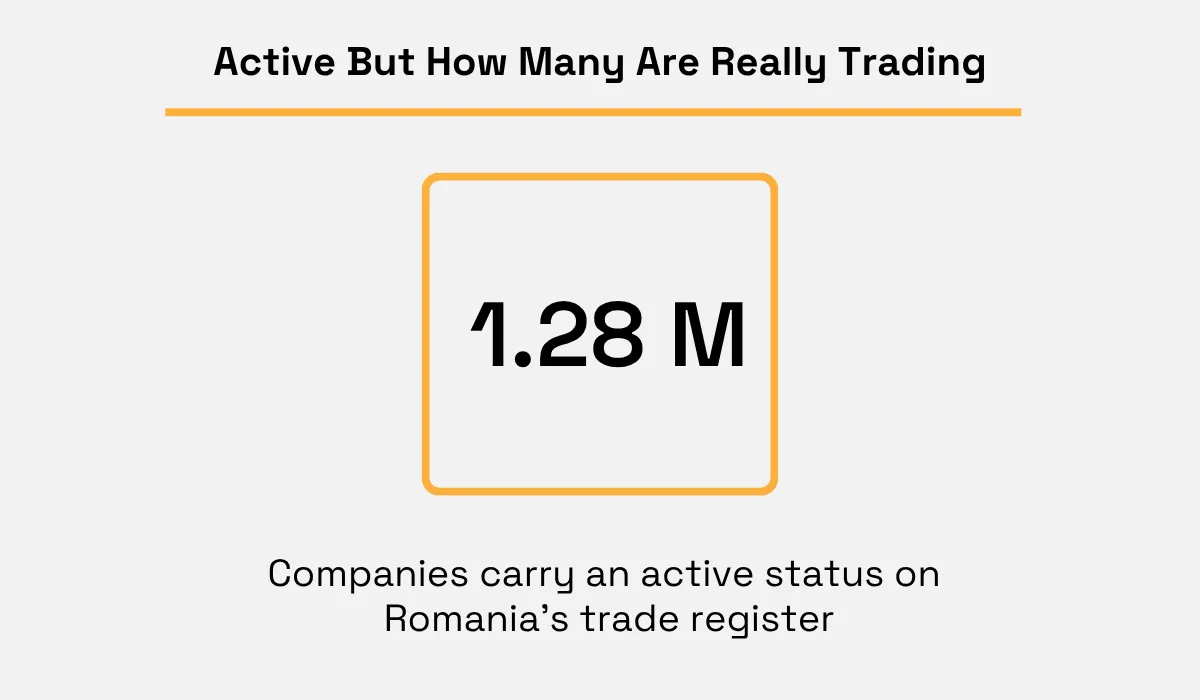
Credit insurer Coface reports Romania’s trade register carries over 1.28 million companies with an active status. Only a fraction generate meaningful economic activity.
Dormancy takes different forms.
Some companies stay open on paper but do nothing, drifting toward closure. Others never do any business at all.
Your checks need to tell these apart from truly active companies. Fresh signals of trading separate the two.
Recent website updates, hiring activity, and new products all suggest ongoing operations. Fresh customer reviews and a current ONRC status add to the picture.
Financial filings show activity too.
Romanian companies submit annual statements, and a long gap in filings suggests dormancy.
An outdated website, disconnected phone numbers, and inactive social profiles suggest trouble. Sources that clash, or people who won't respond, tell you to slow down.
A status verified last year says nothing about today, since insolvency can open within months. Long relationships deserve periodic rechecks, especially before renewals or large orders.
Manual checks like these work well for one company at a time. At enterprise scale, with thousands of counterparties, there are more efficient approaches.
Use AI to Cross-Check and Enrich Business Data at Scale
Everything above works for one supplier at a time. Procurement teams onboarding a hundred vendors this quarter don't have time to run seven manual checks on each one.
Insurance underwriters face the same problem. Thousands of Romanian small and medium-sized enterprise (SME) submissions come in each year. Each one needs the same verification steps.
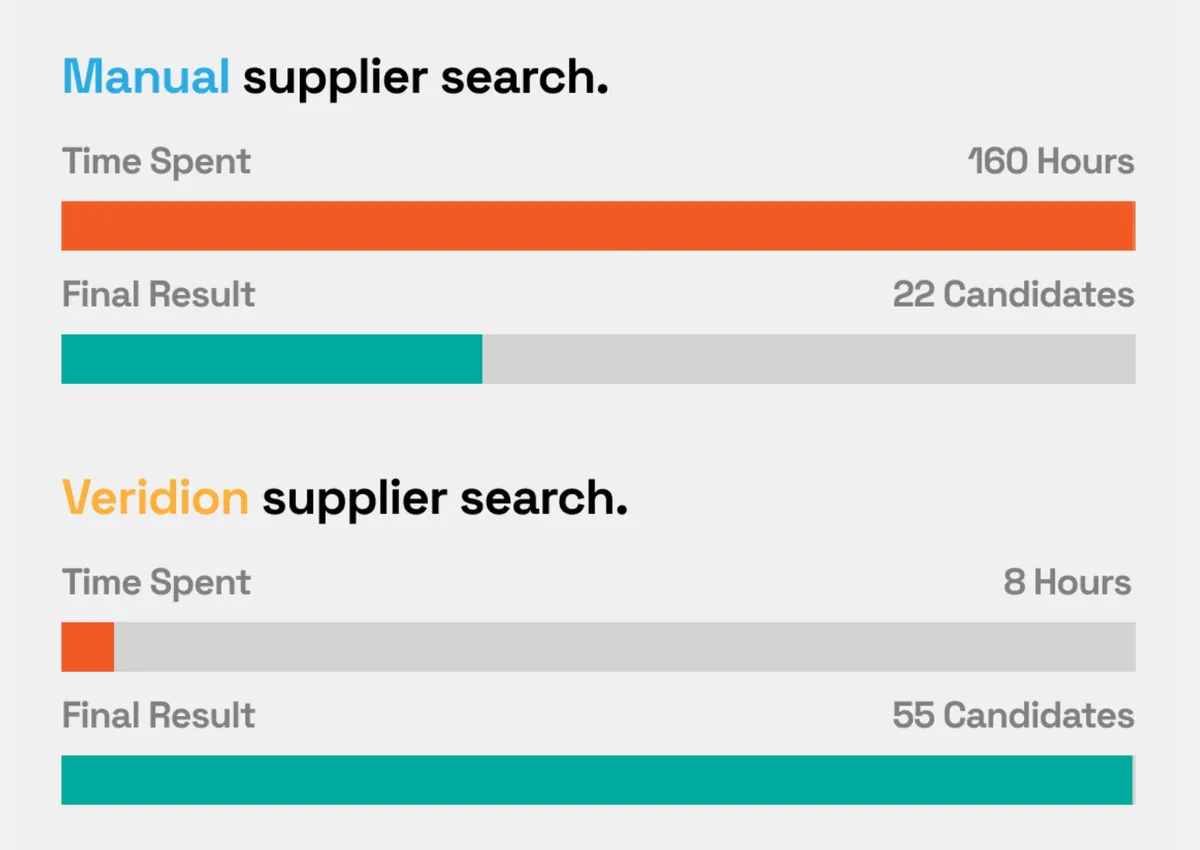
Automated data platforms change the math on verification. Manual work can’t keep up with modern deal volumes.
A modern platform pulls from registry records, tax filings, company websites, business directories, and news mentions. One application programming interface (API) call combines them into a single profile.
No person could build the same profile by hand in an afternoon. The scale rules it out.
Six capabilities make this kind of verification work at scale. Each one closes a gap that trips up manual checks.
Capability | What it does |
|---|---|
Entity resolution | Matches records from many sources to one company. ONRC and ANAF entries link to a single identity. |
Deduplication | Removes near-duplicate company records. |
Name and address standardization | Cleans up inconsistent formatting across sources. |
Industry classification | Sorts each company by industry code. |
Product and service verification | Checks a company's listed products and services against its website and other sources. |
Conflict flagging | Flags mismatches, like a wrong address or a suspended VAT number. |
The Veridion platform is one such service. It keeps a view of active companies worldwide, refreshed continuously rather than at fixed intervals.
Each attribute comes with a source and a confidence score. Every onboarding decision then rests on evidence you can verify.
Source: Veridion
Continuous refresh separates modern platforms from static databases. Data goes stale fast in verification work.
An insolvency filing, an address change, or a code update appears in the enriched profile right away. Your risk assessment stays current without manual rework.
Verification now runs at a scale that matches modern procurement and underwriting. Teams review flagged exceptions and let clean profiles pass through.
The same checks still happen. The platform runs them for you.
Conclusion
None of these checks requires special access. The public registers already hold the answers, and ONRC, ANAF, and VIES close most of the gaps.
The real shift happens when verification becomes routine rather than reactive. The habit scales differently depending on how many counterparties you manage.
Some Romanian suppliers fit into any manual workflow. Hundreds or thousands need automated platforms. Automation turns the problem into a quick search instead of a growing backlog.
Manual or automated, the goal is the same. You need to know exactly who you’re dealing with before you rely on them.
Articles
Discuss how these trends affect your organization.
Our analysts are available for a short call. Bring a specific question and we will ground it in the data.
Insights
Keep reading
More analysis, research, and outcomes grounded in live company intelligence.
Data Collection Methods for E-Commerce Market Intelligence
We will explore data collection methods for e-commerce market intelligence and show how they help businesses track trends and market changes.
No Humans in the Loop: How AI-Powered Entity Resolution Automates B2B Data Matching
Tired of manual B2B data matching? See how AI-powered entity resolution drives decision automation, eliminating human error and boosting efficiency.
5 Trends Shaping the Future of Market Intelligence
Want to future-proof your business strategy? Explore the top trends defining the future of market intelligence.