Insights / Articles
How to Verify Business Addresses and Company Status in Vietnam
Tired of uncertainty? Learn how to find business addresses and verify company status in Vietnam with our expert guide. Avoid costly mistakes.

- The Enterprise Code is the most reliable identifier for matching business and tax records.
- Registered addresses should be normalized and kept separate from factories, warehouses, and other operating sites.
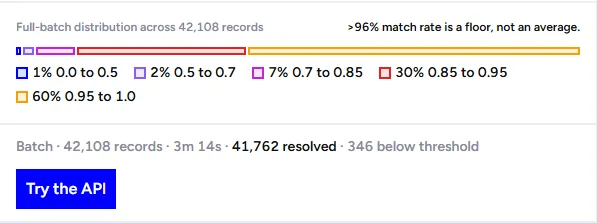
- A Veridion batch processed 42,108 records while routing uncertain matches for human review.
- Vietnam recorded 111,600 enterprise withdrawals in 2025.
How can your enterprise confirm that a Vietnamese company is active and operating from the address in its records?
A registry match alone may not reveal relocations, branches or recent status changes. These gaps can weaken master data, delay onboarding and distort third-party risk assessments.
This guide breaks down the official sources, identifiers and data your team can use to verify Vietnamese businesses accurately and at scale.
It also shows how data platforms like Veridion help with entity resolution and enrichment processes.
1. Confirm the Company's Legal Registration Status
The first step in Vietnam business verification is confirming that the organization exists in the country’s official registration records. Start with the National Registration Portal rather than a company’s website or invoice.
The portal is the public interface to the national Vietnamese company database and identifies the Ministry of Planning and Investment (MPI) and the Ministry of Finance (MOF) as its governing bodies. The portal has both Vietnamese and English interfaces and allows users to search by company name or Enterprise Code, also known as the Business Registration Number.
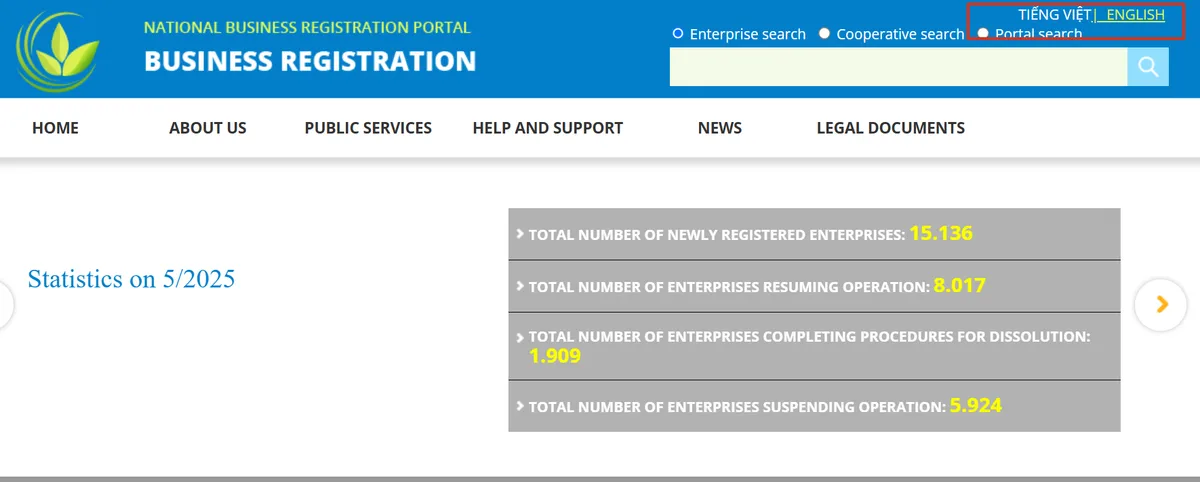
Source: National Registration Portal
However, the underlying records may still display Vietnamese legal names and terminology.
For the cleanest match, search with the Enterprise Code provided by the prospective supplier or customer.
Why? Because names can be abbreviated, translated or entered without Vietnamese diacritics, whereas the code gives your data team a more dependable identifier for entity resolution.
Once you find the corresponding record, compare the following fields with the information stored in your vendor master or onboarding system:
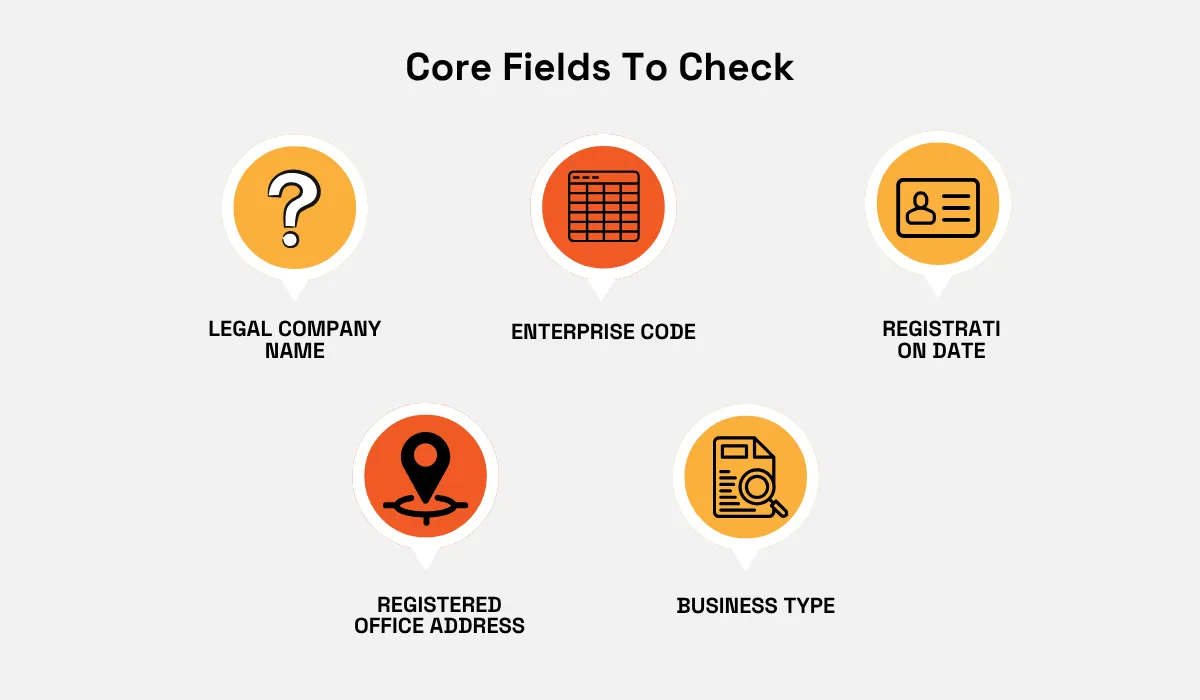
Source: Veridion
Vietnam’s registration authority confirms that the national database contains these core fields and that its stored registration and legal-status information constitutes the original legal information about an enterprise.
But do not treat a name match as a green light, though. For example, an onboarding form may contain the correct legal name but an outdated address or operating status. The devil is in the detail: every material field should be reconciled before the record passes company due diligence.
Mark Meloche, Director of Growth and Transition Capital at entrepreneur-focused bank BDC, puts it this way:
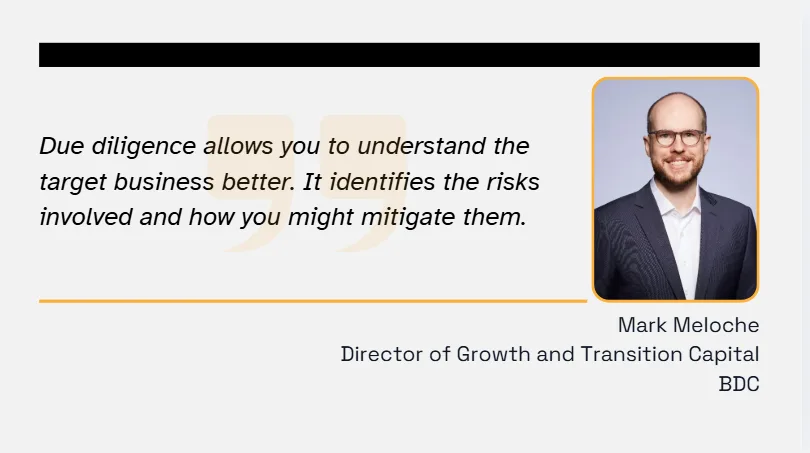
Due diligence matters a lot at scale. Vietnam recorded 162,900 newly registered enterprises in the first ten months of 2025, showing how quickly its business population can change.
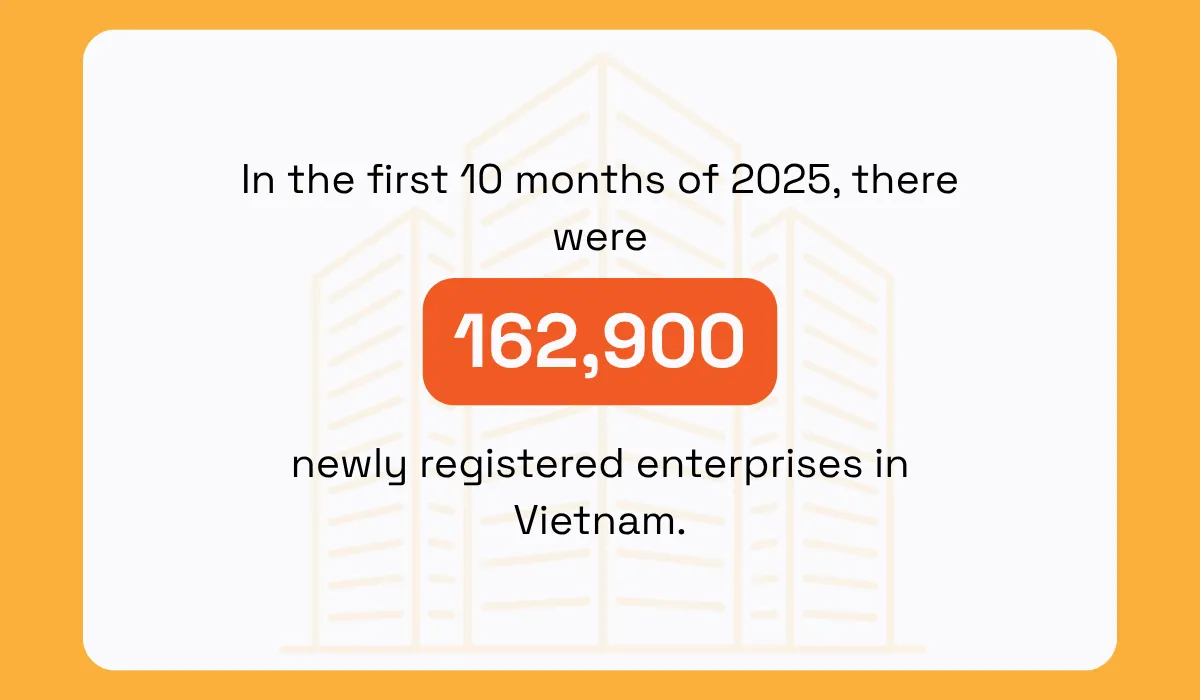
Illustration: Veridion / Data: Vietnam Law Magazine
Static supplier records will therefore drift unless status and address fields are refreshed.
This registration check establishes the legal baseline. The next step is confirming specific business details.
2. Verify the Company's Tax and Business Registration Details
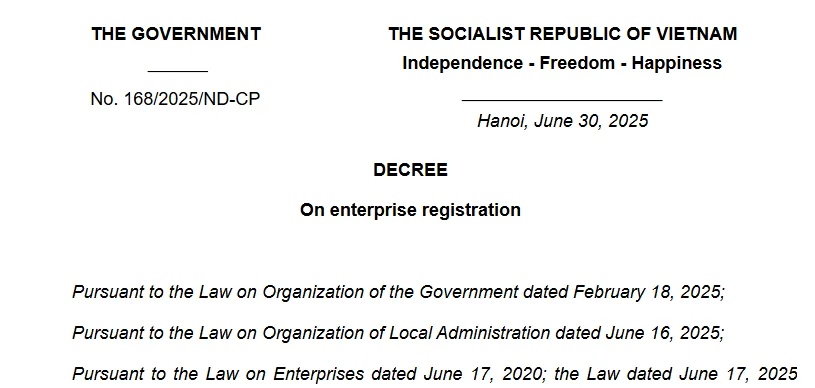
Once the record is identified, verify the company’s tax registration. Vietnam uses the Enterprise Code as its tax identification number. Under Decree 168/2025/ND-CP, the code remains valid, cannot be reassigned, and becomes invalid when the enterprise terminates.
Source: Luat Vietnam
To perform the action, enter the Enterprise Code into the tax authority’s taxpayer lookup. Compare four attributes with the National Business Registration Portal records:
- The code
- Tax registration status
- Legal company name
- Registered address
The records should align, and every mismatch should trigger a review.
Examples?
- A different name may indicate a rename or brand-parent confusion.
- An address discrepancy may reflect an update that had reached only one system.
- An invalidated tax code, however, is more serious. It means the entity cannot lawfully use it in economic transactions.
Request an updated Enterprise Registration Certificate or tax notice before approval.
Let’s put it into perspective.
Suppose an invoice and tax lookup return the same code, but the supplier website displays another address. You should save the government-listed address as the registered address and flag the website address for further company due diligence.
The objective is not to approve or reject the company. It is to create a traceable record of which values match and which conflicts require review.
When the tax alignment is done, move on to checking whether the address represents a current/operational one.
3. Verify the Registered Business Address
Address consistency is a critical part of Vietnam business verification because a business address can look legitimate while being outdated, incomplete or connected to the wrong entity.
Start with the National Business Registration Portal and tax records.
Compare that address with the company website, business directories and listings. Confirm that each source points to the company and includes a building number, street, ward or commune, province or municipality, and postal code where listed.
Before flagging a conflict, normalize the data. Standardize abbreviations and Vietnamese diacritics, then map old administrative labels to current equivalents. Raw string matching can otherwise turn formatting differences into false discrepancies.
Vietnam’s 2025 reforms make this important.
The country reduced its provincial-level units from 63 to 34 and dissolved district-level administrations.
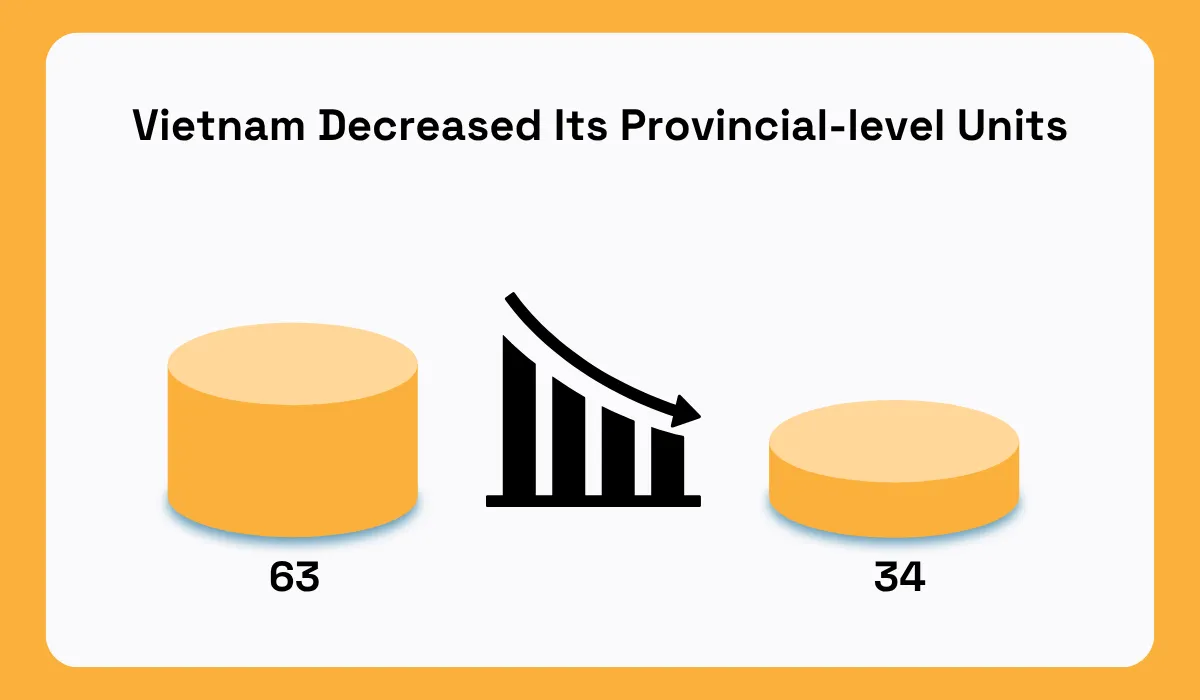
Illustration: Veridion / Data: Socialist Republic of Vietnam
Businesses may continue using certificates with earlier administrative labels, so old and new address strings can describe the same site.
Still, do not sweep conflicts under the rug. An address tied to another Enterprise Code or an unexplained province-level difference should call for a review. Directories and map listings can support the investigation, but should not override government records because users can edit them.
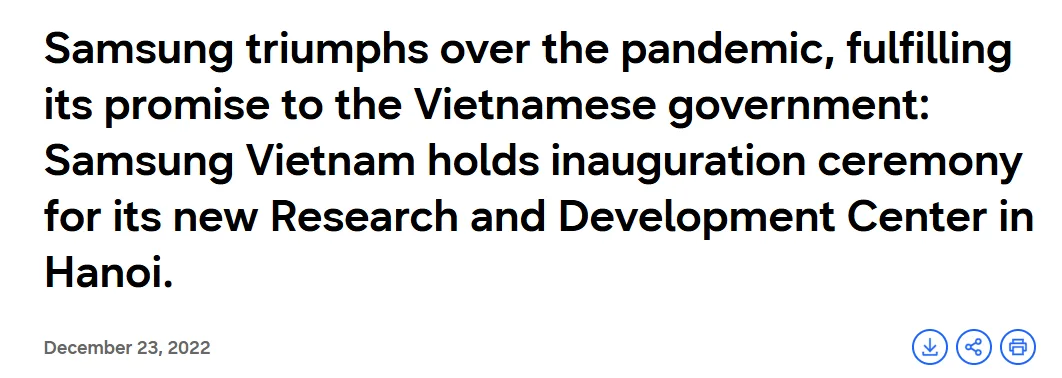
Samsung’s Vietnamese operations show why one address cannot describe a complete footprint. Its official newsroom identifies manufacturing complexes in Bac Ninh and Thai Nguyen, while its research and development centers are in Hanoi.
Source: Samsung News Vietnam
These locations perform different functions and should be stored as separate sites instead of contradictory records.
After this verification, move to the next step.
4. Verify the Actual Operating Location
A registered office is the company’s legal contact point but it does not show where the company manufactures products, stores inventory or runs regional operations. To build that operational footprint, start with the company website.
Record every location it labels as a headquarters, factory or warehouse, along with its stated function and contact details. Then test each claim against independent location signals.
Begin with Google Maps and business listings. Compare the company name, business category, phone number and recent visitor photos. These sources can indicate activity, but do not take them at face value: users and businesses can edit them, so they remain secondary evidence.
For factories and warehouses, inspect satellite imagery for industrial buildings, storage yards and parking. These features indicate the site’s likely function, but they cannot prove who operates the facility, so compare them with company photos. Readable signage, matching building features and landmarks provide stronger evidence than promotional renderings.
Industrial park directories can fill in the remaining gaps. A tenant record connecting the legal name to a park, plot number or business activity corroborates both the operator and the site’s purpose.
LEGO Manufacturing Vietnam is a useful example of this triangulation.
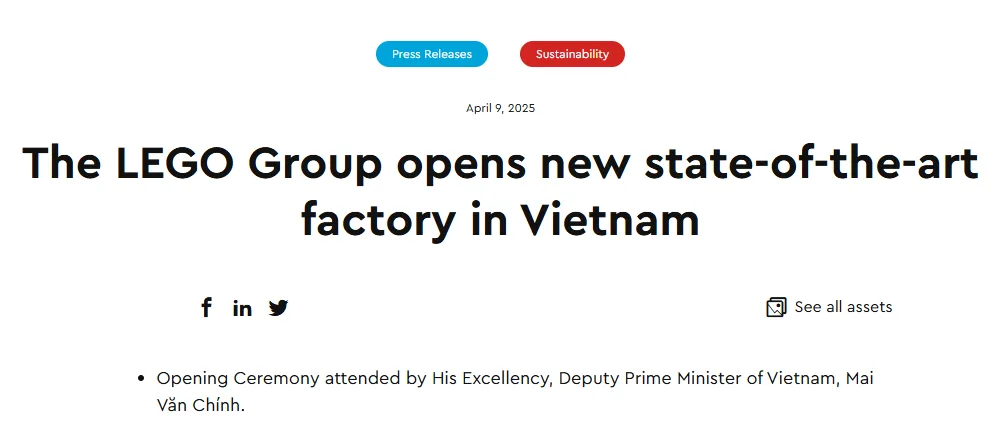
The company confirmed its factory opened in Binh Duong in April 2025 and published aerial images of the 44-hectare facility.
Source: LEGO
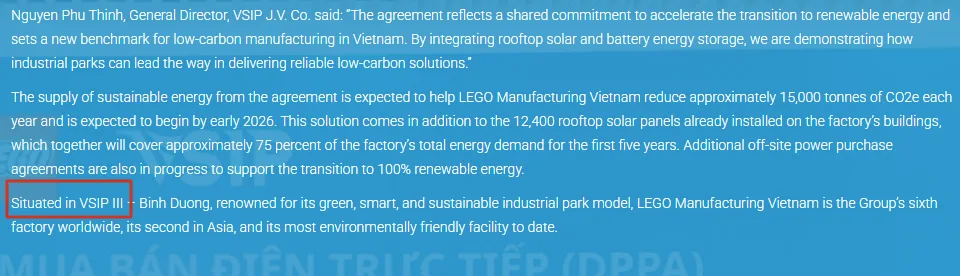
Industrial park network VSIP separately listed the factory as a tenant of VSIP III.
Source: VSIP
Together, the corporate announcement, site imagery and industrial park reference provide stronger evidence of operations than a registered address alone.
To summarize it all, each validated site needs its own record, function, source and verification date. This turns scattered location signals into a usable operational footprint for supplier onboarding and third-party risk management.
5. Confirm the Company's Industry and Business Activities
This stage of Vietnam business verification tests whether its products, services and market claims align with documented activities.
Build a capability profile from business lines, industry classification, products, certifications and areas of operation. Then test each claim against independent sources.
Here’s how to verify some of the points mentioned above.
To verify the products and services, compare the descriptions and technical specifications shown in its catalog with information from independent industry databases. A supplier claiming to manufacture industrial machinery, for example, should provide more evidence than a broad wholesale classification.
To verify certifications, go through the issuing body’s database. Check the certificate number, holder’s legal name, covered products/processes, issue date and expiry date. This prevents teams from accepting an expired certificate or one issued to an affiliated company.
To verify export activities, review trade data, destination-market regulatory records and announcements from overseas buyers. These sources can confirm which products the company exports and the market it serves. If its website promotes global distribution but no supporting export signals appear elsewhere, the claim may require further due diligence.
VinFast, an electric vehicle manufacturer, shows what an updated business activity should look like.
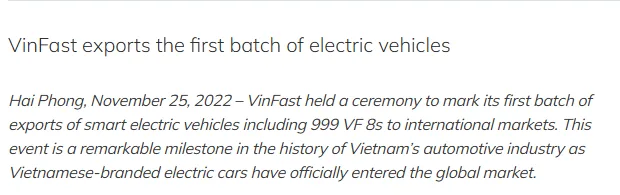
Its product pages feature electric cars, scooters and buses. An official company announcement records the export of 999 VF 8 vehicles to the United States, supporting its export claims.
Source: VinFast
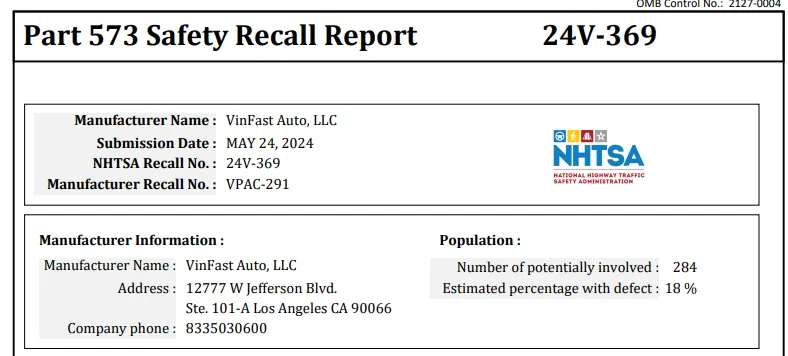
A National Highway Traffic Safety Administration recall report independently verifies VinFast as the manufacturer, verifying its automotive activity and participation in an export market.
Source: NHTSA
When a company’s products, certifications and export claims match across multiple sources, your team can assess whether it is a suitable supplier, not simply a registered business.
6. Check Whether the Company Is Still Active
A registration record confirms that a company exists; it does not prove the business is trading today. They can suspend operations or become dormant while websites and directory profiles remain online. Active company status therefore requires recent operational evidence.
Start with the National Business Registration Portal, then review activity from the previous six to twelve months. New posts, product releases, project announcements and customer reviews are some of the signals that indicate continuing commercial activity.
Hiring for sales, engineering or logistics roles is useful as well because it suggests the company is investing in current capacity.
Contactability provides a more direct test. Call the listed number, verify that the email domain accepts messages and send a basic request for information. Check social profiles and listings for recent posts, updated hours or customer responses.
Now, what are some of the warning signals? It includes:
- A website untouched for years
- Disconnected numbers
- Abandoned social accounts
- Complaints that the company can't be reached
That matters in a market with frequent exits.
Vietnam’s National Statistics Office reported that 111,600 enterprises withdrew from the market during the first five months of 2025, up 14.4% year on year.
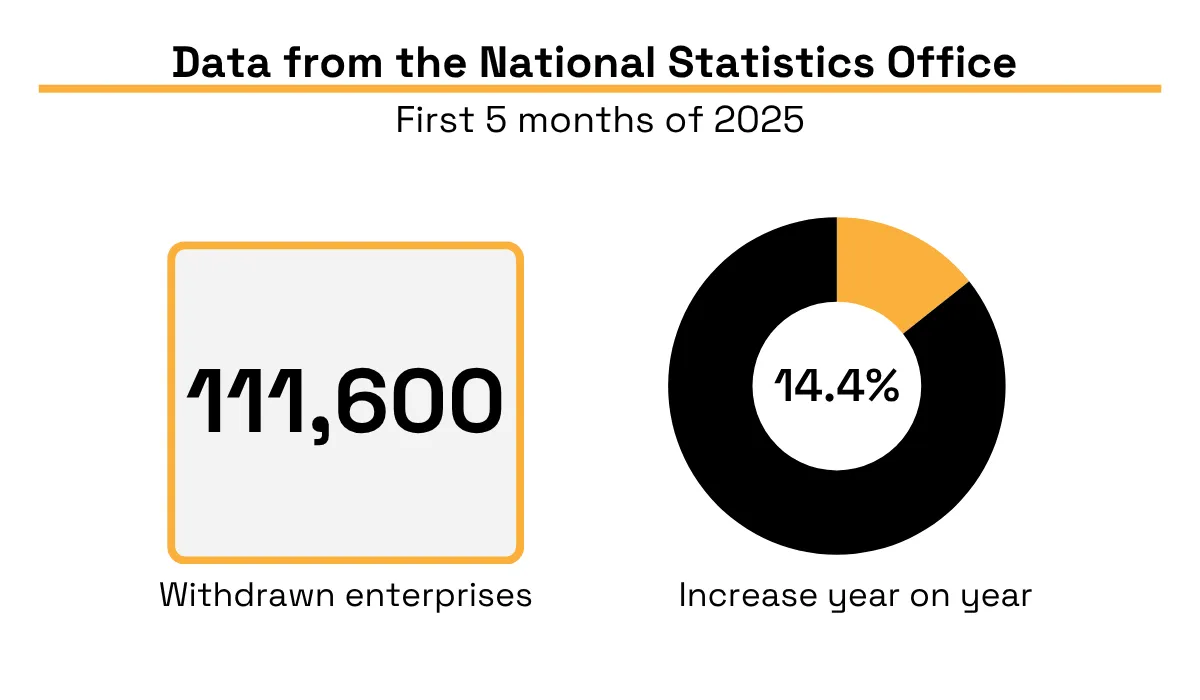
Illustration: Veridion / Data: National Statistics Office
That means a supplier record that was accurate at onboarding may become stale within months.
The takeaway? If you combine official status with recent digital and commercial signals, your team can avoid onboarding dormant suppliers and keep supplier-master data current.
7. Use AI to Cross-Check and Enrich Business Data at Scale
The manual process of verifying a Vietnamese company may work for ten records, but it breaks down across thousands of companies. AI-powered company intelligence is the solution.
The underlying bottleneck is fragmentation. As Eric Chang, co-founder of AI finance platform Claira, puts it,

Analysts should not have to manually connect registry records, websites, directories and internal data before every decision.
AI addresses that problem through two layers.
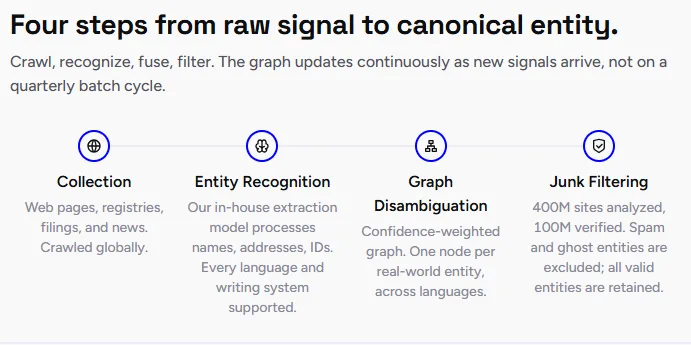
The first layer is entity resolution. AI models compare company names, Enterprise Codes, addresses and identifiers across the National Business Registration Portal, corporate websites and directories.
Source: Veridion
It can recognize that abbreviations, spelling variations and records with or without Vietnamese diacritics refer to the same company. It standardizes names and addresses, then merges duplicates under a canonical ID rather than leaving them separate across the ERP, procurement platform and data warehouse.
The second layer is data enrichment. Natural language processing extracts and compares products, services, locations and other business signals from unstructured pages. Classification models map those descriptions to consistent taxonomies, allowing your data team to compare companies without relying on self-selected labels.
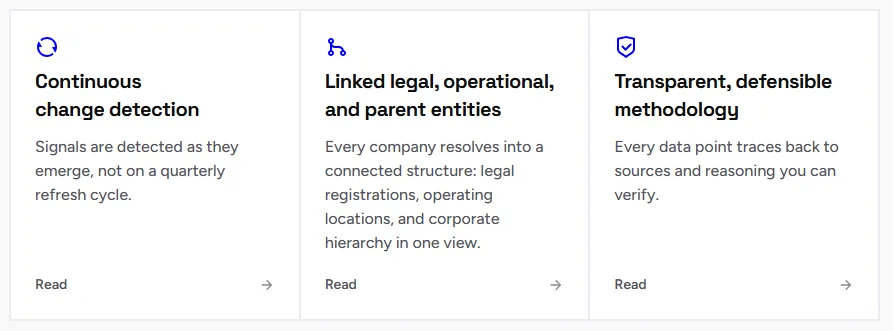
Verdion, an AI-enriched data extraction platform, combines both these layers to create unified business profiles rather than another isolated Vietnamese company database.
Source: Veridion
Its entity resolution service links legal entities with their digital presence, while company enrichment adds firmographics, classifications and source trails.
It also gives confidence scores that allow matches to flow automatically into systems while uncertain records are routed to human review. Veridion illustrates this model with a batch of 42,108 records processed in 3 minutes and 14 seconds: 41,762 were resolved, while 346 remained below the matching threshold.
Source: Veridion
For Vietnam business verification, the result is a cleaner, auditable company master: one profile per business. That is what turns a manual lookup process into infrastructure that can scale.
Conclusion
Business verification used to mean checking a registration record.
In Vietnam, that is no longer enough.
A company may be registered but inactive, operate from a different location, or present capabilities that its data footprint does not support. Reliable Vietnam business verification requires teams to connect legal status, tax details, addresses, operating locations, business activities and company signals.
For a handful of businesses, this can be done manually. Across thousands of suppliers, customers and partners, AI-powered entity resolution and enrichment make the process faster, more consistent and easier to audit.
The enterprises that build these checks into onboarding and ongoing monitoring gain cleaner data and stronger decisions.
Articles
Discuss how these trends affect your organization.
Our analysts are available for a short call. Bring a specific question and we will ground it in the data.
Insights
Keep reading
More analysis, research, and outcomes grounded in live company intelligence.
Supplier Onboarding Checklist: A Quick Guide
Ready to improve your procurement process? Our checklist for supplier onboarding will help you stay organized and avoid costly delays.
What is Third Party Risk Management (TPRM)
How to protect your business from vendor-related risks? This guide on third party risk management will walk you through the essentials.
B2B Data Enrichment: What You Need to Know
Find out what B2B data enrichment really means, why it matters so much across sales, risk, and procurement, and how to best implement it.