Insights / Articles
ZoomInfo Alternatives for Company Data and Market Intelligence
Five ZoomInfo competitors for company data and market intelligence, compared on private company coverage, refresh cadence, access and pricing.

What if a quarter of your company data couldn’t be trusted? Data and analytics leaders estimate that 26% of their data is untrustworthy.
Part of the fix is a source built for the job. That source could be ZoomInfo – a known sales contact and prospecting platform. So, if your job is company data and market intelligence (not contact lists), you’ll likely need a different kind of tool.
In this guide, we compare five ZoomInfo competitors, including Veridion, Dun & Bradstreet, and Moody’s Orbis, on coverage, data updates, access, and pricing.
ZoomInfo Alternatives at a Glance
Veridion, Dun & Bradstreet, Moody’s Orbis, Coresignal, and Crunchbase provide business data similar to ZoomInfo, but they focus on company records rather than sales contacts.
Tool | Best for | Data focus | Private company coverage | Data updates | Access | Pricing model |
|---|---|---|---|---|---|---|
ZoomInfo | Sales prospecting | Contacts and companies | Web app, API, bulk/cloud | |||
Veridion | Market intelligence on company records | Companies | Web app, API, bulk | |||
Dun & Bradstreet | Entity identity and risk | Companies | Global | Not publicly specified | Custom/contact sales | |
Moody’s Orbis | Financials and ownership | Companies and ownership | Not publicly specified | Web app, API, bulk | Custom/contact sales | |
Coresignal | Building on public web data | Companies, employees, jobs | Global | API, bulk datasets | ||
Crunchbase | Startup and funding research | Companies and funding | Global, startup-heavy | Not publicly specified | Web app, API, licensing |
Of all the columns, “Data updates” should be one you focus on most intently.
Simply put, if your database contains out-of-date records because refreshes happen infrequently, your downstream dashboards may run on bad data.
With a faulty informational foundation, you’re one step away from leading your business astray.
In fact, data and analytics leaders already estimate that 26% of their organizational data is untrustworthy, according to CRM giant Salesforce.
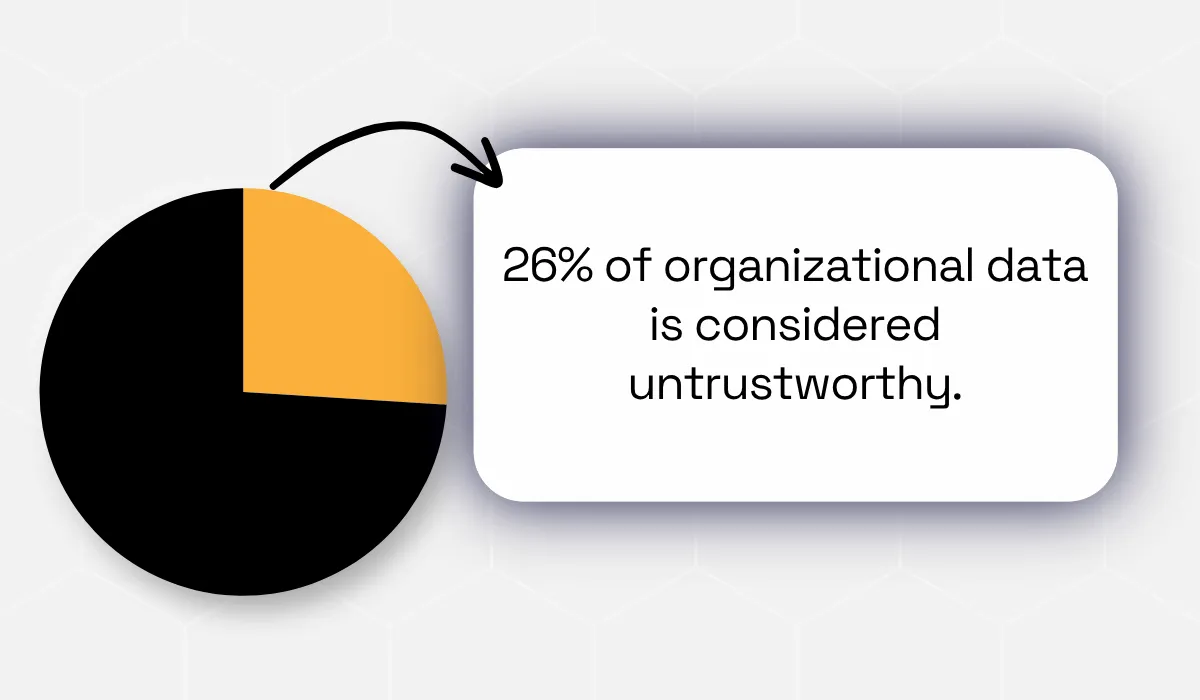
Illustration: Veridion / Data: Salesforce
But, of course, a table can only tell you so much, which is why below we break down each tool’s features, limitations, data sources, refresh frequencies, and more.
Veridion
Veridion is a company data provider that data teams use to build market intelligence on top of structured company records, delivered through an API and a web app. We provide insight on 744.5M companies across 250 countries.
Our primary source is the web, with trade registries as the legal anchor and news, maps, and social media used to corroborate it, as described in our data methodology. Core firmographics, ownership, and locations refresh weekly, while faster-moving attributes such as news, hiring, and other signals update daily.
Key features for company data and market intelligence:
Feature | What it offers |
|---|---|
Long-tail coverage | Most records describe private and mid-market businesses, including their products, services, and locations, so your market map doesn’t stop at companies that file public reports. |
Per-field provenance | Each attribute comes with a confidence score, a source URL, and a last-verified timestamp, so you can filter out stale values early. |
Warehouse-ready delivery | Beyond the APIs, data ships as CSV, JSON, or Parquet files and through Snowflake, BigQuery, and Databricks, so you can join it to your own tables. |
You can see how each field is sourced and verified on our market intelligence page, along with the full list of delivery options.
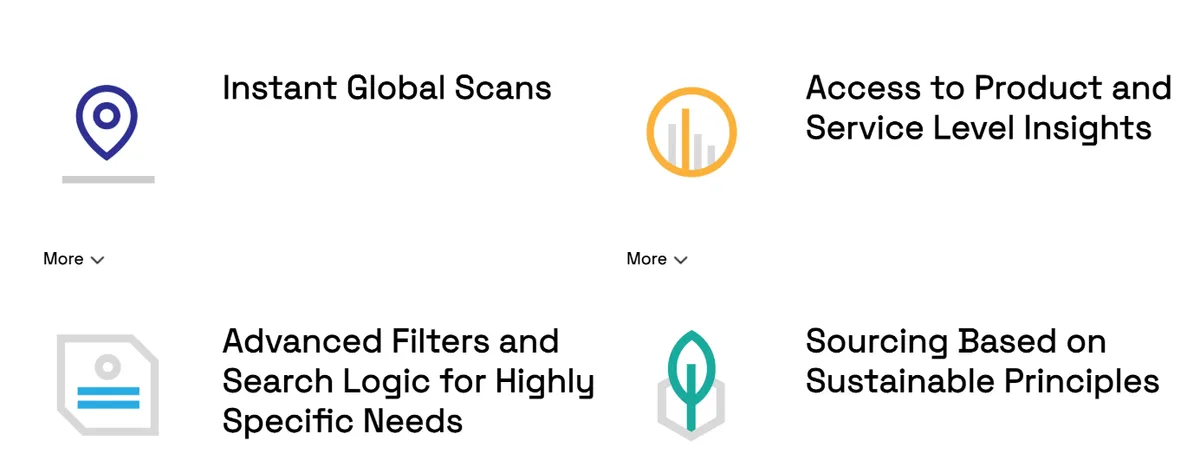
Source: Veridion
In practice, a global market-research firm ran a head-to-head data-quality evaluation of Veridion against another company-data provider.
Both vendors supplied employee counts by country, key-personnel samples, and classification-completeness analysis for the same set of companies. Veridion won, and our data became the core layer for the firm’s new company-level and ESG products.
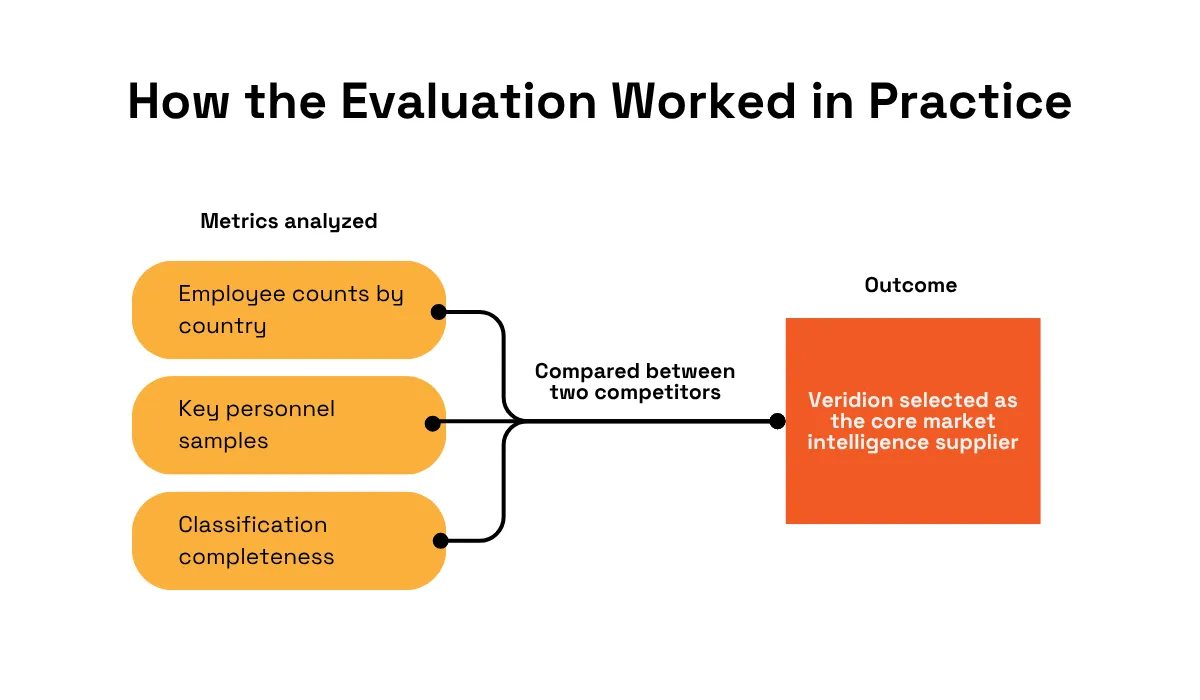
Source: Veridion
That company-first focus is the main difference from ZoomInfo. You can read more about it on our ZoomInfo comparison page, but essentially, ZoomInfo answers who to email, while Veridion tells you what a company is doing and what has changed since the last time you checked.
The trade-off is that you won’t find personal contacts such as employee emails or direct dials here, so teams that need them add a contact tool (which, per the same page, most teams do).
Our pricing model depends on your exact needs and scope, which we scale with your volume and coverage depth. Talk to us to see what we can prepare for your business.
Dun & Bradstreet
Dun & Bradstreet is a commercial data provider built around the D-U-N-S Number, a unique nine-digit identifier it assigns to the business entities it tracks. That identifier ties everything together, from financials to corporate family trees, and records come from public registries, websites, and partners.
Noteworthy features include:
Feature | What it offers |
|---|---|
Persistent entity identity | Each record is matched and assigned a D-U-N-S Number, so you can recognize the same supplier or customer across ERP, CRM, and procurement systems. |
Modular Data Blocks | Data is packaged into Data Blocks on topics such as company information, financials, entity resolution, and beneficial ownership, so you license only the attributes you need. |
Corporate linkage | D&B maps over 65 million corporate family tree relationships, which helps untangle parent-subsidiary relations for market sizing or risk exposure. |
Like ZoomInfo, D&B also sells contact data and buyer intent, but as separate blocks layered on top of the company record.
It emphasizes registry and credit data, which is why a head-to-head D&B comparison suggests many teams keep it for credit work and source broader company intelligence elsewhere.
However, D&B falls short on freshness. Their website doesn’t mention a refresh cadence (you can only find that they run over 60 billion quality checks a month), and on G2, “outdated data” is the most-cited con for D&B Hoovers, its web app, even though accuracy of company intelligence ranks among its top pros.
Pricing, as with most enterprise data vendors, is custom, so you’ll need to talk to sales.
Bureau van Dijk (Moody’s Orbis)
Orbis began as Bureau van Dijk’s flagship database and now sits within Moody’s. It holds information on more than 650 million companies, blended from over 170 providers and standardized so that records from different countries can be compared side by side.
Key features include:
Feature | What it offers |
|---|---|
Private-company depth | More than 99% of the companies Orbis covers are private, which matters when your target market is mostly unlisted firms. |
Ownership structures | Over 2 billion current and historic ownership links let you trace who controls whom, whether you’re screening an acquisition or mapping a competitor’s subsidiaries. |
Standardized financials | Reports account for regional differences in filing and accounting rules, and Orbis M&A deal data is built into the database, so you can compare companies worldwide on the same basis. |
Unlike ZoomInfo, Orbis is built for financial and ownership analysis rather than outreach. It’s closer in spirit to D&B, though Orbis leans further into balance sheets and shareholder links than into operational signals like products or hiring.
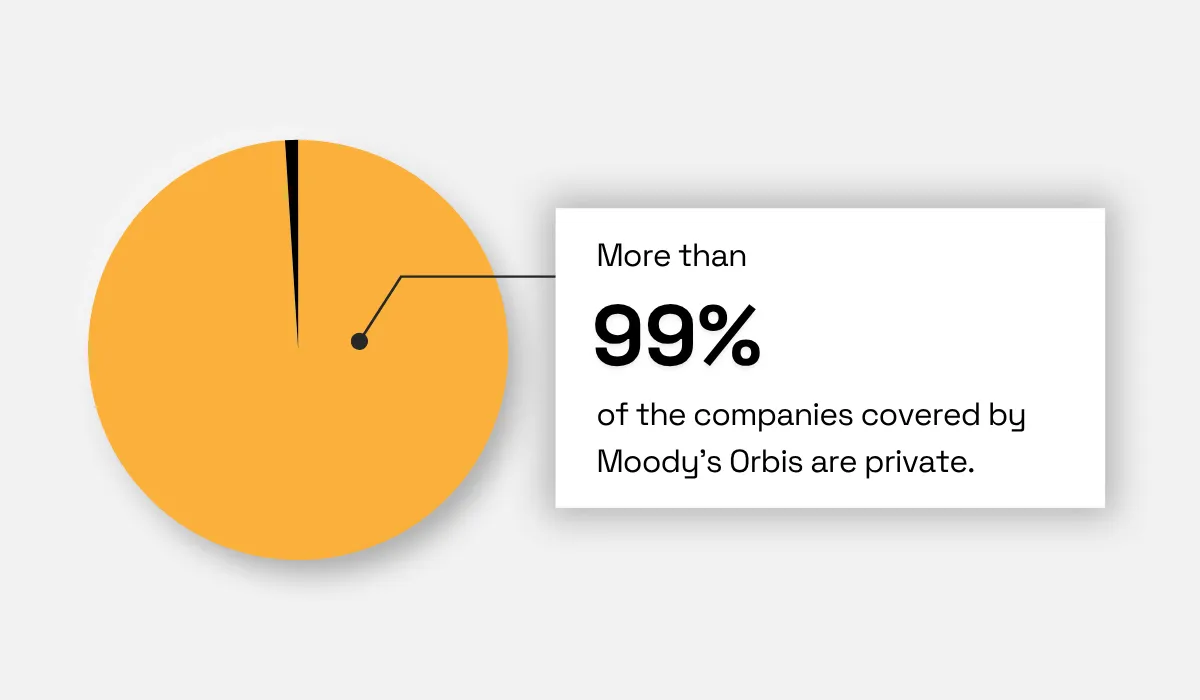
Illustration: Veridion / Data: Moody’s Orbis Product Page
Getting a representative picture out of that coverage takes some work, though.
Economists writing in the American Economic Journal: Macroeconomics (2024) showed how to turn Orbis financial statements into nationally representative firm-level data for European countries, checking coverage and firm-size distribution against official statistics. They also found that which firms make it into a sample can shift results like industry concentration, so a market map built from a raw export may need the same check.
Moody’s also doesn’t disclose how often Orbis records are refreshed, and one G2 reviewer notes that “the information is not always up to date.”
As for pricing, that’s not public knowledge, so access starts with a demo request.
Coresignal
Coresignal sells B2B data gathered from public web sources, covering companies, employees, and job postings, through APIs and bulk datasets. Its audience is mostly engineering and data teams building their own products or models, rather than analysts browsing a dashboard.
On the freshness side, API records update in real time, and each one carries a timestamp of its last update, while bulk datasets ship daily, weekly, or monthly.
Have a look at their notable features:
Feature | What it offers |
|---|---|
Multi-source company records | One dataset combines firmographics, funding, workforce trends, and historical records, with collection running since mid-2016, so you can track how a company changes over time. |
Workforce and hiring data | Employee and job posting records can be joined to company records for a fuller picture of a company's health. |
Developer-first delivery | Data arrives via API or as Parquet and JSONL files, with native integrations for Snowflake, Databricks, and the major clouds, so it's easy to import into your stack. |
Like Veridion, Coresignal builds on public web data, but it sells that data at several processing levels, from raw “Base” records to cleaned, multi-source ones. That leaves more of the modeling up to you, which, depending on the needs of your team, may or may not be an upside.
And, unlike ZoomInfo, it publishes its prices. API plans run from $49 a month for 2,500 credits up to $5,000 for 10 million; a company record costs 10–20 credits, and there’s a 2,000-credit free trial. Bulk datasets start at $1,000 and are priced by agreement.
Because those prices are public, you can work out what a data pull will cost before you ever talk to sales. With a core company record at 10 credits and a full one at 20, here’s roughly what 1,000 records cost on three plans:
Plan | Price per credit | 1,000 company records (core–full) |
|---|---|---|
Mini ($49 / 2,500 credits) | ~$0.020 | ~$196–$392 |
Growth ($1,000 / 150,000) | ~$0.0067 | ~$67–$133 |
Elite ($5,000 / 10M) | $0.0005 | ~$5–$10 |
Those per-record figures only cover the data itself, though. Most of the value sits in APIs and flat files, so you’ll also need engineering time to put it to use. And because Coresignal has no G2 listing yet, independent user feedback is harder to find.
Crunchbase
Crunchbase is a private-company database built around funding rounds, investors, and growth signals. If your market intelligence work leans toward startups and venture-backed firms (competitive landscapes, investment scouting, M&A screening), this is the angle it was built for.
Much of that data comes directly from companies, investors, and partners, supplemented by information drawn from more than 1,000 news outlets and government filings, and checked through a mix of AI grading and human researchers.
Key features for company data and market intelligence:
Feature | What it offers |
|---|---|
Funding and investor data | Crunchbase covers over 4 million private companies, with funding history, investors, and leadership changes on each profile, so you can track who is raising money. |
Predictive signals | Business plans add seven prediction types, from funding and acquisition to closure and layoffs, with over 15 million predictions refreshed weekly, so likely changes often get flagged before they make the headlines. |
API and data licensing | Beyond the web app, an API and licensing options let you pull records into your own systems. |
You can compare what each profile includes on the Pro plan page, and if you mainly need to enrich your own records, see our overview of data enrichment tools.
Because most private companies never publish quarterly reports, data points like funding rounds, investor changes, and predicted acquisitions or closures often stand in for the financials you’d get from a listed firm.
Mark O’Hare, founder of Preqin and now Vice Chairman of BlackRock, shared some insight into the difficulty of reading private companies in an interview from 2025:

Unlike ZoomInfo, Crunchbase organizes its data around funding events rather than people to contact. Compared with Orbis, its depth lies more in venture-backed startups than in the filed financials of established private firms.
Freshness and depth are where reviewers push back. On G2, the most common complaints are pricing and outdated information, with a smaller group flagging thinner data on smaller companies and some regions. Most of those complaints concern mid-market and non-US profiles, which reviewers say are more often outdated or incomplete.
Pricing is partly public: Pro costs $99 a month on monthly billing, with discounted annual plans, while API access comes with custom-priced Enterprise plans.
Conclusion
Picking among ZoomInfo competitors is less about counting features and more about what your team needs – people to reach, or companies to understand.
Each tool above also answers a different question. Some center on legal identity and credit, others on ownership and financials, funding events, raw web data, or what a company actually does day to day.
Before you commit, pick two or three options from the table and run them against a handful of companies your team knows inside out. Because you can check those records yourself, you’ll see which tool comes back complete and up to date.
Articles
Discuss how these trends affect your organization.
Our analysts are available for a short call. Bring a specific question and we will ground it in the data.
Insights
Keep reading
More analysis, research, and outcomes grounded in live company intelligence.
6 Data Enrichment Tools You Need to Know About
Explore six standout tools that transform data enrichment capabilities and can help guide your decision-making and go-to-market strategy.
Top 7 Market Intelligence Software
Discover the top 7 market intelligence software solutions to help you track trends, analyze data, and make smarter business decisions.
Top Market Data Vendors
Want to upgrade your market intelligence? Explore the best market data vendors and choose the one that fits your needs.