Insights / Articles
How Private Equity Firms Use Firmographic Filters to Build Smarter Deal Pipelines
Tired of sifting through endless leads? See how private equity firms leverage firmographic data providers to pinpoint high-value deals.

- Broker- and referral-driven sourcing can leave blind spots in your deal pipeline.
- A proprietary process can improve visibility and make deal flow more predictable.
- A broader pool of potential targets can be difficult to manage, making clear triage criteria essential.
What if your empty deal pipeline isn't a deal shortage, but a sourcing problem?
Brokers, investment bankers, and referrals can generate valuable deal flow, but they're far from the entire market!
Today, with so much company data at our disposal, it doesn't make sense to rely solely on these sources. Smart private equity (PE) firms are now using direct sourcing to take control of their pipeline and find promising targets at scale.
The key is turning your investment thesis into firmographic filters you can apply systematically.
You'll learn how to do that below. Before that, let's explore what this fixes.
The Blind Spot in Broker- and Referral-Driven Deal Flow
Many PE firms rely primarily on investment bankers, brokers, and inbound referrals to source deals. While these relationships are valuable, relying on them as your only source of deals means you’re only seeing part of the market.
Sutton Place Strategies, a PE data company, confirmed in their 2025 Deal Origination Benchmark Report that PE firms overall have low market visibility. According to the report, the median firm covers just 18.4% of relevant, advisor-represented transactions in its target market.
In other words, the median firm sees less than one in five of the relevant transactions represented by advisors.
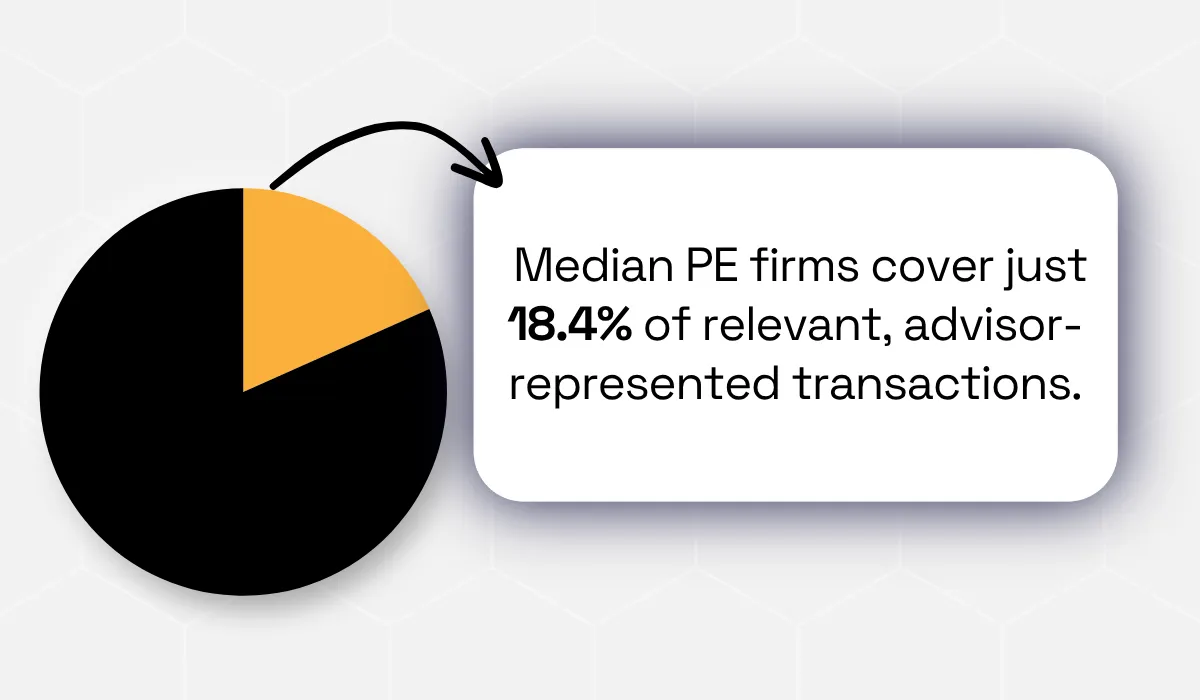
Illustration: Veridion / Data: Sutton Place Strategies
This lack of visibility is especially pronounced with lower-middle-market (LMM) firms, where the gap is even larger.
According to the same report, median coverage for these companies was just 11.2% among generalist LMM firms, 13.8% among quasi-generalists, and 15.7% among sector-focused firms, all well below the overall median.
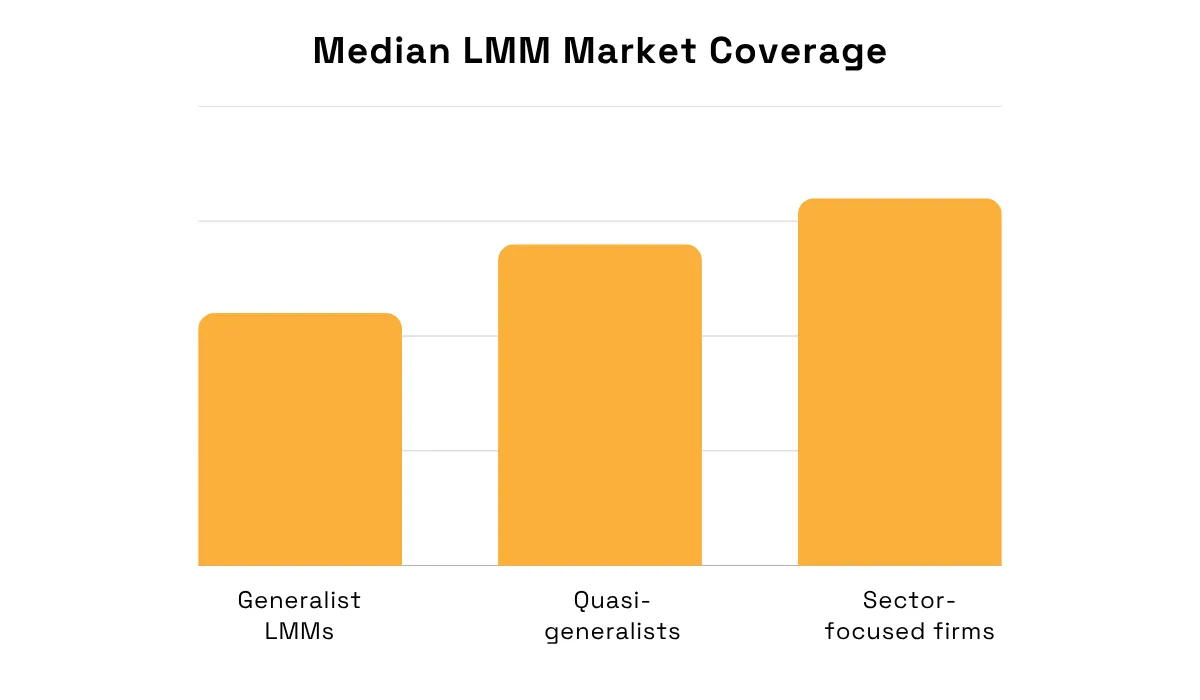
Illustration: Veridion / Data: Sutton Place Strategies
So the problem with relying solely on intermediary-led sourcing is that you’re limiting the number of deals that ever reach you. And the deals that do reach you are more likely to involve larger companies, while much of the lower-middle market remains out of sight.
There are several reasons why visibility into this segment is so limited.
One is that information about smaller companies looking to sell is less likely to be publicized, which also means it’s less likely to reach your network.
Peter Lehrman, Founder & CEO of the small business mergers and acquisitions (M&A) platform Axial, points to a few additional reasons, including market fragmentation and the number and variety of participants involved.
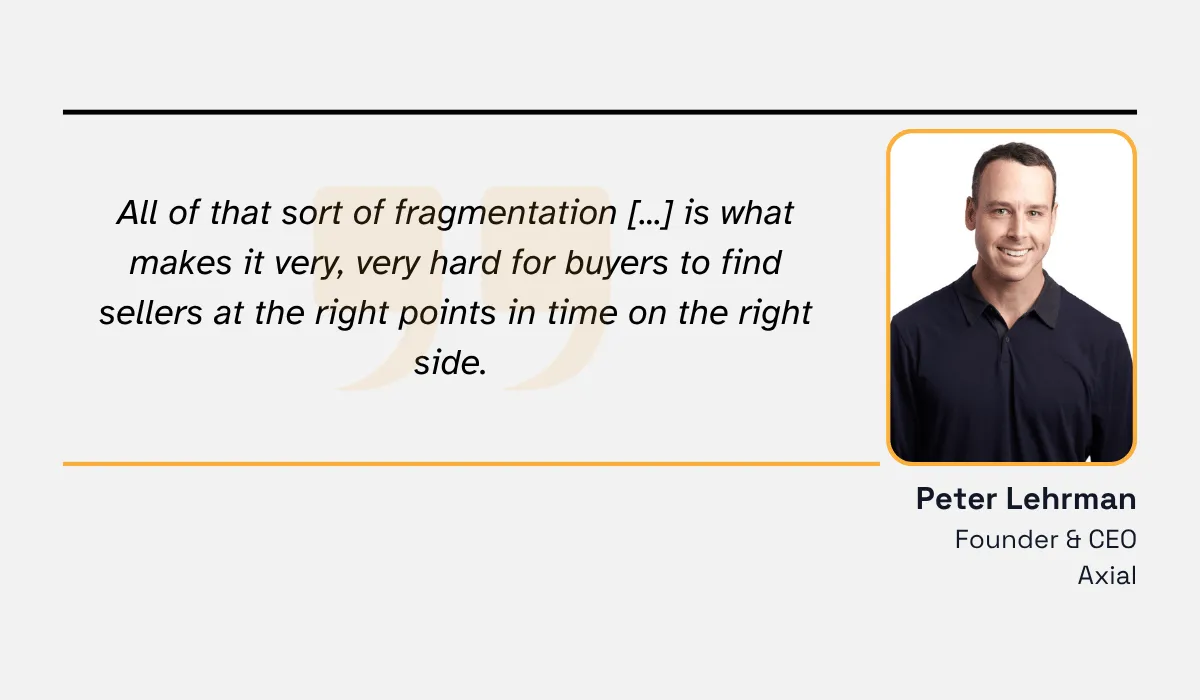
Illustration: Veridion / Quote: The Liberty Company Insurance
Lehrman is right. The LMM's advisor ecosystem is extremely fragmented, spanning major investment banks, specialized boutiques, regional advisors, and small business brokers.
Opportunities are spread across so many intermediaries that no PE firm can realistically maintain relationships with all of them. No matter how big your network is, many suitable opportunities will still fly under your radar.
To fill that gap, many PE firms are turning to direct sourcing.
Beyond just helping you find more promising targets, direct sourcing almost always drives better outcomes than intermediary-run auctions.
Think about it. When you find a company and build relationships before it's formally for sale, you're likely to:
- Face less competition
- Get a better purchase price
- Have more say in how the transaction is structured
Plus, good owner relationships can help the entire process run more smoothly. Negotiations are likely to be more collaborative, deal certainty higher, communication easier, and the post-closing transition more seamless.
That said, let’s see how to get started with direct sourcing and stop relying on your network for deal flow.
The Firmographic Filters That Help Define an Investment Thesis
Direct sourcing implies proactively looking for companies that match your investment criteria. The first step to doing so is translating your investment thesis into a set of firmographic filters.
These filters should describe the characteristics that make a company relevant to your strategy. They'll help you systematically identify potential targets once you start searching company databases and other sources.
Here are the most useful filters to consider:
- Industry
- Geography
- Growth rate
- Revenue band
- Ownership type (e.g., privately held, family-owned, already PE-backed, public)
Revenue band and industry should be among the first filters you apply because they help you answer the basic question first: “Is this even in our mandate?” For example, if a company falls outside your sector focus, you can immediately move on instead of wasting time qualifying it more deeply.
Ownership type is likely the third filter to apply.
For example, a founder-owned business and a publicly traded company represent very different opportunities. Your investment thesis probably already reflects this distinction. And if it doesn't, it might be time to rework it.
According to Morgan Stanley Capital Partners' Patrick Whitehead and Aaron Sack, founder-owned businesses are far more likely to drive rapid growth in the early stages of an investment.
They find this is less common among “companies that have been owned by institutional investors for multiple chapters”.

Illustration: Veridion / Quote: Institutional Investor
That doesn't mean you shouldn't consider the latter, but rather that you should decide which ownership types to target before kicking off direct sourcing.
Growth rate can then help you narrow down the list further.
For example, you might want to filter out companies with declining revenue immediately.
Then, depending on your strategy, you might want to focus solely on those that achieve moderate growth but are stable and cash-flowing, as opposed to those experiencing rapid growth but less predictable cash flow.
All in all, these filters should all work together.
Your ideal target likely can't be described with just one category, like "family-owned", but rather needs to check multiple boxes.
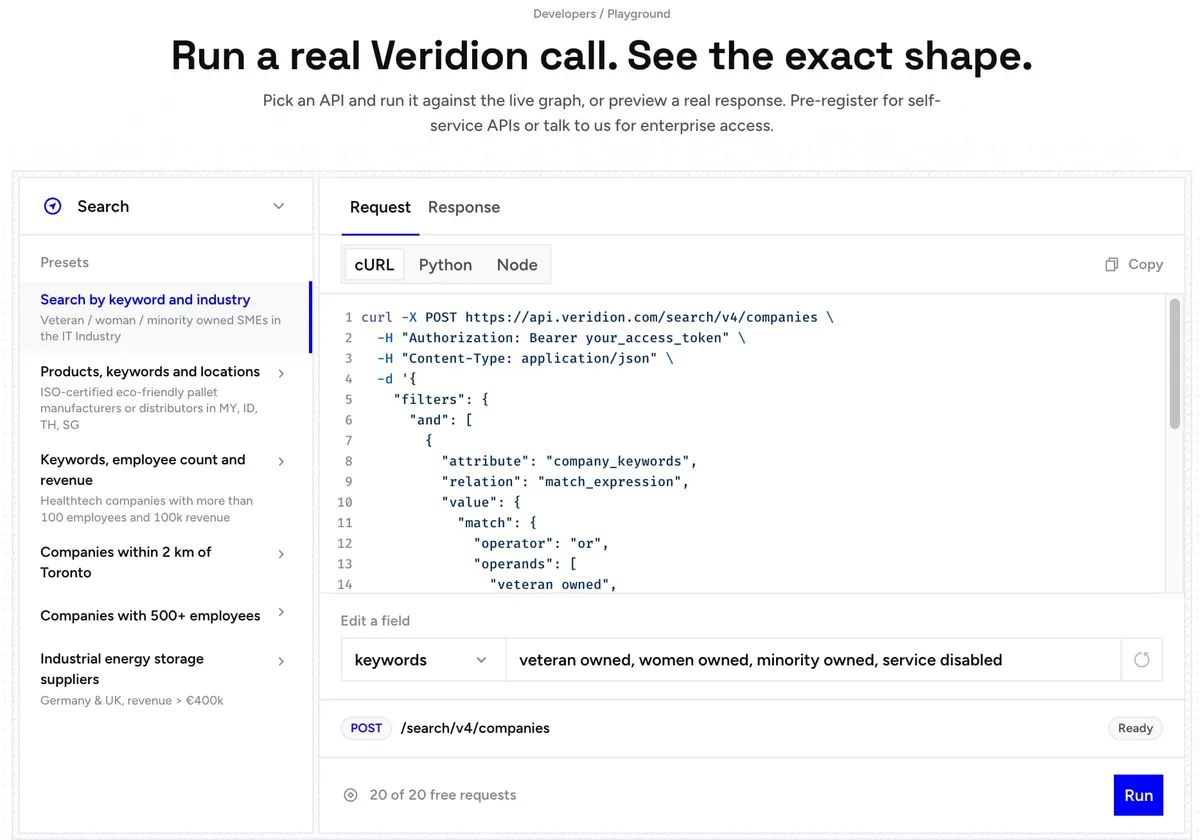
Tools like Veridion's Search API support exactly this type of multivariate query.
Source: Veridion
To help you find the most promising targets quickly, Veridion lets you apply multiple firmographic filters at once, such as:
- Location
- Revenue range
- Ownership type
- Employee count
- Industry classification
You can also combine them with "and/or" logic, so a thesis built around multiple criteria translates into a single structured search rather than a manual, multi-source research project.
In other words, Veridion can immediately return companies that meet the specific combination of criteria you're looking for, like industry, employee headcount, hiring growth, and ownership history.
To see what this looks like in practice, consider the investment thesis and matches shown in the image:
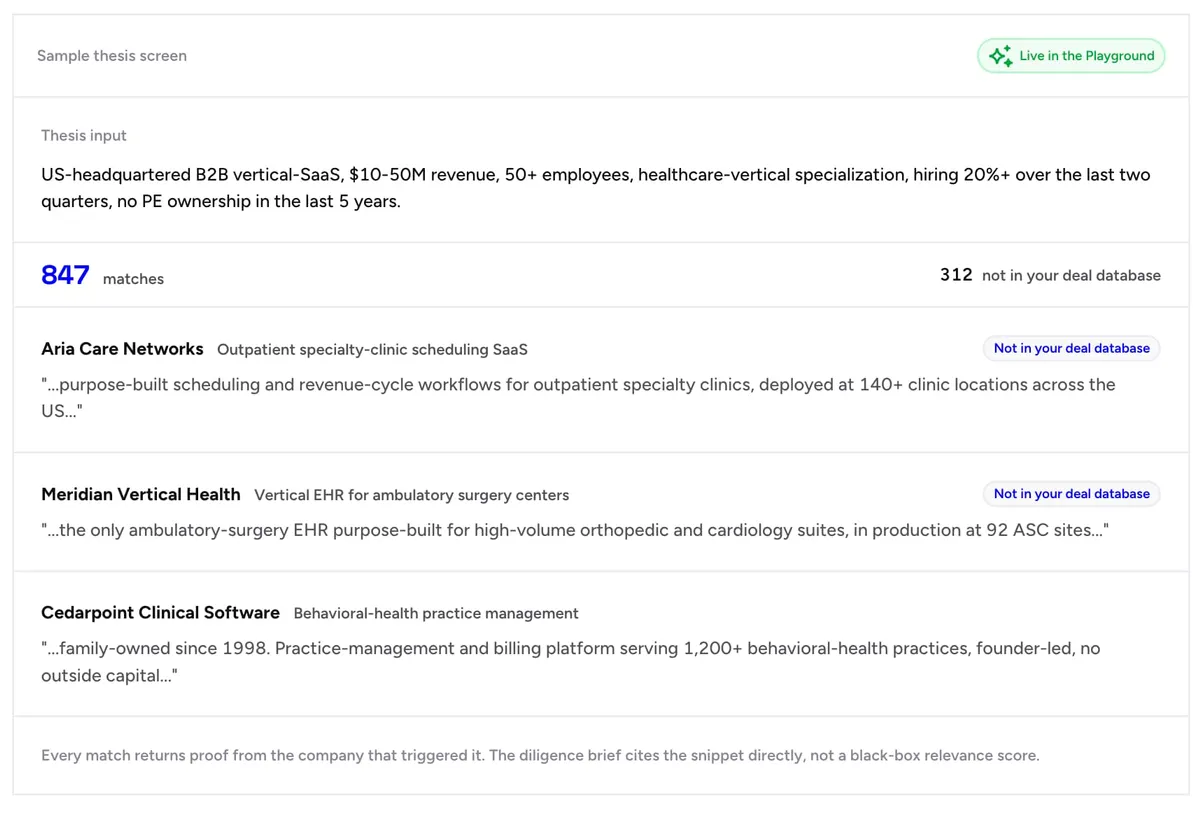
Source: Veridion
These multivariate queries save you time you'd otherwise spend qualifying companies that ultimately won't make your pipeline.
On top of that, Veridion gives you a broader view of the market.
It aggregates data on operating companies worldwide, so you never miss an opportunity just because it didn't reach your network.
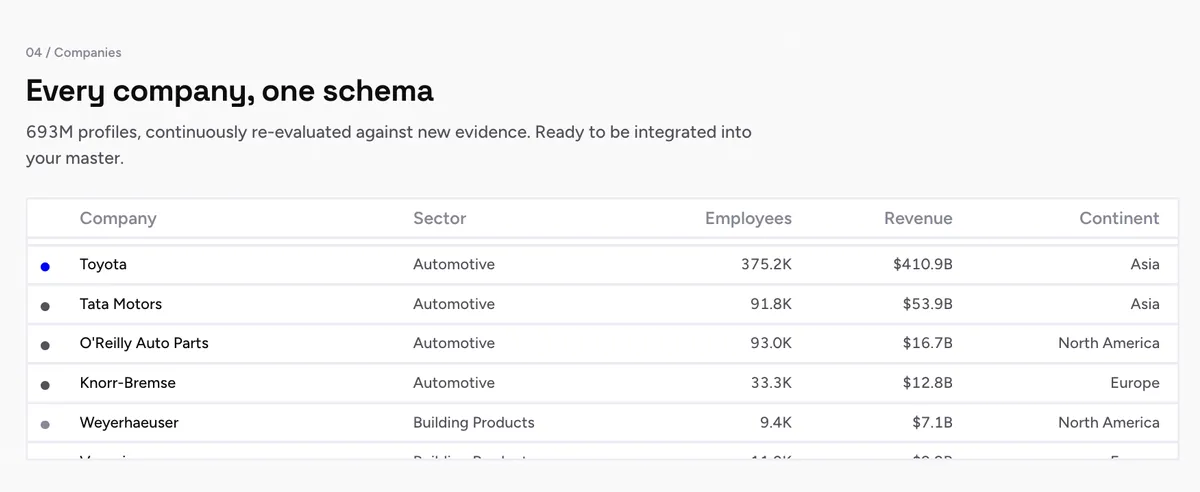
Source: Veridion
To sum up, Veridion helps you see the full addressable market, easily narrow down your options, and identify companies worth looking into further in minutes.
But how exactly does this translate to more opportunities in your pipeline? Let's look at that next.
Why This Surfaces Opportunities Traditional Channels Miss
Traditional deal sourcing works well when a company is already visible to the market. But that visibility is often the exception in the lower-middle market.
We already discussed some reasons why that's so, including limited publicity around transactions and a highly fragmented market.
Beyond that, many smaller, regional, founder-owned, and family-owned businesses aren't actively seeking a buyer or working with an investment bank, so they may never enter a formal sale process at all.
For example, many would rather sell to company insiders, like partners and employees.
But as Sean Mooney, founder of B2B market network BluWave, explains, those preferred buyers may lack the necessary capital to finance the acquisition themselves. So, they may be open to partnering with a PE firm, even if they aren't proactively seeking that partnership.

Illustration: Veridion / Quote: Institutional Investor
So, aside from helping you uncover hidden opportunities, a proprietary, criteria-first approach can also create new ones. You can engage relevant companies before they're even seeking a buyer or financial partner, and get a head start before other buyers enter the picture.
Overall, a criteria-first approach lets you:
- Find suitable companies proactively.
- Make your deal pipeline more predictable.
- Build relationships with the owners before they're necessarily ready to sell.
That last part is especially important.
Elliot Jarvis, Director of Origination at M&A advisor Options2Exit, emphasizes that PE firms rarely get to build relationships through intermediary-led auctions.
At the same time, early access can make a world of difference. For example, it can help you create a more favorable negotiating dynamic or uncover opportunities where insiders lack the necessary capital.
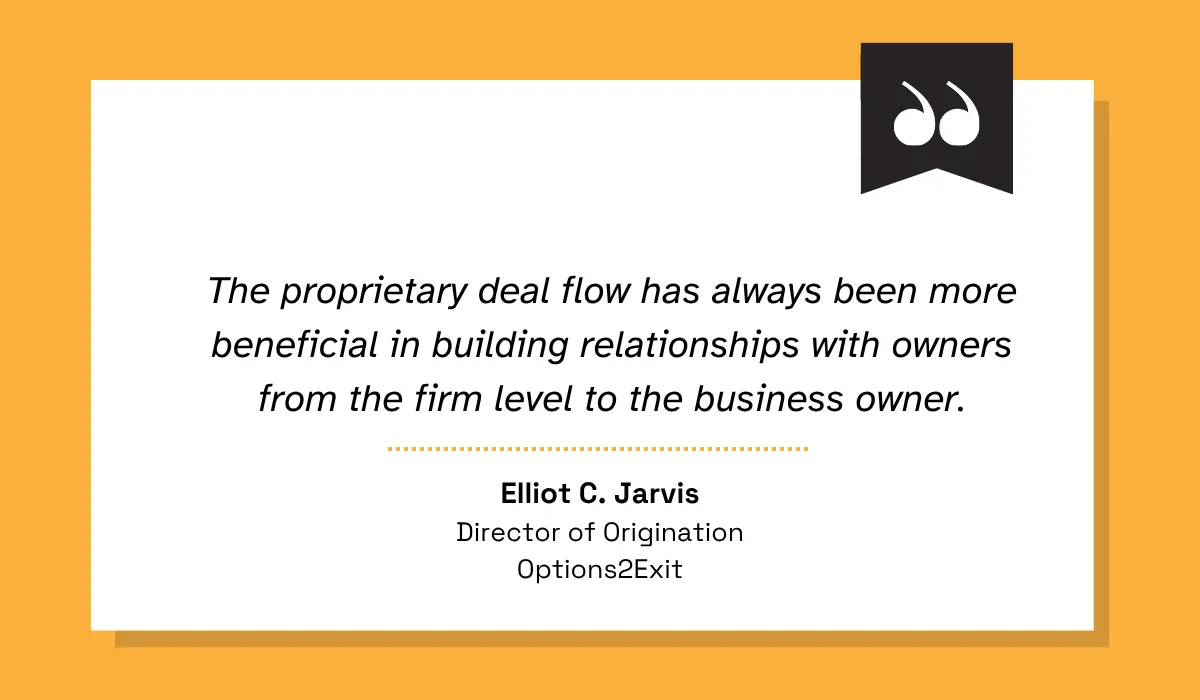
Illustration: Veridion / Quote: Becker Private Equity & Business Podcast
Because of this, according to Jarvis, many PE firms are now moving toward a hybrid model.
In practice, this means combining investment bank coverage with proprietary outreach and business development.
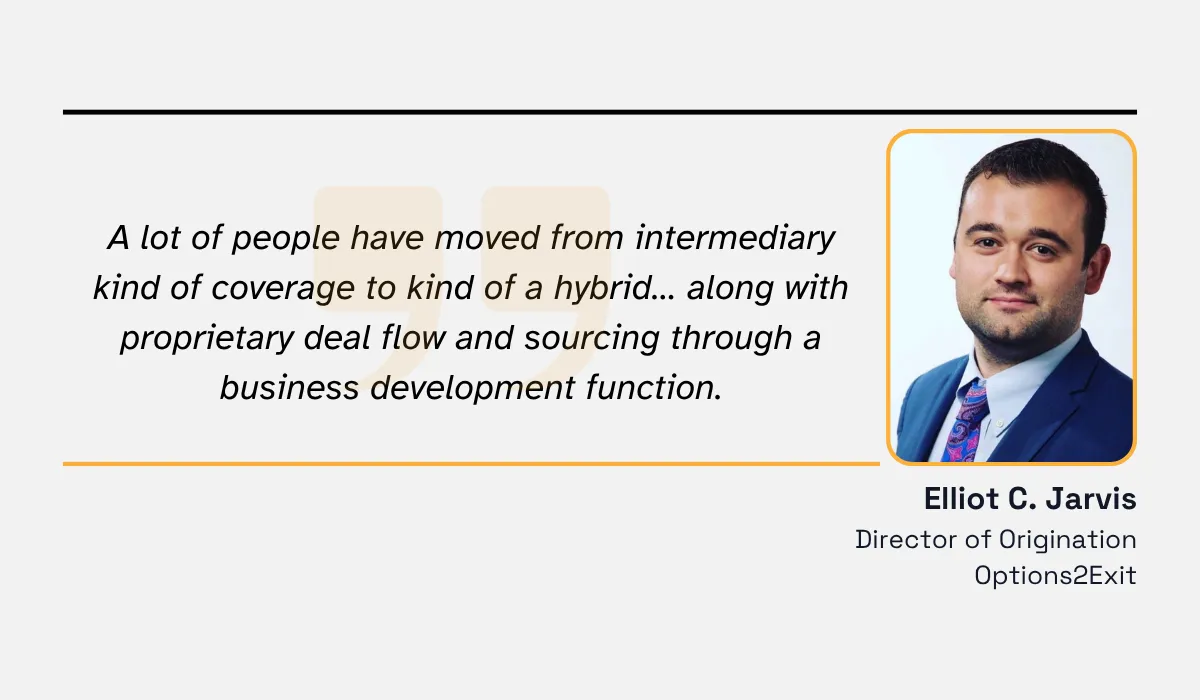
Illustration: Veridion / Quote: Becker Private Equity & Business Podcast
So, the idea isn't to fully replace traditional sourcing methods with proprietary sourcing, but rather to expand them to improve visibility, negotiating dynamics, and deal access.
To do this successfully, you'll need to invest some time upfront into establishing a clear sourcing process you can run consistently. This approach drives much better outcomes than ad hoc searches.
From One-Off Searches to a Repeatable Sourcing Process
One-off searches aren't bad for getting a general sense of the current market. But keep in mind that the market is constantly changing.
If you only rely on ad hoc searches, you'll miss companies that qualify later or, on the flip side, won't realize when companies stop fitting your thesis. You'll also lose the timing advantage and keep your deal pipeline largely reactive.
So your goal should be to turn everything we've discussed so far into an ongoing, repeatable sourcing motion. That means:
- Defining clear firmographic criteria.
- Establishing a regular cadence for rerunning that criteria.
- Creating a workflow for reviewing and following up with new matches.
Now, this approach can easily overwhelm your team. While your PE firm might have struggled to keep the deal pipeline full so far, this new approach might now leave it struggling to keep up with a growing list of potential candidates.
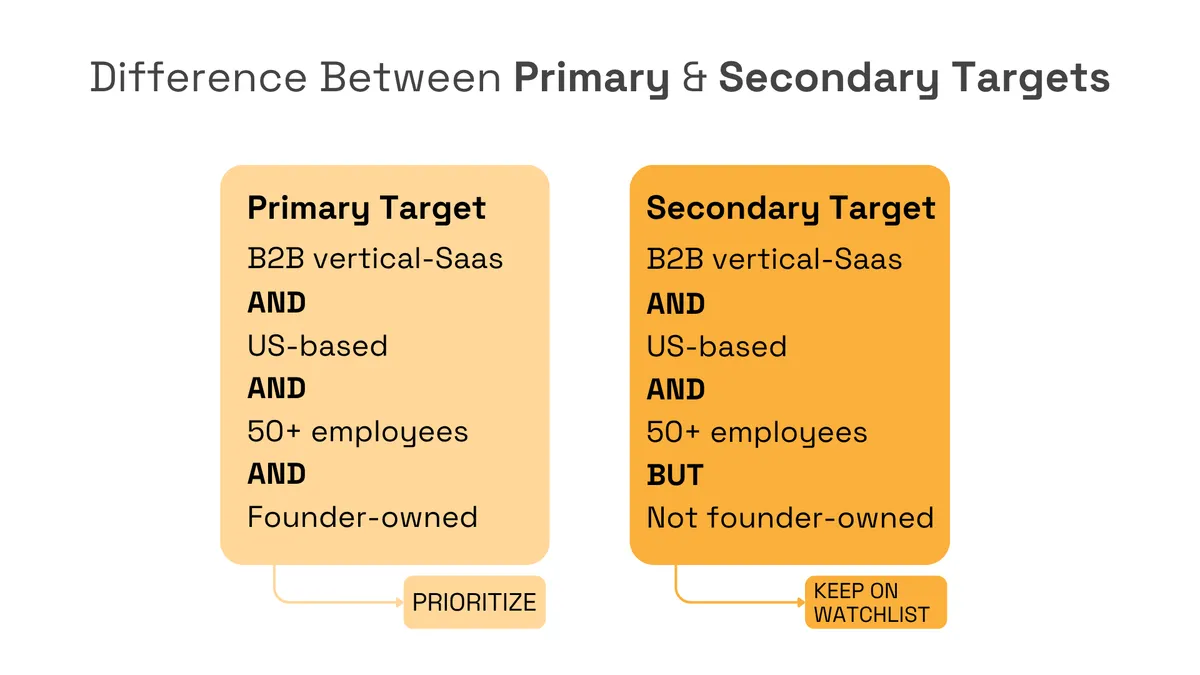
Reviewing, prioritizing, and following up are time-consuming tasks. Tackling them effectively requires a clear triage process.
Establish it by clearly defining how to separate promising targets from companies that merely meet the initial criteria, and how to handle each.
Source: Veridion
Again, platforms like Veridion that combine structural filters with "and/or" logic can speed up this process. You can quickly identify companies that match all your criteria and focus on them first, leaving the rest in your backlog.
That said, don't forget to balance your data-driven pipeline with relationship building.
Industry events, direct outreach, and advisor relationships still matter throughout the sourcing process, from identifying potential targets to developing relationships with them.
Conclusion
PE firms with consistent, predictable deal pipelines aren't waiting around for referrals to fall into their lap. Well, at least not anymore.
Today, they're taking advantage of multiple sourcing channels. And while direct sourcing isn't necessarily their only source of deals, it plays a huge role in their overall strategy.
If you want to do the same and stop missing out on valuable opportunities, take the first step toward creating a repeatable proprietary sourcing process today. Start by defining your firmographic filters and take it from there.
Articles
Discuss how these trends affect your organization.
Our analysts are available for a short call. Bring a specific question and we will ground it in the data.
Insights
Keep reading
More analysis, research, and outcomes grounded in live company intelligence.
A Closer Look at the Top B2B Data Enrichment Companies Businesses Rely On
Struggling to find reliable firmographic data providers? Uncover the top B2B data enrichment companies that businesses trust to fuel growth.
7 Firmographic Attributes to Weight in Your Account Scoring (and How Much Each One Matters)
Tired of inaccurate account scoring? Discover which firmographic data providers offer the 7 crucial attributes that truly matter.
Beyond Static Data: What Growth Signals Reveal That Traditional Firmographics Miss
Tired of relying on outdated firmographic data? Uncover hidden growth signals that traditional firmographic data providers miss.