Insights / Articles
Why Chinese Company Data Is So Hard to Source
Why Chinese company data is hard to source: fragmented provincial registries, romanization mismatches, VIE ownership structures and stale filings.

- Fragmented registries prevent straightforward access to China's 57 million firms.
- Multiple naming conventions make exact-match entity resolution highly unreliable.
- Only 74% of Chinese government websites load internationally.
China has more than 50 million registered businesses, and yet most Western company data providers cover the market poorly.
There are several reasons for this.
Company records are spread across fragmented registries, Chinese characters can be romanized in more than one way, and state ownership and Variable Interest Entities (VIEs) make true control hard to establish.
Even once you work through all of that, the data is often stale by the time it reaches a foreign database.
This article explains each of those obstacles, and what closing the coverage gap actually requires.
Registries Are Fragmented Across Provinces
China's economy is the second largest in the world, and its company count matches that scale.
According to the State Administration for Market Regulation (SAMR), the country's market regulator, the private sector passed a notable milestone in the first quarter of 2025.
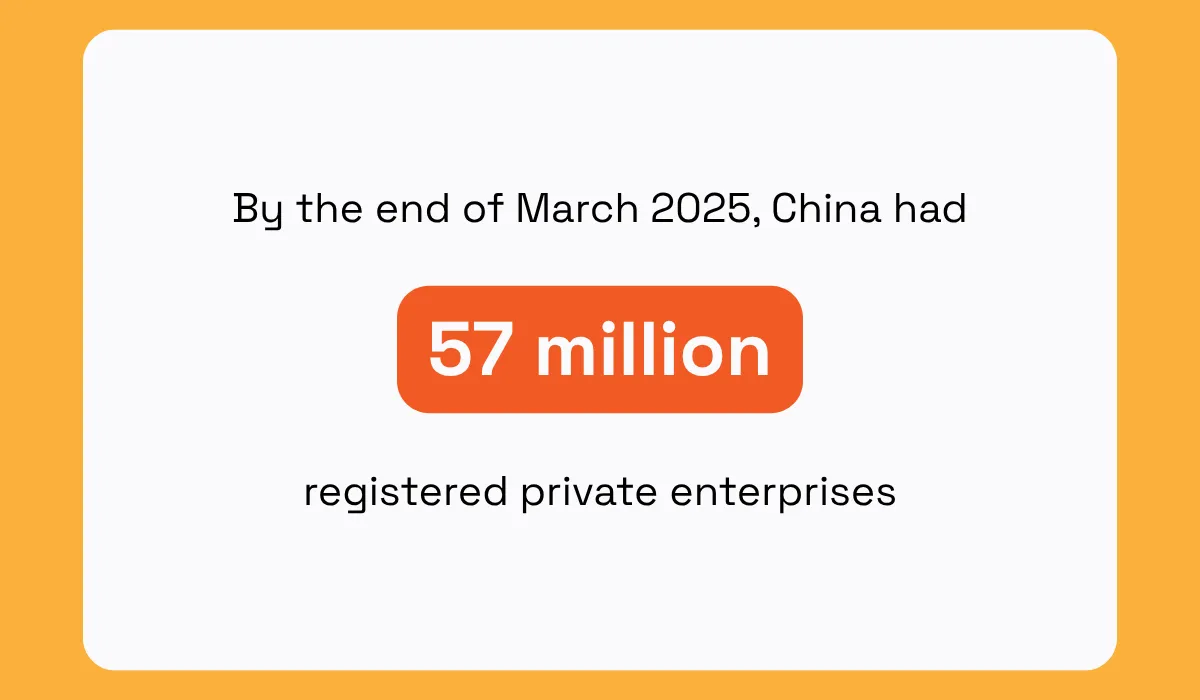
That figure counts registered private enterprises only, and once solo traders are added, SAMR's total passes 185 million business entities.
The problem is that these records are not kept in one place.
Registration happens locally while publication happens centrally, so no single registry returns a complete, consistent national picture.
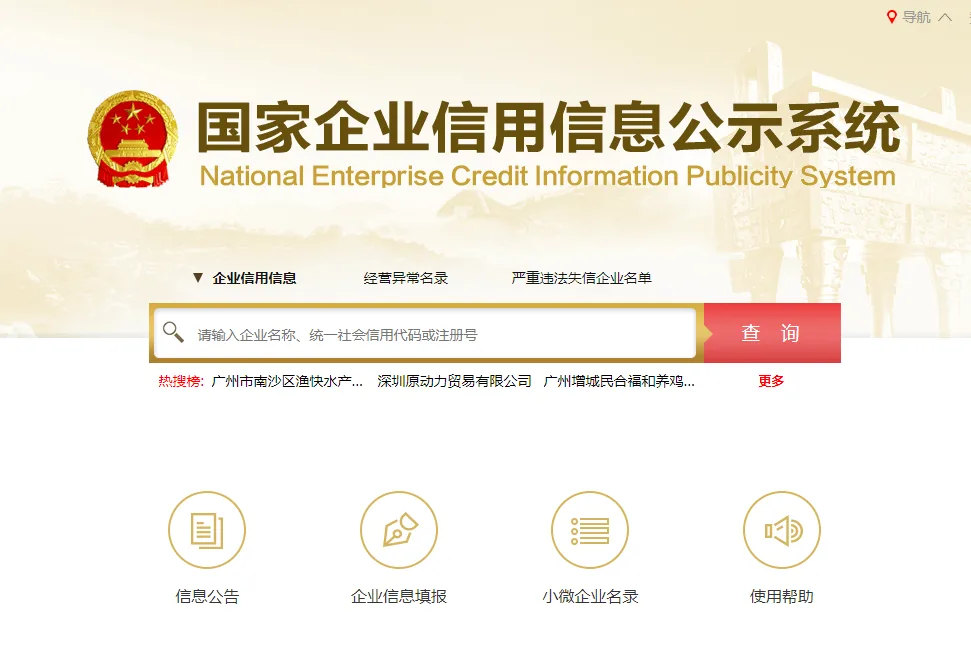
For instance, take the National Enterprise Credit Information Publicity System, or GSXT, the closest thing China has to a single public search point.
Source: LinkedIn
You can search it by company name, unified social credit code or registration number, and it returns registration details, annual filings and abnormal-operation flags.
Even still, there are several limitations.
The interface is Simplified Chinese only, registration requires a Chinese mobile number and real-name check, and automated querying is restricted.
Parts of the data also stay with provincial and municipal SAMR offices, formerly the State Administration for Industry and Commerce (SAIC), which issue licences and run their own portals.
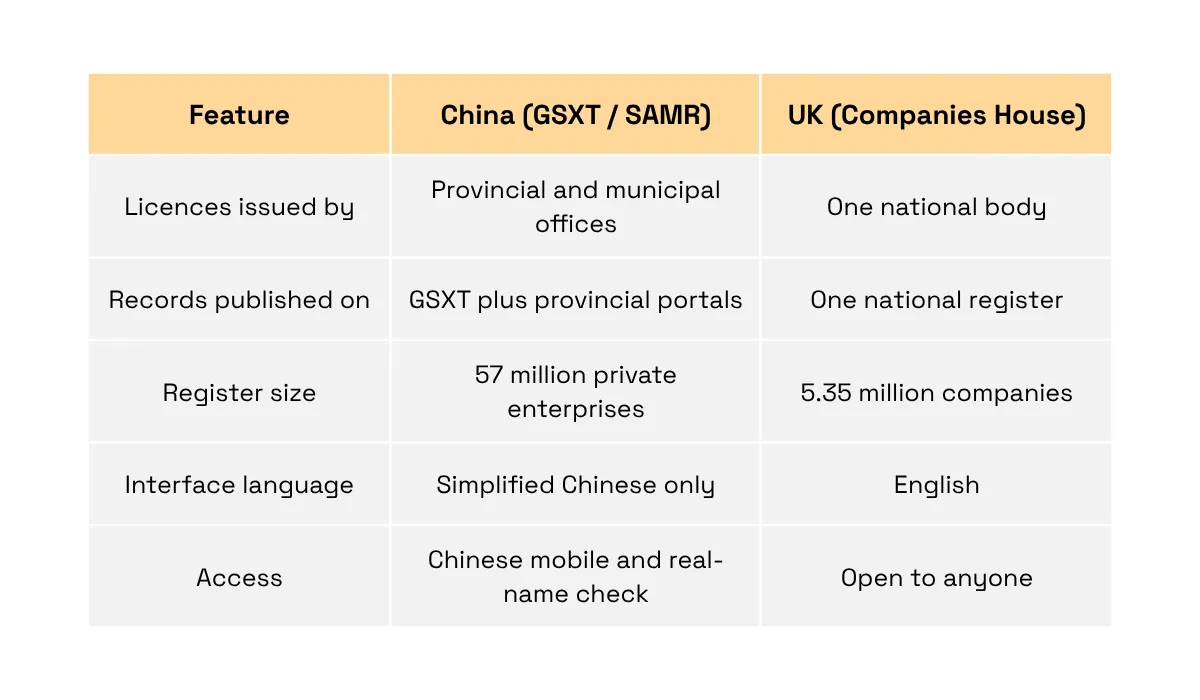
This is best illustrated if we compare China's arrangement with a country that keeps one register, like the United Kingdom.
Source: Veridion
As you can see, there is a significant difference in whether one query can be trusted to return everything relevant about a company.
These issues are summarized well by Chu Yang, a journalist and China analyst who founded The Newcomers and wrote a guide to investigating Chinese companies for the Global Investigative Journalism Network.
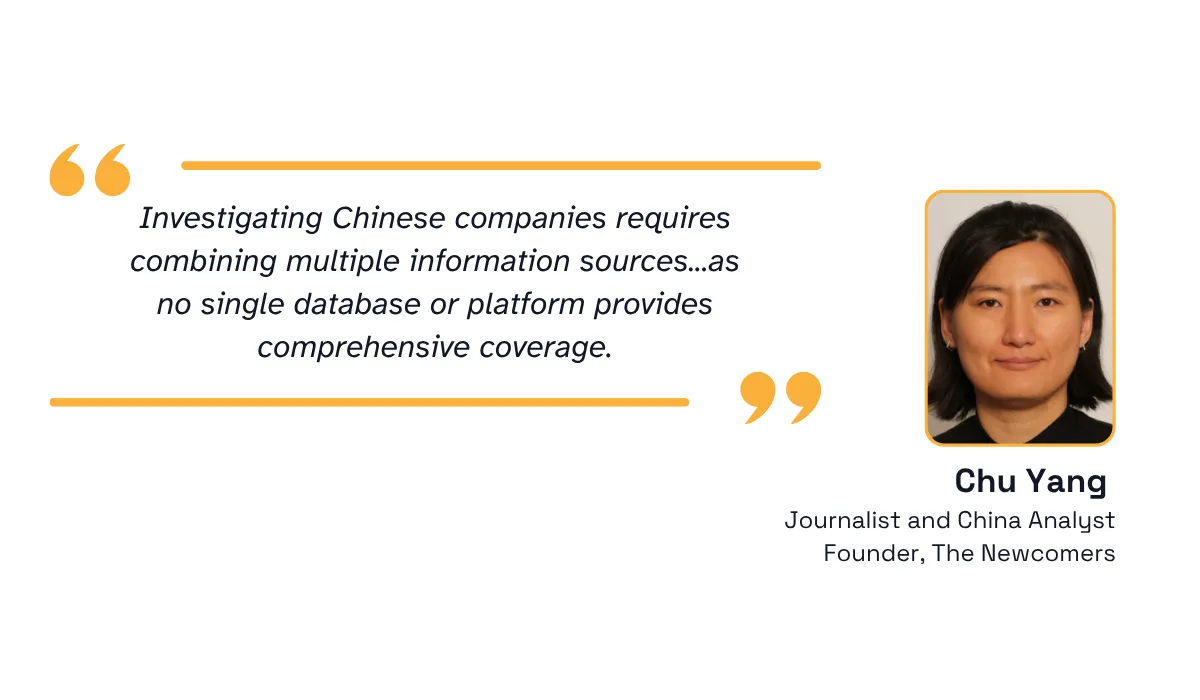
In short, whatever your reason for looking at Chinese company data, one source will not be enough.
Only a combination of the national portal, provincial sites, sector databases and commercial platforms comes close to a full view.
Naming Conventions and Character Sets Complicate Entity Resolution
A seemingly simple issue, Chinese language barriers can complicate sourcing for company data even further.
Every Chinese company has a legal name in Simplified Chinese characters, and every Latin version of it is a choice rather than a fixed translation.
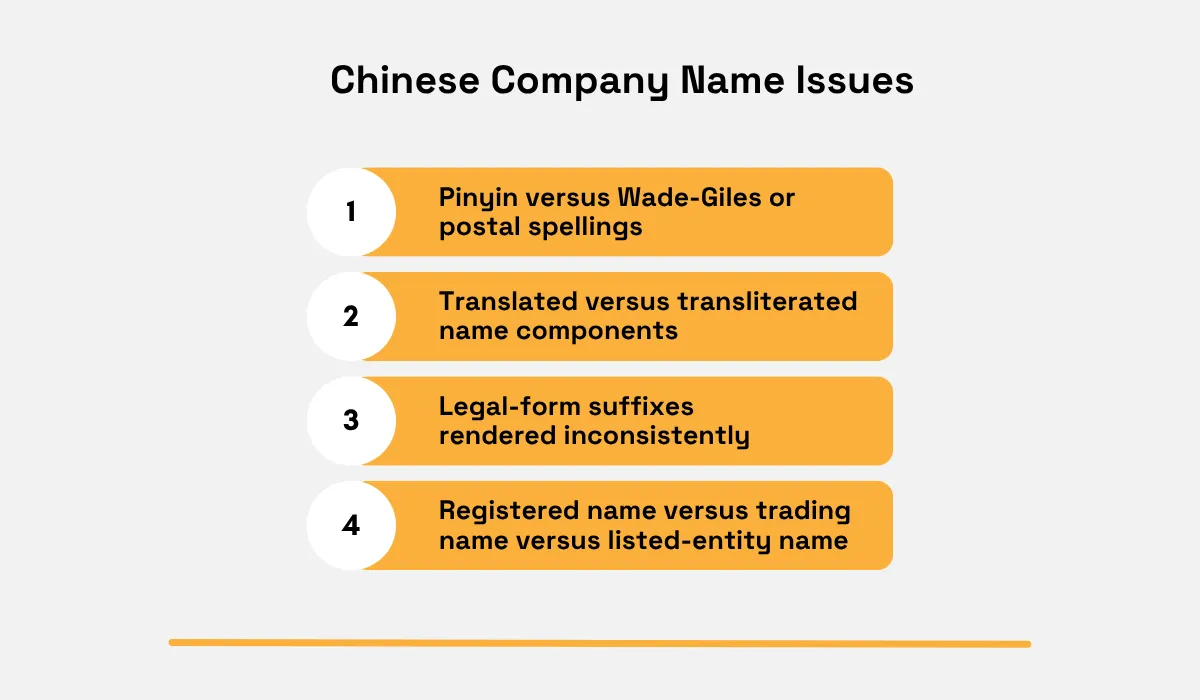
We're not talking about simple mistranslations, but a range of issues, shown below.
Source: Veridion
Each row describes a different way one company ends up as several records, from how sounds are converted to which of its several real names was captured.
For instance, pinyin has been China's official romanization system since 1958, while Wade-Giles is the older system it replaced.
These conventions did not disappear, because companies already trading abroad kept the spelling their customers knew.
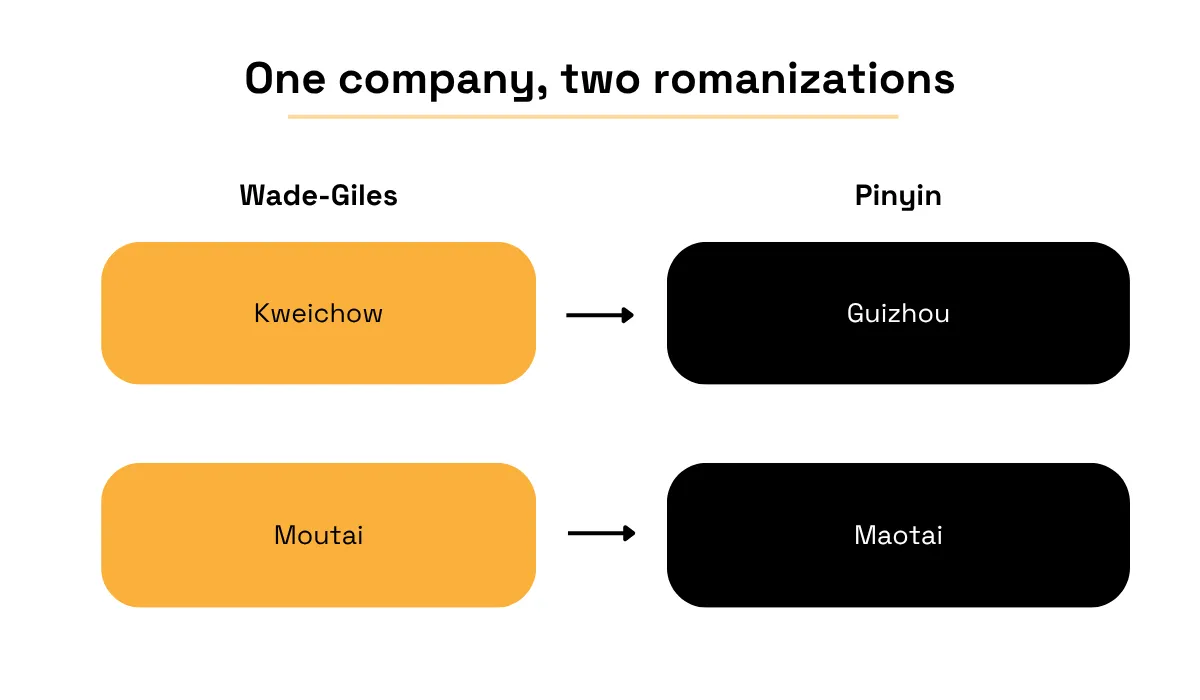
A good example is Kweichow Moutai, the Shanghai-listed distiller of the baijiu of the same name.
Source: Veridion
Its legal name begins with the characters for Guizhou, the province it operates in, and Maotai, the town its liquor is named after.
The official English name uses the older spellings, so no exact-match search will connect the two.
Or, consider a name where one part is translated and another transliterated, so the component meaning technology appears as "Technology" in one record and "Keji" in another.
A single company can therefore appear as several separate entities, with no straightforward way to link them by name.
David Barboza, CEO and founder of the China intelligence service WireScreen and former Shanghai bureau chief of The New York Times, adds that transliteration is rarely the only obstacle.
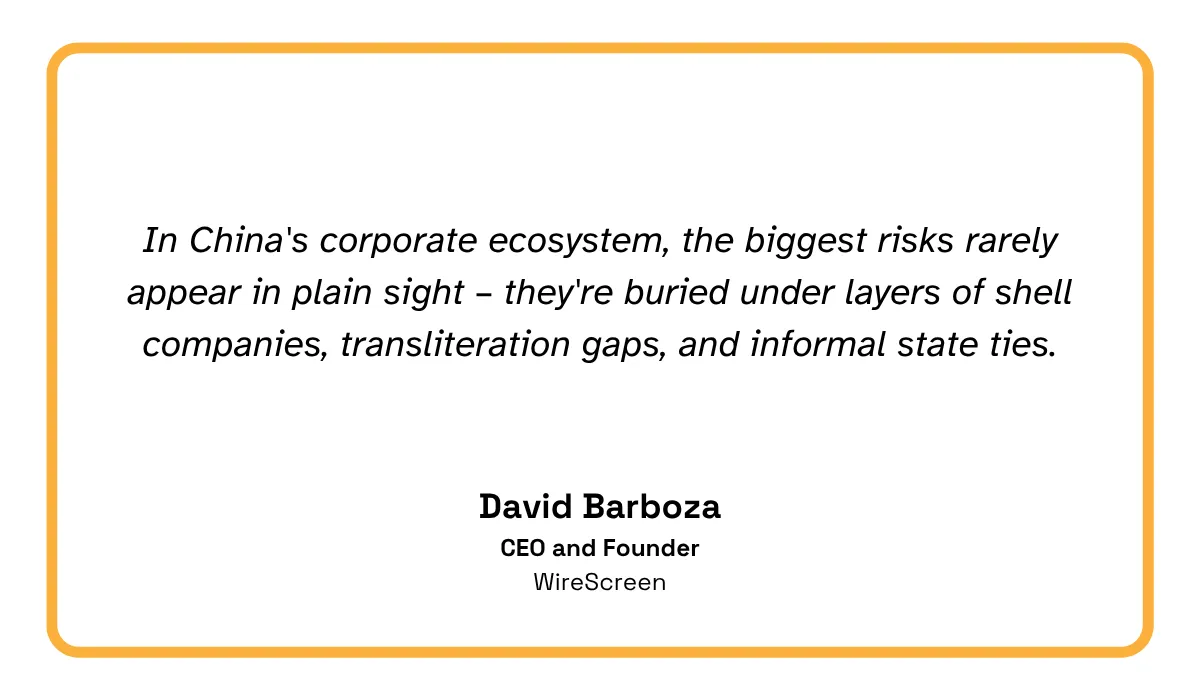
Illustration: Veridion / Quote: WireScreen
In fact, the naming problem makes the rest of Barboza's list harder to address.
A shell company is easier to identify once its name matches something else in your data, so when names never match, the structure stays hidden.
The solution is matching on more than the name, using addresses, identifiers, officers and web presence, as data enrichment practices do.
Names can be a weak signal for Chinese companies, so any process relying on them alone can split companies it should have joined.
State-Owned Enterprises and VIEs Obscure Corporate Structure
Even with the names resolved, the entity you identified may not be the one that matters.
China restricts foreign ownership in several sectors, so companies built structures around those restrictions, like operating through VIEs.
If we look at data from the US-China Economic and Security Review Commission (USCC), a body created by Congress to monitor US-China relations, the scale becomes clear.
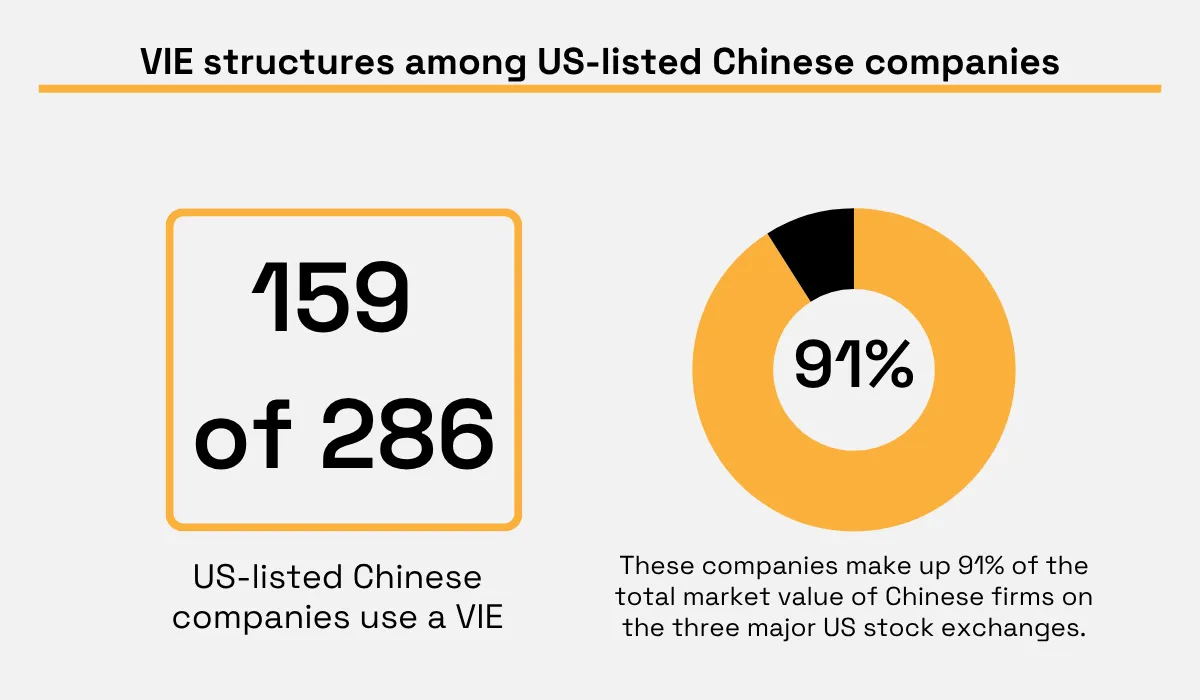
The USCC adds a caveat: because some issuers list through offshore entities without identifying their Chinese domicile, it cannot guarantee its own list is complete.
These structures affect anything depending on who controls a supplier, from sanctions screening to beneficial ownership checks.
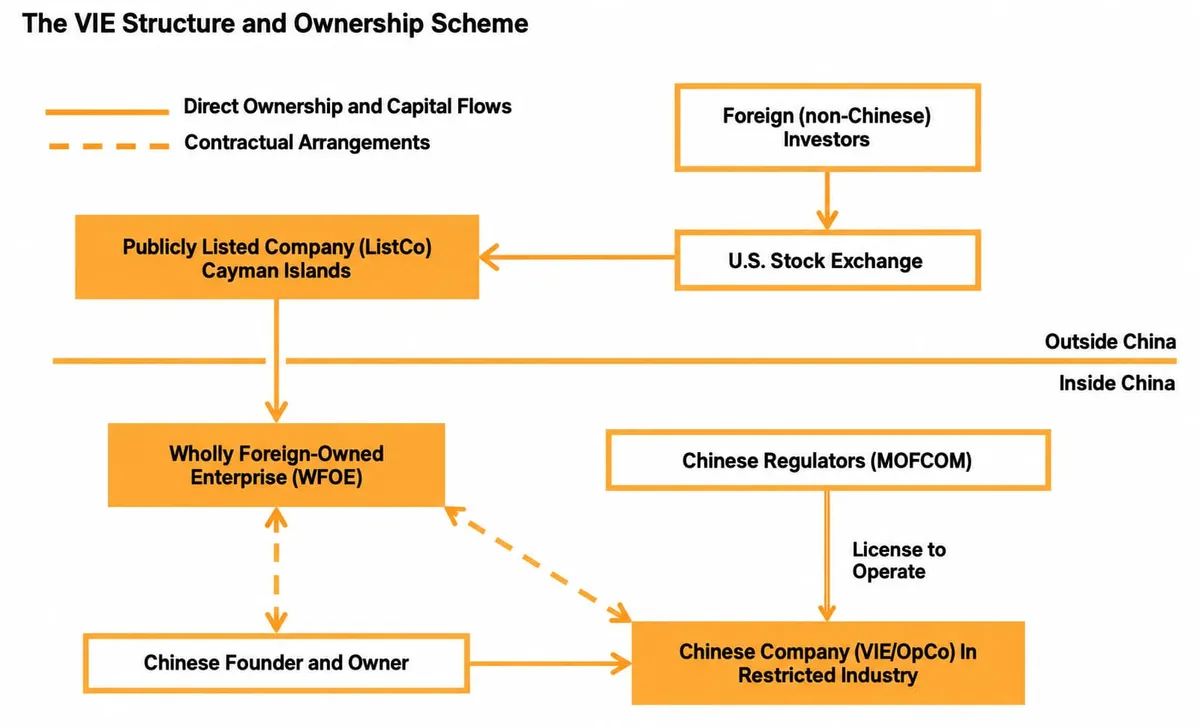
To look at VIEs more closely, take a look at this example structure from the Council of Institutional Investors (CII), a US association of pension funds and large asset owners.
Source: CII
The diagram shows three companies doing the work of one.
A listed shell in the Cayman Islands takes money from foreign investors and owns a wholly foreign-owned enterprise (WFOE) inside China, connected to the operating company by contract rather than ownership.
The operating company holds the licence from Chinese regulators and is owned by the Chinese founders.
That complicates sourcing because a foreign system usually records the Cayman shell, while the business that employs people and signs contracts is the operating company, linked only by agreements absent from any registry field.
Untangling it means reading the listed company's filings, identifying the WFOE and operating company by their registered Chinese names, then looking each up in the Chinese registry.
The same applies to SOEs, where the state's stake often arrives through intermediate holding companies whose names give no signal of it, so a majority-shareholder check misses it.
In three sectors in particular, care is needed, according to work done by the Organisation for Economic Co-operation and Development (OECD) on building a global dataset on state-owned enterprises.
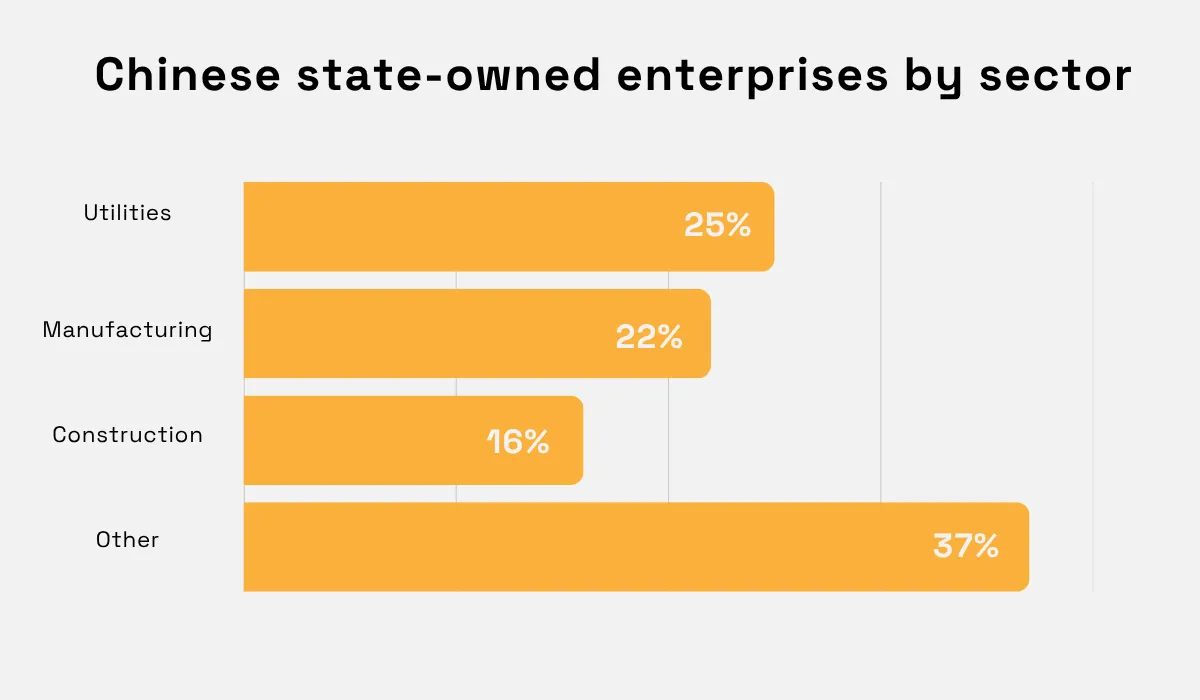
For a Chinese utility supplier, that might mean a parent appearing private, an intermediate holding company 30% state-held and a provincial asset commission above it.
Until that ownership structure is cleared up, you may know what a company is called without knowing who stands behind it.
Most Providers Rely on Stale Annual Snapshots
To make matters worse, even once you finish untangling a structure, the company you mapped may have changed while you worked.
This happens because most providers covering China mirror the country's own reporting cycle instead of monitoring companies continuously.
They pull the registry, publish what it says and wait for the next pull.
In fact, the cycle they copy is set by the Interim Regulations on Enterprise Information Publicity, and the filing window it creates is printed on every Chinese business licence, as shown below.
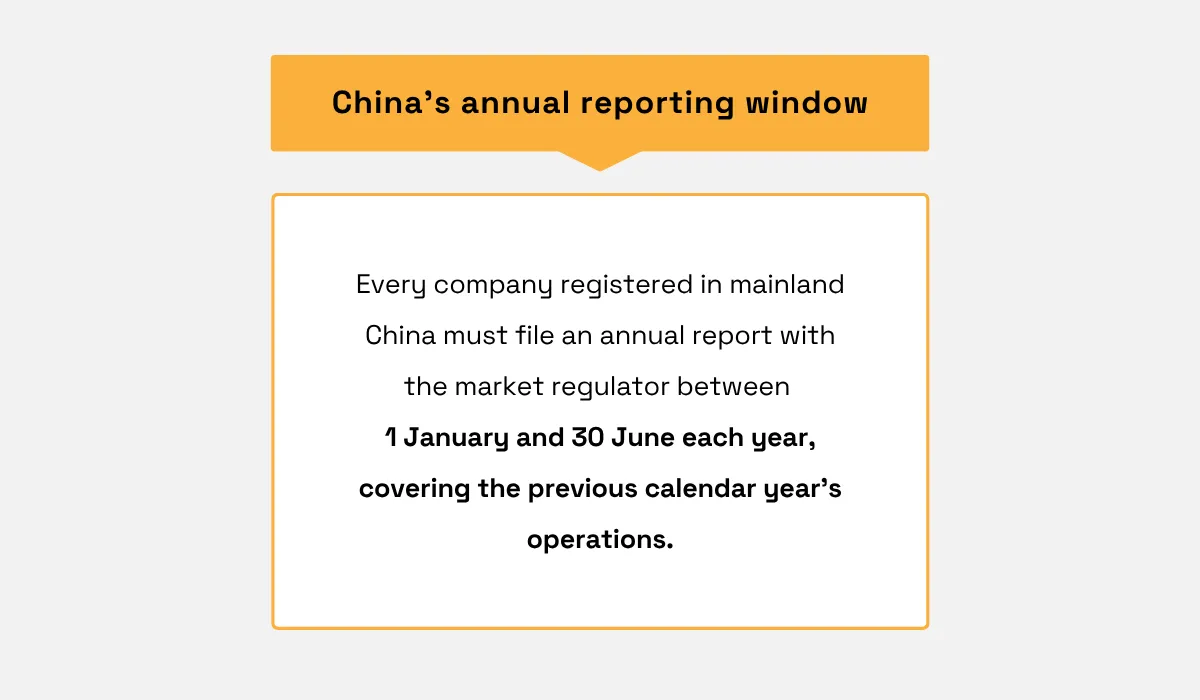
This means a company's most recent filing describes it as of 31 December of the previous year, and may not be submitted until the following June.
Read in late June, a field can describe a state of affairs up to eighteen months old, but it would still be the freshest on record.
When a provider does not seek out changes itself, registry updates are its only signal, so its picture of a company moves only when the registry moves.
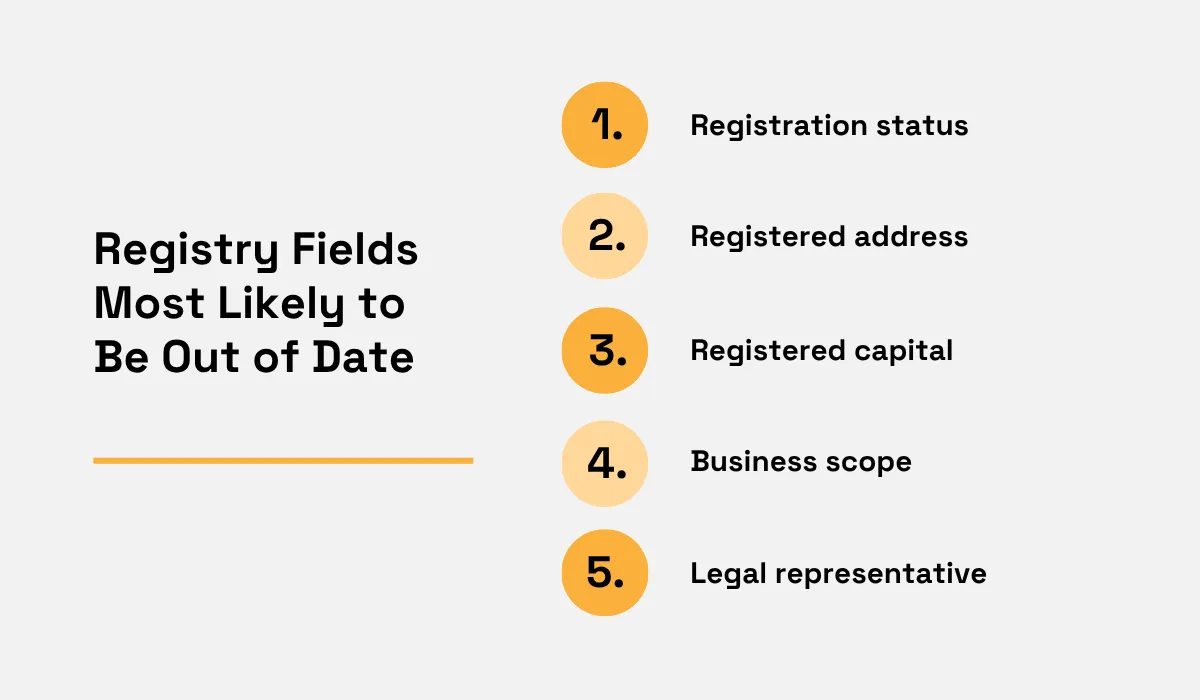
Several fields are more exposed than others, because they change more often than the reporting cycle can capture.
Source: Veridion
The result is a record that stays internally consistent and looks reliable while describing a company that may have changed.
Let's give an example of how quickly this can matter.
Evergrande went from China's top-selling property developer to being removed from the Hong Kong exchange in a few years, and the timeline below sets out three points where its status changed.
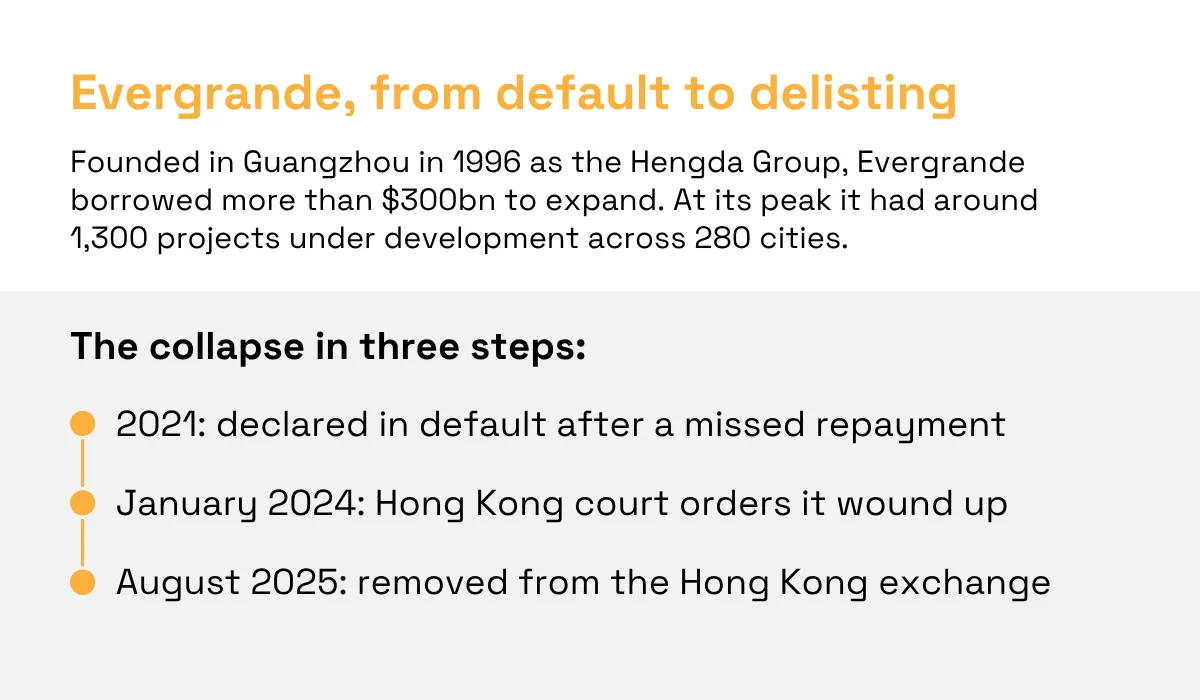
Each event changed what the company was legally and commercially, and they arrived at unpredictable moments rather than during a filing window.
If a provider's last pull came before the January 2024 wind-up order, its record would have described an operating company for months afterwards.
Any credit decision, supplier onboarding or risk model reading that record inherits the error, and later processing cannot correct a value captured too early.
What Data Is Available, and How Is the Coverage Gap Closing?
So, what is the solution to these sourcing issues?
You could start by combining data from Chinese government websites, consolidating what each holds and comparing across them.
That is a solid start, but the Mercator Institute for China Studies (MERICS) found a quarter of those sites cannot be reached from abroad, after Vincent Brussee and Kai von Carnap tested the 517 most browsed government sites from nine servers worldwide in 2024.
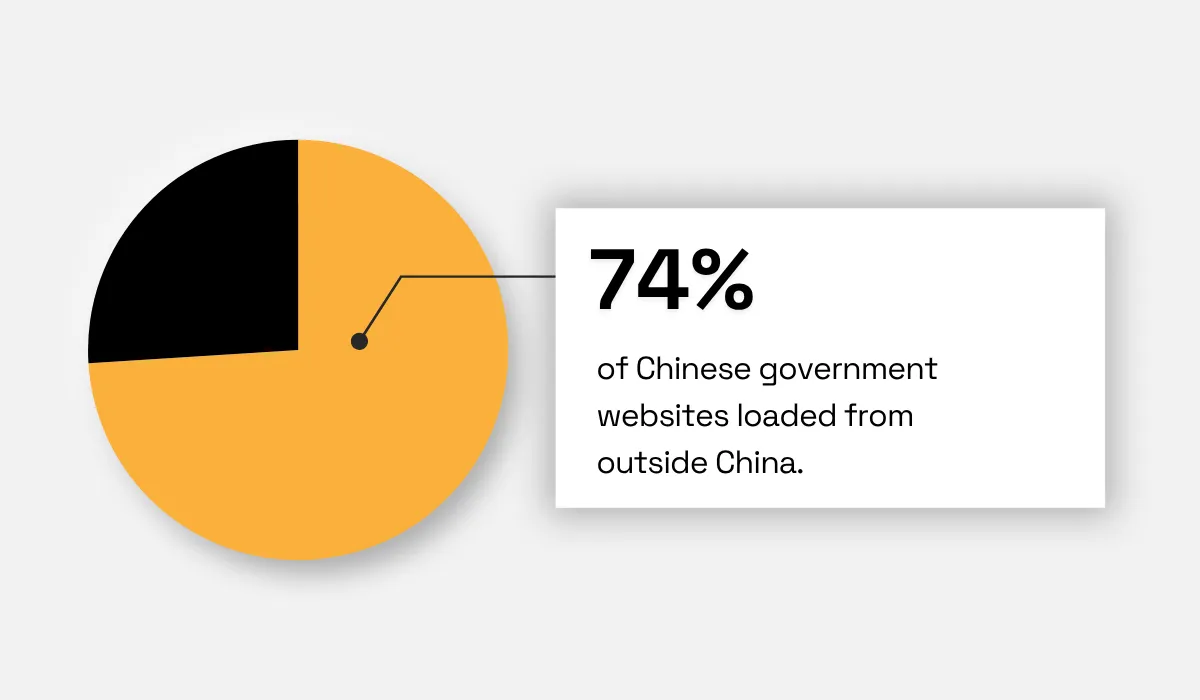
Commercial Chinese sites loaded 90.7% of the time in the same test, so the problem is specific to government sources, which remain the best verification material if reachable.
To work around this, some providers rely on commercial credit investigation platforms like Tianyancha and Qichacha.
These providers aggregate registry data and add material of their own, as the table below shows.
GSXT (SAMR) | Tianyancha / Qichacha | |
|---|---|---|
Identity and status | Yes | Yes, sourced from GSXT |
Registered capital, legal rep, business scope | Yes | Yes, sourced from GSXT |
Annual filings | Yes | Yes, sourced from GSXT |
Litigation and enforcement records | No | Yes, aggregated |
Credit reports and risk scores | No | Yes |
Equity penetration diagrams | No | Yes, auto-generated |
Built for | Statutory publication | Domestic due diligence |
Restrictions still exist here, since both require a Chinese mobile number and limit access from outside the mainland.
Plus, they are built on official historical records rather than a company's live footprint, returning you to the freshness problem.
Veridion is built to address some of these issues.
It’s a business data service that reads the unstructured web continuously rather than waiting for a registry to publish.
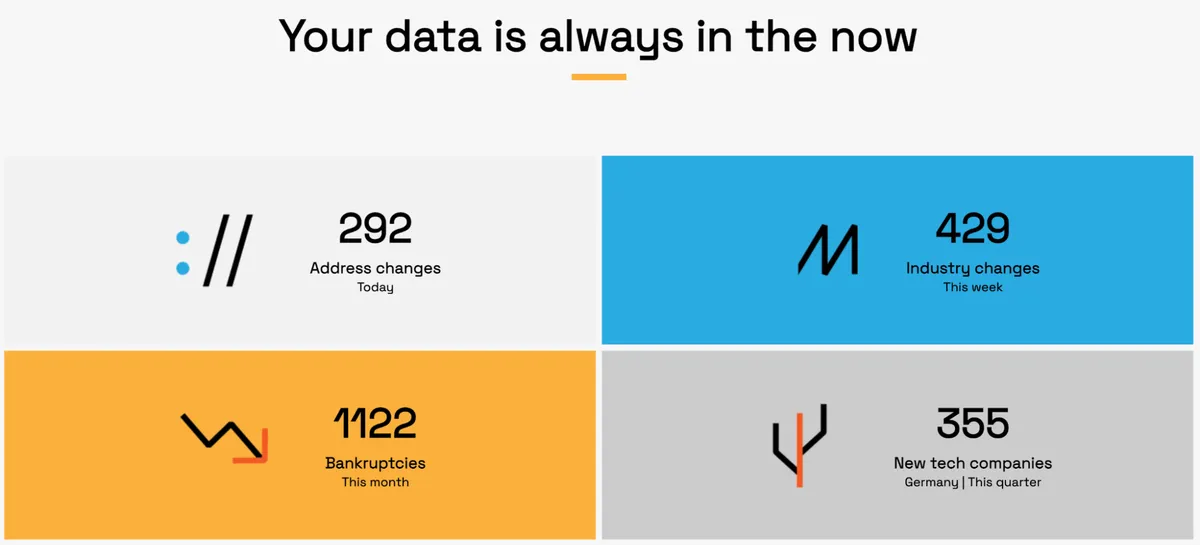
Source: Veridion
Its AI-first approach to entity resolution handles character sets, naming variations and structural complexity across jurisdictions, including markets like China.
Rather than matching a name string, it reads a company's live website, products, locations and public activity, and resolves records against those signals.
A simple example comes from another market.
In São Paulo, a credit bureau building its data from official registries could not see the informal economy of barbershops, salons and small traders.
Veridion surfaced 15,000 active businesses from their web, maps and social presence, geocoded each to a real address, and enriched every record.
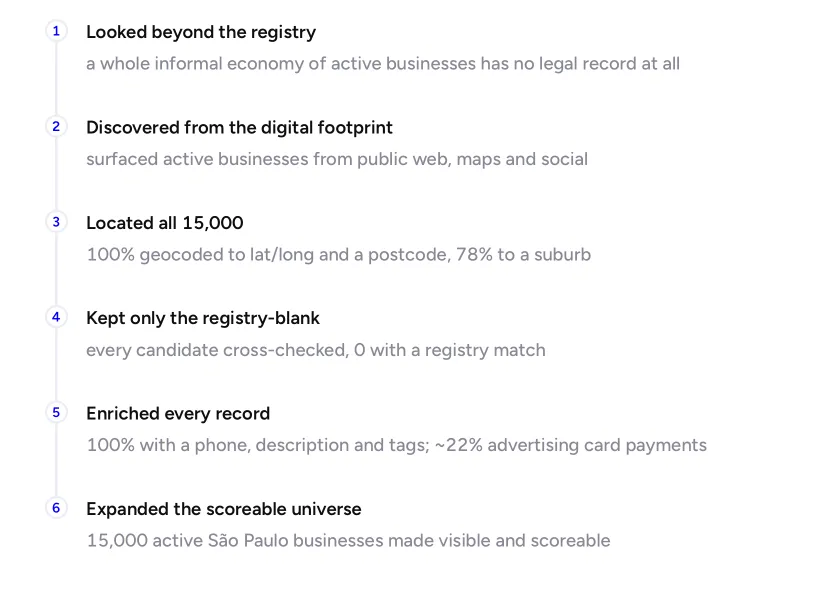
Source: Veridion
The same approach applies to China, where much real commercial activity is not captured by any single registry.
For a data team, that opens a market you could previously only sample, and coverage stops being a question of which snapshot you bought.
Conclusion
That covers the main reasons Chinese company data resists the methods that work elsewhere.
The obstacles are structural rather than accidental, which is why more effort against the same sources rarely helps.
What does help is reading a company's live activity instead of waiting for a filing.
If Chinese coverage matters to your work, start by checking how old your current records are.
Articles
Discuss how these trends affect your organization.
Our analysts are available for a short call. Bring a specific question and we will ground it in the data.
Insights
Keep reading
More analysis, research, and outcomes grounded in live company intelligence.
Best Practices for Data Enrichment
Learn how data enrichment best practices help businesses turn raw data into accurate and actionable insights.
A Closer Look at the Top B2B Data Enrichment Companies Businesses Rely On
Struggling to find reliable firmographic data providers? Uncover the top B2B data enrichment companies that businesses trust to fuel growth.
How to Build a Strong Market Intelligence Strategy
Learn how to build a strong market intelligence strategy that helps you track trends, understand competitors, and make smarter decisions.