Insights / Articles
Company Financial Data APIs: What Credit Risk Teams Should Look For
Eight checks for evaluating a company financial data API in credit workflows, from entity resolution and point-in-time integrity.

- Company coverage alone does not make an API useful for credit workflows.
- False-positive entity matches can reach 40%, making reliable resolution essential.
- Material financial restatements affect roughly 3% of companies annually.
- Provenance and corporate structure matter when reconstructing credit decisions.
A financial data API can give credit teams thousands of company records in seconds. But volume alone does not make that data useful for a credit decision.
Your credit model needs to know which company the data belongs to, what that company looked like at a specific point in time, and where each financial figure came from.
Veridion approaches this through company-level data designed to connect financial information with entity identity, historical context, and source-level evidence.
So, when evaluating a company’s financial data application programming interface (API), you need to look beyond database size and field count.
The following eight checks can help you determine whether the data is actually usable in a credit workflow.
Reliable Entity Resolution
Entity resolution determines whether 'ACME Ltd', 'Acme Limited', and a subsidiary trading under another name are treated as one borrower or several different entities.
That matters because every financial figure that enters your credit workflow needs to be attached to the right company.
Company names alone are not enough. A useful API should provide identifiers such as registration numbers, Legal Entity Identifiers (LEIs), and persistent entity IDs.
It should also show how confident it is in a match rather than quietly returning the closest name.
The risk of getting this wrong is visible in a 2025 study where researchers tested 65 Portuguese company cases and found that traditional entity matching methods achieved more than 92% accuracy, but still produced false-positive rates between 20% and 40%.
Illustration: Veridion
For a credit team, a false match can attach one company’s revenue, debt, or payment history to another borrower. The resulting problem is not limited to data quality. It can flow directly into a credit decision or model output.
That makes entity resolution the first thing to test.
Ask the API provider whether it can collapse messy and inconsistent company names into one canonical record, attach a confidence score to the match, and anchor that match to a registry number or LEI rather than relying on name similarity alone.
If it cannot, the problem is not that you have fewer borrowers to worry about. You may simply have a smaller, wrong dataset.
Meaningful Private-Company Coverage
Once you know that the API can identify the right company, the next question is whether it can give you enough information about that company.
This is particularly important for private businesses. Most companies that credit teams deal with are not publicly traded, so a database that performs well on listed companies may still leave large gaps in your lending or underwriting workflow.
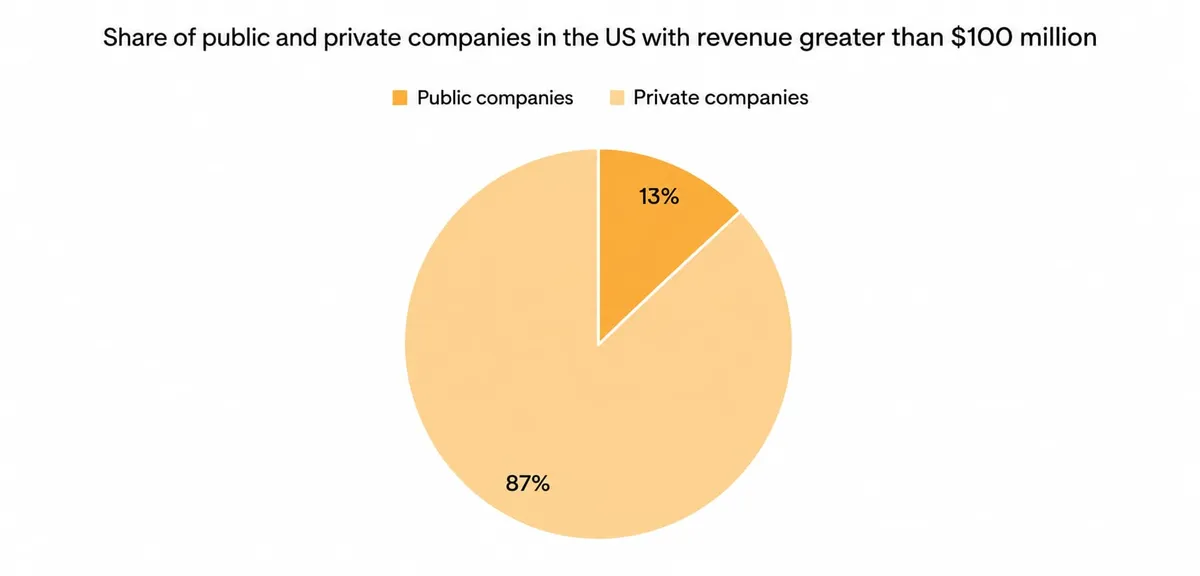
Torsten Slok, Chief Economist and Partner at Apollo, a financial education company, found that 87% of US firms with revenue above $100 million are private. In Europe, that proportion rises to 96%.
Those figures could challenge your view on API coverage.
The question is no longer, ‘How many companies do you cover?’ It is:
- How many private businesses are covered
- How complete their records are
- How recently those records were updated
- Is coverage consistent across geographies
A database may contain millions of private companies while offering very little financial or operating information on each one. Another provider may have fewer records but richer information around company identity, ownership, activities, locations, and current operating status.
Veridion, for instance, can add private-company identity, corporate structure, activities, locations, and current operating context to financial data. It does not replace an API that provides financial statements. It adds the company context needed to interpret them.
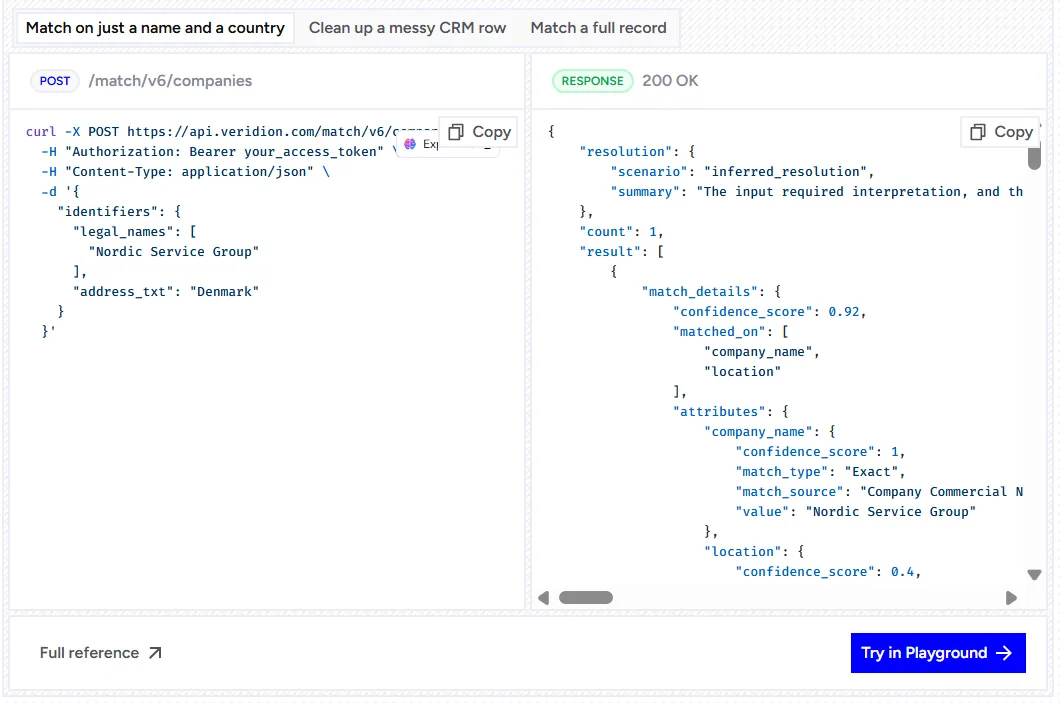
A global financial intelligence and analytics provider used Veridion to fill gaps left by registry-based data across its credit, know your customer (KYC), know your business (KYB), and supplier-risk products.
Its existing database lacked North American Industry Classification System (NAICS) classifications for some operating companies. Registry data also offered limited visibility into activities, products, locations, technographics, and other operational signals.
Veridion’s Match & Enrich layer resolved the customer’s identifiers and added these missing attributes without requiring a database migration.
Source: Veridion
For your credit team, that kind of enrichment matters because a financial number without enough context about the business behind it can leave important parts of the borrower profile unexplained.
Point-in-Time Data Integrity
Imagine approving a loan using a company’s financial position as it appeared in March 2026.
Six months later, the company files an amended statement that changes some of those figures.
If you review the loan decision in September, which numbers should the API give you: the amended figures or the figures available when the decision was made?
That is the core of point-in-time integrity. It means a financial data API can reproduce the information that was available at a specific point in time, rather than silently replacing older observations with newer ones.
This matters because financial information can change after it is first reported. A company may restate its accounts, amend a filing, or publish new information that changes how its financial position looks in hindsight.
A reliable API should preserve these changes as part of the record while keeping the original observation and its timing clear.
The risk is not theoretical. Public Company Accounting Oversight Board (PCAOB) data shows that material restatements, where companies correct previously issued financial statements, have continued to occur at roughly 3% of companies annually.
In 2024, the number of restatements rose by about 10%, from 434 in 2023 to 479.
So, what does this mean for credit teams? If an analyst is reviewing an underwriting decision made in March, using a later restated figure could make the decision look different from what it actually was.
The same issue can affect model monitoring, backtesting, audits, and disputes over past decisions.
That is why a financial data API needs more than historical numbers. It needs a clear data trail showing reporting periods, filing dates, publication dates, restatements, and previous versions.
This lets analysts reconstruct what the business looked like and what information was available when a credit decision was made.
Consistent Financial Data
Two lenders can review the same borrower and arrive at different leverage ratios without either making an arithmetic mistake.
The difference may start with the underlying data. They may define debt, earnings, currency, reporting periods, or financial-statement labels differently.
A company financial data API should reduce that inconsistency through a documented, common schema.
It should clearly handle currencies, accounting conventions, units, reporting periods, and statement labels. Missing, unavailable, estimated, and non-applicable values also need distinct treatment.
Cross-border lending adds another layer of complexity. International Financial Reporting Standards (IFRS) and US Generally Accepted Accounting Principles (GAAP) can treat the same line item differently, so preserving the accounting context behind the numbers is non-negotiable.
This becomes even more relevant as banks work through changing reporting and regulatory requirements.
A Fitch Solutions survey found that 31% of banking professionals said significant work remained for full implementation of the final Basel III regulations, a regulatory framework developed by the Basel Committee on Banking Supervision following the 2008 crisis.
Data quality and reporting requirements were identified by 40% as the most significant challenge.
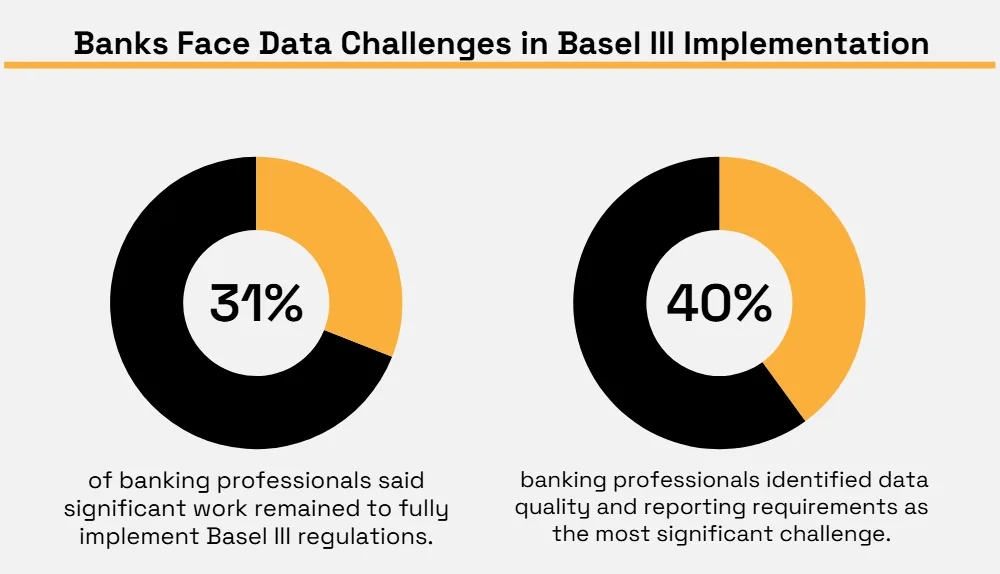
Illustration: Veridion / Data: Fitch Solutions survey
For a credit data or model risk team, the implication is straightforward: standardization cannot mean losing the original context.
Your API should retain raw, as-filed values alongside standardized figures, with enough metadata to explain how the standardized value was derived.
Data Freshness
A financial statement is already historical when a credit analyst receives it. For private companies, the delay can be even longer.
That makes freshness a separate API evaluation criterion.
Your provider should tell you when an observation was collected, when the company reported it, and how frequently the underlying data is updated.
The challenge is particularly visible in company filings. UK private companies can have nine months after year-end to file. Even within that filing window, Companies House issued 317,985 late-filing penalties during 2024–2025.
So, your credit team cannot assume that the latest available financial statement represents the borrower’s current condition.
A survey of 554 financial services business leaders across 12 countries by InterSystems found that 95% of the data used for decision-making was more than an hour old.
Of that data, 63% were more than 24 hours old, while 38% were at least four days old.
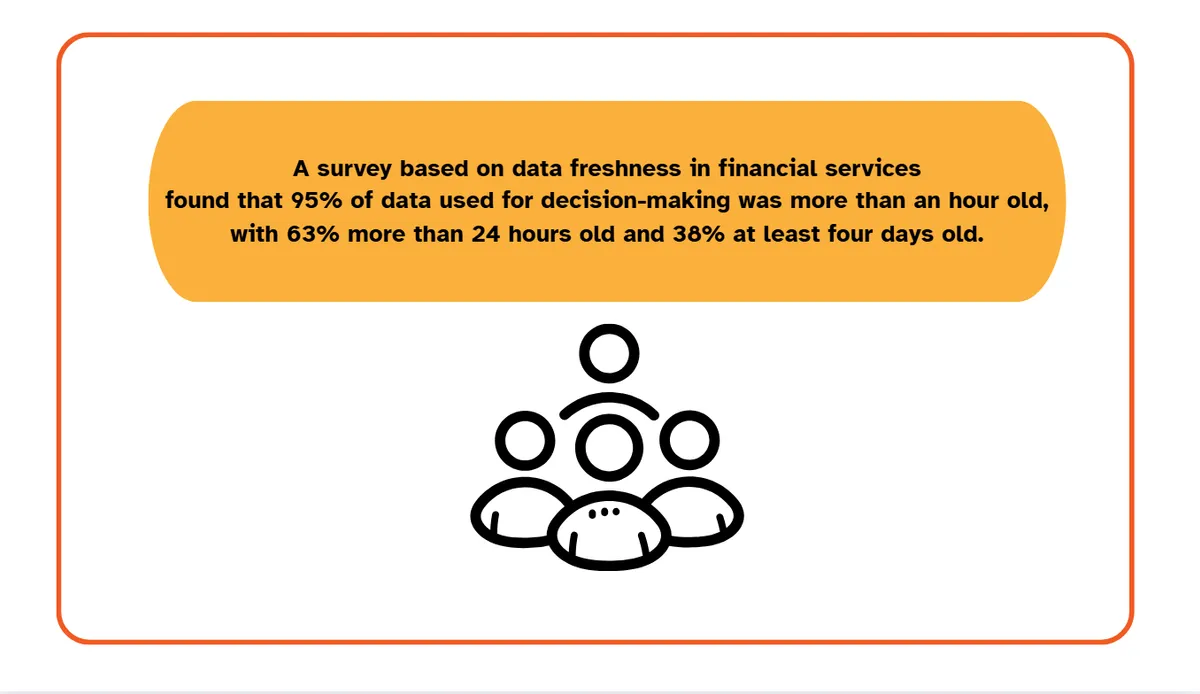
Illustration: Veridion / Data: InterSystems
The point is not that every credit decision needs minute-by-minute data. It is that you need to understand the age of the information your workflow is actually using.
So, when assessing an API, ask:
- Is it refreshed when a filing appears?
- Are other company signals updated more frequently?
- Can you see the observation date for individual fields?
- Does the API distinguish the date a company reported something from the date the provider collected it?
Freshness is therefore not simply about having the newest annual report. It is about knowing how old each important piece of information actually is.
Transparent Data Provenance
A credit analyst should not have to accept a number simply because an API returned it.
For every material data point, your team should be able to understand where the value came from, when it was observed, and what happened to it before reaching the final dataset.
That means distinguishing reported figures from modeled estimates, calculated metrics, and third-party aggregates.
Source links, observation dates, confidence indicators, and documentation can help analysts validate the information and explain it later.
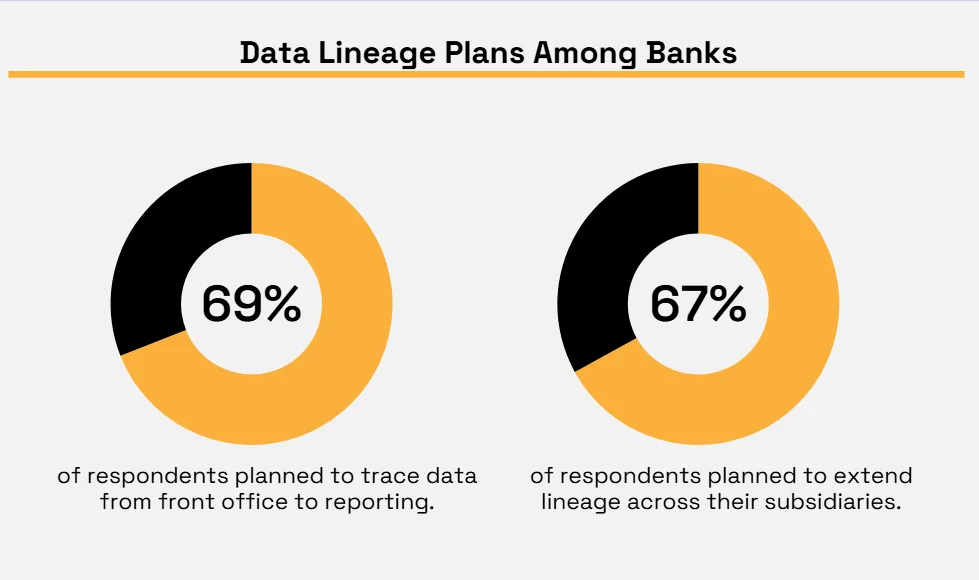
Deloitte’s 2024 BCBS 239 Benchmark Survey found that 69% of banks planned to implement data lineage from the front office through to the reporting layer, while 67% planned to extend lineage to subsidiaries.
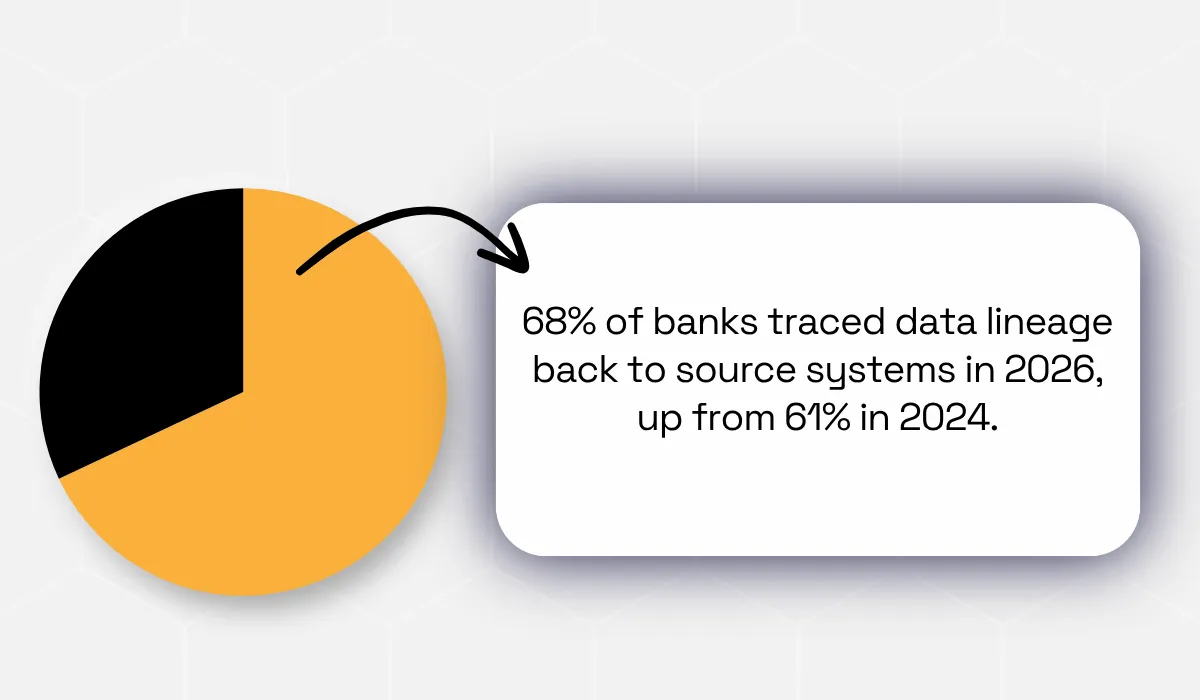
The trend continued two years later in Deloitte’s 2026 BCBS 239 Benchmark Survey. Between 2024 and 2026, the share of banks tracing lineage from the reporting layer back to source systems increased to 68%, from approximately 61% in 2024.
For a financial data API, that means provenance cannot be treated as a technical footnote.
If your model produces an unexpected result, analysts and model risk teams need to work backwards from the output to the underlying value, its source, and the transformation applied to it.
That traceability makes the data easier to validate, challenge, and audit.
Accurate Corporate Structure
A borrower rarely exists in isolation. A parent may own several subsidiaries. A business may operate through branches. Financial statements may be reported at a consolidated level while liabilities sit elsewhere in the group.
So, even if an API identifies the right legal entity, it can still give your credit team an incomplete picture if the ownership structure is wrong or incomplete.
The case of Pine Gate Renewables, a privately held solar developer, shows why corporate structure deserves close attention.
Before filing for bankruptcy on November 6, 2025, Pine Gate Renewables had expanded significantly through a capital-intensive build-and-own strategy.
Rising interest rates, construction-cost inflation, and tighter liquidity increased pressure on its long-dated assets. Moody’s data showed that stress emerged within the wider corporate structure at Blue Ridge Power, a subsidiary.
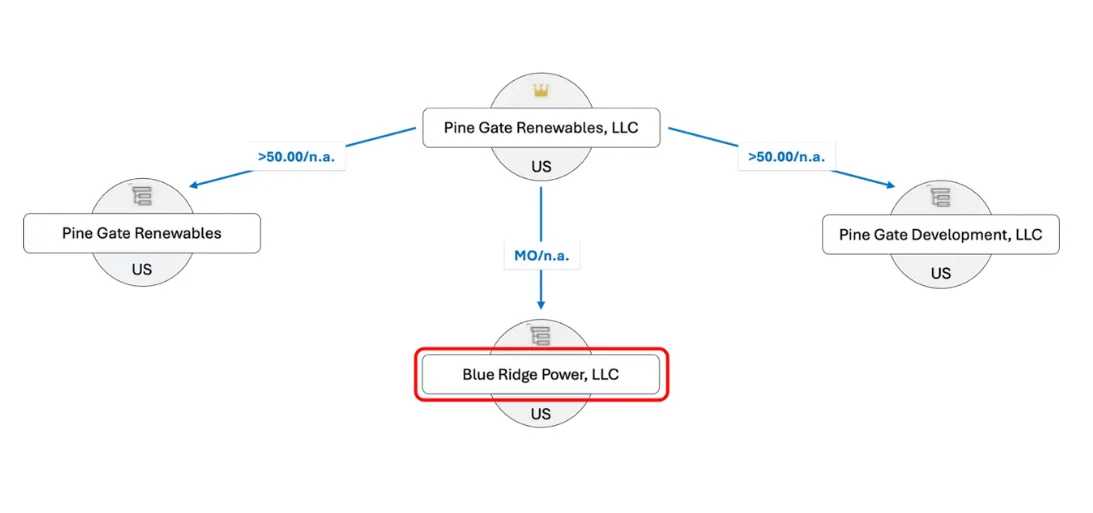
Source: Moody’s
Its Probability of Default (PD) rose sharply from April 2022 through the November 2025 bankruptcy, providing more than three years of lead time.
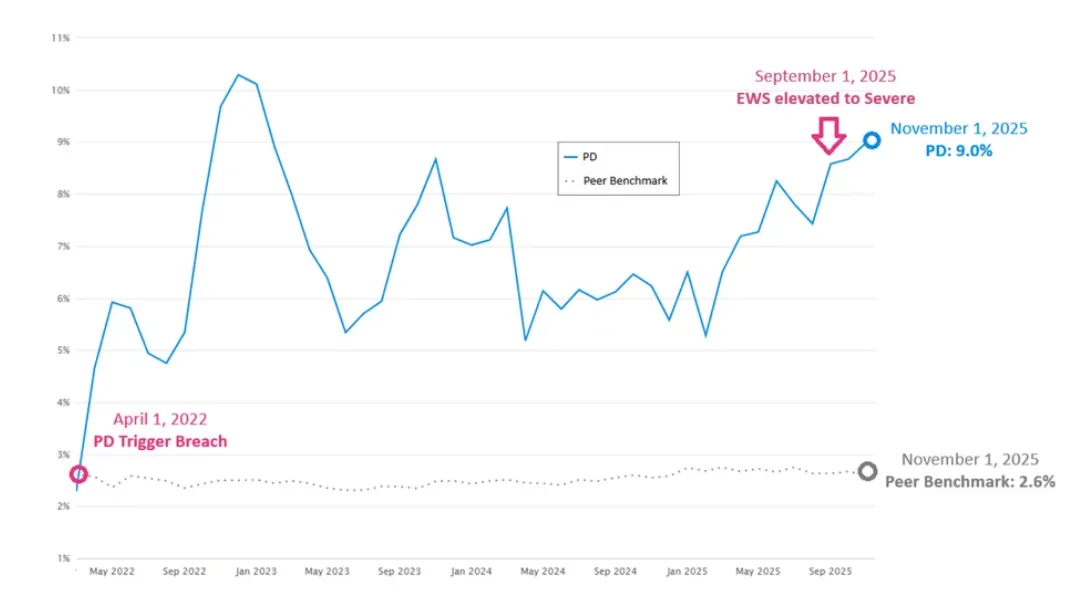
Source: Moody’s
Court filings later showed a complicated structure with more than $7 billion in funded capital across more than 100 affiliated entities, alongside less than $10 million in cash.
For a credit risk team, this changes the picture. Looking only at Pine Gate as a single legal entity could hide the group’s total financial obligations and give an incomplete view of its liquidity. Mapping the related entities helps the team see where debt, assets, and cash sit across the group before assessing its overall credit risk.
The example shows why entity-level financial data is not always enough. A useful financial API should help your team understand who owns whom, how entities are connected, and where the financial exposure sits.
In practical terms, that means being able to build a complete ownership and structure graph: direct parents, ultimate parents, and subsidiaries linked back to the relevant entity.
Scalable Data Delivery
A credit team needs to know whether the API can deliver that data reliably at the scale of its actual workflow.
Start with the basics:
- Can analysts test the API in a sandbox?
- Are documentation and examples clear?
- What are the rate limits?
- Does the provider support pagination, batch requests, and bulk delivery?
- Can data be delivered into your existing warehouse or cloud environment?
These questions become more important as an API moves from a proof of concept to portfolio-wide use.
McKinsey’s APIs in Banking report found that 88% of banking respondents believed API integration gained prominence since 2020, while 81% viewed APIs as a priority for business and IT functions.
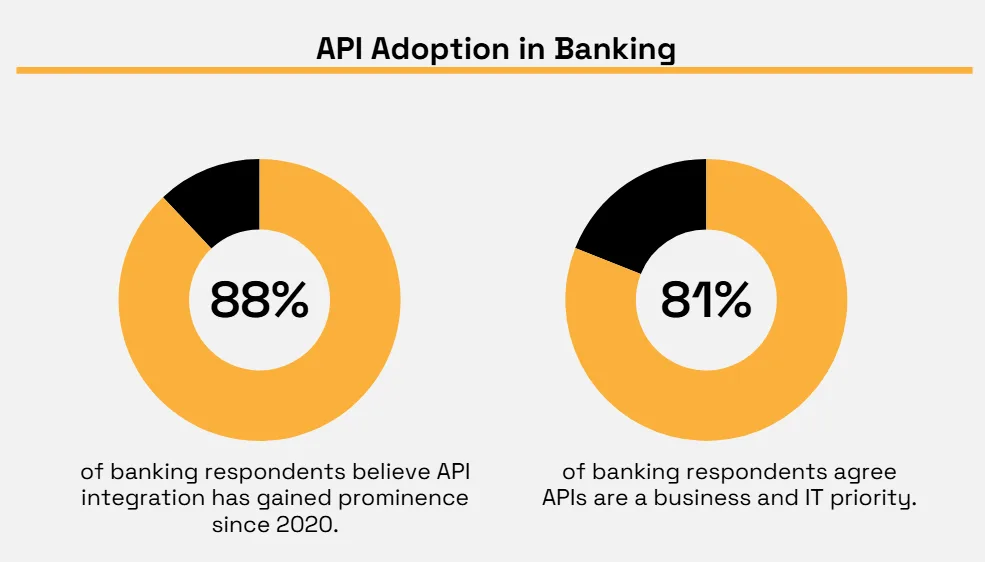
The same research found that banks were allocating about 14% of their IT budgets to APIs on average.
That growing reliance means integration cannot be treated as an afterthought.
So ask the provider to demonstrate the full journey, not just a successful API call. That can help determine whether an API can move beyond a successful proof of concept and become part of a production credit workflow.
Conclusion
A company financial data API should not be judged by the number of fields or companies it can return. For credit teams, the harder questions are more important.
Can the API identify the correct legal entity? Are financial values standardized consistently? How fresh is each observation? Can every important number be traced to its source? Does the corporate hierarchy reflect where risk actually sits? And can the data scale into production?
Here, the goal is not simply more financial data. It is accurate, timely, traceable, structured data that analysts and models can use with confidence.
Articles
Discuss how these trends affect your organization.
Our analysts are available for a short call. Bring a specific question and we will ground it in the data.
Insights
Keep reading
More analysis, research, and outcomes grounded in live company intelligence.
How to Integrate a Company Financial Data API into Credit Risk Models
Connecting a company financial data API to a credit risk model takes entity matching, period alignment and point-in-time snapshots.
6 Most Important Market Intelligence Metrics
Discover six must-track market intelligence metrics that can sharpen your competitive edge and support data-driven growth.
How Successful Companies Use Market Intelligence for Business Growth
Discover how successful companies use market intelligence to unlock new growth opportunities. Learn more in our latest guide.