Insights / Articles
How to Connect a Firmographic Data API to Your CRM, CDP, and BI Stack (A Technical Guide)
Struggling to integrate firmographic data providers? This technical guide shows you how to connect their APIs to your CRM, CDP, and BI stack.

- Real-time enrichment typically needs a latency limit, with a fallback to async processing once that limit is exceeded.
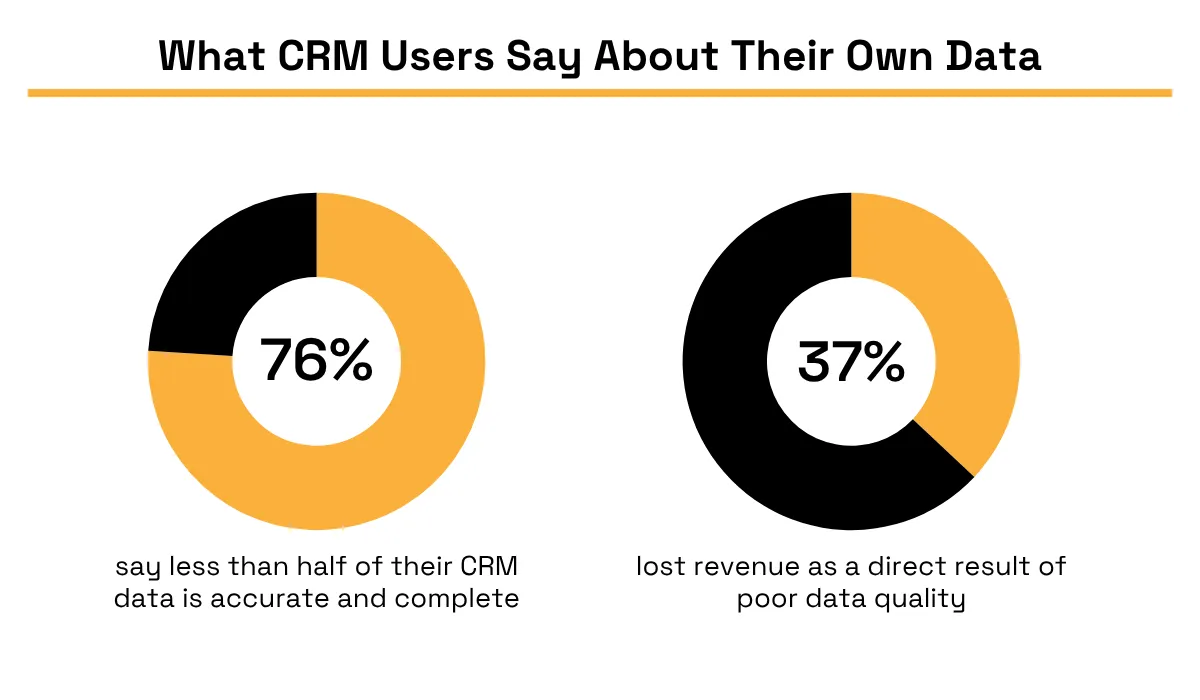
- 76% of CRM users say less than half of their CRM data is accurate and complete.
- Picking the right pattern is more about which implementation fits the tech stack you already run.
When it comes to firmographics, a B2B demo request form typically returns a company name and a work email.
Industry, headcount, and region - the fields a routing rule might depend on - have to come from somewhere else.
That somewhere is a firmographic data API, and four established patterns exist for connecting one.
This guide covers each pattern, what it does, and when to choose it.
Pattern 1: Real-Time Enrichment on Form Submission
Real-time enrichment attaches company data to a lead record at the moment of submission, before any routing or scoring rule reads it.
The mechanism is event-driven.
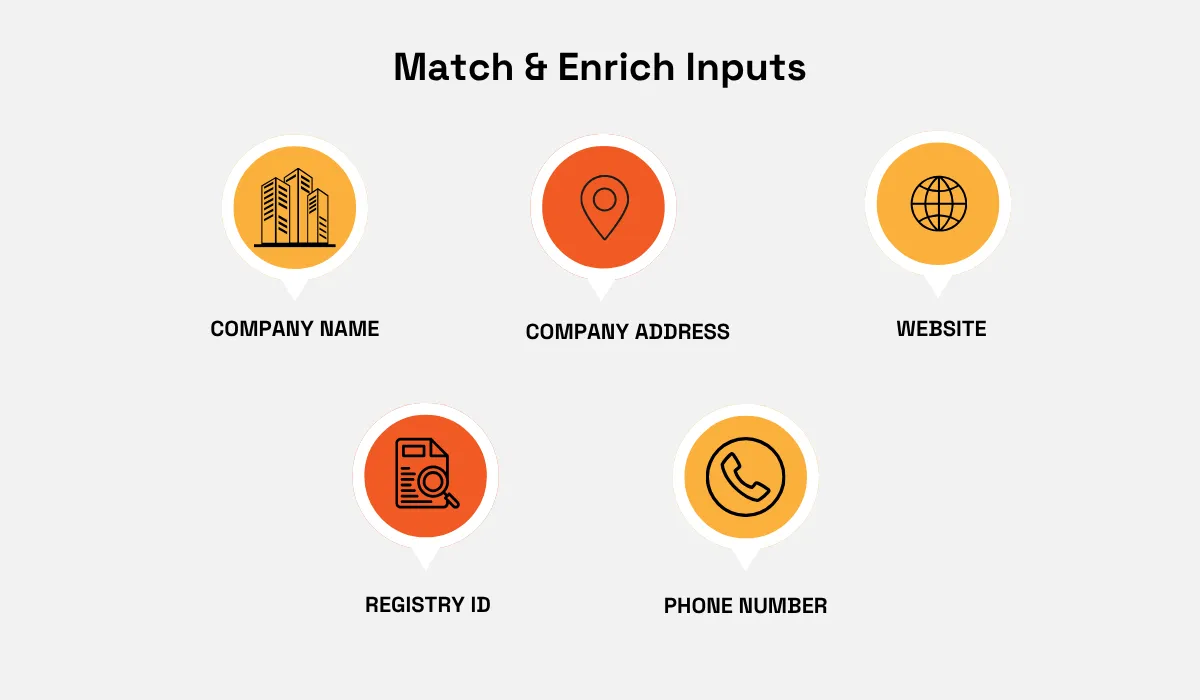
A form submission triggers a webhook, which calls an enrichment application programming interface (API) with whatever inputs were collected.
Source: Veridion
For example, Veridion's Match & Enrich service resolves those inputs to one company and returns its firmographic attributes, which the handler writes to the customer relationship management (CRM) record.
The inputs don't have to be complete.
A name and a country are enough to return a match, which helps when a form is incomplete or contains errors, as many inbound submissions are.
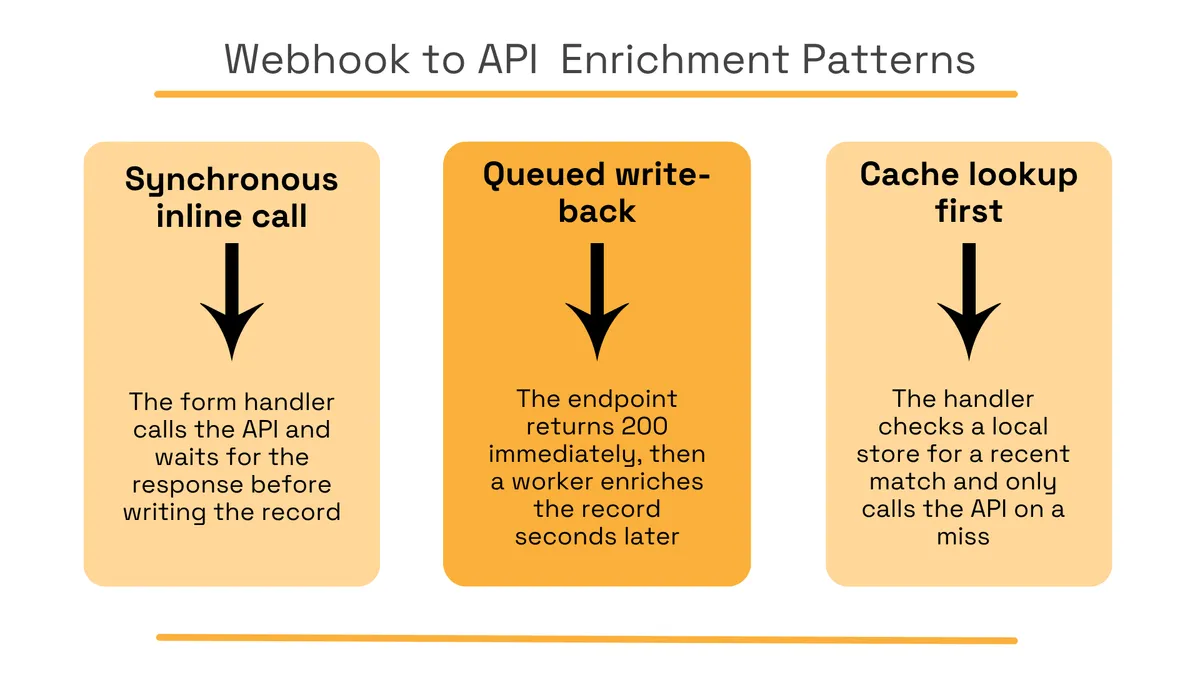
Several patterns are used to connect this webhook to the API, with three main ones shown below.
Source: Veridion
The main difference between the three is the delay within the submission flow.
In fact, the drawback of doing firmographic data enrichment in real time is the latency introduced.
An API call has to complete before routing or scoring can use the enriched data, so a slow response can delay lead processing or even cause form submission timeouts.
That's why Pratik Dani, CEO and Founder of Datamagnet, a company selling real-time enrichment APIs, recommends a fixed ceiling on that call.
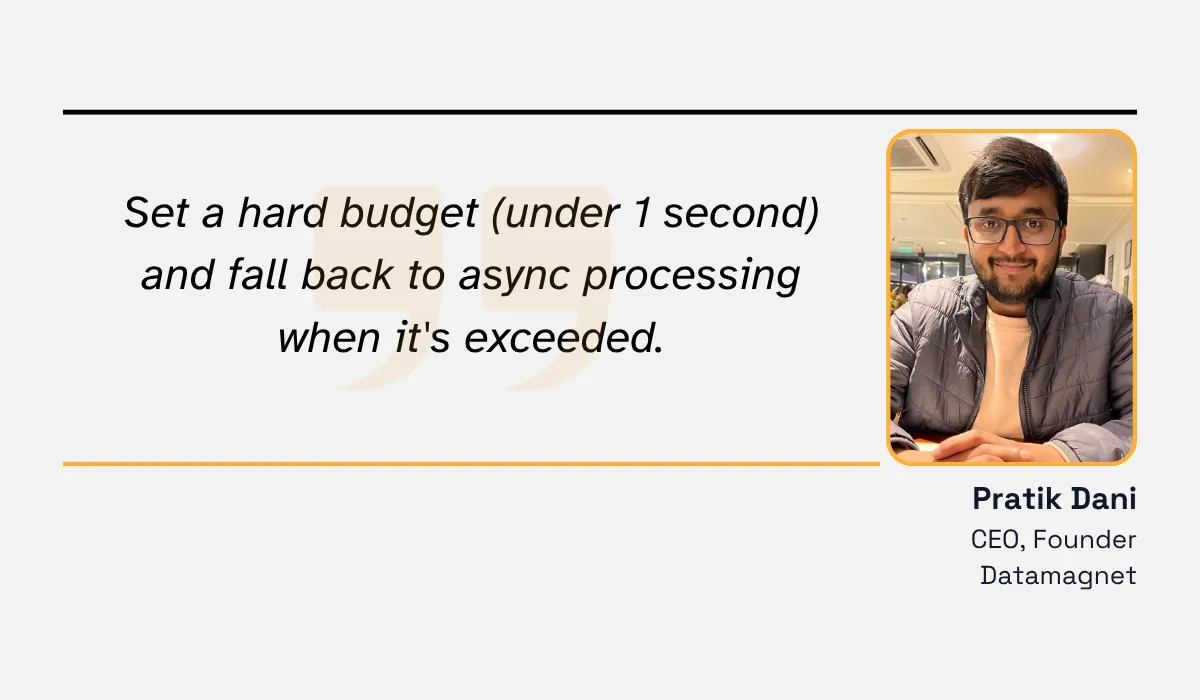
Illustration: Veridion / Data: Datamagnet
Async, short for asynchronous, describes the queued write-back listed in the earlier diagram.
The endpoint accepts the record and responds straight away, while a background worker finishes the enrichment seconds later.
In other words, the submitter never waits on the API.
If the latency is taken care of, the benefit of real-time enrichment is well worth it.
Every inbound lead is qualified and routed with complete information from the first touch, which means territory, segment, and owner are assigned against verified firmographics rather than incomplete self-reported data.
What’s more, consider RevenueHero, which submitted demo requests to 1,000 B2B software companies in 2024, then examined the tech stacks of the 635 that never replied.
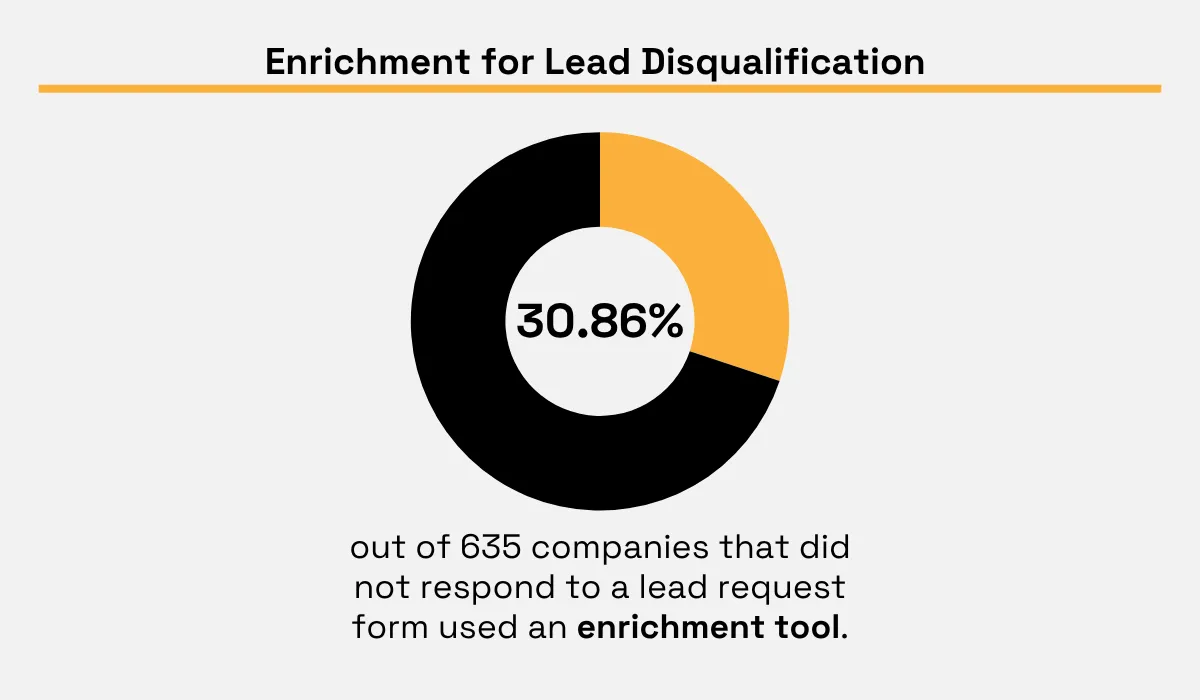
Illustration: Veridion / Data: RevenueHero
The RevenueHero team explained that these results might indicate the enriched form data was used to immediately disqualify leads, instead of scoring them at a later time.
That makes this first pattern best for high-volume inbound flows and lead qualification, where the record needs to be complete when created.
Pattern 2: Batch Enrichment
Instead of enriching one record as it arrives, batch enrichment covers multiple records that you already have.
This matters when we consider data from Validity, a data quality company that surveyed 602 CRM users and administrators across the US, UK, and Australia in 2025.
Take a look at their findings below.
Fortunately, enriching an existing CRM in bulk is where this method is best.
It is scheduled rather than triggered, and sized in tens of thousands to millions of rows per pass.
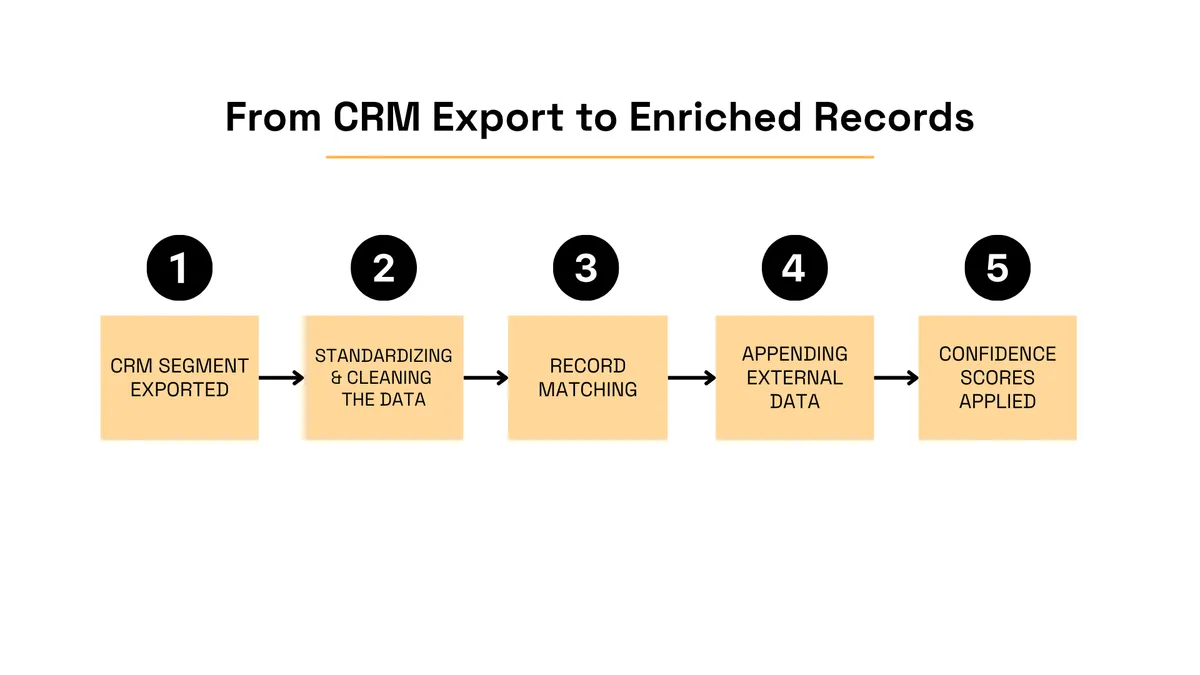
To see a general outline of how it works, take a look at the image below.
Source: Veridion
In essence, a data export from a CRM gets normalized and sent to Veridion for batch enrichment.
Each row is then resolved to a canonical company, external firmographic attributes are appended, and a confidence score is applied to every value.
That returns an enriched dataset which gets written back to update existing records in bulk.
Compared to the first pattern, batch enrichment doesn't provide the immediacy of real-time matching.
However, regular enrichment is necessary to address CRM decay, which is the gradual divergence between stored data and current reality.
In the context of firmographics, consider the following statistic from the US Bureau of Labor Statistics (BLS).
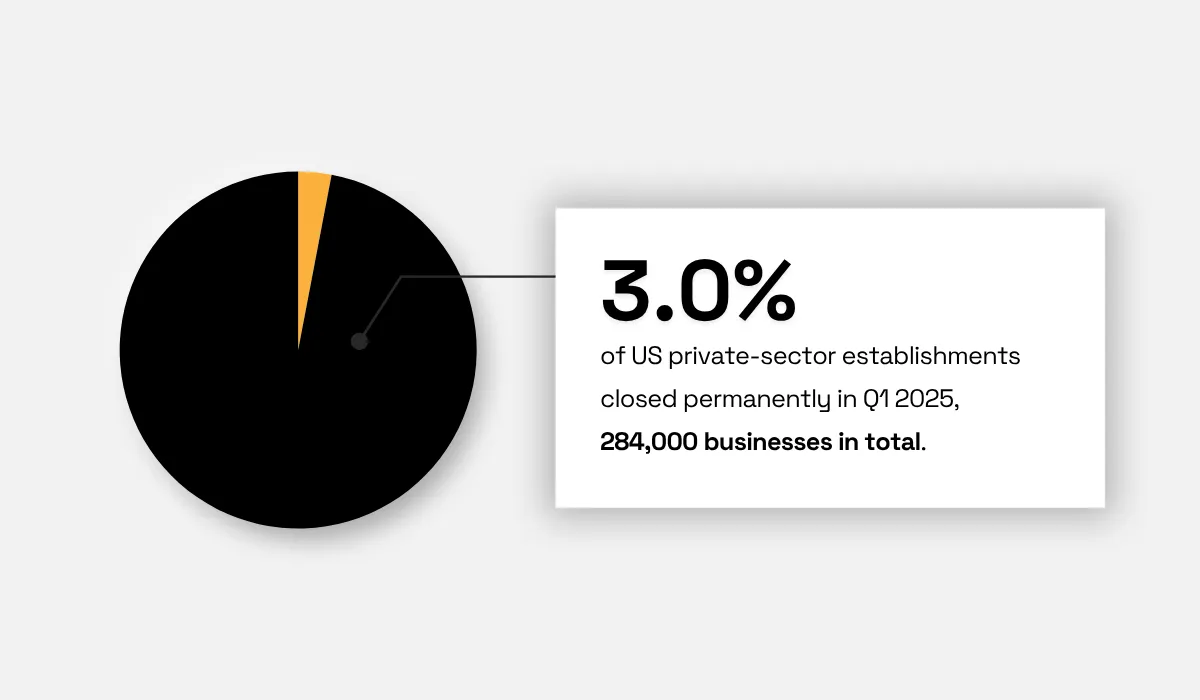
With over a quarter of a million establishments closed permanently in a single quarter, each of these events potentially made some stored record obsolete.
This doesn't even account for changes that leave a company in business but alter its firmographics, such as headcount bands moving, sites opening in new countries, or legal names changing after an acquisition.
In these situations, batch enrichment is the natural fit, since the work is repeatable and indifferent to how each record originally arrived.
Pattern 3: CDP Integration
The next pattern applies enrichment one layer above the CRM, inside a customer data platform (CDP).
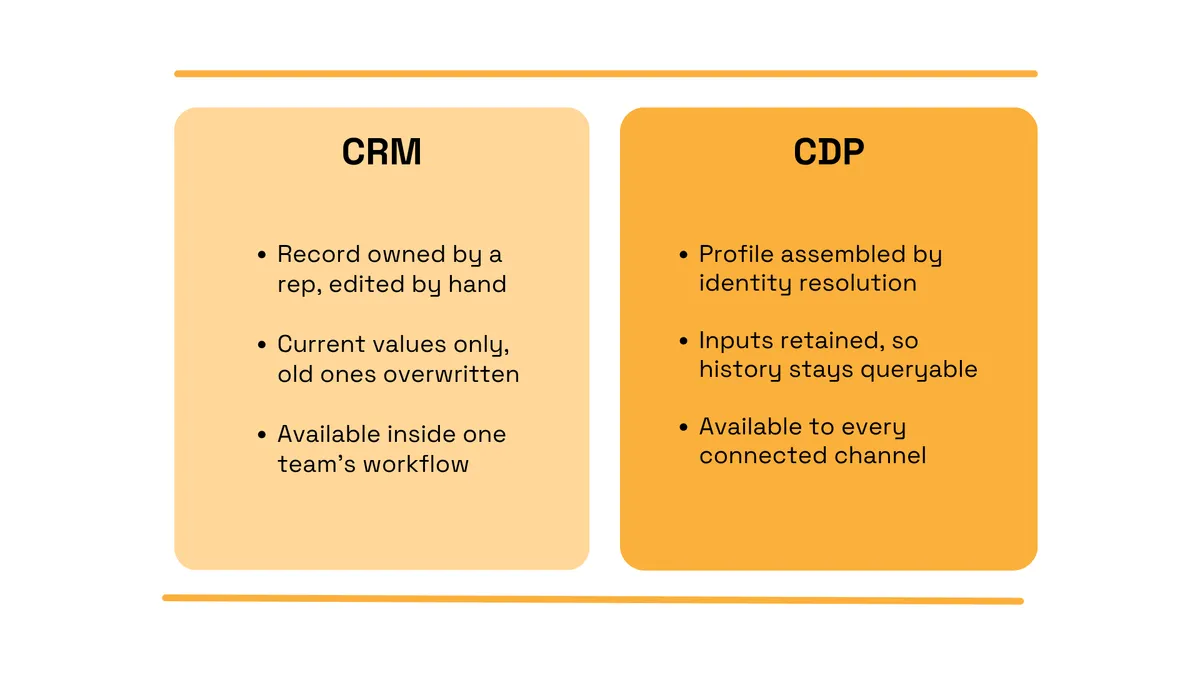
This enrichment pattern differs from the first two because a CDP differs architecturally from a CRM, as outlined in the next image.
Source: Veridion
A CDP aggregates records from across a company's entire tech stack, matches the data points that describe the same customer, and merges them into a single, unified profile.
Enrichment is one of several sources in that process, linked to a specific company profile rather than to any individual record.
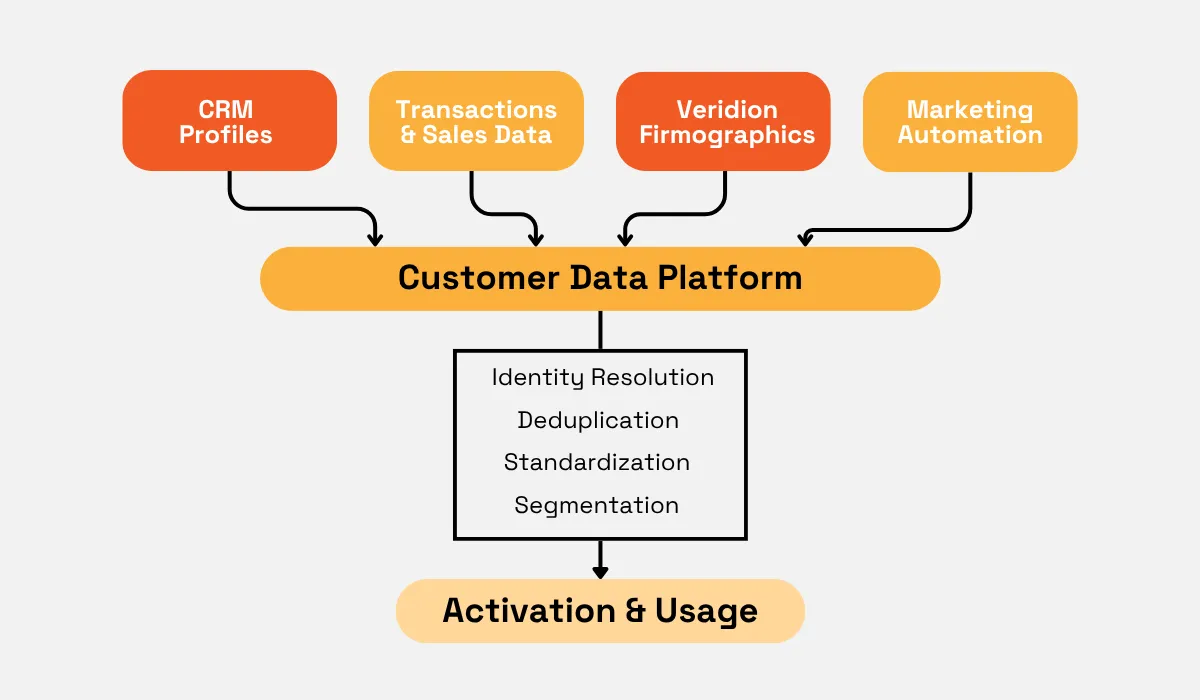
Source: Veridion
In Veridion's case, its firmographic attributes can be written straight into the CDP alongside these other incoming streams.
The CDP then resolves identities, removes duplicates, and standardizes formats, so every contact sharing a company domain is attached to one account profile and inherits the attributes written to it.
Segmentation is the main use case this enables. Marketing teams running advanced segmentation or account-based marketing (ABM) campaigns build audiences from industry, employee headcount, and revenue bands.
Because these queries run against the profile store rather than a static list, an audience instantly updates whenever an attribute changes.
CDP platforms like Adobe Real-Time CDP B2B Edition have built-in activation, a functionality that sends a finished audience to the channels that act on it.
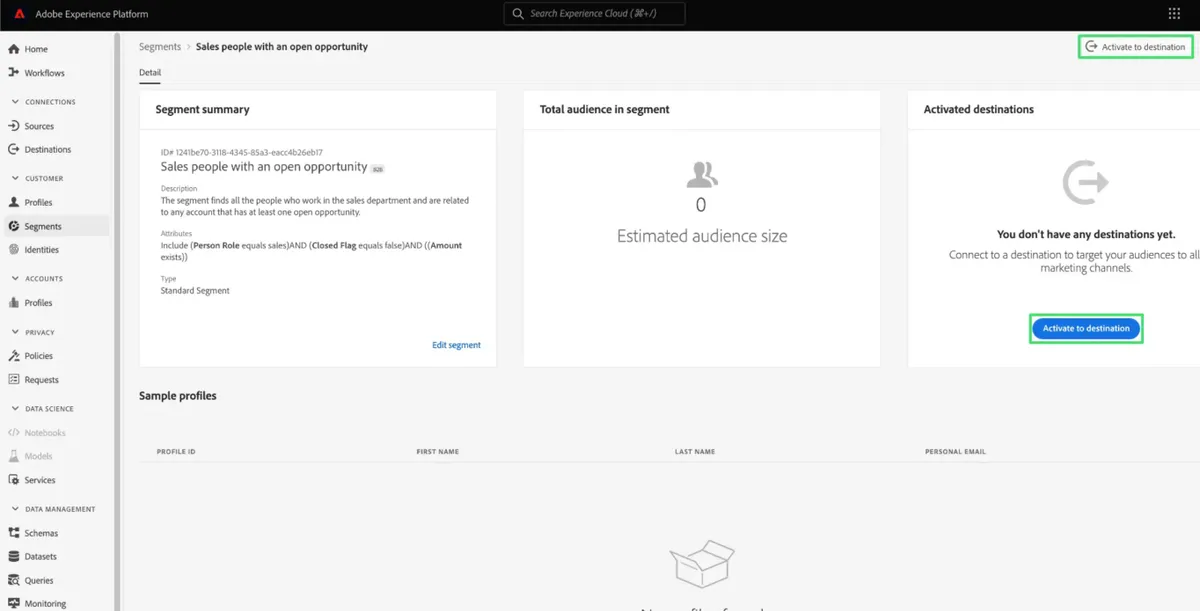
Source: Adobe
This platform lets users define a segment from attribute conditions and then pass it through the activation pipeline.
From there, teams typically push these segments into advertising networks, marketing automation platforms, or back into core sales systems.
While this pattern is powerful, it requires the CDP itself to support custom account-level fields, which consumer-first deployments often don't.
In those systems, the only object available is the person, so an industry code or employee count has to be copied onto every contact record instead of held once on the company.
So before committing, check whether your CDP can hold company-level fields, or whether you can extend it with custom fields.
If these options are available, this pattern is a great way to centralize enrichment so a single data update is available to every downstream channel.
Pattern 4: BI and Analytics Integration
Finally, we have a pattern aimed at analysis rather than at any individual record, where firmographic data becomes a dimension other data is measured against.
Here, enrichment is best illustrated as an extract, transform, load (ETL) pipeline, the sequence that moves data from source systems into a warehouse in a consistent shape.
Take a look at the diagram below.
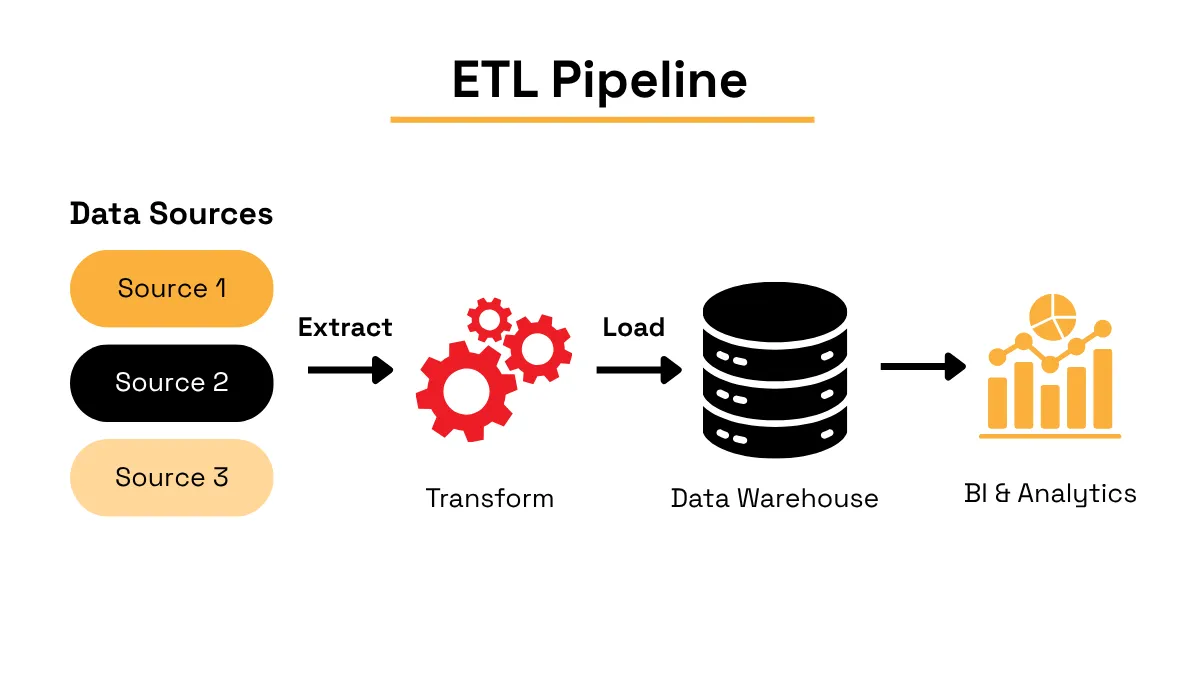
Source: Veridion
Essentially, firmographic data from a provider like Veridion is combined with CRM exports, product usage, and billing records at the extract stage.
Those sources then go through a transformation process where data is standardized and deduplicated.
The transformed data is stored in a data warehouse, which becomes the one place where external company attributes and internal facts are joined.
Only then is this data used by the business intelligence (BI) and analytics platforms that people query.
Tableau is a common example, used to build dashboards where revenue, margin, and pipeline are broken down by whichever dimensions the analyst selects.
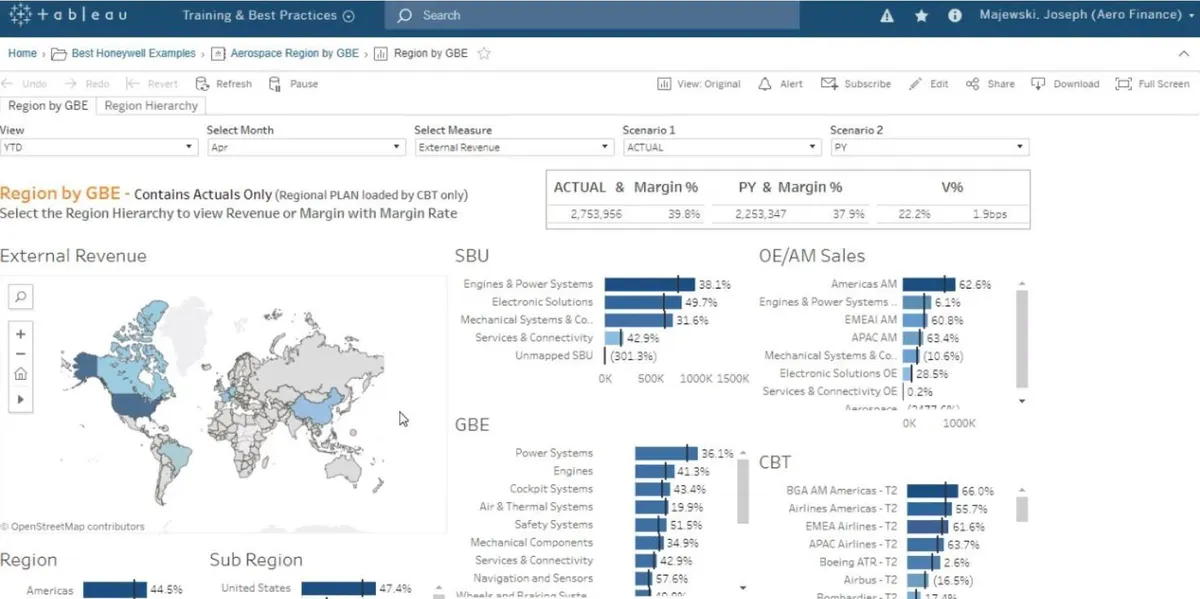
Source: Tableau
Compared to the other methods we included in this article, this pattern doesn't operationalize data into day-to-day workflows the way CRM or CDP integration does, but it's the right fit when the goal is strategic insight.
This can be territory design that distributes accounts by real market size, or a customer profile analysis that tests which firmographic segments convert instead of which ones the team assumed would.
That being said, the data can then be returned to operational systems through a practice of reverse ETL, defined below.
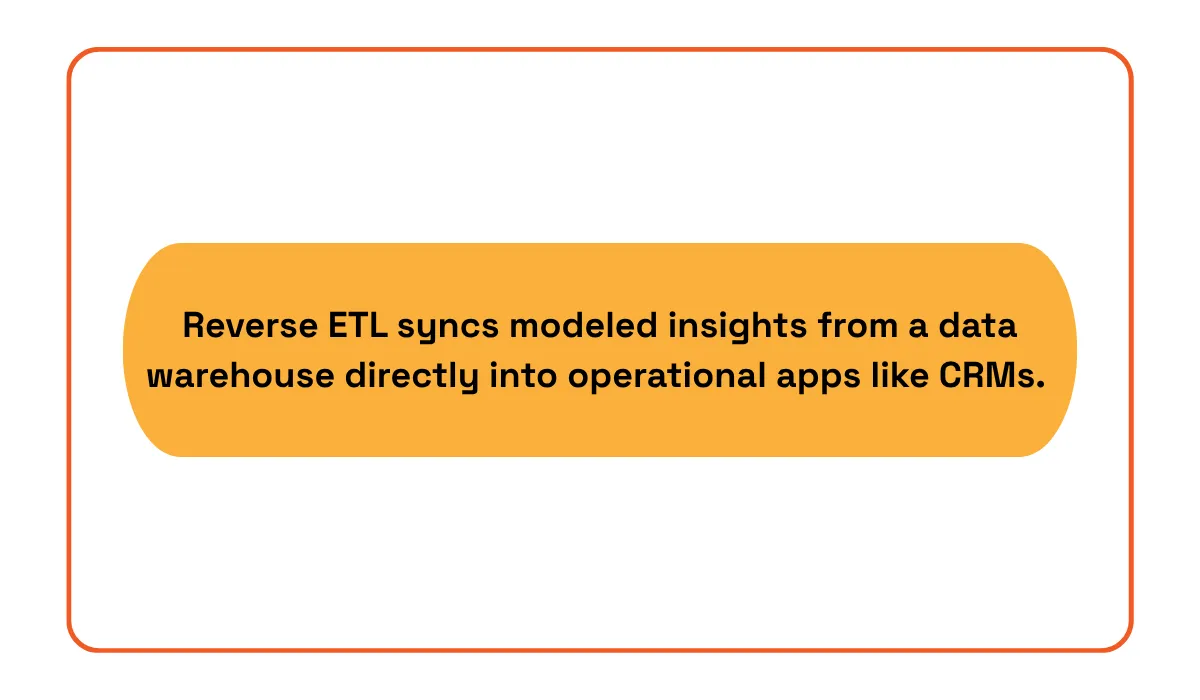
Source: Veridion
What this achieves is one modelled definition that operational systems consume rather than recalculate.
The warehouse stays the source of truth, and the logic is maintained once instead of rebuilt inside each tool.
So a segment tier calculated from firmographics and spend can be written back to the CRM as a field on the account, or an ideal customer profile (ICP) fit score can be sent to the CDP and used as an audience condition.
Overall, this pattern is the slowest to act on a single record but the strongest for understanding the account base as a whole.
Choosing Delivery Without Building Custom Middleware
Four patterns exist, but the one you can adopt depends on how the data reaches your systems in the first place.
If a provider's enrichment delivery method doesn't match the systems you’re already running, the gap has to be closed with custom integration work.
MuleSoft's tenth annual Connectivity Benchmark surveyed 1,050 IT leaders at organizations with 1,000 or more employees, and measured how much capacity that work consumes.
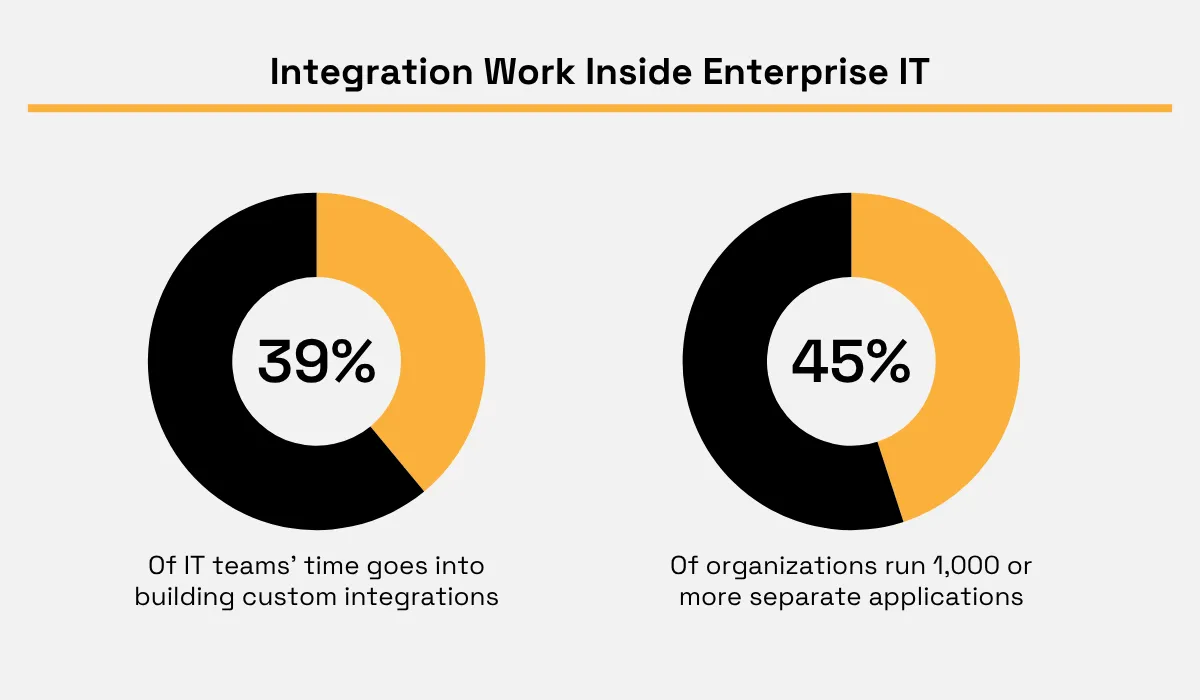
It's no wonder that over a third of IT teams' time goes into writing connective code, when 45% of these organizations run a thousand or more separate applications.
At that scale, each new source has to be integrated against an environment that already contains hundreds of moving parts.
In fact, this is the most important consideration when adding a data source to an existing environment.
Instead of looking at the ideal pattern for a use case, first look at what fits the systems already running.
For instance, a team whose analytics already sit in a warehouse gains little from a webhook service nobody is available to operate.
When doing that, flexible delivery options are what keep the choice open, because a provider offering one route forces the pattern rather than supporting it.
The delivery options in Veridion's case are shown below.
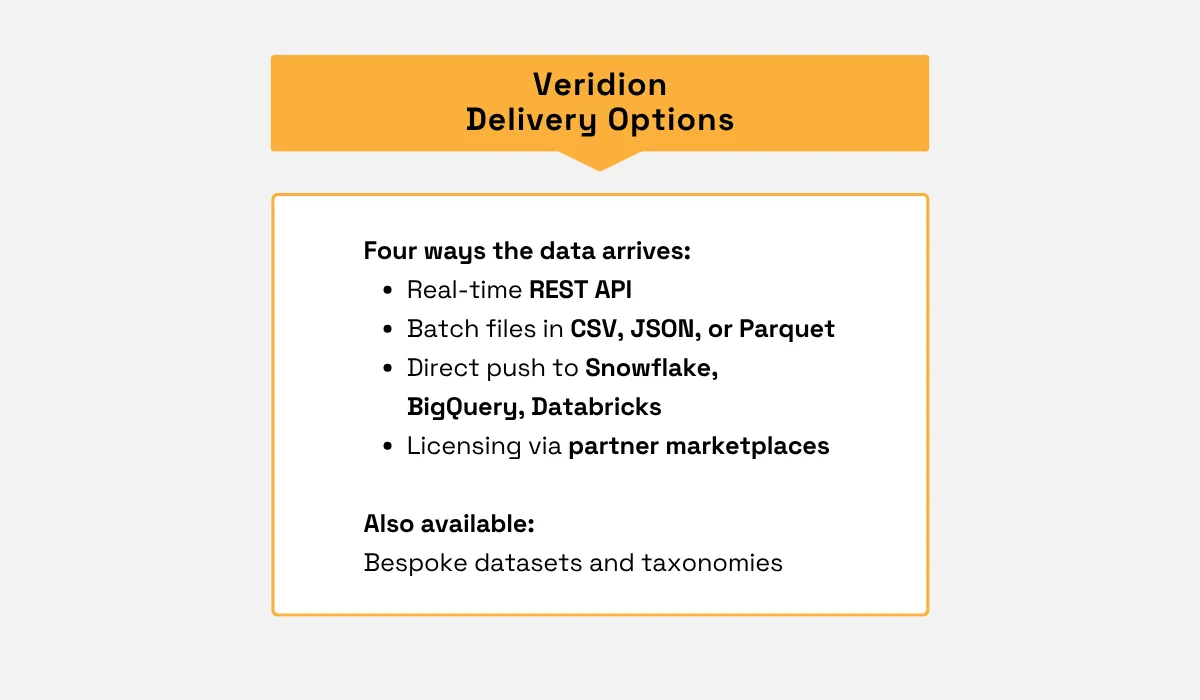
Source: Veridion
This means teams can connect enrichment to whichever pattern above fits their stack, whether that is the REST API for real-time submission handling or a direct push into a data warehouse or BI platform.
All of these methods make use of the same underlying data, built by machine learning models that read the unstructured contents of the web and turn it into a continuously refreshed record of every active company in the world.
The Match & Enrich service resolves a partial or messy company record to one canonical entity and returns a stable identifier, so the same account stays aligned across the CRM, the CDP, and the warehouse.
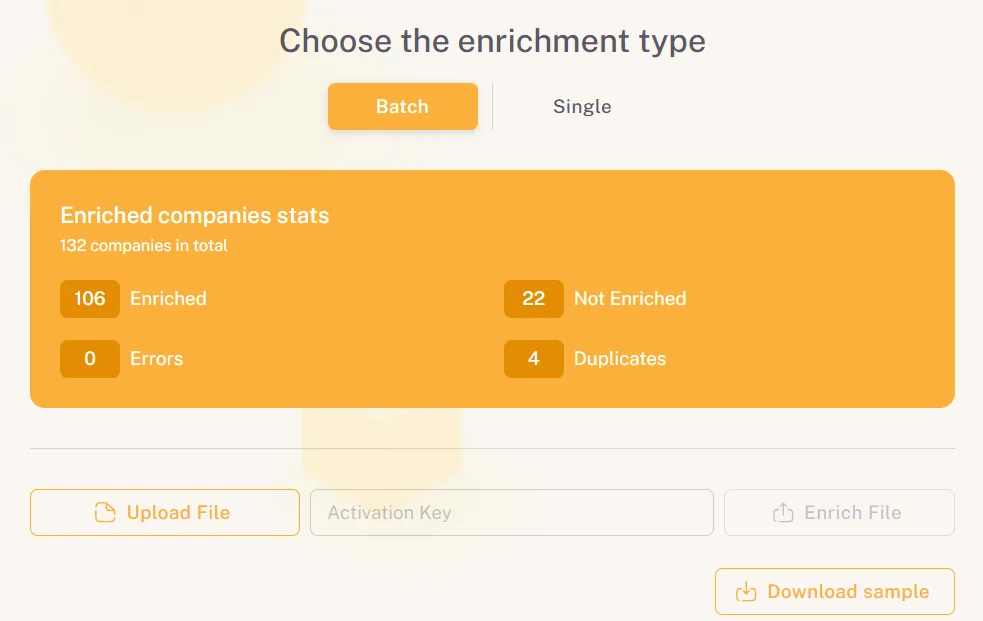
Source: Veridion
The firmographics covered include fields like:
- Registered name
- Website domain
- Main address
- Operational footprint
- Industry classification
- Business model
Importantly, every value arrives with a confidence score, a source, and a last-verified timestamp.
Ultimately, Veridion's quality of data and feature offerings make any of the delivery patterns a viable option.
Conclusion
That covers the four ways a firmographic data API reaches the systems your team already runs, and where each method is best used.
The best pattern for your needs is rarely the most sophisticated one.
Start with the route your current architecture already supports, and build from there.
Articles
Discuss how these trends affect your organization.
Our analysts are available for a short call. Bring a specific question and we will ground it in the data.
Insights
Keep reading
More analysis, research, and outcomes grounded in live company intelligence.
6 Steps of the Data Enrichment Process
In this article, you will learn data enrichment process steps and how businesses transform raw data into valuable insights.
Best Practices for Data Enrichment
Learn how data enrichment best practices help businesses turn raw data into accurate and actionable insights.
What B2B Teams Get Wrong About Data Privacy When Enriching Company Records
Are B2B teams making critical data privacy mistakes when enriching company records? Avoid costly errors with insights on firmographic data providers.