Insights / Articles
7 Customer Risk Analysis Mistakes That Hide Borrower Deterioration
Financial updates catch credit deterioration too late. See 7 customer risk analysis mistakes, including a governance blind spot, and how to fix them.

- Financial updates only reflect the consequences of early signs of credit deterioration.
- Governance negatively impacts 40% of companies’ credit profiles.
- Clean, updated data paired with regular monitoring is the key to early detection of credit deterioration.
Borrower deterioration shows up in a customer’s operational and structural data long before a financial statement reflects it.
But, because this data is often overlooked, outdated, or kept in a separate system, creditors cannot catch the risk early.
They are unpleasantly surprised when a customer defaults, files for bankruptcy, or lags behind on their payments.
At this point, the damage is done.
But you can catch the risk early and make the right decisions on time by avoiding the following mistakes that hide borrower deterioration.
Reviewing Only Financial Updates
The purpose of customer risk analysis is to catch any sign of risk as early as possible.
Finances give strong but delayed signals as they are the result of other factors.
For example, operational, leadership, market, and economic factors are the precursors that result in financial signals.
Catching a deterioration through a financial update means it’s already too late. The precursor was at work a few months before the result you’re seeing now.
The smart approach is to catch the chain at its starting point. This is where Veridion helps by monitoring the non-financial signals that precede financial deterioration.
Operational, behavioural, market, and other factors serve as early signs. These include, but are not limited to:
- Governance weaknesses
- Repeated requests for covenant waivers
- Debt restructuring requests
- Restated or revised financial results
- Losing a major customer
- Margin pressure
- Sector shock
Governance is one of the strongest signal categories. Concentrated power and decision-making capabilities can create significant risks when there is inadequate oversight.
In 2022, a leading financial data provider, S&P Global, analysed 4,200 companies and found that governance factors contributed to credit deterioration in 40% of organizations.
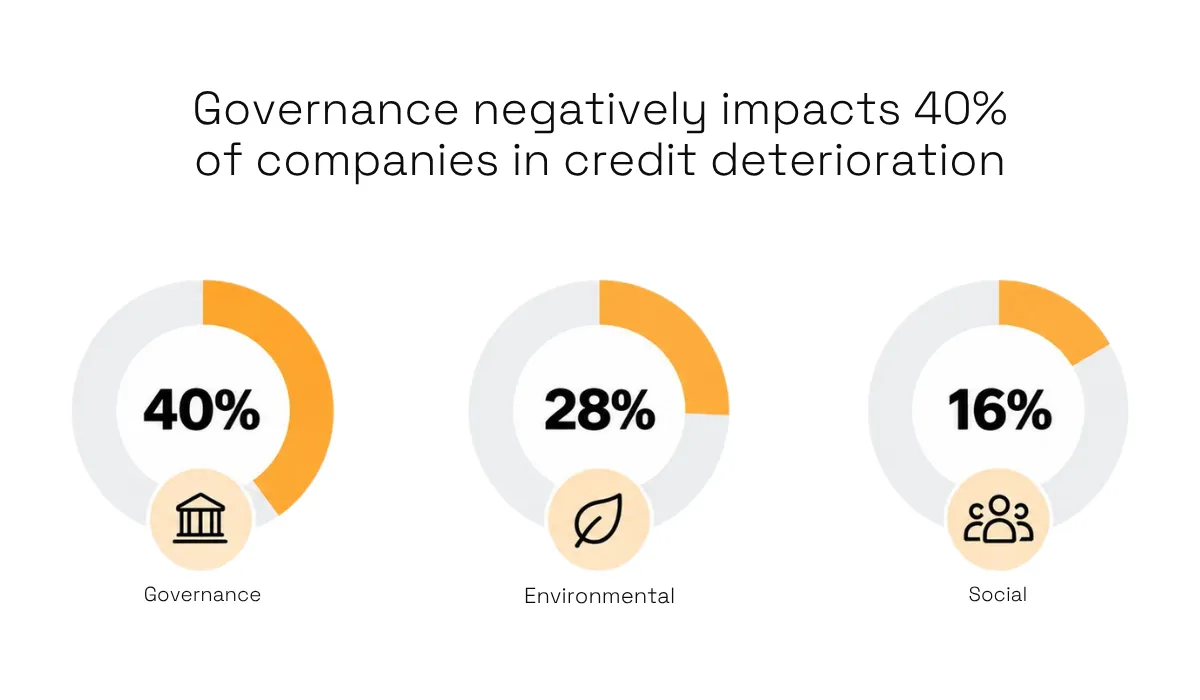
Illustration: Veridion / Data: IDB Invest
Considering the effect of non-financial signals, S&P Global recently developed an early-warning framework to identify companies at risk of default. It flagged 83% of companies that eventually defaulted 12 months in advance, increasing to 89% three months before default.
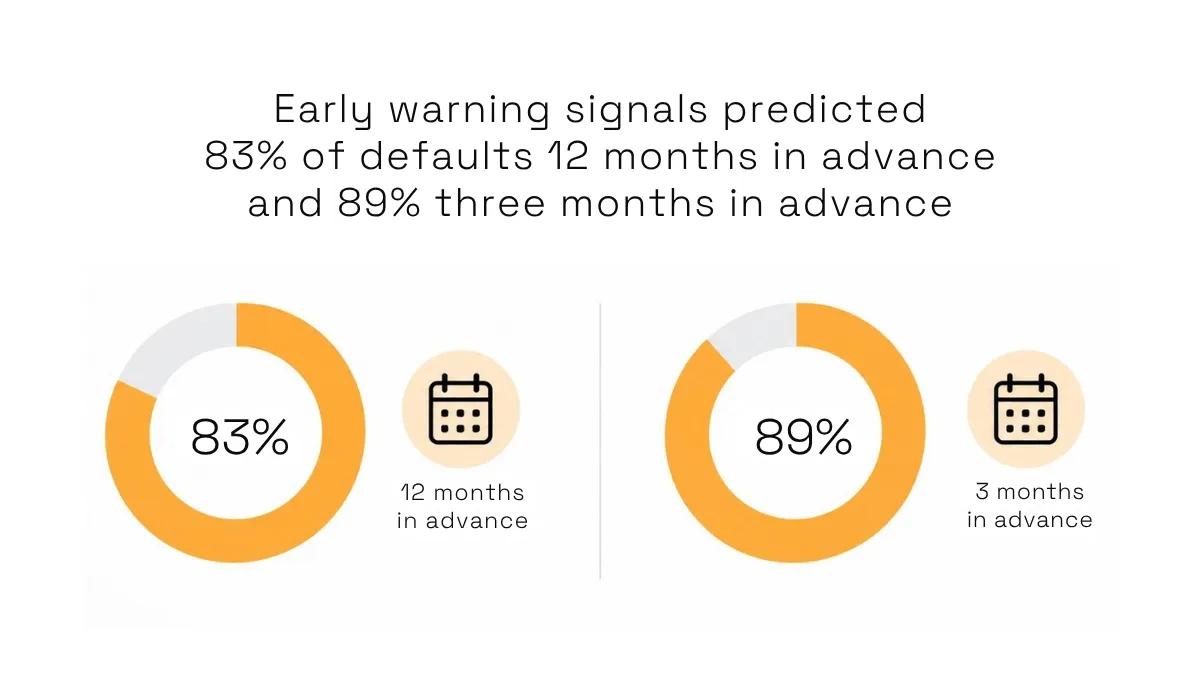
Illustration: Veridion / Data: S&P Global
This shows that financial indicators are not enough to catch the risk. They are concrete signals, but a result of what has already happened. To better catch credit deterioration, you need to consider the early signs.
Failing to Track Business-Status Changes
Businesses are not static, and neither is their status.
Business status is often the most overlooked parameter but offers strong insights into credit deterioration. A business that is dormant or in liquidation does not have the same cash flow as an active business.
A business could be active when you first analysed it, but it can be dormant or in liquidation now.
The data from the Australian Bureau of Statistics shows the quick-changing nature of businesses. In just one year (2025-2026), 460,461 businesses entered the market, and 375,331 businesses exited.
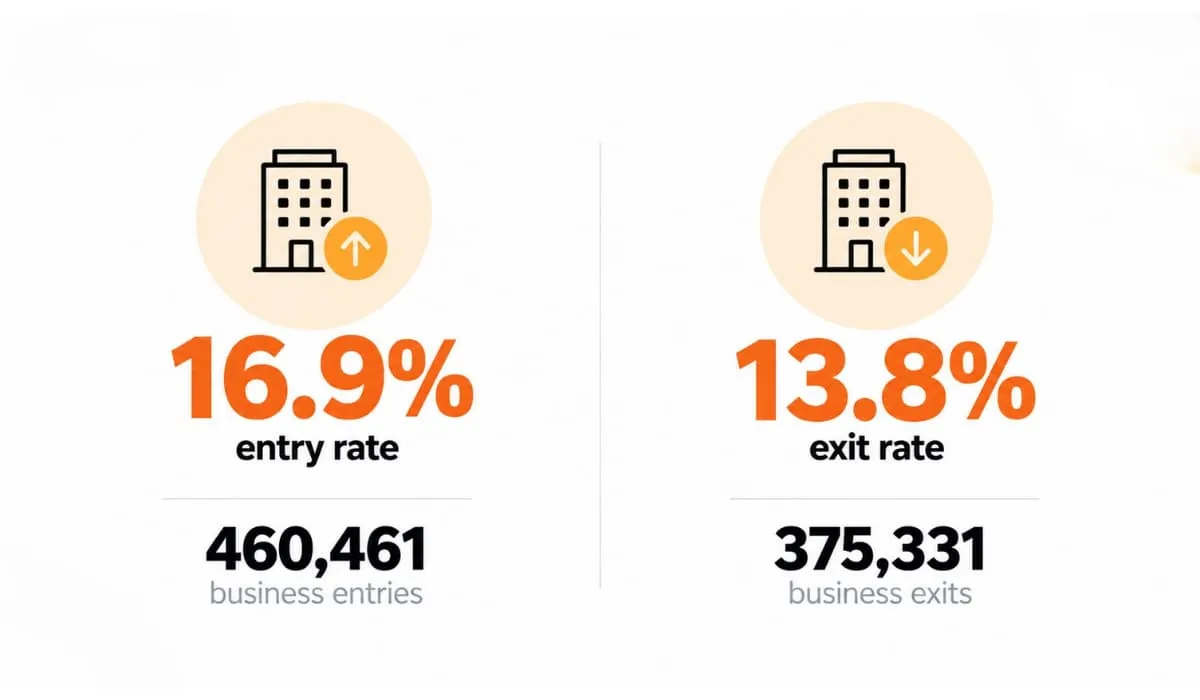
Illustration: Veridion / Data: Australian Bureau of Statistics
The exited businesses must have gone through different statuses, including dormancy and liquidation.
Most B2B credit programs invest heavily in onboarding a new customer. They perform thorough background checks and verify every piece of information.
This extensive analysis allows them to onboard the right customer. However, after onboarding, they do not monitor the business as they should.
As a result, while the business keeps evolving, credit programs still rely on the same initial file that now carries outdated information.
Creditors usually get alerted when the financial statements come out, and that’s when they go back to update the file.
But if they had monitored the customer, they would have predicted it beforehand and acted accordingly.
A change in status can help identify credit deterioration early, as it can reflect major operational and structural changes within a company.
Missing Contraction in Operating Footprint
Another signal that serves as a precursor to the financial signals is a reduction in operational footprint.
A company starting to close its branches is a direct signal of business shrinkage, which translates into credit deterioration.
The financial statements will not raise an alarm when the closing starts, but the effects will reflect months later.
Jonathan Ordon, President at Danbury Global Ltd., a Canadian-based asset disposition company, made a point about operational footprint in his LinkedIn post, saying:

His comment refers to the case of Toys ‘R’ Us, an American toy retailer that sought creditor protection in Canada in February 2026 and owes vendors $120 million, in addition to landlord payments.

Source: Global News
The company had 81 stores in Canada in 2021, and at the time of filing (2026) it only had 22 operational branches, which it claimed to further reduce.
In almost five years, the company shut down 59 stores, significantly reducing its footprint.
Vendors could have shifted from credit to cash payments if they had caught the footprint contraction early.
The following are some footprint reduction scenarios that can give credit teams time to reassess credit exposure before its reflection appears in financial statements:
- Store/ office/ plant closures
- Production-line shutdowns
- Warehouse consolidation
- Reduction in manufacturing capacity
- Reduction in distribution centres
- Withdrawal from specific geographic markets
The key is to treat footprint contraction as an early credit signal. It helps creditors reassess risk while they still have time to adjust terms, limits, or payment requirements.
Failing to Connect Subsidiaries to the Parent Record
Corporate hierarchies are complicated, with multiple entities lying under the same parent company.
Each company/subsidiary is a standalone entity.
However, the hierarchy should always be considered for credit deterioration because a parent company directly affects its subsidiaries.
Let’s say your customer is a subsidiary, but your data has no clue of its hierarchy. If the parent company gets affected, the consequences will spread down to the subsidiary, and you will not know until the consequences materialise.
This is what happened with the default of Infrastructure Leasing & Financial Services (IL&FS).
IL&FS was a large Indian infrastructure lender with more than 100 subsidiaries. In 2018, it defaulted on $12.41 billion in debt.
The impact trickled down through the entire company group. Within days, a series of defaults occurred, and any bank, agency, or investor involved with any of IL&FS's subsidiaries was severely affected.
Interestingly, the two subsidiaries, IL&FS Engineering and IL&FS Transportation Networks, had been in trouble since 2012.
We do not know the credit rating methodology in this specific case. But, given our point, if the creditors had the entire company group structure in front of them, they would have kept a close eye on these two subsidiaries.
The disconnection between parent and subsidiaries could be due to several reasons:
- Separate onboarding
- Different identifiers like trading name, legal name
- Failure of entity resolution (your system fails to find the link)
- Different jurisdictions
- Incomplete or outdated ownership data
Michael S. Barr, former Vice Chair for Supervision of the Board of Governors of the Federal Reserve System of the US, mentioned this point in his speech at the Basel Committee in New York.
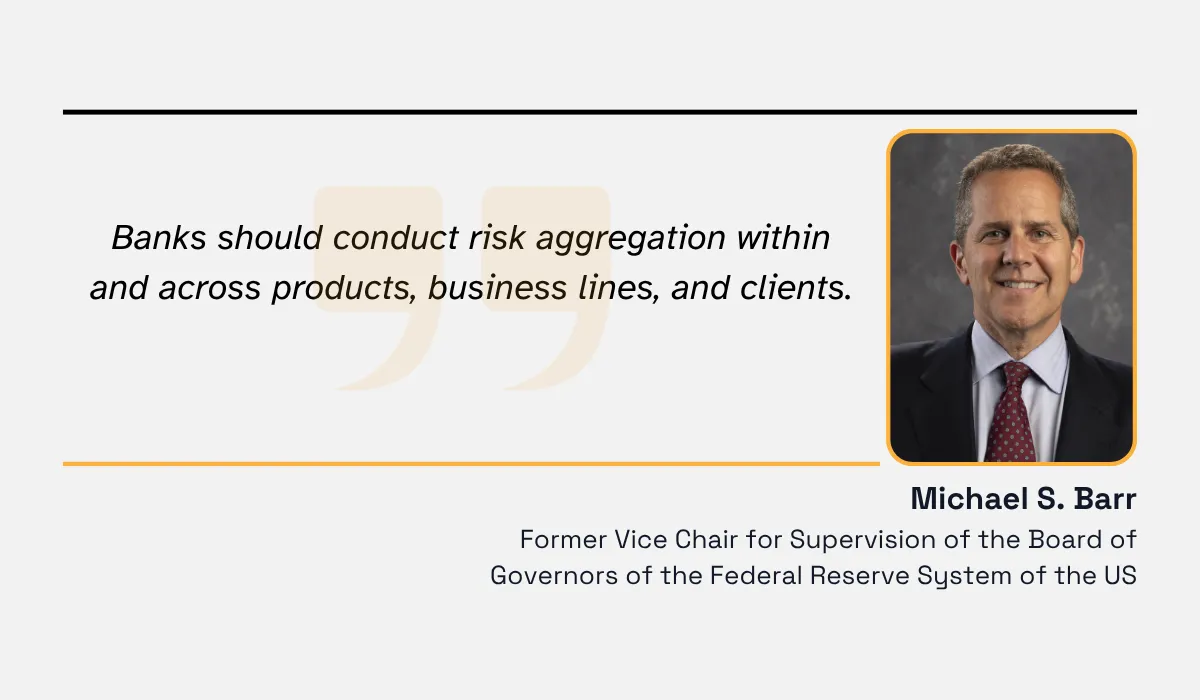
Illustration: Veridion / Quote: Board of Governors of the Federal Reserve System
He further explained that clients with diverse exposure to products and industries need to be connected to have a complete risk picture.
This sums up our point. If your records do not link a subsidiary to its parent, you will not see the risk they share until it hits your customer.
Treating an Unchanged Industry Code as Proof Nothing Changed
Industry codes such as NAICS, NACE, SIC, and ISIC can be wrongly attributed to businesses.
This was pointed out by the United States Census Bureau in the 2022 Economic Census. The report says that 15% to 25% of single-establishment businesses were categorized in a different industry than they were originally classified in.
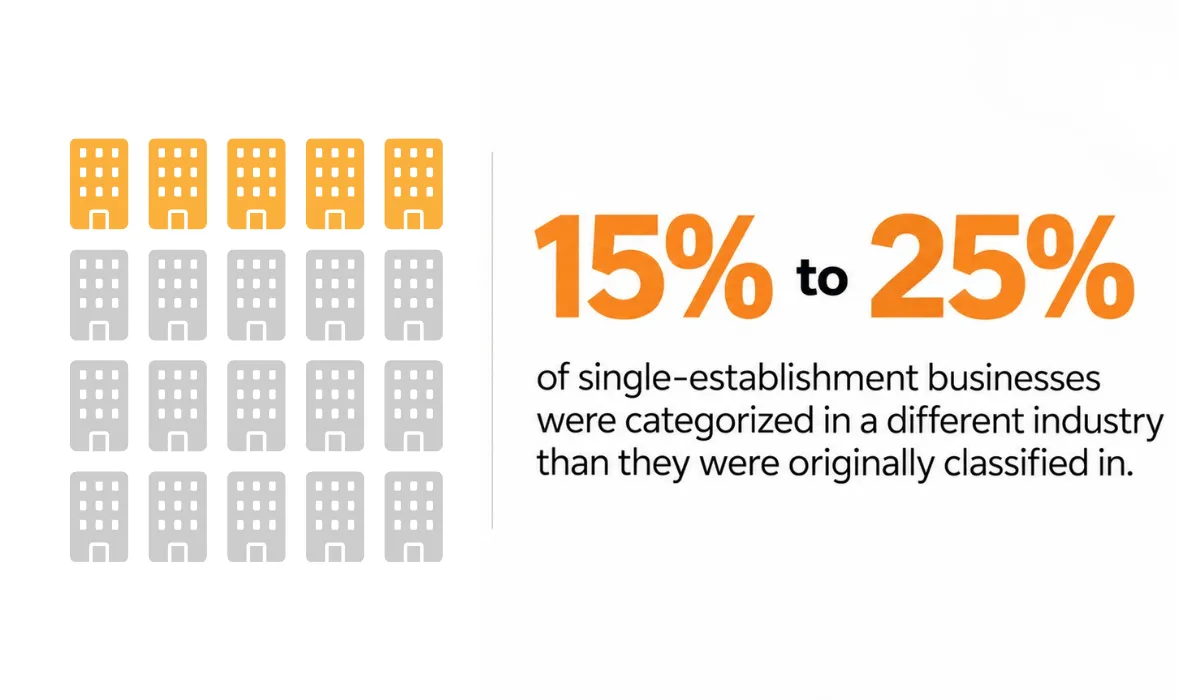
Illustration: Veridion / Data: OMB.report
The industry code provided by the customer can be inaccurate, or it can change over time.
A study from Denmark found that for 20% of the companies, the assigned industry code doesn’t match their business activities.
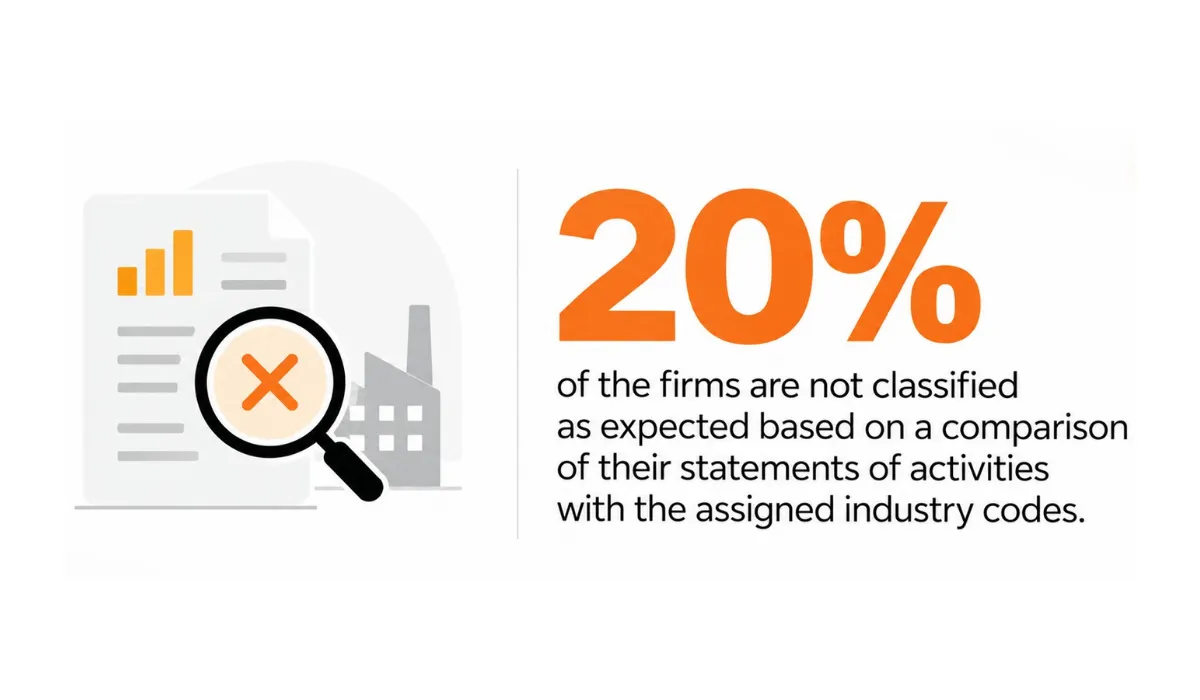
Illustration: Veridion / Structural Change and Economic Dynamics
As companies evolve and grow with time, their operations and industry codes change. But if the codes are not revisited, they remain the same on paper.
Netflix was a DVD-by-mail rental business when it started. It has significantly evolved and is now a streaming platform. But surprisingly, the industry code of Netflix in the US Securities and Exchange Commission (SEC) records still carries SIC code 7841, "Services-Video Tape Rental."
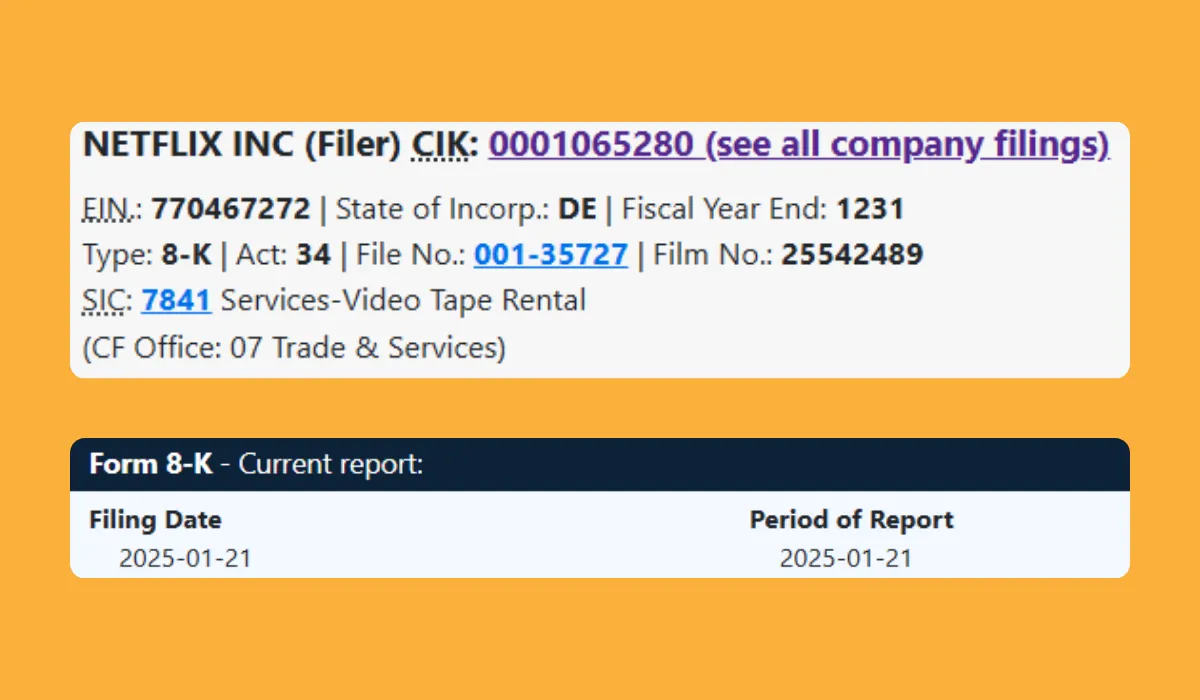
Suppose you are assessing Netflix based on this SIC code. You would misjudge its current business activity and underestimate the risks associated with its actual industry.
This is how inaccurate industry codes can be if not properly assessed.
Credit teams should validate whether the company’s actual activities still match its assigned classification.
Ignoring Material Ownership Changes
A company's current leadership, investors, board of directors, and parent company all shape its credit risks and ratings.
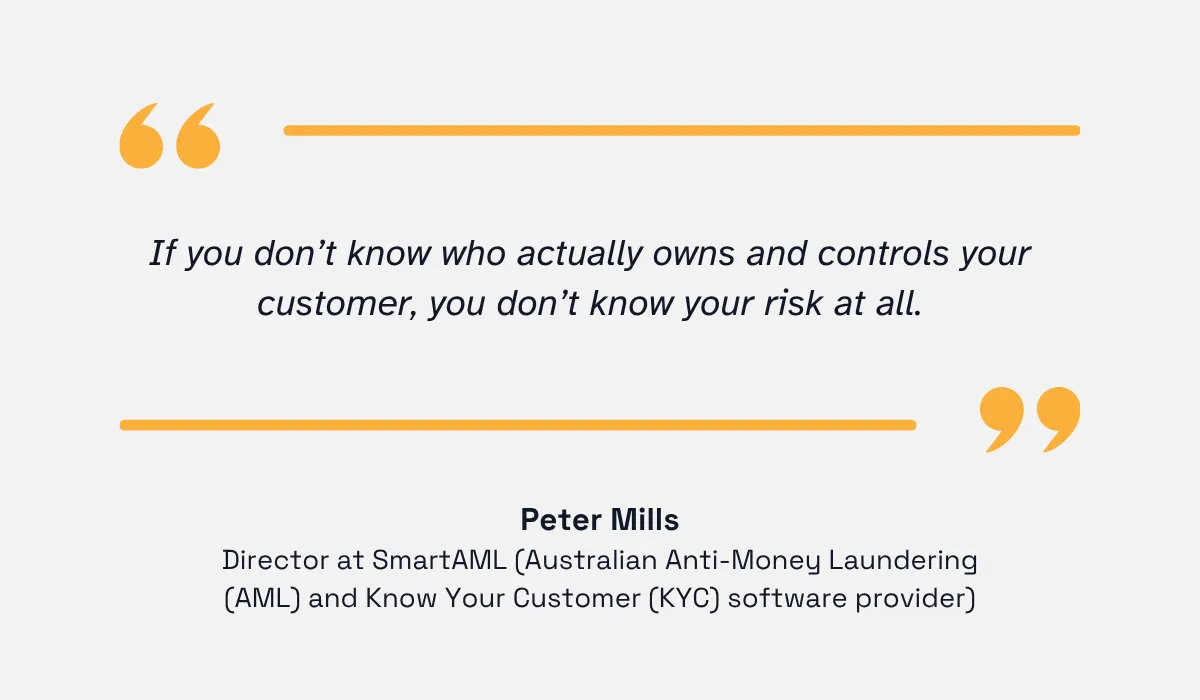
Material ownership changes can affect a company’s risk profile and credit rating. Peter Mills, director at SmartAML (Australian Anti-Money Laundering (AML) and Know Your Customer (KYC) software provider), spoke at the Australian Institute of Credit Management (AICM) webinar and linked risk with ownership in the following words:
Consider the following changes, as each can significantly affect a company’s risk profile:
- Change in the ultimate beneficial owner
- Sale of a controlling stake
- Entry of a new majority shareholder
- Merger or acquisition
- Change in parent-company support
- Losing a financially strong guarantor or parent.
Such changes demand revision.
But this data mostly sits in a different system, like Know Your Customer (KYC). The credit system is separate from it. Both may update at different intervals and might be disconnected.
Privilege Underwriters Reciprocal Exchange (PURE) case is a good example of neglect in ownership.
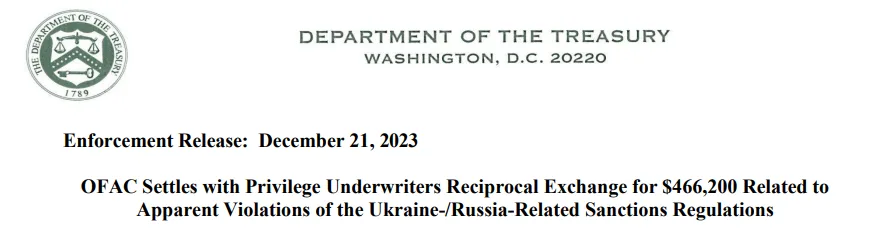
PURE, an insurance provider, offered four insurance policies to Medallion, Inc., which was owned by Viktor Vekselberg. In 2018, Vekselberg was added to the U.S. sanctions list, and any transaction or trade with Medallion, Inc. became illegal.
PURE never ran an ownership check and continued to deal with Medallion, Inc. for two years until the Office of Foreign Assets Control (OFAC) intervened and charged PURE $466,200 for violations.
The ownership did not change in this case. However, the point is the risk of neglecting ownership information.
A detailed and up-to-date ownership assessment is necessary, especially in the case of a change. If this information is neglected, you could end up in a situation like PURE.
Relying on Periodic Snapshots Without Event Triggers
Periodic reviews do not support today’s fast-moving business landscape.
Quarterly or Annual revisions create a gap between what’s happening in the business and when you get to know about it.
There can be changes in ownership, leadership, financial performance, legal status, operations, or market conditions within weeks or months that affect the credit rating, but you will only know it after months in the periodic review.
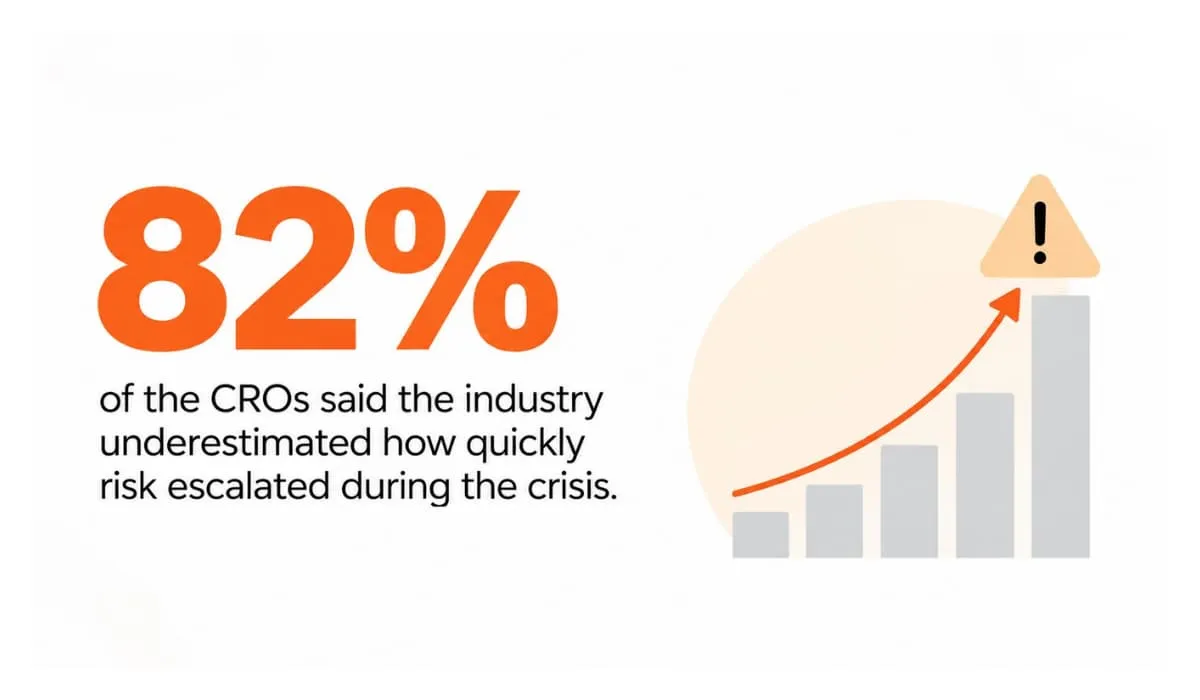
In a recent CRO survey, 82% of the CROs said the industry underestimated how quickly risk escalated during the crisis (2023 regional banking crisis in the US).
Now, constant revisions are not possible. A smart approach is to use event triggers.
Your system should flag any changes in the company profile, so you can assess if it demands attention. This approach ensures every change is brought to human attention.
If you notice, the root cause behind all the mistakes we have discussed is outdated data and a lack of ongoing monitoring.
This is where software like Veridion comes into play.
Veridion’s weekly updated, entity-resolved company profiles with their parent/subsidiary linkage provide insights into company changes in real-time.
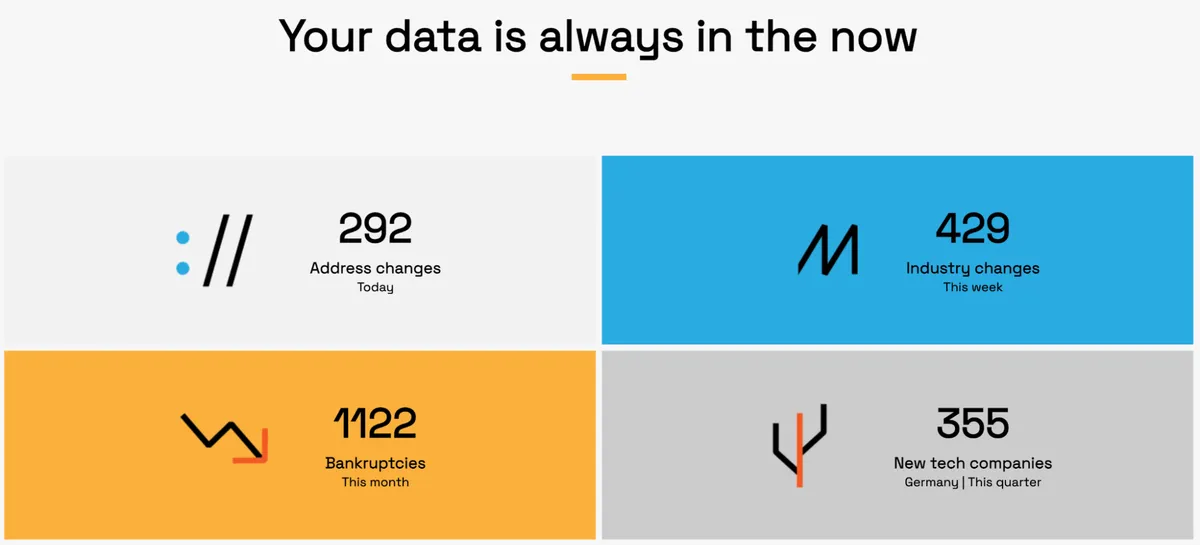
Source: Veridion
Insurers and risk analysts find the change detection and weekly updates the most useful, as it gives them fresh data every time.
For example: A global commercial insurer used Veridion’s knowledge graph as the data source for its underwriting.
Another case study is of a Canadian bank that used Veridion’s knowledge graph for its SMB benchmarking tool. Their numbers looked like this:
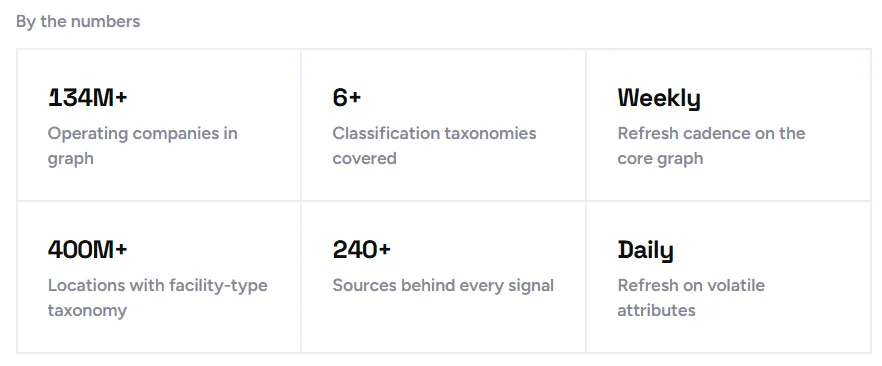
Source: Veridion
Pair it with Veridion’s global coverage, extensive digital footprint coverage, and features like data enrichment, ESG, and third-party risk to get clean and trusted data in a fraction of the time.
Conclusion
Customer risk analysis mistakes that hide deterioration are largely driven by outdated data.
Small parameters that you ignore now may lead to big risks months or years later.
The financial statements are a concrete signal, but they are backward-looking, meaning they reflect what has already happened.
If you intend to catch the risk, you need to look at the main parameters that affect finances the most. For example: business status, industry codes, corporate hierarchy, and any leadership, ownership, or footprint changes.
To summarise, non-financial signals and updated data are the foundation for catching borrower deterioration. They save you from surprises, help spot emerging risks earlier, and enable more informed lending decisions.
Articles
Discuss how these trends affect your organization.
Our analysts are available for a short call. Bring a specific question and we will ground it in the data.
Insights
Keep reading
More analysis, research, and outcomes grounded in live company intelligence.
What Are the Benefits of Data Enrichment?
Want to understand the benefits of data enrichment? This guide will explain how enriched data supports better decisions and analytics.
Best Practices for Data Enrichment
Learn how data enrichment best practices help businesses turn raw data into accurate and actionable insights.
5 Trends Shaping the Future of Market Intelligence
Want to future-proof your business strategy? Explore the top trends defining the future of market intelligence.