Insights / Articles
How To Identify Founder-Owned Businesses At Scale
No register shows who founded a company and still owns it. Grade your evidence in three tiers, then see how to identify founder-owned businesses at scale.

- Your ownership threshold determines which companies qualify as founder-owned.
- US ownership screens need evidence beyond FinCEN’s non-public BOI database.
- An independence filter can exclude valid targets held through a founder’s holding company.
- Founder-owned labels lose accuracy over time, so each one needs a date and a source.
To identify founder-owned businesses at scale, you need to assess several sources of ownership evidence. Public ownership information varies by jurisdiction, and companies formed in the US are exempt from FinCEN’s beneficial ownership reporting requirements under the Corporate Transparency Act.
Build a screen that grades the evidence and assigns each company a confidence label, then test the results for false positives. Company data providers like Veridion supply company profiles and corporate hierarchy data that can support this screening process.
Let’s go through how to build that screen, step by step.
1. Define Founder-Owned for Your Thesis
Before beginning your search, define what constitutes "founder-owned." Otherwise, your analysts can assign this designation to companies with various ownership structures.
A founder can remain CEO after selling a majority stake, while a family can retain ownership after appointing outside management. That distinction matters when deciding which companies belong on your list. KPMG’s 2025 family business report describes transitions “from founder-led to family-run to family-owned models,” illustrating how a family’s role in the business can change over time.
When defining “founder-owned”, address these four key questions:
- Does majority ownership matter, or is significant minority ownership enough?
- Does the founder need to run the company?
- Do descendants qualify, or must the original founder still hold a stake?
- Can an institution be a minority owner?
Your definition will produce two kinds of criteria: those the dataset can test and those that require further research. A recorded parent relationship may be available at scale, while the founder’s exact equity stake may require a filing or confirmation from management.
Keep the definition and screening rules in one shared document so everyone applies the same criteria.
2. Collect Ownership Evidence by Type
For this screen, group the evidence into three categories: direct, indirect, and negative. Each supports a different kind of conclusion.
Evidence type | Examples | What it supports | What it cannot establish |
|---|---|---|---|
Direct | Ownership filings, registers, dated owner statements | Disclosed ownership or control | Undisclosed stakes or later changes |
Indirect | Founder in management, leadership continuity, no recorded parent | A reason to investigate founder ownership | The founder’s current equity stake |
Negative | Investors, acquisitions, corporate parents | A possible conflict with your definition | Whether the founder still holds a qualifying stake |
Direct evidence can support an ownership conclusion within its scope and date. Indirect signals guide further checks, while contradictory evidence may lower confidence or disqualify a target under your definition.
Finding direct evidence depends on what a jurisdiction collects and makes public. In the US, FinCEN’s beneficial ownership information (BOI) database is not available for general PE target screening. Companies formed in the US are also exempt from its reporting requirements under the Corporate Transparency Act.
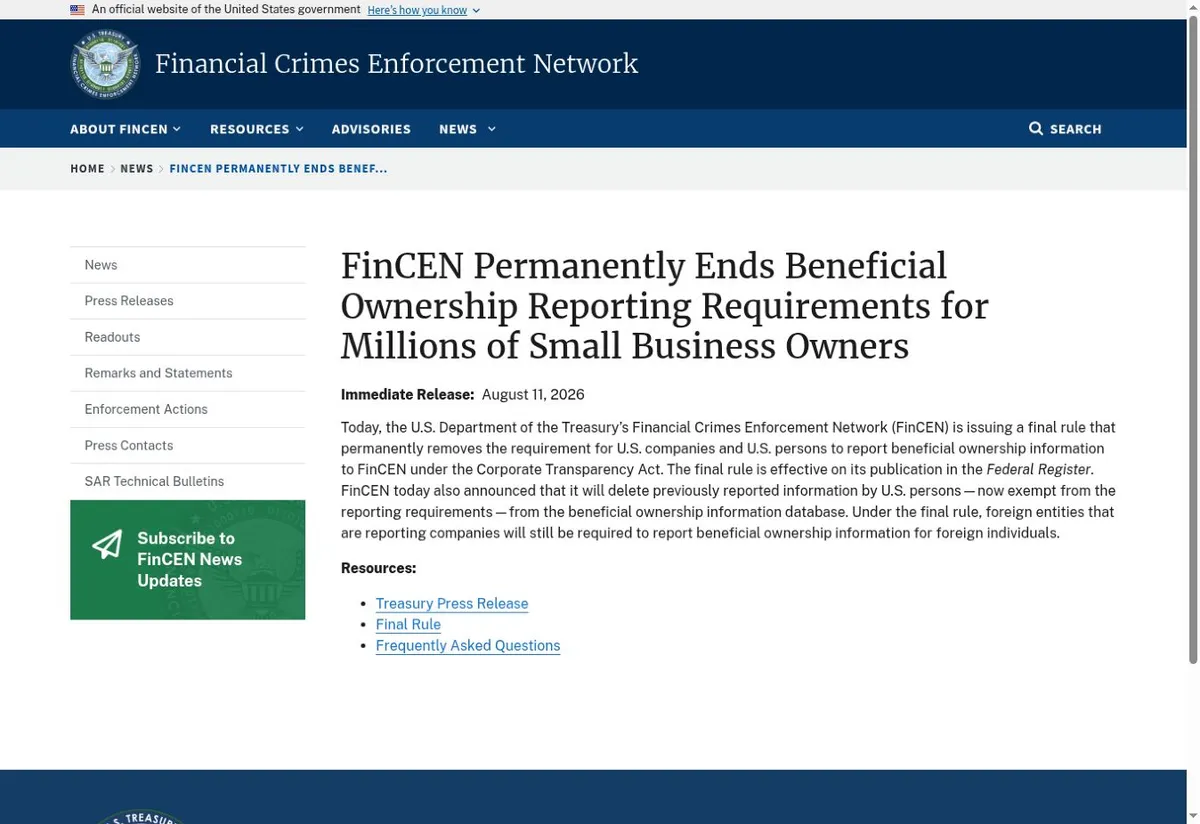
FinCEN’s final rule, announced on August 11, 2026 and effective August 14, made permanent the domestic-company exemption introduced in March 2025. Only certain foreign companies registered to do business in the US must still report, excluding information about US-person beneficial owners.
Source: FinCEN
Most states record information about company officers, directors, or managers of an LLC, but they don't necessarily own the business, and the scope of such a list differs by state.
In the UK, a person can qualify as a PSC by holding more than 25% of shares or voting rights, having the right to appoint or remove a majority of directors, or exercising significant influence or control. Mandatory identity verification began on November 18, 2025, with deadlines depending on when the person became a PSC and whether they are also a director.
Shareholdings are reported in bands: over 25% up to and including 50%, more than 50% but less than 75%, and 75% or more. A founder with a 20% stake would not qualify on share ownership alone, but could qualify through another control condition.
Where direct ownership records are unavailable, use indirect and negative evidence to guide further investigation, rather than treating them as proof of the founder’s stake.
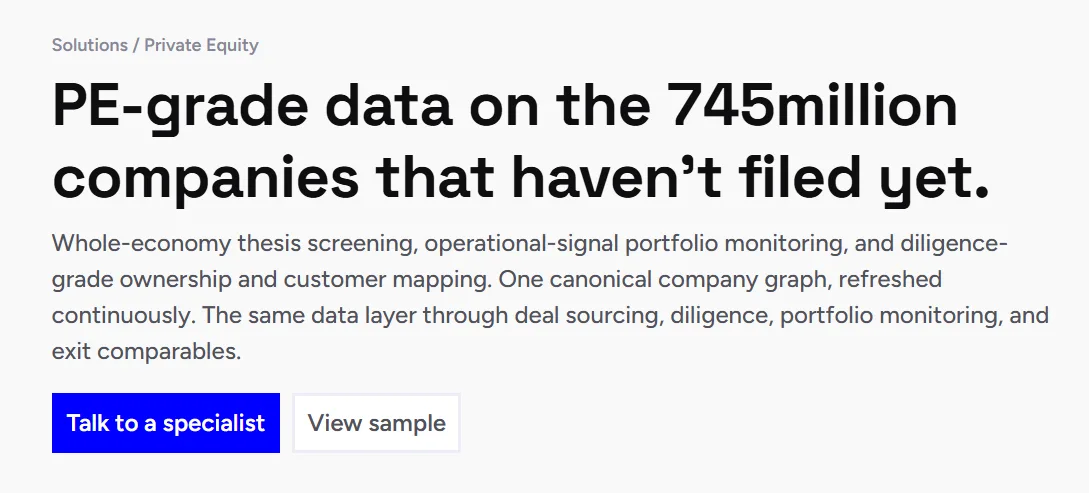
Veridion’s company profiles for PE screening bring together operating activity, locations, industry, size, and corporate relationships. These details help analysts identify potential targets and decide which ownership questions need further investigation.
Source: Veridion
Its corporate group data connects companies to their operating organization and ultimate parent using legal filings and digital footprints. The Ultimate Parent API follows majority corporate ownership chains; it does not provide a shareholder register or ownership percentages.
These attributes help you find founder-owned companies worth investigating while retaining supporting sources. They don't replace a current ownership record or your team's final judgment.
3. Assign Confidence Levels
Assign each company a label that reflects how strongly the evidence supports your ownership definition.
A simple set has four levels: confirmed, likely, possible, and unlikely.
Confidence labels make the strength of an ownership conclusion visible, but the evidence behind each label matters too.
In a survey of 565 data and analytics professionals conducted in the first half of 2024, Drexel LeBow and Precisely found that 67% did not fully trust the data their organizations used.
The findings appeared in their 2025 Outlook: Data Integrity Trends and Insights report.
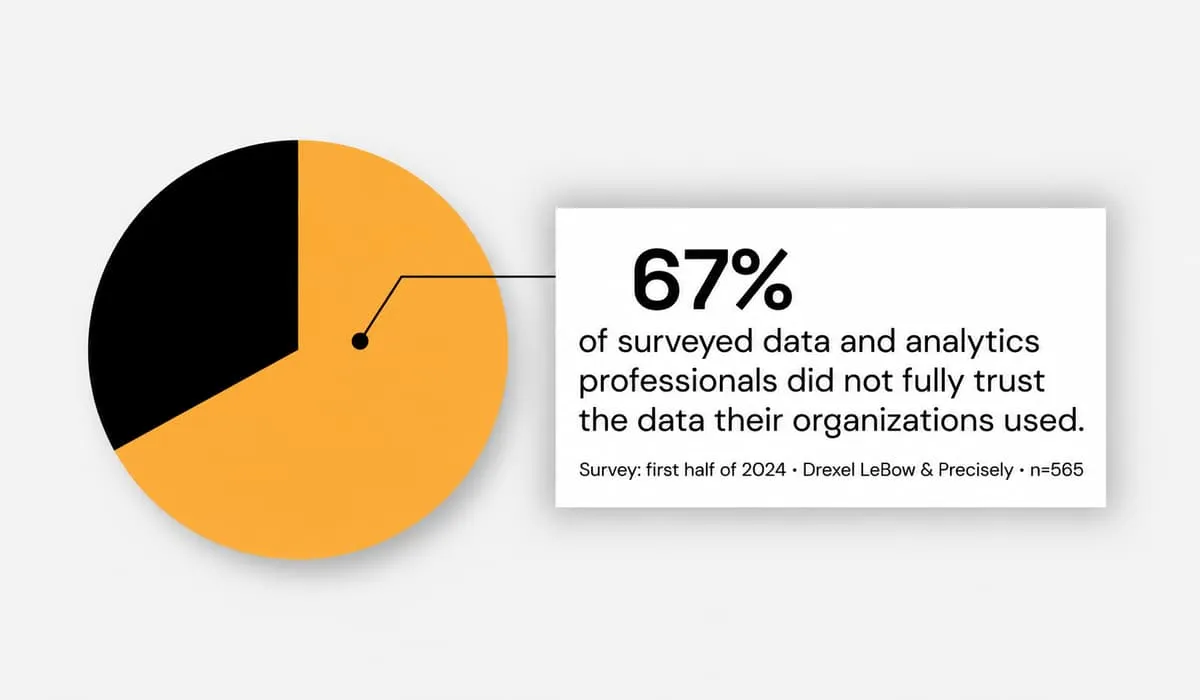
Illustration: Veridion / Data: Drexel LeBow and Precisely
The survey reflects a broader concern about data trust. In your target list, show which evidence supports each label and what remains unverified.
An analyst should be able to see why a company received its label without reconstructing the scoring process.
Your team should set any weights or thresholds using the definition from step one, document the choices, and test them against verified records.
A practical label scheme could include:
Label | When to use it |
|---|---|
Confirmed | Current direct evidence meets your definition, with no unresolved contradiction. |
Likely | Several signals support founder ownership, but direct confirmation is missing. |
Possible | Evidence is incomplete, weak, or contradictory. |
Unlikely | Current evidence indicates that the company does not meet your definition. |
Whether outside investment disqualifies a company depends on the definition you set earlier. A minority sponsor investment may be acceptable if the founder retains the required stake, just as a founder-controlled holding company may satisfy your criteria.
A completed sale that takes the founder below your threshold, however, should outweigh indirect signals such as a longstanding CEO role. Your labeling rules should make that distinction clear.
For each label, explain what the evidence supports and what is still unknown. For instance: "Possible: founder is CEO; leadership continuity since 2009; no corporate parent identified in the checked sources as of [date]; ownership stake unverified."
This helps any analyst who disagrees to know exactly what evidence to investigate, instead of rebuilding the case from scratch.
4. Check for Misleading Matches
A founder-owned screen can fail in two ways:
- False positives send outreach to companies that do not meet your ownership definition.
- False negatives exclude companies that meet your ownership definition.
Check both shortlisted and excluded companies against your definition. Otherwise, errors in the screening rules can pass unnoticed.
In November 2024, Blackstone announced its agreement to acquire a majority stake in Jersey Mike’s, with founder Peter Cancro expected to retain equity and continue leading the business.

Source: Blackstone
The company’s subsequent SEC prospectus confirms that the acquisition closed on January 16, 2025: a Blackstone-controlled entity acquired 90%, while a founder-controlled company retained 10%. A new CEO succeeded Cancro in April 2025. This sequence shows why ownership stakes, leadership roles, and transaction status need separate, dated checks.
The reverse mistake can happen when a founder owns the business through a holding company. An independence filter may exclude the target because it has a corporate parent, even though the founder controls both entities. Before rejecting it, check whether that ownership structure meets your definition.
These two errors require checks on both sides of the shortlist. A sample of accepted companies can reveal false positives, while reviewing excluded companies can uncover valid targets your filters missed.
Verify the sampled companies against current register entries, filings, dated company statements, or documented confirmation from management.
Record false positives and false negatives, and keep unverifiable cases separate as unresolved. Report the sample size and unresolved cases alongside each label’s observed accuracy. Use the error types to identify which rules need attention.
5. Scale the Screen Across the Universe
The order of operations becomes more crucial as you scale up. Handle the quick, reliable steps first, and save the analyst's time for the end of the pipeline.
A practical order might look like this:
Stage | What happens |
|---|---|
Hard filters | Narrow the universe by activity, size, region, and other thesis criteria. |
Evidence collection | Gather direct, indirect, and negative ownership evidence. |
Confidence labels | Apply your definition and document unresolved questions. |
Routing | Decide which companies need confirmation, analyst review, or exclusion. |
Use each label to decide what verification a company needs before outreach. A confirmed label goes onto the origination team's target list, with a quick check that nothing has changed before outreach.
For a likely label, seek direct confirmation through a register lookup, filing search, or documented management confirmation before relying on the ownership status. An unsuccessful lookup leaves the stake unverified.
Send the possible label to an analyst, who reviews the reasoning and decides whether to upgrade, downgrade, or set the company aside.
Park unlikely targets and re-screen them when new evidence indicates that ownership may have changed. Treat a missing source as an evidence gap, rather than proof that the previous ownership relationship has ended.
The audit sample shows where the labeling rules break down. If companies marked “likely” repeatedly fail your ownership definition, the supporting signals may be too weak. A recurring pattern is a stronger reason to revise a rule than an isolated miss.
The scale of company registers illustrates why the process needs to work across large datasets.
According to the Companies House annual report, the UK register held 5.48 million companies on March 31, 2026, and 815,280 companies were incorporated during the year ended on that date.
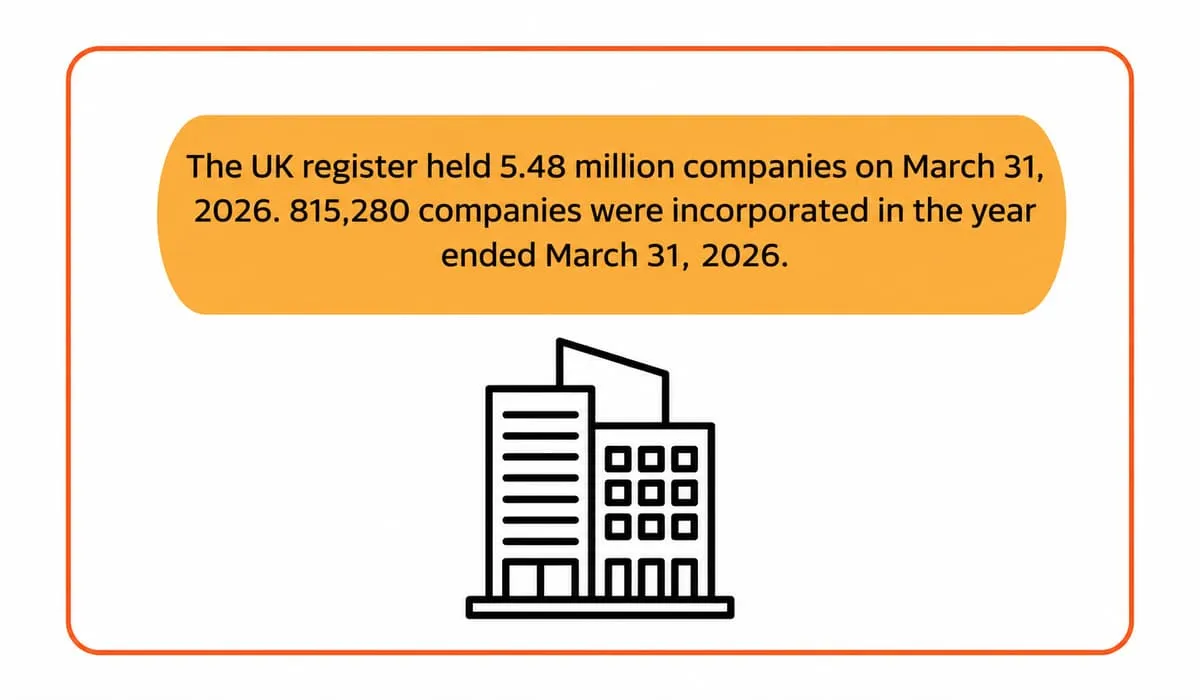
Illustration: Veridion / Data: Companies House
Sample across different sectors and regions to spot any patterns. While at it, review exclusions to catch any false negatives because auditing accepted targets alone won't reveal them.
At scale, sampling evaluates the process without requiring manual verification of every record. Individual targets still need proportionate checks before your team relies on their ownership status.
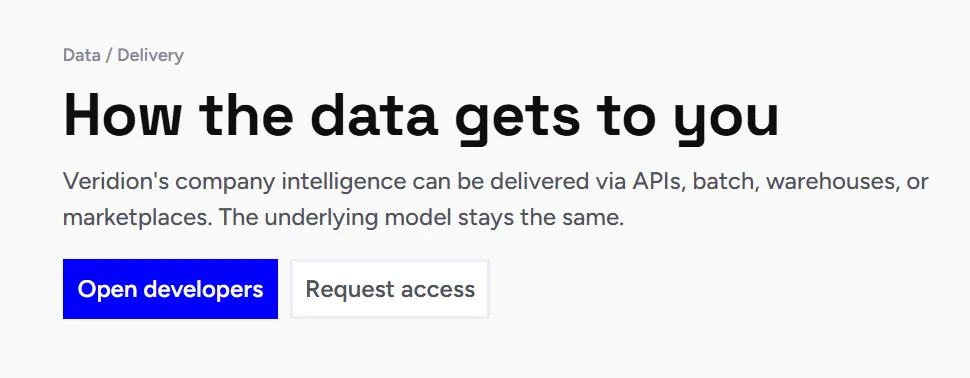
Veridion’s APIs and batch delivery provide company data for screening a large universe, rather than researching each company separately. Your team applies its ownership rules and confidence labels to that data.
Source: Veridion
For a broader view of the options, see this overview of platforms that provide private company data.
6. Keep a Dated Evidence Trail
A founder-owned label reflects the evidence available when it was checked. Later ownership changes can make it outdated.
Ownership changes don't wait for your next screen. In the UK, a company must tell Companies House about a change to its PSC information within 14 days of confirming it.
An acquisition, recapitalization, or ownership transfer can make a previously supported label outdated.
That's why every label needs a date and a planned refresh. Without both, nobody can tell a current label from an outdated one.
For each company, make sure to keep track of:
- Legal identity, domain, registration identifiers, and internal record ID.
- Evidence excerpt, type, source URL, and relevant dates.
- Current label and the version of the rule that generated it.
- Any contradictions, missing facts, and unresolved questions.
- The verifier, verification date, and the next review date.
The evidence trail lets your deal team review and challenge a label. When a partner asks why a company is labeled "likely," the associate can pull up the evidence trail instead of redoing the research.
It also lets analysts reuse earlier research. If a company was screened last quarter for a different thesis, they already have some evidence on hand, so the analyst just needs to look at what's changed since then.
A review schedule is useful only if it catches changes that could affect the ownership conclusion. An acquisition announcement may put a previously confirmed target back under review, while a founder leaving management may leave their equity stake unchanged. Comparing new evidence with the dated record helps your team distinguish those cases and decide whether the label needs to change.
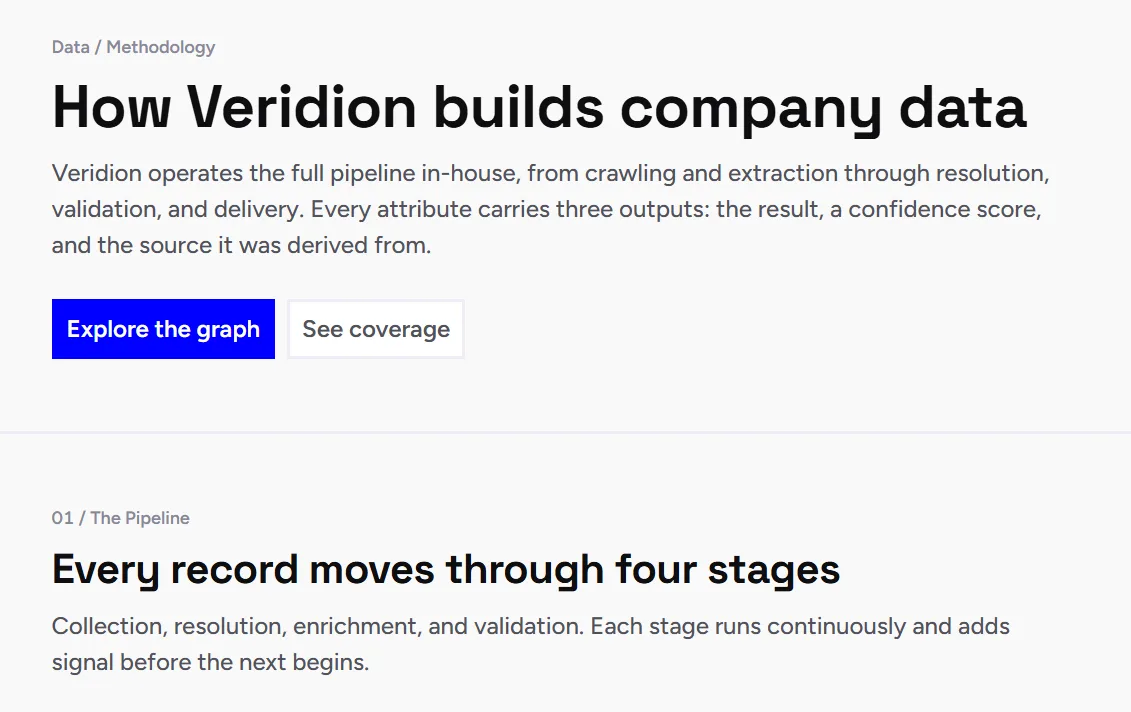
Veridion’s data methodology describes what accompanies each attribute: “the result, a confidence score, and the source it was derived from,” along with the last-harvested date. Keep the source’s publication or effective date separate from Veridion’s last-harvested date and your team’s verification date.
Core company profiles refresh continuously, and volatile signals refresh daily, so updated evidence shows up between your scheduled runs.
Source: Veridion
A scheduled review should also focus on evidence that hasn't changed but is getting old. If you can no longer verify its validity, lower your confidence in it or mark the target as unresolved.
The label should accurately reflect what your team can currently support.
Conclusion
Founder ownership is a conclusion your team needs to support with evidence. A biography or parent-company field can guide the search, but the final label should reflect your definition and what you can currently verify.
Before applying the process to a larger universe, try it on twenty companies from a recent target list. Comparing the labels with manually verified ownership will show where your rules work, which false positives they admit, and which cases remain unresolved.
Articles
Discuss how these trends affect your organization.
Our analysts are available for a short call. Bring a specific question and we will ground it in the data.
Insights
Keep reading
More analysis, research, and outcomes grounded in live company intelligence.
Best Practices for Leveraging Market Intelligence
Not sure how to apply market intelligence effectively? Learn which practices top businesses rely on and how you can too.
5 Types of Market Intelligence You Need to Know About
Explore five different types of market intelligence that can shape your competitive edge. Find out which ones your team should prioritize.
How to Use Data Analytics in Investment Management
How can capital markets data analytics revolutionize your investment management? Unlock smarter strategies and boost your portfolio's performance.