Insights / Articles
How to Operationalize Horizon Scanning with a Data-Driven Workflow
Tired of being blindsided by market shifts? This guide shows you how to identify emerging market risks with a data-driven workflow.

- Most organizations rely on reactive rather than proactive risk management.
- Data-driven horizon scanning helps you catch threats before they turn into a crisis.
- Structured, up-to-date company and market data is the key to effective horizon scanning.
- A live horizon scanning process turns raw data into foresight.
Horizon scanning can give your enterprise a head start on emerging threats.
Yet most organizations still treat it like an annual report, reviewed once and then forgotten until the next crisis. That pace cannot keep up with signals that move in real time.
This guide shows you how to build an effective data-driven horizon scanning process, which will help you recognize early warnings and channel them to the appropriate audience.
Turning Horizon Scanning Into a Live Workflow
A live horizon scanning process consists of five interrelated steps. Each of them transforms raw noise coming from outside into a decision-making tool for your teams.
Failure to complete any one of these steps makes the whole process useless: too much noise, unclear ownership, or an outdated model.
Here's how to build each step so your signals are delivered to the right people.
1. Define Your Signal Categories
Scanning everything creates noise, not decision-grade insight.
The first step in a data-driven horizon-scanning workflow is choosing which signal categories matter to your organization: regulatory, geopolitical, supplier, market, cyber, or a mix specific to your industry.
Professor John Horn warns that trying to track everything leads to overload. Instead, his advice is:
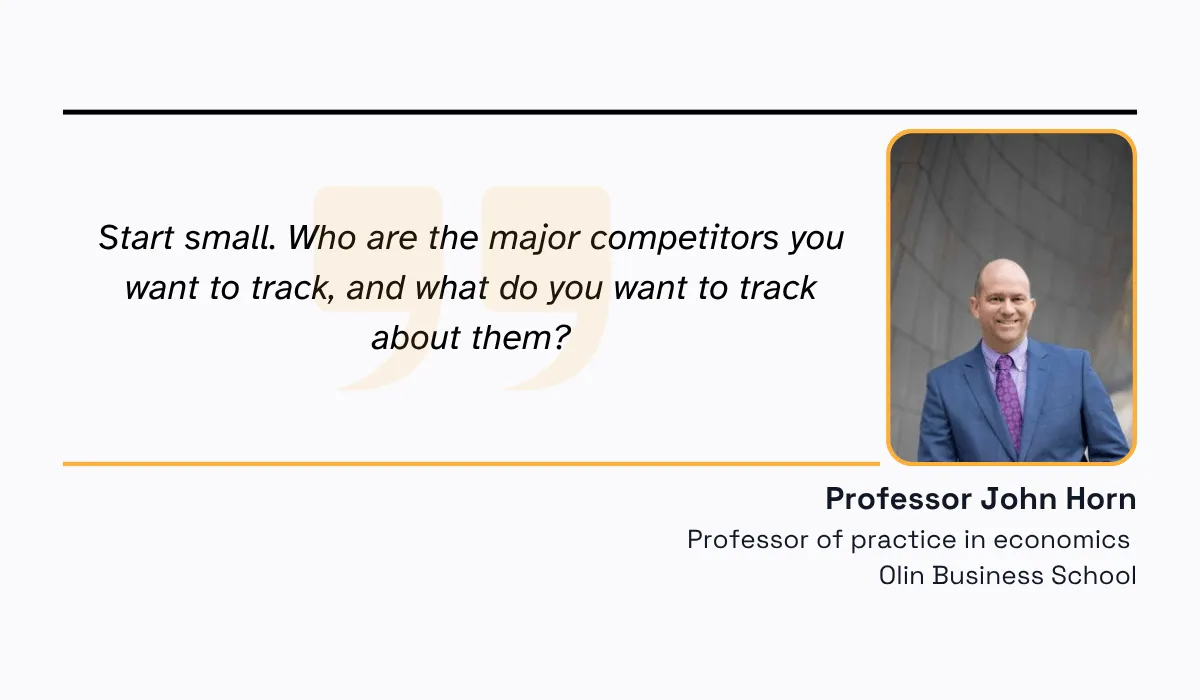
In short, select the buckets most relevant to your strategy to filter out unnecessary data.
Most horizon scanning programs track a similar core set of categories:
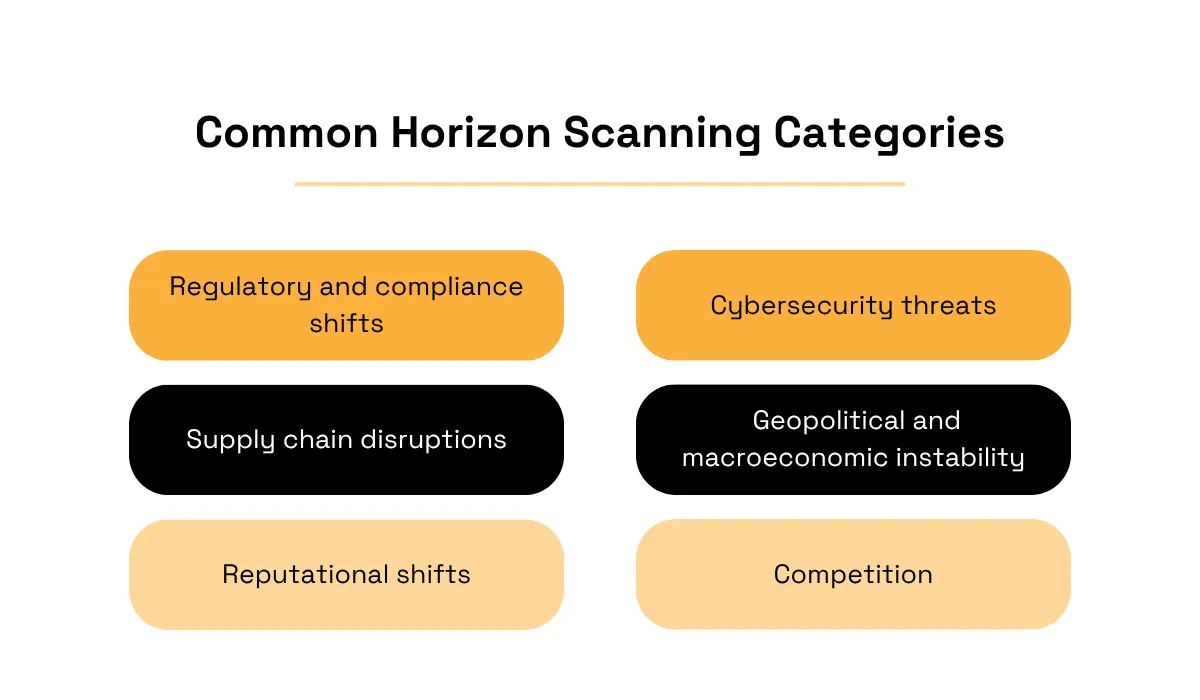
Source: Veridion
The relevance of each signal will depend on your industry, presence, and exposure.
A pharmaceutical company tracking early regulatory discussions has enough time to adapt its research programs to new regulations in advance, avoiding unnecessary work later.
A logistics company with suppliers concentrated in one region needs geopolitical signals more urgently than a domestic software vendor does.
To decide on your categories, start with your existing risk register rather than a generic list, then pick categories that align with your greatest exposures.
Define each category clearly so your scanning system knows what to look for.
Discuss priorities with stakeholders. For instance, compliance officers may prioritize regulatory topics, while procurement leaders flag supplier issues.
A useful practical tip is to involve your internal experts. Ask each department:
"What emerging changes keep you up at night?"
The answers you get will help narrow down the scope of your categories.
Supplier-related categories tend to be closely connected with third-party risk management; therefore, include those who own this process.
Rate each category based on its potential impact on revenue, operations, or reputation; then scan the three to five most important categories first.
2. Connect Continuous Data Feeds
Once your categories are set, feed your pipeline with live data sources. Don't rely on annual reports or manual research done every quarter or year.
Research performed periodically inherently has some lag. Once you are preparing a quarterly report, the draft that triggered your investigation may already have been enacted into law, or the supply chain partner who raised the red flag may have already failed to ship your goods.
Additionally, gathering information manually becomes more difficult as the volume and diversity of data increases.
This is precisely why the market is shifting towards continuous approaches. A whopping 91% of enterprises plan to adopt continuous compliance over the next five years, instead of periodic manual checks.
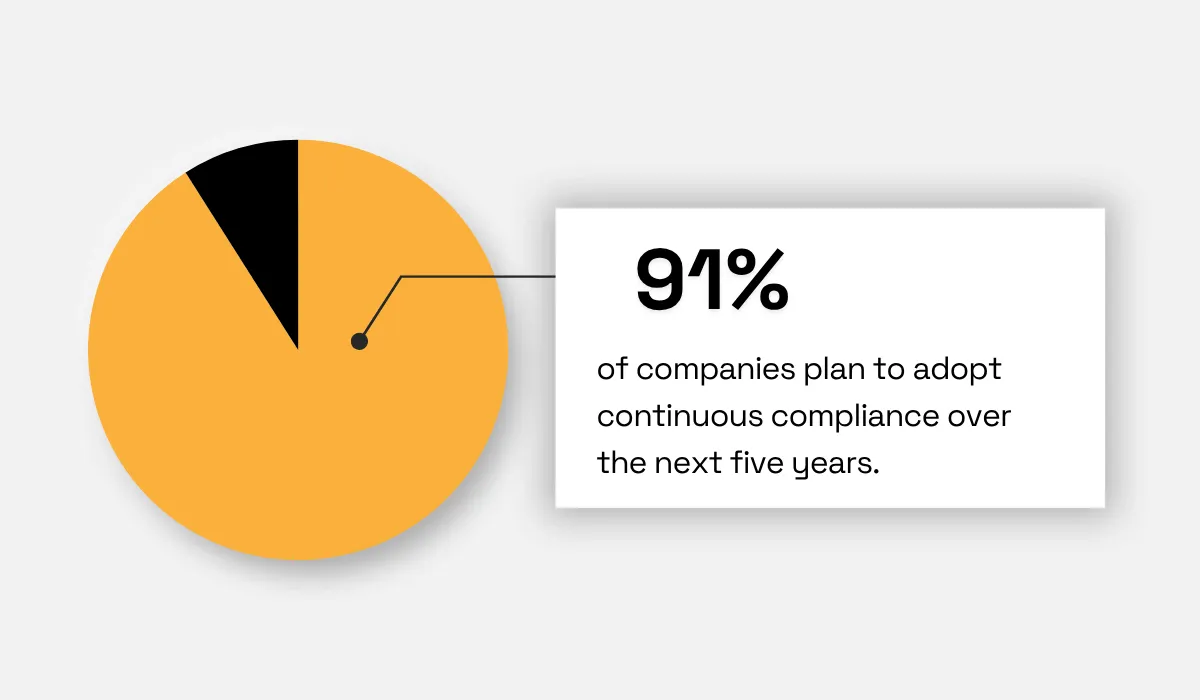
To reduce the lag, implement continuous feeds and collect data as soon as it becomes available.
Instead of a person searching for updates (from news, regulatory databases, court decisions, sanctions lists, and corporate information) the updates reach the workflow on their own.
When connecting live feeds, you should first conduct an audit of where your current signals actually originate.
Whenever the feed for a particular category depends on manual verification via a website or news alert, replace this stage with an API or batch feed.
For instance, you can collect nightly batches from government registers and hourly feeds from a news API.
Additionally, diversify your sources in each category, because even if you rely on only one strong feed, some information is bound to slip through the cracks and be captured by the second source.
You can draw regulatory categories from government registers, supplier categories from company ownership data, and cyber categories from threat intelligence feeds.
Assign a specific refresh frequency for each feed so the workflow updates itself between your review cycles rather than waiting for the next one.
3. Score Signals by Severity
With so much incoming data now, you need a triage mechanism, since not every signal deserves the same attention.
Your workflow needs a way to score severity, likelihood, and urgency before anything reaches a person's inbox.
Most organizations are not yet built for this kind of filtering. Unsurprisingly, only 11% of risk leaders say proactive risk management is a real priority for them over reactive efforts.
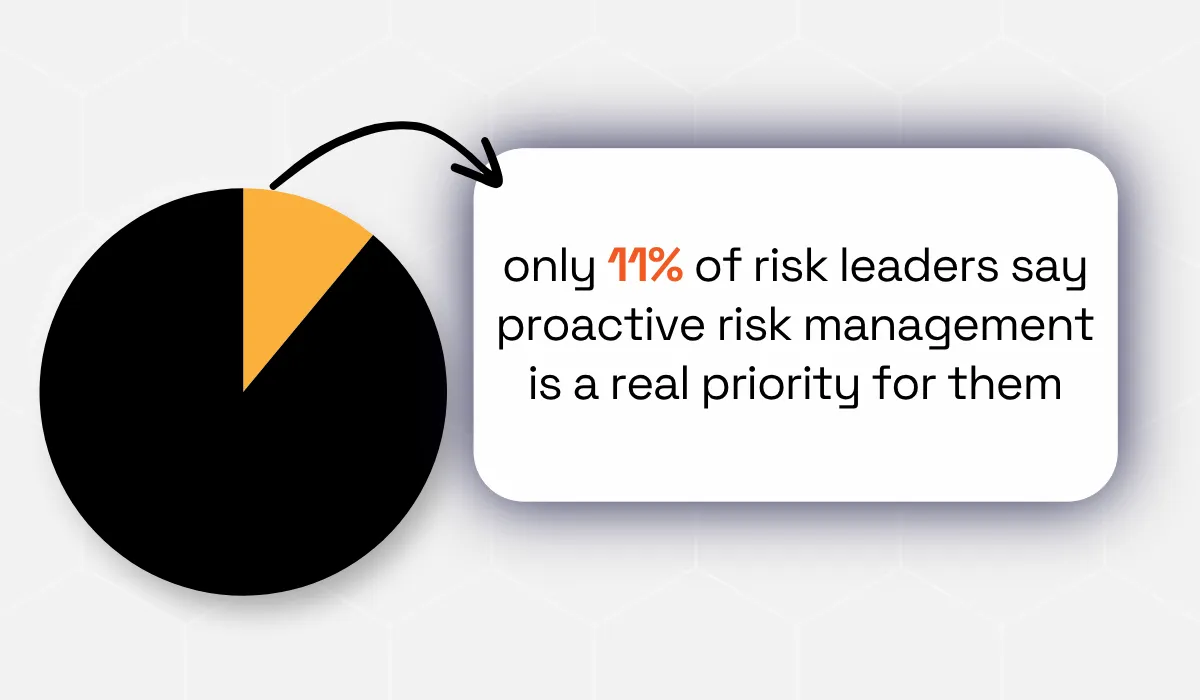
This could mean the bottleneck isn't the flood of incoming signals but the lack of a consistent way to rank them once they arrive.
Hence, your goal should be to continuously analyze signals to extract, structure, and score emerging risks based on relevance, urgency, and business impact so you can filter the flood and surface the handful of true priorities.
Build a simple scoring rubric that rates each signal on a few consistent dimensions: the severity of its potential impact, the likelihood it will materialize, and the urgency of a response.
Then standardize these rating criteria so that your teams can evaluate impact consistently across categories, instead of relying on whoever happened to review the signal that day.
Remember to define your scoring criteria before signals start arriving, not after.
Your scoring rubric should be simple, such as one to five on both severity and likelihood, and apply it the same way across every category so a cyber signal and a regulatory signal are directly comparable.
You can also use color flags (red, yellow, green). For example:
- Rate a news item Red if it describes a high-probability event with major impact (e.g., billions in fines).
- Rate Green for minor changes (e.g. new technology in an adjacent sector).
While setting up your scoring system, let automated filtering handle the first pass, flagging anything below a set threshold as low priority.
Route only the signals that clear the threshold to a human reviewer and save your team's attention for the handful of signals that could genuinely disrupt the business.
4. Route Signals to Owners
Now your signals are scanned, what's next? They must get to the right people, quickly—otherwise, there's no point in scanning signals at all, is there?
Routing rules must be well-defined: every signal type gets a defined owner, and critical signals require escalation.
That means you must define who owns each risk category or type and how alerts flow to them. For example, regulatory alerts might go to the Compliance Team, supplier alerts to Procurement, cyber to IT Security, and so on.
Compliance teams increasingly expect this kind of cross-functional routing to become standard practice.
In a 2025 Compliance Week survey, respondents said they expect to collaborate more with information security, enterprise risk management, legal, and internal audit as regulatory change accelerates, at 65%, 60%, 56%, and 51% respectively.
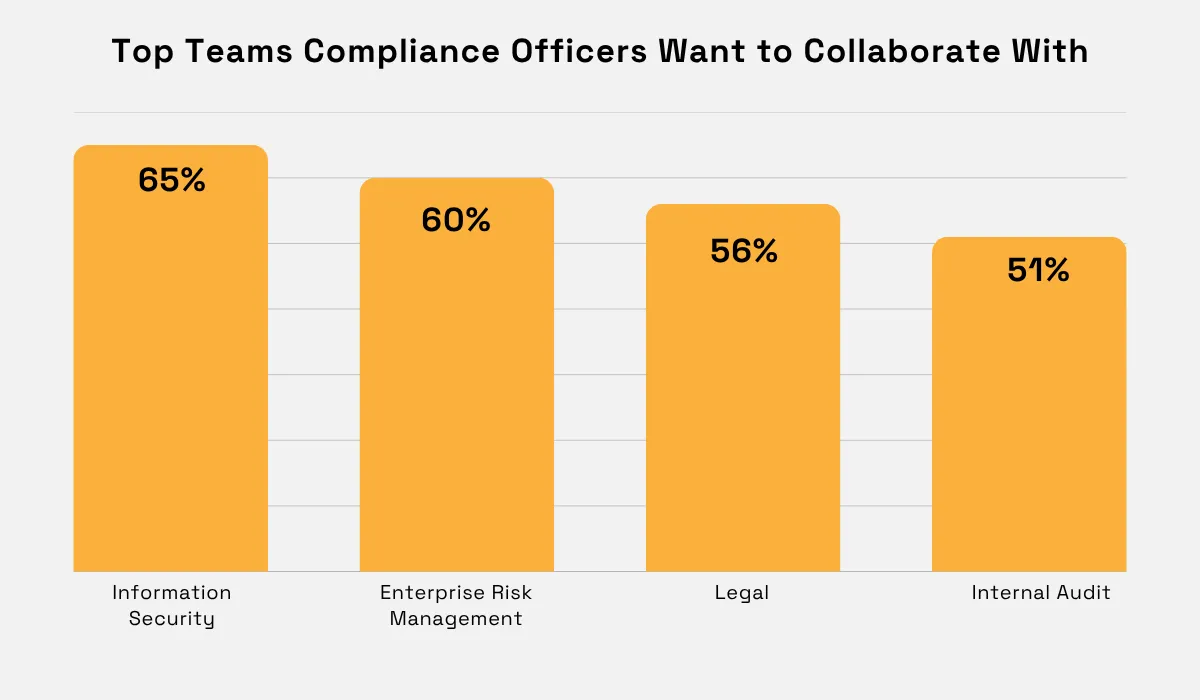
Illustration: Veridion / Data: Compliance Week
One best practice for achieving cross-functional routing is to integrate alerts into existing workflows by linking them to your enterprise risk register, your GRC system, or even your task management tools.
The idea is no new silos—scan outputs should feed into what your teams already use.
A useful structure for assigning ownership is the Three Lines Model. The first line is the operational teams. They own and manage the risk day to day.
The second line is handled by the risk and compliance functions. This line sets policy and provides oversight and challenge.
The third line is the internal audit, which gives independent assurance that the whole system actually works.
When applied to horizon scanning, supply chain signals go directly to procurement, with an additional check from the risk and compliance department.
For critical signals (high severity), define automated escalation to a specific individual with time-to-respond requirements in hours, not days. Ownership without deadlines results in no ownership.
Example:
"If signal category = Supply Chain and score ≥ 4, raise an alert for [Supplier Risk Team] and create a ticket in [Procurement System]."
For any in-house development, use connectors: for every high-risk signal, put it into the database or a dashboard.
Ideally, when an owner gets an alert, they should not have to choose a new workflow. The alert should land in the same system (checklist, mitigation plan, compliance log) they use for any risk.
This unified approach reduces review time and ensures that every signal is logged and tracked.
5. Continuously Refine the Model
A horizon scanning workflow isn't a "set it and forget it" project. This is because a horizon scanning workflow built today will not address the risks you face next year.
You should revisit each part of your model—categories, sources, scoring—on a set schedule, not whenever someone happens to remember.
Markets, regulations, and your company itself evolve, so your scanning must evolve too. Moreover, static models quickly lose relevance.
Based on the 2025 Compliance Week survey, 32% of compliance officers cited regulatory changes as their number one challenge, but only 20% found their teams very proactive.
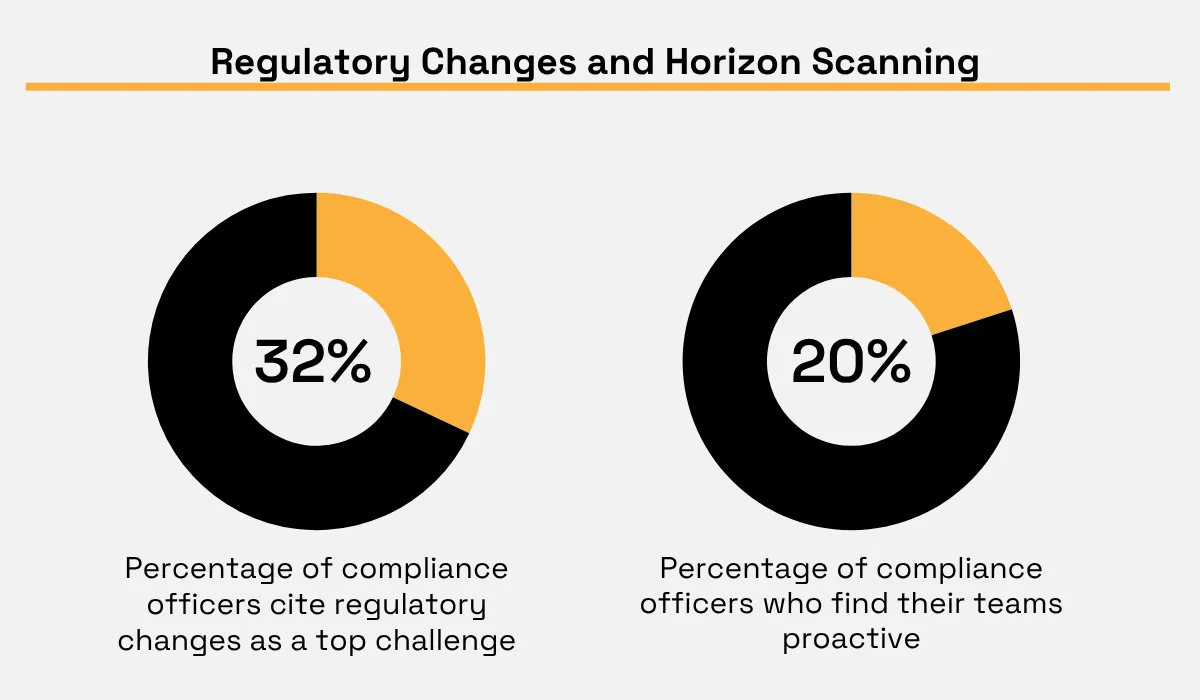
Illustration: Veridion / Data: Compliance Week
In most cases, this situation stems from an outdated modeling approach that hasn't been adjusted since its inception, despite evolving regulations and the competitive landscape.
To avoid being caught in such a scenario, use feedback loops: after scanning for a while, gather insights from owners on the process's effectiveness.
What signals did they follow, and which were false alarms? Adjust your filters and weights accordingly.
For example, if the supply-chain team flags many low-impact alerts, consider tightening those criteria. If a major risk slipped through, find out why and add the missing source or keyword.
This is where a human-in-the-loop process helps. Some systems use human-AI feedback loops to filter out irrelevant results and sharpen what counts as relevant to a specific business over time.
Tweaking your model is not an ongoing effort but a periodic one. Schedule a quarterly meeting where category owners point out incorrect, overlooked, or irrelevant signals and adjust your scoring criteria.
Keep a record of what changed and why, so each review builds on the last one instead of starting over.
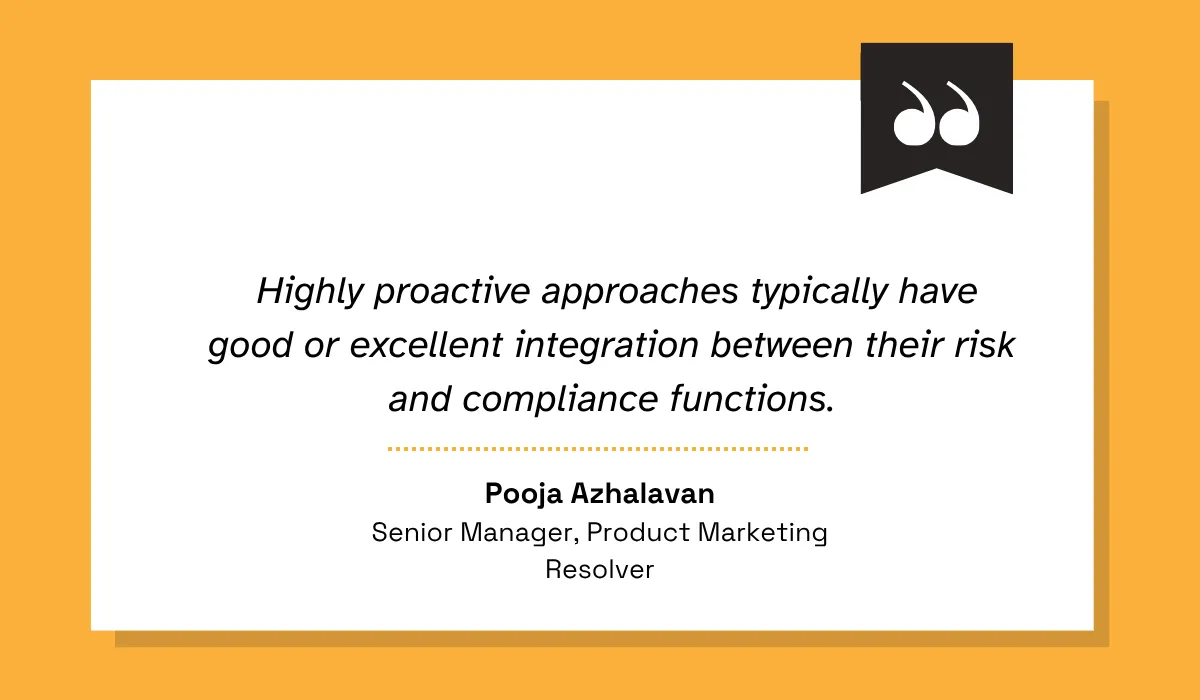
Pooja Azhalavan, Senior Manager, Product Marketing at risk software firm Resolver, calls automation a superpower for compliance teams since spreadsheet-based processes cannot keep pace with how often the risk environment shifts today.
She says:
Thus, treat every missed signal as a data point for tuning your model, not a mistake to move past and forget.
This keeps the workflow sharp and aligned with current needs, so you don't fall behind.
Fueling the Workflow With Structured Data
Each of the five steps above depends on one thing: reliable, current data feeding into the workflow.
In other words, structured, up-to-date company and market data is the fuel for your scanning engine.
Supplier and market categories rely heavily on signals such as transfers of ownership, changes to a company's footprint and operations, or even compliance risks. If the underlying company data is outdated, everything else will suffer.
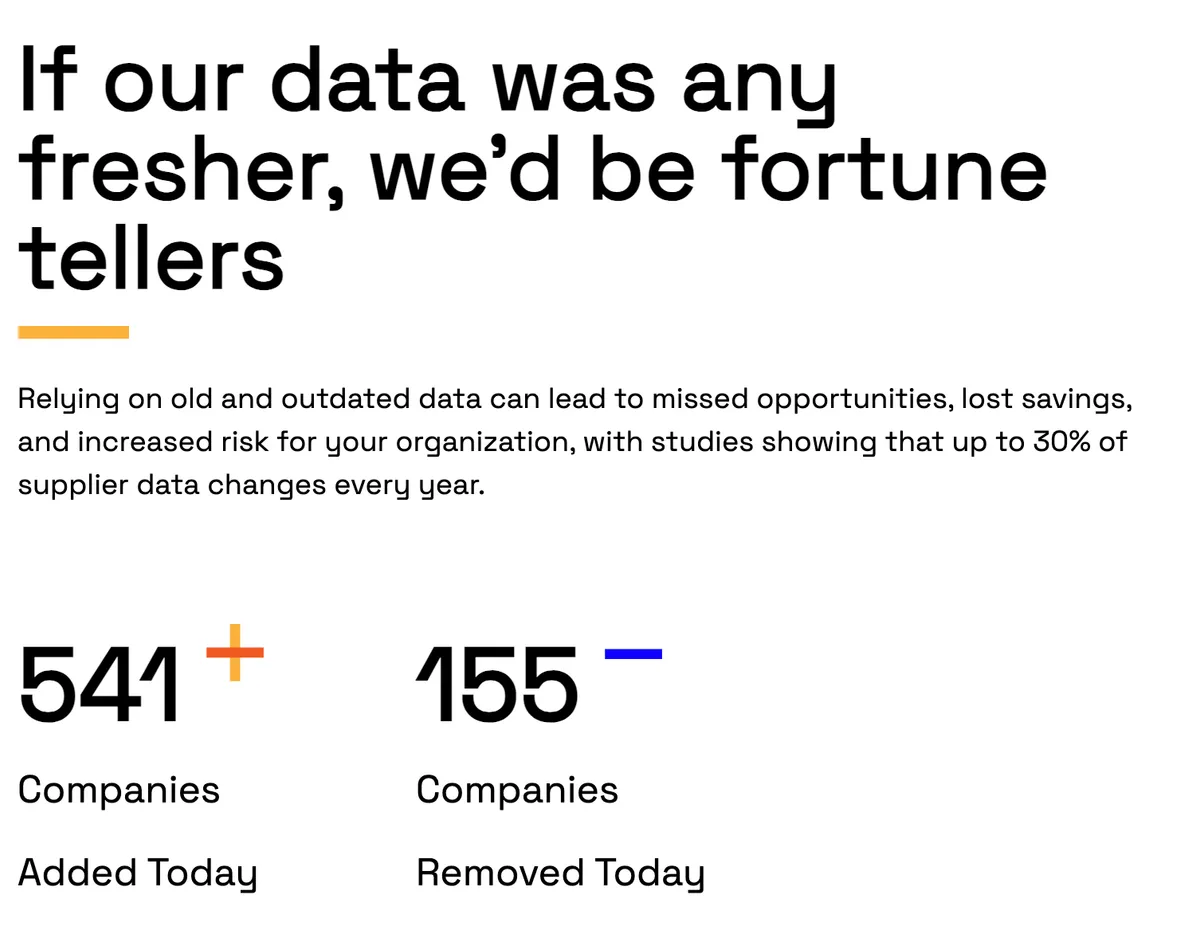
Veridion delivers a continuously refreshed graph of global company information. There are 693M active companies in its database, with each record updated weekly or more often.
Source: Veridion
Each data field has a source and timestamp, so your scanning platform can trust the inputs. For example, when a supplier's ownership changes or its financial health dips, Veridion captures that change immediately.
You can pull this structured data via an API or batch feeds and feed it directly into your scanning pipeline.
Think of Veridion's data as the raw material behind your scanning. It enriches signals with context, as each signal carries metadata such as industry classification, jurisdiction, corporate hierarchy, or ESG scores.
Because it's structured, you can query for very specific changes (e.g., any Tier 1 manufacturer in APAC with revenue above $100M that lost a shipment due to weather). Furthermore, it's updated continuously so you avoid the pitfalls of one-off research.
This is vital for your business because outdated data is expensive. Forrester, the research and advisory firm, found that over 25% of companies lose more than $5 million a year due to poor data quality.
By contrast, Veridion maintains over 99.7% accuracy across its fields and pushes updates weekly, so your signals are based on live facts rather than outdated assumptions.
By combining continuous data (like Veridion's) with your scanning logic, you close the loop, and signals flow from real-world events into your watchlists automatically.
Conclusion
Operationalizing horizon scanning means building a cycle in which you focus the scan, feed it data, filter the results, assign actions, and then refine it again.
Do these five steps methodically and you turn noise into foresight.
Start with one signal category this quarter, build the workflow around it, then expand from there.
If you build this now, you will have more time to respond when the next disruption arrives, instead of less.
Articles
Discuss how these trends affect your organization.
Our analysts are available for a short call. Bring a specific question and we will ground it in the data.
Insights
Keep reading
More analysis, research, and outcomes grounded in live company intelligence.
What is Third Party Risk Management (TPRM)
How to protect your business from vendor-related risks? This guide on third party risk management will walk you through the essentials.
The Hidden Cost of Stale Supplier Intelligence
Are you missing crucial signals to identify emerging market risks? Stale supplier intelligence can cost you dearly. Uncover the hidden dangers.
How AI Powers Continuous Emerging-Risk Detection
Tired of being blindsided by market shifts? See how AI proactively helps you identify emerging market risks before they impact your business.