Insights / Articles
How to Rate Private Companies When Public Filings Are Incomplete
Accounts were missing for 56.85% of companies in one UK register study. Find out where your private company credit rating gets its evidence instead.

- Private company ratings depend on the quality of the available evidence.
- Verify the legal entity, ownership, activities, and footprint first.
- Check each source for accuracy and recency, and document any gaps.
- If the evidence is insufficient, the committee delays or declines the rating.
Private company credit ratings may seem hard due to a lack of publicly available data.
But the gaps can be filled with alternative sources, registries, and third-party commercial data providers like Veridion that maintain a database of regularly updated company information.
This article covers alternative sources for the most important rating data and how to judge their reliability.
What Changes When a Private Company's Filings Are Incomplete?
A public filing gives you a complete view of the business.
It includes:
- Audited financial statements
- Management discussion and analysis (MD&A)
- Ownership structure
- Debt and capital information
- Corporate hierarchy
- Business overview
- Legal and regulatory matters
All this information is required for credit rating. You need to know about every aspect of a business to identify risks and rate it accurately.
Public companies provide all this data as prescribed. However, if you search for private companies, you will often find incomplete or outdated filings.
There are several reasons for this. The main one is that disclosure rules differ by jurisdiction.
In many jurisdictions, private companies are not required to disclose this level of detail, and where they do file accounts, the filings can be limited or not publicly available.
A study of the UK corporate register (as of June 2021) found that account information was unavailable for 56.85% of companies, mostly because many were newly incorporated and had not yet filed their first accounts. Another 40.66% fell into the study's smallest-account category, where disclosure requirements were minimal.
Of the limited companies analyzed, 99.87% were private.
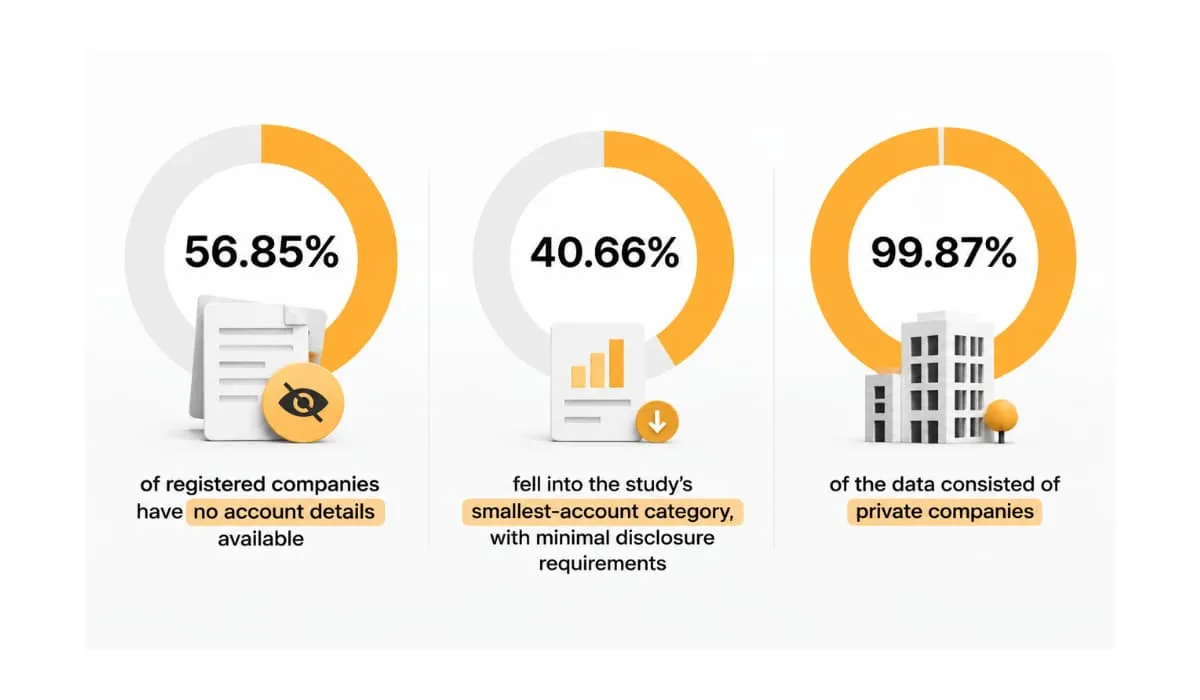
Illustration: Veridion / Data: European Business Organization Law Review
The other reasons come down to a lack of incentive.
The owners want to protect their information and often do not want to reveal informal or complicated ownership structures. The latter case is most often seen in family-owned businesses.
Properly audited reports and documents require budget and resources. Many private companies lack them, and with no requirement to file, they skip it.
Despite this information gap, the rating process for private companies closely follows the one for public companies.
The “Report on Vulnerabilities in Private Credit” (2026) by the Financial Stability Board (FSB) notes that, according to market participants, private credit ratings go through a process similar to public ratings, including financial and credit analysis, peer comparisons, and committee oversight.
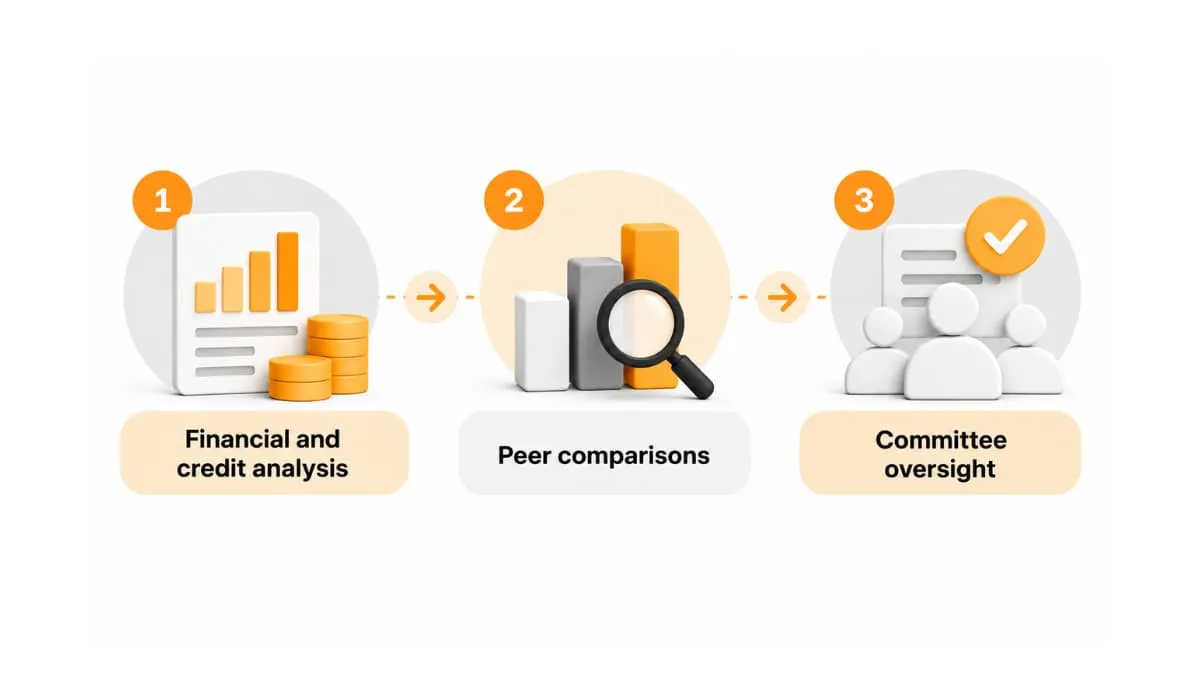
Illustration: Veridion / Quote: Financial Stability Board (FSB)
So you need almost the same information to rate a private company, but more of it has to come from other sources.
How to Replace Missing Filing Information With Other Evidence
For every information category (financial, ownership, corporate structure, legal) that is unavailable in filings, you need to find an alternative source.
You also need a way to judge and verify that information.
Establish the Legal Entity and Group Structure
When filings are incomplete, you need a reliable way to find the business across different databases.
Names are not reliable. They can be duplicated, have multiple versions (trading name, brand name, legal name, etc.), or change in translations.
Identifiers are a safe option. These are codes assigned to legal entities, and each one is unique to a single entity. This ensures you do not accidentally feed a different business’s data into your system.
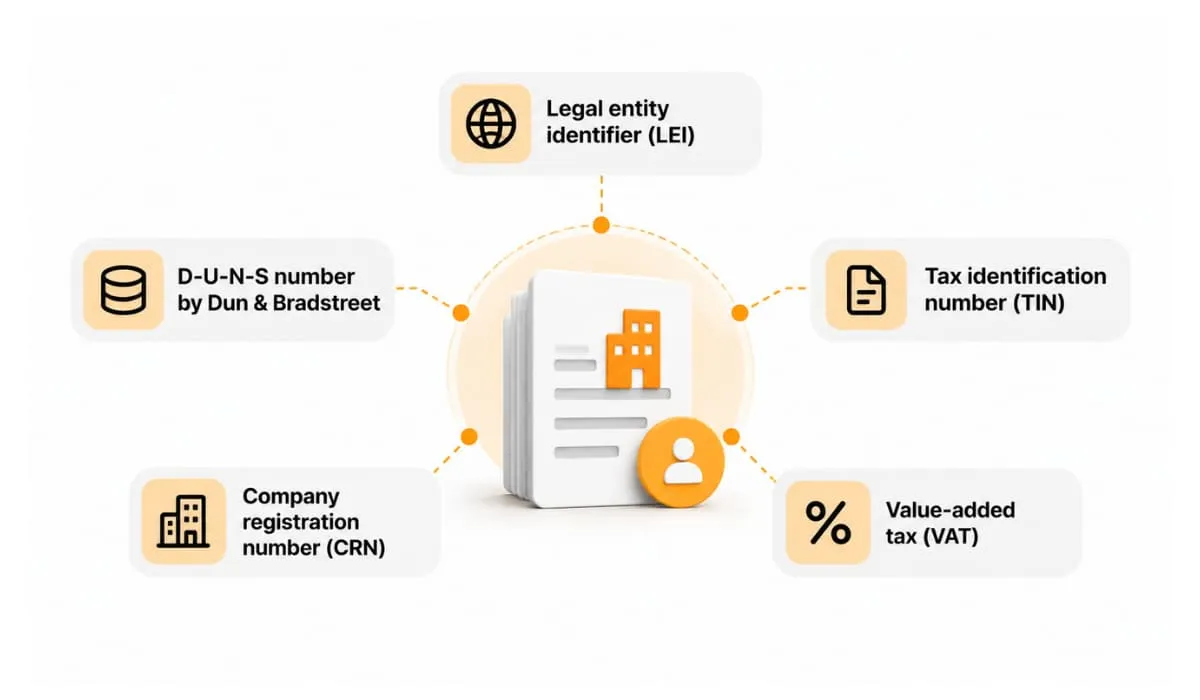
Illustration: Veridion
You can find business identifiers in company registries, regulatory filings, official business databases, and commercial data providers.
Group structure matters too. The entity at hand could be a parent company holding subsidiaries, or it could be under another company’s umbrella.
Credit ratings are highly dependent on an entity's group structure. A parent’s support or a subsidiary’s debt can affect the ratings of both entities.
Establishing group structure early also helps you find more information. For example, if a public company is part of the group, its disclosures may provide insights into the main entity’s financial position.
You can establish group structure through dedicated ownership registries. Access varies by country. Some ownership registries are public, while others restrict access, so you may need to request the information.
One more way to find ownership data is to request the information directly from the company.
Both of these methods yield trusted data, as one is from the official registries and the other is directly from the issuer.
Third-party data providers are another way to pinpoint the legal entity and its ownership.
Many use artificial intelligence to collect data from a wide range of digital sources at scale and keep it structured and up to date in one place.
Veridion, for example, continuously refreshes its data and collects it from across a company’s digital footprint, helping fill the gaps left by registries.
Its Entity Resolution matches a company to a single record and links it to its corporate hierarchy.
But data from commercial data providers can be inferred and may need to be verified.
To make this verification easier, Veridion attaches a confidence score and the reasoning behind each match, so you can see which records need a manual check.
Identify What the Company Does Today
Most filings show the industry code of the business. The purpose is to categorize a business based on the industry it operates in.
However, industry codes are not frequently updated. Hence, they can become outdated as the business evolves. Moreover, they only tell you the industry and not the complete business activity.
The next way to find the business activity is through business descriptions. But if they are incomplete or missing, there are several ways to understand what a company does.
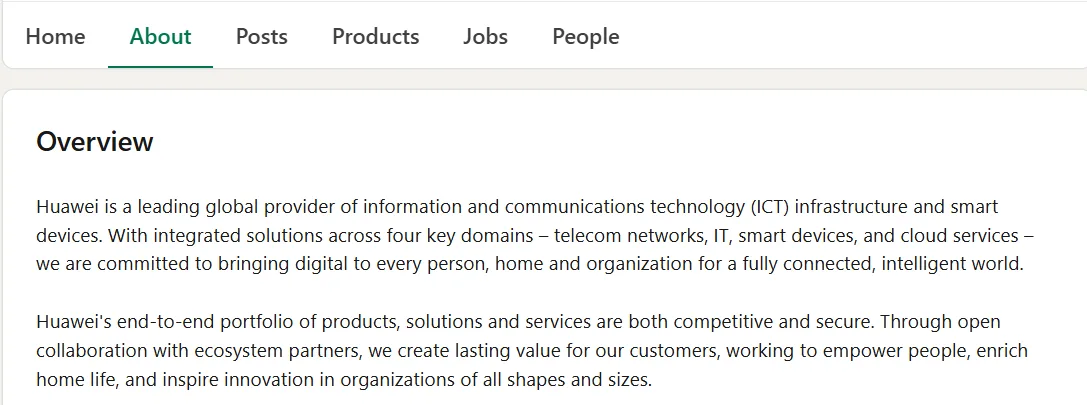
Website and social media: Look at the services or product pages of the website and social media descriptions. LinkedIn company pages have an overview section where companies describe themselves.
For example, the following image shows the overview of Huawei, a privately owned Chinese multinational technology company.
Source: LinkedIn
Hiring positions: Job postings can indirectly tell you the industry, what the company is doing and what it is building.
Any other available information: A company might list its licenses, patents, collaborations, or tenders on the website or social media.
Any press releases or news from the company, either through the website or social media, can inform you about its operations. Example: Employees often post company updates on LinkedIn.
There are two parameters to rate the reliability of these alternative sources: online presence and recency of information.
If a company is digitally active or the documents and information are recent, there is a higher chance the data is current and reliable.
If the company’s social media or website are inactive or the documents are old you will have to verify the information.
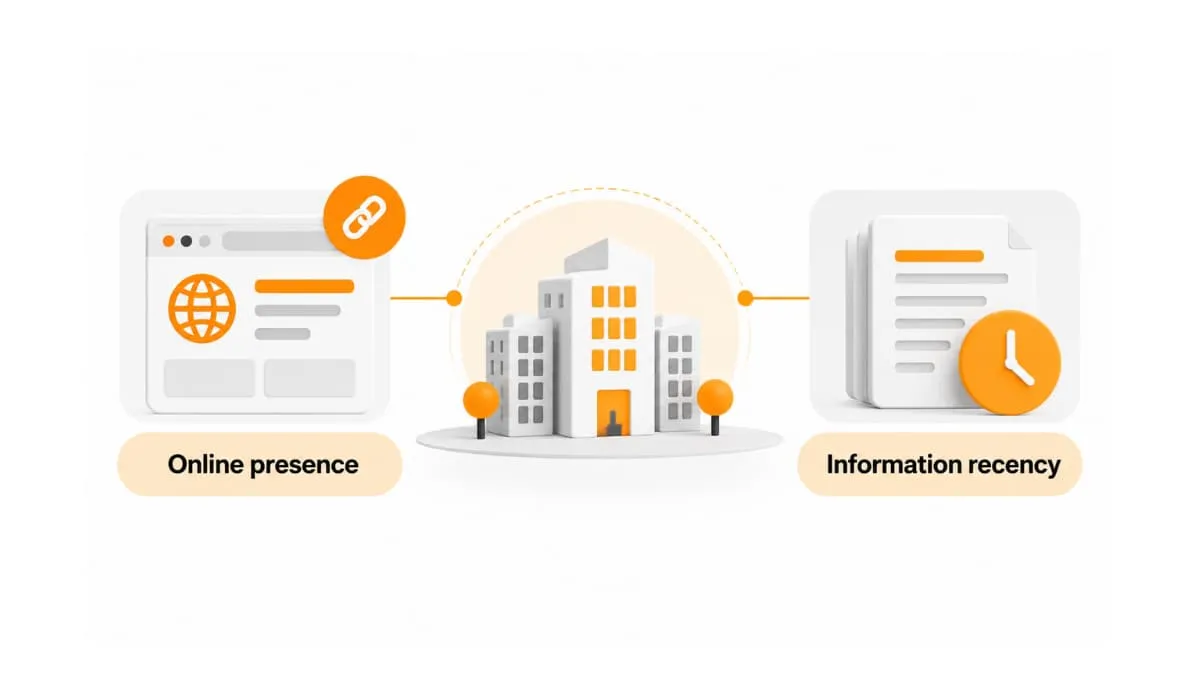
Illustration: Veridion
If a company runs more than one business, record each activity separately, with supporting evidence.
Third-party data providers are a good option for gathering operational data at scale. But here the reliability depends on the data provider.
A financial analytics provider used Veridion to fill gaps in its private-company data. Veridion increased NAICS industry-code coverage from 30% to 100% and added operational details such as company activities, products, technology use, locations, certifications, and ESG signals.
Each classification came with confidence scores and source evidence, so the data could be checked and traced.
With Veridion’s data, the provider could offer its clients private-company data that goes beyond what filings and registry feeds contain.
Gauge Size, Footprint, and Direction From Operating Evidence
Operational data can help you gauge the size and scale of the business when the financial data is not available.
Data points like headcount, location(s), number of sites, and site type (warehouse, plant, office) give strong signals about a business’s scale, though they are not a replacement for financial data.
You can find this information through:
Headcount | LinkedIn company pages show a self-reported company size range and the number of employees on LinkedIn. Job postings can also give clues about whether the company is expanding. |
|---|---|
Operational sites | Check government records for permits and licenses that show where a company operates. Property records can help identify its buildings. |
Locations and site types | Google Maps or a company’s website may list locations, addresses, warehouses, and factories. |
Always check dates to ensure the information is current. Double-check the data across two or more sources or verify the information, as websites and business listings are often not updated. Using unverified data can lead to a flawed rating.
Here’s a summary of all the alternative data sources we have discussed.
Question a filing would answer | Replacement evidence | How reliable it is | What to document |
|---|---|---|---|
Identity and group | Official and ownership registries, the company itself, and third-party databases | High when confirmed by registries or the company; inferred links need verification | Identifiers, parent and subsidiary links, source, date, and confidence level |
Business activity | Website, LinkedIn, job postings, licenses, patents, press releases, and data providers | Stronger when recent sources agree; industry codes may be outdated | Each activity, supporting evidence, source dates, and confidence level |
Size | Headcount, job postings, operational footprint, and available financial disclosures | Audited figures are strongest; headcount and similar indicators are only clues | Figures, estimates, dates, sources, and gaps |
Footprint | Company website, licenses and permits, property records, Google Maps, and directories | Official records are strongest; online listings may be outdated | Addresses, site types, evidence of operations, and dates |
Direction | Hiring trends, new sites, expansion announcements, and changes in operational data | Stronger when several dated sources show the same trend | Changes over time, evidence, and whether the trend is confirmed or inferred |
Financials | Information from the company, group-level statements, and verified disclosures | Audited company-level statements are strongest; group accounts may not reflect the entity | Figures, period, entity covered, audit status, and assumptions |
Use this table to see what information you can find, how reliable it is, and what you still need to verify.
How to Judge Whether the Evidence Is Enough to Rate
The International Organization of Securities Commissions (IOSCO) surveyed credit rating agencies (CRAs) and found that they use different ways to judge whether the information they have is sufficient.
Some have internal policies, some use checklists, while others conduct training on data sufficiency.
The same report describes what CRAs do when information is insufficient.
Besides finding replacement evidence through public information and third-party commercial data providers, CRAs in the IOSCO survey noted that the most relevant information usually comes from the issuer itself.
CRAs request information, and some even arrange visits for inspection and information gathering.
If committee members have concerns about the information, the rating committee may be adjourned while more information is collected. If the information is still insufficient, the CRA declines to assign a rating or withdraws an existing one.
Fitch Ratings applies the same rule in its rating process: if the available information, both public and private, is insufficient to form a rating opinion, it does not assign or maintain a credit rating.
The alternative sources of information we have discussed do not fully replace the primary data requirements.
Hence, it is the rating committee’s responsibility to analyze the information and decide whether it is sufficient as per their set criteria or needs further verification.
How to Document the Evidence Behind the Rating
In 2008, the US Securities and Exchange Commission (SEC) examined Fitch, Moody's, and S&P and found that they did not always document significant steps in the rating process, including the reasons for deviating from their models and for rating committee decisions.
For private company credit ratings, the analyst note should record:
- Sources used
- When each source was checked
- How confidently the information was matched (confidence score)
- Missing or conflicting information
- Assumptions
- Why the available evidence was sufficient
It should distinguish between reported facts, estimates, and observations.
The rating committee’s reasoning matters just as much.
Their notes should explain the main factors behind the rating decision and any adjustments made to the model. They should also clarify why the committee considered the available evidence sufficient despite missing information or uncertainty.
Conclusion
Incomplete filings do not mean you cannot rate a private company. But you need to fill the gaps with evidence from reliable sources.
Check how current and accurate the data is, and document what you could and couldn't confirm.
The rating committee will then decide whether the available information is enough to support the rating.
Start with one private company you are reviewing. Use the summary table above to map its evidence and identify what's missing, uncertain, or undocumented.
Articles
Discuss how these trends affect your organization.
Our analysts are available for a short call. Bring a specific question and we will ground it in the data.
Insights
Keep reading
More analysis, research, and outcomes grounded in live company intelligence.
6 Issuer Data Quality Checks Before a Case Reaches the Rating Committee
Tired of rating committee delays? Ensure top-notch issuer data quality with 6 essential checks. Avoid costly errors and streamline your process.
Best Practices for Data Enrichment
Learn how data enrichment best practices help businesses turn raw data into accurate and actionable insights.
How to Build a Strong Market Intelligence Strategy
Learn how to build a strong market intelligence strategy that helps you track trends, understand competitors, and make smarter decisions.