Insights / Articles
The Private Equity Deal Sourcing Data Stack: From Thesis To Ranked Target Universe
Two records for one company inflate the target pool. Follow seven layers of private equity deal sourcing data from thesis to the ranked list you hand off.

- Two records for one company inflate the apparent acquisition pool.
- A target matching 90% of preferences fails screening if it misses a must-have criterion.
- Missing financial data limits confidence in a target’s position on the list.
- Reasons for rejecting companies guide the next search.
Which companies deserve a place on your acquisition shortlist? A private equity deal sourcing data stack turns your thesis into a ranked target list through company discovery, identity resolution, classification and enrichment.
Veridion, a company data provider, turns thesis criteria into structured company searches and returns enriched profiles. Here’s how you connect those layers and keep your target list current.
1. Translate Your Deal Sourcing Thesis Into Structured Search Criteria
Your investment thesis must be precise enough for consistent screening across analysts. Two analysts assessing the same company should reach the same eligibility decision.
Suppose your mandate is to acquire established industrial-maintenance businesses in North America. Start by defining the sub-sector by what companies do. Specify whether qualifying services include equipment repairs and maintenance contracts, and how to assess a parts distributor earning a small share of revenue from servicing.
These definitions determine which businesses enter your search.
Published acquisition criteria illustrate how investment firms express their requirements. HKW, a private equity firm, targets companies headquartered in North America with EBITDA (earnings before interest, taxes, depreciation and amortization) of $3–30 million.
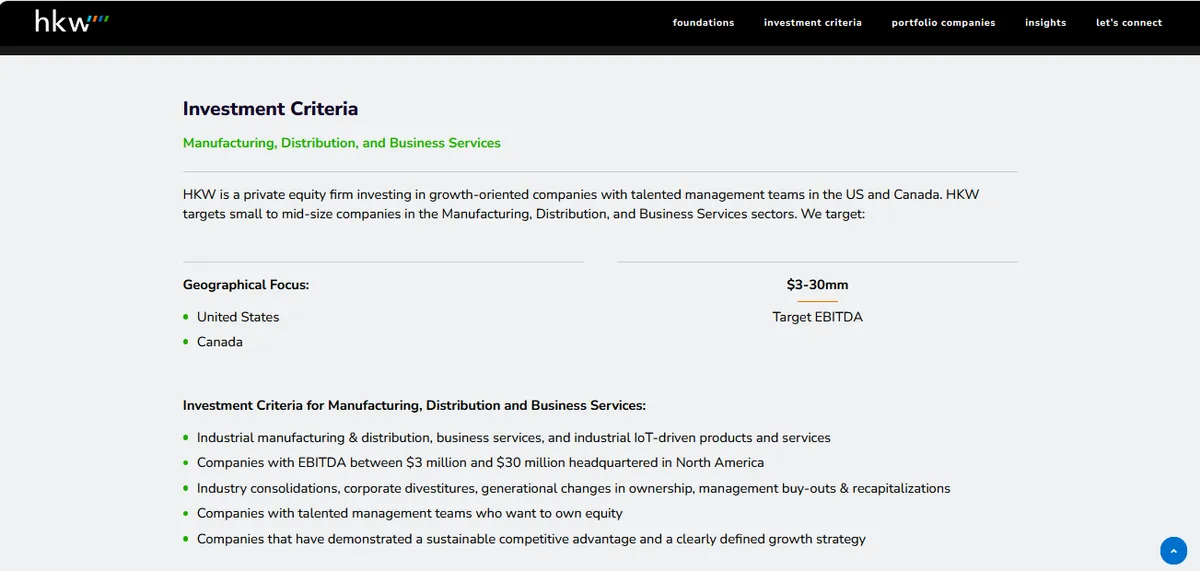
Source: HKW
Define the remaining search fields just as precisely. A size band sets the financial range. Geography specifies headquarters or operating locations. If your mandate concerns headquarters, a Canadian service branch alone leaves the location condition unmet.
Ownership type distinguishes founder-owned, family-owned and sponsor-owned businesses. Decide whether each category affects eligibility or expresses a preference.
Growth stage specifies the business’s maturity. Define the operating history and revenue evidence you expect from an established company.
Record these decisions together so the data team understands how to apply them. The following table sets out the rules for our industrial-maintenance example.
Criterion | Must-have / Nice-to-have / Negative filter | Measurable from company data or analyst judgment |
|---|---|---|
Sub-sector: industrial equipment maintenance | Must-have | Service descriptions, verified by an analyst |
Size band: $10–50 million annual revenue | Must-have | Reported revenue, with estimates identified |
Geography: US or Canadian headquarters | Must-have | Headquarters-country field |
Ownership type: founder-owned or family-owned | Nice-to-have | Ownership records, subject to confirmation |
Ownership type: sponsor-owned | Negative filter | Ownership records |
Growth stage: established, revenue-generating business | Must-have | Operating history and financial evidence |
In private equity target screening, must-have criteria decide which candidates stay. A family-owned business outside the revenue band fails the size condition despite matching the ownership preference. Negative filters remove excluded businesses at the outset, such as sponsor-owned companies in this example.
An undisclosed revenue figure leaves eligibility unresolved. Mark the company “pending financial verification” and record the question for analyst review.
Some criteria need analyst judgment, such as a company’s competitive position. Berkley Capital, for example, includes the following characteristic among its investment criteria.

Illustration: Veridion / Quote: Berkley Capital
For an industrial-maintenance business, examine why customers renew service contracts and choose its technicians over competing contractors. Record the evidence supporting your assessment.
Search several PE firms’ acquisition pages within your sector for wording relevant to your mandate. Test the resulting definitions against sample companies with another analyst and resolve disagreements.
Your agreed rules then guide the company search. Veridion’s private equity data supports filters across activity, products and services, location and size. Its APIs return enriched company profiles with excerpts from company sources that support each match, so your team can check the evidence as it builds the initial pool.
2. Build the Raw Target Universe
With your criteria agreed, search for companies to assess. For our industrial-maintenance thesis, look for equipment repairs and maintenance contracts in company service descriptions, then apply the geography and size filters. These results form your raw target universe, a candidate pool awaiting cleaning and verification.
Service descriptions reveal activities hidden by broad industry categories. The US Census Bureau’s NAICS 811310 definition, for example, groups forklift repairs and commercial refrigeration maintenance within one industry.
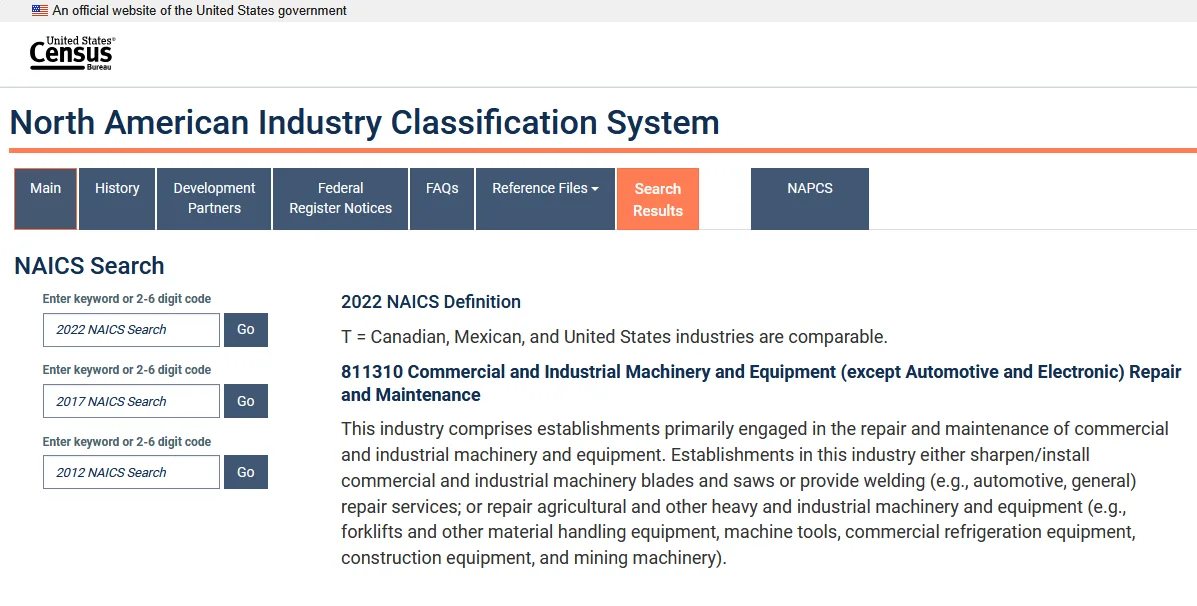
Source: US Census Bureau’s NAICS 811310
For a search focused on pump maintenance, examine service descriptions for evidence of pump repairs. This distinguishes relevant businesses within the category.
Extend discovery through trade directories and deal-team referrals. CT Acquisitions discusses combining relationship channels with data-led sourcing. Each directory or referral list follows its own inclusion rules, so a universe drawn from one route inherits its blind spots. Compare results across routes to see which companies only one source returned.
Retain each candidate’s source URL and collection date so analysts can see why it was included and how old its evidence is.
Test the combined results against known businesses matching your thesis. If examples are missing, investigate whether the search terms exclude their service descriptions. If results extend beyond your niche, check whether the query lets in parts distributors or unrelated maintenance services. Check the pool’s size as well. A count far below the establishments listed under the matching industry code suggests the search terms are too narrow, while a much larger count suggests the query lets in adjacent activities.
An additional discovery route is to search for evidence of business expansion. In Veridion’s investability-signals case study, a US financial-data provider wanted to identify companies gaining momentum, including private businesses absent from its existing list.
Veridion compared company activity over time. It tracked hiring through job openings and reputation trends through customer reviews. New sites indicated geographic expansion, while headquarters relocations showed whether a company had moved into a larger or higher-class building. Veridion combined these signals into a single momentum score.
Veridion identified 1,670 companies with changes to their headquarters or operating locations. Of these, 1,209 (72%) were not on the client’s existing company list.
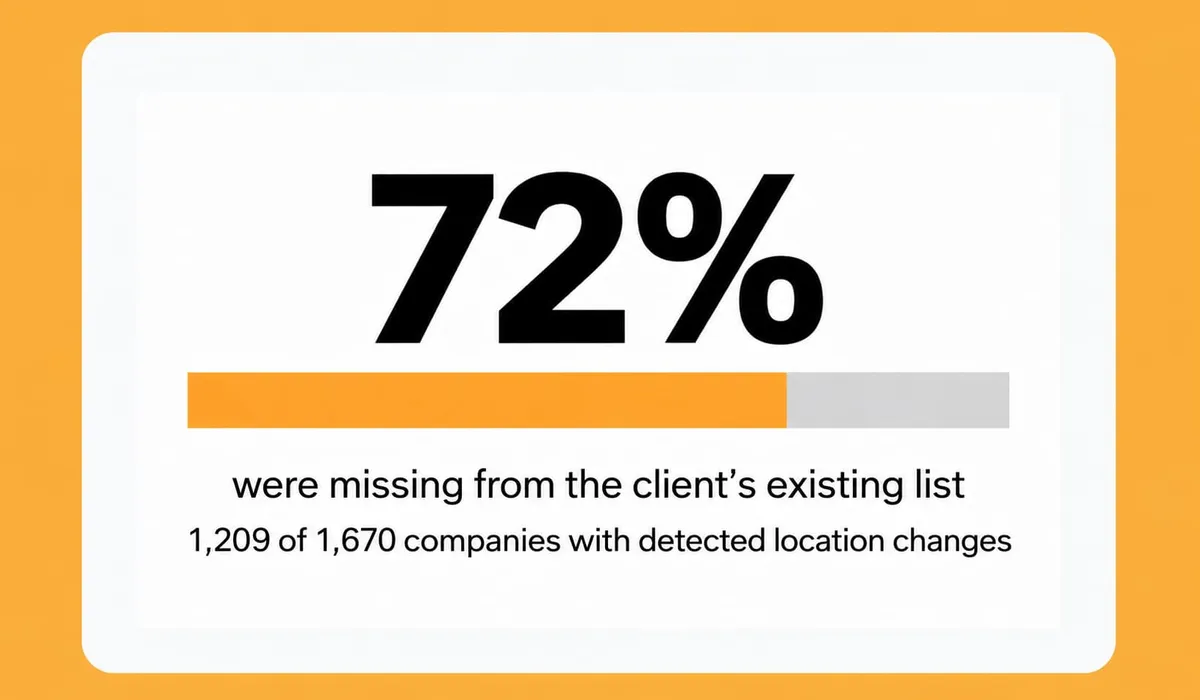
Source: Veridion
The result shows how tracking location changes can reveal companies missing from an existing sourcing list. For your industrial-maintenance search, look for new service locations and hiring activity. Add the companies you find to your raw pool, then check them against your acquisition criteria.
3. Deduplicate Entities Into One Record per Company
Your raw pool includes records collected through different routes. A company listed under its trading name in a directory might appear under its registered name elsewhere. Abbreviations and outdated addresses create further variations.
Duplicate entries inflate the target count and scatter research across profiles. One analyst’s findings stay on one record while a colleague assesses the same business through another.
For our industrial-maintenance example, compare suspected duplicates using registration identifiers and website domains, with addresses as supporting evidence. Similar names alone leave identity uncertain.
Combine confirmed duplicates under a stable company ID, retaining the original names and source references. Send uncertain matches to an analyst for review.
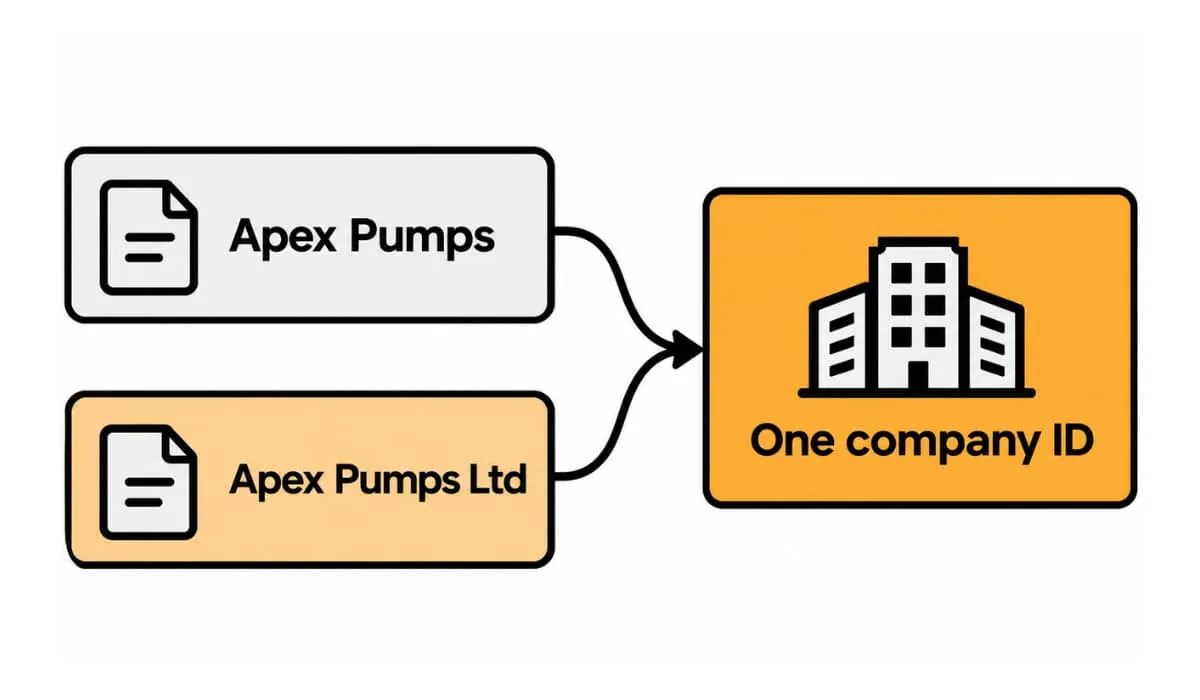
Illustration: Veridion
This process, called entity resolution, identifies records that refer to the same business. Veridion’s entity-resolution service returns company identifiers with the evidence and confidence behind each match. It also links parents and subsidiaries.
A parent and its maintenance subsidiary belong to one group, but each retains its own identity. Keep separate company records and document the ownership link. Merging them would obscure the business you intend to acquire.
Ownership also affects eligibility. Our example mandate excludes sponsor-owned businesses, so tag confirmed cases for removal from the target list. Mark uncertain ownership for verification.
Buying a subsidiary on its own is a carve-out, the acquisition of part of a larger business. Assess whether its maintenance operations depend on the parent’s staff or shared systems.
Veridion’s Ultimate Parent API, available under an enterprise contract, returns the company at the top of a business’s majority-ownership chain. Investment funds aren’t treated as parents of their portfolio companies, so confirm sponsor ownership through other evidence, such as acquisition announcements.
Koenig & Bauer’s published group structure shows how named subsidiaries sit within a group.
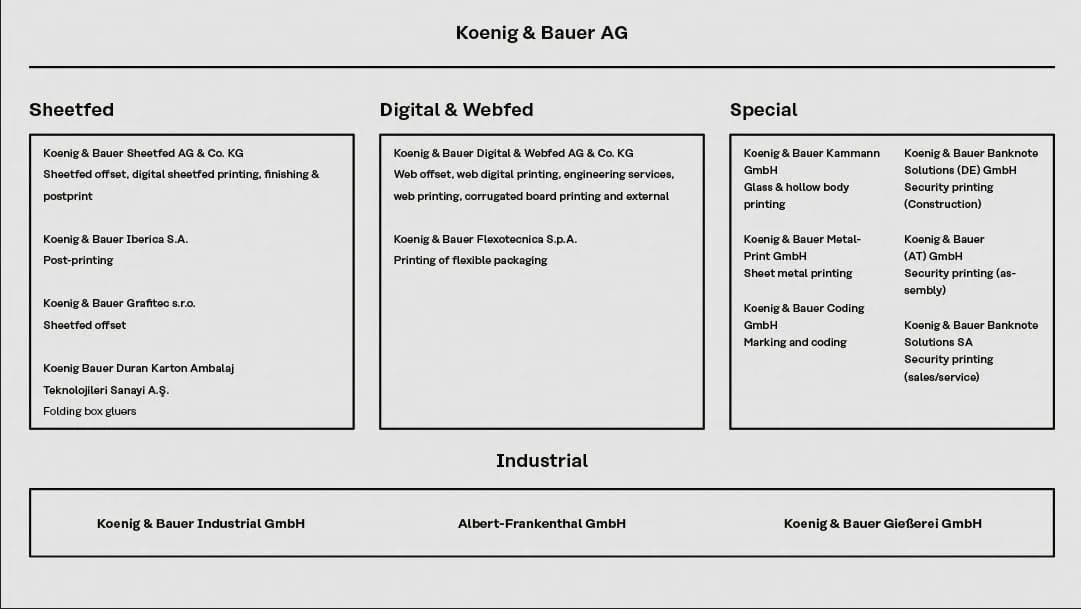
Source: Koenig & Bauer
Keep each subsidiary’s record linked to the group so the deal team distinguishes the business under consideration from its parent. Your list now has one record per company, with group relationships preserved.
4. Classify Companies Against Your Thesis
With duplicate records resolved, assess how each business matches the activities in your acquisition thesis. Our industrial-maintenance search includes pump repair, so define what qualifies for this label. Repairing or overhauling industrial pumps qualifies; selling replacement parts alone falls outside it.
NAICS and SIC codes place businesses in broad industry categories, so a pump-repair specialist and a forklift servicer can share one code. To classify a company against this definition, examine its current service descriptions.
Sulzer’s pump-services page, for example, identifies repair and overhaul services alongside spare parts.

Source: Sulzer
The repair description supports “pump repair,” while the parts activity supports “spare-parts supply.” Keep both labels, with evidence for each, so the company keeps both classifications.
Less specific descriptions leave classification unresolved. If a company advertises “equipment solutions,” assign an analyst to establish whether it repairs equipment or sells it.
Have another analyst review a small set of classified companies. If you disagree about a distributor that also offers repairs, decide whether any documented repair service qualifies or whether maintenance must be its main activity. Revise the category definition and review the affected records.
Veridion Search supports searches across products, services and current activity, helping you apply these thesis-specific categories. Retain the supporting excerpts with each label so the deal team understands why the company belongs in its category.
5. Enrich Profiles With the Attributes the Ranking Needs
Your classified records show which services each business performs. Enrichment adds the attributes, such as revenue and ownership, that the rest of your thesis needs.
For our industrial-maintenance example, revenue supports size screening, while ownership identifies sponsor-owned businesses excluded by the mandate. Add operating locations if regional service coverage affects priority, following Veridion’s guidance on selecting fields relevant to the assessment. Veridion’s guide to verifying a target’s operational footprint covers how to confirm that each site is active.
Record how each figure was obtained. Veridion’s field documentation distinguishes “Extracted” revenue published in source material from “Modelled” estimates through its revenue.type field.

Source: Veridion
Keep this label when you import revenue figures. An estimate inside your target band lets a company pass provisional screening until its financials are confirmed. Record the estimate’s source date so the deal team understands the age of the evidence.
Where revenue is unavailable, headcount gives a rough indication of size. Treat this proxy as grounds for further research. A workforce figure alone establishes neither sales nor profit.
Keep unresolved financial fields explicit. Record undisclosed EBITDA as “undisclosed” and a figure awaiting validation as “unverified.” Leave the numerical field empty, because zero would imply an earnings result.
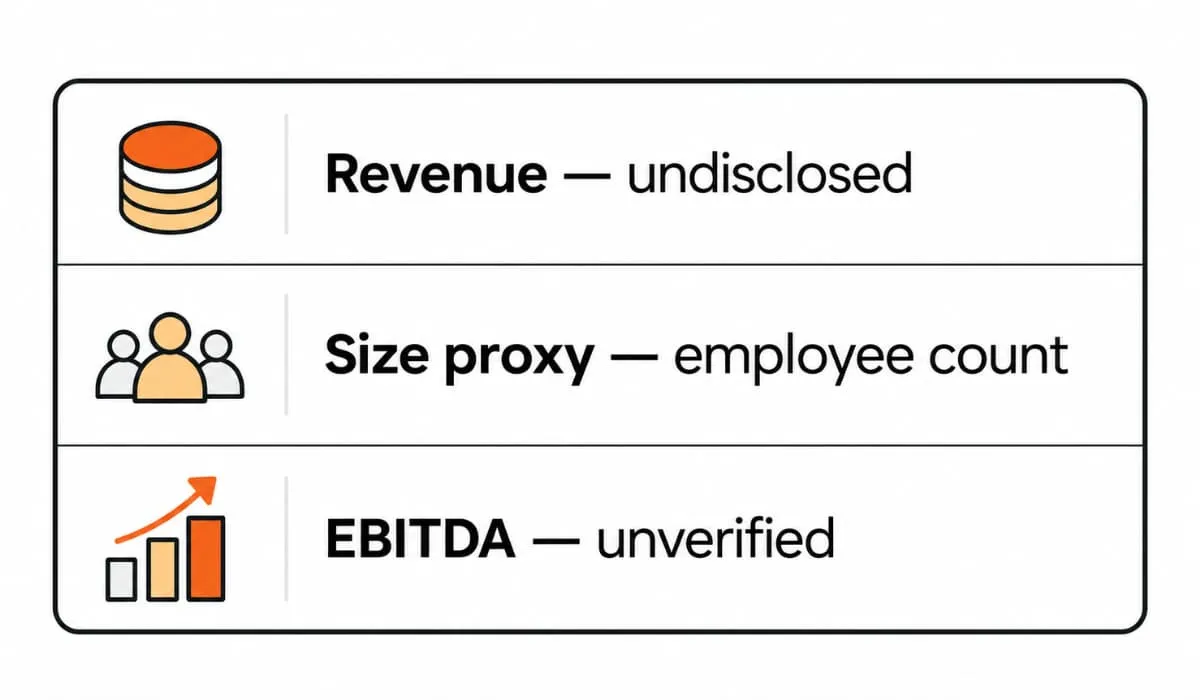
Illustration: Veridion
In this example, the company’s services fit the thesis, but its financial eligibility is still open. Pass the missing-data flags to ranking alongside the available attributes so its position reflects the limits of the evidence.
6. Rank Targets by Thesis Fit
Rank companies meeting your must-have criteria according to the preferences agreed in your thesis. Keep businesses awaiting financial or ownership verification in a review queue, with the unresolved condition recorded.
Within the eligible pool, assign priority tiers to organize acquisition research. Under our industrial-maintenance mandate, confirmed family ownership places a company in the priority tier. An eligible business without this characteristic enters the standard tier.
If several preferences influence placement, document their relative importance. That way, individual analysts don’t weight them differently.
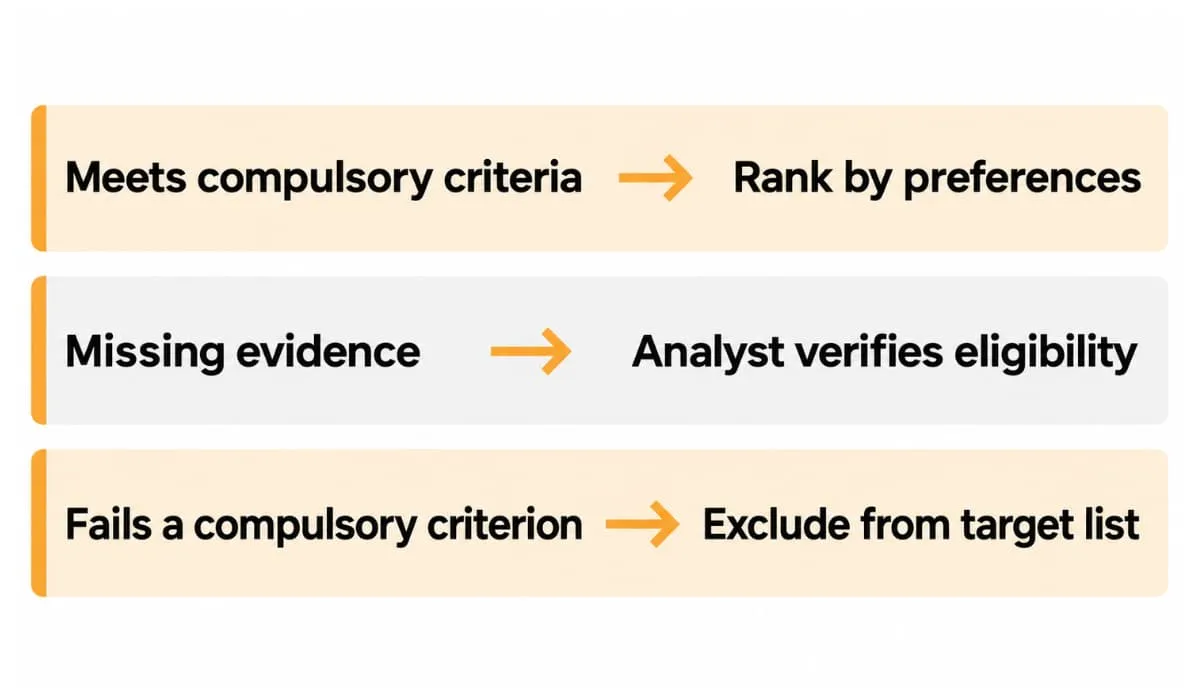
Illustration: Veridion
The tier records acquisition priority; confidence reflects the evidence supporting the assessment. Keep both visible, as in the table below. Both example companies meet the must-have criteria.
Target | Initial tier and rationale | Evidence confidence | Analyst decision |
|---|---|---|---|
Maintenance company A | Priority: confirmed family ownership | Ownership supported by registry records | Retain placement |
Maintenance company B | Standard: ownership outside the preferred categories | Must-have criteria verified; new ownership evidence received | Promote if the evidence confirms family ownership |
When an analyst overrides a placement, keep the original alongside it, with the supporting evidence and the date.
Test the rules against past targets, including rejected opportunities. Reconstruct the assessment from research available on its original date. Exclude subsequent discoveries to avoid look-ahead bias, where later knowledge distorts the historical result.
Compare the resulting priorities with documented reasons for pursuing or rejecting those businesses. If the rules elevate an unsuitable target, identify the criterion responsible. Revise its definition or its weight, then test a different sample.
Pass the ranked records to the deal team with the rationale and revision history attached.
7. Hand Off a Living Target List to the Deal Team
The deal team takes over from your research when the ranked list reaches its customer relationship management (CRM) or deal-tracking system. Match company IDs to existing entries so analysts’ findings sit alongside the team’s contact history with each business.
Whoever prepares the first conversation with a target then sees the research behind the recommendation, including open questions.
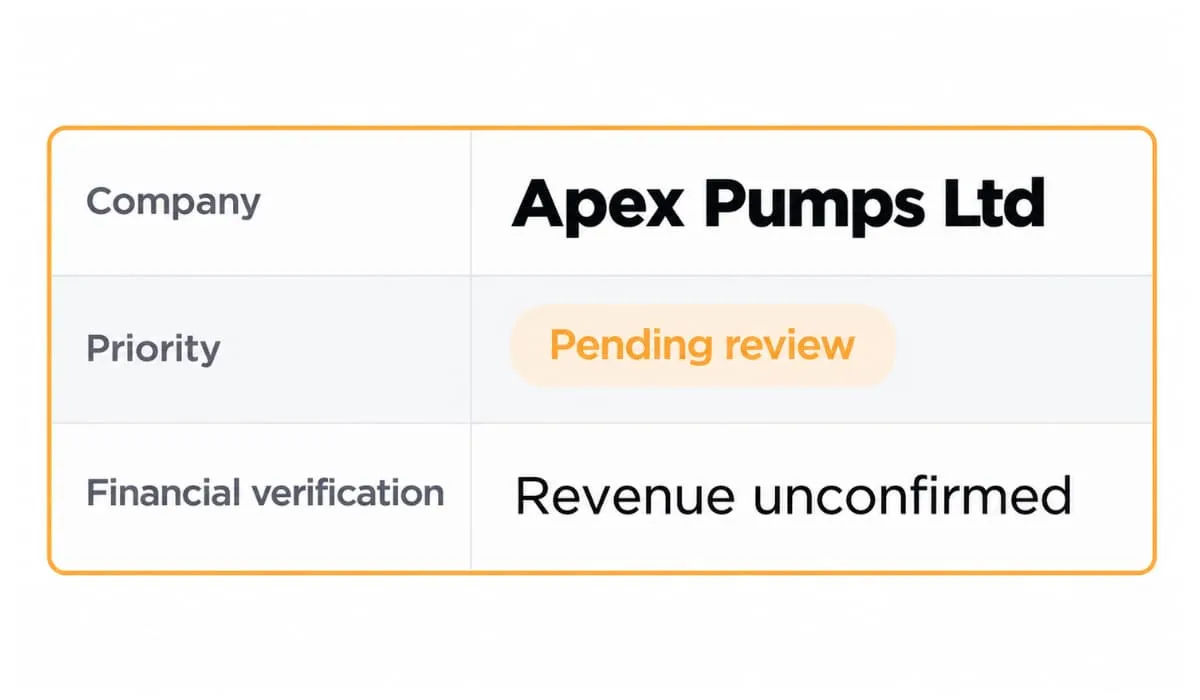
Illustration: Veridion
For this handoff, preserve the following fields.
Resolved identity | Connect research and outreach to the correct company. |
|---|---|
Classification | Identify the services relevant to the thesis. |
Key attributes | Record the details supporting eligibility and priority. |
Confidence | Distinguish estimates from verified information. |
Source and date | Trace claims and assess the age of evidence. |
Reason for rank | Explain placement and analyst overrides. |
Assign outstanding questions to a named analyst with a review date. Veridion’s API and batch delivery support scheduled imports and incremental updates to the company data behind these records.
Ownership changes, relocations and new service lines make a ranked list stale, so rerun the ranking on a fixed schedule agreed with the deal team, as well as when a tracked attribute changes.
As fresh evidence arrives, reassess the affected decision. A confirmed sponsor acquisition, for example, triggers the ownership exclusion in our maintenance mandate. Preserve the previous assessment so the reason for removing the target is documented.
Conversations also test the research. If the team contacts a company listed as a maintenance business and learns it only sells parts, correct its classification. Repeated cases point to a service definition that lets in unsuitable businesses.
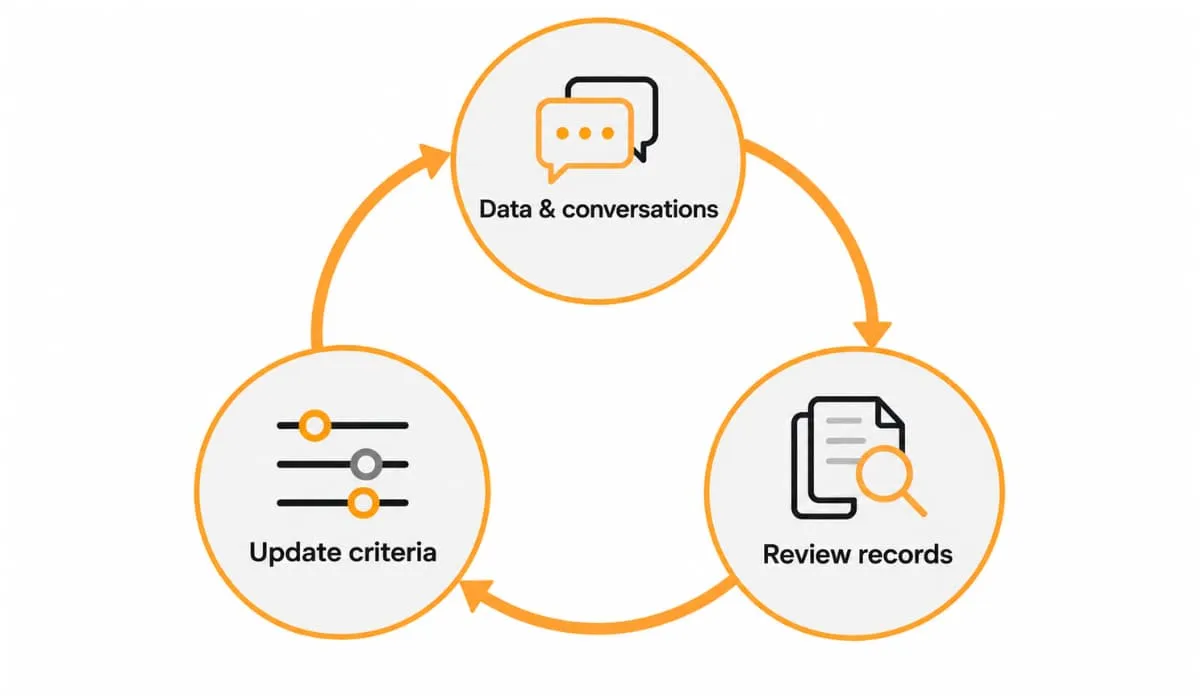
Illustration: Veridion
Apply the revised definition across existing records and subsequent searches. The team’s experience then shapes its next candidate pool, with each correction traceable to the evidence behind it.
Conclusion
A ranked private equity target universe depends on defined acquisition criteria and company evidence supporting each decision.
The deal team follows this evidence through the records, examining why a company entered the list and how it reached its current priority. Source dates and open questions show what still needs checking.
This week, take ten companies from a live thesis through the stack. For each, document the reason for inclusion and its priority. Assign any outstanding verification to a named analyst with a review date.
Articles
Discuss how these trends affect your organization.
Our analysts are available for a short call. Bring a specific question and we will ground it in the data.
Insights
Keep reading
More analysis, research, and outcomes grounded in live company intelligence.
Why Legacy SIC and NACE Rev. 2 Codes Miss Modern Niche B2B Companies
Struggling with niche industrial product sourcing? Legacy industry codes fail modern B2B companies. Find out why and how to adapt.
How to Verify a Company’s Operational Footprint in Private Equity Due Diligence
We break down the process of surfacing and validating every location and activity that keeps a business running for PE due diligence.
How to Gather Market Intelligence In 5 Steps
In this guide, we're breaking down the five key steps you need to take to gather market intelligence that drives real action.