Insights / Articles
5 Credit Risk Assessment Mistakes Caused by Bad Company Data
Bad company data derails credit risk assessment, from registry lag to entity mismatches. Five common mistakes and how better data fixes them.

- Bad company data has harmed many multinational companies and industry giants.
- Delays in registry updates and mismatches are two main reasons for wrong data.
- The small yet impactful data problems can be solved with a reliable and up-to-date data source.
Bad data results in wrong decisions, and reliable data yields better outcomes. It is a universal truth in the world of data and tech.
No matter how experienced your credit professionals are, inaccurate foundational data leads to flawed decisions.
We’ll cover 5 high-impact mistakes caused by bad company data, their ripple effects, and how Veridion improves data quality through entity resolution and weekly refreshes.
Assessing the Wrong Legal Entity
If you assess an entirely wrong legal entity or attach an attribute to the wrong entity, your data will be inaccurate.
Now you might be wondering why anyone would do that. It is a silly mistake and the most basic thing when profiling an entity.
On the surface, yes, it is a basic oversight.
But when you’re building profiles, several entities may have similar names, parent companies, share an industry, or operate under a different trading or brand name than the legal entity, and hence there is always a risk of mismatching information.
Let's understand the different registration names companies use with the help of a multinational hospitality company, Marriott International, Inc.’s example.
- Registered Legal Entity: Marriott International, Inc.
This is the name that is used in official, legal, and government documents. A legal entity can sue and be sued.
- Trading Name: Marriott Hotels & Resorts
This is the public-facing name used for advertising and selling.
- Establishment: The Marriott Marquis (Times Square, New York) or Sydney Harbour Marriott Hotel.
The brick-and-mortar setup where the company or its branches operate from.
- Brand: Ritz-Carlton, a luxury brand owned entirely by Marriott International, Inc.
It has a completely different logo, a unique aesthetic, and a distinct reputation for high-end service compared to a standard Marriott hotel. Yet it operates under the same corporate parent umbrella.
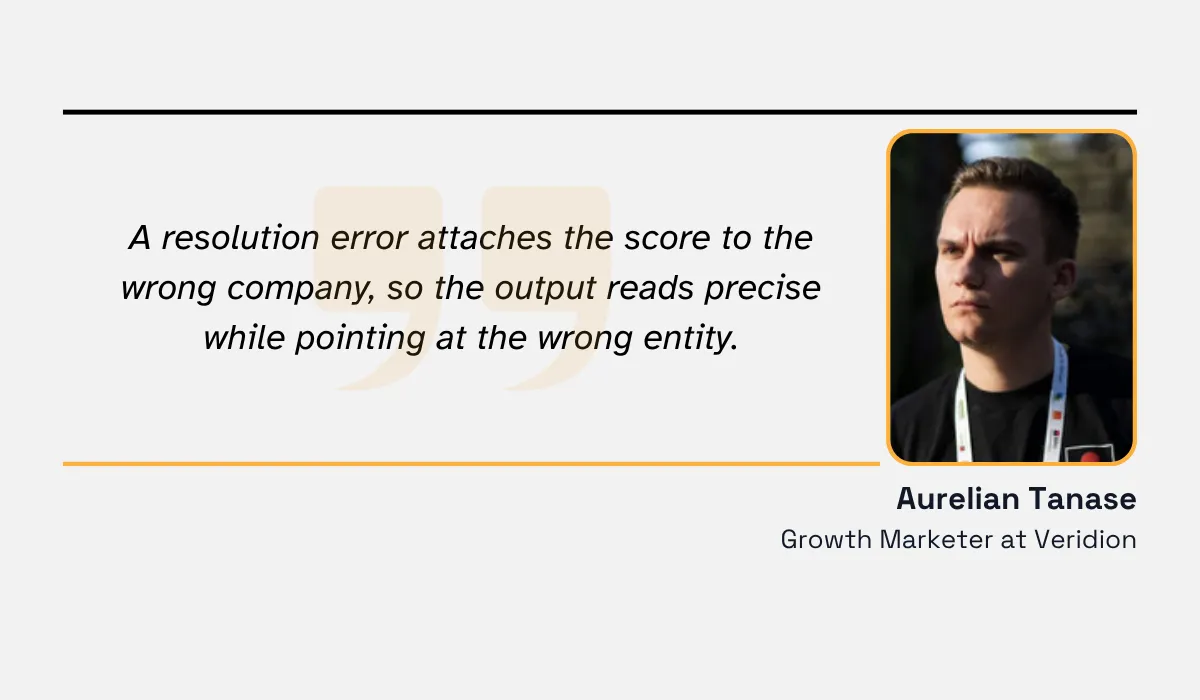
Mismatches can occur in both manual and software entity resolution. Aurelian Tanase, Growth Marketer at Veridion, a global data-as-a-service (DaaS) company, talked about how software can match an attribute to the wrong entity while making it look perfect on display.
One such example is the TransUnion LLC v. Ramirez case that went to the US Supreme Court due to a single incorrect name match.
TransUnion is one of the three largest consumer reporting firms in the US. It had a name screen alert for the Office of Foreign Assets Control (OFAC) for lenders and issuers.
To simplify, the alert flagged the person as a "potential match" to a name on OFAC's list of sanctioned individuals and entities. The case was fought for almost a decade, costing reputation and money, and was finally settled in 2022.
TransUnion had to pay $9 million in a settlement fund for individuals whose wrong alerts were sent to third parties, damaging their reputation.
A company name can also be mismatched or treated as a separate entity when it is the same company with a slightly different name. Hence, it is necessary to understand the legal entity and its different registration names.
Treating Parent and Subsidiary Data as Interchangeable
Often dealing with subsidiaries, we recognize the parent and treat both entities as synonymous. We link a subsidiary’s financial strength to its parent company.
However, a strong parent does not automatically minimize the credit risk or ensure repayments. It boils down to how much support a parent company offers a specific subsidiary.
Jacques Ouazana is the head of US ratings advisory at Societe Generale, a French multinational universal bank and financial services company. He spoke about the distinction between implicit and explicit support from a parent and why it is essential in credit risk assessment.
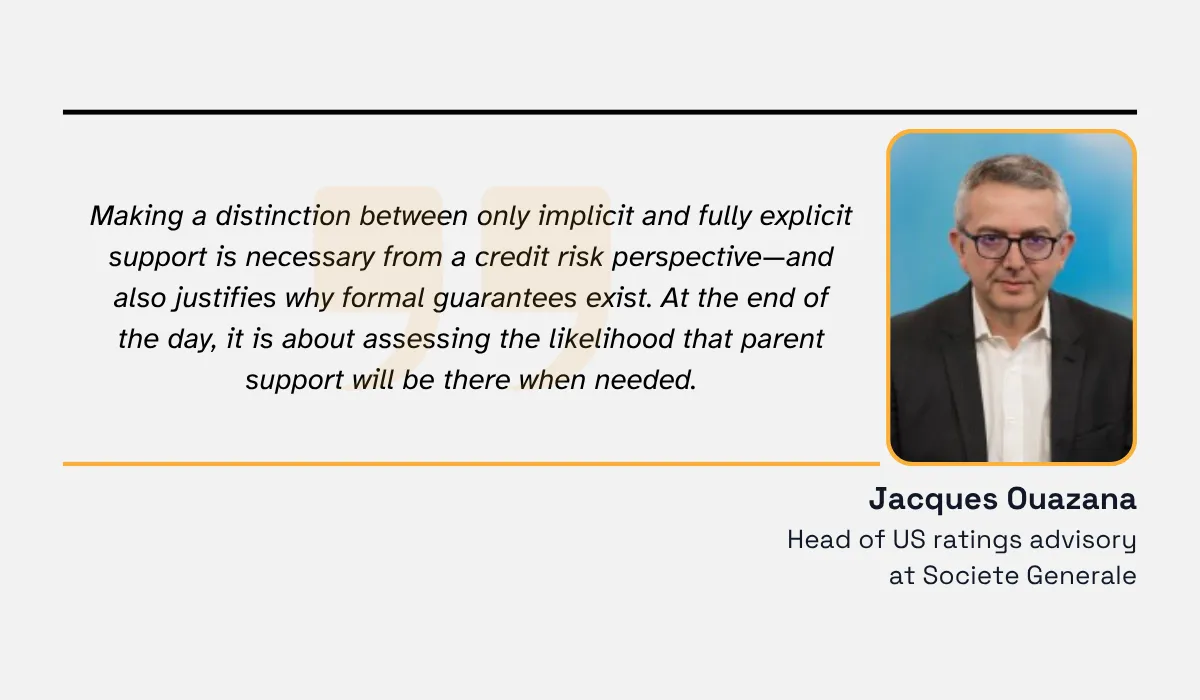
Implicit support is the chance of being supported by a parent entity, while explicit support is a documented agreement that defines the extent of support and hence guarantees the agreed support.
One such case was Parmalat (2003), where a subsidiary’s fake assets inflated the parent’s consolidated financial statements, resulting in a fraud.
Parmalat is an Italian dairy company. They had a subsidiary called Bonlat Financing Corporation, which claimed to hold €3.95 billion in cash at Bank of America.
In reality, there was no account at Bank of America, and the numbers were falsely represented in the consolidated financial statements.
The fictitious assets reported by Bonlat were incorporated into Parmalat’s consolidated financial statements, giving a false picture of the group’s financial position.
In short, parents and subsidiaries should be treated as separate entities. And one’s strength should not automatically be attributed to the other.
Relying on an Outdated Business Status
Business status, a.k.a. the current state of the company, tells you whether it is operating, closing, or currently dormant. The situation of the company directly impacts its finances and hence is important for credit risk assessment.
Let’s look at different business statuses.
- Active: It means the company is operational. Ideally, this should be the business status of the company.
- Dormant: It means the business exists but is currently not participating in economic activity (buying, selling, and producing). For example: during company reorganizations, temporary shutdowns, or while awaiting regulatory approval.
- Liquidation: The company is selling its assets, clearing debts and liabilities, and wrapping up to close.
- Dissolved: The company has closed and is no longer a legal entity. Meaning it cannot be sued.
One reason credit analysts often end up using outdated status is the delay in datasets. Oftentimes, the company has already transitioned, but the datasets have not been updated.
The UK’s Office for National Statistics (ONS) could measure registration lags for 97.9% of businesses. For those, the average delay between the birth of a new business and its registration was 106 days, or about 3.5 months.
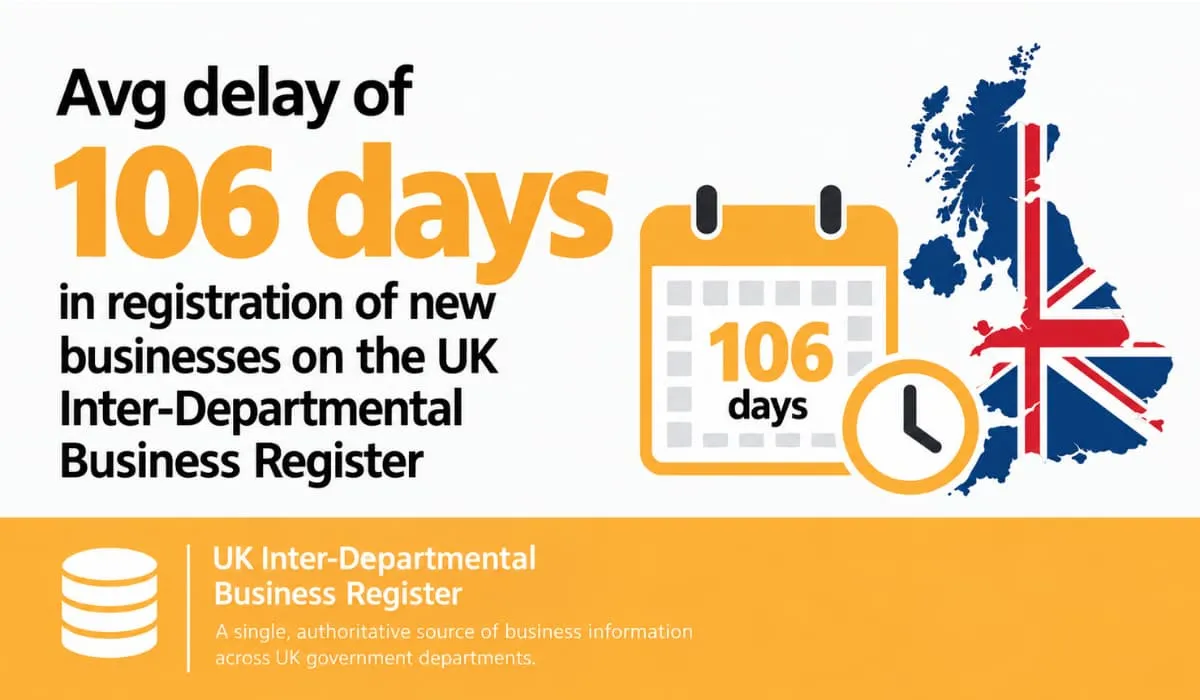
Illustration: Veridion / Data: Office for National Statistics (ONS), UK
The delays are often due to registries and document processing procedures. On the other hand, it depends on the company as well. If there is a delay in the request for a status change, there is nothing anyone can do.
If there are multiple registries and datasets, there is a high chance of inconsistent updates. One registry will have updated the status while another still shows the outdated one.
This inconsistency can also be misleading.
Another important factor is to continue monitoring the status changes even after the initial assessment. It will help you stay up to date and take the right actions instantly.
Although business status is a small parameter, it has a fundamental impact on a company’s financial position.
Putting the Company in the Wrong Industry
Business classification allows creditors to analyze the economic group a company belongs to.
Economic group analysis involves looking at companies in similar industries and understanding their credit risk, estimates, and rating.
Grouping a company incorrectly implies you misunderstand its operations, treat it differently than it should be, and follow a different set of rules and regulations for it.
A study using a Russian financial statements database highlights the staleness of industry codes. It talked about how easy it is to choose the wrong codes and the need for updating with changes in operations and company direction.
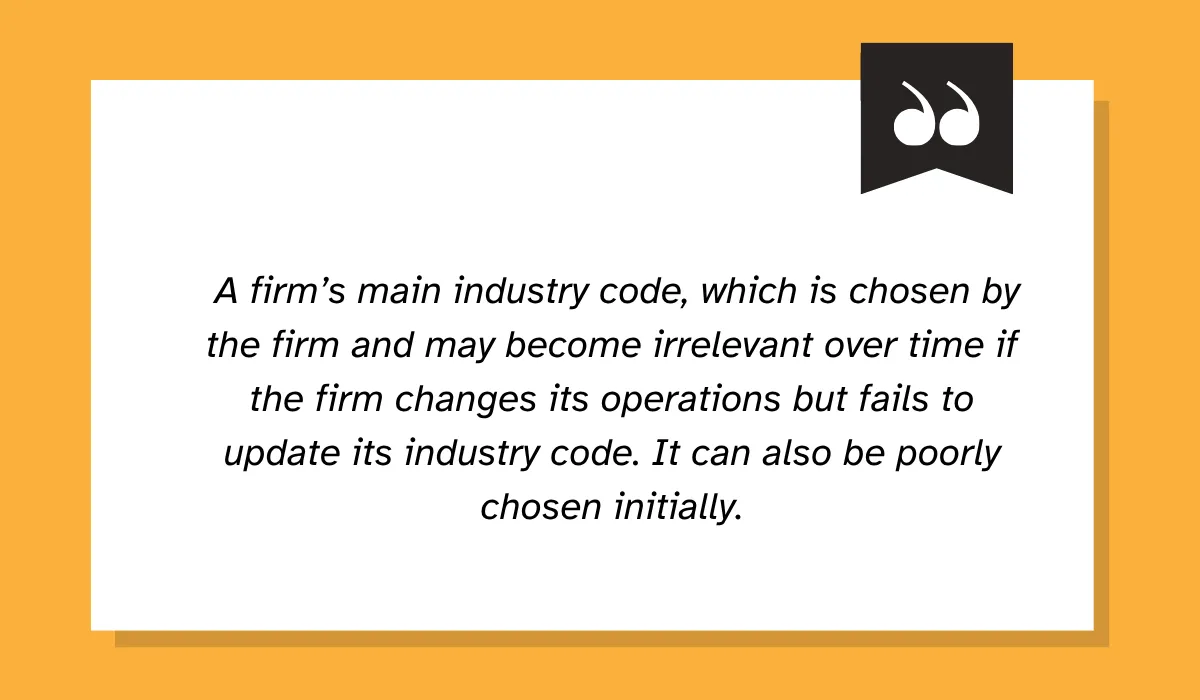
Illustration: Veridion / Quote: Scientific Data
There are four main industry standard codes used for business classification. The following is a short description of each.
- North American Industry Classification System (NAICS): A 6-digit system that classifies businesses by how they produce goods/services. It is used by the US Census Bureau, Canada, and Mexico.
- Statistical Classification of Economic Activities in the European Community (NACE): It is a European Union industry standard consisting of 4-digit codes.
- Standard Industrial Classification (SIC): A 4-digit code replaced by NAICS. However, some authorities, including the US Securities and Exchange Commission (SEC), still use it.
- International Standard Industrial Classification of All Economic Activities (ISIC): A global business classification system by the United Nations. The purpose is to standardize global economic and business activities for easy understanding and comparison.
To illustrate how these four classification systems apply in practice, consider Tesla, Inc., a prominent electric vehicle manufacturer:
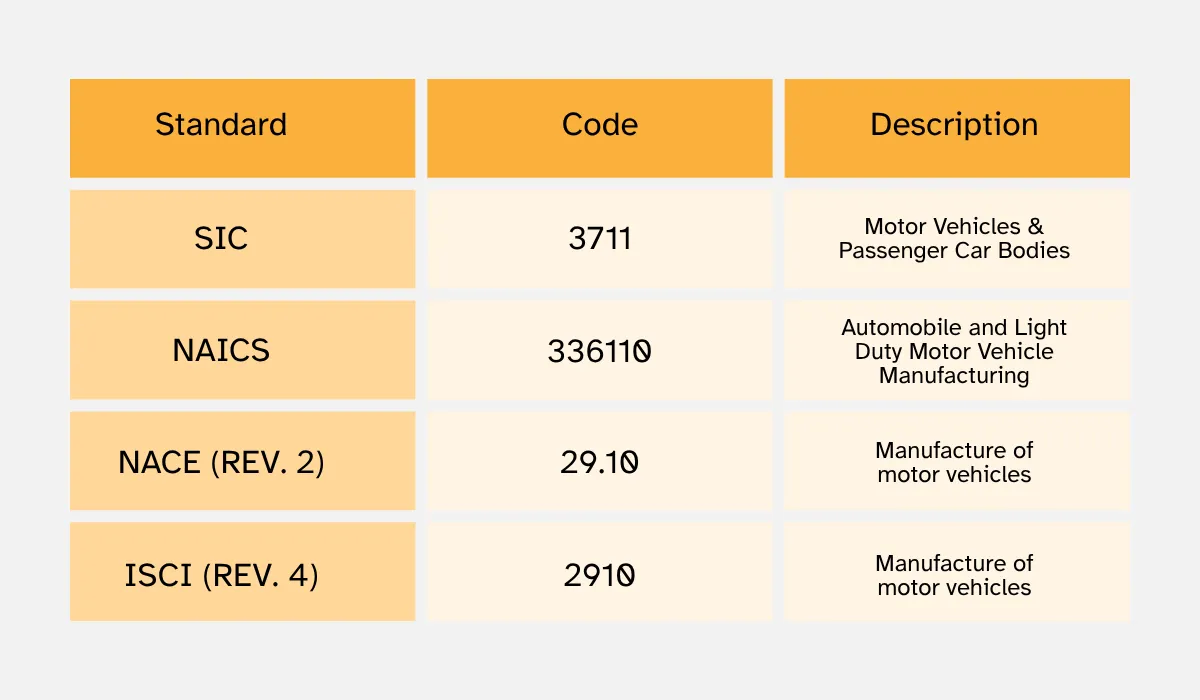
Illustration: Veridion / Quote: Scientific Data
These are the popular classification systems. However, there are inconsistencies among them.
A recent study used machine learning to map different classification systems to each other. They found the range of correspondence (how well classifications mapped onto each other) was from 29% to 86%.
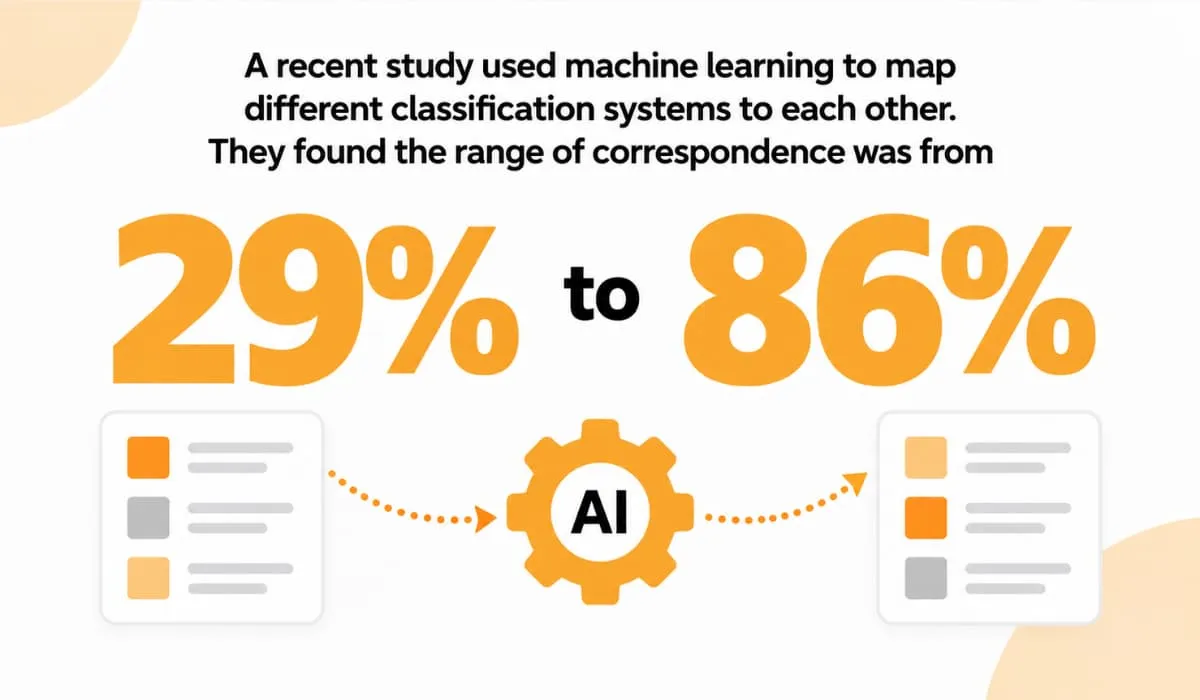
Illustration: Veridion / Data: Strategic Management Journal
This suggests that these codes are inconsistent across different standards.
Rice University, a private research university in Houston, Texas, further confirms the inconsistent nature of business codes and how they depend upon the vendor.
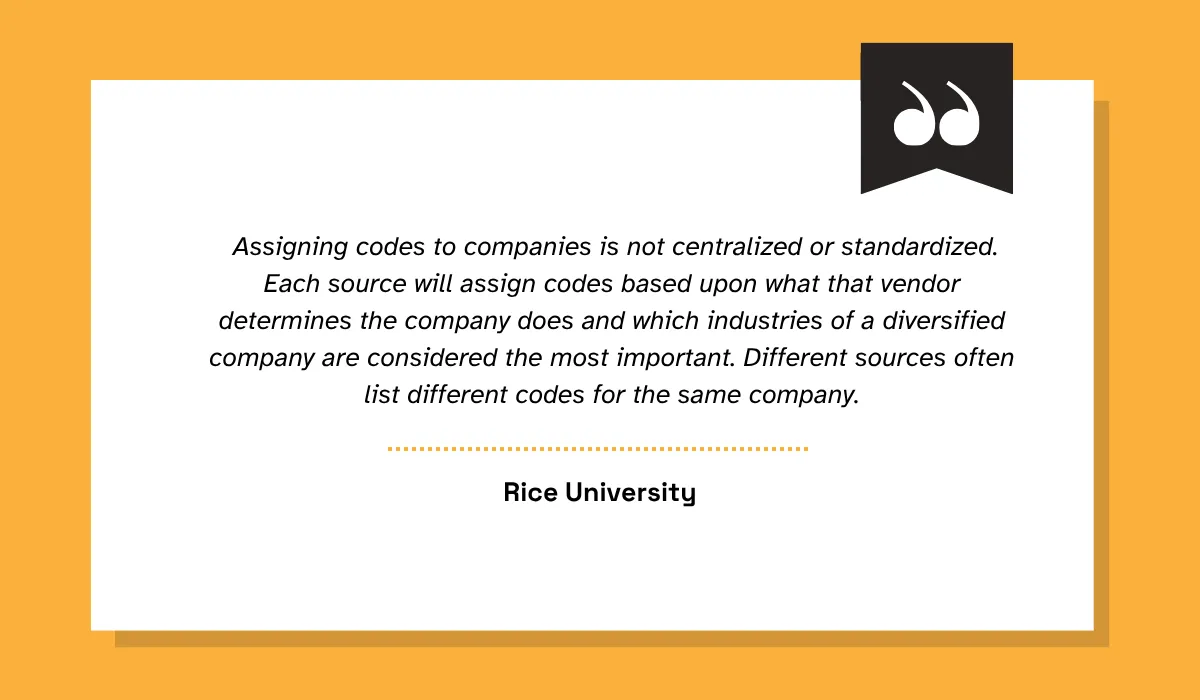
Illustration: Veridion / Quote: Rice University
So industry codes can be easily reported incorrectly or become outdated, even though they remain an important factor in credit risk assessment.
The Federal Reserve includes industry codes as a variable in its corporate loan probability-of-default (PD) models. This means an incorrect classification can feed the wrong risk profile into credit models.
Industry codes may look like simple labels, but inaccuracies can influence risk assessment, peer comparisons, and ultimately the credit decisions made about a company.
Let’s look at a real case of how wrong classification affects a business itself.
Financial Stability Oversight Council (FSOC) designated it a Systemically Important Financial Institution (SIFI). Meaning it was an important financial institution whose collapse would affect the economy. GE Capital had to significantly reduce its operations to be removed from the SIFI list.
This is how big an impact these small codes can have on how you perceive a business.
Missing Ownership and Corporate Hierarchy Changes
The last mistake caused by bad company data is not validating the hierarchy.
Hierarchy validation means verifying that a company’s ownership and corporate structure are current. Changes in these two parameters change the control and risk profile of a company.
This was highlighted by Janet Yellen, former US Treasury Secretary. Yellen linked corporate transparency to national security. But it also aids in credit risk assessment and underwriting.
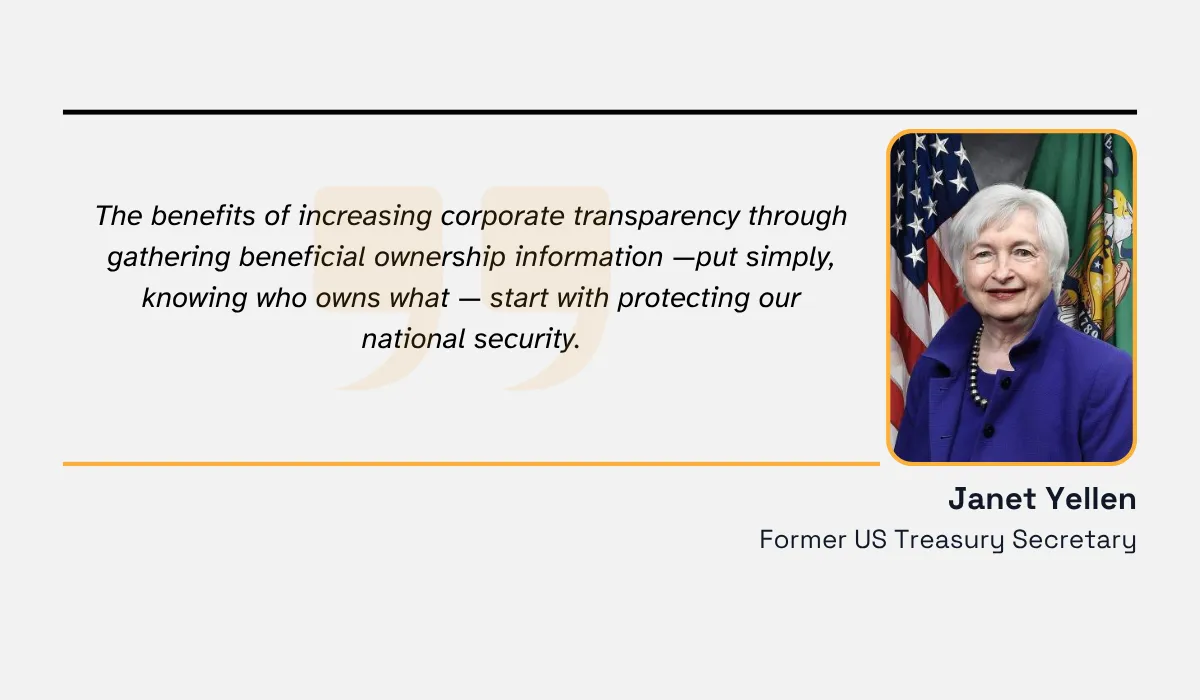
Illustration: Veridion / Quote: The Associated Press
Knowing who owns what is not enough. You also need to know how much.
The entity holding the major share will have the most say in the business affairs and hence will require more weightage in the credit risk assessment.
It’s important to be aware of direct and ultimate ownership. The direct owner is the one who holds the share, but who controls the direct owner? Tracing the chain and pinpointing the ultimate controller leads you to ultimate ownership.
This distinction is important. If you stop at direct ownership, you would never know who the ultimate controller is behind it all and how much control and support they offer.
For example: Lamborghini’s direct owner is Audi AG. However, Audi AG is a subsidiary of Volkswagen AG. Now Volkswagen is majority-owned by Porsche Automobil Holding SE. So the ultimate owner of Lamborghini is Porsche Automobil Holding SE.
In short, knowing the complete corporate hierarchy and ownership is just as important as keeping it up to date.
How Better Company Data Supports More Reliable Assessments
All of the above mistakes can be avoided if you have a reliable, coherent, and updated data source.
However, such an accurate and up-to-date database is difficult to maintain when you have multiple companies to manage.
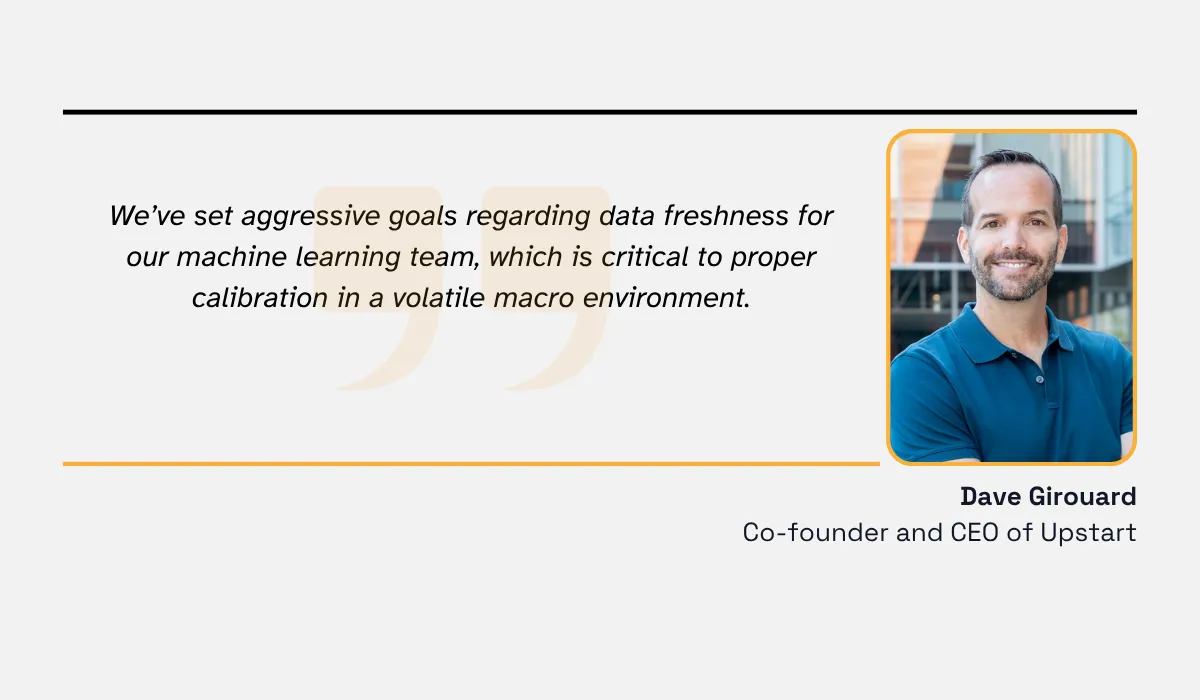
While talking about the data freshness in credit decisions, Dave Girouard, Co-founder and CEO of Upstart, an AI-powered lending platform, said the following:
There are multiple data-as-a-service options you can use to track multiple businesses simultaneously.
One popular and reliable option is Veridion.
Veridion maintains company data across the globe and goes beyond the common registries and databases.
It tracks the complete digital footprint of a company, which allows it to even identify businesses that are not registered.
A credit bureau was able to identify 15,000 active businesses in São Paulo that had no record in registries. This was done by analyzing the digital footprint. The platform also enriched the data and verified the local address.
The entity resolution feature allows deduplication and matching of the same companies with different brand, trade, and legal names to create a coherent profile. It also provides complete company hierarchy and ownership mapping.
Using these two features, a market intelligence provider was able to catch 200 rebrands and 200 mergers and acquisitions that were corrupting its data. Veridion matched the provider’s company universe with a 94% average match-score confidence.
The comprehensive and structured business profiles have led clients to make Veridion their primary data source, enrich ESG results across various companies, and build private-company depth on Veridion’s company knowledge graph.
Every attribute is traceable to its source signal, with a confidence score ensuring the data you see is verified and correct.
Conclusion
All five mentioned mistakes seem small at first. But when you dig deep, you realize how big the impact can be of one wrong data attribute, especially in the case of credit risk assessment.
One missed company update can have a snowball effect and can lead to wrong judgments and analysis.
Every mistake in this article is preventable with consistent, up-to-date, and transparent company data. And with the right data provider, you can enjoy the luxury of reliable and structured data that you know will not be stale or wrong.
Articles
Discuss how these trends affect your organization.
Our analysts are available for a short call. Bring a specific question and we will ground it in the data.
Insights
Keep reading
More analysis, research, and outcomes grounded in live company intelligence.
Using Alternative Firmographics for Faster SMB Credit Risk Assessment
Struggling with slow SMB credit risk assessment? Uncover how alternative firmographics can revolutionize your process and speed up decisions.
5 Trends Shaping the Future of Market Intelligence
Want to future-proof your business strategy? Explore the top trends defining the future of market intelligence.
How Is AI Revolutionizing Market Intelligence?
Explore the key ways AI is transforming market intelligence workflows and helping businesses stay ahead of the competition.