Insights / Articles
7 Events That Should Trigger a Credit Risk Reassessment
One plant closure a month after the last review leaves a stale rating. Set thresholds for seven events in your credit risk monitoring policy.

- A key plant’s closure can reopen a review even when overall contraction is small.
- Read ownership percentages alongside voting rights and contract terms.
- Seasonal employment patterns influence whether a workforce decline warrants review.
- A formal reassessment might affirm the existing credit rating.
What if a company in your loan portfolio closed its main plant a month after its last credit review? The rating on file would still describe a business that no longer operates that way. A confirmed development should reopen a review once it meets a threshold set by your institution. Analysts then assess whether the existing credit assessment needs revision.
Veridion’s data on 744.5M companies, refreshed weekly, helps identify these developments for credit risk monitoring.
This guide covers seven company events, how to set their thresholds and what happens once one qualifies.
Legal Status Changes: Which Ones Reopen a Review Automatically
Legal status changes are the easiest events to turn into trigger rules, because each one is discrete and confirmed by an official filing. Once a company enters administration, an appointed administrator controls its affairs, and repayment may follow the administrator’s proposals rather than the original loan terms.
Your credit team examines these proposals to decide whether the existing credit assessment needs revision. Assign an analyst and a deadline, and decide whether the review must finish before any new lending.
In the United Kingdom (UK), administration notices document the appointment. Your policy can name this event as grounds for a review, with the notice as confirmation.
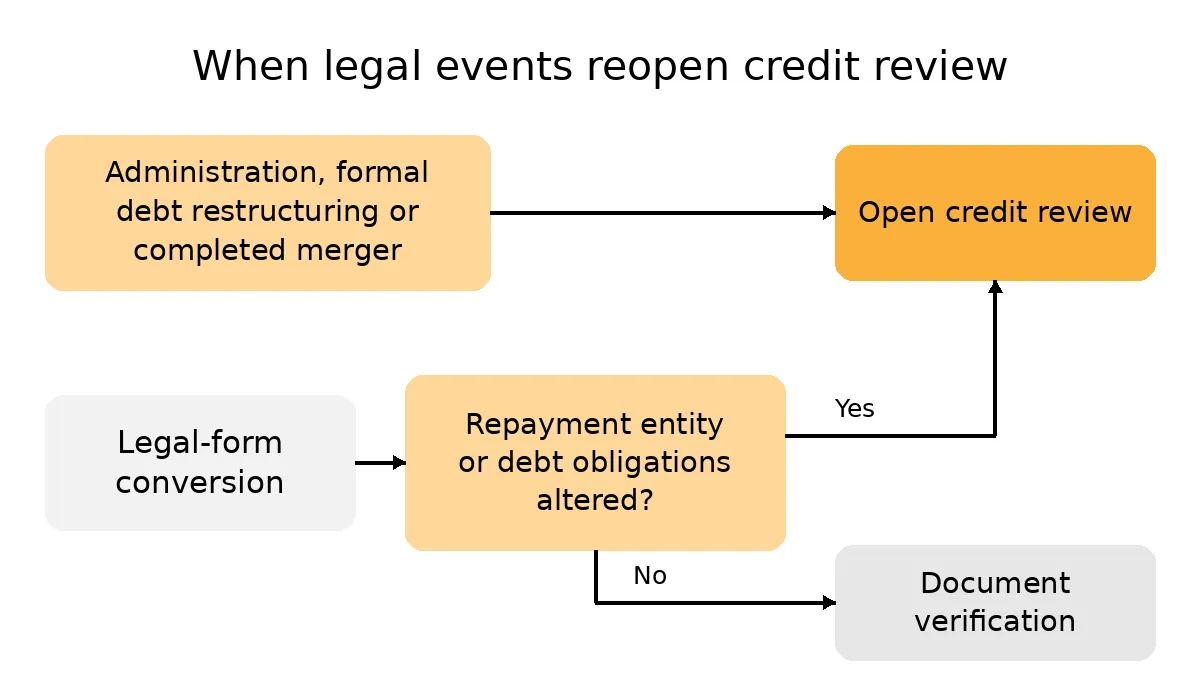
A completed merger also calls for a look at the resulting debt arrangements. Under this example policy, administration, formal debt restructuring and completed mergers qualify without a numerical threshold.
A legal-form conversion needs an initial check of responsibility for the loan. If a partnership becomes a limited company, establish whether the existing entity retains the debt or a new entity assumes it. An altered repayment entity or obligation prompts credit review. If both remain unchanged, record the findings to close the verification.
The flowchart maps these events to credit review or verification of the debt arrangements.
Source: Veridion
For conversions, verify the company’s identity and corporate structure to confirm which entity now holds the loan.
To identify legal-form updates requiring this examination, compare saved company records across dates. Veridion’s weekly data refresh supports this comparison through successive records. The screenshot below identifies the relevant fields.

Source: Veridion
If a comparison identifies a legal change, confirm it against the official filing. The filing records when the event took effect, while the data update indicates when it appeared in your monitoring records.
Ownership Changes: Where to Set the Control Threshold
When control passes to a new owner, guarantees and funding from the previous parent may stop. The review examines the new owner’s finances and commitments to the company.
A small share purchase matters less than a change of control. Set a threshold specifying when the size of the stake or the rights attached to it reopen a credit review.
Start with any change-of-control covenant in the company’s debt agreement. Its definition of control and contractual consequences inform your review threshold. Read the percentage alongside any conditions concerning existing owners’ holdings.
For example, one credit agreement McGraw Hill filed with the Securities and Exchange Commission (SEC) specifies a post-initial public offering (IPO) trigger: a new party acquires at least 35% of voting power and exceeds specified existing owners’ voting stake, subject to exceptions.
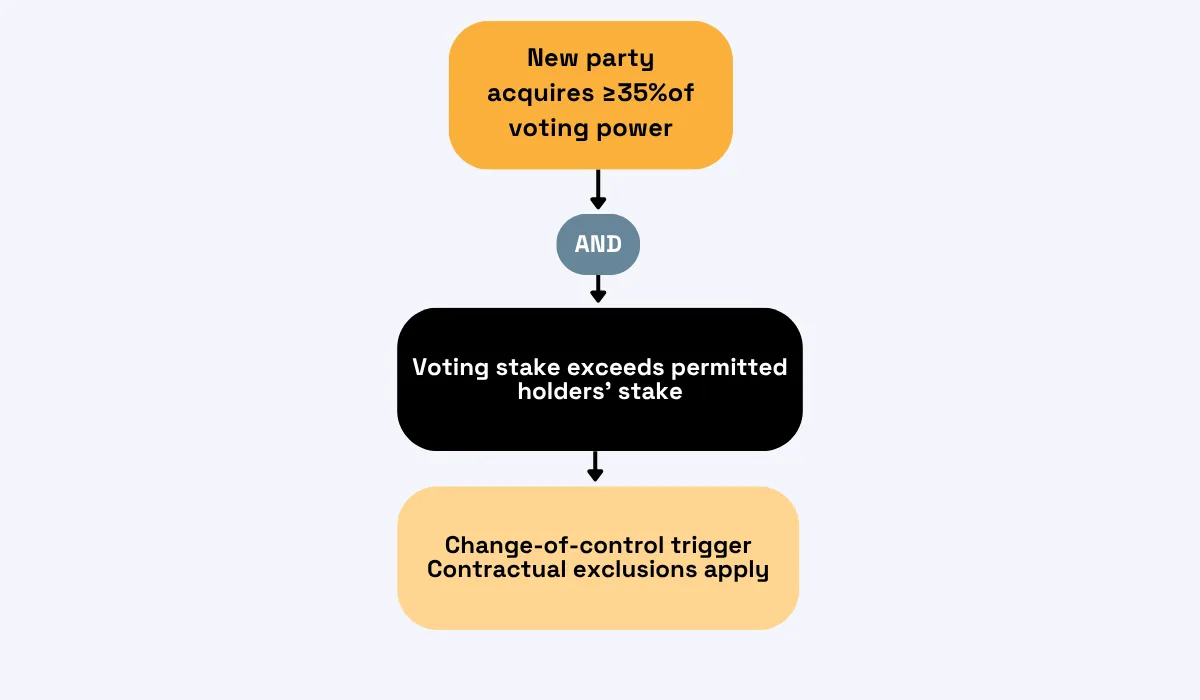
Illustration: Veridion / Source: SEC-filed credit agreement
Your policy also needs to address investments below its control threshold. Specify whether they qualify alone or require another event, such as site closures.
Parent-company records show when ownership transfers. Veridion’s Corporate Groups API, which is coming soon and available under an enterprise contract, reconstructs past group structures through as-of hierarchy slices. Validate an identified transfer against transaction documents, then apply your ownership rule.
Once the transfer qualifies, refer it to the assigned credit analyst within your policy’s review period. CreditPulse’s guidance reinforces the need for a defined and assigned response.
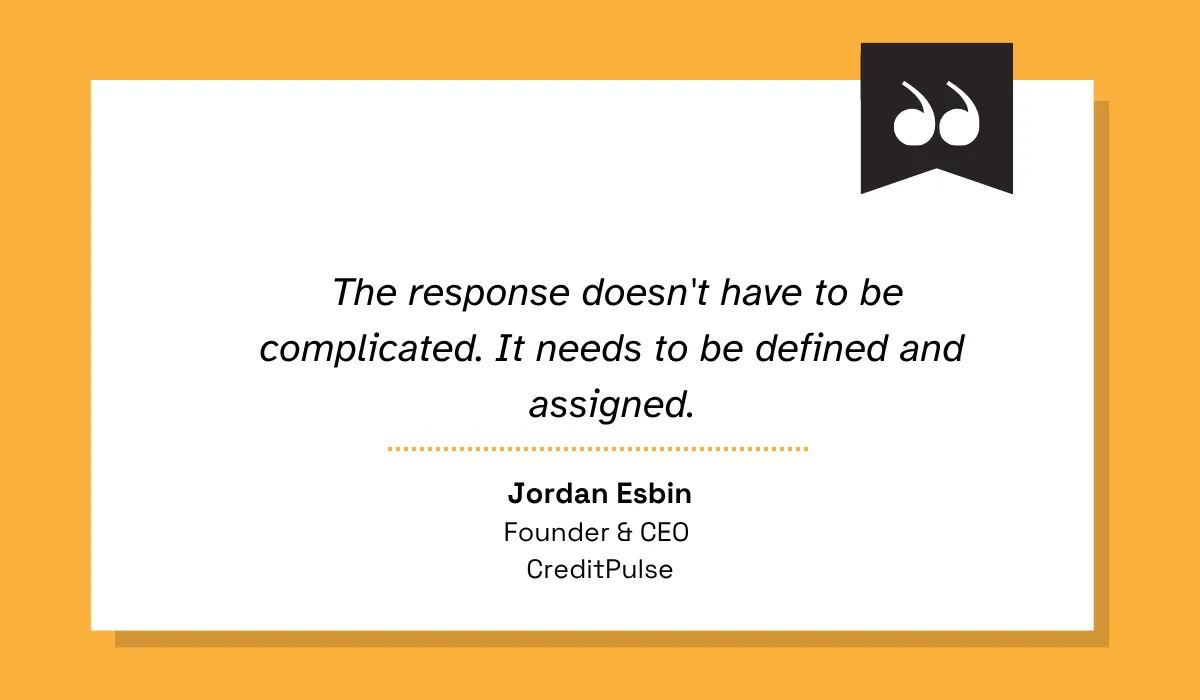
Illustration: Veridion / Quote: CreditPulse
Specify whether the review deadline runs from the transaction announcement or completion, so the assigned analyst knows when the assessment is due.
Footprint Contraction: How Many Closures Are Too Many
A company might close several offices while concentrating production at one plant. A footprint trigger needs to weigh both how much the company contracts and which sites it loses.
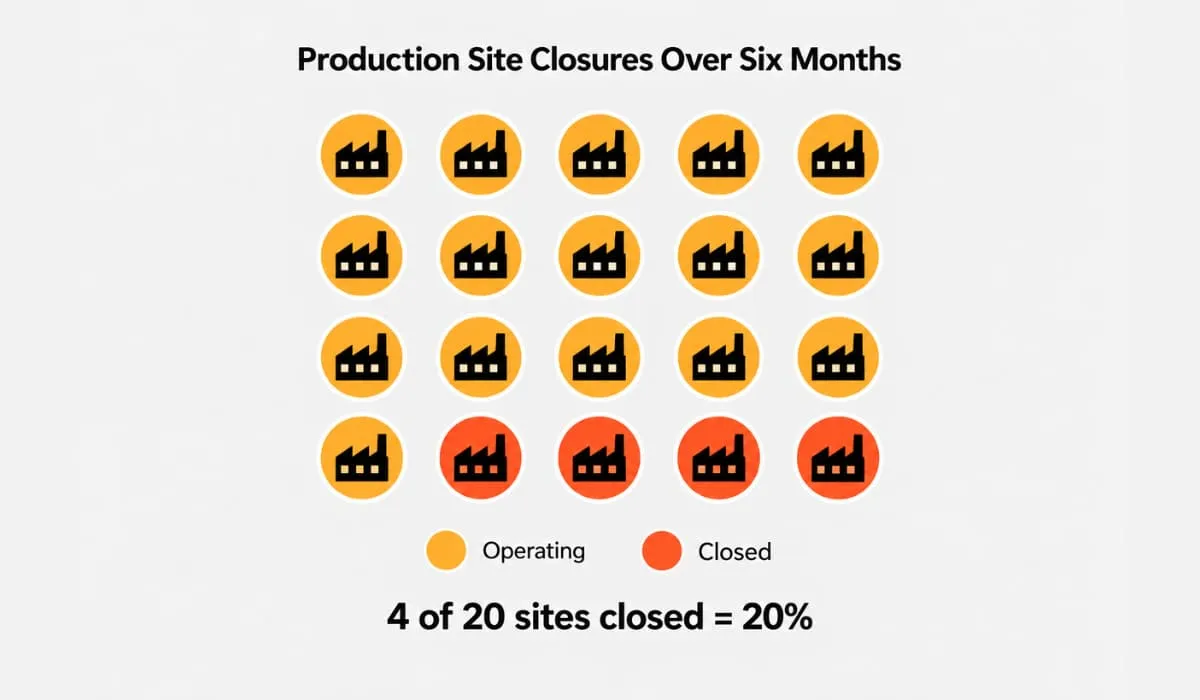
For example, your policy might reopen a review when a company with an outstanding loan closes at least 20% of its production sites within six months.
Source: Veridion
Four closures out of twenty meet this example threshold, prompting review and a request for management’s explanation.
A separate rule can address individual plants. If your policy defines a key site as accounting for at least 30% of production capacity, its confirmed closure qualifies alone. Request an updated operating plan explaining how production will continue.
A closure that meets neither condition might qualify only alongside a workforce decline in the same window. For planned consolidation, specify whether verified replacement capacity qualifies for an exception and document the production transfer.
These percentages are only examples, since the 2020 United States interagency guidance on credit risk review systems leaves review policies to each institution.
Veridion’s location-level records support comparisons of individual sites beyond headquarters. Confirm apparent closures against evidence of whether the premises remain operational.
Site closures gain context when examined alongside employment trends. In its growth-score demonstration for a card and payments provider, Veridion scored every company in the provider’s portfolio across rolling 12-month windows. It combined location activity and headcount trends with website developments and technology-stack upgrades to assess whether each business was expanding or contracting.
The resulting score ranged from −10 to +10, accompanied by written reasoning and a High, Medium or Low confidence category. This summary let the client compare business trajectories while retaining the evidence behind each result. In a 204-company demonstration sample, 149 companies registered changes on all four signals, so most scores rested on corroborating evidence.
The provider routed sharp decliners to early-warning review for churn and credit attention.
For example, a rebuilt website counted toward expansion, but falling headcount outweighed it, so the combined score read as contraction. The screenshot shows how each score comes with its reasoning and confidence level.

Source: Veridion
For a borrowing company, specify the score range and confidence required for review. Lower-confidence results might go to validation first. The analyst then reviews the dated observations behind the score and decides what they mean for credit.
Headcount Decline: Set a Baseline Before You Set a Threshold
A loss of 50 employees amounts to 25% of a 200-person workforce, but 1% of a 5,000-person workforce. Your trigger needs a baseline reflecting the borrowing company’s size and employment history.
The counts need to cover the same entities across the monitoring period. Removing a subsidiary from the total might produce an apparent decline without employee departures. Seasonal reductions also affect the comparison, as the United States Bureau of Labor Statistics explains.
A hypothetical threshold might flag a fall from 500 to 400 employees within six months, a 20% reduction. The illustrative figures below compare this decline from January to June with a seasonal dip and recovery.
Month | Observed headcount | Example seasonal pattern |
|---|---|---|
January | 500 | 500 |
February | 480 | 490 |
March | 460 | 480 |
April | 440 | 475 |
May | 420 | 485 |
June | 400 | 500 |
The observed count keeps falling while the seasonal pattern recovers. That gap calls for a look at the cause, and your policy should specify whether the workforce threshold qualifies alone or requires corroboration.
Illustrative condition | Response |
|---|---|
Workforce threshold met alone. | Request management information; consider a watchlist for additional monitoring. |
Threshold met alongside confirmed site closures within six months. | Reopen a review of the combined developments. |
The management request establishes whether employees departed or the reporting scope changed. Veridion’s data dictionary adds another measurement distinction, identifying employee counts as extracted figures or modeled estimates.
Validate differences in scope or measurement basis, then apply the response assigned to the confirmed development.
Activity or Product Shifts: When a Company Outgrows Its Peer Group
If a manufacturer earns a growing share of revenue from services, the manufacturing peers used in its credit assessment may no longer be a fair benchmark, even though its registered industry code stays the same. Your review rule needs evidence of how its operations differ from those assessed previously.
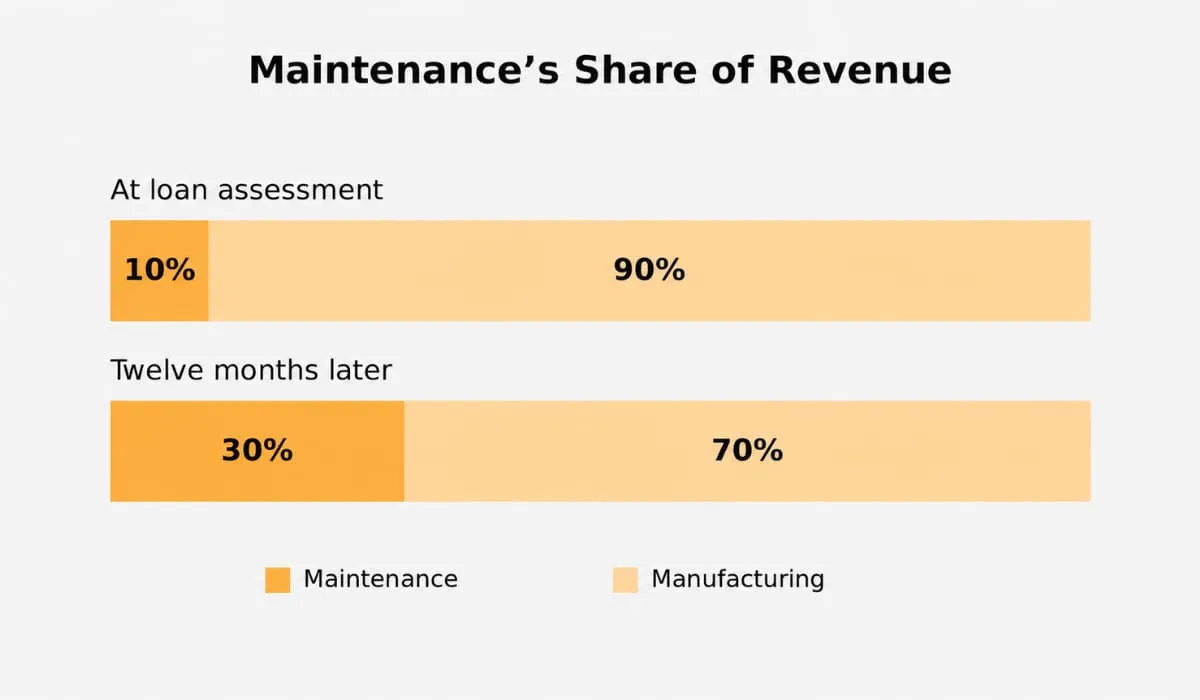
For example, maintenance services might grow from 10% to 30% of a manufacturing company’s revenue within twelve months. If your policy sets 30% as the threshold, reaching it prompts examination of the peer group, meaning the companies selected for comparison during credit assessment.
Source: Veridion
The analyst examines whether manufacturing peers still reflect this business mix.
If your rule counts advertised offerings, check how much they contribute. New catalog entries show a wider offering, but not how much revenue it brings in. The North American Industry Classification System (NAICS) manual discusses revenue and employment as measures of an establishment’s principal activity. Veridion’s NAICS 2022 field lists each of a company’s activities with its estimated share of revenue, which gives a basis for tracking this shift between assessments.
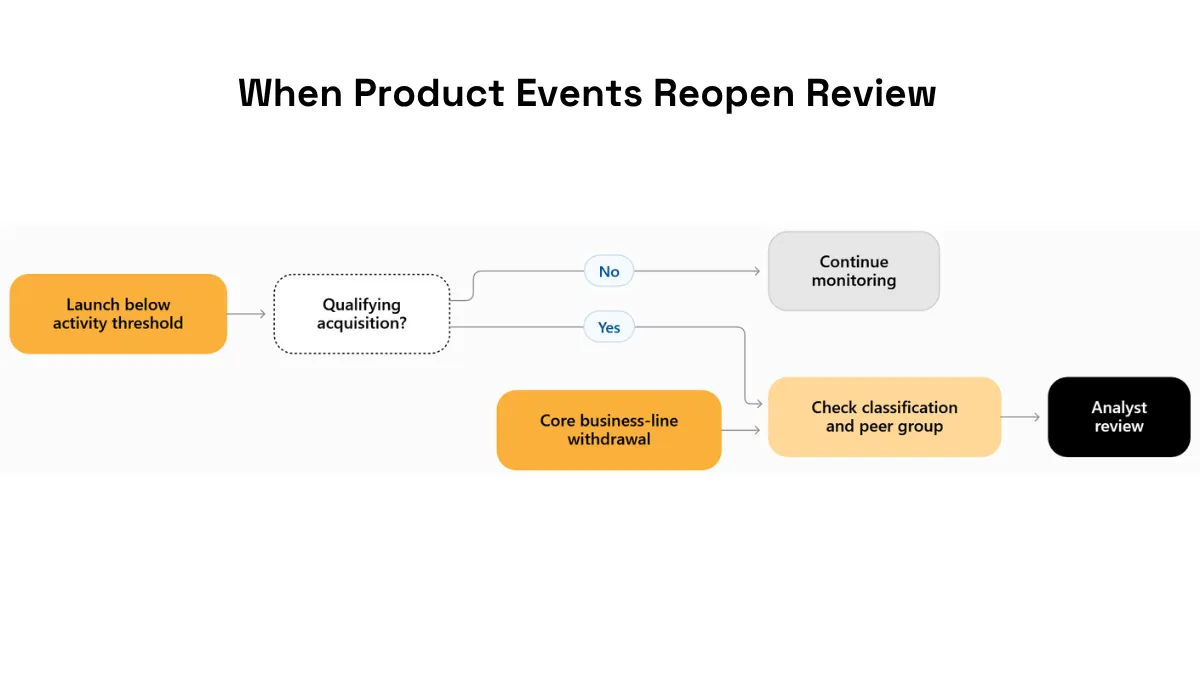
A launch below your activity threshold might need another qualifying event, such as an acquisition, to reopen a review. Withdrawal from a business line central to the previous assessment might qualify alone.
The flowchart separates these example routes.
Source: Veridion
Once either condition qualifies, re-check classification and the peer group, then refer the findings for analyst review. Veridion’s peer-group guide discusses matching current activities and business models. Record whether the existing peers remain appropriate and the evidence supporting any replacement.
New High-Risk Jurisdictions: Let Your Own Risk List Set the Trigger
A borrower’s move into a high-risk country can add political and sanctions exposure that its last credit assessment didn’t account for. Your approved risk list could identify the countries requiring examination, with an entry rule specifying when review begins.
Document the rule alongside the list’s effective date and responsibility for updates. External assessments inform country classifications, while your policy connects those classifications to review requirements.
The United States Office of the Comptroller of the Currency (OCC) discusses internal country ratings and exposure limits in its Country Risk Management handbook.
The excerpt below links country ratings to strategy and exposure limits.
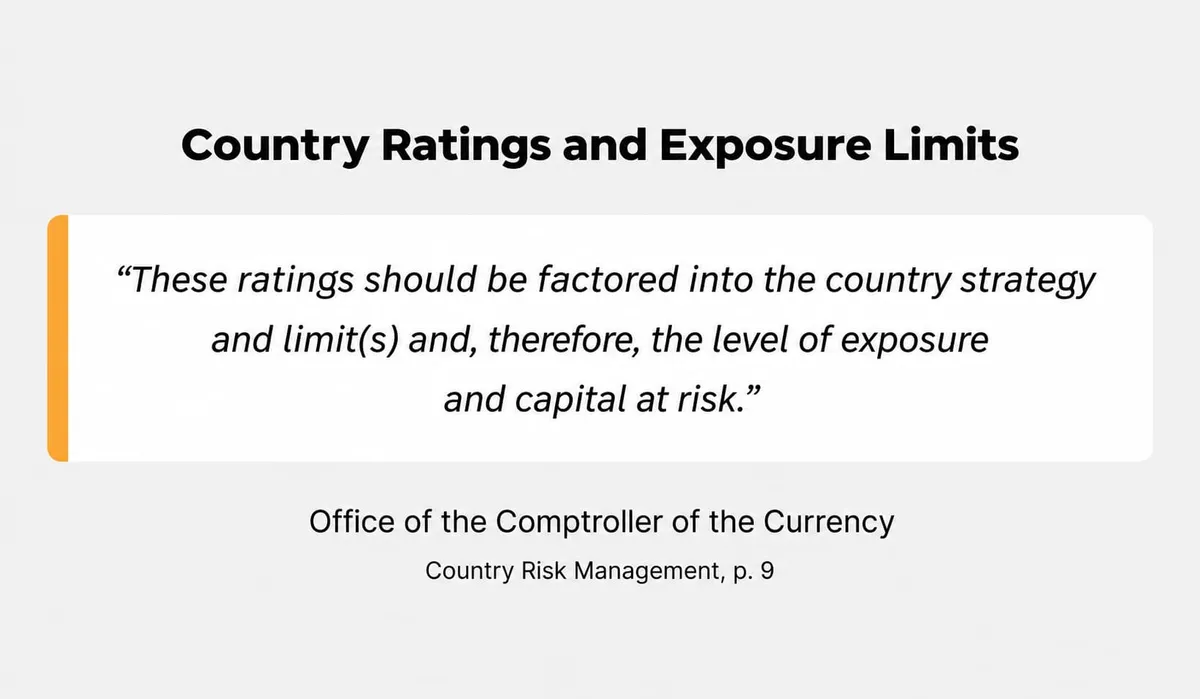
Illustration: Veridion / Source: OCC handbook
Your entry rule applies this classification to the company’s new presence. Specify whether subsidiary registration qualifies or operating activity is required. Veridion’s credit assessment guide discusses verification of operating jurisdictions.
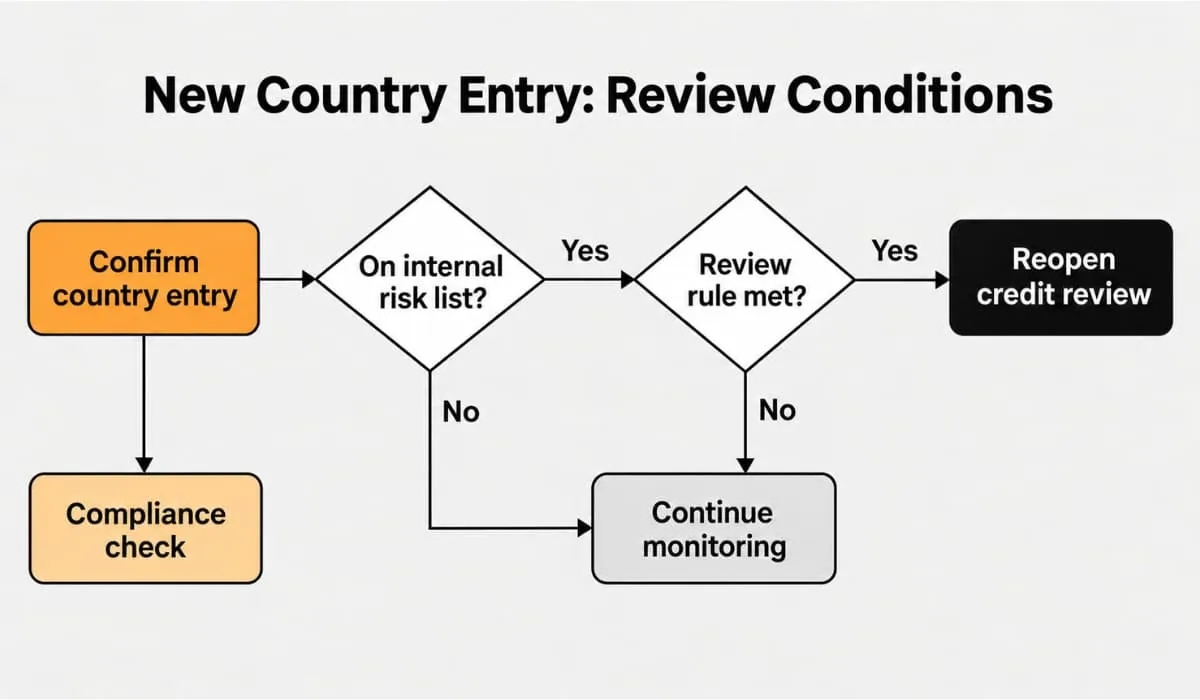
A rule might reopen a review upon the company’s first operating presence in a listed country. Another might require operations there to exceed a stated share of production capacity. Below this threshold, an accompanying ownership transfer might qualify under a combined rule.
New country entry also prompts a compliance check for applicable sanctions. These restrictions affect whether the company’s local activities are permitted. The United States Office of Foreign Assets Control (OFAC) explains how sanctions vary between geographic restrictions and measures targeting specific entities.
Refer details of the local operations and related entities to your compliance team for assessment against applicable restrictions. This check runs separately from your credit-review threshold, as the flowchart illustrates.
Source: Veridion
If the entry also meets your credit-review condition, assign an analyst to assess its effect on repayment prospects. Record the credit decision and compliance findings through their respective approval processes.
Acquisitions and Divestitures: Size the Deal Against the Borrower
A $40 million acquisition barely registers at a large group but can reshape a borrower with $200 million in assets. This trigger concerns the company’s overall scope and scale after the transaction, beyond individual closures or employee departures.
Measure acquired or sold assets against the company’s asset base at its last credit assessment. In that example, the deal equals 20% of the asset base and meets a review threshold of 20% or above.
Rating agencies treat large deals as potential rating events. S&P Global Ratings placed The Simply Good Foods Company on CreditWatch after its 2019 debt-funded acquisition of Quest Nutrition, and Harsco after its 2013 agreement to sell its infrastructure division.
Its CreditWatch guide explains that S&P may place a rating on CreditWatch when events could affect it in the near term, usually within 90 days, as the excerpt below indicates.
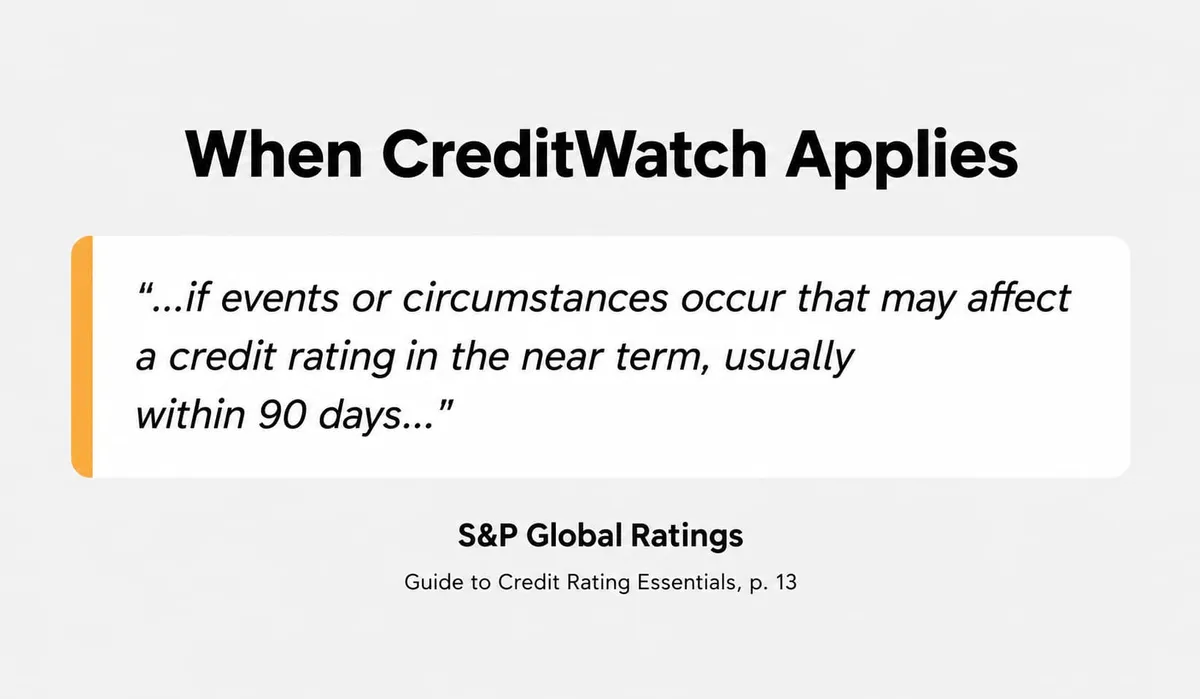
A CreditWatch placement opens a review, but the outcome still depends on the evidence.
Your policy also needs rules for expansion or divisional wind-down outside a transaction. Sharp headcount growth might prompt a check of the added operations. It reopens a review only with supporting operational evidence, unless the increase meets a standalone threshold.
For wind-down, measure the division’s share of group revenue at the previous assessment. Specify the share above which a confirmed closure of the division reopens a review on its own.
Once a transaction or divisional development qualifies, start an accelerated review with a deadline tied to announcement or completion. Request financing details and projections reflecting the resulting business. If its activities have changed, revisit the comparison group using the considerations in Veridion’s peer-group guide.
Who Decides Whether a Change Is Material?
A trigger reopens a review so an analyst can examine the new information. The analyst assesses its significance to the existing rating, and any proposed adjustment follows your institution’s approval process.
Stage | Responsibility |
|---|---|
Detection | Data and rules identify an event meeting the review condition. |
Materiality judgment | An analyst verifies the evidence and assesses its significance to the existing credit assessment. |
Rating or model action | Authorized staff or committees approve any adjustment through the institution’s governance process. |
If the evidence supports retaining the existing assessment, record “reviewed, no action” with the analyst’s rationale.
If questions remain open, consider adding the company to a watchlist. Evidence affecting repayment assumptions calls for formal reassessment, with affirmation of the existing rating still a possible outcome.
Veridion’s credit assessment guide discusses how source reliability and conflicting evidence inform this examination.
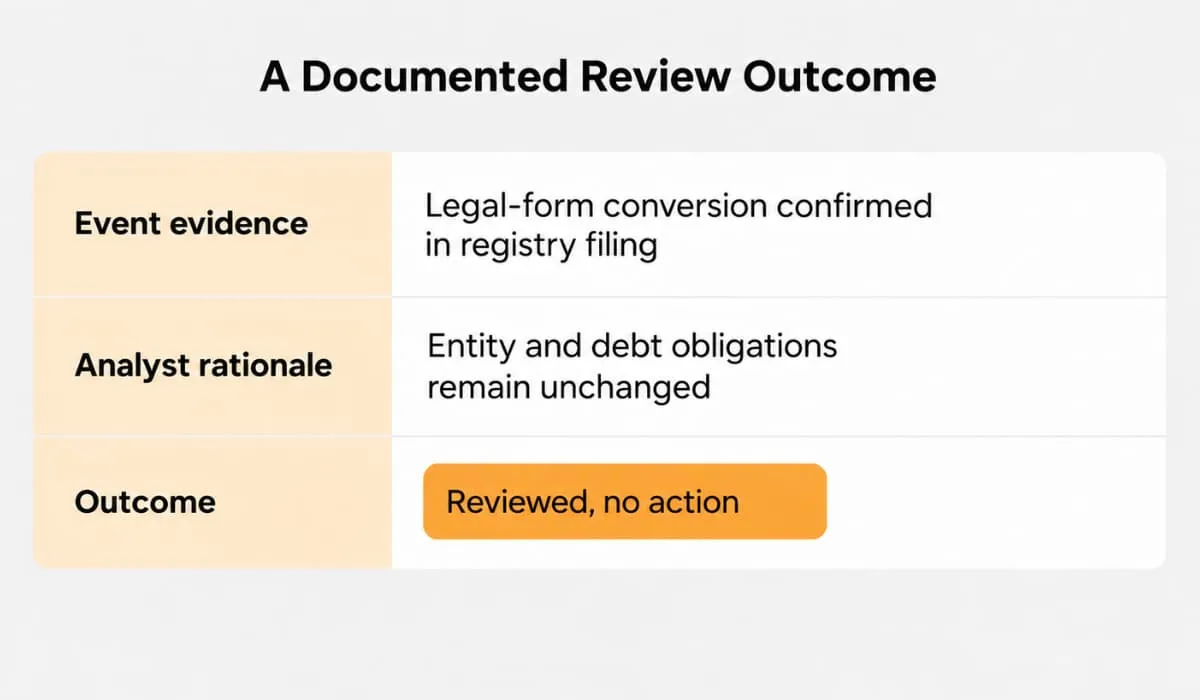
Source: Veridion
The completed record explains why the analyst closed the review. A named policy owner maintains the trigger rules, with an approval body and scheduled reviews against portfolio experience.
The same interagency guidance supports institution-specific policies, typically reviewed and approved at least annually. It supplies no event-specific percentages.
Your institution therefore sets review thresholds according to its risk appetite, meaning the level and types of risk it accepts. Credit Benchmark discusses thresholds for investigating differences between credit ratings.
The same principle applies here: define in advance how far a change must go before it prompts a review.
For company events, test proposed thresholds against past ownership transactions or site closures to assess whether they flag developments affecting repayment prospects. Document the basis for each threshold and submit revisions through the assigned approval process.
Conclusion
A trigger defines when a review reopens, not how it ends. That’s why the thresholds and conditions matter more than the list of events itself.
Select two or three events relevant to your portfolio. Write down each threshold, whether the event qualifies alone, who reviews it and what happens next.
Test the documented rules against last year’s company developments and count how many reviews they would have initiated.
Articles
Discuss how these trends affect your organization.
Our analysts are available for a short call. Bring a specific question and we will ground it in the data.
Insights
Keep reading
More analysis, research, and outcomes grounded in live company intelligence.
How to Assess Credit Risk for Private Companies with Limited Financial Disclosure
Credit risk assessment for private companies with thin disclosure means grading evidence, verifying identity and scale.
How to Build Comparable Peer Groups for Private Company Credit Analysis
This article will explain how to create peer groups for private company credit analysis and improve benchmarking when financial disclosure is limited.
How to Gather Market Intelligence In 5 Steps
In this guide, we're breaking down the five key steps you need to take to gather market intelligence that drives real action.