Insights / Articles
How to Find a Company's Competitors
Industry codes miss indirect and private competitors. Here is how to find a company's competitors from what companies actually sell.

- Industry codes like NAICS can narrow searches but may not reveal true competitors.
- Match companies by products, customers, markets, and business activity.
- 31% of B2B buyers name review sites as their most consulted source.
- CRM data can uncover competitors missing from standard database searches.
Who are your real competitors? Finding them is not as simple as searching for companies in the same industry.
Two businesses can share an industry code but sell different products, target different customers, or operate in different markets.
A better approach starts with understanding what your competitor actually sells and then narrowing further based on industry, products, customers, and location.
Veridion can support this process by bringing together detailed company, industry, product, and geographic data. You can then validate potential competitors through market sources and your own sales records.
This guide walks through each step, from defining your competitive space and filtering company databases to validating results and comparing company data providers.
Define What the Company Actually Sells
Finding competitors gets hard when a company does not fit neatly into one category.
A business may change its target customer, add a new product, enter another market, or change its business model as it grows.
So, what counts as a competitor?
It could be another company selling the same product to the same buyers, or a company selling something different that solves the same customer problem.
In an episode of the B2B Marketers on a Mission podcast, hosted by Christian Klepp, Layton Cox, Senior Director of Competitive Intelligence at Sedulo Group, explains that effective B2B competitor research requires triangulating multiple sources to understand where a company competes and who it is really up against:

The point is simple: every company that looks similar should not be on your competitor list. Some may have a large market presence, while others may be smaller but disruptive enough to deserve attention.
Before looking through any database, it helps to pin down three things:
- What the company sells
- Who it sells to
- Where it operates
Those three inputs create a much clearer picture of the competitive space beyond an industry label.
Filter Company Databases by Industry Code
Industry codes can be a useful first filter when narrowing a large company database, such as D&B, ZoomInfo, or Bureau van Dijk’s Orbis, by SIC or NAICS codes.
The North American Industry Classification System (NAICS), for example, gives businesses and researchers a common language for grouping economic activity.
That makes industry codes useful for competitor research too. A search for a specific six-digit NAICS code can narrow thousands of company records into a more manageable group.
The challenge starts when the goal shifts from finding companies in an industry to finding companies that actually compete with each other.
The Census Bureau makes an important distinction here: NAICS is an industry classification system, not a product classification system. It groups establishments according to their primary economic activity.
A company can therefore offer several products or services while its primary code represents only one part of what it does.
For example, according to Veridion's company data (September 2026), NAICS 541511, ‘Custom Computer Programming Services,’ groups more than 250,000 U.S. companies, including OpenAI and Slice, an ordering platform for independent pizza shops.
By that code, a pizza-ordering app and an AI lab look like the same business.
But, as you might imagine, their products, customers, and business models are all very different.
Here’s another concern when it comes to competitor research: a company’s NAICS code is often self-reported and rarely updated, so it may not reflect changes in what the business actually does.
A Reddit discussion on NAICS code selection in the context of government contracting brings another interesting practical point to the surface:
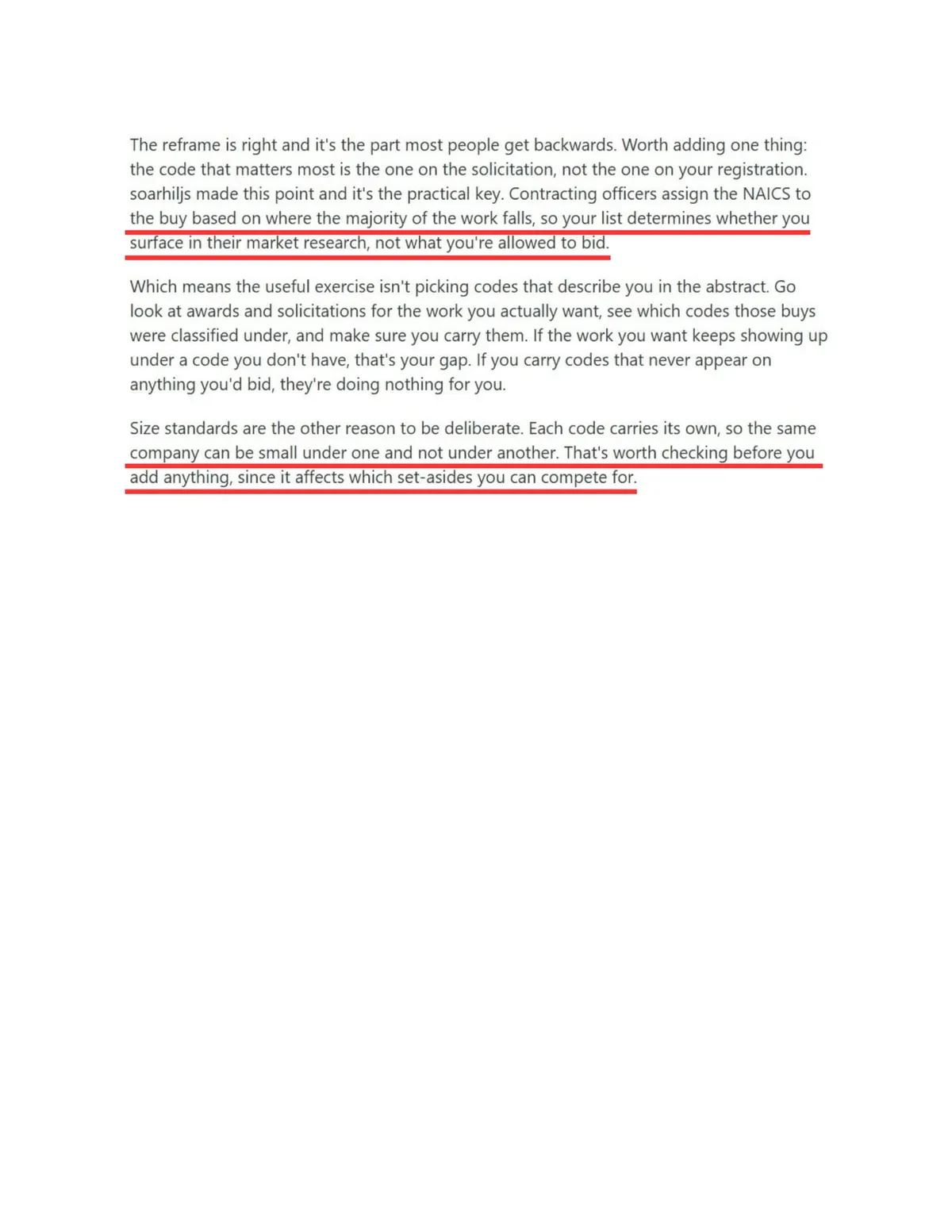
Source: Reddit
The main point to focus on here is how a code can help a company appear in the right pool of opportunities; but carrying that code does not necessarily mean the company has the ability or expertise to compete for all of them.
In other words, a shared industry code can tell you which companies belong to the same broad category, but it may not tell you which ones belong in the same competitive set.
So, industry codes can provide the structure for the first search. The next step is to look beyond the label and understand what those companies actually do.
Match Competitors by What Companies Actually Do
This is where competitor research can move beyond the label attached to a company.
Instead of asking, 'Which companies have the same industry code?', the question becomes, 'Which companies actually sell something similar to the same market?'
That could mean looking at products, services, business descriptions, customer segments, locations, and other signals that reveal commercial activity.
It can also bring indirect competitors into view, i.e., companies that solve the same problem through a different product or business model.
That distinction matters because everybody searching the same industry code could end up looking at the same familiar companies. The more interesting question is often: which companies are overlooked?
Those could include private competitors, emerging disruptors, or businesses operating across several verticals that do not fit neatly into one industry code.
In a Veridion case study, a Canadian commercial P&C carrier set out to fix a common underwriting problem: more than half of SMBs are misclassified in government registries.
After introducing Veridion's Match & Enrich layer, its SMB match rate increased 4×, while 20% of policies were recalibrated following reclassification. The workflow returned 50+ structured data points per company.
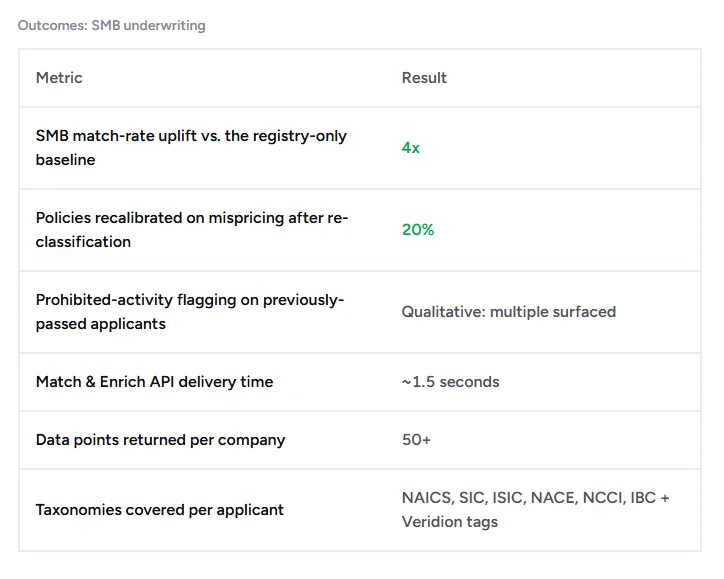
Source: Veridion
For a data team, this type of matching could be run across one company or an entire portfolio. Natural-language searches, product and service filters, business descriptions, geography, and other attributes could be combined and applied through API or batch workflows.
The result is a competitor search based less on where a company has been classified and more on what it appears to do.
Validate With Market Sources
A structured company search could produce a much wider list. Market sources can then help answer a different question: which of these companies are actually visible in the market?
A few searches for '[company] alternatives' can reveal the names buyers already associate with a product.
Review sites such as G2 and Capterra can add another source of insight, while industry reports, trade associations, and conference exhibitor lists can reveal companies that are prominent within a particular market.
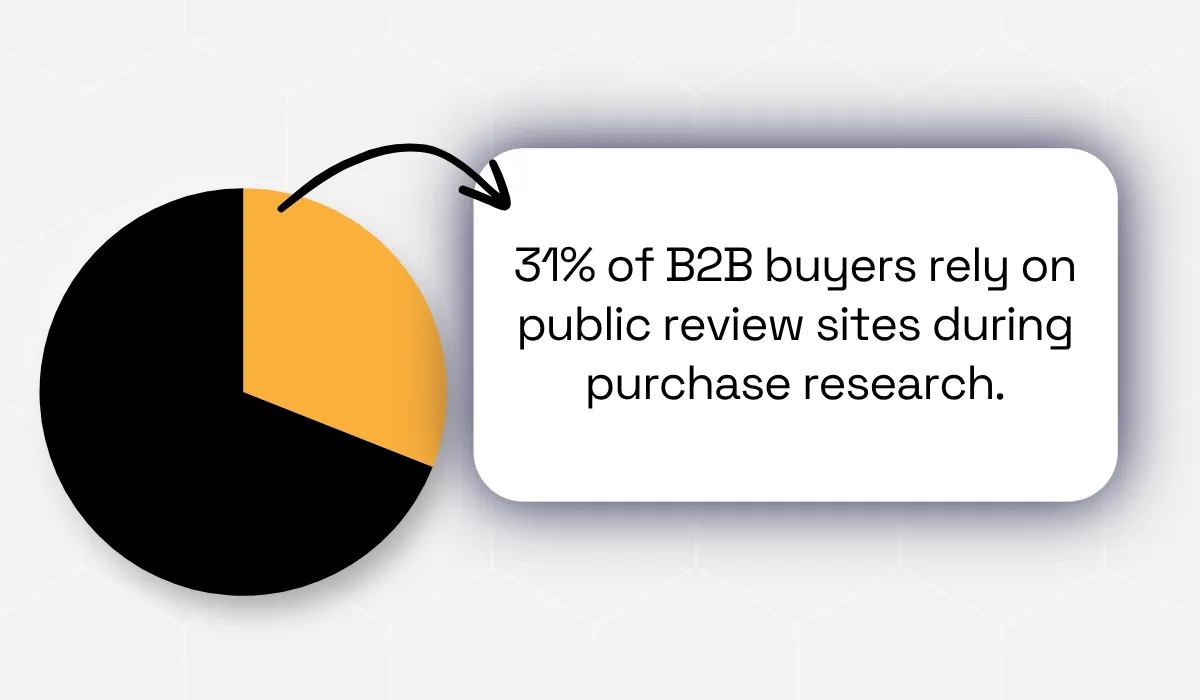
There is evidence that review sites are worth checking. G2's 2024 Buyer Behavior Report, based on more than 1,900 B2B decision-makers, found that 31% of buyers consulted public product-review websites more than other sources when researching a purchase. That figure had risen from 13% in 2021.
While these sources could be particularly useful for data enrichment, validating a competitor list, and understanding how buyers see the market, they may not provide the complete picture.
A company needs to have enough market visibility to appear in a review category, comparison article, industry report, or conference. A smaller private competitor, a newer entrant, or a company with little marketing presence could easily sit outside those sources.
That creates a useful division of labour. Market sources could help confirm the visible competitive landscape, while company-level data could help investigate the companies that are harder to find.
Pull Competitor Mentions From Your Own Sales Data
There may already be a valuable competitor list inside the company's own systems.
Competitor fields, closed-lost reasons, win/loss notes, sales-call summaries, and customer interviews can contain names that never appear in an industry database search.
The challenge is that these mentions may not be recorded consistently.
Say a sales rep wants to log competitor information after customer calls. One salesperson might enter 'HubSpot', another could write 'HS', and a third might mention the company inside a free-text note rather than the competitor field.
CRM data-quality research shows why that matters.
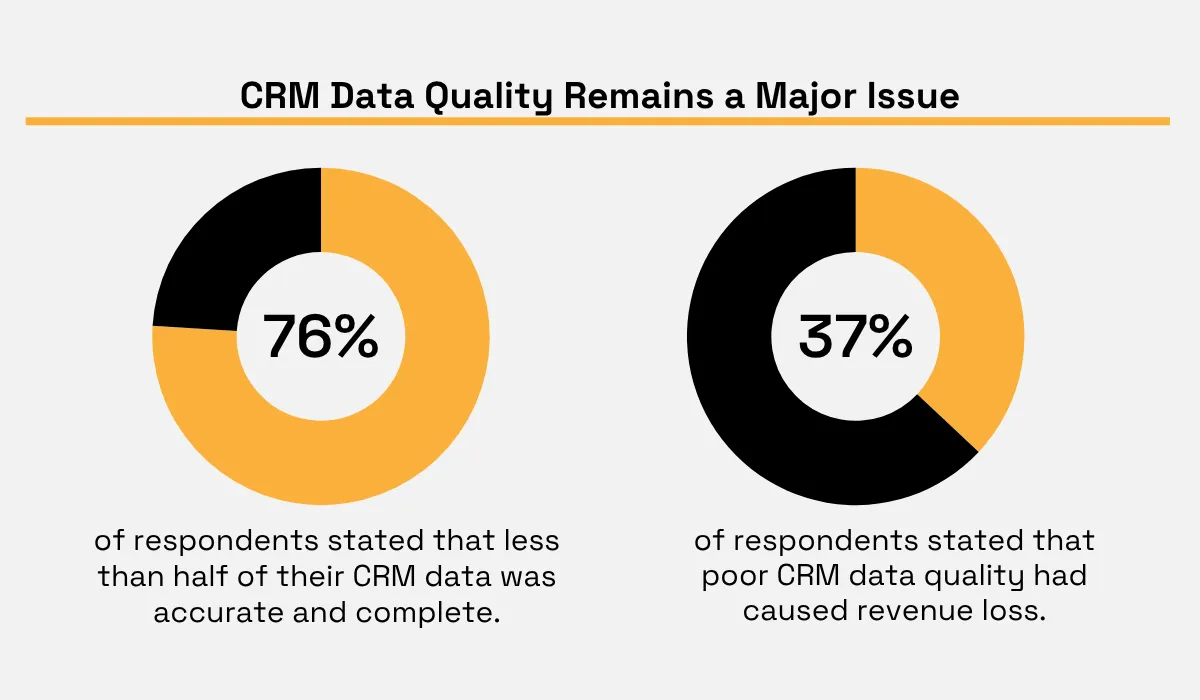
Validity's 2025 State of CRM Data Management Report, based on 602 CRM users and stakeholders, found that 76% of users agreed that less than half of their organization's CRM data was accurate and complete.
And 37% said poor data quality had caused their company to lose revenue.
Competitor discovery could therefore start with extracting mentions from CRM data, then standardizing variations and matching them to a consistent company record.
For example:
'Hubspot', 'HS', 'HubSpot CRM' → HubSpot
'SF', 'SFDC', 'Salesforce CRM' → Salesforce
Once those names are resolved, you can connect the records to domains, locations, parent companies, products, industry codes, and other company attributes.
That would make it easier to see which competitors appear repeatedly in lost deals, which ones are concentrated in particular segments, and which names are missing from the broader market search.
This creates a useful final check:
- Industry codes could show who looks similar on paper
- Activity-based matching could reveal who actually does similar work
- Market intelligence created through external sources could show who buyers already recognize.
- Sales data could reveal who is appearing in real opportunities
Put those signals together, and the competitor list becomes a deeply enriched data set to understand company competitors.
How Does Veridion Compare to Other Company Data Providers?
Provider | How companies are classified | Coverage of private and small companies | Update frequency | Delivery options |
|---|---|---|---|---|
Veridion | Standard codes (NAICS, ISIC, NACE, UK SIC, GICS) plus its own activity-based, multi-sector classification | 744.5M public and private companies, built from business activity signals and legal-entity data | Weekly core refresh (firmographics, ownership, locations), daily for news and signals | UI, API, batch, marketplaces |
Dun & Bradstreet (D&B) | NAICS, SIC, and D&B's own industry classifications | Companies of all sizes and ownership types | No single refresh interval; millions of updates per day | UI, API, batch |
ZoomInfo | NAICS, SIC, and its own firmographic and industry data | 100M+ companies, from small businesses to enterprises | Continuous collection and verification; no fixed interval published | UI, API, bulk |
Bureau van Dijk (Orbis) | Standard industry codes plus financial, ownership, and corporate-structure data | 625M+ entities, with financials for tens of millions of private companies | No single interval; freshness varies by field and source | API, bulk feed, cloud, real-time |
OpenCorporates | Legal-entity records and jurisdiction-specific industry codes | Registry entities from 140+ jurisdictions, including small private ones | Depends on the underlying official registers | UI, API, bulk |
Selecting the right provider depends on what you need the data to do. Veridion fits research and prospecting that require broad company coverage, activity-level classification, and regularly refreshed business data. Beyond industry codes, its data also captures business models, target markets, and core offerings, and it's available through Search, Match, and Enrich APIs.
Compared to Veridion, D&B and ZoomInfo may suit teams that need established firmographic and sales intelligence workflows, while Orbis is useful when financial and ownership information is central to the analysis. OpenCorporates is more suited to work that starts with legal entities and official registry records.
Conclusion
Finding the right competitors takes more than matching companies by industry or location.
Industry codes can help you build an initial list, but they do not always show what a company actually sells or who it competes with.
Reviewing products, services, customers, market sources, and your own sales data can help you narrow that list to companies with genuine market overlap.
This approach also helps uncover competitors that may not appear in standard industry searches.
Articles
Discuss how these trends affect your organization.
Our analysts are available for a short call. Bring a specific question and we will ground it in the data.
Insights
Keep reading
More analysis, research, and outcomes grounded in live company intelligence.
Best Practices for Data Enrichment
Learn how data enrichment best practices help businesses turn raw data into accurate and actionable insights.
What Are the Benefits of Data Enrichment?
Want to understand the benefits of data enrichment? This guide will explain how enriched data supports better decisions and analytics.
Best Practices for Leveraging Market Intelligence
Not sure how to apply market intelligence effectively? Learn which practices top businesses rely on and how you can too.