Insights / Articles
Point-in-Time Company Data: Why Historical Backtests Need Historical Truth
Looking into point-in-time company data? This guide will explain why accurate historical snapshots are critical for reliable model backtesting.

- Point-in-time company data lets a backtest answer: what did the model know about this borrower on this date?
- Current company values applied to historical dates create look-ahead bias.
- A point-in-time record needs dated observations, kept history, and documented refresh logic.
- Overwriting, backfill, and missing failed borrowers distort historical tests.
Point-in-time company data means a historical test only sees what was known about a company on the test date. Apply today's industry code, headcount, owner, or status to a past date, and you silently break that rule.
Your model then gets credit for facts it never had.
That raises one central question: when was this known?
Veridion, a company data provider, ships each attribute with its source and last-harvested date, so you can start to check.
Below, you'll learn about the three ways current data replaces history, and how to run a sample check.
What Does Point-in-Time Mean for Company Data?
Point-in-time company data follows one rule: a model run on a historical date should see only information known on that date. This isn't the point-in-time vs. through-the-cycle rating philosophy from credit risk. Here, point-in-time refers to what was known about a company on a given date.
If you run a backtest today to recreate a credit assessment as of 31 March 2022, the model should use only company information available on or before that date. Records can be older, but they must not include changes or corrections first learned afterward.
This matters because company facts change. A borrower may change sectors, be acquired, add locations, reduce headcount, or cease operations. Suppose a borrower operated as a wholesaler in March 2022 but later shifted into software. If your historical test uses its current software classification, it may compare the borrower with software companies rather than the wholesalers it belonged alongside at the time.
You would then be evaluating the model using a later version of the business, not the company information available when the credit decision was made.
A current data record describes the company as it is now. A point-in-time record describes the company as it was known at the date your model is testing.
The distinction has two time dimensions.
Martin Fowler, Chief Scientist at software delivery company Thoughtworks, calls them actual time and record time. Actual time is when a fact becomes true in real time. Record time is when your dataset learned or recorded that fact.
He states:
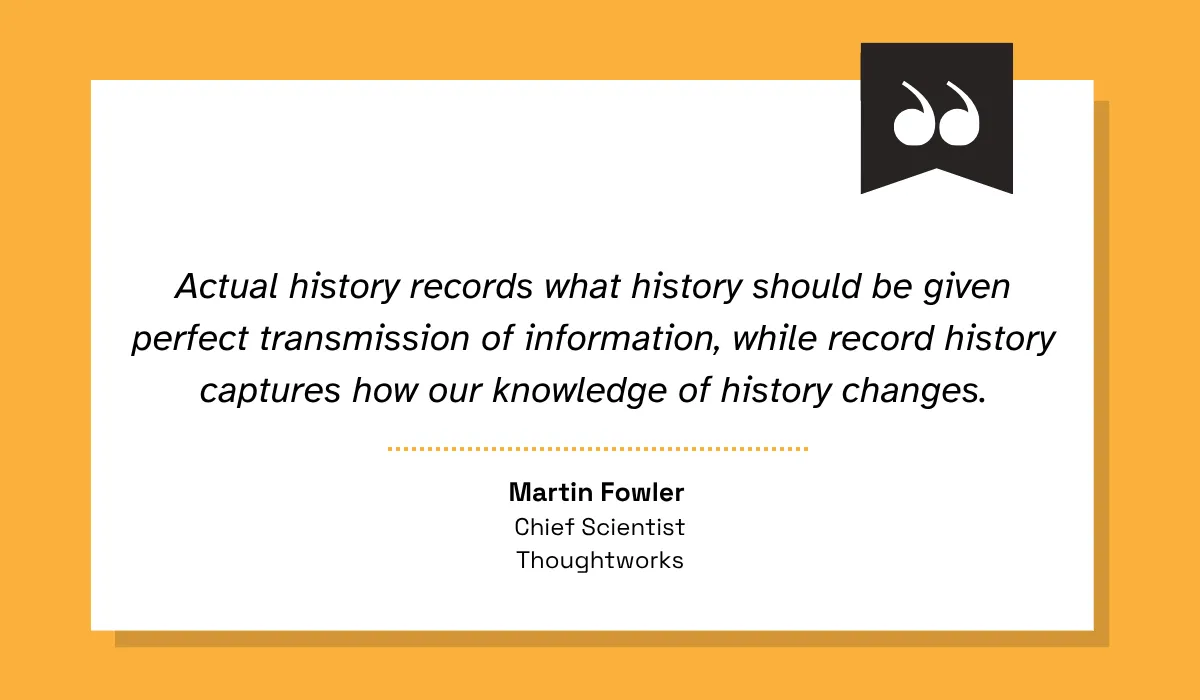
Illustration: Veridion / Quote: Martin Fowler
In practice, for example, a borrower can enter liquidation in one quarter and appear as liquidated in a database, register, or commercial information source several weeks later.
In case of backtesting, the record date matters more. For instance, if a borrower enters liquidation on 3rd March and the registry records it on 21st April, anyone analyzing the borrower on 31st March would not know about it.
A backtest that dates the fact to March 3rd hands the model something the analyst never had. So a backtest needs the date a fact became known, not just the date it was true.
The problem, however, is future data, not old data. A company record from 2019 with a correct 2019 timestamp is valid for a 2019 test. An old record becomes useful evidence of historical conditions when it preserves its observation date.
The error occurs when a 2026 value is attached to a 2019 borrower observation without a record of when that value was first known.
This failure has a name. Look-ahead bias occurs when a backtest uses information that wasn't available when the simulated decision was made.
The result is overly optimistic results. In credit, the model that separates good borrowers from bad ones will look better on paper than it will in reality.
The principle is established in other data domains. The St. Louis Fed's Archival Federal Reserve Economic Data (ALFRED) service stores each vintage of an economic data release as it was available on a specific historical date.

Source: ALFRED
That lets researchers compare the figures available when a release first came out with the revised figures shown today. Company data needs the same discipline when it supports credit model validation.
How Current Company Data Replaces History
Current data rarely announces itself when it slips into a historical test. No job fails, no value looks wrong, and your backtest performs better than the model deserves.
The model simply receives information from a date later than the one it should represent, so results look better than they should. It happens in three ways.
Overwriting
This occurs when a dataset keeps only the latest value for each company attribute. The old value disappears when a new value arrives.
Take the March 2023 revision of the Global Industry Classification Standard (GICS). After the close on March 17, 2023, Visa, Mastercard and PayPal moved from Information Technology to a new payment-processing sub-industry under Financials.
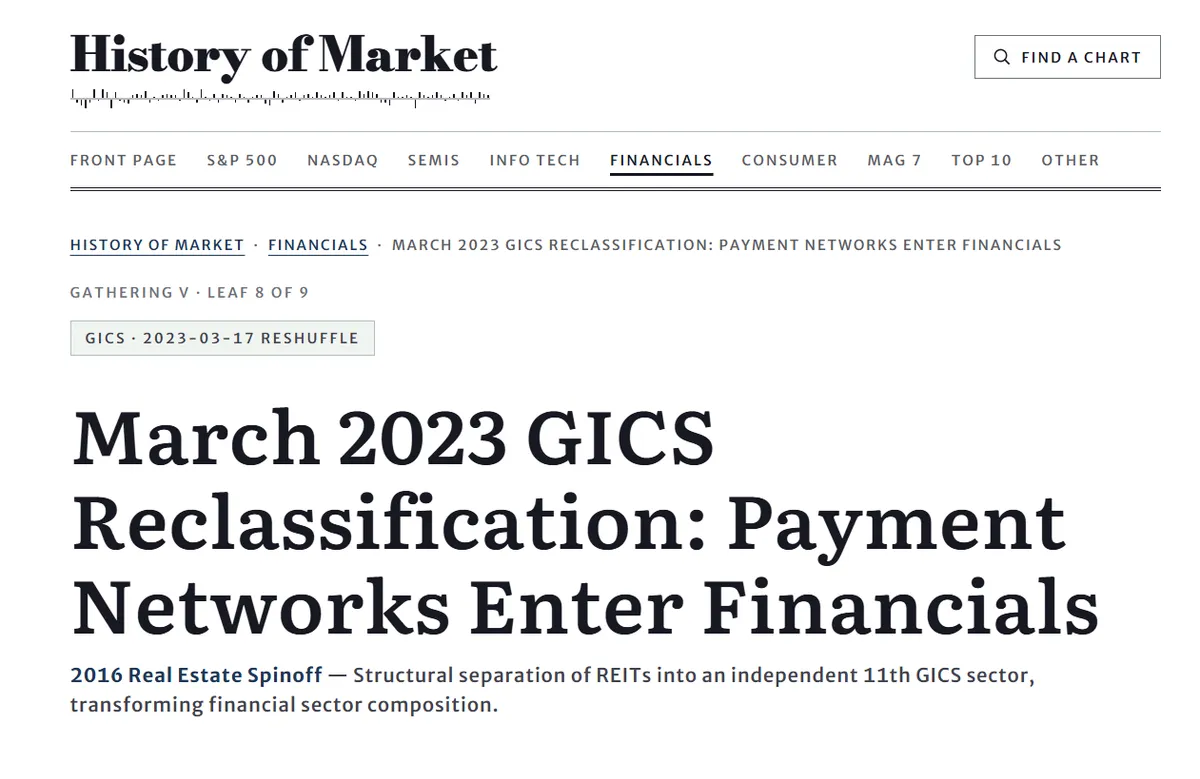
Source: History of Market
A backtest that overwrites the old code, for instance, puts Visa in Financials in every earlier period. A 2021 test then compares it with financial peers instead of the technology peers it had then. Sector benchmarks then reflect a structure that did not exist at the time.
In credit, the consequence is direct. A borrower's sector can affect default correlations, peer comparisons, collateral assumptions, and macroeconomic sensitivity.
If today's sector enters a past observation, the model is not testing the information available to the original credit decision.
Late Arrival and Backfill
This is when a change is recorded after it happened, or a provider corrects a value and applies the correction to the whole history. Either way, past dates show facts that nobody knew yet.
Say a borrower is acquired on February 27, but the change reaches the dataset only on April 10. If the dataset files the change under February 27, a test dated March 31 shows a parent company and group support that no one could see on that date. Filing a fact under the period it describes, instead of the date it became known, sets the same trap. Tradevo Data shows how this happens in equity data: if a backtest joins fundamentals on the fiscal period end date, it receives fourth-quarter figures on December 31, weeks or months before the annual report is filed.
Backfill can also arise from corrections. A provider may discover that a company's employee count was wrong, then replace the historical value with the corrected figure.
The corrected figure may be more accurate today, but it was not the figure available when the historical credit assessment was made.
Selecting Today's Universe
The test set is built from companies that are active today. That drops the ones that failed in between, so a credit backtest undercounts defaults.
This is survivorship bias, a selection problem, rather than look-ahead bias. But they share the same origin: using today's view of the data.
A study published in 2023 examined 10,848 US public companies from 1980 to 2014. It found that a sample of surviving firms is truncated in proportion to default probability, so it doesn't represent the full population. Firm value comparisons built on that sample were distorted, and the distortion disappeared once the authors controlled for survival probability.
For a credit backtest, the effect is severe. Defaults are among the outcomes that remove a company from a current active-company universe.
When borrowers no longer exist, the sample underestimates default and may suggest that a rating model, scorecard, or early-warning indicator is more discriminant than it really is.
The Federal Reserve, OCC, and FDIC’s 2026 guidance identifies backtesting as a form of outcomes analysis, which compares model outputs with corresponding real-world outcomes to assess performance.
If the sample excludes the companies that produced the adverse outcomes, the comparison no longer reflects the population the model was intended to assess.
Here’s a quick snapshot of the three mechanisms:
Mechanism | What happens to the data | Company-data example | What the backtest sees | What a point-in-time record needs |
|---|---|---|---|---|
Overwriting | Only the latest value is kept | A reclassified issuer, like Visa before 2023 | Today's industry on every past date, so peer groups reflect a structure that didn't exist | Each classification with its effective date and source |
Late arrival and backfill | A change is recorded late, or a correction is applied to all history | An acquisition entered weeks after it closed | Group support on a test date before anyone knew about the deal | The date each fact was first known, with later corrections kept separate |
Selecting today's universe | The test set comes from currently active companies | Borrowers that defaulted or closed are missing | Fewer failures than occurred, so defaults look rarer | Every company that existed on the test date, with its status history |
Each mechanism results in the same practical effect. Backtesting gets access to a more accurate, more knowledgeable version of historical company data than a credit decision-maker can obtain. It produces an optimistic backtest and conceals the model's weaknesses.
What Makes a Company Dataset Point-in-Time?
Point-in-time data can answer an "as of" question only if the dataset recorded when it learned each fact and kept the facts it replaced. Three properties make that possible.
Dated observations. Each value carries the date it was observed or last verified. Where possible, key it to when the fact became known, not the period it describes.
History kept, not overwritten. Updates come as new records, and reported values are clearly distinct from later updates. You don't change what you knew on a given date; you simply add what you learn later. Fowler puts it simply:
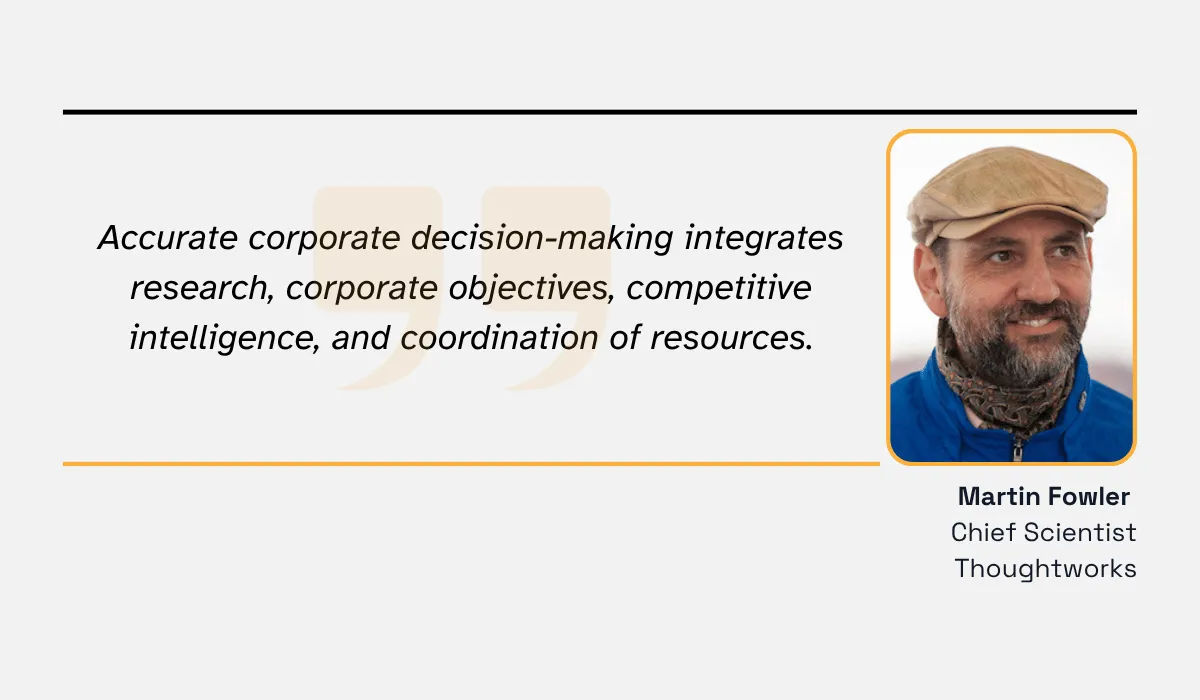
Illustration: Veridion / Quote: Martin Fowler
Documented refresh logic. How often each field type refreshes tells you how long after a real-world change the dataset could have known about it. Without documented cadence by field type, you can't estimate that lag.
Veridion's data methodology shows what timestamped, traceable company data looks like. Every attribute ships with a result, a confidence score, and a source trail: the sources it was derived from, plus the date it was last harvested.
Every change to a conclusion is traceable to the evidence that caused it, and a change to an existing value is accepted only when it comes with supporting evidence and passes a set of filters.
Refresh cadence differs by attribute type. Core company attributes are updated continuously, volatile indicators are updated daily, and technographics use a rolling 90-day window.
The methodology also notes the lag: material signals update in near-real-time, but lower-priority changes may take days or weeks to appear in sources. That is the gap between actual time and record time.
This is vital because timestamps and provenance make a data provider auditable. When you evaluate a data provider, ask how each field is sourced, when it was last updated, and whether the provider preserves proof of any changes. Questions about refresh cadence and update triggers are also part of data enrichment best practices.
Match confidence and source provenance also help you judge whether a value is strong enough to use in a model feature.
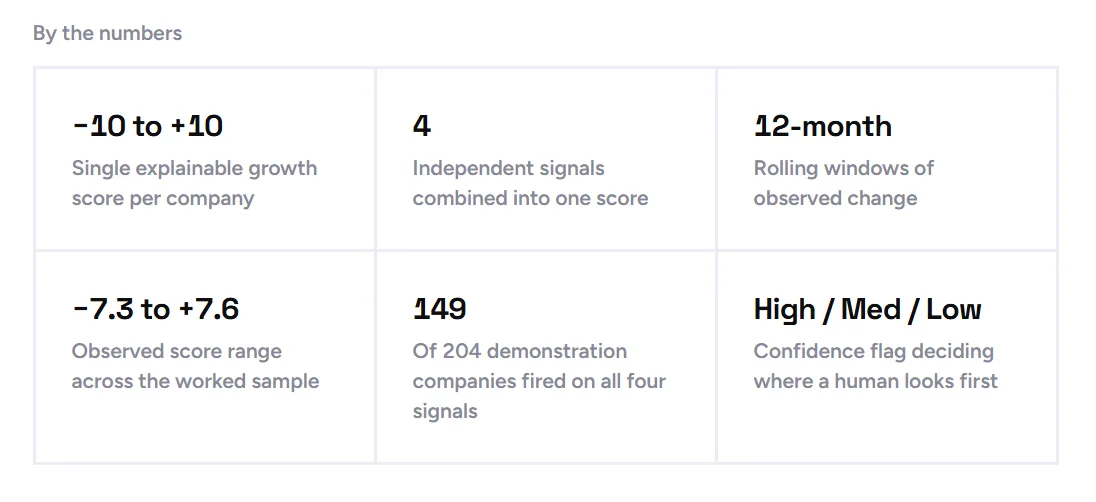
Veridion’s case study, A Per-Company Growth Score Built From Real-World Behavior, shows how dated, traceable signals can support an explainable company-level measure. A UK card and payments provider wanted to see which customers were expanding, which were slowing, and which were heading toward distress before the change showed up in its own spend data.
The score draws on Veridion's company knowledge graph and reads change over rolling 12-month windows. It includes four signals: net change in active physical locations, employee-count trend, website comparison with the previous year, and confirmed transition to a new web stack. A new location counts only once it is verified open, so backfilled data can't fake an expansion.
Each score includes a written explanation and a High, Medium, or Low confidence level.
Source: Veridion
The case study showed that every score decomposes back to the dated location, headcount, tech-stack, and website-change records that produced it.
This lets data teams check the factual basis of a signal instead of relying on an unexplained current-state value.
However, this doesn't mean that Veridion offers "as of" historical records or prebuilt backtesting history. The essential point is different: source date, harvest date, confidence score, and refresh behavior let you answer the question, "when was this known?"
How Can You Check a Dataset for Future Data?
You can find future data in a company dataset with a short test on a sample of companies. You do not need to rebuild every historical field before you understand where future data can enter.
Pick a historical test date and, for each company field, ask two questions: is this the value on that date? And is there a timestamp showing when it was first known?
Start with the fields your model actually uses. For a credit model, those may include legal status, industry or sector, ownership or parent company, employee count, locations, registration data, website presence, and technology signals.
For each field, compare the value in the backtest extract with the value that was known on the test date.
Flag fields that only store a current value. These are the likely leaks. If a field has one value per company, no effective date, no observation date, and no revision history, you cannot demonstrate that it was available on a past date. Treat it as a current-state field until proven otherwise.
Pay particular attention to fields that change materially over time. These may include ownership, legal status, industry classification, employee size, and physical location.
A current ownership field can hide an acquisition. A current status field can hide a later liquidation. A current industry field can hide a pivot that changed the borrower's peer group.
Also document the timestamp fields, refresh cadence, source of data, and any known backfill practices. These help the validators determine whether the backtest has sufficient evidence to support model use.
Validators have a reason to read your data note. The US banking agencies replaced SR 11-7 with SR 26-2 on 17th April, 2026. It lists a critical assessment of data quality, relevance, and inputs in model testing activities. It also states that model risk management principles still apply to vendor and third-party products, including data.
The SR 26-2 states:
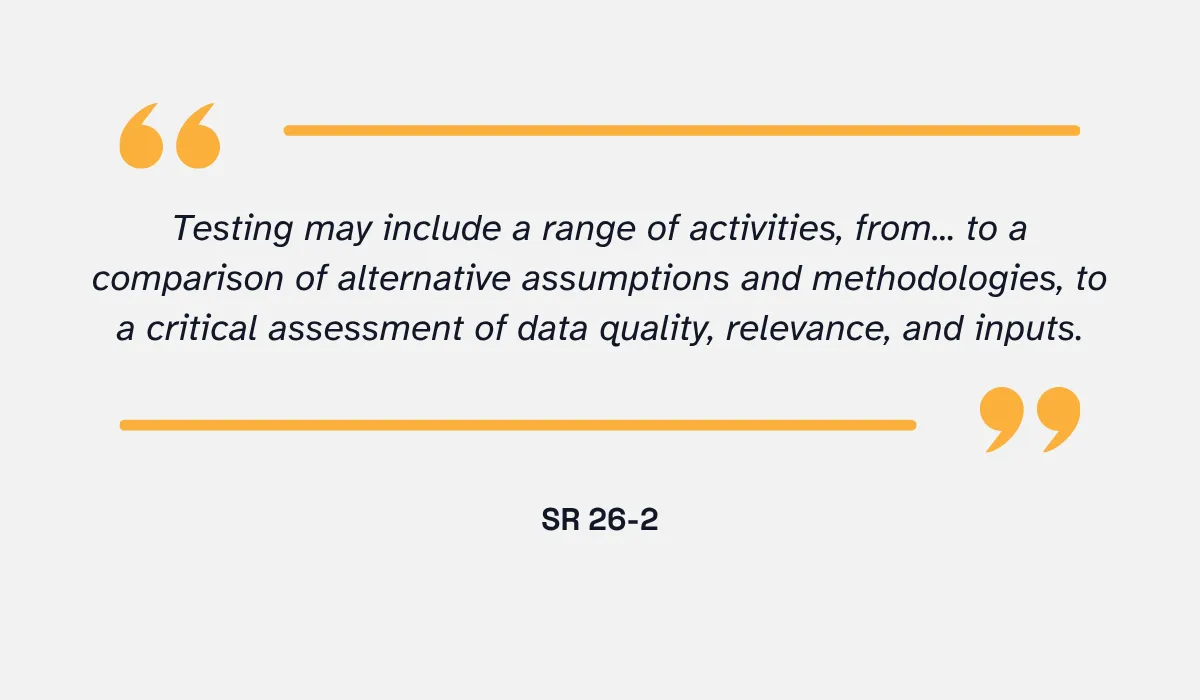
Illustration: Veridion / Quote: Federal Reserve System
Your data note is evidence for that review.
Keep this check at the dataset level. It tells you whether the inputs could contain future information.
Conclusion
A historical model should only see company facts that were known on the test date. Current values applied to past dates are the most common way the future gets in.
Start with one backtest. List every company field it uses. Mark which fields store only a current value. Then begin saving dated snapshots of those fields today, so future backtests have the historical truth they need.
Articles
Discuss how these trends affect your organization.
Our analysts are available for a short call. Bring a specific question and we will ground it in the data.
Insights
Keep reading
More analysis, research, and outcomes grounded in live company intelligence.
How to Choose a Third-Party Risk Data Provider (Without Getting Burned)
Tired of unexpected vendor issues? Learn how to identify emerging market risks and choose a third-party risk data provider that keeps you safe.
Best Practices for Data Enrichment
Learn how data enrichment best practices help businesses turn raw data into accurate and actionable insights.
What is a Match Score? Understanding the Waterfall Methodology in Company Data Enrichment
Tired of inaccurate company data? Understand the data enrichment API match score and fuzzy company name matching with the Waterfall Methodology.