Insights / Articles
Company Data API for Private Equity: Architecture, Fields and Buying Criteria
Your company data API for private equity is only as good as its match to your CRM. See which fields PE tasks need and the seven tests to run before you sign.

- Integrate external data without replacing internal company IDs.
- Corporate ownership does not always identify the sponsoring PE fund.
- Check activities and size figures in context before screening targets.
A company data API for private equity brings external company information into the systems a firm uses for sourcing, research, and portfolio monitoring. When choosing a provider, PE data teams need to understand how its data connects to existing records, which fields are available, and whether its delivery options and commercial terms suit their work.
Veridion is a business data provider that delivers continuously updated company intelligence through APIs, batch files, and warehouse integrations.
Where Does a Company Data API Fit in a PE Data Stack?
Your customer relationship management (CRM) system and portfolio-monitoring tools hold records for companies you already track. A company data API can add information to those records or help you discover new targets. Because the provider assigns its own company IDs, your integration needs to connect its records to yours before adding or updating information.
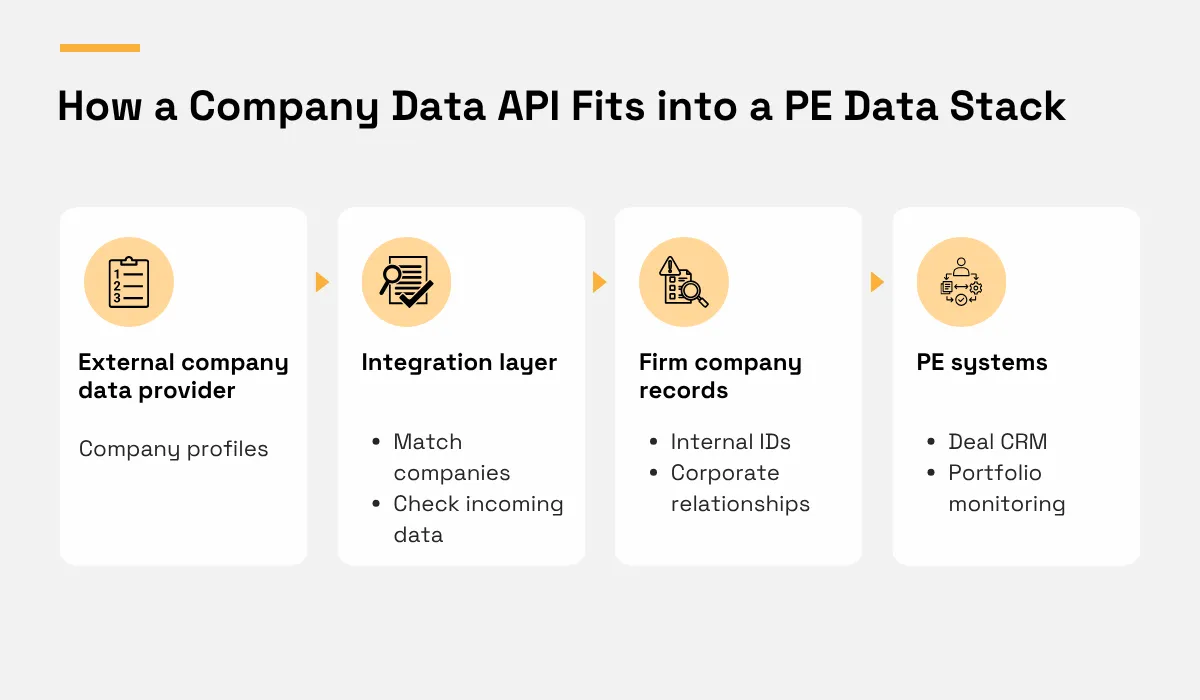
An integration layer between the provider and your internal systems handles identity matching and quality checks before incoming data reaches deal teams. The diagram shows how this layer connects external information to your firm's company records.
Source: Veridion
The integration layer should link incoming data to the correct internal record, flag uncertain matches for review, and check new companies before adding them. Preserve your existing IDs: if a portfolio company is PE-00482 in your CRM, link the provider's ID to PE-00482 rather than replacing it or creating a duplicate.
Veridion's Private Equity solution supports sourcing, due diligence, and portfolio monitoring through its company graph. When your team is looking for new targets, Search V4 finds businesses that fit an investment thesis. When you already have a company record, Match & Enrich V6 identifies the business and returns additional information about it.
Keep the operating company, its subsidiaries, the investing fund, and any special-purpose vehicle (SPV) as separate records linked by defined relationships. A corporate-group identifier can support those links, but it should not be treated as proof of which PE fund sponsors the investment.
How you receive the data depends on how your team will use it. An API supports individual company lookups, while batch delivery is useful for building target lists or updating portfolio records in bulk. You can start with an initial bulk import, or backfill, then receive complete datasets or only changed records on an agreed schedule.
Veridion's Data Delivery options include Snowflake, BigQuery, and Databricks integrations, allowing teams to analyze company data alongside investment records. Its Firmographic API Integration guide explains broader patterns for API enrichment, batch processing, and warehouse analytics.
A global information-services provider needed to expand its private-company data because its existing products offered more detailed information on listed companies than on private operating businesses.
Using Veridion's company graph and Match & Enrich, the provider linked new company information to the identifiers already used in its systems. Veridion delivered the records in batches timed to the provider's ingestion schedule, so its content team could validate them before adding them to its products. By January 2025, cumulative delivery had reached 5.4 million unique private-company records.
A PE firm can use the same approach to add external company data while preserving its internal IDs and reviewing records before they reach deal teams.
Once you've decided how your team will access company data, you can choose which fields it needs for sourcing, due diligence, and portfolio monitoring.
Which Company Data Fields Do PE Workflows Need?
The company data fields you need depend on what your fund wants to research. The table below summarizes the main field groups, the PE tasks they support, and what to verify before using them.
Field group | PE task it supports | Example fields to request | What to verify |
|---|---|---|---|
Identity and match evidence | Identify targets and match CRM records. | Legal name, trading name, registration ID, LEI, website, match score. | Entity identity and matching evidence. |
Activities and classifications | Screen target industries and niches. | Industry codes, NAICS, keywords, products, services. | Activities beyond broad industry codes. |
Geography and sites | Find companies in target regions. | Headquarters, secondary locations, site addresses. | Site function, not just its address. |
Company size | Screen by revenue and workforce. | Annual revenue, currency, financial year, employee count. | Entity scope, period, currency, and estimates. |
Corporate relationships | Map ownership and group structures. | Direct parent, ultimate parent, subsidiaries, shareholders, ownership percentages. | Definitions, dataset access, and SPVs. |
Sources and dates | Verify information and freshness. | Source references, collection dates, confidence scores. | Source support, age, and attribute confidence. |
Use these groups to define the information your workflow requires, then check what each dataset and endpoint actually returns.
Company Identity and Corporate Relationships
A company's name alone may not identify the right business: trading and registered names can differ, and unrelated companies may share similar names. Registration numbers, a Legal Entity Identifier (LEI), websites, and addresses provide additional matching evidence.
Veridion's Match & Enrich API accepts a company name and country alongside details such as an address, website, or registry ID. It returns evidence of which details matched and a confidence score, helping your team review ambiguous records before using the enrichment.
Once the entity is identified, establish which corporate relationships the task requires. A target may sit beneath a holding company while owning several operating subsidiaries, so an ultimate-parent field alone will not describe the whole group.
Before comparing ownership fields, check how each provider defines a parent company. GLEIF uses accounting consolidation to identify direct and ultimate parents, while Veridion's Ultimate Parent API traces majority ownership to the top of the chain. These different methods can identify different ultimate parents for the same business.
Veridion's endpoint returns the ultimate controlling company. It does not return intermediate holding companies, a subsidiary list, shareholders, or ownership percentages. If your team needs those details, check the separate corporate-group datasets and confirm access, licensing, and delivery with Veridion; they should not be assumed to be included in the standard Match & Enrich response.
Even a verified corporate chain may not identify the sponsoring PE fund, because a fund can invest through an SPV that holds the portfolio company's shares.
Take KKR, a global investment firm, for example. The May 2024 announcement published by Apax stated that an SPV owned by KKR-managed funds would acquire a controlling interest in Healthium group, including Healthium MedTech, an Indian medical-device company.

Source: Reuters
The funds were behind the investment, while the SPV was the acquiring entity. Recording both relationships helps your team distinguish the investment sponsor from the legal shareholder before evaluating the operating business.
Business Activities, Locations, and Size
Industry codes are a starting point for screening, but they may group manufacturers with distributors and service providers. If your thesis targets specialty chemical-additive manufacturers, product and activity descriptions help establish which companies actually make the relevant products.
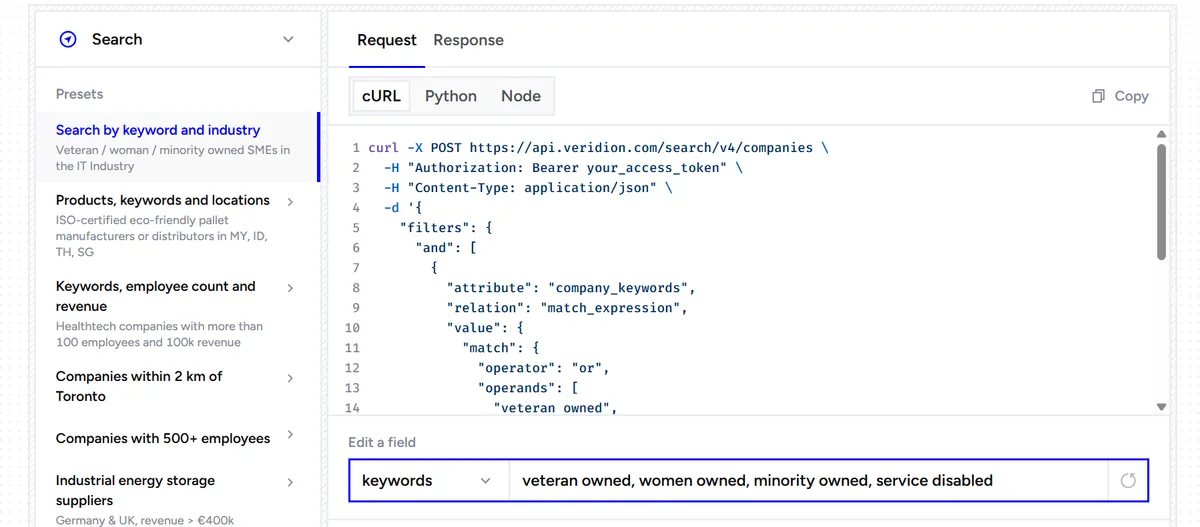
Veridion's Search API combines industry and North American Industry Classification System (NAICS) filters with keywords, products, and services, helping you narrow a broad industry to businesses that fit the thesis.
Source: Veridion
Once a company's activities fit your thesis, check where those activities take place. An Italian headquarters address does not show whether the company manufactures in Italy, while a company headquartered abroad may operate Italian factories. Secondary locations can help, but you still need to distinguish factories from offices, branches, and stores.
Revenue and employee counts can then help narrow the list by size. Before comparing figures, check whether they describe an individual company or its wider group: a subsidiary's revenue may cover only its own operations, while consolidated parent revenue includes several businesses. The currency, financial year, and date of the employee count also need to be clear.
Distinguish published figures from provider estimates: an estimate can support initial screening but is not confirmed revenue or headcount. Treat missing revenue or employee values as unknown rather than zero, and decide whether those records require further research before excluding them from a target list.
Sources, Dates, and Confidence
Matching the right company is only the first step; each returned field also needs supporting evidence. A registry filing can help verify legal identity, while a company website may describe products and operating locations.
Veridion's data methodology explains how it checks information across sources and provides source references and confidence for individual attributes. When reviewing freshness, distinguish when the provider collected the information, when the source published it, and when the event occurred. These dates can differ substantially for an acquisition.
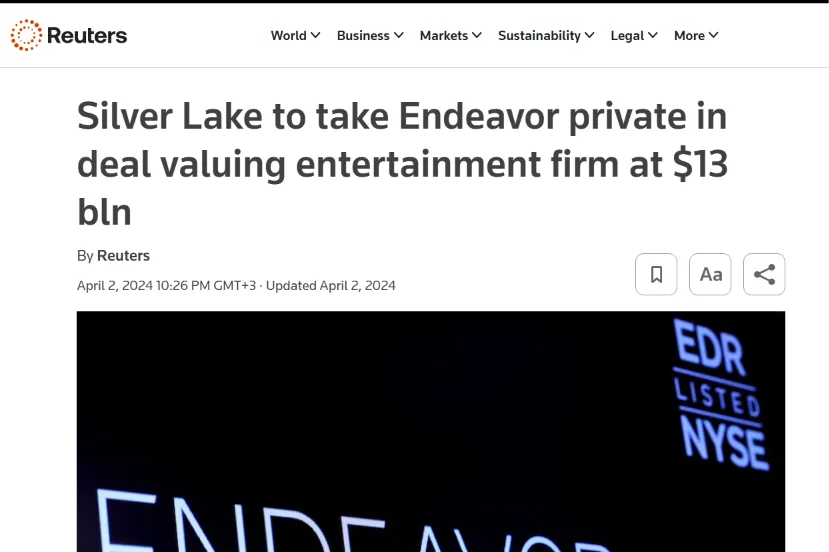
Silver Lake, a global technology investment firm, announced an agreement to take Endeavor, a global sports and entertainment company, private on April 2, 2024. The acquisition was completed on March 24, 2025.
The announcement established an agreement; the later closing confirmed completion. Collecting the April announcement again after the deal closed would not make it evidence of completion. The source still needs to support the ownership status recorded in your system.
Source: Reuters
A company match score measures confidence that your submitted record and the returned profile refer to the same business. It does not guarantee the accuracy of every field: review the sources, dates, and confidence attached to individual attributes separately.
What Should PE Teams Test Before Choosing a Company Data API?
A pilot should test the API against the companies and workflows your fund actually researches. Before running it, define the required fields, acceptable data age, rules for reviewing uncertain matches, and essential delivery and usage conditions. Assess each criterion against those requirements and record it as passed, failed, or unresolved.
Criterion | Test | Evidence to request | Acceptance requirement |
|---|---|---|---|
Company coverage and matching | Test companies from target sectors and regions, including difficult-to-match records. | Match results and coverage by sector and region. | Matches are correct; uncertain results are flagged. |
Field coverage and accuracy | Check required fields against known company records. | Sample profiles, populated fields, and returned values. | Required fields meet agreed coverage and accuracy criteria. |
Sources and freshness | Check where information came from and when it was collected. | Source references, collection dates, and confidence information. | Sources are traceable; data meets age requirements. |
API documentation and reliability | Test documentation, access, request limits, errors, version changes, and failed-call recovery. | API documentation, test access, and error-handling policies. | Requests complete successfully, and failed calls can be retried safely within documented limits. |
Security and access | Review authentication, access controls, and data protection. | Security documentation and access-control details. | Controls pass the firm's security review. |
Pricing and support | Confirm paid modules, search and match charges, refresh costs, and support commitments. | Pricing proposal, usage terms, and support agreement. | All required modules, charges, and support are agreed. |
Data usage rights | Check storage, internal use, and sharing with advisers. | Data licensing terms and proposed contract. | License permits intended storage, use, and sharing. |
Use the results to identify requirements the provider meets and questions that need resolving before purchase.
Coverage and Data Quality
Build a representative sample across your target sectors and regions, including familiar companies and difficult records. Include trading-name variations, subsidiaries, incomplete records, and businesses without published revenue or employee counts.
Use registries, annual reports, and official websites to confirm which company each sample record represents and which details you can verify. Compare the API's results with those references, recording correct matches, incorrect matches, unresolved records, and duplicate profiles separately.
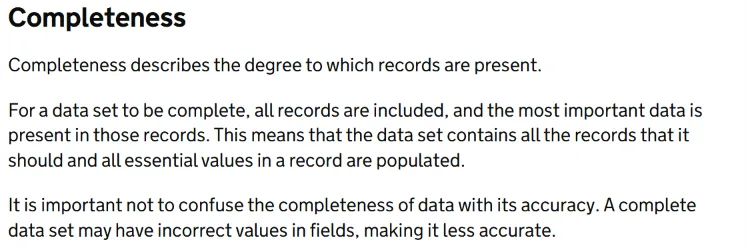
Then assess field coverage and accuracy independently: how often does each required field contain a value, and how often does that value agree with the reference source? The UK Government's Data Quality Framework distinguishes completeness from accuracy, so a populated profile should not automatically count as a correct one.
Source: GOV.UK
Keep unresolved companies and missing fields visible in the results. There is no universal match-rate or field-coverage threshold for PE firms; acceptance should depend on the requirements you set for the intended workflow.
Delivery, Reliability, and Commercial Terms
Give developers test access and ask them to run common requests using the provider's documentation. Check request limits, response formats, error handling, and version-change policies, including how much notice the provider gives before breaking changes.
For failed or slow requests, establish when retries are safe and how timeouts and backoff should work. AWS's guidance on timeouts and retries explains why controlled retries matter when services become unavailable.
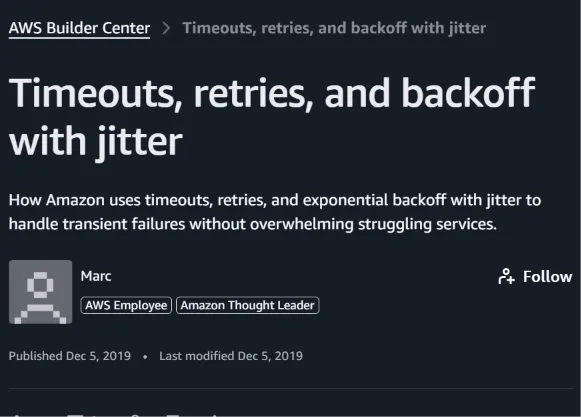
Source: AWS
Reliability also depends on secure access and a record of API activity. Review authentication, access controls, and how data is protected in transit. The NCSC's API authentication and authorization guidance covers access controls, while its logging and monitoring guidance explains how to record and review API activity.
Commercial review should establish which datasets or modules are included, how searches and matches are billed, and whether refreshes carry separate charges. Confirm support commitments and licensing rights for storage, internal use, and sharing with advisers.
Finally, assess response latency separately from data refresh frequency. A fast API response does not establish that the underlying company information was recently updated; both need to meet the workflow's requirements.
Conclusion
The value of a company data API becomes clear when deal teams use it to build a target list, research a business, or review a portfolio company. Can they tell which entity a record describes, what supports its key fields, and when the information was updated?
Build your pilot around one of those tasks and follow the data into the systems your team uses. That will show whether the provider gives you information people can confidently use in their next investment discussion.
Articles
Discuss how these trends affect your organization.
Our analysts are available for a short call. Bring a specific question and we will ground it in the data.
Insights
Keep reading
More analysis, research, and outcomes grounded in live company intelligence.
How to Connect a Firmographic Data API to Your CRM, CDP, and BI Stack (A Technical Guide)
Struggling to integrate firmographic data providers? This technical guide shows you how to connect their APIs to your CRM, CDP, and BI stack.
What is a Match Score? Understanding the Waterfall Methodology in Company Data Enrichment
Tired of inaccurate company data? Understand the data enrichment API match score and fuzzy company name matching with the Waterfall Methodology.
What Is the Difference Between Business and Market Intelligence?
Not sure whether you need business intelligence or market intelligence? This article compares them and shows when to choose each.