Insights / Articles
8 Peer Selection Mistakes That Distort Credit Comparisons
Eight peer selection mistakes that distort credit peer analysis, including broad industry codes, and scale mismatches.

- Broad industry codes can produce misleading peer sets.
- Geography can matter as much as industry when comparing credit risk.
- For reliable comparisons, regularly refresh peer sets and carefully resolve entities.
A distorted credit comparison doesn't always start with bad analysis.
More often, the problem begins much earlier: with a flawed peer set built on weak or unchecked company data.
Once those inaccuracies enter the process, even a sound analytical framework can produce misleading results.
In this post, we’ll look at the mistakes that undermine peer selection and explain how to avoid them.
1. Relying on One Broad Classification Code
The first mistake is building a peer set from an industry classification code, like an NAICS or SIC code, without checking whether that code is current or specific enough.
This can lead to comparing companies that aren't true peers, even when they technically share the same code.
Let's take SIC code 7011 as an example.
Although it's primarily used for hotels and motels, it can also encompass other commercial establishments that provide lodging for the general public.
And some of these establishments are often quite different from what you'd consider a typical hotel or motel.
For instance, the code also includes health resorts, guest ranches, cabin rentals, and fish houses, which might not be the best peers for the company you're analyzing.
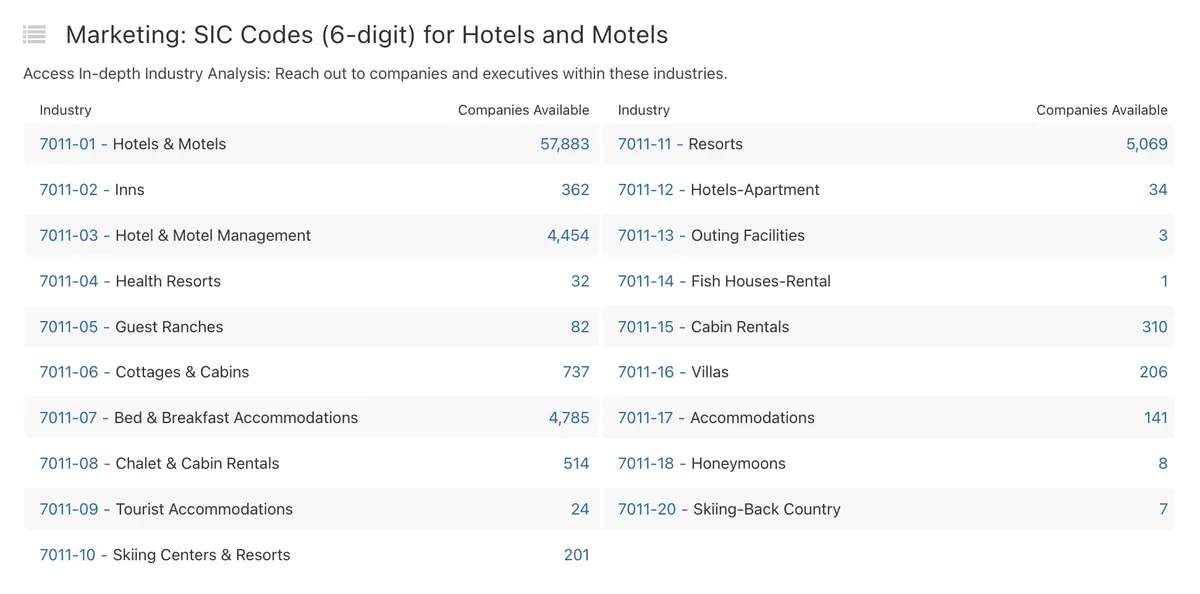
Source: SICCODE.com
The same problem can appear even when companies share more similarities.
Visbanking illustrates this with two banks, both with roughly $1 billion in assets.
Although they seem quite similar at first glance, if their other characteristics differ significantly, they may still not be the best peers.
One could be a community bank operating in a rural, agriculture-based market, while another might operate in a high-growth urban market.
In that case, the two banks are likely to have fundamentally different business models, customer bases, competitive environments, and risks, despite their similar size and broad classification.
Comparing them would be a classic example of an “apples-to-oranges” peer comparison.
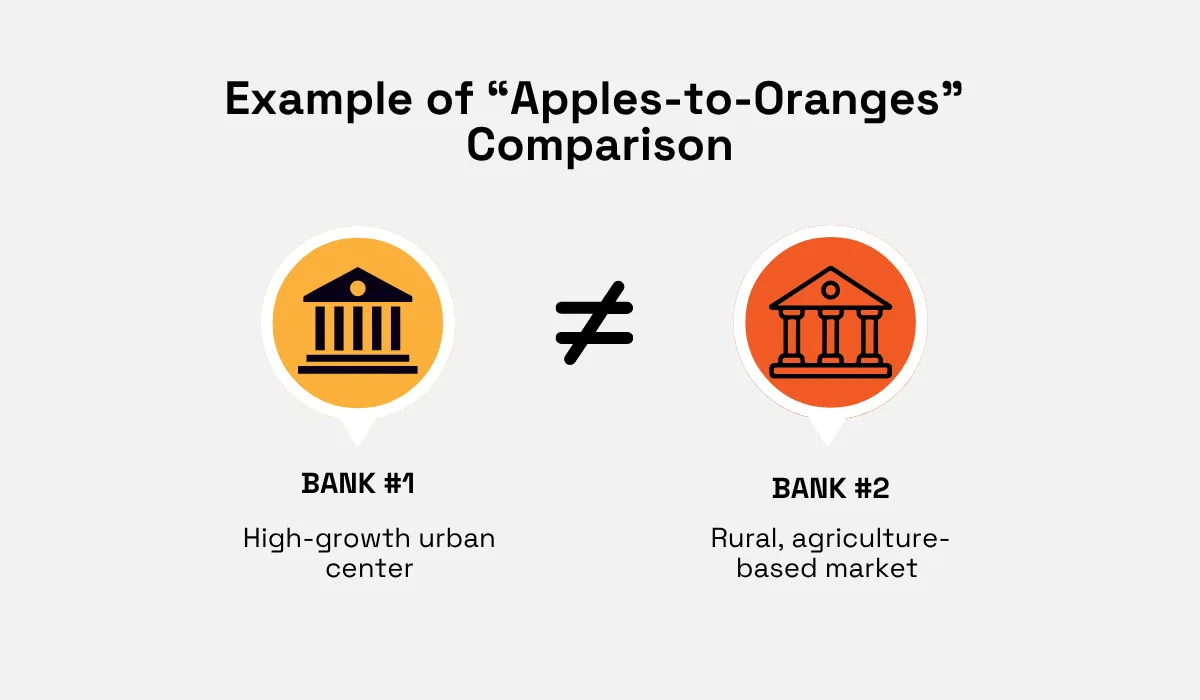
Illustration: Veridion / Data: Visbanking
Apples-to-oranges comparisons can happen even when you use a broad classification code simply as a starting point.
The problem is that this can already bring companies into your peer set that aren't truly comparable.
So before relying on code, make sure they're both current and sufficiently specific.
Additionally, don't add peers blindly just because they share the same industry classification.
Instead, assess each potential peer against key credit risk factors, such as business model, geographic exposure, revenue mix, scale, profitability, leverage, and cash-flow characteristics.
2. Comparing a Parent to Its Own Operating Subsidiary
Another common mistake is treating a parent company and its operating subsidiary as independent peers.
This gives one group's business risks more weight in the analysis and skews peer benchmarks, even when the parent and its subsidiaries have different credit profiles.
Consider International Airlines Group (IAG).
IAG is the parent company of British Airways, Iberia, Vueling, and Aer Lingus.
As shown in the graph below, all of them have different credit risk profiles.
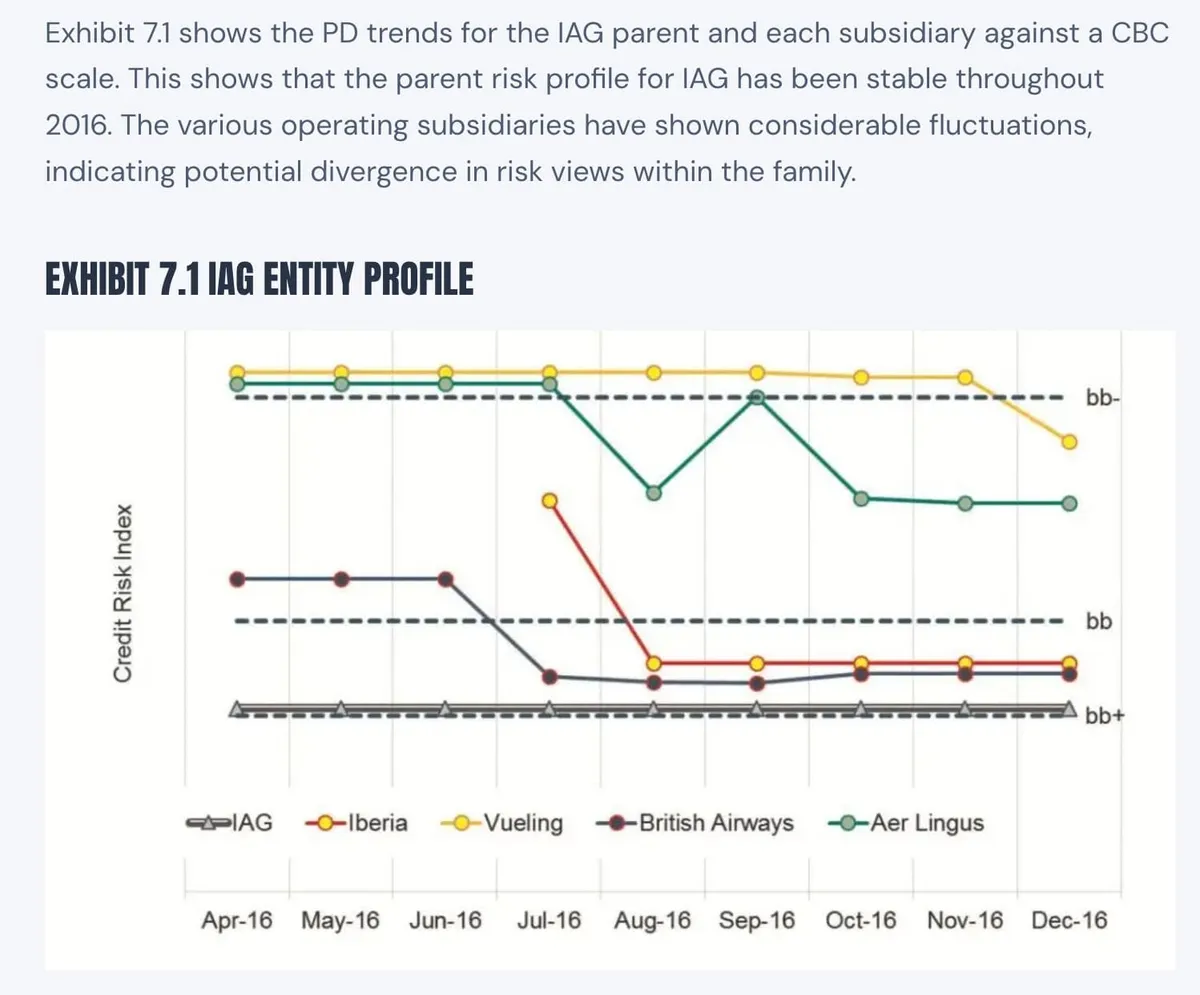
Source: Credit Benchmark
That said, you should still avoid adding them as independent peers.
Since they're part of the same corporate group, these companies share important underlying business, strategic, and financial exposures.
Including all of them in the peer set would effectively double-count those shared exposures and inflate the peer group size without adding genuine comparative value.
As senior partner at McKinsey, Andy West and his colleagues write, a bigger peer group isn't always better.
In fact, it might distort the picture by introducing companies that aren't truly comparable or relevant.
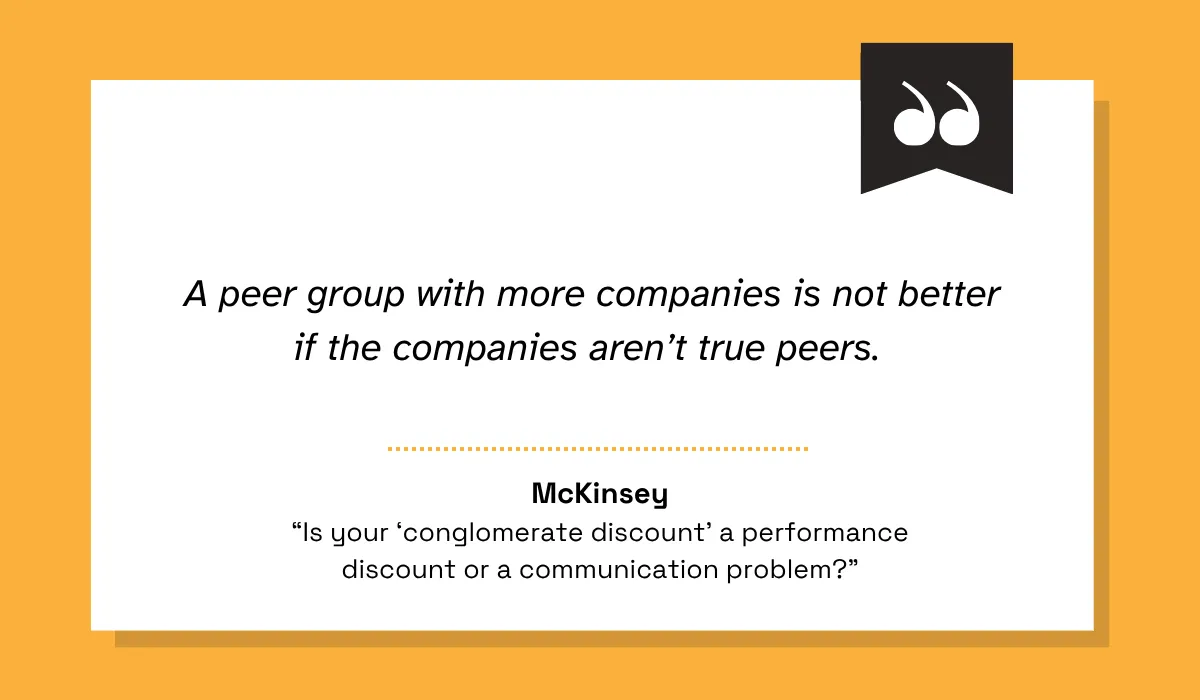
So, before treating companies as separate peers, analysts should map the corporate hierarchy and determine whether they represent genuinely independent businesses.
3. Ignoring Scale Mismatches
Pairing a much larger company with a much smaller one also introduces distortion, since scale affects bargaining power, access to capital, and operating leverage independent of industry or business model similarity.
For instance, Arsene Lui, director of quantitative modeling at S&P Global, explicitly says that company size variables are frequently used as inputs within S&P’s Credit Analysis quantitative models.
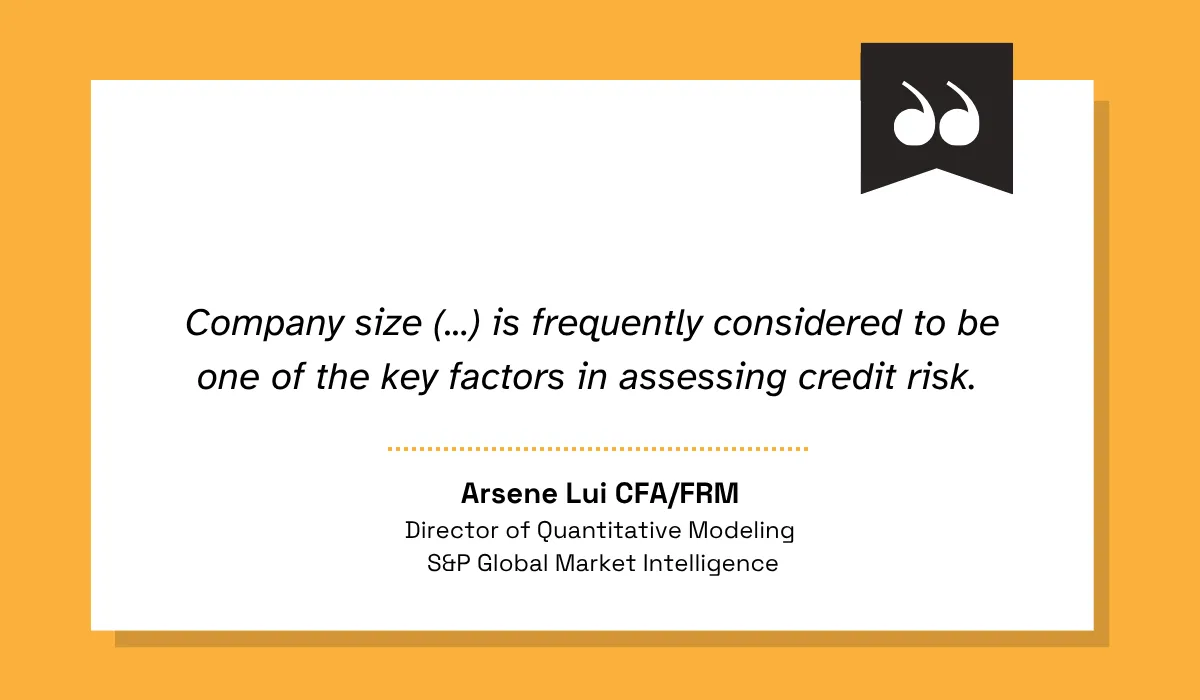
Illustration: Veridion / Source: S&P Global
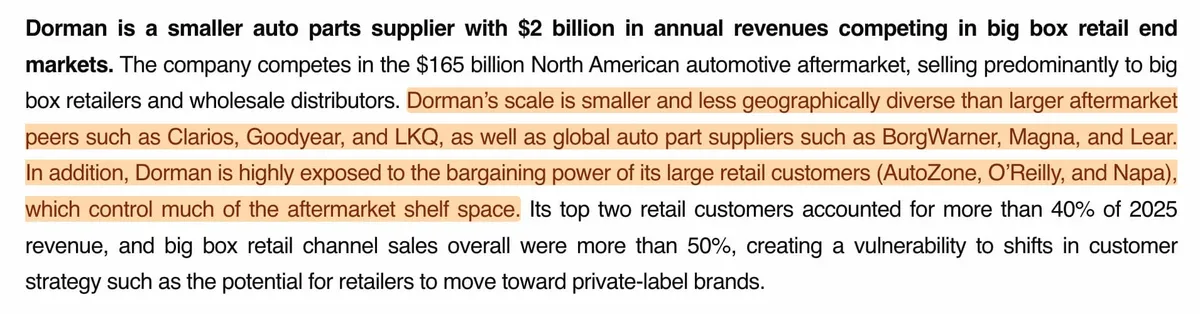
To illustrate why size matters, let's look at S&P Global's own credit rating analysis for Dorman Products Inc.
S&P Global describes Dorman as "a smaller auto parts supplier (...) competing in big box retail end markets," with competitors spanning household names like Goodyear.
They go on to clarify that Dorman's scale is both smaller and geographically less diverse than that of its bigger competitors, while its large retail customers also hold significant bargaining power because they account for a large portion of Dorman's revenue.
Source: S&P Global
So, treating Dorman as a direct peer to competitors like Goodyear or BorgWarner can make the comparison misleading, as differences in size can lead to significantly different credit risk profiles.
That said, size alone doesn't make two companies unsuitable peers.
A smaller or larger company can still provide a useful comparison when its business and credit risk characteristics are otherwise comparable.
The key is to determine whether the scale difference is material enough to affect the credit metrics being compared and to document why a larger or smaller company remains appropriate.
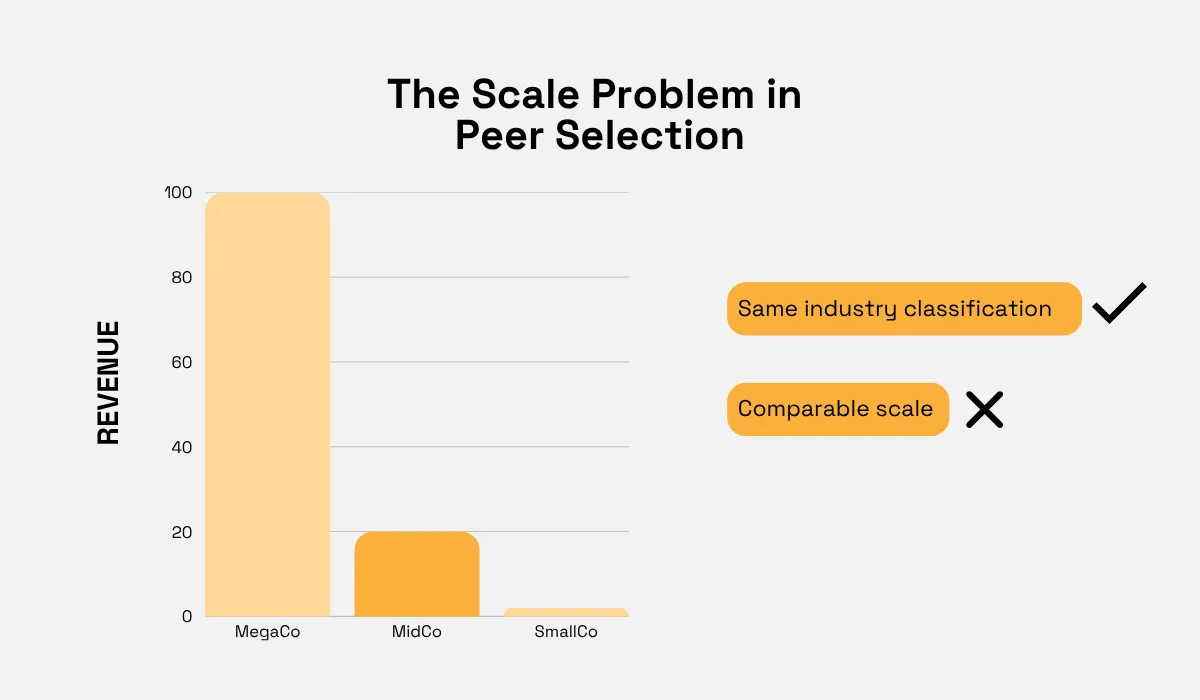
A useful red flag is a peer set that combines a mega-cap company with mid-market businesses simply because they share the same industry classification or a similar characteristic.
In that case, metrics such as leverage, margins, and liquidity will be much less directly comparable.
Source: Veridion
Overall, rather than treating every size mismatch as invalid, analysts should define an acceptable size range for the peer set and document exceptions.
A company outside that range may still be a relevant peer, but the scale difference should be explicitly considered when interpreting the comparison.
4. Ignoring Geography
The fourth mistake is building a peer set without considering where companies actually generate their revenue.
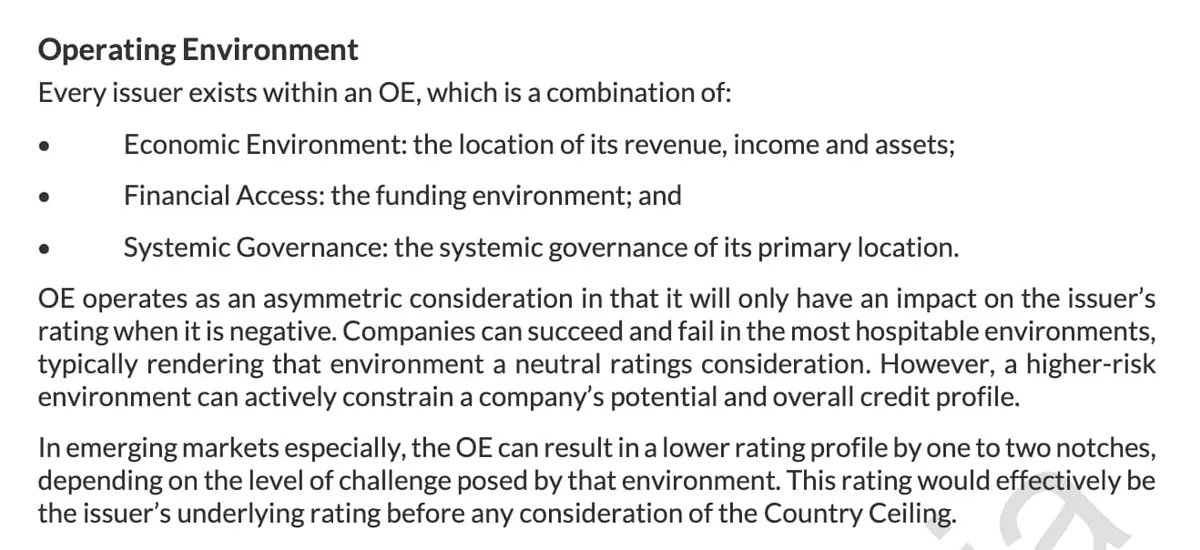
For example, Fitch, a global credit ratings and financial research company, incorporates the issuer’s operating environment into its corporate ratings.
It even explicitly states that a higher-risk operating environment can constrain a company's credit profile, particularly when it has significant exposure to emerging markets.
Source: Fitch Ratings
S&P Global, meanwhile, highlights both the opportunities and risks associated with emerging and frontier markets.
Favorable demographics can support growth, for example, while persistent inflation and political uncertainty can create additional challenges.

Source: S&P Global
This shows how geographical markets can bring different opportunities and risks.
A company operating in one region may face very different economic conditions and business cycles than a company in another region, even when they operate in the same industry. Ignoring this reality can make your comparisons less accurate.
For example, imagine:
- Company A generates 90% of its revenue in the U.S.
- Company B generates 40% in the U.S., 30% in Brazil, 20% in Mexico, and 10% in Southeast Asia.
Even if both companies sell the same product and have similar leverage, they might have very different margins and cash flow volatility because of their different geographic exposure.
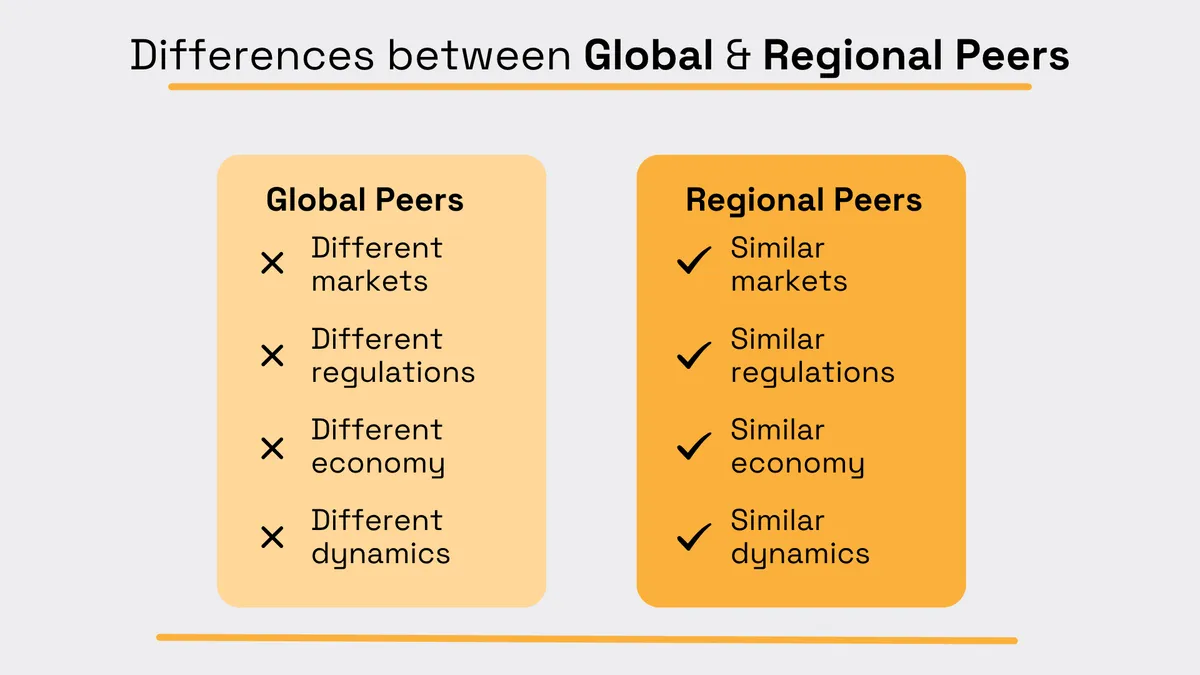
That's why regional peers can often provide a more useful benchmark.
Companies operating in the same region are more likely to face similar economic conditions, regulatory environments, and market dynamics.
Source: Veridion
Overall, regional peers are generally considered more relevant, even within the same broad industry.
5. Missing Business-Model Diversification
Two companies can share the same industry label while operating very different business models.
One might be asset-heavy while another is asset-light. A different company might rely on subscriptions, while another depends on project-based work.
Ignoring these differences can create a peer set that looks homogeneous but isn't.
Take McDonald's and Starbucks, for example.
Both are global restaurant companies, but their business models are quite different.
Most of McDonald's revenue comes from its franchise business, with approximately 95% of its restaurants operated by franchisees by the end of fiscal 2025.
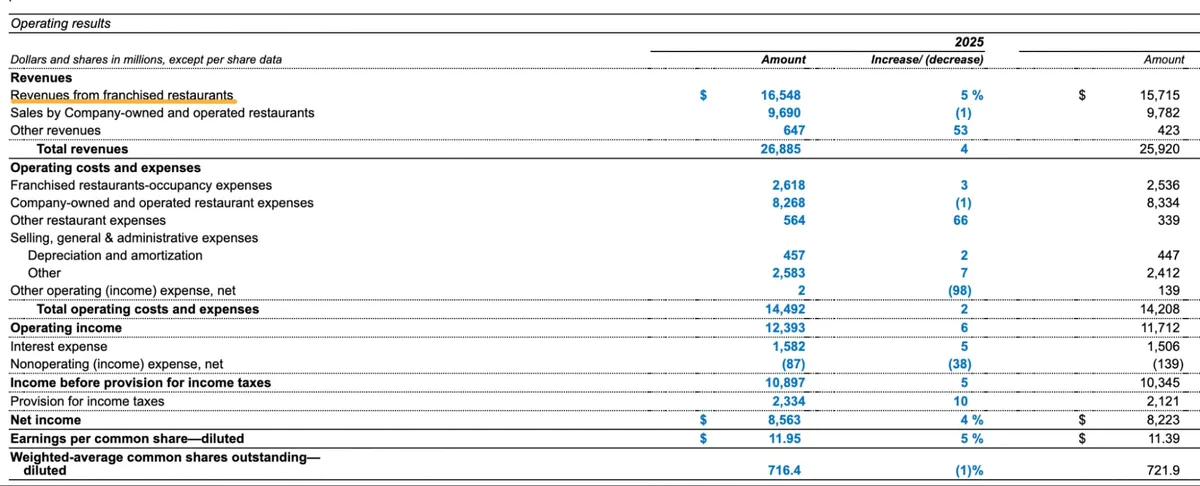
Source: SEC
Starbucks, by contrast, relies much more heavily on its own stores.
In fiscal 2025, 60% of its revenue came from company-operated stores, while licensed stores accounted for 40% in North America.

Source: SEC
That difference is important.
A more franchise-heavy model can require less direct capital investment and shift some operating costs to franchisees, while a company-operated model leaves more of those costs with the company.
As a result, two companies in the same industry can have very different margins, capital intensity, cash-flow profiles, and leverage.
That's why Ross Slutsky, ASA, a manager at the advisory and accounting firm Withum, says that the business model should be one of the primary criteria for selecting peers.
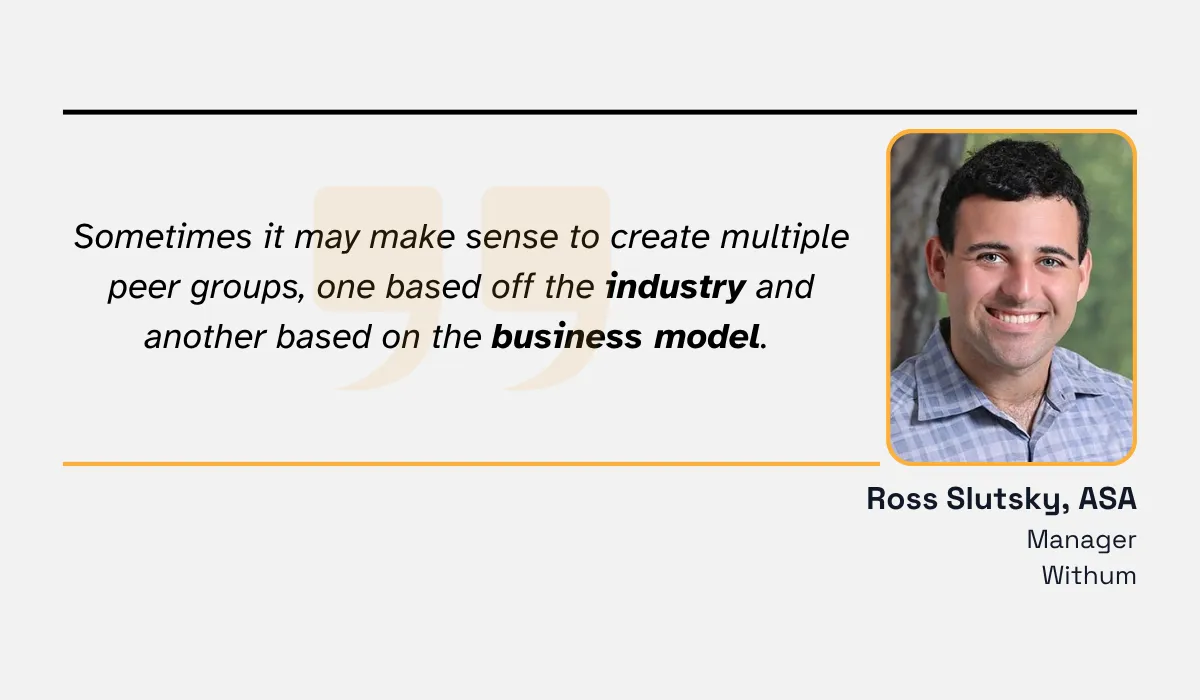
Illustration: Veridion / Quote: Ross Slutsky on LinkedIn
He also suggests creating multiple peer groups when one can't capture all relevant similarities.
For instance, one can be based on the business model and others on criteria such as industry or geography.
The challenge is that, unlike industry or size, business model differences are rarely captured in a single classification field.
They can be buried in differences in revenue mix, customer arrangements, cost structure, or capital requirements, making them harder to identify through standard peer-screening processes.
Analysts often need to investigate more deeply, which can make this step easy to skip during peer selection. The example above, however, shows why that would be a mistake.
6. Skewing the Peer Set Toward Public Companies
It can be tempting to use public companies as peers when analyzing a private company.
Anand Sanwal, co-founder of the predictive intelligence company CB Insights, explains why that's so with the following quote.
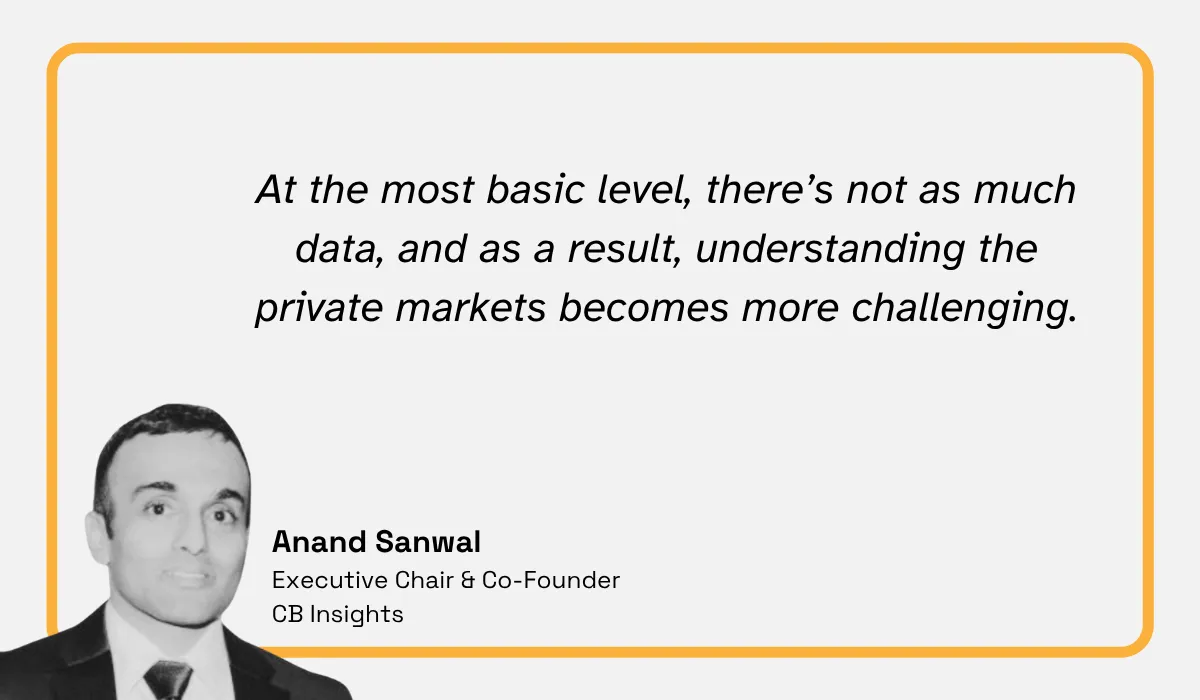
As Sanwal puts it, you can easily pull the financials for public companies from the SEC website, but the same isn't possible for private companies.
Gathering their data often requires looking at non-traditional signals and alternative sources, like business journals.
That's harder, so analysts may default to adding public companies as peers.
The problem, however, is that such a peer group may introduce differences that aren't relevant to the private company being analyzed.
For example, Axial, a platform for small business M&A, highlights that public companies are generally larger, better-disclosed, more diversified, and more liquidity-favored than private companies.
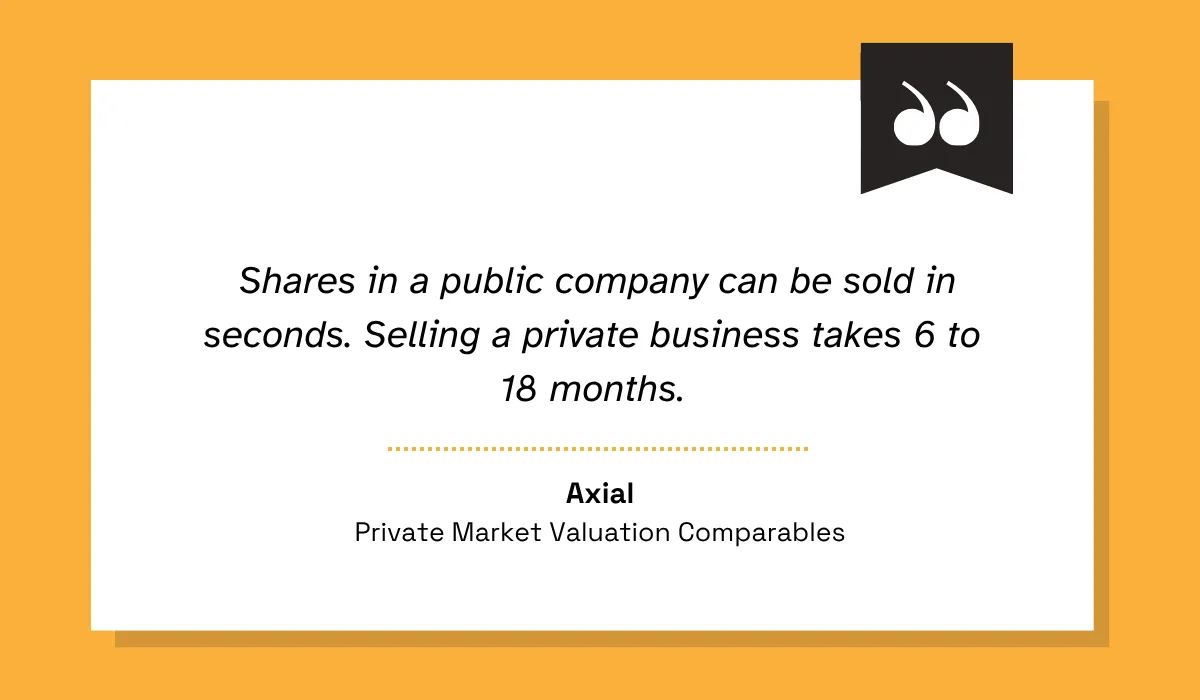
So a public-heavy peer set may skew the comparison by making the private company appear weaker than its true operating peers.
That doesn't mean that public companies can't still be useful peers, but rather that they shouldn't become the default simply because their data is easier to obtain.
Instead, you should ensure that public companies share enough relevant characteristics with the company you're analyzing to support an accurate and balanced comparison.
7. Letting Duplicate Entities Inflate the Peer Set
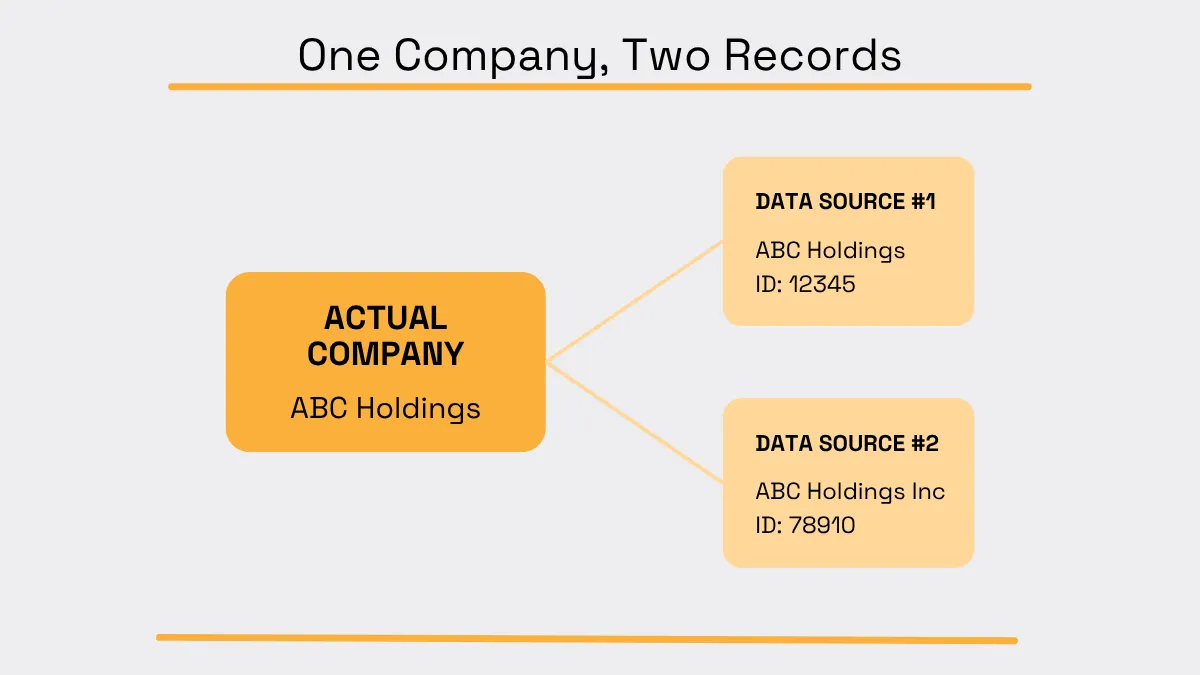
Another common mistake is counting the same company multiple times or, in other words, having multiple records referring to the same company within the peer set.
Duplicate records often stem from merging data from several sources that use different identifiers or naming conventions to refer to the same entity.
If those records aren't correctly matched, the same company can be identified as several different entities and appear multiple times in the peer set.
Source: Veridion
This mistake inflates the apparent size and diversity of the peer set without adding any real value.
To prevent this issue, you should resolve every record to exactly one company. If multiple records point to the same entity, they should be consolidated into one.
Veridion, a company intelligence platform, does this by default.
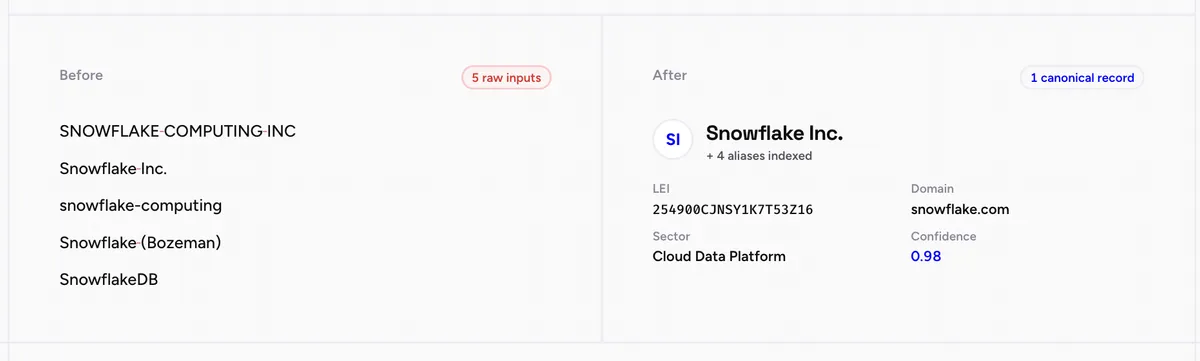
It ensures that duplicate records never make it into your peer set by resolving entities before turning them into company profiles in the first place.
Source: Veridion
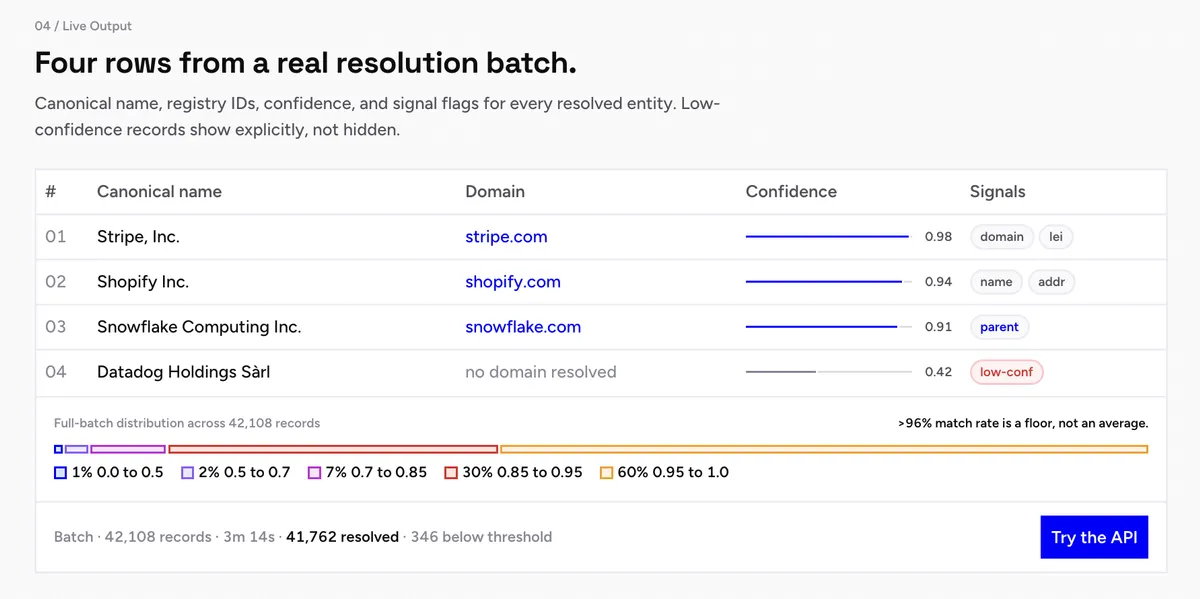
Veridion pulls data from across the entire internet, filters the data sources down to the most trusted ones, and as a result resolves 99.2% of entities on the first pass.
Each resolved entity is given a system-agnostic canonical identifier, creating a consistent reference point across different datasets and making it easier to identify and eliminate duplicate records.
Records also receive confidence scores, so analysts can easily tell which ones are ready for downstream use and which need manual review.
Source: Veridion
Veridion's approach resolves some other issues we've discussed, too.
For instance, by linking entities to their corporate hierarchy, the platform helps prevent parent companies and subsidiaries from being treated as independent peers.
This further reduces the risk of building a peer group that seems larger or more diverse than it actually is.
8. Failing to Refresh Peers After Material Company Changes
The last mistake to discuss is building a peer set once and then continuing to use it as a reference point without ever revisiting it.
This is wrong because businesses change over time. As the accounting firm BDO puts it, comparable companies grow and shrink, so a peer set made once should be reviewed before every assessment and refreshed when needed.

Beyond just growing or shrinking, companies might also undergo other material changes that should prompt a review.
Common triggers include:
- M&A activity
- A significant classification change, like moving into a different industry
- A business-model shift, like how a company generates revenue or cash flow
Acquisitions and divestitures, for example, can fundamentally change what a company looks like from a credit perspective.
If a software company acquires a large hardware business, that acquisition might significantly affect its margins and capital requirements. Similarly, a company that funds a major acquisition with debt may move from 2.0x to 4.0x leverage.
In both cases, the company may no longer look like the businesses it was originally compared with, making the existing peer set less relevant.
To avoid this scenario, revisit the peer set on each rating date and update it when material changes make existing peers less relevant.
Conclusion
The foundation for accurate credit comparisons is selecting the right peers.
In this article, we covered eight common mistakes analysts make during selection, from relying on broad classification codes to overlooking geography.
But even the best peer selection can fall short if the underlying entities aren't matched correctly.
Make it one of the first steps in your analysis, and consider solutions that automate tedious matching work and provide clear confidence scores.
With the right peers and clean entity data, you can build more reliable comparisons and make more confident credit decisions.
Articles
Discuss how these trends affect your organization.
Our analysts are available for a short call. Bring a specific question and we will ground it in the data.
Insights
Keep reading
More analysis, research, and outcomes grounded in live company intelligence.
How Credit Rating Agencies Map the Relevant Group Parent and Group Members Before Analysis
Rating agencies map the group parent and members with an entity graph: a full ownership tree, entity types, link confidence and continuous updates.
Point-in-Time Credit Estimates vs. Monitored Private Ratings: Different Data Requirements
We will explore point-in-time credit estimates vs monitored private ratings and show how data collection, updates, and monitoring needs will change.
6 Issuer Data Quality Checks Before a Case Reaches the Rating Committee
Tired of rating committee delays? Ensure top-notch issuer data quality with 6 essential checks. Avoid costly errors and streamline your process.