Insights / Articles
The Ultimate Guide to Global Procurement
This guide is going to provide you with a comprehensive overview of global procurement, its importance, and the key steps and pillars that underpin its implementation.

By leveraging Veridion's global supplier database with over 693M companies and 1.3B products and services indexed in conjunction with its advanced search APIs, your team can save valuable time and resources.
More precisely, they can find potential suppliers that fit very specific procurement criteria in minutes instead of days or weeks.
Likewise, they can use Veridion’s database to evaluate suppliers’ risk factors—such as the geographical locations of their facilities, track record, and reputation—as well as compliance with environmental, social, and governance (ESG) standards.

Source: Veridion
For instance, a company seeking to source electronic components globally might focus on potential suppliers’ production capacity, quality control measures, and adherence to ESG requirements.
Coupled with examining their local market environment, such as pricing trends, competitors, and geopolitical factors, companies can anticipate challenges and optimize their sourcing decisions.
This thorough evaluation process lays the foundation for selecting the most suitable suppliers to effectively fulfill your procurement needs.
Selection of the Supplier
Once suppliers and markets are evaluated, your procurement team can move to selecting the most suitable supplier based on your company’s specific requirements and criteria.
In this stage, supplier capabilities, performance history, pricing structures, and delivery terms are further scrutinized.
Then, the team can proceed to negotiate, draft the contract agreement, and establish a relationship with the chosen supplier.
The ultimate goal is to select suppliers that not only meet quality and reliability standards but also offer the most value and strategic advantages to the company’s supply chain.
Implementation
During the implementation stage, the focus shifts to executing what was agreed with the selected supplier.
This involves finalizing their contract, establishing supply chain processes, and integrating suppliers seamlessly into the company’s operations.
For instance, this means defining order fulfillment procedures, delivery schedules (lead time), and quality control mechanisms.
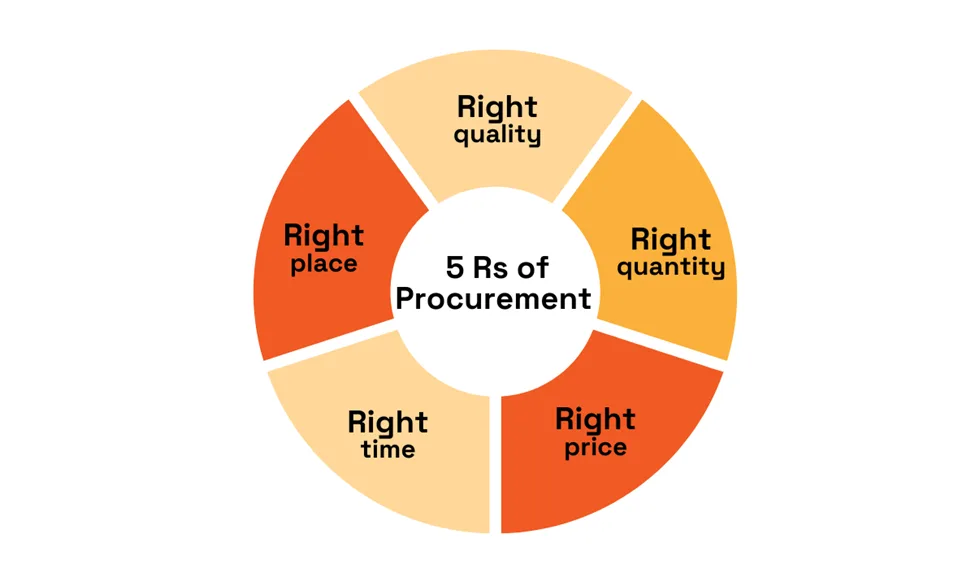
In essence, you want to ensure that the 5 Rs of procurement will be adhered to.
Source: Veridion
Additionally, you should establish clear communication channels and protocols (especially when dealing with overseas suppliers in different time zones) to ensure smooth coordination and collaboration throughout the procurement process.
Overall, a successful implementation stage will ensure that the procurement objectives are translated into actionable steps and that the necessary infrastructure is in place to support ongoing procurement activities.
Performance Monitoring
After everything is put in place, the process of supplier performance monitoring should be implemented to ensure that procurement activities align with your company’s goals and standards.
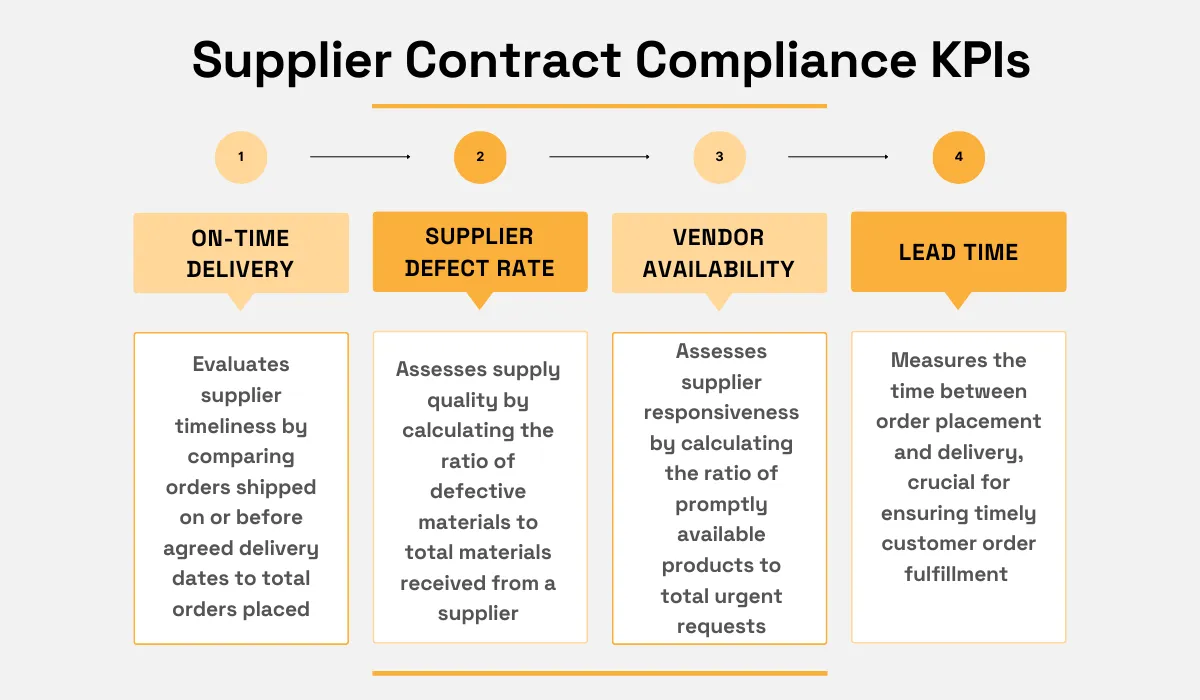
This involves continuously monitoring supplier performance by tracking key performance indicators (KPIs) such as delivery times, product quality, and compliance levels.
Here are a few KPIs typically used to monitor a supplier’s compliance with the agreed contract terms:
Source: Veridion
This ongoing process enables companies to identify and promptly address any issues or deviations that may arise, i.e., make necessary adjustments to optimize supplier performance and maintain competitiveness in their respective markets.
Each of the five described stages of global procurement is interconnected and critical for effectively and efficiently achieving your company’s objectives in the global marketplace.
The Four Pillars of Global Procurement
Having covered what global procurement is, its importance, and key stages, let’s see what your organization needs for its sourcing efforts to be successful.
Naturally, the four pillars of global procurement described below largely overlap with resources used for more traditional local or regional procurement.
However, they may involve specific considerations, tools, and procedures aligned with the specific requirements of global procurement.
So, let’s explore how people, processes, technology, and supply chains should come together to achieve the best possible results in global procurement endeavors.
People
The success of global procurement relies heavily on the expertise, skills, and collaboration of people involved in the process.
This includes members of your procurement team, selected suppliers, and other stakeholders, such as logistics partners, market experts, and legal or financial advisors.
Moreover, your team of external experts should leverage their knowledge of cultural sensitivities and negotiation techniques specific to individual countries and markets.
Of course, effective communication, relationship-building, and cross-cultural understanding are essential for fostering strong supplier relationships and navigating international business environments.
Process
A well-defined and streamlined procurement process is crucial for ensuring consistency, efficiency, and compliance in global procurement activities.
This involves establishing clear procedures for supplier selection, contract negotiation, risk management, and performance monitoring.
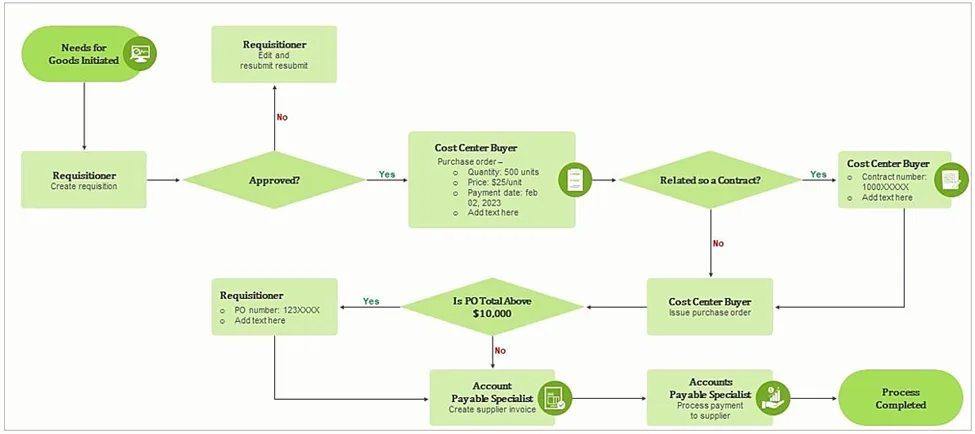
Many companies establish a single procurement procedure that is followed for all purchases a company makes, like the example below.
Source: Slide Team
Moreover, standardizing processes across company departments and suppliers helps minimize errors, reduce cycle times, and improve overall procurement outcomes.
In addition to standardization, continuous process improvements are key to adapting to changing market conditions and driving procurement cost savings.
Technology
Technology plays a vital role in modern procurement by providing tools and platforms to automate, optimize, and streamline various procurement activities.
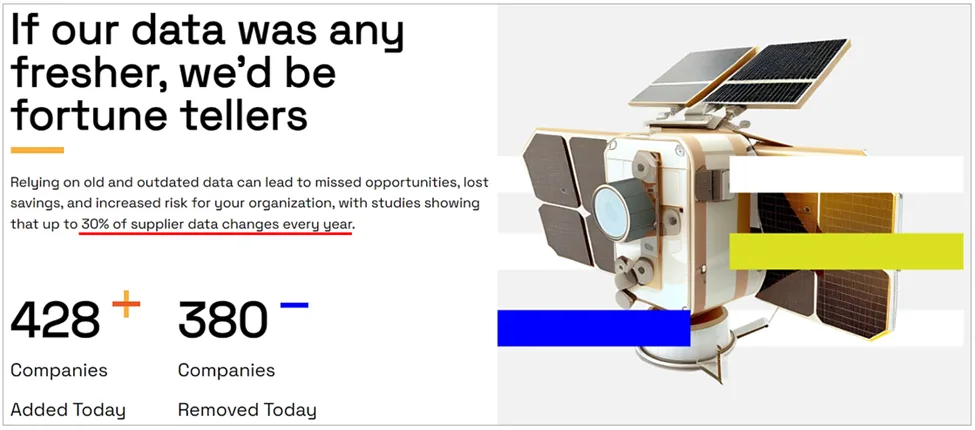
This includes procurement automation solutions like e-procurement systems, supplier relationship management software, analytics tools, and big data platforms that provide up-to-date supplier and market information.
Source: Veridion
Leveraging technology enables companies to enhance transparency, visibility, and control over their procurement processes, facilitating better decision-making and supplier collaboration.
Suffice it to say, utilizing procurement tools becomes even more important when sourcing globally.
The efficiencies and data-driven insights gained through technology can be further enhanced by ensuring integration between relevant enterprise systems.
Supply Chain
Arising from the three above pillars and the five stages we covered, an efficient and resilient supply chain is essential for successful global procurement operations.
This involves establishing robust logistics networks, inventory management systems, and risk mitigation strategies to ensure the timely delivery of raw materials, components, and other supplies.
Source: Veridion
Collaboration with suppliers, freight forwarders, and third-party logistics providers helps companies optimize transportation routes, minimize lead times, and reduce supply chain disruptions.
Finally, integrating sustainability principles in procurement practices and monitoring supplier performance contribute to building a reliable, sustainable, and resilient global supply chain.
Conclusion
So, while exploring the definition, significance, key stages, and pillars of global procurement, we’ve underscored the critical role played by strategic processes, technological innovations, and collaborative efforts in this process.
As such, global procurement serves as a foundation for businesses seeking to enhance their supply chain efficiency, lower expenses, and extend their reach in the international market.
By embracing the right procurement tools and methods, companies can navigate the complexities of global procurement with confidence, ensuring sustainable growth and competitiveness in an increasingly interconnected world.
Articles
Discuss how these trends affect your organization.
Our analysts are available for a short call. Bring a specific question and we will ground it in the data.